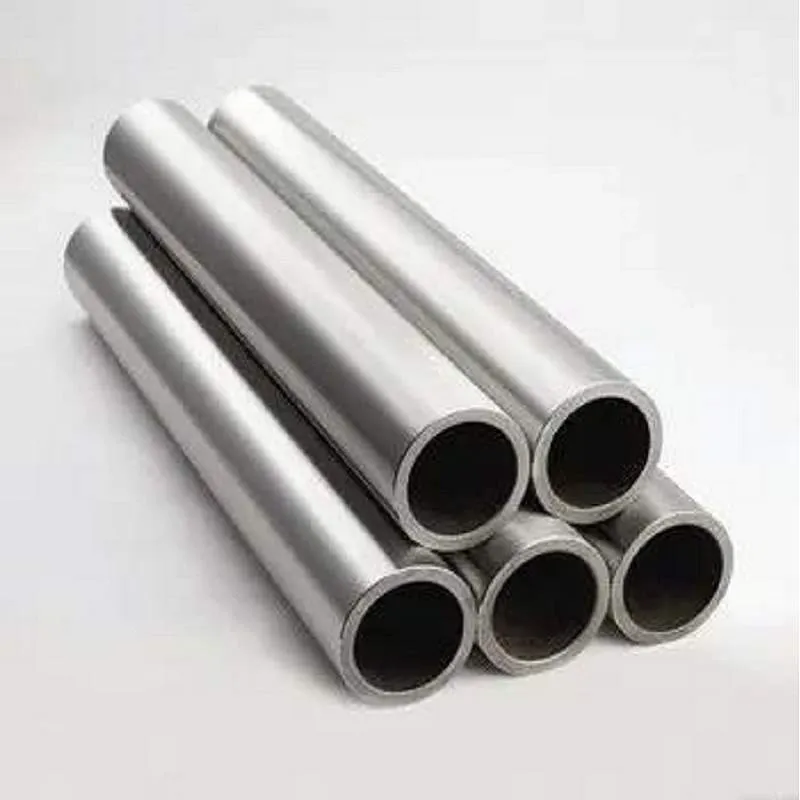
AISI 50B40 Steel Seamless tube
Product Code : STI-AL-095-CU
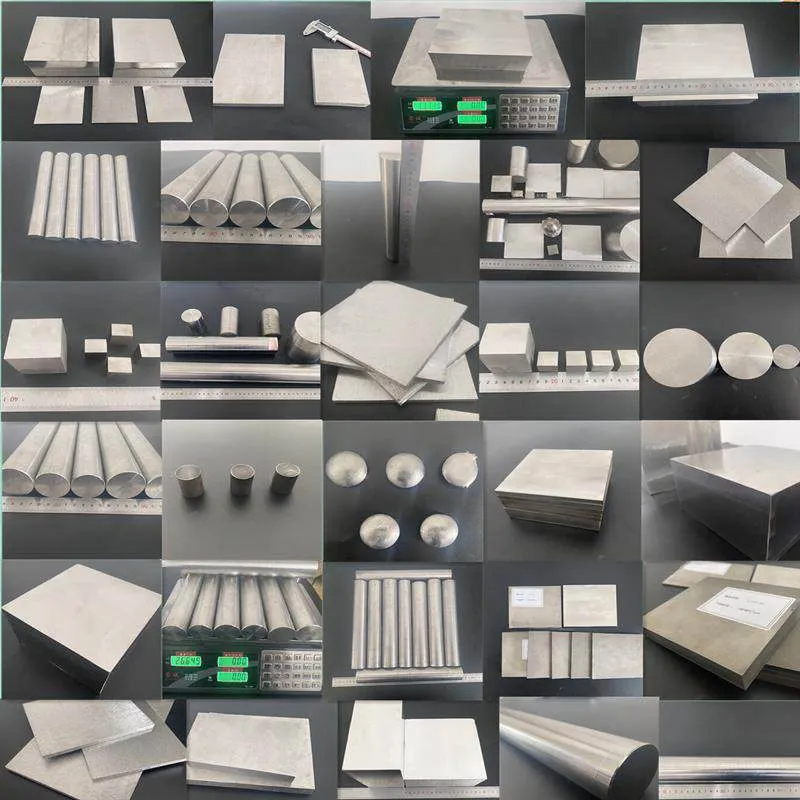
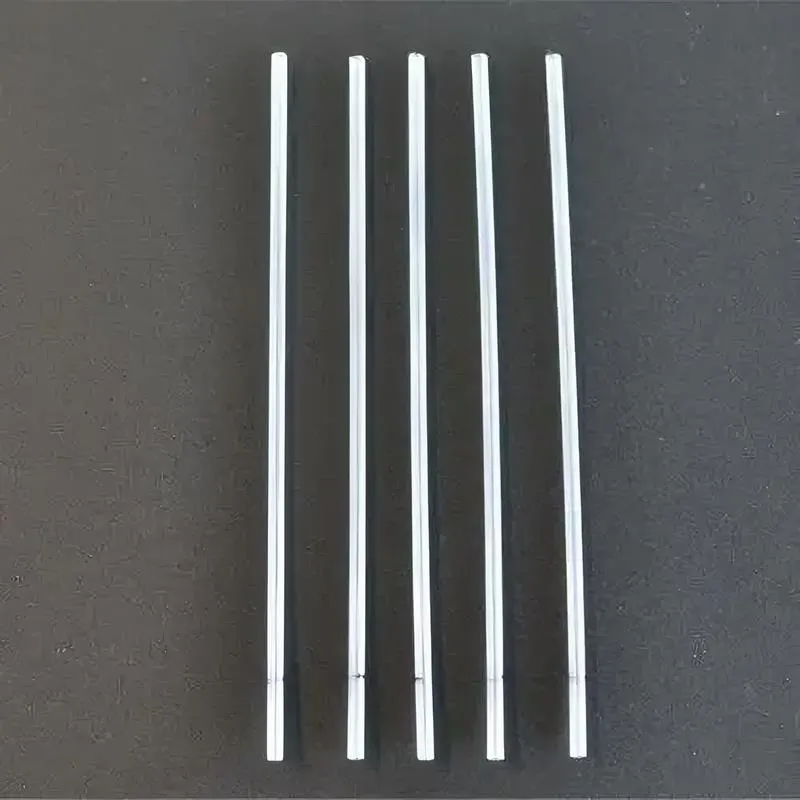
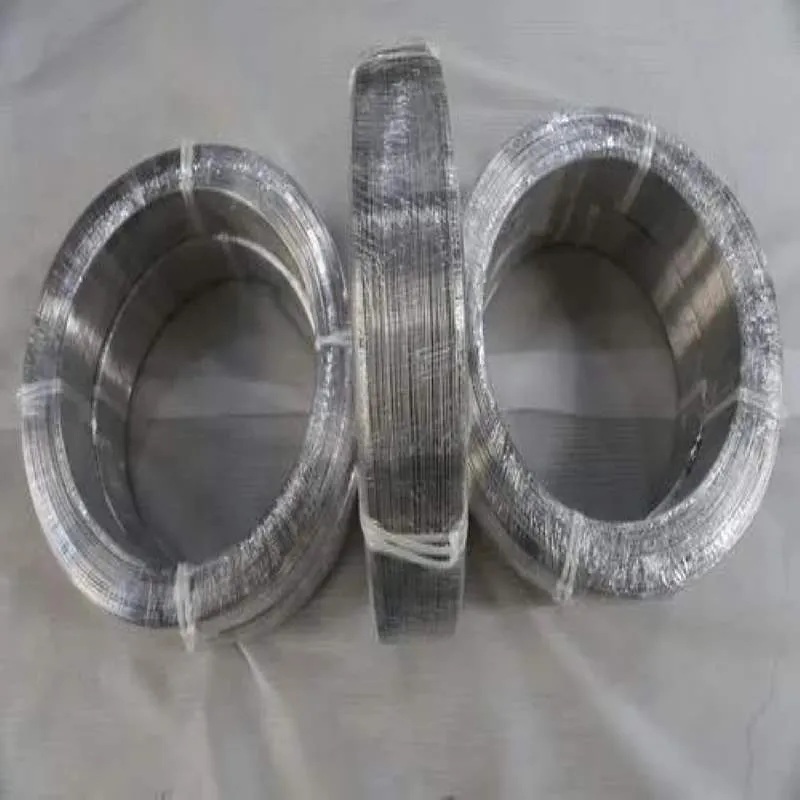
We provide AISI 50B40 Steel Seamless tube is available in Bar (Round bar, Flat bar), Ribbon, Wire, Rods, Tube,Seamless Tube,Pipe, Ingots, Plate, Sheet, Strip and Forging Stock.,Purity, chemical composition, size, etc. can all be customized to meet specific requirements.
Please contact us if you need customized services. We will contact you with the price and availability in 24 hours.
AISI 50B40 Steel Seamless tube Product Information
-:-
For detailed product information, please contact sales.
-:
AISI 50B40 Steel Seamless tube Synonyms
-:-
For detailed product information, please contact sales.
-:
AISI 50B40 Steel Product Information
-:-
For detailed product information, please contact sales.
-:
**Product Datasheet: AISI 50B40 Boron-Treated Alloy Steel**
**1. Product Overview**
AISI 50B40 is a **medium-carbon, boron-treated alloy steel** designed to achieve high strength and hardness through heat treatment, particularly quenching and tempering. The key characteristic is the addition of a small, controlled amount of boron (typically 0.0005% to 0.003%), which significantly increases the hardenability of the steel at a minimal cost increase compared to more heavily alloyed grades. This makes it a **cost-effective and high-performance** choice for high-strength, wear-resistant components.
**2. Key International & Equivalent Standards**
* **Primary Standard:** **SAE J404, J770** (SAE-AISI 50B40). The "B" denotes boron treatment.
* **U.S. Standards:** **ASTM A29/A29M** (Standard Specification for Steel Bars, Carbon and Alloy, Hot-Wrought), **ASTM A304** (for H-steel hardenability requirements).
* **European (EU) Equivalents:** No direct equivalent; similar hardenability to some **Ck 45** or modified grades, but boron steels are less common in standard EN series.
* **Japanese Equivalent:** Approximated by some SCM or SAC boron-containing steels.
* **ISO Equivalent:** No direct single equivalent.
**3. Chemical Composition (Weight % - Standard Ranges)**
Composition is per SAE J404 specifications. The boron addition is the defining feature. Carbon is kept moderate to balance hardness with toughness.
| Element | Minimum (%) | Maximum (%) | Typical Target (%) | Primary Function |
| :--- | :--- | :--- | :--- | :--- |
| **Carbon (C)** | 0.36 | 0.44 | 0.40 | Primary source of hardness and strength. |
| **Manganese (Mn)** | 0.70 | 1.00 | 0.85 | Increases hardenability and strength. |
| **Phosphorus (P)** | — | 0.035 | 0.020 | Residual element (impurity). |
| **Sulfur (S)** | — | 0.040 | 0.025 | Improves machinability. |
| **Silicon (Si)** | 0.15 | 0.35 | 0.25 | Deoxidizer, solid solution strengthener. |
| **Boron (B)** | 0.0005 | 0.003 | 0.0015 | **Dramatically increases hardenability** by retarding ferrite formation at grain boundaries. |
| **Residual Alloys (Cr, Ni, Mo etc.)** | Typically present in very low residual amounts unless specified. |
**4. Physical & Mechanical Properties (Typical - After Quench & Tempering)**
*Note: Properties are highly dependent on section size, quench medium, and tempering temperature.*
* **Heat Treatment (Typical):**
* **Austenitizing:** 830°C – 860°C (1525°F – 1580°F)
* **Quenching:** Oil quench (good for sections up to ~75mm/3in due to high boron hardenability).
* **Tempering:** 425°C – 650°C (800°F – 1200°F) depending on desired strength/toughness balance.
* **Mechanical Properties (Example at 540°C / 1000°F Temper):**
* **Tensile Strength:** 900 – 1100 MPa
* **Yield Strength (0.2% Offset):** 750 – 950 MPa
* **Elongation (in 50 mm):** 15% – 20%
* **Reduction of Area:** 45% – 60%
* **Hardness:** 28 – 35 HRC
* **Properties at Lower Temper (e.g., 200°C / 400°F):**
* **Hardness:** 50 – 55 HRC (High strength, lower toughness).
* **Physical Constants:**
* **Density:** ~7.85 g/cm³
* **Modulus of Elasticity:** ~205 GPa
* **Machinability:** Fair in annealed condition. Boron can cause abrasive wear on tools.
**5. Heat Treatment & Processing Notes**
* **Forging:** Heat uniformly to 1150°C – 1200°C (2100°F – 2200°F). Finish above 850°C (1550°F). Slow cool after forging.
* **Annealing:** Full anneal at 830°C – 860°C, slow furnace cool. Spheroidize annealing improves machinability for severe cold forming.
* **Hardenability:** The boron effect provides hardenability equivalent to steels with higher levels of Cr, Ni, or Mo. This allows for through-hardening of larger sections with a milder quench (oil vs. water), reducing distortion and cracking risk.
* **Weldability:** Poor. Preheating (200-315°C / 400-600°F) and post-weld stress relieving are mandatory due to high hardenability and risk of cold cracking.
**6. Primary Applications**
AISI 50B40 is used in applications requiring a good combination of high strength, toughness, and wear resistance at a competitive cost:
* **Automotive:** Axle shafts, steering components (tie rods, pitman arms), torsion bars, high-strength bolts, brackets, and forged levers.
* **Agricultural & Off-Highway:** Gears, shafts, plow beams, connecting rods, and other high-stress components.
* **Industrial Machinery:** Hydraulic piston rods, cylinders, spindles, and general high-strength structural parts.
* **Fasteners:** High-strength, heat-treated bolts and studs.
**7. Key Advantages & Selection Rationale**
* **High Hardenability at Low Cost:** Boron is a highly cost-effective hardenability enhancer, making 50B40 a substitute for more expensive alloy steels like 4140 or 4340 in many applications.
* **Good Strength/Toughness Balance:** The moderate carbon content allows for a wide range of mechanical properties through tempering.
* **Suitable for Larger Sections:** Can be through-hardened in oil for substantial cross-sections, reducing heat treatment complexity.
* **Material Efficiency:** Allows designers to use lower alloy content to achieve performance goals, optimizing material cost.
---
**Disclaimer:** This data sheet provides typical information. The effectiveness of boron is highly sensitive to processing; optimal nitrogen levels must be controlled (often with Ti or Al additions) to protect boron. For critical applications, material should be ordered to hardenability (H-band) specifications per ASTM A304. Final properties are determined by the specific heat treatment practice and part geometry.
-:-
For detailed product information, please contact sales.
-:
AISI 50B40 Steel Specification
Dimensions
Size:
Diameter 20-1000 mm Length <4093 mm
Size:We can customized as required
Standard:
Per your request or drawing
We can customized as required
Properties(Theoretical)
Chemical Composition
-:-
For detailed product information, please contact sales.
-:
AISI 50B40 Steel Properties
-:-
For detailed product information, please contact sales.
-:
Applications of AISI 50B40 Steel Seamless tube
-:-
For detailed product information, please contact sales.
-:
Chemical Identifiers AISI 50B40 Steel Seamless tube
-:-
For detailed product information, please contact sales.
-:
Packing of AISI 50B40 Steel Seamless tube
-:-
For detailed product information, please contact sales.
-:
Standard Packing:
-:-
For detailed product information, please contact sales.
-:
Typical bulk packaging includes palletized plastic 5 gallon/25 kg. pails, fiber and Steel Seamless tube drums to 1 ton super sacks in full container (FCL) or truck load (T/L) quantities. Research and sample quantities and hygroscopic, oxidizing or other air sensitive materials may be packaged under argon or vacuum. Solutions are packaged in polypropylene, plastic or glass jars up to palletized 564 gallon liquid totes Special package is available on request. E FORUs’ is carefully handled to minimize damage during storage and transportation and to preserve the quality of our products in their original condition