AISI 4027H Alloy Steel Rod/Bar,
Product Code : STI-AL-020-CU
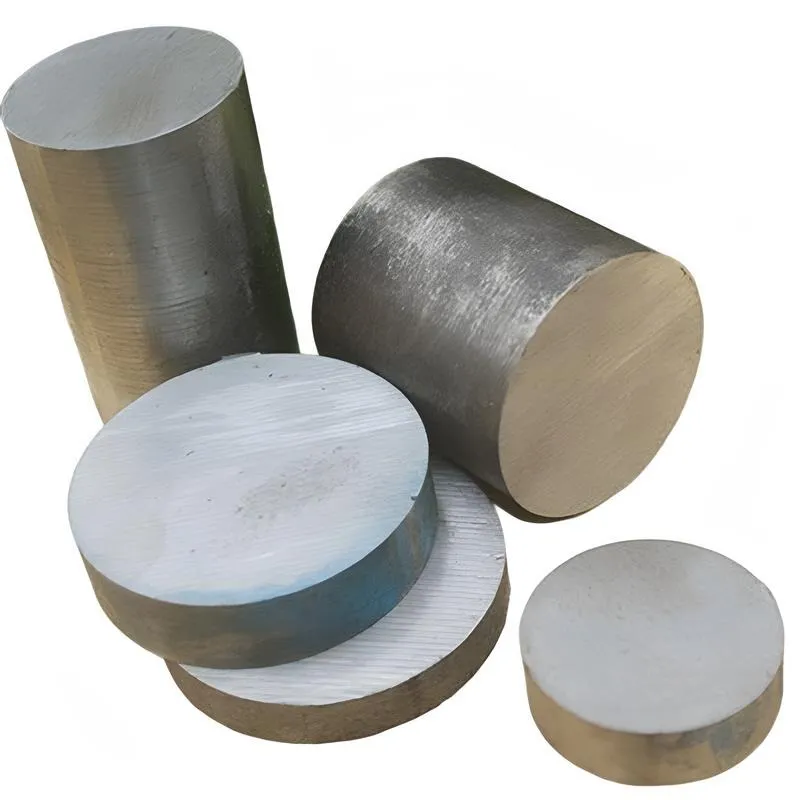
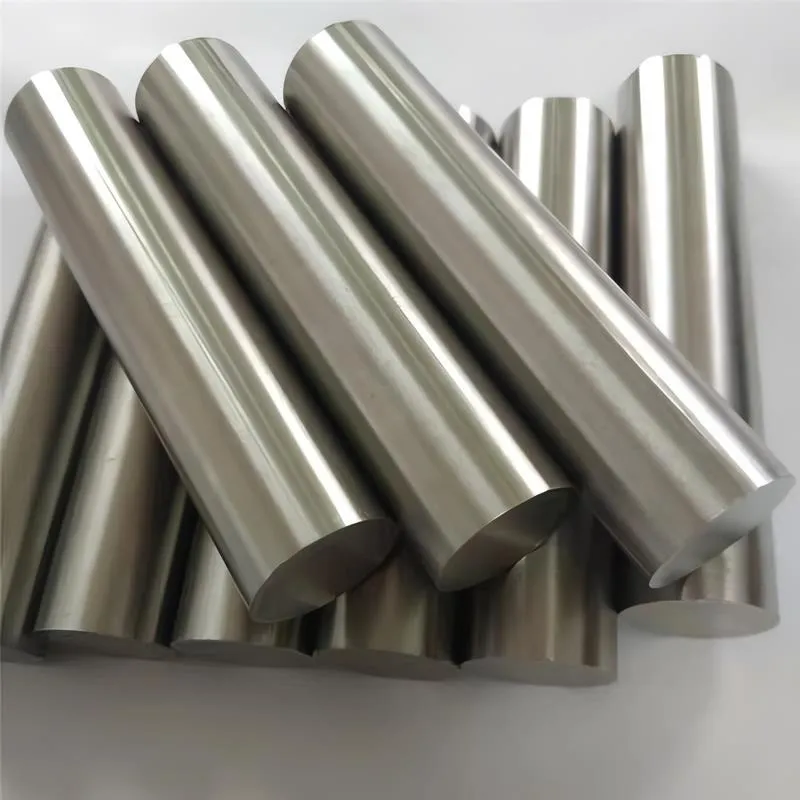
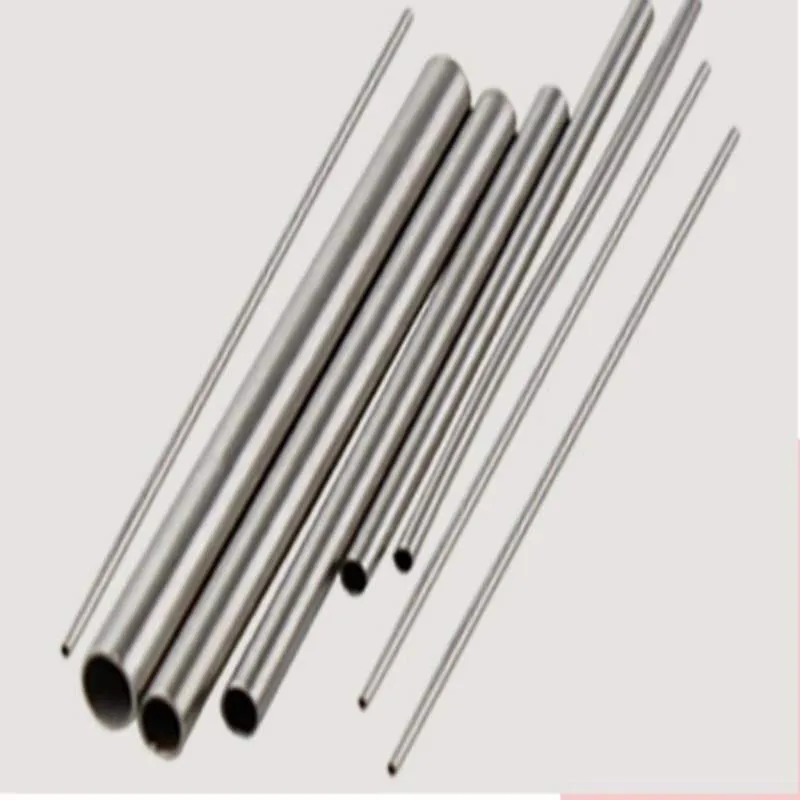
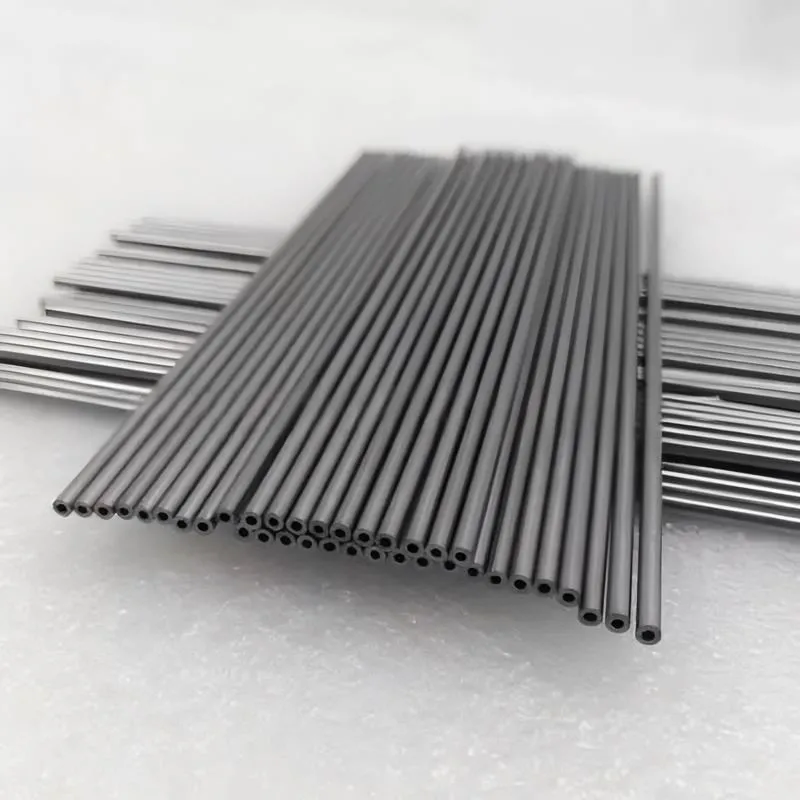
We provide AISI 4027H Alloy Steel Rod/Bar, is available in Bar (Round bar, Flat bar), Ribbon, Wire, Rod/Bars, Tube,Seamless Tube,Pipe, Ingots, Plate, Sheet, Strip and Forging Stock.,Purity, chemical composition, size, etc. can all be customized to meet specific requirements.
Please contact us if you need customized services. We will contact you with the price and availability in 24 hours.
AISI 4027H Alloy Steel Rod, Product Information
-:-
For detailed product information, please contact sales.
-:
AISI 4027H Alloy Steel Rod, Synonyms
-:-
For detailed product information, please contact sales.
-:
AISI 4027H Alloy Steel, Product Information
-:-
For detailed product information, please contact sales.
-:
# **Product Introduction: AISI 4027H Hardenability-Controlled Alloy Steel**
## **Executive Summary**
**AISI 4027H** represents the **hardenability-controlled variant** of the standard AISI 4027 medium-carbon molybdenum steel, specifically engineered for applications requiring **predictable and consistent heat treatment response**. The "H" designation indicates that this material is produced with guaranteed hardenability bands as determined by standardized end-quench (Jominy) testing. This steel is designed for medium to heavy-duty case-hardening applications where uniform mechanical properties, minimized distortion, and consistent performance across production batches are critical requirements. By controlling hardenability within specified bands, AISI 4027H ensures reliable through-hardening characteristics in moderately sized sections, making it particularly valuable for automotive, agricultural, and industrial components where quality consistency and manufacturing reliability are paramount.
---
## **1. Chemical Composition & Hardenability Control**
### **Controlled Composition Ranges**
| Element | Content Range (% by weight) - **AISI 4027H** | Control Philosophy & Function |
| :--- | :--- | :--- |
| **Carbon (C)** | 0.24 - 0.31 | Wider range allows adjustment to achieve specific hardenability; provides core strength and case absorption potential |
| **Molybdenum (Mo)** | 0.15 - 0.35 | Expanded range enables precise hardenability control; enhances hardenability, refines grain, improves temper resistance |
| **Manganese (Mn)** | 0.60 - 1.00 | Broadened range for hardenability adjustment; deoxidizer and hardenability enhancer |
| **Silicon (Si)** | 0.15 - 0.35 | Standard range; deoxidizer and solid solution strengthener |
| **Phosphorus (P)** | 0.035 max | Impurity control for ductility |
| **Sulfur (S)** | 0.040 max | Typically kept low; may be slightly increased in specific applications |
| **Nickel (Ni)** | - | Not specified; trace amounts may be present |
| **Chromium (Cr)** | - | Not specified; trace amounts may be present |
| **Iron (Fe)** | Balance | Matrix element |
### **Hardenability Control Philosophy**
The fundamental principle of H-grade steels differs significantly from standard grades:
- **Guaranteed Bands:** Chemistry is adjusted within broader ranges to achieve **guaranteed hardenability bands** rather than fixed composition limits
- **Jominy Certification:** Each heat is tested using the standardized end-quench test to verify hardenability within specified bands
- **Production Consistency:** Different heats may have varying chemistries but will produce identical hardenability responses
- **Predictable Performance:** Engineers can design with confidence knowing the exact hardening characteristics for specific section sizes
### **Key Metallurgical Advantages**
- **Reduced Heat Treatment Variability:** Minimizes the "lot-to-lot" variations common in standard steels
- **Optimized Manufacturing:** Allows precise calculation of heat treatment parameters for different section sizes
- **Improved Quality Control:** Provides documented hardenability data for each production lot
- **Enhanced Reliability:** Particularly valuable for safety-critical or high-volume production components
---
## **2. Physical & Mechanical Properties**
### **A. Fundamental Physical Properties**
| Property | Condition | Value/Range | Notes |
| :--- | :--- | :--- | :--- |
| **Density** | All conditions | 7.85 g/cm³ (0.284 lb/in³) | - |
| **Melting Point** | - | ~1510°C (2750°F) | - |
| **Elastic Modulus** | Tempered | 200-205 GPa (29,000-29,700 ksi) | - |
| **Shear Modulus** | - | 80-82 GPa (11,600-11,900 ksi) | - |
| **Poisson's Ratio** | - | 0.29 | - |
| **Thermal Conductivity** | 100°C | 44.0 W/m·K | - |
| **Specific Heat Capacity** | 20°C | 475 J/kg·K | - |
| **Thermal Expansion Coefficient** | 20-100°C | 11.9 × 10⁻⁶/°C | - |
| **Electrical Resistivity** | 20°C | 0.22 μΩ·m | - |
| **Magnetic Properties** | Below Curie temp | Ferromagnetic | - |
### **B. Guaranteed Hardenability Characteristics (Jominy Test)**
#### **Standard Hardenability Bands**
AISI 4027H is typically supplied with guaranteed minimum and maximum hardness values at specified Jominy distances:
| Jominy Distance | Hardness Range (HRC) | Significance |
| :--- | :--- | :--- |
| **1/16" (1.6 mm)** | 38-45 | Surface hardenability potential |
| **1/4" (6.4 mm)** | 30-38 | Moderate section hardening |
| **1/2" (12.7 mm)** | 24-32 | Core hardenability for case-hardened parts |
| **3/4" (19.1 mm)** | 20-28 | Through-hardening capability |
| **1" (25.4 mm)** | 18-26 | Maximum effective hardening depth |
#### **Critical Diameter Calculations**
- **Ideal Critical Diameter (DI):** 1.8-2.4 inches (45-60 mm) in oil quench
- **95% Martensite (D95):** 1.2-1.8 inches (30-45 mm) in fast oil
- **50% Martensite (D50):** 1.8-2.5 inches (45-63 mm) in fast oil
- **Maximum Effective Case Depth:** 1.5-2.0 mm for carburized components
### **C. Mechanical Properties by Condition**
#### **1. Annealed/Normalized Condition (Pre-Machining)**
- **Hardness:** 163-207 HB (Brinell)
- **Tensile Strength:** 550-690 MPa (80-100 ksi)
- **Yield Strength:** 380-550 MPa (55-80 ksi)
- **Elongation:** 22-28%
- **Machinability Rating:** 60-65% of B1112
#### **2. Core Properties After Case Hardening**
*Typical values for properly heat treated material*
| Property | Minimum Guaranteed | Typical Range | Maximum Achievable |
| :--- | :--- | :--- | :--- |
| **Core Hardness** | 30 HRC | 32-38 HRC | 40 HRC |
| **Core Tensile Strength** | 860 MPa | 900-1100 MPa | 1200 MPa |
| **Core Yield Strength** | 690 MPa | 750-950 MPa | 1000 MPa |
| **Case Hardness** | 58 HRC | 60-63 HRC | 65 HRC (carbonitrided) |
| **Fatigue Strength (Rotating Bending)** | 400 MPa | 450-550 MPa | 600 MPa |
#### **3. Through-Hardened Properties**
*When used without case hardening*
| Tempering Temperature | Hardness (HRC) | Tensile Strength | Impact Energy |
| :--- | :--- | :--- | :--- |
| **425°C (800°F)** | 35-40 | 1150-1250 MPa | 40-60 J |
| **540°C (1000°F)** | 28-33 | 950-1050 MPa | 60-80 J |
| **650°C (1200°F)** | 22-26 | 750-850 MPa | 80-100 J |
### **D. Special Properties & Advantages**
- **Consistent Through-Hardening:** Predictable hardness gradients in sections up to 60mm diameter
- **Reduced Distortion:** Uniform transformation minimizes warpage during quenching
- **Batch-to-Batch Consistency:** Certified hardenability ensures identical heat treatment response
- **Optimized Manufacturing:** Allows precise calculation of quenching parameters
- **Quality Documentation:** Each lot includes actual Jominy test data
---
## **3. International Standards & Specifications**
### **Primary Governing Standards**
| Standard/Organization | Designation | Title/Scope |
| :--- | :--- | :--- |
| **SAE International** | **SAE J1268** | Hardenability Bands for Carbon and Alloy H-Steels |
| **SAE International** | **SAE J1868** | Standard Hardness and Hardenability Requirements |
| **ASTM International** | **ASTM A304** | Standard for Carbon and Alloy Steel Bars Subject to End-Quench Hardenability Requirements |
| **ASTM International** | ASTM A29/A29M | General Specification (with H-grade supplement) |
| **UNS** | **H40270** | Unified Numbering System for H-Steels |
| **AISI** | 4027H | Commercial designation |
### **International Equivalents & Cross-References**
| Country/Region | Equivalent System | Notes |
| :--- | :--- | :--- |
| **ISO** | **ISO 683-18** | Hardenability steel classification system (Type designation) |
| **European Union** | **- (No direct equivalent)** | EU standards specify composition/properties, not H-bands |
| **Germany** | **- (No direct equivalent)** | German standards use composition-based specification |
| **Japan** | **- (No direct equivalent)** | JIS standards do not include H-band system |
| **China** | **H-band equivalents possible** | Can be produced to similar requirements |
| **General Note** | | **The "H" designation system is primarily North American** |
### **Industry-Specific Specifications**
- **Automotive:** Often referenced in OEM material specifications for critical components
- **Agricultural:** Used in tractor and equipment manufacturer specifications
- **Fastener Industry:** For high-reliability bolts and studs requiring consistent heat treatment
- **General Manufacturing:** Specified where heat treatment consistency is critical to quality
---
## **4. Product Applications & Industries**
### **Available Product Forms**
- **Hot-Rolled Bars:** Rounds (15-200mm), squares, hexagons with guaranteed hardenability
- **Cold-Finished Bars:** Precision ground and polished for high-volume production
- **Forging Stock:** Billets and blooms with certified hardenability bands
- **Wire Rod:** For cold heading of critical fasteners
- **Special Sections:** Custom profiles for specific component requirements
### **Primary Industry Applications**
#### **1. Automotive & Transportation (High-Volume Production)**
- **Transmission Components:** Synchronizer hubs, gear clusters, shift forks requiring consistent hardening
- **Drivetrain Parts:** Differential side gears, spider gears in mass production
- **Steering Components:** Steering arms, pitman arms, idler arms
- **Engine Components:** Camshafts for medium-duty engines, balance shafts
- **Heavy Truck:** Axle shafts, transmission shafts in volume production
#### **2. Agricultural Equipment (Reliability-Critical)**
- **Tractor Components:** Transmission gears produced in high volumes
- **Harvesting Equipment:** Combine gearbox components requiring consistent quality
- **Implement Parts:** PTO shafts, gearbox gears for implements
- **Drive Components:** Final drive gears and shafts
#### **3. Industrial Machinery & Equipment**
- **Gear Manufacturing:** Production gears for power transmission equipment
- **Power Transmission:** Sprockets, chain wheels produced in batches
- **Material Handling:** Conveyor drive components requiring consistent wear properties
- **Construction Equipment:** Track rollers, idlers in volume production
#### **4. Fastener & Component Manufacturing**
- **High-Strength Fasteners:** Grade 8.8 and similar bolts requiring consistent heat treatment
- **Special Components:** Bushings, sleeves, and wear parts in production quantities
- **Hydraulic Components:** Cylinder rods, piston rods for hydraulic systems
### **Economic Justification for 4027H vs. Standard 4027**
- **Reduced Scrap Rates:** Consistent hardenability minimizes heat treatment rejects
- **Lower Inspection Costs:** Reduced need for extensive hardness testing
- **Improved Process Control:** Simplified heat treatment parameter determination
- **Enhanced Reliability:** Fewer field failures and warranty claims
- **Production Efficiency:** Faster setup and fewer process adjustments
---
## **5. Heat Treatment Technology with Hardenability Control**
### **Certified Hardenability Data**
Each lot of AISI 4027H includes actual Jominy test results showing:
- Hardness values at standard distances from quenched end
- Minimum and maximum values within the specified band
- Heat-specific data for precise process calculation
### **Standard Heat Treatment Processes**
#### **1. Carburizing with Controlled Response**
- **Temperature:** 900-930°C (1650-1705°F)
- **Atmosphere Control:** Critical for consistent case properties
- **Quenching Parameters:** Precisely calculated based on certified hardenability data
- **Tempering:** 150-200°C (300-390°F) for 1-3 hours based on section size
#### **2. Through-Hardening Applications**
- **Austenitizing:** 830-850°C (1525-1560°F)
- **Quenching:** Oil quench with parameters based on hardenability data
- **Tempering:** Temperature selected based on required hardness
### **Hardenability-Based Process Optimization**
The certified hardenability data enables:
1. **Precise Quench Time Calculation:** Based on section size and desired hardness
2. **Distortion Prediction:** More accurate anticipation of dimensional changes
3. **Property Prediction:** Reliable estimation of core and case properties
4. **Process Standardization:** Consistent parameters across production runs
### **Special Considerations for H-Grades**
- **Reduced Safety Margins:** Designers can use smaller safety factors due to predictability
- **Optimized Section Sizes:** Components can be designed to maximum effective hardening depth
- **Consistent Quality:** Reduced need for conservative "over-design"
---
## **6. Manufacturing & Fabrication Characteristics**
### **Machinability Assessment**
- **Annealed Condition:** 60-65% of B1112 – Similar to standard 4027
- **Hardenability Effect:** Consistent microstructure aids predictable machining behavior
- **Recommended Practices:**
- **Turning:** 70-100 m/min (230-330 SFM) with carbide
- **Drilling:** 18-28 m/min (60-90 SFM) with HSS
- **Coolant:** Essential for consistent results
### **Weldability Characteristics**
**Rating: FAIR (same precautions as standard 4027)**
#### **Welding with Hardenability Considerations**
1. **HAZ Properties:** Heat-affected zone properties more predictable with known hardenability
2. **Preheat Requirements:** Based on material thickness and hardenability band
3. **Post-Weld Heat Treatment:** Particularly important to restore properties in HAZ
4. **Filler Selection:** Low-hydrogen electrodes recommended
### **Quality Assurance Advantages**
- **Predictable Behavior:** Manufacturing processes can be optimized with confidence
- **Reduced Testing:** Less need for destructive testing of finished parts
- **Documentation:** Complete traceability with certified hardenability data
- **Process Validation:** Easier validation of heat treatment processes
---
## **7. Design & Engineering Advantages**
### **Key Benefits of Specifying 4027H**
1. **Predictable Performance:** Eliminates guesswork in heat treatment planning
2. **Consistent Quality:** Uniform properties across production batches
3. **Optimized Design:** Allows design to specific property requirements
4. **Reduced Risk:** Lower probability of heat treatment-related failures
5. **Documented Properties:** Certified data for quality assurance and traceability
### **Design Considerations with Hardenability Data**
- **Section Size Optimization:** Design to maximize effective hardening depth
- **Property Gradients:** Predictable hardness gradients enable optimized designs
- **Safety Factors:** Can be reduced due to material consistency
- **Process Integration:** Heat treatment parameters can be precisely calculated during design phase
### **Economic Justification**
- **Premium Cost:** Typically 10-25% higher than standard 4027
- **Cost Savings:** Reduced scrap, fewer heat treatment issues, lower inspection costs
- **Warranty Reduction:** Fewer field failures and warranty claims
- **Production Efficiency:** Faster setup, fewer process adjustments
---
## **8. Comparative Analysis: Standard vs. H-Grade**
| Parameter | AISI 4027 (Standard) | AISI 4027H (Hardenability Controlled) |
| :--- | :--- | :--- |
| **Chemical Control** | Fixed composition limits | Controlled to achieve hardenability bands |
| **Hardenability** | Typical ranges only | **Guaranteed minimum and maximum bands** |
| **Heat Treatment Consistency** | Variable between heats | **Highly consistent, predictable** |
| **Certification** | Standard mill test reports | **Jominy hardenability curve included** |
| **Design Approach** | Conservative safety factors | **Optimized, performance-based design** |
| **Production Applications** | General purpose | **Critical components, high volume** |
| **Quality Assurance** | Statistical sampling | **Lot-specific hardenability data** |
| **Cost** | Standard pricing | 10-25% premium |
---
## **9. Technical Summary & Selection Guidelines**
### **When to Specify AISI 4027H**
1. **Critical Components:** Where consistent heat treatment response is mandatory
2. **High-Volume Production:** Where process stability reduces total manufacturing cost
3. **Safety-Critical Applications:** Where reliability cannot be compromised
4. **Complex Heat Treatment:** Where predictable distortion control is important
5. **Quality-Driven Manufacturing:** Where documented material properties are required
### **Optimal Application Characteristics**
- **Component Size:** Sections up to 60mm diameter requiring through-hardening
- **Production Volume:** Medium to high volume justifying hardenability control
- **Quality Requirements:** Industries with stringent quality standards
- **Cost Considerations:** Where total cost (not just material cost) is the driver
### **Selection Criteria**
**Choose 4027H over standard 4027 when:**
- Heat treatment consistency is critical to component performance
- Production volume justifies the material premium
- Component failure would have significant safety or cost consequences
- Manufacturing processes require predictable material behavior
- Quality documentation and traceability are important requirements
**Standard 4027 may be adequate when:**
- Components are not heat treatment critical
- Production volumes are low
- Cost is the primary consideration
- Conservative design approaches are acceptable
---
## **10. Future Trends & Developments**
### **Technological Advancements**
1. **Digital Integration:** Hardenability data integration with digital manufacturing systems
2. **Predictive Modeling:** Advanced simulation using certified hardenability data
3. **Smart Heat Treatment:** IoT-enabled furnaces using hardenability data for process optimization
4. **Additive Manufacturing:** Development of powders with controlled hardenability characteristics
### **Market Trends**
- **Increased Adoption:** Growing use in quality-critical applications
- **Global Standardization:** Potential for wider adoption of H-band systems
- **Sustainability Focus:** Reduced scrap and energy consumption through optimized processes
- **Digital Traceability:** Blockchain and digital tracking of hardenability data
### **Research Directions**
- **Microstructural Control:** Enhanced control of grain structure within hardenability bands
- **Alloy Optimization:** Development of more economical H-grade compositions
- **Process Integration:** Closer integration between steel production and component manufacturing
---
**AISI 4027H** represents the convergence of material science and production engineering, transforming a capable medium-carbon molybdenum steel into a predictable, performance-guaranteed engineering material. Its guaranteed hardenability bands provide manufacturers with unprecedented control over heat treatment outcomes, enabling optimized designs, consistent quality, and reliable performance. While commanding a premium over standard grades, AISI 4027H delivers significant value through reduced manufacturing costs, improved reliability, and enhanced quality assurance. For applications where consistency, reliability, and performance predictability are paramount—particularly in automotive, agricultural, and industrial equipment manufacturing—AISI 4027H offers a compelling solution that bridges the gap between standard materials and premium alloy steels. The specification of 4027H represents not just a material choice, but a commitment to manufacturing excellence and product reliability throughout the component lifecycle.
-:-
For detailed product information, please contact sales.
-:
AISI 4027H Alloy Steel, Specification
Dimensions
Size:
Diameter 20-1000 mm Length <4018 mm
Size:We can customized as required
Standard:
Per your request or drawing
We can customized as required
Properties(Theoretical)
Chemical Composition
-:-
For detailed product information, please contact sales.
-:
AISI 4027H Alloy Steel, Properties
-:-
For detailed product information, please contact sales.
-:
Applications of AISI 4027H Alloy Steel Rod,
-:-
For detailed product information, please contact sales.
-:
Chemical Identifiers AISI 4027H Alloy Steel Rod,
-:-
For detailed product information, please contact sales.
-:
Packing of AISI 4027H Alloy Steel Rod,
-:-
For detailed product information, please contact sales.
-:
Standard Packing:
-:-
For detailed product information, please contact sales.
-:
Typical bulk packaging includes palletized plastic 5 gallon/25 kg. pails, fiber and Steel Rod drums to 1 ton super sacks in full container (FCL) or truck load (T/L) quantities. Research and sample quantities and hygroscopic, oxidizing or other air sensitive materials may be packaged under argon or vacuum. Solutions are packaged in polypropylene, plastic or glass jars up to palletized 489 gallon liquid totes Special package is available on request. E FORUs’ is carefully handled to minimize damage during storage and transportation and to preserve the quality of our products in their original condition