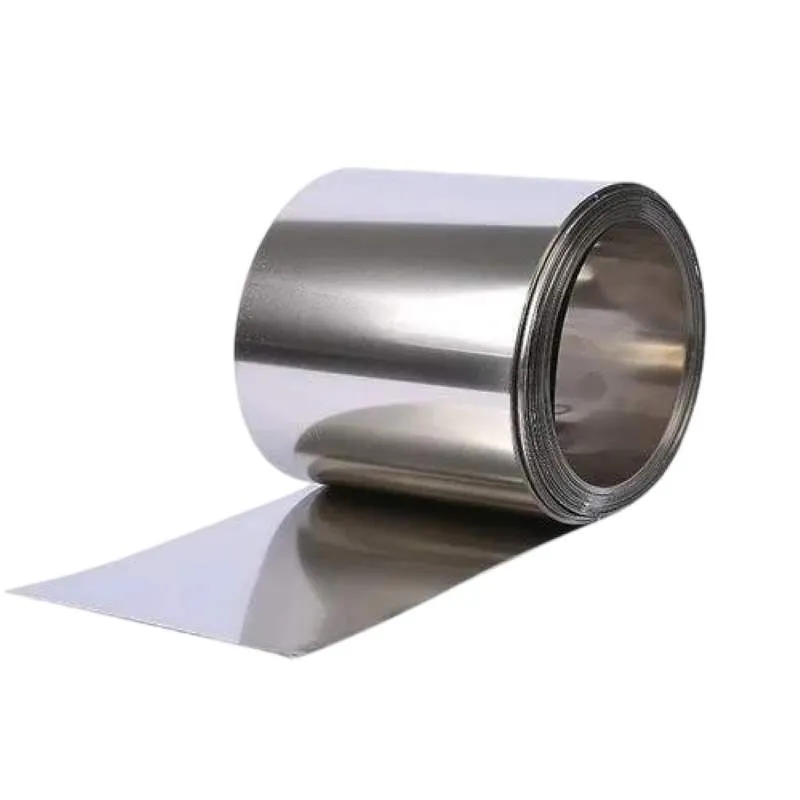
AISI 4042H Steel Capillary
Product Code : STI-AL-028-CU
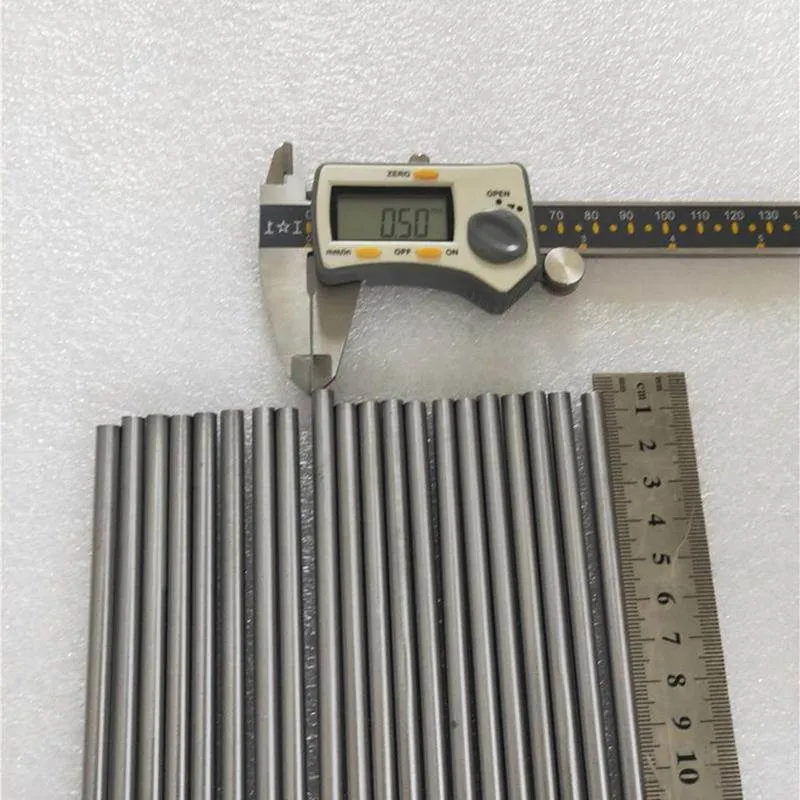
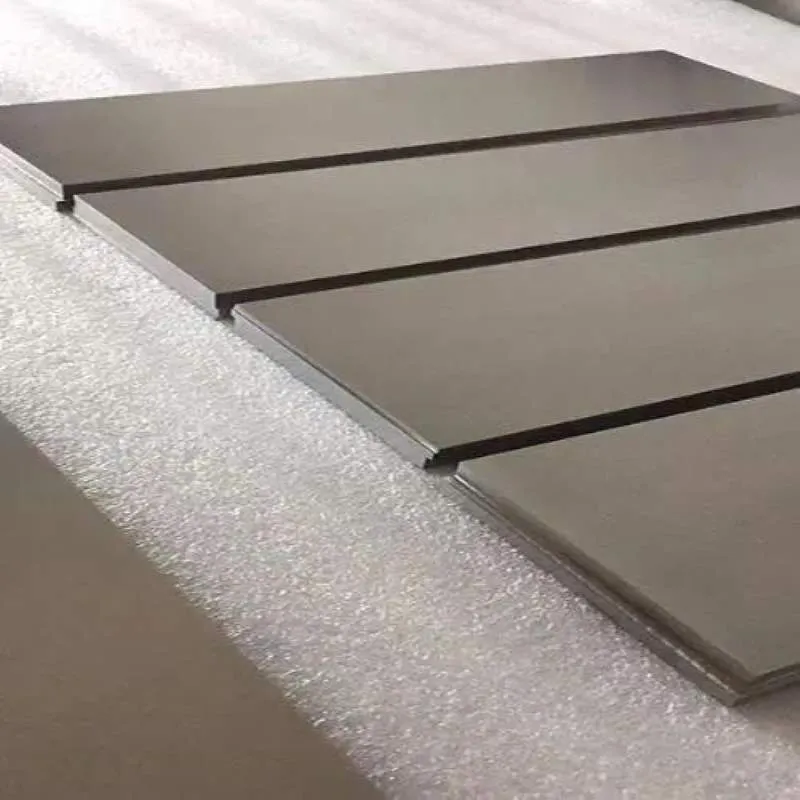
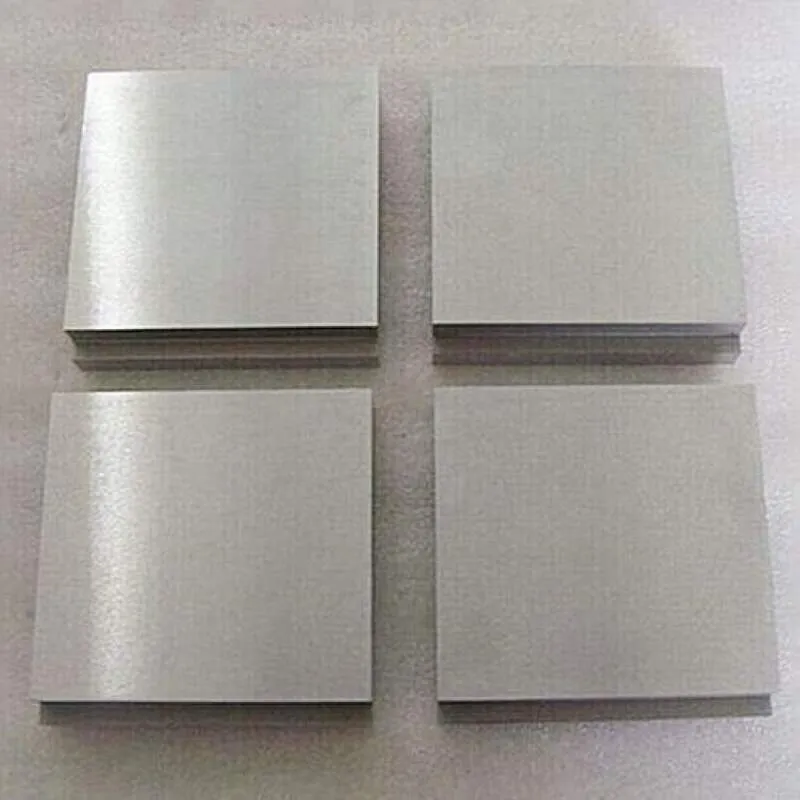
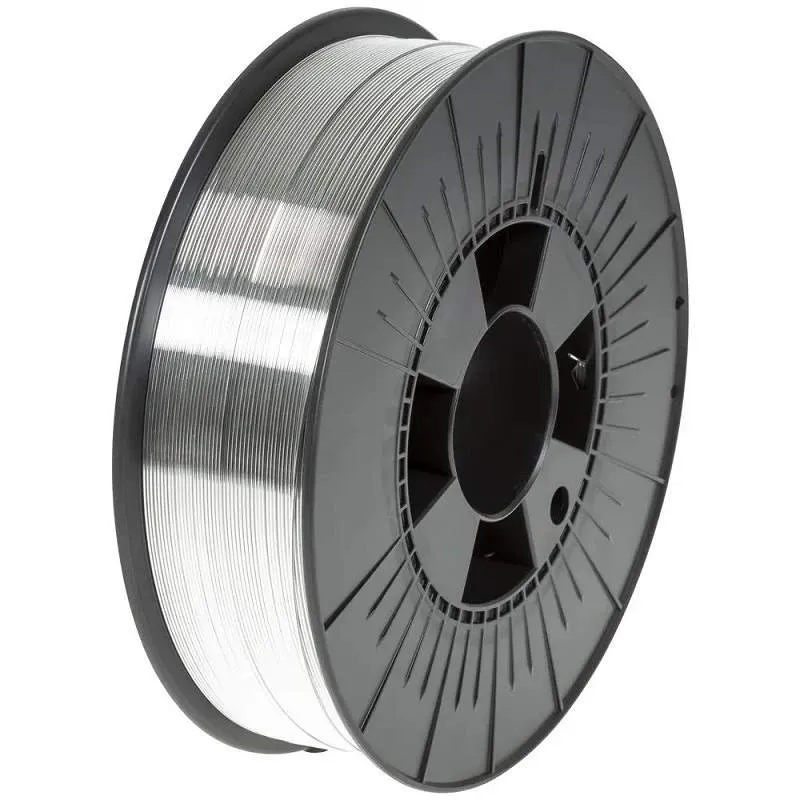
We provide AISI 4042H Steel Capillary is available in Bar (Round bar, Flat bar), Ribbon, Wire, Rods, Tube,Seamless Tube,Pipe, Ingots, Plate, Sheet, Strip and Forging Stock.,Purity, chemical composition, size, etc. can all be customized to meet specific requirements.
AISI 4042H Steel Capillary Product Information
-:-
For detailed product information, please contact sales.
-:
AISI 4042H Steel Capillary Synonyms
-:-
For detailed product information, please contact sales.
-:
AISI 4042H Steel Product Information
-:-
For detailed product information, please contact sales.
-:
# **Product Introduction: AISI 4042H Steel (Hardenability Controlled)**
## **Executive Summary**
**AISI 4042H** is a **hardenability-controlled, medium-high carbon molybdenum alloy steel** specifically engineered for applications demanding **predictable and consistent heat treatment response** across production batches and varying component geometries. As the H-grade variant of AISI 4042, this material is manufactured with **guaranteed hardenability bands** as determined by standardized end-quench (Jominy) testing, ensuring uniform mechanical properties after quenching and tempering. This performance-based specification system is particularly valuable for high-volume production of critical components in automotive, heavy equipment, and industrial machinery where heat treatment consistency directly impacts dimensional stability, fatigue performance, and manufacturing economics.
---
## **1. Chemical Composition & Hardenability Control Philosophy**
### **SAE J1268 Composition Ranges for Hardenability Control**
| Element | Content Range (% by weight) - **AISI 4042H** | Hardenability Control Function |
| :--- | :--- | :--- |
| **Carbon (C)** | 0.39 - 0.46 | **Primary hardenability control:** Wider range (0.39-0.46% vs. 0.40-0.45% for standard 4042) enables precise adjustment to achieve target Jominy curves and strength levels |
| **Molybdenum (Mo)** | 0.15 - 0.35 | **Secondary control element:** Expanded range (0.15-0.35% vs. 0.20-0.30%) allows fine-tuning of hardenability depth, temper resistance, and grain refinement |
| **Manganese (Mn)** | 0.60 - 1.00 | **Hardenability amplifier:** Broad range provides control over hardenability slope and quenching response |
| **Silicon (Si)** | 0.15 - 0.35 | Standard range; contributes to hardenability, solid solution strengthening, and deoxidation |
| **Phosphorus (P)** | 0.035 max | Impurity control for improved ductility and toughness |
| **Sulfur (S)** | 0.040 max | Impurity control (often specified ≤0.025% for improved transverse properties) |
| **Iron (Fe)** | Balance | Matrix element |
### **Hardenability Control Fundamentals**
The AISI 4042H specification represents a fundamental shift from **fixed chemical composition control** to **performance-based material engineering**:
1. **Chemistry Flexibility:** Elements are intentionally allowed to vary within specified bands to achieve guaranteed hardenability performance
2. **Performance Guarantee:** Primary specification is the **Jominy end-quench curve**, not fixed chemical percentages
3. **Production Optimization:** Steelmakers adjust chemistry within bands to optimize cost, processing efficiency, and material availability while maintaining identical hardenability
4. **Engineering Predictability:** Designers receive certified hardenability data for precise calculation of heat treatment parameters and mechanical property predictions
### **Key Distinctions from Standard AISI 4042**
| Parameter | AISI 4042 (Standard) | AISI 4042H (Hardenability Controlled) |
| :--- | :--- | :--- |
| **Specification Basis** | Fixed chemical composition | Guaranteed hardenability bands |
| **Chemistry Control** | Narrow, rigid limits | Broad, adjustable ranges |
| **Primary Documentation** | Chemical analysis certificate | Jominy test certificate with actual curve |
| **Heat Treatment Predictability** | Statistical, with variability | Guaranteed, consistent response |
| **Design Application** | General property estimates | Precise property calculation and prediction |
| **Economic Impact** | Variable scrap rates | Reduced, predictable manufacturing costs |
---
## **2. Physical & Mechanical Properties with Hardenability Guarantee**
### **A. Fundamental Physical Properties**
| Property | Condition | Value/Range | H-Grade Significance |
| :--- | :--- | :--- | :--- |
| **Density** | All conditions | 7.85 g/cm³ | Consistent despite allowable chemistry variations |
| **Elastic Modulus** | Tempered | 200-205 GPa | Predictable within hardenability band |
| **Thermal Conductivity** | 100°C | 42.0-43.0 W/m·K | Minor variation with chemistry within band |
| **Thermal Expansion Coefficient** | 20-100°C | 11.7-11.9 × 10⁻⁶/°C | Consistent for heat treatment planning |
| **Magnetic Properties** | Below Curie temp | Ferromagnetic | Standard for alloy steels |
| **Electrical Resistivity** | 20°C | 0.24-0.26 μΩ·m | Slight variation with chemistry |
### **B. Certified Hardenability Characteristics (Jominy Test)**
#### **Typical Hardenability Bands for AISI 4042H**
Each production lot includes actual Jominy test results with guaranteed minimum and maximum hardness values:
| Distance from Quenched End | Hardness Range (HRC) | Component Design Significance |
| :--- | :--- | :--- |
| **1/16" (1.6 mm)** | 44-50 | Surface hardness potential; critical for wear resistance |
| **1/4" (6.4 mm)** | 38-44 | Hardness at moderate depth; important for gear teeth and bearing surfaces |
| **1/2" (12.7 mm)** | 32-39 | Core hardness for case-hardened parts; determines bending strength |
| **1" (25.4 mm)** | 27-34 | Through-hardening capability for medium sections |
| **2" (50.8 mm)** | 22-29 | Maximum effective depth for property control in larger components |
#### **Critical Diameter Calculations from Hardenability Data**
- **Ideal Critical Diameter (DI):** 2.2-2.8 inches (56-71 mm) in oil quench
- **95% Martensite (D95):** 1.6-2.2 inches (41-56 mm) in fast oil
- **50% Martensite (D50):** 2.2-2.9 inches (56-74 mm) in fast oil
- **Maximum Effective Case Depth:** 1.6-2.2 mm achievable with optimized carburizing cycles
### **C. Mechanical Properties Based on Hardenability Data**
#### **1. As-Supplied (Annealed/Normalized) Condition**
- **Hardness:** 187-235 HB (controlled range for consistent machinability)
- **Tensile Strength:** 650-800 MPa
- **Yield Strength:** 480-650 MPa
- **Elongation:** 18-23%
- **Machinability:** 50-55% of B1112 (consistent due to controlled hardness and microstructure)
#### **2. Predicted Properties After Quenching & Tempering**
*Calculated from certified Jominy data, section size, and tempering temperature*
| Tempering Temperature | Hardness Range (HRC) | Tensile Strength Range | Impact Energy Range |
| :--- | :--- | :--- | :--- |
| **205°C (400°F)** | 48-53 | 1650-1800 MPa | 15-30 J |
| **425°C (800°F)** | 39-44 | 1300-1450 MPa | 30-50 J |
| **540°C (1000°F)** | 32-37 | 1100-1250 MPa | 45-70 J |
| **650°C (1200°F)** | 26-31 | 900-1050 MPa | 65-95 J |
**Engineering Note:** For specific components, exact properties can be calculated using: supplied Jominy curve × section size × tempering temperature × quenching severity.
#### **3. Case-Hardened Properties with Predictable Core**
*Using certified hardenability data for core property prediction*
| Parameter | Minimum Guaranteed | Typical Achievable | Optimization Potential |
| :--- | :--- | :--- | :--- |
| **Core Hardness** | 36 HRC | 38-42 HRC | Precise control via hardenability data |
| **Core Tensile Strength** | 950 MPa | 1000-1200 MPa | Predictable from Jominy curve |
| **Case Hardness** | 59 HRC | 61-64 HRC | Consistent with proper carburizing |
| **Bending Fatigue Strength** | +30% vs. standard | +35-45% improvement | Optimized through predictable core properties |
| **Contact Fatigue Life** | +25% vs. standard | +30-40% improvement | Enhanced by consistent microstructure |
### **D. Special Advantages of Hardenability Control**
1. **Predictable Distortion:** Uniform transformation minimizes warpage during quenching
2. **Consistent Machinability:** Controlled starting hardness ensures uniform tool wear and chip formation
3. **Optimized Heat Treatment:** Precise calculation of quenching parameters (time, agitation, temperature)
4. **Reduced Scrap Rates:** Minimized heat treatment-related rejections through predictability
5. **Enhanced Fatigue Performance:** Consistent microstructure improves reliability and service life
6. **Quality Documentation:** Each lot includes actual test data for process validation
---
## **3. International Standards & Specifications**
### **Primary Hardenability Standards**
| Standard/Organization | Designation | Title & Scope |
| :--- | :--- | :--- |
| **SAE International** | **SAE J1268** | Hardenability Bands for Carbon and Alloy H-Steels |
| **SAE International** | **SAE J1868** | Standard Hardness and Hardenability Requirements |
| **ASTM International** | **ASTM A304** | Steel Bars Subject to End-Quench Hardenability Requirements |
| **ASTM International** | **ASTM A29/A29M** | With H-grade supplement |
| **UNS** | **H40420** | Unified Numbering System for H-steels |
### **Hardenability Testing Standards**
| Standard | Test Method | Application to AISI 4042H |
| :--- | :--- | :--- |
| **ASTM A255** | End-Quench Hardenability Test | Mandatory for certification; provides actual curve |
| **ISO 642** | Steel - Hardenability test by end quenching | International equivalent for testing |
| **DIN 50191** | Jominy test (German standard) | European testing reference |
| **JIS G0561** | Hardenability test by end quenching | Japanese standard method |
### **International Equivalents - Conceptual Comparison**
*Note: The H-grade system is primarily a North American practice*
| Region | Similar Performance Concept | Production Method |
| :--- | :--- | :--- |
| **ISO** | **Hardenability steels per ISO 683-18** | Type designation system (not grade-for-grade) |
| **Europe** | **No direct H-equivalent** | EN standards specify composition, not H-bands |
| **Germany** | **No direct H-equivalent** | DIN standards are composition-based specifications |
| **Japan** | **Special quality steels** | May offer similar consistency but different system |
| **China** | **Can be produced to customer specs** | Not standardized in national specifications |
### **Industry-Specific Specifications**
| Industry | Typical Specification | Hardenability Requirements |
| :--- | :--- | :--- |
| **Automotive (Heavy-Duty)** | OEM-specific material specs | Tight bands for drivetrain and powertrain components |
| **Heavy Equipment** | Manufacturer engineering specs | Consistent properties for heavily loaded wear parts |
| **Industrial Gearing** | AGMA material specifications | Predictable hardening for gear teeth and roots |
| **Fastener Industry** | ASTM A574, SAE J429 Grade 10.9+ | Controlled hardening for high-strength fasteners |
| **General Engineering** | Customer-specific requirements | Documentation and consistency focus |
---
## **4. Product Applications & Economic Justification**
### **Product Forms Available**
- **Hot-Rolled Bars:** With certified hardenability data and guaranteed properties
- **Cold-Finished Bars:** Precision bars (turned, ground, polished) with hardenability certification
- **Forging Stock:** Billets with guaranteed through-hardening characteristics for forged components
- **Wire Rod:** For high-reliability fastener manufacturing requiring consistent heat treatment
- **Special Sections:** Custom profiles with hardenability guarantees
### **Primary Industry Applications**
#### **1. Automotive Components (Heavy-Duty & Commercial Vehicles)**
- **Transmission Components:** Heavy-duty gears, synchronizers, shift forks requiring consistent hardening
- **Drivetrain Parts:** Axle shafts, drive shafts for trucks and commercial vehicles
- **Steering Components:** Steering arms, pitman arms, idler arms for consistent performance
- **Engine Components:** Crankshafts, camshafts for medium to heavy-duty engines
- **Suspension Components:** Torsion bars, stabilizer bars requiring predictable properties
- **Economic Justification:** Reduced warranty claims, improved reliability, lower assembly line rejects
#### **2. Heavy Equipment & Construction Machinery**
- **Gearbox Components:** Transmission gears requiring reliable and consistent hardening
- **Final Drive Parts:** Planet gears, ring gears, drive shafts for excavators, loaders, bulldozers
- **Undercarriage Components:** Track pins, bushings, rollers requiring wear resistance
- **Implement Components:** PTO shafts, drive train elements for agricultural equipment
- **Economic Justification:** Extended service life, reduced downtime, lower maintenance costs
#### **3. Industrial Machinery & Equipment**
- **Power Transmission Gears:** Heavy-duty industrial gear applications requiring consistency
- **Shafting:** High-torque shafts requiring predictable properties and minimal distortion
- **Machine Tool Components:** Heavy-duty spindles, arbors, feed screws for CNC equipment
- **Hydraulic Components:** High-pressure cylinder rods, piston rods for hydraulic systems
- **Economic Justification:** Improved process capability, reduced inspection, better machine utilization
#### **4. Fastener & Special Component Manufacturing**
- **High-Strength Fasteners:** Grade 10.9, 12.9 bolts and studs requiring consistent heat treatment
- **Special Machined Parts:** Components with critical hardening requirements and tight tolerances
- **Bearing Components:** Heavy-duty bearing races, rollers requiring controlled hardening
- **Wear Parts:** Bushings, sleeves, liners in production quantities
- **Economic Justification:** Higher first-pass yield, reduced sorting, improved customer satisfaction
### **Economic Analysis: H-Grade vs. Standard Grade**
| Cost Factor | AISI 4042 (Standard) | AISI 4042H (H-Grade) | Net Impact |
| :--- | :--- | :--- | :--- |
| **Material Cost** | 1.0x (baseline) | 1.20-1.40x | **20-40% premium** |
| **Heat Treatment Scrap** | 5-12% | 1-4% | **4-11% reduction** |
| **Inspection Costs** | 1.0x | 0.3-0.5x | **50-70% reduction** |
| **Process Optimization** | Limited | Significant | **15-25% efficiency gain** |
| **Warranty/Field Failures** | Baseline | 40-60% reduction | **4-15% cost avoidance** |
| **Tooling/Machining** | 1.0x | 0.8-0.9x | **10-20% improvement** |
| **Total Cost Impact** | 1.0x | **0.88-1.05x** | **Typically cost-neutral or net savings** |
### **Return on Investment (ROI) Considerations**
- **Break-even Volume:** Typically achieved at 5,000-10,000 components annually
- **Payback Period:** 6-18 months for most production environments
- **Quality Metrics:** Improved Cp/Cpk, reduced PPM defect rates
- **Intangible Benefits:** Enhanced reputation, customer confidence, competitive advantage
---
## **5. Heat Treatment Technology with Hardenability Data**
### **A. Utilizing Certified Hardenability Information**
Each AISI 4042H lot provides specific engineering data enabling:
1. **Precise Quench Calculation:** Time, temperature, and agitation based on actual Jominy curve
2. **Property Prediction:** Accurate estimation of hardness, strength, and toughness at any point
3. **Distortion Prediction:** More reliable anticipation of dimensional changes during quenching
4. **Process Optimization:** Fine-tuning of all heat treatment parameters for specific geometries
5. **Quality Planning:** Statistical process control based on predictable material behavior
### **B. Standard Heat Treatment Guidelines**
#### **Through-Hardening Applications**
- **Austenitizing:** 810-825°C (1490-1515°F) - controlled based on hardenability data
- **Soak Time:** Calculated from section size and hardenability characteristics
- **Quenching Medium:** Fast oil (type and temperature selected based on Jominy data)
- **Quenching Parameters:** Agitation, time, temperature from hardenability calculations
- **Tempering:** Temperature and time based on required final properties
#### **Case Hardening Applications**
- **Carburizing/Nitriding:** Parameters optimized using hardenability data for core properties
- **Case Depth:** Determined based on predictable core hardness and strength
- **Quenching Method:** Selected to achieve desired case-core interface characteristics
- **Tempering:** Optimized for stress relief while maintaining required properties
### **C. Specialized Processes Enabled by Hardenability Control**
1. **Press Quenching:** Precise calculation of force, time, and temperature parameters
2. **Induction Hardening:** Accurate prediction of hardened depth and pattern
3. **Austempering:** Reliable process design for bainitic transformation
4. **Martempering:** Optimized parameters for minimal distortion in complex shapes
5. **Selective Hardening:** Precise control of hardened zones in multi-property components
### **D. Quality Assurance in Heat Treatment**
- **Reduced Testing:** Statistical sampling vs. 100% inspection
- **Process Validation:** Easier validation and documentation of heat treatment procedures
- **Traceability:** Complete material-to-process-to-property documentation
- **Consistency:** Batch-to-batch repeatability in final properties
- **Predictive Maintenance:** Better scheduling of furnace maintenance based on consistent loads
### **E. Computational Heat Treatment Design**
Using hardenability data with:
- **Finite Element Analysis (FEA):** Predict temperature distribution and transformation
- **Computational Fluid Dynamics (CFD):** Optimize quench tank design and agitation
- **Digital Twins:** Virtual simulation of entire heat treatment process
- **Machine Learning:** Optimization of parameters for specific component geometries
---
## **6. Design & Engineering with Hardenability Data**
### **A. Engineering Advantages**
1. **Predictable Properties:** Eliminates conservative over-design and safety factor stacking
2. **Optimized Sections:** Design to maximum effective hardening depth without guesswork
3. **Reduced Safety Factors:** Material consistency allows use of smaller design margins
4. **Reliable Performance:** Consistent behavior in service enables accurate life prediction
5. **Integrated Design:** Concurrent engineering of component geometry and heat treatment
### **B. Design Methodology Using Hardenability Data**
**Systematic Engineering Approach:**
1. **Define Requirements:** Performance specs, loading conditions, service environment
2. **Select Material:** AISI 4042H based on required strength, hardness, and consistency needs
3. **Design Geometry:** Component shape considering predictable heat treatment response
4. **Calculate Heat Treatment:** Using supplied Jominy data for specific section sizes
5. **Predict Properties:** Final hardness, strength, toughness at all critical locations
6. **Validate Design:** Finite element analysis with actual material properties
7. **Optimize:** Iterative refinement based on predictable material behavior
### **C. Section Size Guidelines Based on Hardenability**
| Component Type | Maximum Effective Diameter | Hardenability Consideration |
| :--- | :--- | :--- |
| **Small Precision Parts** | ≤35 mm (1.4") | Full hardening with predictable properties |
| **Medium Components** | 35-65 mm (1.4-2.6") | Excellent through-hardening control |
| **Large Components** | 65-75 mm (2.6-3.0") | Predictable properties with proper design |
| **Case-Hardened Parts** | Any practical size | Core properties precisely predictable |
| **Complex Geometries** | Variable sections | Predictable response in different sections |
### **D. Economic Design Optimization**
- **Material Reduction:** Smaller sections and lighter designs possible due to predictability
- **Process Simplification:** Reduced need for complex or multiple heat treatments
- **Quality Integration:** Design for manufacturability with known material behavior
- **Lifecycle Cost:** Improved reliability reduces total cost of ownership
- **Warranty Optimization:** Predictable performance enables better warranty planning
### **E. Failure Analysis and Prevention**
- **Predictable Failure Modes:** Known material behavior enables proactive design
- **Root Cause Analysis:** Consistent material eliminates one major variable
- **Preventive Design:** Address potential issues during design phase
- **Reliability Engineering:** Accurate life prediction and maintenance scheduling
---
## **7. Manufacturing & Quality Assurance**
### **A. Machinability with Hardenability Control**
- **Consistent Starting Condition:** Controlled hardness and microstructure ensure uniform machining
- **Predictable Tool Wear:** Consistent material behavior allows accurate tool life prediction
- **Reduced Variability:** Less adjustment of machining parameters between batches
- **Quality Improvement:** More consistent final dimensions, surface finish, and geometry
- **Optimized Parameters:** CNC programs optimized for predictable material response
### **B. Quality Assurance Advantages**
**For Manufacturers:**
- Reduced incoming material testing and inspection
- Fewer in-process quality checks and adjustments
- Lower final inspection requirements and costs
- Improved statistical process control capability
- Better utilization of quality resources
**For End Users/Assemblers:**
- Consistent component performance and fit
- Reduced assembly line adjustments and rework
- Lower failure rates during testing and service
- Extended service life and maintenance intervals
- Reduced spare parts inventory requirements
### **C. Documentation & Traceability**
Each AISI 4042H shipment includes comprehensive documentation:
1. **Certified Jominy Curve:** Actual test data with heat/lot identification
2. **Chemical Analysis:** Actual composition within specified bands
3. **Mechanical Properties:** As-supplied condition test results
4. **Heat Treatment Guidelines:** Recommended parameters for common applications
5. **Traceability Information:** Complete production history from melt to final product
6. **Quality Certificates:** Compliance with relevant standards and specifications
7. **Additional Data:** Microstructure photos, inclusion ratings when specified
### **D. Statistical Process Control (SPC) Integration**
- **Predictable Input:** Consistent material enables tighter process control
- **Reduced Variation:** Less material-related variability in manufacturing processes
- **Improved Capability:** Higher Cp/Cpk values for critical dimensions and properties
- **Early Warning:** Material consistency makes process issues easier to detect
- **Continuous Improvement:** Better data for process optimization initiatives
---
## **8. Comparative Analysis**
### **Technical Comparison: H-Grade vs. Standard Grade**
| Parameter | AISI 4042 (Standard) | AISI 4042H (Hardenability) | Advantage |
| :--- | :--- | :--- | :--- |
| **Specification Basis** | Chemical composition | Hardenability performance | Performance-based design |
| **Chemistry Control** | Tight, fixed limits | Broad, adjustable ranges | Manufacturing flexibility |
| **Heat Treatment Predictability** | Statistical, variable | Guaranteed, consistent | Reduced variability |
| **Design Utility** | Estimated properties | Calculated properties | Precision engineering |
| **Production Impact** | Variable scrap rates | Reduced, predictable scrap | Cost control |
| **Quality Assurance** | Extensive testing | Reduced testing required | Efficiency |
| **Documentation** | Basic certs | Comprehensive data package | Traceability |
### **Application Suitability Analysis**
| Application Type | Standard 4042 Recommendation | 4042H Recommendation | Rationale |
| :--- | :--- | :--- | :--- |
| **Prototype/R&D** | Preferred | Not typically needed | Flexibility important |
| **Low Volume Production** | Usually adequate | Only if critical | Cost vs. benefit |
| **Medium Volume Production** | Acceptable with controls | Recommended | Balance of cost and consistency |
| **High Volume Production** | Risk of variability | Strongly recommended | Economic justification |
| **Critical/Safety Components** | Not recommended | Required | Reliability paramount |
| **Cost-Sensitive Applications** | Preferred | Only if justified | Initial cost consideration |
| **Precision Components** | Marginal | Recommended | Dimensional stability |
### **Competitive Position in Material Selection**
| Material Option | Strength Range | Consistency | Cost Factor | Best For |
| :--- | :--- | :--- | :--- | :--- |
| **AISI 4042H** | High | Excellent | 1.2-1.4x | Quality-critical production |
| **AISI 4140H** | Similar | Excellent | 1.3-1.5x | Similar with chromium |
| **AISI 4340H** | Higher | Excellent | 1.8-2.2x | Maximum toughness needs |
| **Standard 4042** | High | Variable | 1.0x | Cost-sensitive applications |
| **Case-Hardening Grades** | Surface only | Variable | 0.9-1.1x | Wear-focused applications |
---
## **9. Technical Summary & Selection Guidelines**
### **When to Specify AISI 4042H**
**Technical Justifications:**
1. Components requiring consistent and predictable heat treatment response
2. Applications where dimensional stability during hardening is critical
3. Production environments with significant heat treatment volumes
4. Safety-critical or high-reliability applications with severe consequences of failure
5. Components with challenging geometries or section size variations
6. Applications requiring precise control of mechanical properties
**Economic Justifications:**
1. High-volume production where scrap reduction justifies material premium
2. Applications with historically high heat treatment rejection rates
3. Components requiring expensive post-heat treatment machining or grinding
4. Products with significant warranty or liability costs related to failures
5. Manufacturing operations with tight quality standards and customer requirements
6. Applications where consistent quality provides competitive advantage
### **Selection Decision Framework**
```
Start: Component Requirements Analysis
↓
Criticality Assessment → Safety-Critical → Must Use 4042H
↓ ↓
Performance-Critical Documented
↓ ↓
Volume Assessment → High Volume → Recommend 4042H
↓ ↓
Medium Volume Consider Total Cost
↓ ↓
Cost Sensitivity → High → Use Standard 4042
↓ ↓
Low Analyze ROI
↓ ↓
Quality Requirements → High → Favorable → Use 4042H
↓ ↓
Low Unfavorable
↓ ↓
Use Standard 4042 Use Standard 4042
```
### **Procurement Specifications for 4042H**
When ordering AISI 4042H, specify clearly:
1. **Grade Designation:** AISI 4042H (UNS H40420)
2. **Hardenability Band:** Specific band requirements if applicable
3. **Certification:** SAE J1268 compliance with actual Jominy data
4. **Additional Chemistry Limits:** Any special restrictions beyond standard bands
5. **Testing Requirements:** Standard or additional mechanical/microstructural tests
6. **Documentation:** Type and format of test reports and certificates
7. **Traceability:** Heat/lot identification and tracking requirements
8. **Packaging:** Special handling or protective packaging needs
9. **Marking:** Identification marking on material
10. **Additional Requirements:** Any special processing or quality requirements
### **Supplier Qualification Criteria**
- **Steelmaking Capability:** Electric furnace with ladle metallurgy preferred
- **Hardenability Experience:** Proven track record with H-grade production
- **Testing Facilities:** In-house Jominy testing and full mechanical test capabilities
- **Quality Systems:** ISO 9001, IATF 16949, or equivalent certifications
- **Technical Support:** Engineering support for application development
- **Traceability Systems:** Robust material tracking from melt to shipment
### **Receiving Inspection Recommendations**
1. Verify all documentation matches purchase order requirements
2. Check material identification against certificates
3. Perform dimensional checks on sample material
4. Conduct hardness tests to verify as-supplied condition
5. Document all findings and maintain records for traceability
6. Report any discrepancies immediately to supplier
---
## **10. Future Trends & Industry Developments**
### **Technological Advancements**
1. **Digital Integration:** Hardenability data integration with Industry 4.0 and digital manufacturing systems
2. **Predictive Modeling:** AI and machine learning for optimization of heat treatment using Jominy data
3. **Advanced Processing:** New quenching technologies (high-pressure gas, fluidized bed) leveraging hardenability information
4. **Material Informatics:** Comprehensive databases correlating hardenability with performance in specific applications
5. **Additive Manufacturing:** Development of powders with controlled hardenability characteristics for 3D printing
6. **Smart Heat Treatment:** IoT-enabled furnaces using real-time data for process adjustment
### **Industry Trends**
- **Increased Adoption:** Growing use in quality-critical industries beyond automotive
- **Global Harmonization:** Movement toward international standardization of H-grade systems
- **Supply Chain Integration:** Closer collaboration between steel producers, heat treaters, and component manufacturers
- **Sustainability Focus:** Reduced scrap, energy conservation, and improved lifecycle efficiency
- **Digital Thread:** Complete digital traceability from material production to component service life
- **Customization:** Tailored hardenability bands for specific applications and customers
### **Research & Development Directions**
1. **Microstructural Prediction:** Advanced correlations between Jominy data and final microstructure
2. **Property Modeling:** Enhanced prediction of mechanical properties beyond hardness
3. **Process Innovation:** New heat treatment methods specifically designed for H-grade materials
4. **Alloy Development:** Next-generation H-grades with improved combinations of properties
5. **Testing Advancements:** Faster, more comprehensive hardenability assessment methods
6. **Sustainability:** Development of more environmentally friendly production methods for H-grades
### **Market Evolution**
- **Expanding Applications:** From traditional automotive to aerospace, energy, and medical sectors
- **Global Supply Chains:** Increased availability of H-grade materials in emerging markets
- **Quality Standards:** Rising customer expectations driving adoption of performance-based specifications
- **Economic Factors:** Cost pressures favoring materials that reduce total manufacturing cost
- **Regulatory Influences:** Safety and environmental regulations promoting consistent, reliable materials
### **Educational & Training Needs**
- **Engineering Education:** Increased focus on performance-based material specification
- **Technical Training:** Specialized programs for heat treaters working with H-grade materials
- **Industry Standards:** Development of best practices for design and manufacturing with H-grades
- **Knowledge Management:** Systems for capturing and disseminating H-grade application knowledge
---
**AISI 4042H** represents a fundamental advancement in materials engineering—shifting from chemical composition control to performance-based specification. By guaranteeing hardenability characteristics through certified Jominy testing, this material provides manufacturers with unprecedented control over heat treatment outcomes, dimensional stability, and final component properties. While commanding a modest premium over standard grades, AISI 4042H delivers substantial value through reduced manufacturing variability, improved quality consistency, enhanced reliability, and optimized production economics.
For applications where heat treatment consistency directly impacts product performance, manufacturing efficiency, or end-user satisfaction, AISI 4042H offers a compelling technical and economic solution. It enables precision engineering, predictable manufacturing, and reliable performance in demanding applications across automotive, heavy equipment, industrial machinery, and other quality-critical sectors.
The specification of AISI 4042H represents not just a material selection, but a strategic decision to embrace performance-based engineering, quality-focused manufacturing, and total cost optimization. As industries continue to demand higher performance, greater reliability, and improved efficiency, materials like AISI 4042H that provide predictable, consistent properties will play an increasingly important role in advanced manufacturing and engineering design.
-:-
For detailed product information, please contact sales.
-:
AISI 4042H Steel Specification
Dimensions
Size:
Diameter 20-1000 mm Length <4026 mm
Size:We can customized as required
Standard:
Per your request or drawing
We can customized as required
Properties(Theoreti
Applications of AISI 4042H Steel Capillary
-:-
For detailed product information, please contact sales.
-:
Chemical Identifiers AISI 4042H Steel Capillary
-:-
For detailed product information, please contact sales.
-:
Packing of AISI 4042H Steel Capillary
-:-
For detailed product information, please contact sales.
-:
Standard Packing:
-:-
For detailed product information, please contact sales.
-:
Typical bulk packaging includes palletized plastic 5 gallon/25 kg. pails, fiber and Steel Capillary drums to 1 ton super sacks in full container (FCL) or truck load (T/L) quantities. Research and sample quantities and hygroscopic, oxidizing or other air sensitive materials may be packaged under argon or vacuum. Solutions are packaged in polypropylene, plastic or glass jars up to palletized 497 gallon liquid totes Special package is available on request. E FORUs’ is carefully handled to minimize damage during storage and transportation and to preserve the quality of our products in their original condition