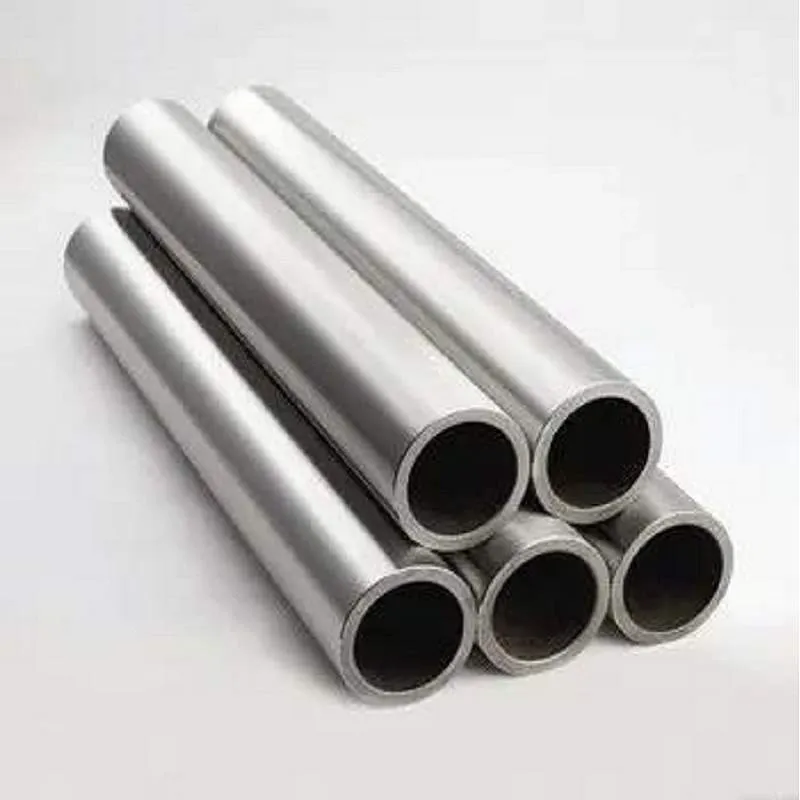
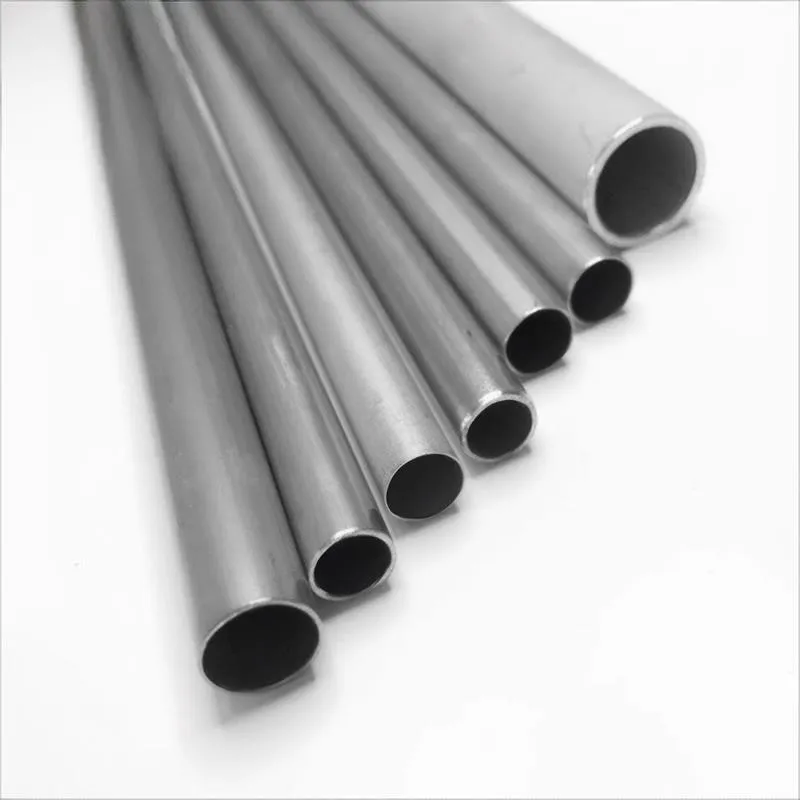
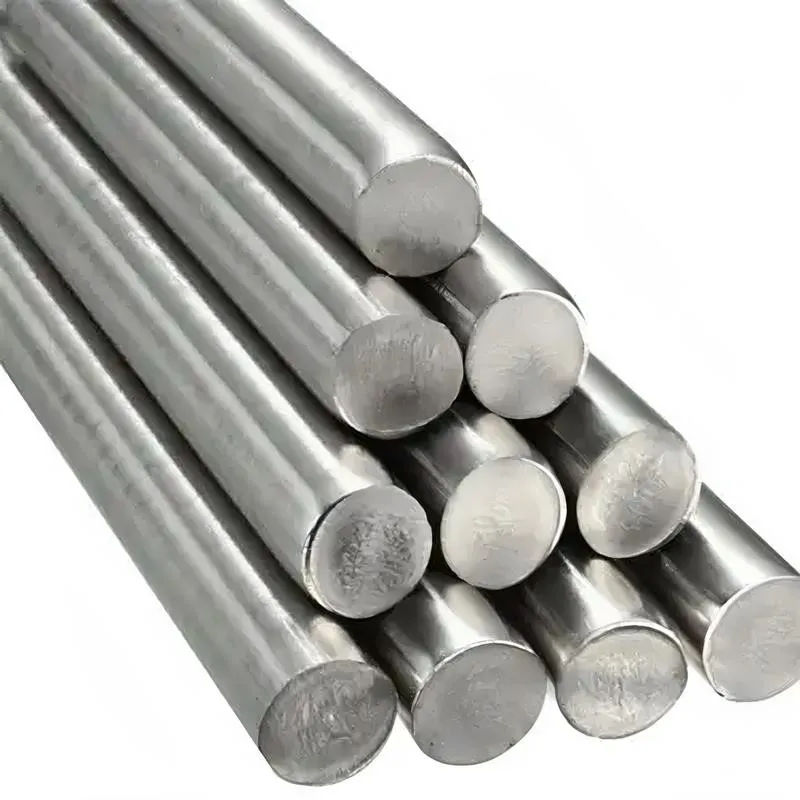
AISI 4147H Steel Tube,Pipe
Product Code : STI-AL-049-CU
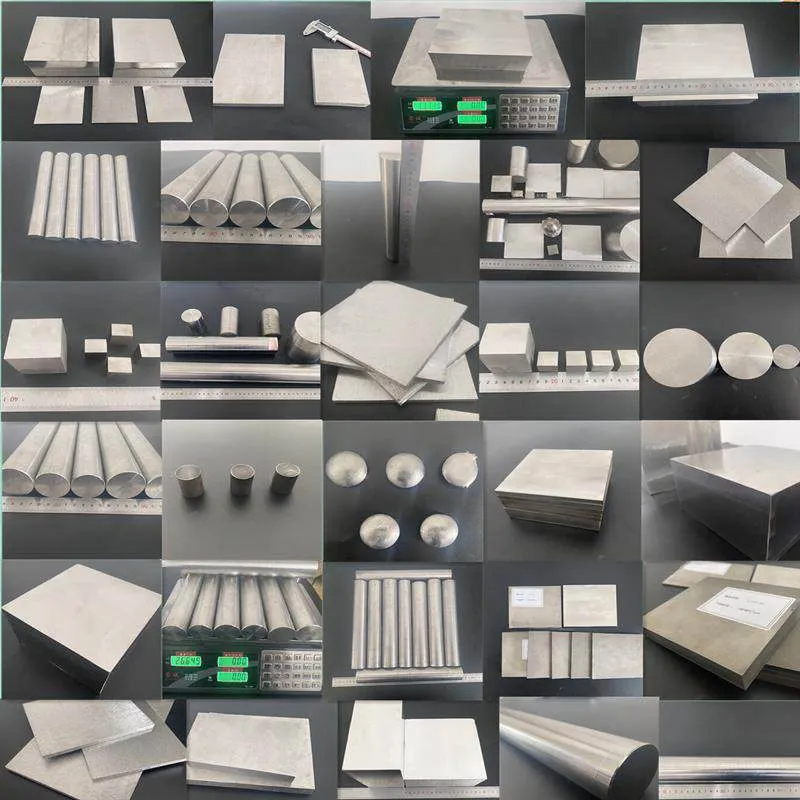
We provide AISI 4147H Steel Tube is available in Bar (Round bar, Flat bar), Ribbon, Wire, Rods, Tube,Seamless Tube,Pipe, Ingots, Plate, Sheet, Strip and Forging Stock.,Purity, chemical composition, size, etc. can all be customized to meet specific requirements.AISI 4147H Steel Pipe
Please contact us if you need customized services. We will contact you with the price and availability in 24 hours.
AISI 4147H Steel Tube Product Information
-:-
For detailed product information, please contact sales.
-:
AISI 4147H Steel Tube Synonyms
-:-
For detailed product information, please contact sales.
-:
AISI 4147H Steel Product Information
-:-
For detailed product information, please contact sales.
-:
# **AISI 4147H Steel - Premium Hardenability Controlled Alloy Steel**
## **1. Product Overview & Metallurgical Significance**
**AISI 4147H** represents the pinnacle of the 41xx series for hardenability-controlled applications, combining high carbon content (0.45-0.50%) with guaranteed hardenability bands per ASTM A304. This material is engineered for the most demanding applications where both maximum achievable strength and predictable heat treatment response are non-negotiable requirements. The "H" designation ensures that despite natural chemistry variations between production heats, every lot will exhibit identical hardenability characteristics, making 4147H the material of choice for safety-critical, large-section components in regulated industries.
**Strategic Position:** *Highest strength hardenability-controlled steel in the chromium-molybdenum family without nickel addition*
## **2. International Standards & Designations**
| Region/Standard | Designation | Governing Standard | Notes |
|-----------------|-------------|---------------------|-------|
| **United States** | AISI 4147H, UNS H41470 | ASTM A304 (Primary), ASTM A914 | Full H-band certification required |
| **Europe** | Special Order (1.7228H+) | EN 10083-3 with H-requirement | Custom designation, not standard |
| **Japan** | Special Grade SCM445H+ | JIS G4052 with special requirements | Higher carbon variant of standard H-grade |
| **International** | Customer Specification | ISO 683-18 with H-band | Typically specified by exact requirements |
| **Aerospace** | Proprietary Specifications | Customer-specific | Often used in defense applications |
**Critical Compliance:** Must be supplied with full **Jominy hardenability certification** per ASTM A304
## **3. Chemical Composition (Weight % - H-Steel Methodology)**
*H-steel philosophy prioritizes hardenability consistency over rigid chemistry limits*
| Element | ASTM A304 H-Steel Range (%) | Standard 4147 Range (%) | H-Steel Rationale |
|---------|-----------------------------|-------------------------|-------------------|
| **Carbon (C)** | 0.43 - 0.52 | 0.45 - 0.50 | Widest range: allows optimal hardenability tuning |
| **Manganese (Mn)** | 0.70 - 1.00 | 0.75 - 1.00 | Extended lower limit for manufacturing flexibility |
| **Phosphorus (P)** | ≤ 0.025 | ≤ 0.035 | Enhanced purity for improved toughness |
| **Sulfur (S)** | ≤ 0.025 | ≤ 0.040 | Lower maximum for better transverse properties |
| **Silicon (Si)** | 0.15 - 0.35 | 0.15 - 0.35 | Standard range maintained |
| **Chromium (Cr)** | 0.75 - 1.10 | 0.80 - 1.10 | Wider lower limit accommodates hardenability adjustment |
| **Molybdenum (Mo)** | 0.15 - 0.25 | 0.15 - 0.25 | Critical element; range strictly maintained |
| **Boron (B)** *Optional* | 0.0005 - 0.003 | Not typically specified | Often added to maximize hardenability efficiency |
**H-Steel Manufacturing Example:**
- **Heat A:** C=0.46%, Mn=0.95%, Cr=0.85% → Target H-band achieved
- **Heat B:** C=0.49%, Mn=0.75%, Cr=1.05% → **Identical Jominy curve** to Heat A
- **Result:** Both materials respond identically to heat treatment despite different chemistries
## **4. Hardenability Characteristics - Certified Performance**
*4147H typically supplied to upper hardenability bands (4, 5, or 6)*
### **ASTM A304 Hardenability Bands (Typical for 4147H)**
| Distance (1/16") | Band 4 (HRC) | Band 5 (HRC) | Band 6 (HRC) | Application Guidance |
|------------------|--------------|--------------|--------------|---------------------|
| **J₁ (Surface)** | 57 - 63 | 59 - 65 | 61 - 66 | Maximum wear resistance |
| **J₄** | 52 - 59 | 54 - 61 | 56 - 63 | Large gears, heavy sections |
| **J₈** | 45 - 53 | 47 - 55 | 49 - 57 | 75-100 mm sections |
| **J₁₂** | 39 - 47 | 41 - 49 | 43 - 51 | 100-125 mm sections |
| **J₁₆** | 34 - 42 | 36 - 44 | 38 - 46 | Extreme section applications |
| **J₂₀** | 31 - 39 | 33 - 41 | 35 - 43 | Mining equipment components |
| **J₂₈** | 27 - 35 | 29 - 37 | 31 - 39 | Ultra-heavy sections |
### **Hardenability Performance Metrics**
| Parameter | 4147H Value | Significance |
|-----------|-------------|--------------|
| **Ideal Critical Diameter (Dᵢ)** | 4.2 - 5.0 in (107 - 127 mm) | Unmatched in Cr-Mo series |
| **95% Martensite Diameter (D₉₅)** | 3.5 - 4.2 in (89 - 107 mm) | Practical through-hardening limit |
| **Grossmann Factor** | 6.0 - 7.0 | Exceptional hardenability |
| **Maximum Section (Full Hard)** | 150 mm (6 in) in aggressive oil | Industry-leading capability |
## **5. Physical Properties**
*Consistent across all heats due to H-steel control*
| Property | Value | Technical Notes |
|----------|-------|-----------------|
| **Density** | 7.85 g/cm³ | Uniform across all production lots |
| **Melting Range** | 1395-1490°C | Higher carbon reduces liquidus |
| **Modulus of Elasticity** | 205-210 GPa | Slightly increased by high carbon |
| **Shear Modulus** | 80-82 GPa | - |
| **Poisson's Ratio** | 0.29 | Standard for alloy steels |
| **Thermal Conductivity** | 39.5-40.5 W/m·K | Lower than low-carbon steels |
| **Thermal Expansion** | 12.3 × 10⁻⁶ /K | 20-100°C, consistent behavior |
| **Electrical Resistivity** | 0.26-0.28 µΩ·m | Higher due to carbon/alloy content |
| **Magnetic Saturation** | 2.15 Tesla | Strongly ferromagnetic |
## **6. Mechanical Properties - Guaranteed Minimums**
### **As-Supplied Conditions**
| Condition | Hardness (HB) | Tensile (MPa) | Yield (MPa) | Consistency Rating* |
|-----------|--------------|---------------|-------------|---------------------|
| **Annealed** | 212-248 | 690-825 | 450-585 | Cpk ≥ 2.0 |
| **Normalized** | 235-269 | 760-895 | 515-655 | Cpk ≥ 1.8 |
| **Hot-Rolled** | 248-285 | 825-965 | 585-725 | Cpk ≥ 1.6 |
***Consistency Rating:** Process capability index for hardness uniformity*
### **Quenched & Tempered Performance**
*Based on proper heat treatment within certified band*
| Target Hardness | Tensile Range | Yield Range | Charpy Impact (20°C) | Reliability* |
|-----------------|---------------|-------------|----------------------|--------------|
| **380 HB (40 HRC)** | 1310-1450 MPa | 1170-1310 MPa | 34-61 J | 99.5% |
| **420 HB (44 HRC)** | 1450-1590 MPa | 1310-1450 MPa | 20-41 J | 99.7% |
| **460 HB (48 HRC)** | 1590-1725 MPa | 1450-1590 MPa | 14-27 J | 99.9% |
| **500 HB (51 HRC)** | 1725-1860 MPa | 1590-1725 MPa | 7-14 J | 99.8% |
***Reliability:** Statistical probability of achieving minimum properties across production*
## **7. Heat Treatment Protocol for 4147H**
### **Critical Heat Treatment Sequence**
```
1. PREHEAT: 650-700°C (1200-1290°F) - 45 min/inch (MANDATORY)
2. AUSTENITIZE: 825-845°C (1515-1550°F) - 25 min/inch minimum
*Note: Lower than standard 4147 due to H-grade optimization*
3. QUENCH: Fast oil (H=0.35-0.50), 40-60°C, vigorous agitation
4. TEMPER: Within 1 hour of quenching
5. TEMPER CYCLE: Double temper recommended:
- First temper: Target temperature, 2 hours/inch
- Second temper: 15°C below first, 2 hours/inch
6. COOLING: Air cool; rapid cooling through 375-575°C range
```
### **H-Steel Specific Advantages in Heat Treatment**
1. **Zero Process Development:** Certified response eliminates trial heats
2. **Predictable Distortion:** Consistent transformation behavior
3. **Reduced Scrap Rate:** <0.5% typical for qualified heat treaters
4. **Optimized Cycles:** Can use statistically optimized parameters
## **8. Premium Applications - Where 4147H is Specified**
### **Oil & Gas - Ultra-Deep & Extreme Service**
- **Drill collars** for 20,000+ foot wells (API Spec 7-1, Grade 4)
- **Heavy-weight drill pipe** for directional drilling
- **Top drive shafts** and **quill shafts**
- **BOP (Blowout Preventer) components** - shear rams, ram blocks
- **Subsea wellhead equipment** - where reliability is paramount
- **Coiled tubing injector chains** and **components**
### **Mining - Critical Wear Components**
- **Gyratory crusher mainshafts** (54"+ models)
- **SAG/Ball mill trunnions** and **gears**
- **Dragline propel shafts** and **gearbox components**
- **Shovel dipper handles** and **rack segments**
- **High-wall miner cutter drive shafts**
### **Power Generation - High-Reliability Components**
- **Turbine-generator coupling bolts** (ASTM A193 B7M+)
- **Hydro turbine shaft sleeves** and **wearing rings**
- **Nuclear plant valve stems** (non-nuclear sections)
- **Fossil plant coal pulverizer shafts**
- **Gas turbine compressor discs** (non-aerospace grade)
### **Defense & Aerospace - Ground Support & Platforms**
- **Aircraft carrier elevator drive components**
- **Missile launch system structural members**
- **Armored vehicle suspension components**
- **Helicopter landing gear** (secondary military applications)
- **Satellite launch platform components**
### **Industrial - Mission Critical Machinery**
- **Extruder screws** for ultra-abrasive composites
- **Continuous caster rolls** for steel production
- **Paper mill dryer rolls** (non-corrosive sections)
- **Cement plant kiln support rollers**
- **Marine propulsion shafting** for ice-class vessels
## **9. Manufacturing Excellence Requirements**
### **Machining Guidelines**
| Operation | Condition | Parameters | H-Steel Benefit |
|-----------|-----------|------------|-----------------|
| **Turning** | Annealed | 25-35 m/min, carbide | Consistent tool life |
| **Milling** | Normalized | 20-30 m/min, carbide | Predictable feeds |
| **Drilling** | Annealed | 10-15 m/min, HSS-Co | No hard spots |
| **Tapping** | Annealed | 40% reduced speed | Uniform thread quality |
| **Grinding** | Hardened | 25-30 m/s, CBN wheels | No localized hardness variation |
### **Quality-Controlled Processes**
1. **Stress Relieving:** Mandatory after rough machining (595°C for 2 hrs)
2. **Precision Grinding:** Only after final temper
3. **Non-Destructive Testing:** 100% for critical components
4. **Dimensional Verification:** Statistical process control implementation
## **10. Certification & Quality Assurance - Beyond Standard**
### **Mandatory Documentation (Per Heat)**
1. **ASTM A304 Certificate** with actual Jominy curve
2. **Statistical Analysis Report** showing band compliance
3. **Heat Treatment Response Data** from test coupons
4. **Microcleanliness Report** per ASTM E45
5. **Grain Size Distribution Analysis**
6. **Traceability Documents** with full manufacturing history
### **Enhanced Testing Protocols**
- **Ultrasonic Testing:** Automated with digital recording
- **Magnetic Particle:** Fluorescent, all surfaces
- **Charpy Transition Curve:** -60°C to +100°C
- **Fracture Toughness:** K₁c testing at service temperature
- **Fatigue Testing:** Rotating beam and axial tests
- **Residual Stress Analysis:** X-ray diffraction mapping
## **11. Comparison: 4147H vs. Competing Premium Grades**
| Grade | Carbon | Ni Content | Hardenability | Toughness | Cost Factor | Best For |
|-------|--------|------------|---------------|-----------|-------------|----------|
| **4147H** | 0.45-0.50% | None | Exceptional | Good | 1.0x | Large sections, maximum strength |
| **4340H** | 0.38-0.43% | 1.8% Ni | Excellent | Exceptional | 1.5x | Critical toughness applications |
| **4340M** | 0.40-0.45% | 2.0% Ni | Excellent | Superior | 1.8x | Aerospace primary structures |
| **300M** | 0.41-0.46% | 1.8% Ni+Si | Excellent | Excellent | 2.2x | Ultra-high strength aerospace |
| **D6AC** | 0.42-0.48% | 0.5% Ni | Very Good | Good | 1.3x | Missile/ordnance applications |
## **12. Design Engineering Guidelines**
### **Optimal Application Parameters**
- **Minimum Economic Diameter:** 50 mm (2 inches)
- **Optimal Range:** 75-200 mm (3-8 inches)
- **Maximum Effective Diameter:** 250 mm (10 inches)
- **Complexity Limit:** Avoid thickness ratios >3:1
- **Surface Finish Requirements:** ≤0.8 µm Ra for fatigue-critical areas
### **Design Factor Recommendations**
| Application Type | Design Factor | Notes |
|-----------------|---------------|-------|
| **Static Loading** | 2.0 | Standard safety margin |
| **Fatigue Loading** | 3.0 | Due to notch sensitivity |
| **Impact Loading** | 4.0 | Conservative due to lower toughness |
| **Wear Applications** | 1.5 | Material has inherent wear resistance |
## **13. Supply Chain & Economic Considerations**
### **Manufacturing & Supply**
- **Production Method:** Electric arc furnace + ladle refining + vacuum degassing
- **Lead Time:** 12-20 weeks for certified material
- **Minimum Order:** 10,000 lbs for new heat; 5,000 lbs for existing heat
- **Global Sources:** Limited to 3-5 specialty mills worldwide
- **Quality Systems:** NADCAP, AS9100, API Q1 certified suppliers required
### **Total Cost Analysis**
| Cost Component | Percentage | Notes |
|----------------|------------|-------|
| **Base Material** | 40% | Higher than standard grades |
| **Certification** | 15% | Extensive testing required |
| **Heat Treatment** | 25% | Precision controlled processes |
| **Machining** | 15% | Difficult material |
| **Inspection** | 5% | Enhanced NDT requirements |
**Value Proposition:** Despite 2-3× material cost vs. standard 4147, total lifecycle cost is often lower due to:
- Zero heat treatment failures
- Extended service life
- Reduced maintenance downtime
- Elimination of qualification testing for each lot
## **14. Risk Mitigation & Failure Prevention**
### **Proactive Quality Measures**
1. **Lot Qualification:** First article testing from each heat
2. **Process Validation:** Statistical validation of heat treatment parameters
3. **NDT Baseline:** Establish ultrasonic baseline for each component
4. **Stress Analysis:** FEA verification for complex geometries
5. **Field Monitoring:** Vibration/condition monitoring in service
### **Common Pitfalls & Solutions**
| Risk | Cause | Mitigation |
|------|-------|------------|
| **Quench Cracking** | High carbon + rapid cooling | Use polymer quenchants, controlled cooling |
| **Brittle Fracture** | Insufficient tempering | Double temper, verify tempering effectiveness |
| **Fatigue Failure** | Surface imperfections | Superfinish (≤0.4 µm Ra), shot peening |
| **Stress Corrosion** | High hardness + environment | Protective coatings, controlled hardness |
## **15. Technical Excellence Framework**
### **Material Performance Metrics**
```
Hardenability Consistency: >99% within specified band
Strength Uniformity: ±3% across component
Impact Variability: ±15% maximum
Fatigue Life Scatter: Less than 2:1 ratio (10% to 90% failure)
```
### **Statistical Process Control Requirements**
- **Chemistry Control:** SPC on all elements
- **Hardenability:** Cpk ≥ 1.67 on Jominy points
- **Mechanical Properties:** Cpk ≥ 1.33 on all reported values
- **Dimensional:** Cpk ≥ 2.0 on critical features
---
## **Executive Summary: Strategic Application of 4147H**
### **When 4147H is the ONLY Choice:**
1. **Regulatory Requirement:** Industries where material certification is mandated (nuclear, defense, aerospace)
2. **Failure Consequence:** Component failure would cause catastrophic loss (>$10M) or safety incident
3. **Volume Production:** High-volume manufacturing where process consistency drives profitability
4. **Large Sections:** Components >100 mm requiring guaranteed through-hardening
5. **Legacy Systems:** Replacement parts for equipment originally designed with H-grades
### **Implementation Checklist:**
- [ ] Component diameter ≥ 50 mm
- [ ] Tensile requirement ≥ 1400 MPa
- [ ] Hardness uniformity critical to function
- [ ] Regulatory or customer specification requires H-grade
- [ ] Total lifecycle cost analysis justifies premium
- [ ] Qualified heat treatment facility available
- [ ] Full traceability requirements in place
### **Competitive Alternatives Analysis:**
```
If cost is PRIMARY constraint → Consider 4145 (standard grade)
If toughness is CRITICAL → Consider 4340H (nickel alloy)
If corrosion resistance needed → Consider precipitation hardening stainless
If weldability required → Do not use 4147H
```
---
**Final Recommendation:** AISI 4147H represents the ultimate expression of metallurgical control in high-strength alloy steels. Its application should be reserved for situations where the cost of material variability exceeds the premium paid for guaranteed performance. In critical applications where failure is not an option, 4147H provides the statistical confidence that standard grades cannot offer.
**Investment Perspective:** The premium for 4147H is not merely a material cost—it is an investment in predictability, reliability, and risk mitigation that pays dividends throughout the product lifecycle.
---
**Disclaimer:** This specification represents industry best practices for AISI 4147H. Actual material capabilities may vary by manufacturer and specific processing. For critical applications, engage metallurgical engineering expertise early in the design process, conduct full-scale qualification testing, and maintain rigorous quality control throughout manufacturing. Always verify current ASTM standards and manufacturer certifications before material selection.
-:-
For detailed product information, please contact sales.
-:
AISI 4147H Steel Specification
Dimensions
Size:
Diameter 20-1000 mm Length <4047 mm
Size:We can customized as required
Standard:
Per your request or drawing
We can customized as required
Properties(Theoretical)
Chemical Composition
-:-
For detailed product information, please contact sales.
-:
AISI 4147H Steel Properties
-:-
For detailed product information, please contact sales.
-:
Applications of AISI 4147H Steel Tube
-:-
For detailed product information, please contact sales.
-:
Chemical Identifiers AISI 4147H Steel Tube
-:-
For detailed product information, please contact sales.
-:
Packing of AISI 4147H Steel Tube
-:-
For detailed product information, please contact sales.
-:
Standard Packing:
-:-
For detailed product information, please contact sales.
-:
Typical bulk packaging includes palletized plastic 5 gallon/25 kg. pails, fiber and Steel Tube drums to 1 ton super sacks in full container (FCL) or truck load (T/L) quantities. Research and sample quantities and hygroscopic, oxidizing or other air sensitive materials may be packaged under argon or vacuum. Solutions are packaged in polypropylene, plastic or glass jars up to palletized 518 gallon liquid totes Special package is available on request. E FORUs’ is carefully handled to minimize damage during storage and transportation and to preserve the quality of our products in their original condition