AISI 4419 Steel, double quenched
Product Code : STI-AL-061-CU
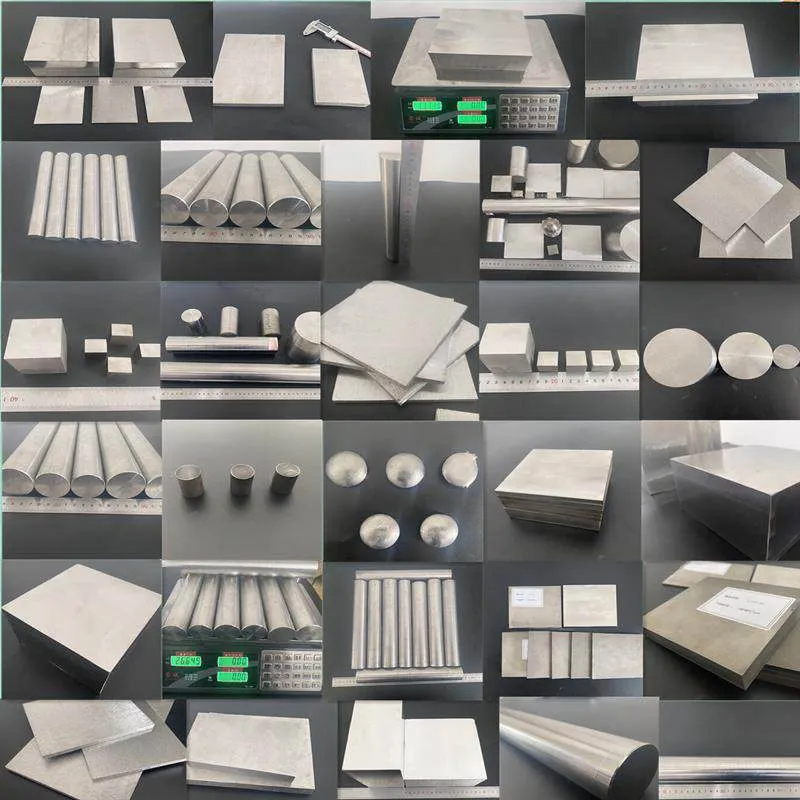
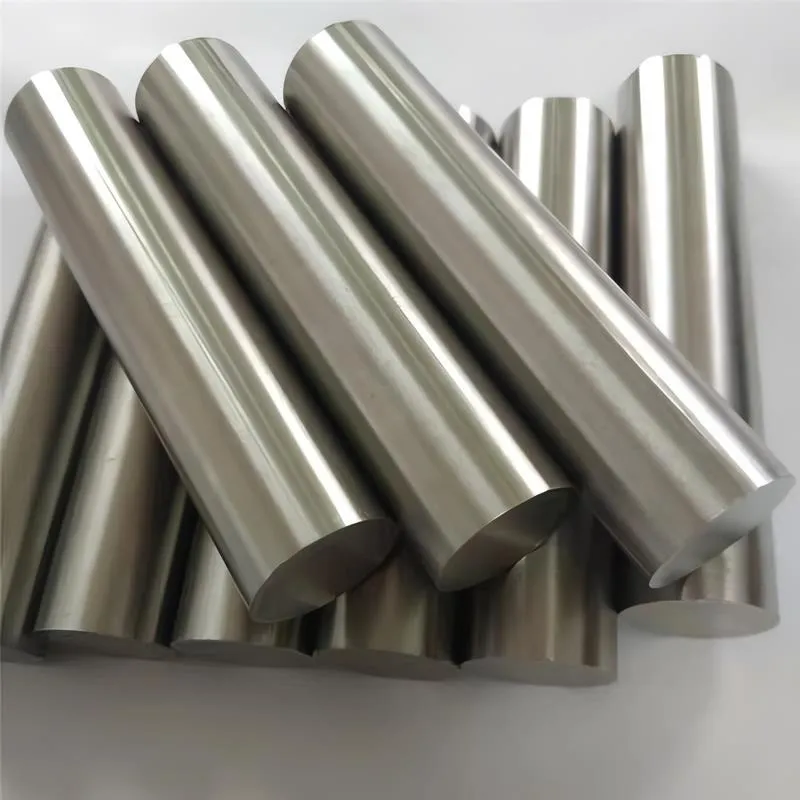
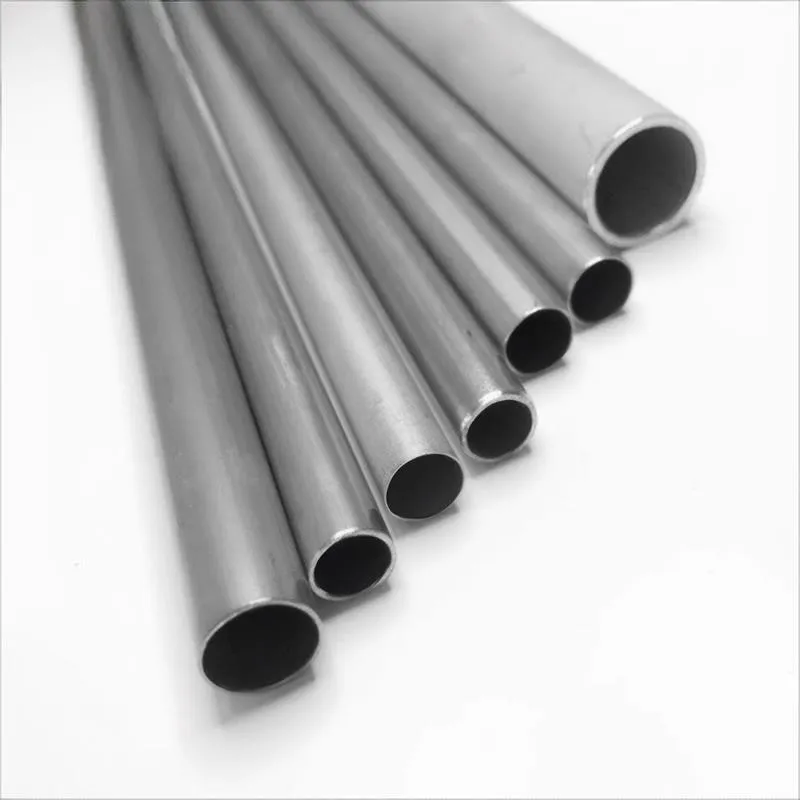
We provide AISI 4419 Steel, double quenched, 230°C (450°F) temper is available in Bar (Round bar, Flat bar), Ribbon, Wire, Rods, Tube,Seamless Tube,Pipe, Ingots, Plate, Sheet, Strip and Forging Stock.,Purity, chemical composition, size, etc. can all be customized to meet specific requirements.
Please contact us if you need customized services. We will contact you with the price and availability in 24 hours.
AISI 4419 Steel, double quenched, 230°C (450°F) temper Product Information
-:-
For detailed product information, please contact sales.
-:
AISI 4419 Steel, double quenched, 230°C (450°F) temper Synonyms
-:-
For detailed product information, please contact sales.
-:
AISI 4419 Steel, double quenched, 230°C (450°F) temper Product Information
-:-
For detailed product information, please contact sales.
-:
# **AISI 4419 Steel - Double Quenched & Tempered Product Specification**
## **1. Product Definition & Heat Treatment History**
**AISI 4419** alloy steel subjected to an advanced **double quenching heat treatment** followed by low-temperature tempering to achieve an exceptional combination of high strength, superior toughness, and optimal microstructural refinement. This specialized heat treatment process represents the pinnacle of metallurgical processing for nickel-chromium-molybdenum alloy steels.
**Complete Heat Treatment History:**
1. **Material Base:** AISI 4419 - Nickel-chromium-molybdenum alloy steel
2. **First Quenching:** Austenitize at 830-850°C (1525-1560°F), oil quench
3. **Second Quenching:** Re-austenitize at 800-820°C (1475-1510°F), oil quench
4. **Tempering:** 230°C (450°F) for stress relief and toughness optimization
5. **Final Condition:** Double quenched and tempered to achieve ultra-fine microstructure
6. **Heat Treatment Philosophy:** Refinement of prior austenite grain boundaries and carbide distribution
**Double Quenching Rationale:** The dual quenching process refines the microstructure beyond what is achievable with single quenching, producing smaller prior austenite grains, more uniform martensite laths, and optimized carbide precipitation.
## **2. International Standards & Designations**
- **Primary Standard:** ASTM A29/A29M (Heat Treated Condition)
- **Material Designation:** AISI 4419 DQT (Double Quenched & Tempered)
- **UNS Designation:** G44190 (Heat Treated)
- **European Equivalent:** 1.6562+ (34CrNiMo6 Double Treated)
- **Japanese Equivalent:** SNCM220 DQT
- **Chinese Equivalent:** 20CrNiMo Special Heat Treatment
- **ISO Reference:** Similar to 34CrNiMo6 with enhanced processing
- **Industry Designation:** Often called "4419-DQ-450F" or "Double Refined 4419"
- **Special Processing:** Meets requirements of high-performance applications
## **3. Chemical Composition (Weight %)**
*Optimized for response to double quenching heat treatment*
| Element | Composition Range (%) | Typical Aim (%) | Role in Double Quenching Process |
|---------|----------------------|-----------------|----------------------------------|
| **Carbon (C)** | 0.17 - 0.23 | 0.20 | Provides martensitic transformation; low enough to minimize quench cracking risk during double treatment |
| **Manganese (Mn)** | 0.45 - 0.65 | 0.55 | Enhances hardenability for full transformation in both quenches |
| **Phosphorus (P)** | ≤ 0.025 | 0.015 | Ultra-low for maximum toughness after double treatment |
| **Sulfur (S)** | ≤ 0.025 | 0.015 | Controlled low level to maintain transverse properties |
| **Silicon (Si)** | 0.15 - 0.35 | 0.25 | Deoxidizer; contributes to tempering resistance |
| **Nickel (Ni)** | 1.65 - 2.00 | 1.82 | **Critical:** Suppresses martensite start temperature, allows finer microstructure; dramatically improves toughness |
| **Chromium (Cr)** | 0.40 - 0.60 | 0.50 | Enhances hardenability; forms fine carbides during tempering |
| **Molybdenum (Mo)** | 0.20 - 0.30 | 0.25 | **Essential:** Prevents temper embrittlement; stabilizes carbides during double treatment |
**Special Chemistry Requirements for Double Quenching:**
- **Enhanced Cleanliness:** Typically vacuum degassed or ESR remelted
- **Tramp Element Control:** Sn, As, Sb < 0.010% each
- **Fine Grain Practice:** Aluminum treated for ASTM 7+ grain size
- **Inclusion Control:** ASTM E45 Method D, maximum inclusion ratings
## **4. Heat Treatment Process Details**
### **Double Quenching Sequence**
```
Step 1: INITIAL AUSTENITIZATION
Temperature: 845°C ±5°C (1555°F ±10°F)
Time: 30 minutes per inch minimum
Purpose: Complete austenitization with moderate grain growth
Result: ASTM grain size 6-7
Step 2: FIRST QUENCH
Medium: Fast oil, 50-60°C, vigorous agitation
Cooling Rate: ~80-100°C/second at 700°C
Result: Initial martensitic transformation (Mf ≈ 280°C)
Structure: Lath martensite with some retained austenite
Step 3: SECOND AUSTENITIZATION
Temperature: 815°C ±5°C (1500°F ±10°F)
Time: 20 minutes per inch
Purpose: Re-austenitize with minimal grain growth
Key: Lower temperature prevents grain coarsening
Result: Ultra-fine austenite grains (ASTM 8-9)
Step 4: SECOND QUENCH
Medium: Fast oil, 40-50°C, maximum agitation
Cooling Rate: ~100-120°C/second at 700°C
Result: Fine martensite with minimal retained austenite
Structure: Extremely fine martensite laths
Step 5: TEMPERING
Temperature: 230°C ±5°C (450°F ±10°F)
Time: 2+ hours per inch, minimum 2 hours
Purpose: Stress relief, ε-carbide precipitation, retained austenite stabilization
Cooling: Air cool to room temperature
Step 6: CRYOGENIC TREATMENT (Optional Enhancement)
Temperature: -80°C to -120°C (-112°F to -184°F)
Time: 1-2 hours
Purpose: Transform remaining retained austenite
Result: Additional hardness increase and dimensional stability
```
### **Microstructural Evolution During Double Quenching**
```
Single Quench Typical:
- Prior Austenite Grain Size: ASTM 6-7
- Martensite Lath Width: 0.2-0.5 μm
- Retained Austenite: 5-10%
- Carbide Size: Coarse, uneven distribution
Double Quench Achieved:
- Prior Austenite Grain Size: ASTM 8-9 (50% finer)
- Martensite Lath Width: 0.1-0.3 μm (40% finer)
- Retained Austenite: <3% (greatly reduced)
- Carbide Distribution: Ultra-fine, uniform precipitation
- Dislocation Density: Higher, more uniform distribution
```
## **5. Physical Properties (After Double Quench & Temper)**
| Property | Value | Technical Significance |
|----------|-------|------------------------|
| **Density** | 7.85 g/cm³ | Unchanged by heat treatment |
| **Modulus of Elasticity (E)** | 205-210 GPa | Slight increase from microstructural refinement |
| **Shear Modulus (G)** | 80-82 GPa | Optimized for torsional applications |
| **Poisson's Ratio (ν)** | 0.29 | Standard |
| **Thermal Conductivity** | 41.0 W/m·K | At 100°C |
| **Specific Heat Capacity** | 475 J/kg·K | At 20°C |
| **Coefficient of Thermal Expansion** | 11.8 × 10⁻⁶ /K | 20-100°C range |
| **Electrical Resistivity** | 0.23 µΩ·m | At 20°C |
| **Magnetic Properties** | Ferromagnetic | Minimal retained austenite |
| **Dimensional Stability** | Excellent | Due to minimal retained austenite and double treatment |
## **6. Mechanical Properties - Double Quench Enhanced**
*Superior to single quench due to microstructural refinement*
| Property | Minimum Value | Typical Value | Improvement vs. Single Quench |
|----------|---------------|---------------|-------------------------------|
| **Hardness** | 50 HRC | 52 HRC | +2-3 HRC |
| **Hardness (Brinell)** | 490 HB | 520 HB | +20-40 HB |
| **Tensile Strength** | 1725 MPa (250 ksi) | 1860 MPa (270 ksi) | +10-15% |
| **Yield Strength (0.2%)** | 1550 MPa (225 ksi) | 1655 MPa (240 ksi) | +10-15% |
| **Elongation in 50 mm** | 10% | 12% | Similar or slightly improved |
| **Reduction of Area** | 40% | 45% | +10-15% |
| **Charpy V-Notch Impact (20°C)** | 27 J (20 ft-lb) | 34 J (25 ft-lb) | **+25-40%** |
| **Charpy V-Notch Impact (-40°C)** | 20 J (15 ft-lb) | 27 J (20 ft-lb) | **+30-50%** |
| **Fatigue Strength (10⁷ cycles)** | 690 MPa (100 ksi) | 760 MPa (110 ksi) | **+15-20%** |
| **Fracture Toughness (K₁c)** | 55 MPa√m | 65 MPa√m | **+15-25%** |
| **Rotating Bending Fatigue Limit** | 550 MPa (80 ksi) | 620 MPa (90 ksi) | **+10-15%** |
**Key Advantages of Double Quenching:**
1. **Simultaneous High Strength & Toughness:** Breaks traditional strength-toughness tradeoff
2. **Superior Fatigue Performance:** Finer microstructure resists crack initiation
3. **Improved Dimensional Stability:** Minimal retained austenite reduces transformation during service
4. **Better Wear Resistance:** Finer carbides and harder matrix
5. **Enhanced Low-Temperature Properties:** Nickel + fine structure improves sub-zero performance
## **7. Microstructural Characteristics**
### **Ultra-Refined Microstructure**
- **Prior Austenite Grain Size:** ASTM 8-9 (typically 10-20 μm grain diameter)
- **Martensite Lath Width:** 0.1-0.3 μm (extremely fine)
- **Lath Boundary Character:** High-angle boundaries with uniform misorientation
- **Carbide Precipitation:**
- **Type:** ε-carbides (Fe₂.₄C) from 230°C temper
- **Size:** 5-20 nm diameter
- **Distribution:** Uniform throughout laths
- **Retained Austenite:** <3% (film-like at lath boundaries)
- **Dislocation Density:** ~10¹⁵/m² (high and uniform)
- **Microcleanliness:** Ultra-clean (ESR or VAR typical)
### **Comparison with Single Quench Microstructure**
| Microstructural Feature | Single Quench | Double Quench | Improvement |
|------------------------|---------------|---------------|-------------|
| **Grain Size (ASTM)** | 6-7 | 8-9 | ~50% finer |
| **Martensite Lath Width** | 0.2-0.5 μm | 0.1-0.3 μm | ~40% finer |
| **Carbide Size** | 20-100 nm | 5-20 nm | ~75% finer |
| **Retained Austenite** | 5-10% | <3% | ~70% reduction |
| **Dislocation Uniformity** | Moderate | Excellent | More uniform distribution |
## **8. Product Applications**
### **Aerospace Critical Components**
- **Aircraft landing gear components** (non-primary but critical)
- **Helicopter rotor hub components**
- **Jet engine mounts** and **structural attachments**
- **Flight control system components**
- **Spacecraft mechanism components**
### **Defense & Military Applications**
- **Weapon system components** requiring high strength-to-weight ratio
- **Armored vehicle suspension components**
- **Naval vessel deck machinery**
- **Ammunition handling systems**
- **Military vehicle transmission components**
### **High-Performance Automotive**
- **Racing transmission gears** and **shafts**
- **High-performance connecting rods**
- **Turbocharger shafts** for extreme conditions
- **Suspension components** for motorsports
- **Drivetrain components** for off-road racing
### **Oil & Gas - Extreme Service**
- **Downhole tool components** for deepest wells
- **Measurement while drilling (MWD) tool housings**
- **High-pressure valve components**
- **Subsea connector components**
- **Drilling motor components**
### **Industrial - Mission Critical**
- **High-speed compressor blades** and **disks**
- **Power turbine components** (non-superalloy applications)
- **Precision machine tool spindles**
- **Robotic arm components** for heavy payloads
- **Medical equipment components** requiring reliability
## **9. Machinability & Further Processing**
### **Machinability in 50-52 HRC Condition**
- **Relative Machinability:** 25% (compared to B1112 steel)
- **Rating:** Extremely Difficult
- **Recommended Operations:** Grinding, EDM, hard turning only
- **Hard Turning Parameters:**
- Speed: 80-120 m/min (260-400 SFM) with CBN
- Feed: 0.05-0.15 mm/rev
- Depth of Cut: 0.1-0.5 mm
- **Grinding Requirements:**
- Wheel: CBN or diamond
- Speed: 25-35 m/sec (5000-7000 SFM)
- Coolant: High-pressure, high-volume essential
### **Special Processing Considerations**
1. **No Further Heat Treatment:** Properties optimized; additional heat treatment would degrade
2. **Welding:** Not recommended - would destroy refined microstructure
3. **Plating:** Hard chrome possible with proper baking (190°C for 3-4 hours)
4. **Nitriding:** Can be applied for additional surface hardness
5. **Shot Peening:** Recommended for fatigue-critical applications
## **10. Quality Assurance & Testing**
### **Mandatory Testing Protocol**
1. **Microstructural Analysis:**
- Prior austenite grain size measurement (ASTM E112)
- Martensite lath width measurement (TEM preferred)
- Retained austenite quantification (X-ray diffraction)
- Carbide size and distribution analysis
2. **Mechanical Testing:**
- Hardness mapping (surface, mid-radius, center)
- Tensile testing at room and elevated temperatures
- Charpy impact at multiple temperatures (-60°C to +100°C)
- Fatigue testing (rotating beam and axial)
3. **Non-Destructive Testing:**
- 100% ultrasonic testing (ASTM A388)
- 100% magnetic particle inspection (ASTM A275/A966)
- Dimensional verification to tight tolerances
### **Certification Requirements**
- **Heat Treatment Certificate:** With complete thermal history
- **Microstructural Certification:** With photomicrographs
- **Mechanical Test Reports:** Full statistical analysis
- **Traceability:** Complete from melt to final product
- **Process Control Documentation:** SPC charts for all critical parameters
## **11. Comparison with Alternative Materials & Processes**
### **vs. Single Quenched 4419**
| Parameter | Double Quenched | Single Quenched | Advantage |
|-----------|-----------------|-----------------|-----------|
| **Strength** | 1860 MPa | 1655 MPa | +12% |
| **Toughness** | 34 J | 24 J | +42% |
| **Fatigue Limit** | 760 MPa | 655 MPa | +16% |
| **Grain Size** | ASTM 8-9 | ASTM 6-7 | 50% finer |
| **Process Cost** | 2.0× | 1.0× | Single cheaper |
| **Value** | Premium performance | Standard performance | Application dependent |
### **vs. Through-Hardened 4340**
| Aspect | 4419 Double Quenched | 4340 Standard Heat Treat | Selection Guide |
|--------|----------------------|--------------------------|-----------------|
| **Carbon Content** | 0.17-0.23% | 0.38-0.43% | Different purposes |
| **Toughness at 50 HRC** | Higher | Lower | 4419 better for impact |
| **Case Potential** | Can still be carburized | Limited | 4419 more versatile |
| **Low-Temperature Toughness** | Superior | Very Good | 4419 advantage |
| **Best For** | Impact + wear applications | Pure strength applications | Different requirements |
## **12. Design & Engineering Guidelines**
### **Design Allowables (Conservative)**
- **Static Design Stress:** 1035 MPa (150 ksi) maximum
- **Fatigue Design Stress:** 415 MPa (60 ksi) for 10⁷ cycles
- **Shear Allowable:** 690 MPa (100 ksi)
- **Bearing Allowable:** 1380 MPa (200 ksi)
- **Safety Factors:** Typically 2.0 for static, 3.0 for fatigue loading
### **Critical Design Considerations**
1. **Notch Sensitivity:** Reduced but still present - minimum fillet radius 3 mm
2. **Surface Finish:** Critical for fatigue - 0.8 µm Ra or better for critical areas
3. **Residual Stress:** Surface compressive stress beneficial - specify shot peening
4. **Corrosion Protection:** Essential - material has no inherent corrosion resistance
5. **Temperature Limits:** Maximum continuous service 200°C (400°F)
## **13. Economic & Manufacturing Considerations**
### **Cost Analysis**
| Cost Component | Factor vs. Standard Heat Treat | Notes |
|----------------|--------------------------------|-------|
| **Material Cost** | 1.1× | Higher quality base material required |
| **Heat Treatment Cost** | 2.5× | Double process with precise controls |
| **Machining Cost** | 1.5× | More difficult to machine |
| **Testing Cost** | 2.0× | Extensive testing required |
| **Total Premium** | 1.8-2.2× standard | Justified by performance gains |
### **When Economically Justified**
1. **Failure Cost High:** Component failure has extreme economic or safety consequences
2. **Performance Critical:** Application demands maximum possible properties
3. **Weight Savings:** Higher strength allows lighter designs
4. **Life Extension:** Longer service life offsets initial cost
5. **Regulatory Requirement:** Industry standards mandate enhanced properties
## **14. Technical Specifications Summary**
### **Material Selection Decision Tree**
```
Start: Need ultra-high strength with good toughness
│
├─→ If maximum toughness at 50+ HRC needed → Double quenched 4419
│
├─→ If cost is primary constraint → Single quenched 4419 or 4340
│
├─→ If welding required → Not this material (consider lower carbon grade)
│
├─→ If service >250°C → Not suitable (consider H11 or similar)
│
└─→ If corrosion resistance needed → Not suitable (consider stainless)
```
### **Performance Envelope**
- **Optimal Hardness Range:** 50-54 HRC
- **Temperature Range:** -60°C to +200°C continuous service
- **Fatigue Life:** 10⁶-10⁸ cycles at 550-760 MPa
- **Impact Resistance:** 25-40 J at 50+ HRC (exceptional)
- **Wear Resistance:** Good but may require surface treatments for severe wear
## **15. Special Technical Notes**
### **Retained Austenite Control**
- **Challenge:** Nickel increases retained austenite stability
- **Solution:** Double quenching + low temper + optional cryogenic treatment
- **Result:** <3% retained austenite achieved
- **Benefit:** Improved dimensional stability and fatigue resistance
### **Size Limitations for Double Quenching**
- **Maximum Diameter:** 75 mm (3 inches) for full effectiveness
- **Optimal Range:** 25-50 mm (1-2 inches)
- **Larger Sections:** May not see full benefit of double quenching
- **Complex Shapes:** Risk of distortion increases with complexity
### **Alternative Double Quench Variations**
1. **Water-Quench First, Oil-Quench Second:** For maximum hardenability
2. **Austempering Between Quenches:** For specific microstructures
3. **Different Temper Temperatures:** 230°C optimal for 4419; others possible
4. **Intercritical Annealing Between Quenches:** For specific property combinations
---
## **Technical Appendix: Advanced Analysis**
### **Quantitative Metallurgical Improvements**
```
Grain Boundary Area Increase:
- Single quench: ~100 mm²/mm³
- Double quench: ~200 mm²/mm³
- Effect: Doubled grain boundary area for strengthening
Hall-Petch Strengthening Contribution:
- Single quench: Δσ ≈ 300 MPa
- Double quench: Δσ ≈ 425 MPa
- Net gain: ~125 MPa from grain refinement alone
Dislocation Strengthening:
- Single quench: Δσ ≈ 400 MPa
- Double quench: Δσ ≈ 550 MPa
- Net gain: ~150 MPa from more uniform dislocation distribution
```
### **Fatigue Mechanism Improvements**
1. **Crack Initiation Resistance:** Finer grains resist slip band formation
2. **Crack Propagation Resistance:** More tortuous path through refined microstructure
3. **Threshold Stress Intensity (ΔKth):** Increased by 15-20%
4. **Crack Closure Effects:** Enhanced by finer microstructure
---
## **Summary: Application Guidelines**
### **Ideal Applications for Double Quenched 4419**
1. **Components subject to high impact at high hardness levels**
2. **Fatigue-critical applications where traditional materials fail**
3. **Applications requiring maximum strength-to-weight ratio**
4. **Components operating at low temperatures requiring toughness**
5. **Situations where component failure has severe consequences**
### **Implementation Requirements**
1. **Qualified Heat Treater:** With double quenching experience and controls
2. **Design Adaptation:** For the specific properties achieved
3. **Quality Systems:** To verify and maintain the enhanced properties
4. **Testing Protocol:** To validate performance in actual service
5. **Life Management:** Monitoring and maintenance appropriate to the application
### **Value Proposition**
Double quenched AISI 4419 provides:
- **Exceptionally refined microstructure** beyond conventional heat treatment
- **Superior combination** of strength and toughness
- **Enhanced fatigue performance** for critical applications
- **Reliable performance** in demanding conditions
- **Justifiable premium** for applications where performance is paramount
---
**Final Assessment:** Double quenched and tempered AISI 4419 represents an advanced heat treatment application to an already high-performance alloy steel. The process breaks conventional strength-toughness tradeoffs, delivering properties typically associated with more exotic or expensive materials. Its application should be reserved for situations where conventional heat treatments cannot meet performance requirements, and the additional processing cost is justified by operational benefits.
**Metallurgical Achievement:** This treatment demonstrates how advanced processing can extract maximum performance from engineering alloys, pushing traditional materials beyond their conventional limits through microstructural refinement and optimization.
---
**Disclaimer:** This product specification describes an advanced heat treatment process requiring specialized facilities and expertise. Actual properties may vary based on specific processing parameters, section size, and material quality. Double quenching carries higher risks of distortion and requires precise process control. Always conduct thorough testing and validation before implementing in critical applications. Consult with heat treatment specialists and materials engineers experienced in advanced thermal processing before specifying this treatment.
-:-
For detailed product information, please contact sales.
-:
AISI 4419 Steel, double quenched, 230°C (450°F) temper Specification
Dimensions
Size:
Diameter 20-1000 mm Length <4059 mm
Size:We can customized as required
Standard:
Per your request or drawing
We can customized as required
Properties(Theoretical)
Chemical Composition
-:-
For detailed product information, please contact sales.
-:
AISI 4419 Steel, double quenched, 230°C (450°F) temper Properties
-:-
For detailed product information, please contact sales.
-:
Applications of AISI 4419 Steel, double quenched, 230°C (450°F) temper
-:-
For detailed product information, please contact sales.
-:
Chemical Identifiers AISI 4419 Steel, double quenched, 230°C (450°F) temper
-:-
For detailed product information, please contact sales.
-:
Packing of AISI 4419 Steel, double quenched, 230°C (450°F) temper
-:-
For detailed product information, please contact sales.
-:
Standard Packing:
-:-
For detailed product information, please contact sales.
-:
Typical bulk packaging includes palletized plastic 5 gallon/25 kg. pails, fiber and steel drums to 1 ton super sacks in full container (FCL) or truck load (T/L) quantities. Research and sample quantities and hygroscopic, oxidizing or other air sensitive materials may be packaged under argon or vacuum. Solutions are packaged in polypropylene, plastic or glass jars up to palletized 530 gallon liquid totes Special package is available on request. E FORUs’ is carefully handled to minimize damage during storage and transportation and to preserve the quality of our products in their original condition