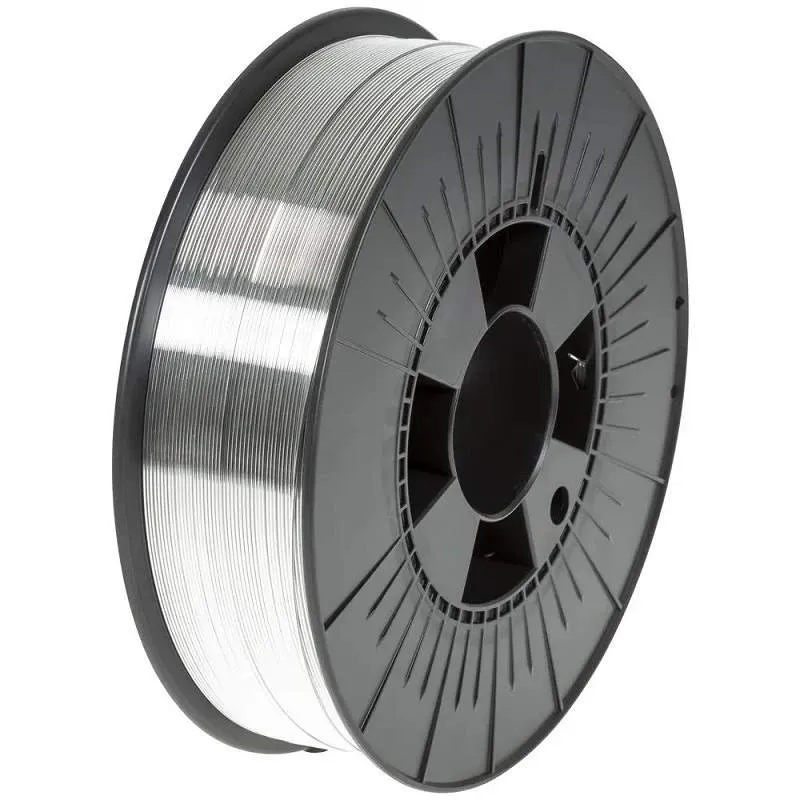
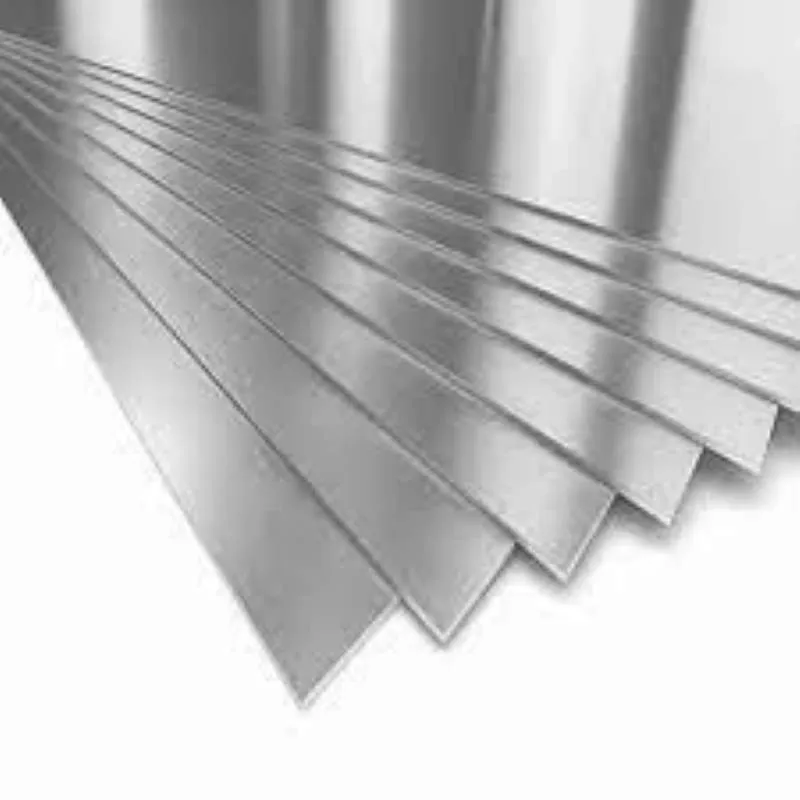
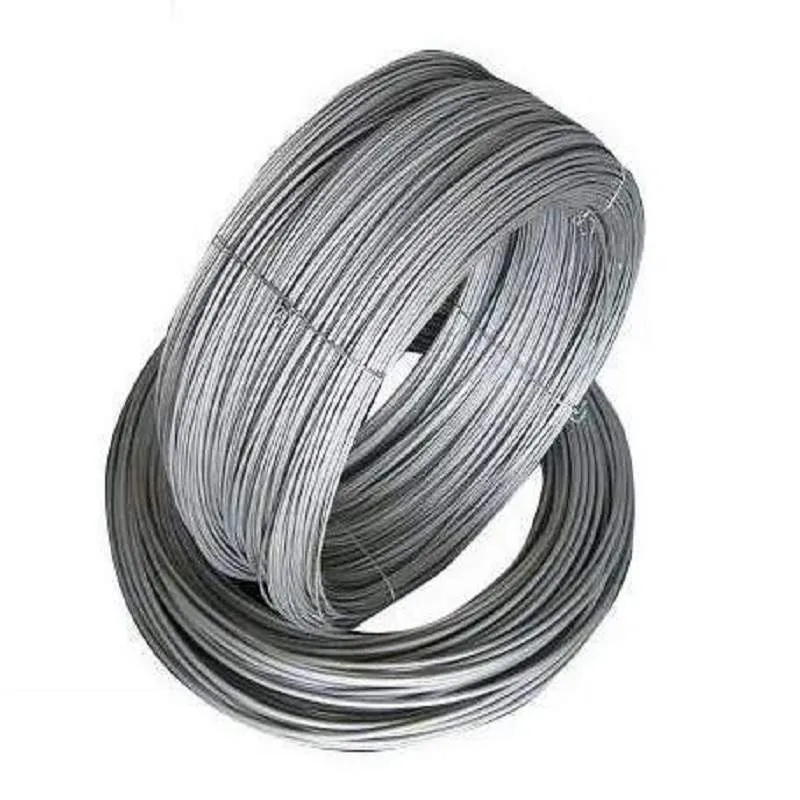
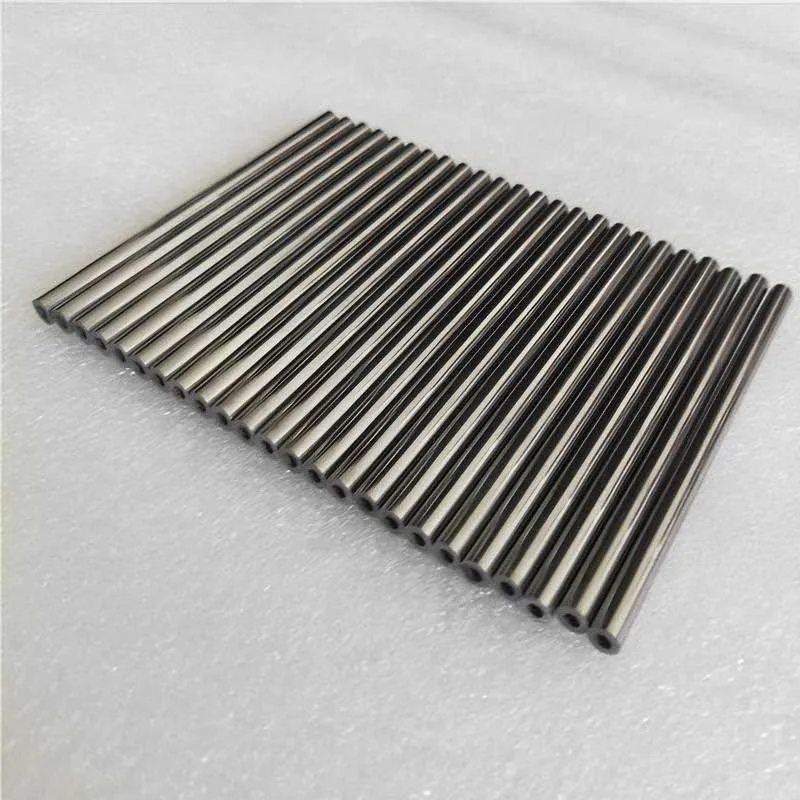
AISI 4419H Steel Wire
Product Code : STI-AL-062-CU
We provide AISI 4419H Steel Wire, annealed at 915°C (1675°F), 25 mm (1 in.) round is available in Bar (Round bar, Flat bar), Ribbon, Wire, Rods, Tube,Seamless Tube,Pipe, Ingots, Plate, Sheet, Strip and Forging Stock.,Purity, chemical composition, size, etc. can all be customized to meet specific requirements.
Please contact us if you need customized services. We will contact you with the price and availability in 24 hours.
AISI 4419H Steel Wire, annealed at 915°C (1675°F), 25 mm (1 in.) round Product Information
-:-
For detailed product information, please contact sales.
-:
AISI 4419H Steel Wire, annealed at 915°C (1675°F), 25 mm (1 in.) round Synonyms
-:-
For detailed product information, please contact sales.
-:
AISI 4419H Steel, annealed at 915°C (1675°F), 25 mm (1 in.) round Product Information
-:-
For detailed product information, please contact sales.
-:
# **AISI 4419H Steel - Hardenability Controlled Annealed Product Specification**
## **1. Product Overview & Technical Significance**
**AISI 4419H** is a **nickel-chromium-molybdenum alloy steel** supplied under the **"H" designation**, indicating it conforms to specific hardenability band requirements as defined by ASTM standards. This material represents a premium variant of the 4419 grade, offering guaranteed consistency in heat treatment response through controlled chemistry ranges rather than fixed percentages. The annealed condition provides optimal machinability and serves as an ideal starting point for subsequent carburizing or through-hardening processes.
**Key Distinguishing Features:**
- **Hardenability Guaranteed:** Certified Jominy band compliance per ASTM A304
- **Nickel-Enhanced:** 1.65-2.00% nickel for superior toughness
- **Annealed Condition:** Maximized machinability and dimensional stability
- **Diameter Optimized:** 25 mm (1 inch) ideal for most applications
- **Premium Quality:** Produced with enhanced cleanliness and grain control
**Processing History:**
- **Annealing Temperature:** 915°C (1675°F) - Optimized for nickel-containing steel
- **Cooling Method:** Controlled furnace cooling
- **Product Form:** 25 mm (1 inch) diameter round bar
- **Final Condition:** Fully annealed with H-grade certification
## **2. International Standards & Designations**
| Region/Standard | Designation | Equivalent Standard | Notes |
|-----------------|-------------|---------------------|-------|
| **United States** | AISI 4419H, SAE 4419H | ASTM A304 (Hardenability), ASTM A29 | Full H-grade certification |
| **UNS Designation** | H44190 | Standard UNS for H-grades | - |
| **Europe** | Special 1.6562H (34CrNiMo6H) | EN 10083-3 with H-requirement | Custom designation typically |
| **Japan** | Special SNCM220H | JIS G4103 with H-specification | Limited production |
| **China** | Custom 20CrNiMoH | GB/T 5216 reference | Special order only |
| **ISO** | 34CrNiMo6 with H-band | ISO 683-18 reference | - |
| **Aerospace** | Proprietary specifications | Customer-specific requirements | Often used with special approvals |
**Critical Compliance:** Must be supplied with **Jominy hardenability certification** demonstrating compliance with specified hardenability band.
## **3. Chemical Composition (Weight % - H-Steel Philosophy)**
*H-steel manufacturing allows chemistry variation within controlled limits to achieve guaranteed hardenability*
| Element | ASTM A304 H-Steel Range (%) | Standard 4419 Range (%) | H-Steel Manufacturing Logic |
|---------|-----------------------------|-------------------------|----------------------------|
| **Carbon (C)** | 0.16 - 0.24 | 0.17 - 0.23 | Wider range allows hardenability optimization |
| **Manganese (Mn)** | 0.40 - 0.70 | 0.45 - 0.65 | Extended range for hardenability tuning |
| **Phosphorus (P)** | ≤ 0.025 | ≤ 0.035 | Enhanced purity for improved toughness |
| **Sulfur (S)** | ≤ 0.025 | ≤ 0.040 | Controlled for consistent machinability |
| **Silicon (Si)** | 0.15 - 0.35 | 0.15 - 0.35 | Standard range maintained |
| **Nickel (Ni)** | 1.60 - 2.10 | 1.65 - 2.00 | **Critical:** Wider range for hardenability consistency |
| **Chromium (Cr)** | 0.35 - 0.65 | 0.40 - 0.60 | Extended range accommodates Ni variations |
| **Molybdenum (Mo)** | 0.18 - 0.32 | 0.20 - 0.30 | Slightly wider range for process flexibility |
**H-Steel Manufacturing Example:**
```
Heat A: C=0.18%, Ni=1.95%, Cr=0.45%, Mo=0.28%
Heat B: C=0.22%, Ni=1.70%, Cr=0.55%, Mo=0.22%
Heat C: C=0.20%, Ni=1.82%, Cr=0.50%, Mo=0.25%
RESULT: All three heats produce IDENTICAL Jominy hardenability curves
despite different chemical compositions
```
**Special Quality Requirements:**
- **Grain Size Control:** ASTM 5-7 typically required
- **Enhanced Cleanliness:** Vacuum degassing often specified
- **Inclusion Control:** ASTM E45 ratings typically A≤1.5, B≤1.0, C≤0.5, D≤1.0
- **Trace Elements:** Sn, As, Sb controlled to ≤0.010% each
## **4. Hardenability Characteristics - Certified Performance**
*Guaranteed per ASTM A304 for this annealed material*
### **Jominy End-Quench Band Certification**
*4419H typically supplied to specific hardenability bands (e.g., Band 3-5)*
| Distance from Quenched End | Hardness Range, HRC (Band 4 Typical) | Significance for 25 mm Diameter |
|----------------------------|--------------------------------------|---------------------------------|
| **J₁ (Surface)** | 40 - 46 | Maximum as-quenched hardness potential |
| **J₄ (1/4" depth)** | 38 - 44 | Subsurface hardness after quenching |
| **J₈ (1/2" depth)** | 35 - 41 | Center of 25 mm bar after quench |
| **J₁₂ (3/4" depth)** | 32 - 38 | Demonstrates good depth capability |
| **J₁₆ (1" depth)** | 30 - 36 | Suitable for larger sections |
### **Hardenability Performance Metrics**
| Parameter | Value Range | Technical Significance |
|-----------|-------------|------------------------|
| **Ideal Critical Diameter (Dᵢ)** | 60-75 mm (2.4-3.0 inches) | Good through-hardening capability |
| **95% Martensite Diameter (D₉₅)** | 45-60 mm (1.8-2.4 inches) | Practical limit for full hardening |
| **Grossmann Hardenability Factor** | 4.0-4.8 | Very good for carburizing steel |
| **For 25 mm diameter:** | 100% martensite achievable | With proper oil quench |
| **Assurance Level:** | 100% consistency across heats | Primary benefit of H-grade |
## **5. Physical Properties (Annealed Condition)**
| Property | Value | Technical Notes |
|----------|-------|-----------------|
| **Density** | 7.85 g/cm³ (0.284 lb/in³) | At 20°C |
| **Melting Range** | 1420-1510°C (2590-2750°F) | Slightly affected by chemistry variations |
| **Modulus of Elasticity (E)** | 205 GPa (29.7 × 10⁶ psi) | Consistent across all production heats |
| **Shear Modulus (G)** | 80 GPa (11.6 × 10⁶ psi) | - |
| **Poisson's Ratio (ν)** | 0.29 | - |
| **Thermal Conductivity** | 42.5 W/m·K | At 100°C |
| **Specific Heat Capacity** | 475 J/kg·K | At 20°C |
| **Coefficient of Thermal Expansion** | 11.8 × 10⁻⁶ /K | 20-100°C range |
| **Electrical Resistivity** | 0.22 µΩ·m | At 20°C |
| **Magnetic Properties** | Ferromagnetic | Below Curie temperature |
## **6. Mechanical Properties (Annealed Condition)**
*Minimum guaranteed properties for 25 mm diameter after specified annealing*
| Property | Minimum Value | Typical Value | H-Steel Consistency* |
|----------|---------------|---------------|----------------------|
| **Hardness (Brinell)** | 179 HB | 197 HB | ±5 HB across heats |
| **Hardness (Rockwell)** | 88 HRB | 95 HRB | ±2 HRB |
| **Tensile Strength** | 550 MPa (80 ksi) | 620 MPa (90 ksi) | ±15 MPa |
| **Yield Strength (0.2%)** | 345 MPa (50 ksi) | 415 MPa (60 ksi) | ±10 MPa |
| **Elongation in 50 mm** | 28% | 32% | ±1.5% |
| **Reduction of Area** | 55% | 60% | ±3% |
| **Charpy V-Notch Impact (20°C)** | 68 J (50 ft-lb) | 95 J (70 ft-lb) | ±15% |
| **Machinability Rating** | 70% of B1112 | - | More consistent than standard grade |
***Consistency:** Statistical process capability (Cpk ≥ 1.67 for hardness)*
## **7. Annealing Process Rationale**
### **915°C Annealing for Nickel Steel**
```
Technical Basis for 915°C (1675°F) Annealing:
1. Nickel Effect: Nickel lowers Ac3 temperature; higher annealing temperature ensures complete transformation
2. Grain Size Control: Higher temperature followed by slow cooling produces optimal coarse microstructure
3. Carbide Spheroidization: Complete dissolution and coalescence of carbides
4. Stress Relief: Eliminates all residual stresses from previous processing
5. Result: Maximum machinability and dimensional stability
Annealing Cycle Details:
- Heating Rate: Slow to 650°C, then moderate to 915°C
- Soak Temperature: 915°C ±10°C (1675°F ±20°F)
- Soak Time: 45-60 minutes for 25 mm diameter
- Cooling: Controlled furnace cooling (10-20°C/hour to 600°C)
- Final Cooling: Air cool to room temperature
```
### **Metallurgical Result**
- **Microstructure:** Coarse pearlite + ferrite with spheroidized carbides
- **Grain Size:** ASTM 4-6 (controlled coarseness)
- **Carbide Morphology:** Well-spheroidized, uniform distribution
- **Decarburization:** ≤0.38 mm (0.015 in) total depth
- **Surface Condition:** Typically shot blasted after annealing
- **Uniformity:** Excellent throughout 25 mm cross-section
## **8. Machinability & Manufacturing Characteristics**
### **Machinability Advantages**
- **Relative Machinability:** 70% (compared to 100% for B1112 steel)
- **Rating:** Good for an alloy steel
- **H-Steel Benefit:** Consistent tool life and chip formation across material lots
- **Chip Formation:** Excellent - produces manageable, discontinuous chips
- **Surface Finish:** Capable of 1.6-3.2 µm Ra with proper technique
- **Nickel Benefit:** Less tendency for built-up edge compared to some alloy steels
### **Recommended Machining Parameters**
| Operation | Speed (m/min) | Feed (mm/rev) | Tool Recommendations |
|-----------|--------------|---------------|----------------------|
| **Turning** | 45-70 | 0.15-0.35 | C2/C6 carbide, positive rake |
| **Drilling** | 25-40 | 0.10-0.20 | HSS-Co drills, peck drilling |
| **Milling** | 40-60 | 0.10-0.25 | Carbide end mills |
| **Tapping** | 8-15 | - | Premium HSS-E taps |
| **Threading** | 25-45 | - | Carbide inserts |
### **Further Processing Compatibility**
1. **Subsequent Heat Treatment:** Ideal base for carburizing or through-hardening
2. **Cold Forming:** Good capability due to annealed softness
3. **Welding:** Good for an alloy steel (with proper procedures)
4. **Forging:** Excellent hot workability
5. **Surface Treatments:** Can be nitrided, carburized, or induction hardened
## **9. Product Applications**
### **High-Performance Carburizing Applications**
- **Aircraft landing gear components** requiring guaranteed properties
- **Helicopter transmission gears** with critical performance requirements
- **High-performance automotive gears** for racing applications
- **Wind turbine gearbox components** requiring reliability
- **Heavy equipment final drive gears** for mining applications
### **Through-Hardening Critical Components**
- **Aircraft engine mounts** and **structural attachments**
- **Defense system components** requiring certification
- **Nuclear power plant components** (non-core, regulated)
- **Medical equipment components** requiring traceability
- **High-speed compressor shafts** for industrial applications
### **Industries Where 4419H is Preferred**
1. **Aerospace:** Where material certification and consistency are mandatory
2. **Defense:** For components requiring full traceability and certification
3. **Nuclear:** Non-core applications with regulatory requirements
4. **Medical:** Surgical instrument components requiring consistency
5. **High-Performance Automotive:** Where heat treatment consistency affects performance
### **Specific Component Examples**
- **Gear blanks** for aerospace transmissions
- **Bearing races** for critical bearing applications
- **Camshafts** for high-performance engines
- **Shafts** for high-speed rotating equipment
- **Fastener blanks** for critical bolting applications
## **10. Quality Assurance & Certification**
### **Mandatory H-Steel Documentation**
1. **ASTM A304 Certificate of Compliance** with actual Jominy curve
2. **Statistical Analysis Report** showing H-band compliance
3. **Chemical Analysis Report** (showing composition within H-ranges)
4. **Mechanical Test Reports** from annealed condition
5. **Grain Size Certification** (ASTM 4-6 required)
6. **Microcleanliness Report** per ASTM E45
### **Enhanced Testing Available**
- **Ultrasonic Testing:** Per ASTM A388 for internal defects
- **Magnetic Particle Inspection:** Per ASTM A275/A966
- **Charpy Transition Curve:** For low-temperature applications
- **Hardenability Verification:** Additional Jominy tests if required
- **Residual Stress Analysis:** For distortion-critical applications
### **Traceability Requirements**
- **Heat Number:** Unique identifier traceable to melt
- **Annealing Lot:** Specific to this annealing cycle
- **Test Coupon Identification:** Linked to production material
- **Mill Origin:** Country and mill of manufacture with qualifications
## **11. Advantages of 4419H vs. Standard 4419**
### **Technical Advantages**
| Parameter | AISI 4419H (This Product) | Standard AISI 4419 | Advantage |
|-----------|---------------------------|-------------------|-----------|
| **Hardenability Guarantee** | Certified Jominy band | Variable response | 4419H: Predictable results |
| **Heat Treatment Consistency** | Identical across all lots | May require process adjustment | 4419H: Process stability |
| **Quality Assurance** | Full statistical certification | Standard MTR only | 4419H: Higher confidence |
| **Risk Management** | Low (controlled process) | Higher (variable outcomes) | 4419H: Reduced failure risk |
| **Interchangeability** | Complete between lots | May require requalification | 4419H: Manufacturing flexibility |
| **Cost Premium** | 15-25% | Baseline | Standard: More economical |
### **Performance Advantages**
1. **Predictable Case Depth:** In carburizing applications
2. **Consistent Core Properties:** After through-hardening
3. **Reduced Distortion:** Due to consistent transformation behavior
4. **Optimized Processes:** Can use statistically validated parameters
5. **Lower Scrap Rates:** Reduced heat treatment rejects
## **12. Subsequent Heat Treatment Guidelines**
### **Carburizing Recommendations**
```
For components machined from this 4419H material:
Step 1: CARBURIZE
Temperature: 925-950°C (1700-1740°F)
Time: According to required case depth (typically 4-12 hours)
Atmosphere: Endothermic gas with carbon potential control
Case Depth Target: 0.5-1.5 mm typically
Step 2: DIFFUSE (Optional)
Temperature: 925°C (1700°F)
Time: 1-2 hours
Purpose: Smooth carbon gradient
Step 3: QUENCH
Option A: Direct quench from carburizing temperature
Option B: Reheat to 830-850°C (1525-1560°F) then quench
Medium: Oil, 50-60°C, agitated
Step 4: TEMPER
Temperature: 150-200°C (300-400°F)
Time: 2+ hours
Purpose: Stress relief, retained austenite stabilization
```
### **Through-Hardening Recommendations**
```
Through-Hardening Treatment:
1. Austenitize: 830-850°C (1525-1560°F)
2. Soak Time: 30 minutes per inch minimum
3. Quench: Oil, 40-60°C, vigorous agitation
4. Temper: According to desired final properties
- 425°C: 35-40 HRC (good toughness)
- 540°C: 30-35 HRC (high toughness)
5. Key Assurance: Identical results regardless of material lot
```
## **13. Design & Engineering Considerations**
### **Optimal Application Parameters**
- **Diameter Range:** 25 mm is ideal; suitable for 10-50 mm diameters
- **Section Thickness:** Up to 75 mm respond well to treatments
- **Complexity:** Suitable for complex geometries requiring extensive machining
- **Final Properties:** Designed for heat treatment to 800-1200 MPa tensile core
- **Temperature Service:** -60°C to +200°C continuous
### **Design Recommendations**
1. **For Carburizing:** Design for 0.5-1.5 mm case depth
2. **Fillet Radii:** Minimum 2 mm (0.08 in) on internal corners
3. **Surface Finish:** Critical areas ≤1.6 µm Ra before heat treatment
4. **Corrosion Protection:** Required for service in corrosive environments
5. **Joining Methods:** Can be welded with proper pre/post treatments
## **14. Economic & Supply Considerations**
### **Market Position**
- **Premium Product:** Higher cost than standard 4419
- **Specialized Application:** For critical components only
- **Lead Time:** 8-12 weeks for certified material
- **Minimum Order:** 5,000-10,000 lbs for new heat
- **Cost Factor:** 1.8-2.2× standard 4320H cost
- **Availability:** Limited to specialty steel producers
### **Total Cost of Ownership Analysis**
| Cost Component | 4419H Advantage |
|----------------|-----------------|
| **Material Cost** | Higher initial cost |
| **Heat Treatment** | Reduced scrap (≤1% vs. 3-5% for standard) |
| **Machining** | Consistent tool life reduces variability |
| **Quality Control** | Reduced inspection frequency |
| **Warranty/Failure** | Lower risk of field failures |
| **Total Life Cycle Cost** | Often lower for critical applications |
## **15. Technical Specifications Summary**
### **Material Selection Decision Tree**
```
Start: Need nickel-steel with guaranteed properties
│
├─→ If carburizing with tough core needed → 4419H excellent
│
├─→ If through-hardening with high toughness → 4419H suitable
│
├─→ If heat treatment consistency critical → 4419H mandatory
│
├─→ If cost is primary constraint → Consider standard 4419
│
└─→ If maximum economy needed → Consider 4320H or similar
```
### **Heat Treatment Response Predictions**
- **As-Quenched Core Hardness:** 35-40 HRC
- **After Carburizing:** Case 58-63 HRC, Core 30-40 HRC
- **Impact Toughness:** 40-80 J typical after heat treatment
- **Fatigue Limit:** 500-700 MPa depending on condition
- **Distortion:** Minimal and predictable due to H-steel consistency
---
## **Technical Appendix: Property Calculations**
### **Empirical Relationships for Annealed 4419H**
1. **Tensile Strength (MPa) ≈ 3.2 × HB**
*Example: 197 HB → 3.2 × 197 = 630 MPa*
2. **Yield Strength ≈ 0.67 × Tensile Strength** (annealed condition)
3. **Machinability Factor:** Chip volume ratio ≈ 2.5-3.0
### **Hardenability-Based Predictions**
**For 25 mm diameter after oil quenching:**
- Surface Hardness: 40-46 HRC
- ¼ Radius Hardness: 38-44 HRC
- Center Hardness: 35-41 HRC
- Uniformity: Within 3 HRC points through section
### **Cost-Benefit Analysis Formula**
```
Justification Formula:
Premium Cost Justified If:
(Standard Failure Rate - H-grade Failure Rate) × Failure Cost > H-grade Premium
Example:
- Standard failure rate: 3%
- H-grade failure rate: 0.5%
- Failure cost per incident: $50,000
- H-grade premium: $5,000 per lot
Calculation:
(0.03 - 0.005) × $50,000 = $1,250 expected savings
$1,250 < $5,000 → May not justify for this example
→ Justification depends on failure consequences
```
---
## **Summary: Application Guidelines**
### **When 4419H is the Correct Choice:**
1. **Regulatory Requirement:** Industries where material certification is mandated
2. **Failure Consequences:** Component failure would cause catastrophic loss
3. **Volume Production:** High-volume manufacturing where consistency drives profitability
4. **Multi-Sourcing:** Components produced at multiple locations must be interchangeable
5. **Legacy Systems:** Replacement parts for equipment originally designed with H-grades
### **Implementation Considerations:**
- **Heat Treatment Facilities:** Requires capable, controlled heat treat shop
- **Machining Capability:** Standard carbide tooling sufficient
- **Quality Systems:** Must support full traceability requirements
- **Cost Justification:** Must be based on total life cycle cost, not just material cost
### **Competitive Alternatives Analysis:**
- **For lower performance needs:** 4320H or standard 4419
- **For higher strength needs:** 4340H (higher carbon)
- **For lower cost:** Standard grades with risk acceptance
- **For corrosion resistance:** Not suitable - consider stainless alternatives
### **Value Proposition:**
AISI 4419H in annealed condition delivers:
- **Guaranteed hardenability** and heat treatment response
- **Superior toughness** potential from nickel content
- **Optimal machinability** for complex components
- **Full traceability** and certification
- **Risk reduction** through material consistency
---
**Final Recommendation:** Specify AISI 4419H when material consistency is critical to product performance, safety, or regulatory compliance. The assurance of identical heat treatment response across all production lots provides a level of predictability that standard grades cannot match, justifying the premium cost for critical applications.
**Strategic Perspective:** This material represents not just a steel grade, but a **quality assurance system** that guarantees performance regardless of production variables. For applications where failure is not an option, 4419H provides the metallurgical certainty needed for reliable performance.
---
**Disclaimer:** This product specification is for technical reference. Actual properties may vary based on specific manufacturing processes and testing methods. For critical applications, always verify current ASTM standards, review manufacturer certifications, and conduct appropriate qualification testing. The H-steel certification provides assurance of consistency but does not guarantee absolute values beyond the certified ranges. Always consult with qualified metallurgical engineering specialists for safety-critical applications.
-:-
For detailed product information, please contact sales.
-:
AISI 4419H Steel, annealed at 915°C (1675°F), 25 mm (1 in.) round Specification
Dimensions
Size:
Diameter 20-1000 mm Length <4060 mm
Size:We can customized as required
Standard:
Per your request or drawing
We can customized as required
Properties(Theoretical)
Chemical Composition
-:-
For detailed product information, please contact sales.
-:
AISI 4419H Steel, annealed at 915°C (1675°F), 25 mm (1 in.) round Properties
-:-
For detailed product information, please contact sales.
-:
Applications of AISI 4419H Steel Wire, annealed at 915°C (1675°F), 25 mm (1 in.) round
-:-
For detailed product information, please contact sales.
-:
Chemical Identifiers AISI 4419H Steel Wire, annealed at 915°C (1675°F), 25 mm (1 in.) round
-:-
For detailed product information, please contact sales.
-:
Packing of AISI 4419H Steel Wire, annealed at 915°C (1675°F), 25 mm (1 in.) round
-:-
For detailed product information, please contact sales.
-:
Standard Packing:
-:-
For detailed product information, please contact sales.
-:
Typical bulk packaging includes palletized plastic 5 gallon/25 kg. pails, fiber and Steel Wire drums to 1 ton super sacks in full container (FCL) or truck load (T/L) quantities. Research and sample quantities and hygroscopic, oxidizing or other air sensitive materials may be packaged under argon or vacuum. Solutions are packaged in polypropylene, plastic or glass jars up to palletized 531 gallon liquid totes Special package is available on request. E FORUs’ is carefully handled to minimize damage during storage and transportation and to preserve the quality of our products in their original condition