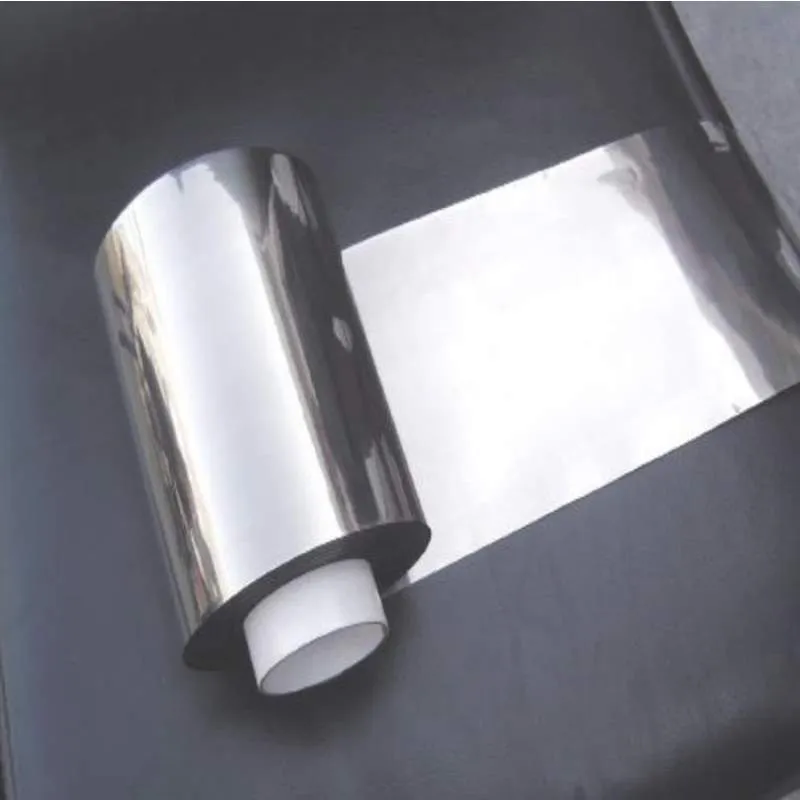
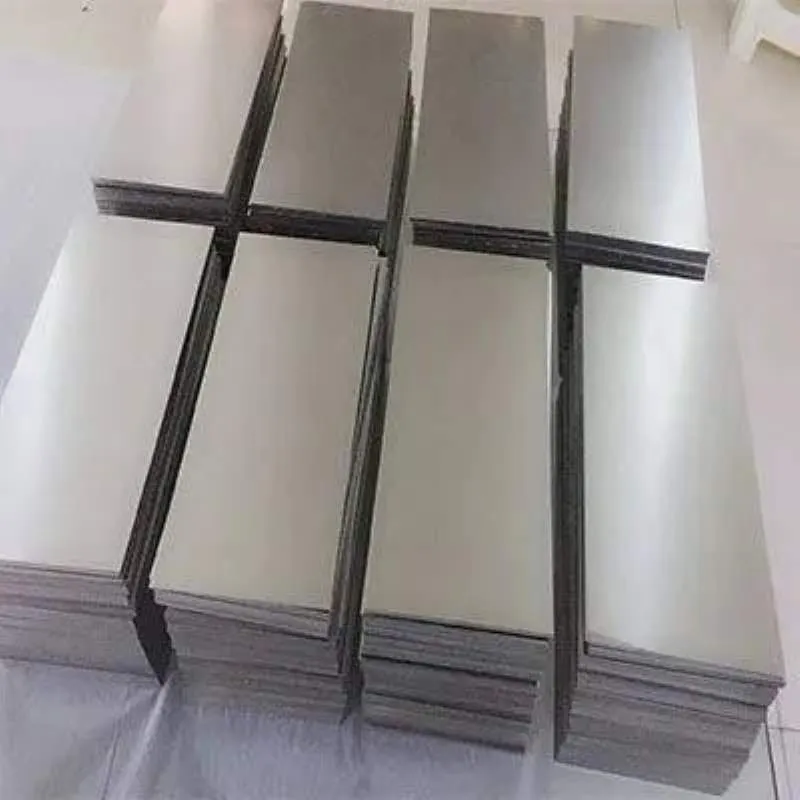
AISI 4718 Steel Foil/Strip
Product Code : STI-AL-082-CU
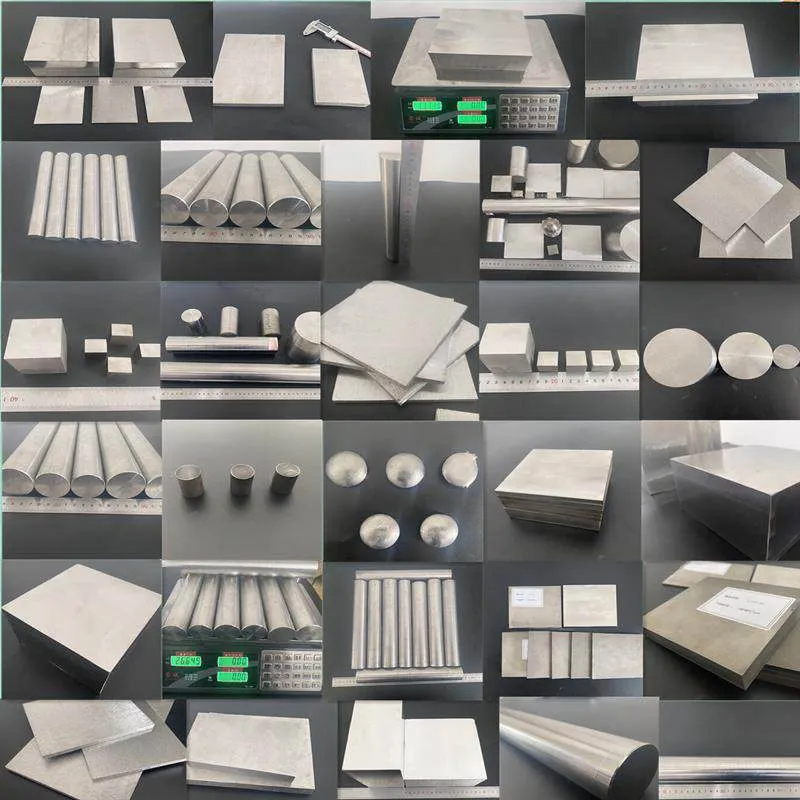
We provide AISI 4718 Steel Foil/Strip, pseudocarburized, reheated to 765°C (1700°F) and oil quenched, 150°C (300°F) temper, 25 mm round is available in Bar (Round bar, Flat bar), Ribbon, Wire, Rods, Tube,Seamless Tube,Pipe, Ingots, Plate, Sheet, Strip and Forging Stock.,Purity, chemical composition, size, etc. can all be customized to meet specific requirements.
Please contact us if you need customized services. We will contact you with the price and availability in 24 hours.
AISI 4718 Steel Foil, pseudocarburized, reheated to 765°C (1700°F) and oil quenched, 150°C (300°F) temper, 25 mm round Product Information
-:-
For detailed product information, please contact sales.
-:
AISI 4718 Steel Foil, pseudocarburized, reheated to 765°C (1700°F) and oil quenched, 150°C (300°F) temper, 25 mm round Synonyms
-:-
For detailed product information, please contact sales.
-:
AISI 4718 Steel, pseudocarburized, reheated to 765°C (1700°F) and oil quenched, 150°C (300°F) temper, 25 mm round Product Information
-:-
For detailed product information, please contact sales.
-:
# **AISI 4718 Steel - Pseudo-Carburized & Heat Treated**
## **25mm Round, Nickel-Chromium-Molybdenum Case-Hardening Steel with Simulated Case**
---
### **1. PRODUCT OVERVIEW**
**AISI 4718 Steel - Special Heat Treatment Condition**
- **Product Form:** 25mm (1.0 inch) diameter round bar
- **Material Standard:** AISI 4718 / SAE 4718
- **Unique Processing:** Pseudo-carburizing followed by hardening and low-temperature tempering
- **Applied Heat Treatment Sequence:**
1. **Pseudo-Carburizing:** Surface carbon enrichment simulation
2. **Reheating:** 765°C (1700°F) for austenitization
3. **Quenching:** Oil quench
4. **Tempering:** 150°C (300°F) low-temperature stress relief
- **Resulting Condition:** Simulated case-hardened structure with high surface hardness
- **Special Feature:** Provides case-hardening response characteristics without actual carburizing process
**Material Designation Breakdown:**
- **"47" Series:** Nickel-chromium-molybdenum alloy steels (1.0% Ni, 0.5% Cr, 0.2% Mo)
- **"18":** Nominal carbon content of 0.18%
- **Unique Processing:** Pseudo-carburizing creates carbon gradient for testing/development
---
### **2. CHEMICAL COMPOSITION**
| Element | AISI 4718 Standard Range (%) | Typical Composition (%) | Metallurgical Function |
|---------|-----------------------------|-------------------------|------------------------|
| **Carbon (C)** | 0.16-0.21 | 0.18-0.20 | Base strength, determines core properties |
| **Manganese (Mn)** | 0.70-0.90 | 0.75-0.85 | Enhances hardenability, solid solution strengthening |
| **Phosphorus (P)** | ≤ 0.035 | ≤ 0.020 | Residual impurity (controlled) |
| **Sulfur (S)** | ≤ 0.040 | 0.020-0.035 | Machinability enhancer |
| **Silicon (Si)** | 0.15-0.30 | 0.20-0.25 | Deoxidizer, improves strength |
| **Nickel (Ni)** | 0.90-1.20 | 1.00-1.10 | Provides toughness, enhances hardenability |
| **Chromium (Cr)** | 0.35-0.55 | 0.40-0.50 | Increases hardenability, improves wear resistance |
| **Molybdenum (Mo)** | 0.15-0.25 | 0.18-0.22 | Grain refinement, prevents temper embrittlement |
| **Aluminum (Al)** | - | 0.020-0.050 | Grain size control (typically added) |
| **Iron (Fe)** | Balance | Balance | Matrix element |
**Pseudo-Carburizing Effect:**
- **Surface Carbon:** Increased to approximately 0.70-0.90% (simulated)
- **Carbon Gradient:** Gradual decrease from surface to core
- **Purpose:** Simulates actual carburized case for testing and development
- **Method:** Typically achieved through controlled atmosphere or carbon-containing compounds
---
### **3. INTERNATIONAL STANDARDS & EQUIVALENTS**
| Standard System | Designation | Title / Description | Notes |
|----------------|-------------|---------------------|-------|
| **UNS** | G47180 | Unified Numbering System | Primary US designation |
| **AISI/SAE** | 4718 | SAE J404, J412 | Original specification |
| **ASTM** | A322 | Standard Specification for Steel Bars, Alloy | Grade 4718 |
| **ASTM** | A29/A29M | Steel Bars, Carbon and Alloy | General requirements |
| **AMS** | 6271 | Steel Bars and Forgings | Aerospace specification |
| **ISO** | 683-11 | Heat-treatable steels | 18NiCrMo5 equivalent |
| **DIN** | 1.6562 | 18NiCrMo5 | German equivalent |
| **EN** | 1.6562 | 18NiCrMo5 | European designation |
| **JIS** | SNCM220 | Nickel-chromium-molybdenum steel | Japanese similar grade |
| **GB** | 18NiCrMo5 | Chinese standard | Chinese equivalent |
**Special Process Standards:**
- **Pseudo-Carburizing:** Often follows ASTM A255 principles for hardenability testing
- **Heat Treatment:** Compliant with AMS 2759/AMS-H-6875 for aerospace heat treatment
- **Testing:** Mechanical testing per applicable ASTM standards
---
### **4. PHYSICAL PROPERTIES (POST-TREATMENT)**
| Property | Value | Conditions / Notes |
|----------|-------|-------------------|
| **Density** | 7.85 g/cm³ (0.284 lb/in³) | At 20°C |
| **Melting Range** | 1480-1520°C | Liquidus to solidus temperature |
| **Thermal Conductivity** | 42.0 W/m·K | At 100°C |
| **Specific Heat Capacity** | 460 J/kg·K | At 20°C |
| **Coefficient of Thermal Expansion** | 12.2 × 10⁻⁶/K | 20-100°C temperature range |
| **Electrical Resistivity** | 0.23 μΩ·m | At 20°C |
| **Modulus of Elasticity** | 205 GPa (29.7×10⁶ psi) | Slight variation between case and core |
| **Shear Modulus** | 80 GPa (11.6×10⁶ psi) | - |
| **Poisson's Ratio** | 0.29 | - |
| **Magnetic Properties** | Ferromagnetic | Below Curie temperature |
**Transformation Characteristics:**
- **Surface Ac₁:** ~710°C (1310°F) - lower due to increased carbon
- **Core Ac₁:** ~730°C (1345°F)
- **Ms (Surface):** ~180°C (355°F) - lower due to high carbon
- **Ms (Core):** ~400°C (750°F)
- **Mf (Surface):** ~0°C (32°F)
- **Mf (Core):** ~250°C (480°F)
---
### **5. HEAT TREATMENT DETAILS**
#### **Applied Thermal Processing:**
1. **Pseudo-Carburizing Phase:**
- **Method:** Controlled atmosphere or pack carburizing simulation
- **Temperature:** 900-925°C (1650-1700°F)
- **Time:** Sufficient to create carbon gradient (typically 4-8 hours)
- **Surface Carbon Target:** 0.70-0.90%
- **Case Depth Simulation:** Approximately 0.5-1.5mm effective depth
2. **Reheating for Hardening:**
- **Temperature:** 765°C (1700°F) ±10°C
- **Soak Time:** 45-60 minutes for 25mm diameter
- **Purpose:** Austenitization of both case and core regions
- **Note:** Lower than typical hardening temperature to preserve case carbon
3. **Quenching Process:**
- **Medium:** Fast oil quench (ISO VG 46-68)
- **Agitation:** Moderate to ensure uniform cooling
- **Cooling Rate:** Sufficient for martensite formation in both case and core
4. **Tempering Cycle:**
- **Temperature:** 150°C (300°F) ±5°C
- **Duration:** 90-120 minutes (follows 1 hour per inch rule)
- **Cooling:** Air cool to room temperature
- **Purpose:** Stress relief without significant hardness reduction
#### **Resulting Microstructure:**
| Region | Microstructure | Hardness | Characteristics |
|--------|---------------|----------|-----------------|
| **Surface (0-0.5mm)** | High-carbon martensite + carbides | 60-65 HRC | Retained austenite: 10-20% |
| **Intermediate (0.5-1.5mm)** | Medium-carbon martensite | 55-60 HRC | Gradual transition zone |
| **Core (>1.5mm)** | Low-carbon martensite/bainite | 40-48 HRC | Good toughness, lower hardness |
---
### **6. MECHANICAL PROPERTIES**
#### **Hardness Gradient (25mm Round):**
| Depth from Surface | Hardness (HRC) | Equivalent HV | Microstructure Description |
|-------------------|----------------|---------------|---------------------------|
| **Surface (0mm)** | 60-65 | 700-850 | High-carbon martensite with carbides |
| **0.25mm** | 58-63 | 650-750 | Transition zone |
| **0.50mm** | 55-60 | 600-700 | Effective case depth boundary |
| **1.00mm** | 50-55 | 500-600 | Intermediate zone |
| **1.50mm** | 45-50 | 450-500 | Case-core transition |
| **Core (12.5mm)** | 40-48 | 380-480 | Low-carbon martensite/bainite |
#### **Tensile Properties (Core Region):**
| Property | Value Range | Testing Standard | Notes |
|----------|-------------|------------------|-------|
| **Ultimate Tensile Strength** | 1300-1500 MPa (189-218 ksi) | ASTM E8/E8M | High strength due to low temper |
| **Yield Strength (0.2%)** | 1100-1300 MPa (160-189 ksi) | ASTM E8/E8M | Excellent yield ratio |
| **Elongation in 4D** | 8-12% | ASTM E8/E8M | Moderate ductility |
| **Reduction of Area** | 30-45% | ASTM E8/E8M | Good energy absorption |
| **True Fracture Strength** | 1400-1600 MPa | Calculated | - |
#### **Toughness and Fatigue Properties:**
| Property | Surface Region | Core Region | Testing Method |
|----------|----------------|-------------|---------------|
| **Charpy Impact (20°C)** | 5-15 J | 25-35 J | ASTM E23 |
| **Fatigue Limit (Rotating Bending)** | 600-700 MPa | 500-600 MPa | - |
| **Contact Fatigue Strength** | High | Moderate | For gear applications |
| **Fracture Toughness (KIC)** | Low (20-30 MPa√m) | Moderate (40-60 MPa√m) | ASTM E399 |
---
### **7. RESIDUAL STRESS PROFILE**
#### **Characteristic Residual Stress Distribution:**
| Depth from Surface | Residual Stress (MPa) | Type | Cause |
|-------------------|------------------------|------|-------|
| **Surface (0mm)** | -300 to -500 | Compressive | Martensite transformation, volume expansion |
| **0.25mm** | -400 to -600 | Compressive | Maximum compressive stress |
| **0.50mm** | -200 to -400 | Compressive | Transition zone |
| **1.00mm** | 0 to +100 | Neutral/Tensile | Stress reversal point |
| **Core** | +50 to +150 | Tensile | Balancing of surface compression |
**Benefits of Compressive Residual Stresses:**
1. **Improved Fatigue Life:** Delays crack initiation
2. **Enhanced Bending Strength:** Counteracts applied tensile loads
3. **Better Contact Fatigue Resistance:** For gear and bearing applications
4. **Increased Wear Resistance:** Surface under compression resists deformation
---
### **8. TYPICAL APPLICATIONS**
#### **Applications Benefiting from This Specific Treatment:**
1. **Gear Development and Testing:**
- Prototype gears for fatigue testing
- Gear material development specimens
- Contact fatigue evaluation samples
- *Purpose:* Simulate actual service conditions without full manufacturing
2. **Bearing Components:**
- Raceway development samples
- Bearing ring test specimens
- Roller and needle bearing components
- *Purpose:* Evaluate material performance under simulated conditions
3. **Automotive Powertrain Development:**
- Transmission gear test coupons
- Differential component prototypes
- Driveshaft connection samples
- *Purpose:* Accelerate material selection and validation
4. **Aerospace Component Validation:**
- Actuator gear test specimens
- Landing gear component prototypes
- Flight control mechanism parts
- *Purpose:* Certification and qualification testing
5. **Research and Development:**
- Material behavior studies
- Heat treatment optimization samples
- Failure analysis reference specimens
- *Purpose:* Fundamental and applied research
#### **Why Use Pseudo-Carburized Material:**
| Application Need | Benefit of Pseudo-Carburized 4718 |
|------------------|------------------------------------|
| **Rapid Prototyping** | Eliminates need for full carburizing cycle |
| **Material Screening** | Allows comparison of different steel grades |
| **Process Development** | Optimizes heat treatment parameters |
| **Failure Analysis** | Provides controlled reference material |
| **Quality Control** | Standardized test material for consistency |
---
### **9. PROCESSING CHARACTERISTICS**
#### **Machinability (Before Treatment):**
- **Relative Rating:** 60-65% of B1112 steel
- **Annealed Hardness:** 149-197 HB (optimal for machining)
- **Recommendations for 25mm Round:**
- Cutting speed: 35-55 m/min (HSS), 70-100 m/min (carbide)
- Feed rate: 0.15-0.25 mm/rev
- Depth of cut: 2-4 mm optimal
- Coolant: Recommended for all operations
#### **Grinding After Treatment:**
- **Surface Region:** Difficult due to high hardness (requires CBN or diamond)
- **Core Region:** More manageable with aluminum oxide wheels
- **Recommendations:**
- Wheel speed: 25-35 m/s
- Downfeed: 0.005-0.015 mm/pass
- Coolant: Essential to prevent tempering
- Dressing: Frequent to maintain wheel sharpness
#### **Special Processing Considerations:**
1. **Straightening:** Not recommended after treatment due to high hardness
2. **Cutting:** Use abrasive cutting only
3. **Drilling/Tapping:** Extremely difficult; perform before treatment
4. **Joining:** Welding not recommended in treated condition
---
### **10. QUALITY ASSURANCE & TESTING**
#### **Standard Testing for Treated Material:**
1. **Hardness Gradient Mapping:**
- Method: Microhardness testing (HV0.1 or HV0.5)
- Depths: Surface, 0.1, 0.25, 0.5, 1.0, 1.5, 2.0, 5.0, 10.0, 12.5mm
- Standard: ASTM E384
2. **Microstructural Examination:**
- Case depth measurement (to 550 HV)
- Martensite quality assessment
- Retained austenite quantification (XRD or metallographic)
- Carbide distribution evaluation
3. **Residual Stress Analysis:**
- Method: X-ray diffraction (XRD)
- Depths: Multiple points through case
- Standard: SAE J784a, ASTM E915
4. **Chemical Analysis:**
- Surface carbon content verification
- Carbon gradient profiling
- Core chemistry confirmation
#### **Acceptance Criteria:**
| Parameter | Requirement | Measurement Method |
|-----------|-------------|-------------------|
| **Surface Hardness** | 60-65 HRC | Rockwell C scale |
| **Effective Case Depth** | 0.5-1.0mm at 550 HV | Microhardness traverse |
| **Core Hardness** | 40-48 HRC | Rockwell C scale |
| **Surface Carbon** | 0.70-0.90% | Spectroscopy or combustion analysis |
| **Microstructure** | Fine martensite, minimal defects | Metallographic examination |
---
### **11. COMPARISON WITH STANDARD HEAT TREATMENT**
#### **Pseudo-Carburized vs. Standard Case Hardened 4718:**
| Aspect | Pseudo-Carburized (This Spec) | Standard Case Hardened |
|--------|-------------------------------|------------------------|
| **Surface Carbon** | 0.70-0.90% (simulated) | 0.70-0.90% (actual) |
| **Processing Time** | Shorter (combined process) | Longer (separate carburizing) |
| **Distortion** | Potentially less | More significant |
| **Cost** | Lower for testing quantities | Higher for full processing |
| **Application** | Testing, development | Production components |
| **Case Control** | Less precise | Highly controlled |
#### **Comparison with Other Case-Hardening Grades:**
| Grade | Ni% | Cr% | Mo% | Surface Hardness | Core Toughness | Relative Cost |
|-------|-----|-----|-----|-----------------|---------------|---------------|
| **4718 (This)** | 1.0 | 0.45 | 0.20 | 60-65 HRC | Good | Medium |
| **8620** | 0.55 | 0.50 | 0.20 | 58-62 HRC | Very Good | Low-Medium |
| **9310** | 3.25 | 1.20 | 0.12 | 60-65 HRC | Excellent | High |
| **4620** | 1.80 | - | 0.25 | 58-63 HRC | Excellent | Medium-High |
| **5120** | - | 0.80 | - | 56-60 HRC | Good | Low |
---
### **12. TECHNICAL SPECIFICATION RECOMMENDATIONS**
#### **Procurement Specification Example:**
```
MATERIAL: AISI 4718 Steel, Pseudo-Carburized & Heat Treated
SIZE: 25.0mm diameter round bar (+0.0/-0.15mm)
HEAT TREATMENT: Pseudo-carburized, reheated to 765°C (1700°F),
oil quenched, tempered at 150°C (300°F)
PROPERTIES:
- Surface Hardness: 60-65 HRC
- Effective Case Depth: 0.5-1.0mm at 550 HV minimum
- Core Hardness: 40-48 HRC
- Surface Carbon: 0.75-0.85%
TESTING REQUIREMENTS:
- Complete hardness gradient (9 points minimum)
- Microstructural examination at surface and core
- Residual stress profile (optional)
- Chemical analysis (surface and core)
CERTIFICATION: EN 10204 3.2 with all test results
```
#### **Quality Documentation Required:**
- Material Test Certificate 3.2 (EN 10204)
- Complete heat treatment record
- Hardness gradient test report
- Microstructural examination report
- Chemical analysis (including surface carbon)
- Residual stress analysis (if specified)
---
### **13. RESEARCH AND DEVELOPMENT APPLICATIONS**
#### **Typical R&D Uses:**
1. **Fatigue Testing:**
- Bending fatigue specimens
- Contact fatigue test samples
- Rolling contact fatigue (RCF) specimens
2. **Wear Studies:**
- Pin-on-disk test samples
- Block-on-ring specimens
- Abrasion test coupons
3. **Microstructural Research:**
- Phase transformation studies
- Retained austenite stability research
- Carbide precipitation investigations
4. **Process Development:**
- Heat treatment optimization
- Cooling rate studies
- Tempering parameter development
#### **Standard Test Coupon Designs:**
| Test Type | Recommended Coupon Design | Critical Dimensions |
|-----------|---------------------------|---------------------|
| **Rotating Bending Fatigue** | 8mm diameter, 50mm gauge length | Polished to Ra 0.2μm |
| **Contact Fatigue** | 25mm diameter disk, 10mm thick | Case depth 0.5-0.8mm |
| **Charpy Impact** | Standard 10×10×55mm | Notched after treatment |
| **Hardness Gradient** | 25mm diameter × 25mm long | Full cross-section |
---
### **14. LIMITATIONS AND CONSIDERATIONS**
#### **Technical Limitations:**
1. **Not for Production:** Intended for testing and development only
2. **Size Limitations:** Properties optimized for 25mm diameter
3. **Process Variability:** Pseudo-carburizing less controlled than production methods
4. **Surface Integrity:** May have different characteristics than actual carburized parts
#### **Handling and Storage:**
- **Fragility:** High hardness makes material brittle
- **Storage:** Dry environment to prevent corrosion
- **Handling:** Careful to avoid chipping or cracking
- **Identification:** Clearly mark to prevent misuse as standard material
#### **Safety Considerations:**
- **Sharp Edges:** Extreme hardness creates very sharp edges
- **Grinding Dust:** Use proper ventilation and PPE
- **Material Handling:** Wear cut-resistant gloves
- **Testing:** Follow all safety protocols for mechanical testing
---
**TECHNICAL SUMMARY:**
AISI 4718 steel in this pseudo-carburized and heat-treated condition provides a valuable material for research, development, and testing of case-hardened components. The specific treatment (765°C reheat, oil quench, 150°C temper) creates a simulated case-hardened structure with high surface hardness (60-65 HRC), moderate case depth (0.5-1.0mm), and a tough core (40-48 HRC). This material is particularly useful for fatigue testing, wear studies, and process development where actual case-hardened properties are needed without the time and expense of full carburizing processes.
**PRIMARY APPLICATIONS:**
- Material research and development
- Heat treatment process optimization
- Fatigue and wear testing specimens
- Quality control and failure analysis reference materials
- Educational and training purposes
**VALUE PROPOSITION:**
1. **Time Savings:** Eliminates lengthy carburizing cycles
2. **Cost Effective:** For testing and development quantities
3. **Consistency:** Controlled processing provides reproducible results
4. **Versatility:** Suitable for various mechanical tests and studies
---
**QUALITY ASSURANCE:**
This material is processed under controlled conditions with full documentation of all heat treatment parameters. Each batch includes comprehensive testing and certification to ensure consistent properties for research and development purposes.
**DISCLAIMER:** This material is intended for testing, development, and research applications only. It is not suitable for production components or safety-critical applications. Properties may vary from actual carburized components. For production applications, proper carburizing processes should be followed. Always consult with materials engineering professionals for specific application requirements.
-:-
For detailed product information, please contact sales.
-:
AISI 4718 Steel, pseudocarburized, reheated to 765°C (1700°F) and oil quenched, 150°C (300°F) temper, 25 mm round Specification
Dimensions
Size:
Diameter 20-1000 mm Length <4080 mm
Size:We can customized as required
Standard:
Per your request or drawing
We can customized as required
Properties(Theoretical)
Chemical Composition
-:-
For detailed product information, please contact sales.
-:
AISI 4718 Steel, pseudocarburized, reheated to 765°C (1700°F) and oil quenched, 150°C (300°F) temper, 25 mm round Properties
-:-
For detailed product information, please contact sales.
-:
Applications of AISI 4718 Steel Foil, pseudocarburized, reheated to 765°C (1700°F) and oil quenched, 150°C (300°F) temper, 25 mm round
-:-
For detailed product information, please contact sales.
-:
Chemical Identifiers AISI 4718 Steel Foil, pseudocarburized, reheated to 765°C (1700°F) and oil quenched, 150°C (300°F) temper, 25 mm round
-:-
For detailed product information, please contact sales.
-:
Packing of AISI 4718 Steel Foil/Strip, pseudocarburized, reheated to 765°C (1700°F) and oil quenched, 150°C (300°F) temper, 25 mm round
-:-
For detailed product information, please contact sales.
-:
Standard Packing:
-:-
For detailed product information, please contact sales.
-:
Typical bulk packaging includes palletized plastic 5 gallon/25 kg. pails, fiber and Steel Foil/Strip drums to 1 ton super sacks in full container (FCL) or truck load (T/L) quantities. Research and sample quantities and hygroscopic, oxidizing or other air sensitive materials may be packaged under argon or vacuum. Solutions are packaged in polypropylene, plastic or glass jars up to palletized 551 gallon liquid totes Special package is available on request. E FORUs’ is carefully handled to minimize damage during storage and transportation and to preserve the quality of our products in their original condition