AISI 5046H Steel
Product Code : STI-AL-100-CU
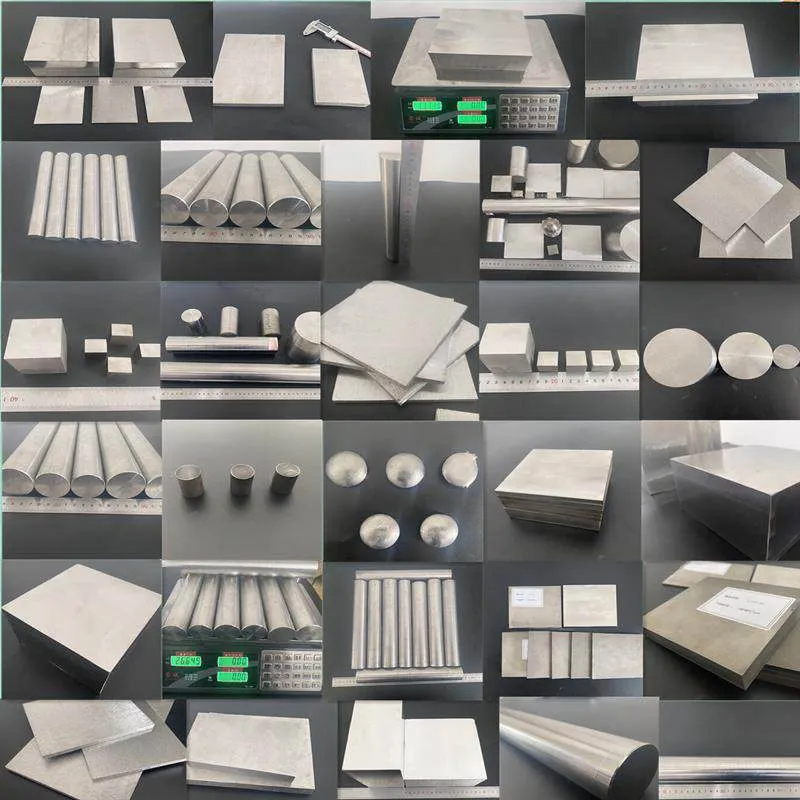
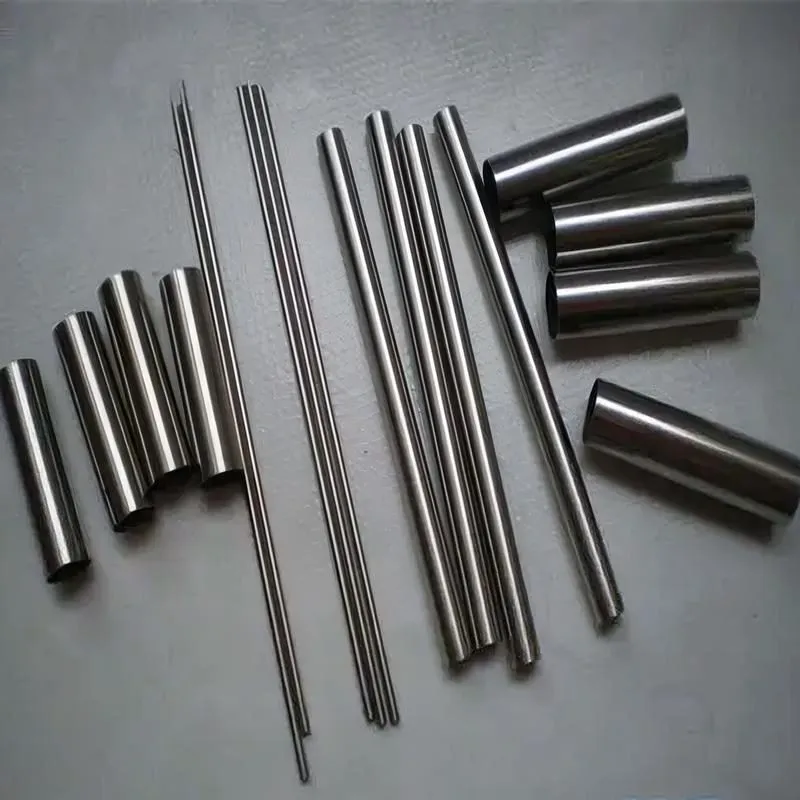
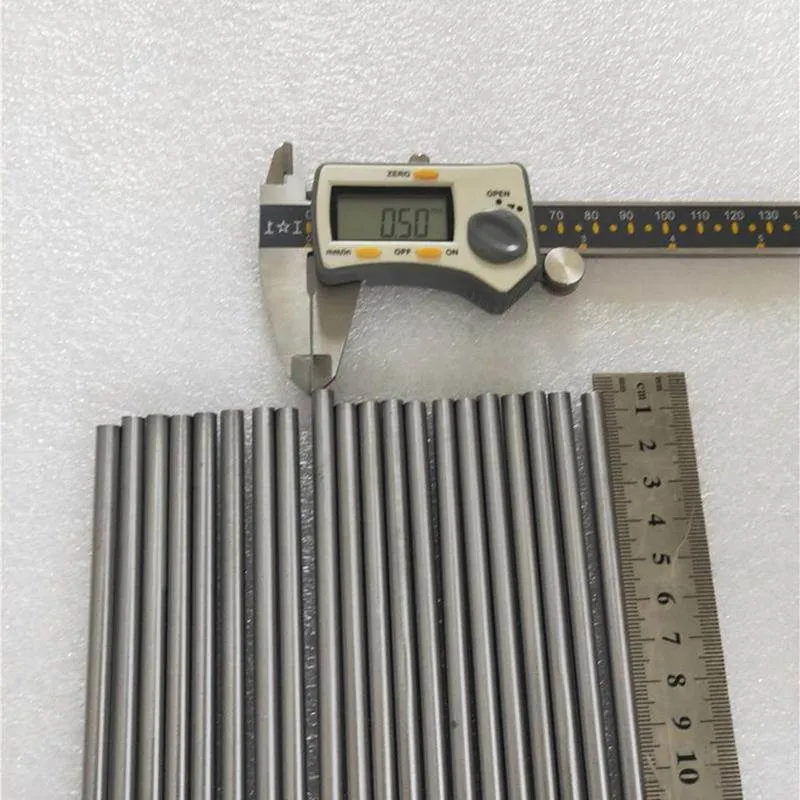
We provide AISI 5046H Steel is available in Bar (Round bar, Flat bar), Ribbon, Wire, Rods, Tube,Seamless Tube,Pipe, Ingots, Plate, Sheet, Strip and Forging Stock.,Purity, chemical composition, size, etc. can all be customized to meet specific requirements.
Please contact us if you need customized services. We will contact you with the price and availability in 24 hours.
AISI 5046H Steel Product Information
-:-
For detailed product information, please contact sales.
-:
AISI 5046H Steel Synonyms
-:-
For detailed product information, please contact sales.
-:
AISI 5046H Steel Product Information
-:-
For detailed product information, please contact sales.
-:
**Product Datasheet: AISI 5046H Chromium Alloy H-Steel**
---
## **1. Product Overview**
AISI 5046H is a **medium-carbon chromium alloy steel supplied to specific hardenability requirements**, as indicated by the **"H" suffix**. This designation ensures the material meets defined bands of hardenability as per the end-quench (Jominy) test, guaranteeing **consistent and predictable through-hardening characteristics** in production. The steel provides a balanced combination of strength, toughness, and wear resistance after quenching and tempering, with the added assurance of uniform response to heat treatment across different manufacturing lots. It is a cost-effective choice for critical components where reliable core properties are essential.
---
## **2. Key International & Equivalent Standards**
| Region/System | Standard Designation | Description |
| :--- | :--- | :--- |
| **USA (Primary)** | **SAE J404, J412, J770** | Standard designation: **AISI 5046H** |
| **USA (Hardenability)** | **ASTM A304** | Standard Specification for Alloy Steel Bars Subject to End-Quench Hardenability Requirements |
| **USA (Material)** | **ASTM A29/A29M** | Standard Specification for Steel Bars, Carbon and Alloy, Hot-Wrought |
| **Europe (Functional Similar)** | Similar concept to **46Cr2 with specified hardenability** | No direct "H" equivalent in EN; closest material is **1.7006** with supplementary requirements. |
| **Japan (Similar)** | **SCr445H (JIS G4105)** | Designates chromium steel for machine structural use with hardenability bands. |
**Core Principle:** The "H" designation shifts the primary acceptance criterion from strict chemistry to **guaranteed hardenability performance**. The steel must conform to a published Jominy curve band within the limits of ASTM A304.
---
## **3. Chemical Composition (Weight %)**
*Typical ranges for hardenability control. Actual composition may vary to achieve the specified H-band.*
| Element | Minimum | Maximum | Typical | Primary Function |
| :--- | :--- | :--- | :--- | :--- |
| **Carbon (C)** | 0.44 | 0.49 | 0.46 | Primary determinant of attainable hardness and strength. |
| **Manganese (Mn)** | 0.70 | 0.90 | 0.80 | Enhances hardenability and strength. |
| **Phosphorus (P)** | — | 0.035 | 0.020 | Residual impurity (controlled). |
| **Sulfur (S)** | — | 0.040 | 0.025 | Improves machinability via MnS inclusions. |
| **Silicon (Si)** | 0.15 | 0.35 | 0.25 | Deoxidizer, provides solid solution strengthening. |
| **Chromium (Cr)** | 0.20 | 0.35 | 0.27 | Improves hardenability, wear resistance, and tempering stability. |
| **Residuals (Ni, Mo, Cu)** | Report | Typically ≤ 0.35% each | | Minor influence. |
**Critical Note:** For AISI 5046H, the permissible chemical composition range is intentionally wider than for standard 5046. The final chemistry for a given heat is optimized to ensure the Jominy test results fall within the specified hardenability band.
---
## **4. Hardenability & Mechanical Properties**
### **Guaranteed Hardenability (Per ASTM A304)**
- The material is supplied to a specific **Hardenability Band** (e.g., H1, H2, etc.), which defines the allowable minimum and maximum hardness values at standard distances on the Jominy end-quench test specimen.
- **Typical Jominy Curve Characteristic:** AISI 5046H exhibits moderate hardenability. A hardness of **40 HRC is typically maintained to a distance of approximately J10 to J15 (10-15 mm from the quenched end)** under standard test conditions.
- This performance translates to reliable **through-hardening in oil for sections up to about 30-50 mm (1.2-2 inches) in diameter**, depending on the specific H-band and quenching conditions.
### **Mechanical Properties (After Quench & Temper)**
*Properties are achieved after austenitizing at 830-860°C (1525-1580°F), oil quenching, and tempering. Values are typical for medium sections.*
| Tempering Temperature | Tensile Strength | Yield Strength (0.2%) | Elongation (%) | Reduction of Area (%) | Typical Hardness (HRC) |
| :--- | :--- | :--- | :--- | :--- | :--- |
| **As-Quenched** | — | — | — | — | 55 - 60 (approx.) |
| **200°C (400°F)** | 1550 - 1750 MPa | 1350 - 1550 MPa | 9 - 12 | 35 - 45 | 50 - 54 |
| **425°C (800°F)** | 1150 - 1300 MPa | 1050 - 1200 MPa | 13 - 16 | 45 - 55 | 38 - 42 |
| **540°C (1000°F)** | 950 - 1100 MPa | 850 - 1000 MPa | 16 - 20 | 50 - 60 | 30 - 34 |
| **650°C (1200°F)** | 750 - 850 MPa | 650 - 750 MPa | 20 - 25 | 55 - 65 | 23 - 27 |
### **Physical Properties**
- **Density:** 7.85 g/cm³
- **Modulus of Elasticity:** 205 GPa
- **Poisson's Ratio:** 0.29
- **Machinability (Annealed):** Good (~65% of 1212 steel standard).
---
## **5. Heat Treatment Guidelines**
| Process | Key Parameters | Objective / Notes |
| :--- | :--- | :--- |
| **Annealing** | 830-860°C (1525-1580°F), slow cool. | Soften for machining (~187-229 HB). |
| **Normalizing** | 870-900°C (1600-1650°F), air cool. | Grain refinement. |
| **Hardening** | Austenitize: 830-860°C (1525-1580°F). Quench: **Oil**. | Achieve full martensitic transformation in core. |
| **Tempering** | **Immediate** temper after quench. 400-650°C (750-1200°F), 1-2 hrs/inch. | Relieve stresses, set final strength/toughness. |
---
## **6. Primary Applications**
AISI 5046H is specified for **critical, heat-treated components** where consistent core properties and predictable manufacturing are paramount, particularly in automotive and heavy machinery sectors:
- **Automotive:** Transmission gears, axle shafts, steering components (pitman arms, idler arms), crankshafts, and high-stress fasteners.
- **Heavy Equipment:** Gears, drive shafts, sprockets, rollers, and pivot pins for agricultural and construction machinery.
- **Industrial Components:** Pump shafts, spindle rods, couplings, and other machinery parts subjected to torsional and bending fatigue.
- **Forgings:** High-integrity forged parts requiring uniform hardening and reliable impact resistance.
---
## **7. Key Advantages & Selection Rationale**
- **Manufacturing Consistency:** The **H-band guarantee** ensures uniform hardenability from lot to lot, reducing heat treatment variability and scrap rates in high-volume production.
- **Predictable Performance:** Design engineers can reliably predict the core hardness and strength profile across a part's cross-section, leading to more robust and optimized designs.
- **Quality Assurance:** Mill certification includes actual Jominy hardenability data, providing verifiable proof of performance beyond simple chemistry.
- **Cost-Effective Reliability:** Offers the assurance of a controlled-hardenability steel at a cost point between plain carbon steels and higher-alloy grades like 41xxH steels.
---
## **Important Processing & Design Considerations**
- **Weldability:** **Poor.** Preheating (200-300°C / 400-570°F) and strict control using low-hydrogen processes are mandatory. Post-weld heat treatment (PWHT) is strongly recommended.
- **Decarburization Prevention:** Use controlled atmosphere or protective coatings during heating for hardening to preserve surface carbon content and final hardness.
- **Section Size Limitation:** For sections significantly larger than 50 mm, the guaranteed through-hardening may not be achieved; verification for the specific H-band and quenching severity is required.
- **Notch Sensitivity:** In high-strength conditions, components are sensitive to surface defects and sharp radii. Proper finishing (grinding, shot peening) and generous fillets are crucial for fatigue-critical parts.
---
**Disclaimer:**
This datasheet provides characteristic data. For specification, **AISI 5046H must be ordered to ASTM A304 with a specified Hardenability Band**. Final properties depend on part geometry, quenching conditions, and tempering practice. Prototype testing under simulated service conditions is essential for critical applications. The manufacturer's processing guidelines and certified mill test reports should always govern production.
-:-
For detailed product information, please contact sales.
-:
AISI 5046H Steel Specification
Dimensions
Size:
Diameter 20-1000 mm Length <4098 mm
Size:We can customized as required
Standard:
Per your request or drawing
We can customized as required
Properties(Theoretical)
Chemical Composition
-:-
For detailed product information, please contact sales.
-:
AISI 5046H Steel Properties
-:-
For detailed product information, please contact sales.
-:
Applications of AISI 5046H Steel
-:-
For detailed product information, please contact sales.
-:
Chemical Identifiers AISI 5046H Steel
-:-
For detailed product information, please contact sales.
-:
Packing of AISI 5046H Steel
-:-
For detailed product information, please contact sales.
-:
Standard Packing:
-:-
For detailed product information, please contact sales.
-:
Typical bulk packaging includes palletized plastic 5 gallon/25 kg. pails, fiber and steel drums to 1 ton super sacks in full container (FCL) or truck load (T/L) quantities. Research and sample quantities and hygroscopic, oxidizing or other air sensitive materials may be packaged under argon or vacuum. Solutions are packaged in polypropylene, plastic or glass jars up to palletized 569 gallon liquid totes Special package is available on request. E FORUs’ is carefully handled to minimize damage during storage and transportation and to preserve the quality of our products in their original condition