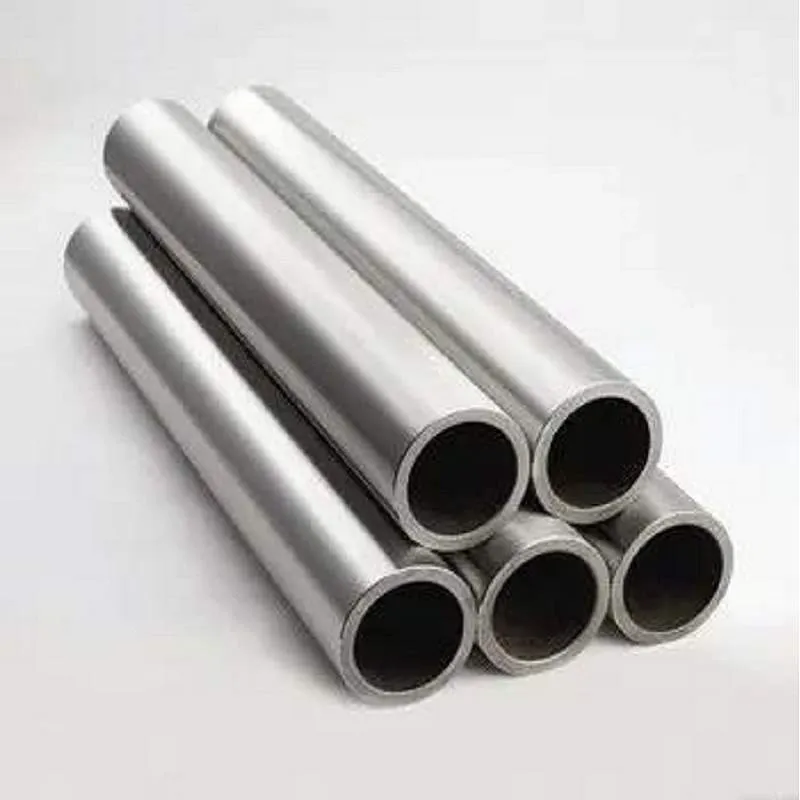
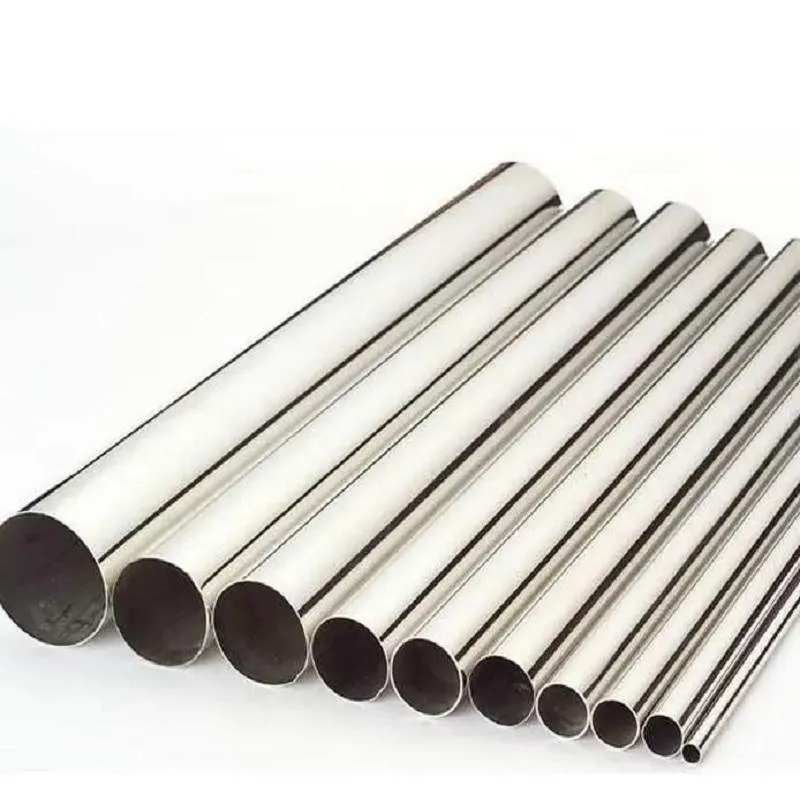
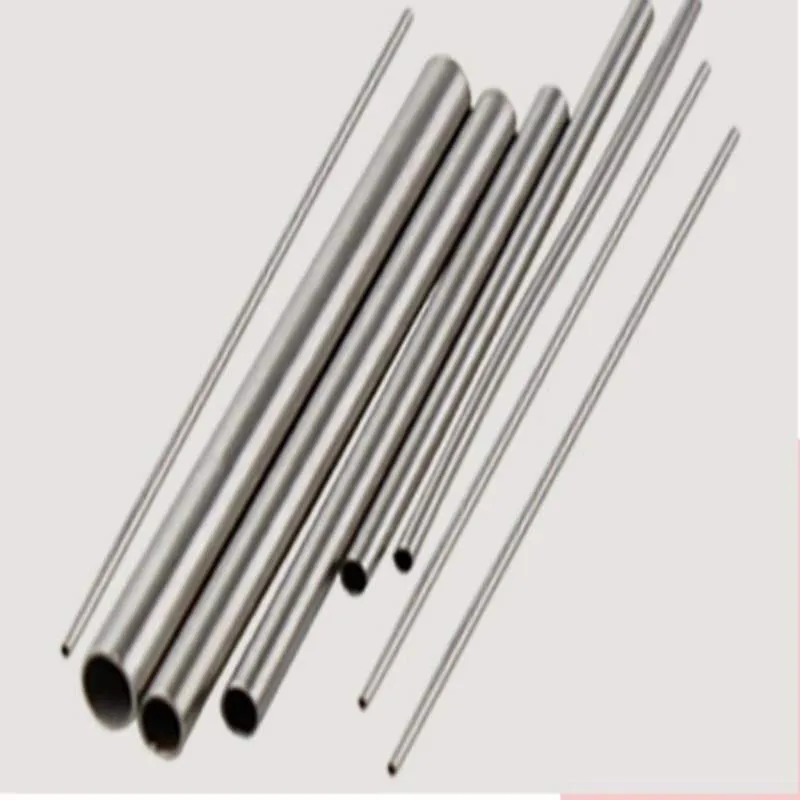
AISI 50B44H Steel Seamless tube
Product Code : STI-AL-098-CU
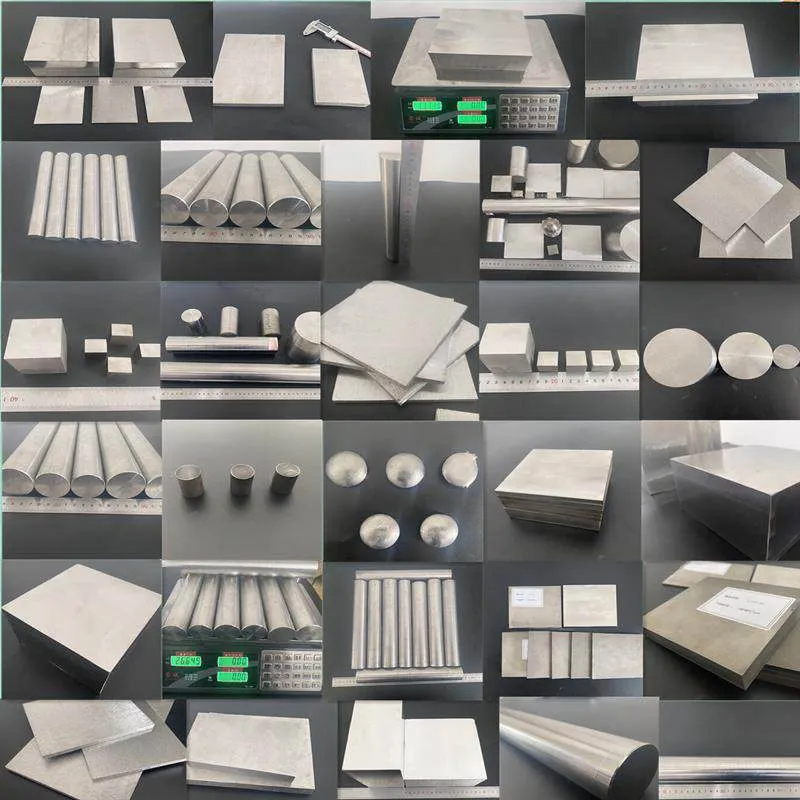
We provide AISI 50B44H Steel Seamless tube is available in Bar (Round bar, Flat bar), Ribbon, Wire, Rods, Tube,Seamless Tube,Pipe, Ingots, Plate, Sheet, Strip and Forging Stock.,Purity, chemical composition, size, etc. can all be customized to meet specific requirements.
Please contact us if you need customized services. We will contact you with the price and availability in 24 hours.
AISI 50B44H Steel Seamless tube Product Information
-:-
For detailed product information, please contact sales.
-:
AISI 50B44H Steel Seamless tube Synonyms
-:-
For detailed product information, please contact sales.
-:
AISI 50B44H Steel Product Information
-:-
For detailed product information, please contact sales.
-:
**Product Datasheet: AISI 50B44H Boron-Treated Hardenability Steel**
---
### **1. Product Overview**
AISI 50B44H is a **medium-carbon, boron-treated alloy steel supplied with guaranteed hardenability characteristics**, designated by the "H" suffix. This specification ensures the steel will consistently meet defined depth-of-hardness requirements, making it a reliable and cost-effective choice for **high-volume production of critical, heat-treated components**. The intentional boron addition provides exceptional hardenability—equivalent to steels with higher alloy content—while maintaining a leaner, more economical chemical composition. It is primarily used in the quenched and tempered condition to achieve an optimal balance of strength, toughness, and wear resistance.
---
### **2. Key International & Equivalent Standards**
| Region/System | Standard Designation | Description |
| :--- | :--- | :--- |
| **USA (Primary)** | **SAE J404, J412, J770** | Standard designation: **AISI 50B44H** |
| **USA (Hardenability)** | **ASTM A304** | Standard Specification for Alloy Steel Bars Subject to End-Quench Hardenability Requirements |
| **USA (Material)** | **ASTM A29/A29M** | Standard Specification for Steel Bars, Carbon and Alloy, Hot-Wrought |
| **Europe (Functional Equivalent)** | Similar to **34CrB4 (1.7321) + H** concept | No direct equivalent; European EN standards less commonly specify boron H-steels. |
| **Japan (Similar)** | Approx. **SCr440H-B (Modified)** | JIS G4052/4053 (Alloy steels for machine structural use) |
**Core Concept:** The "H" designation signifies the steel is purchased to meet specific **end-quench (Jominy) hardenability bands** as defined in ASTM A304, not just chemical composition ranges. This guarantees predictable and uniform heat treatment response.
---
### **3. Chemical Composition (Weight %)**
*Typical ladle ranges for hardenability control. Actual composition may vary to meet the H-band requirement.*
| Element | Minimum | Maximum | Typical | Primary Function |
| :--- | :--- | :--- | :--- | :--- |
| **Carbon (C)** | 0.42 | 0.49 | 0.44 | Primary strength & hardness. |
| **Manganese (Mn)** | 0.75 | 1.00 | 0.85 | Base hardenability, strength. |
| **Phosphorus (P)** | — | 0.035 | 0.020 | Residual impurity (controlled). |
| **Sulfur (S)** | — | 0.040 | 0.025 | Improves machinability. |
| **Silicon (Si)** | 0.15 | 0.35 | 0.25 | Deoxidizer, solid solution strengthener. |
| **Boron (B)** | 0.0005 | 0.003 | 0.0015 | **Critical Hardenability Enhancer.** Maximizes depth of hardening efficiently. |
| **Residual Alloys (Cr, Ni, Mo)** | Report or as agreed | Typically ≤ 0.35% each | | Minor contributions. |
**Note for "H" Steels:** The acceptable chemical composition range is typically wider than for non-"H" grades. The **Jominy Hardenability Test** is the governing acceptance criterion.
---
### **4. Hardenability & Mechanical Properties**
#### **Guaranteed Hardenability (ASTM A304)**
- The steel is supplied to a specific **Hardenability Band** (e.g., Band H1, H2, etc.), which defines the allowable range of hardness values at given distances on the Jominy end-quench test bar.
- **Typical Jominy Performance:** Due to boron, 50B44H exhibits a relatively flat hardenability curve. A hardness of **40 HRC can typically be maintained out to J20-J30 (20-30 mm from quenched end)** or further, depending on the specific heat's chemistry and grain size.
- This ensures **consistent through-hardening** in oil for sections up to approximately **75-100 mm (3-4 inches)** in diameter.
#### **Mechanical Properties (After Quench & Temper)**
*Properties are a function of tempering temperature. Below are typical ranges.*
| Tempering Temperature | Tensile Strength | Yield Strength (0.2%) | Elongation (%) | Reduction of Area (%) | Typical Hardness (HRC) |
| :--- | :--- | :--- | :--- | :--- | :--- |
| **200°C (400°F)** | 1650 - 1850 MPa | 1400 - 1650 MPa | 8 - 12 | 35 - 45 | 50 - 55 |
| **425°C (800°F)** | 1250 - 1400 MPa | 1100 - 1250 MPa | 12 - 16 | 45 - 55 | 38 - 43 |
| **540°C (1000°F)** | 1000 - 1150 MPa | 850 - 1000 MPa | 16 - 20 | 50 - 60 | 30 - 35 |
| **650°C (1200°F)** | 750 - 850 MPa | 650 - 750 MPa | 20 - 25 | 60 - 65 | 22 - 27 |
#### **Physical Properties**
- **Density:** 7.85 g/cm³
- **Modulus of Elasticity (Young's):** 205 GPa
- **Poisson's Ratio:** 0.29
- **Machinability (Annealed):** Fair (approx. 60% of 1212 steel standard).
---
### **5. Heat Treatment Guidelines**
| Process | Parameters | Notes |
| :--- | :--- | :--- |
| **Forging** | 1150°C - 900°C (2100°F - 1650°F) | Do not forge below 850°C (1560°F). Anneal after forging. |
| **Annealing** | 830°C - 860°C (1525°F - 1580°F), slow cool | For optimal machinability (~187-229 HB). |
| **Normalizing** | 870°C - 900°C (1600°F - 1650°F), air cool | Refines grain structure. |
| **Austenitizing** | 830°C - 860°C (1525°F - 1580°F) | Use protective atmosphere to prevent decarburization. |
| **Quenching** | **Oil quench** (rapid agitation recommended) | Excellent through-hardening in oil due to boron. |
| **Tempering** | **Immediately after quench.** 200°C - 650°C (400°F - 1200°F), 1-2 hrs per inch of thickness. | Mandatory to relieve stresses and achieve desired toughness. |
---
### **6. Primary Applications**
AISI 50B44H is selected for **high-stress components** requiring consistent, predictable hardening in manufacturing, particularly in the automotive and heavy equipment sectors:
- **Automotive:** Axle shafts (rear axle), torsion bars, steering knuckles, high-strength bolts (Grade 10.9+), gear blanks, crankshafts.
- **Agricultural & Construction:** Gears, drive shafts, track rollers, pivot pins, plow beams, harrow discs.
- **General Engineering:** Hydraulic piston rods, spindles, couplings, large fasteners, and machinery parts subject to high bending/torsional loads.
- **Industrial Fasteners:** High-performance studs, bolts, and special fasteners requiring guaranteed core properties.
---
### **7. Key Advantages & Selection Rationale**
- **Consistent Performance:** The **H-band guarantee** ensures uniform heat treatment response from batch to batch, critical for automated production and quality control.
- **Cost-Effective Strength:** Achieves hardenability and strength levels similar to more expensive steels like 4140H or 4340H, offering significant material cost savings.
- **Design Flexibility:** Suitable for larger cross-sections where uniform through-hardening is required with a relatively mild quench (oil), minimizing distortion and cracking risks.
- **Quality Assurance:** Supplied with certified mill test reports including actual Jominy hardenability data, providing engineers with reliable data for design and process validation.
---
### **Important Processing Notes & Limitations**
- **Weldability:** **Poor.** Requires careful procedure: low-hydrogen electrodes, preheating (200-300°C / 400-570°F), and post-weld tempering are essential to prevent cold cracking.
- **Boron Effectiveness:** Hardenability depends on "active" boron. Steelmaking must control nitrogen (often via Ti or Al additions) to prevent boron nitride formation.
- **Notch Sensitivity:** In high-hardness conditions (>45 HRC), components are sensitive to sharp notches and surface defects; proper fillet design and good surface finish are critical.
- **Distortion Control:** Although oil quenching is less severe, complex parts may still distort. Martempering (hot oil quench) can be used to reduce thermal gradients and distortion.
---
**Disclaimer:**
This datasheet provides characteristic values based on industry standards and typical processing. For critical applications, the material must be ordered to **ASTM A304** with a specified hardenability band. Final mechanical properties are dependent on the component's geometry, exact heat treatment parameters, and prior processing history. Prototype testing under simulated service conditions is strongly recommended.
-:-
For detailed product information, please contact sales.
-:
AISI 50B44H Steel Specification
Dimensions
Size:
Diameter 20-1000 mm Length <4096 mm
Size:We can customized as required
Standard:
Per your request or drawing
We can customized as required
Properties(Theoretical)
Chemical Composition
-:-
For detailed product information, please contact sales.
-:
AISI 50B44H Steel Properties
-:-
For detailed product information, please contact sales.
-:
Applications of AISI 50B44H Steel Seamless tube
-:-
For detailed product information, please contact sales.
-:
Chemical Identifiers AISI 50B44H Steel Seamless tube
-:-
For detailed product information, please contact sales.
-:
Packing of AISI 50B44H Steel Seamless tube
-:-
For detailed product information, please contact sales.
-:
Standard Packing:
-:-
For detailed product information, please contact sales.
-:
Typical bulk packaging includes palletized plastic 5 gallon/25 kg. pails, fiber and Steel Seamless tube drums to 1 ton super sacks in full container (FCL) or truck load (T/L) quantities. Research and sample quantities and hygroscopic, oxidizing or other air sensitive materials may be packaged under argon or vacuum. Solutions are packaged in polypropylene, plastic or glass jars up to palletized 567 gallon liquid totes Special package is available on request. E FORUs’ is carefully handled to minimize damage during storage and transportation and to preserve the quality of our products in their original condition