Bethlehem Steel ASTM A529 Grade 50, as-rolled steel
Product Code : STI-ASTM-473-CU
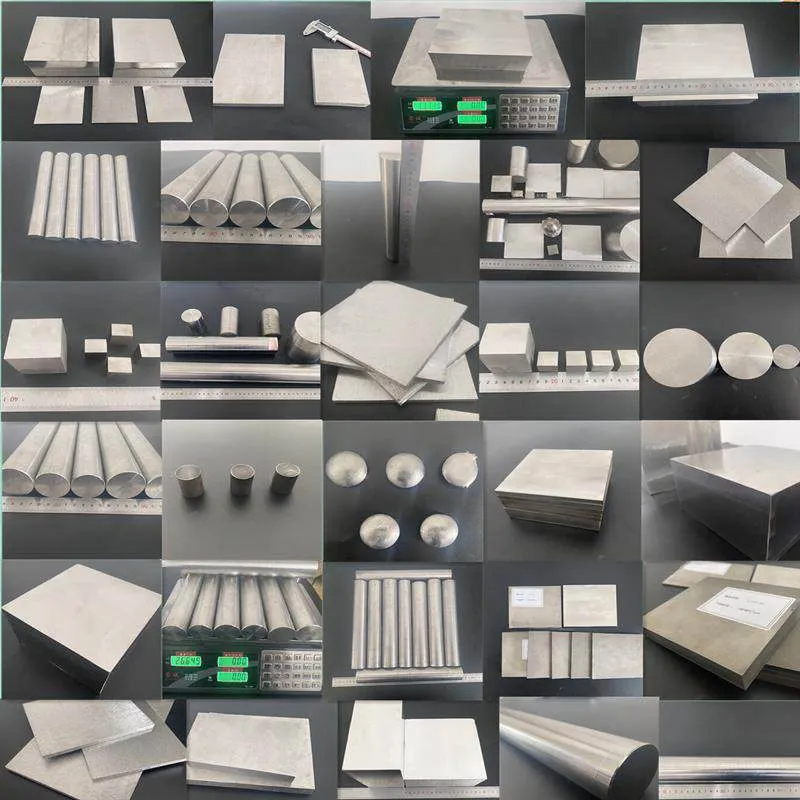
We provide Bethlehem Steel ASTM A529 Grade 50 3/16 to 1 in. thick, as-rolled steel plate is available in Bar (Round bar, Flat bar), Ribbon, Wire, Rods, Tube,Seamless Tube,Pipe, Ingots, Plate, Sheet, Strip and Forging Stock.,Purity, chemical composition, size, etc. can all be customized to meet specific requirements.
Please contact us if you need customized services. We will contact you with the price and availability in 24 hours.
Bethlehem Steel ASTM A529 Grade 50 3/16 to 1 in. thick, as-rolled steel plate Product Information
-:-
For detailed product information, please contact sales.
-:
Bethlehem Steel ASTM A529 Grade 50 3/16 to 1 in. thick, as-rolled steel plate Synonyms
-:-
For detailed product information, please contact sales.
-:
Bethlehem Steel ASTM A529 Grade 50 3/16 to 1 in. thick, as-rolled steel plate Product Information
-:-
For detailed product information, please contact sales.
-:
# **Bethlehem Steel ASTM A529 Grade 50 (3/16" to 1" thick) As-Rolled High-Strength Carbon Steel Plate**
---
## **1. Overview**
Bethlehem Steel's **ASTM A529 Grade 50** plate is a **high-strength carbon-manganese structural steel** designed to provide a substantial **50 ksi (345 MPa) minimum yield strength** in the moderate thickness range of **3/16" to 1"**. Supplied in the **as-rolled condition**, this material delivers a **39% increase in yield strength** over standard A36 steel, enabling significant weight reduction and higher load capacity in structural designs. As the higher-strength variant within the A529 specification, Grade 50 achieves its performance primarily through an elevated carbon-manganese chemistry, making it a **cost-competitive alternative to microalloyed HSLA grades** like A572 Grade 50 for many applications. It is a preferred choice for fabricators seeking an economical, high-strength plate with well-understood welding and forming characteristics.
---
## **2. International Standards**
This product conforms to the standard for high-strength carbon-manganese structural steel:
* **Primary Standard: ASTM A529 / A529M** – Standard Specification for High-Strength Carbon-Manganese Steel of Structural Quality.
* **Grade Designation:** **50** (indicating 50 ksi minimum yield strength). This is the higher-strength option alongside Grade 42 within the same specification.
* **Key Metallurgical Distinction:** Unlike ASTM A572 (HSLA), A529 is a **carbon-strengthened steel**, not microalloyed. Its strength is derived from higher levels of carbon and manganese rather than additions of Niobium (Nb) or Vanadium (V).
* **Related/Competing Standards:**
* **ASTM A572 Grade 50:** The most common microalloyed HSLA grade with 50 ksi yield. Often compared directly.
* **ASTM A36:** The baseline carbon structural steel (36 ksi yield).
* **ASTM A992:** For rolled structural shapes (50-65 ksi yield).
---
## **3. Chemical Composition (Typical, % by Weight)**
The chemistry is a balanced, higher-carbon, higher-manganese formula optimized for 50 ksi yield strength and rolling response.
| Element | Content (Maximum, per ASTM A529 Grade 50) | Role & Implication |
| :--- | :--- | :--- |
| **Carbon (C)** | **0.30% max** | The primary strengthening element. At the high end for common weldable structural steels, directly driving the 50 ksi yield strength. This results in a **higher Carbon Equivalent (CE)**, demanding careful welding procedure. |
| **Manganese (Mn)** | **1.20% max** | Elevated to work with carbon, providing solid solution strengthening and enhancing hardenability. |
| **Phosphorus (P)** | 0.04% max | Residual; kept low. |
| **Sulfur (S)** | 0.05% max | Residual; controlled. |
| **Silicon (Si)** | 0.40% max | Deoxidizer (killed steel practice), contributes to strength. |
| **Copper (Cu)** | 0.20% min (when specified) | Optional for enhanced atmospheric corrosion resistance. |
| **Key Characteristic:** | **High Carbon Equivalent (CE).** Typical CE ranges from **0.45 to 0.52**. This is significantly higher than A36 (~0.38-0.42) and comparable to some higher-carbon steels. It is the defining feature for fabrication: **excellent strength but requires stringent welding controls.** | |
---
## **4. Physical & Mechanical Properties (As-Rolled)**
Properties are reliable within this specified thickness range.
| Property | ASTM A529 Grade 50 Specification Minimum | Typical Value (3/16" - 1" thick) |
| :--- | :--- | :--- |
| **Yield Strength (min)** | **50 ksi (345 MPa)** | Typically 50-58 ksi. |
| **Tensile Strength** | **65 - 100 ksi (450 - 690 MPa)** | Typically 65-80 ksi. The wide allowable range accommodates variations in rolling and cooling but ensures a minimum. |
| **Elongation in 2" (min)** | **18%** (for material up to 3/4" thick) | Typically 18-22%. Maintains adequate ductility for structural needs. |
| **Yield-to-Tensile Ratio** | N/A | Typically 0.77 - 0.85. Higher than mild steels, indicating less uniform elongation but high elastic capacity. |
| **Modulus of Elasticity** | 29,000 ksi (200 GPa) | |
| **Notch Toughness** | **Not specified** in the base standard. | Generally fair for static loading but **not guaranteed for impact or low-temperature service**. Not suitable for fracture-critical applications without supplemental testing. |
| **Surface Finish** | Standard hot-rolled mill finish. | |
---
## **5. Key Features & Advantages**
* **High Strength at Competitive Cost:** Provides 50 ksi yield strength, often at a lower cost per ksi than microalloyed HSLA grades, due to its simpler chemistry.
* **Excellent Static Load Capacity:** Ideal for heavily loaded beams, columns, and plates in buildings and structures where weight savings are a priority.
* **Good Machinability:** The carbon content promotes good chip formation and surface finish.
* **Proven, Predictable Material:** As a traditional carbon-manganese steel, its behavior during fabrication is well-documented and predictable for experienced shops.
* **Widely Available:** Produced by most major mills and readily available from service centers.
---
## **6. Product Applications**
ASTM A529 Grade 50 is specified for structural applications where its strength and economy are advantageous:
* **Building Construction:** Heavy beams, columns, truss chords, and built-up sections in commercial and industrial buildings.
* **Bridge Components:** Girder webs, stiffeners, connection plates, and cross frames where higher strength reduces plate thickness.
* **Industrial Structures:** Heavy-duty support frames, crane runway beams, and mezzanine structures.
* **Material Handling & Storage:** Uprights and beams for heavy-duty pallet racking systems.
* **General Heavy Fabrication:** Base plates, weldments, and machinery components requiring 50 ksi strength.
---
## **7. Fabrication & Processing Notes**
Fabrication requires respect for the material's higher carbon content and hardenability.
* **Cutting:** All standard methods apply. **Flame cutting** is common but requires attention for thicknesses over 1/2".
* **Forming:** **Moderate cold formability.** Requires more force and larger bend radii than A36. Minimum recommended inside bend radius is typically **2.5t to 3.5t**. **Hot forming is preferred for tight radii or complex shapes.**
* **Welding:** **Requires strict, controlled procedures due to high carbon equivalent (CE). This is the most critical aspect of fabrication.**
* **Preheat: MANDATORY.** For thicknesses **over 1/2"**, a preheat of **200-300°F (95-150°C)** is **essential** to prevent hydrogen-induced (cold) cracking. For thinner material or in cold ambient conditions, preheat is still strongly recommended.
* **Electrodes/Process: Low-hydrogen practice is non-negotiable.** Use **E7018** electrodes for SMAW. For GMAW/FCAW, use deoxidized wires (ER70S-6, E71T-1). Electrodes must be properly baked and stored.
* **Interpass Temperature:** Maintain preheat, maximum 400-450°F (205-230°C).
* **Post-Weld Heat Treatment (PWHT):** Often **recommended for thicknesses over 3/4"** to relieve residual stresses, especially in highly restrained joints.
* **Comparison to A572 Gr. 50 Welding:** **A529 Gr. 50 is less forgiving to weld** than microalloyed A572 Gr. 50 due to its higher CE. A572 typically requires less preheat and has a lower risk of HAZ cracking.
---
## **8. Modern Perspective & Comparison**
* **vs. ASTM A572 Grade 50:** The direct competitor. Both offer 50 ksi yield.
* **A572:** **Microalloyed (Nb/V).** Generally better weldability (lower CE), better toughness, and often better formability. **Modern preferred choice for most new designs.**
* **A529:** **Carbon-strengthened.** Often slightly lower cost, excellent machinability. Requires more careful welding. **Still used, especially in non-dynamic applications or where cost is a primary driver.**
* **vs. ASTM A36:** **Much stronger (50 vs 36 ksi).** Used when A36 sections become too bulky.
* **vs. ASTM A992:** A992 is for shapes (I-beams); A529 Grade 50 is for plate used in conjunction with them.
* **Current Status:** ASTM A529 Grade 50 remains in production and is specified, particularly in certain construction sectors and for specific fabricator preferences. However, for applications where weldability and toughness are concerns, **A572 Grade 50 has largely become the industry standard.**
---
**Disclaimer:**
*This profile describes a high-strength structural steel with specific fabrication requirements. Bethlehem Steel is now part of Cleveland-Cliffs Inc.*
**Critical Recommendations:**
1. **Consult the latest ASTM A529 specification.**
2. **Welding Procedure Specification (WPS) must be qualified** according to AWS D1.1 for the specific thickness and joint design.
3. **Preheat is not optional.** Undercutting on preheat can lead to catastrophic cracking.
4. For new designs where weldability is a major consideration, **evaluate ASTM A572 Grade 50 as a potentially more fabricator-friendly alternative.**
5. Always review the certified Mill Test Report (MTR) for the actual Carbon and Manganese content to calculate the precise Carbon Equivalent for welding procedure development.
-:-
For detailed product information, please contact sales.
-:
Bethlehem Steel ASTM A529 Grade 50 3/16 to 1 in. thick, as-rolled steel plate Specification
Dimensions
Size:
Diameter 20-1000 mm Length <4623 mm
Size:We can customized as required
Standard:
Per your request or drawing
We can customized as required
Properties(Theoretical)
Chemical Composition
-:-
For detailed product information, please contact sales.
-:
Bethlehem Steel ASTM A529 Grade 50 3/16 to 1 in. thick, as-rolled steel plate Properties
-:-
For detailed product information, please contact sales.
-:
Applications of Bethlehem Steel ASTM A529 Grade 50 3/16 to 1 in. thick, as-rolled steel plate
-:-
For detailed product information, please contact sales.
-:
Chemical Identifiers Bethlehem Steel ASTM A529 Grade 50 3/16 to 1 in. thick, as-rolled steel plate
-:-
For detailed product information, please contact sales.
-:
Packing of Bethlehem Steel ASTM A529 Grade 50 3/16 to 1 in. thick, as-rolled steel plate
-:-
For detailed product information, please contact sales.
-:
Standard Packing:
-:-
For detailed product information, please contact sales.
-:
Typical bulk packaging includes palletized plastic 5 gallon/25 kg. pails, fiber and steel drums to 1 ton super sacks in full container (FCL) or truck load (T/L) quantities. Research and sample quantities and hygroscopic, oxidizing or other air sensitive materials may be packaged under argon or vacuum. Solutions are packaged in polypropylene, plastic or glass jars up to palletized 1094 gallon liquid totes Special package is available on request. E FORUs’ is carefully handled to minimize damage during storage and transportation and to preserve the quality of our products in their original condition