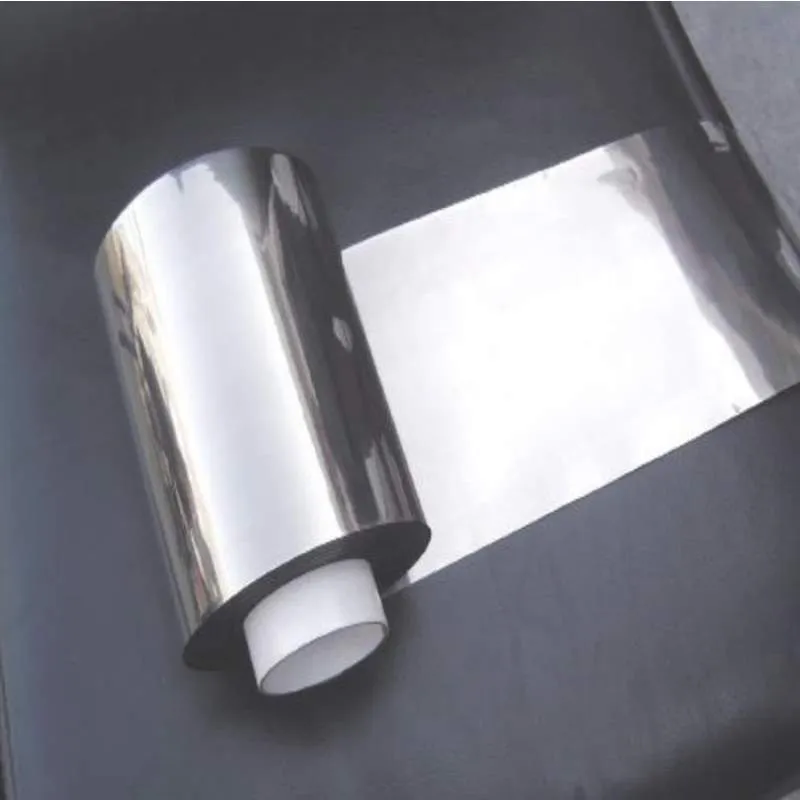
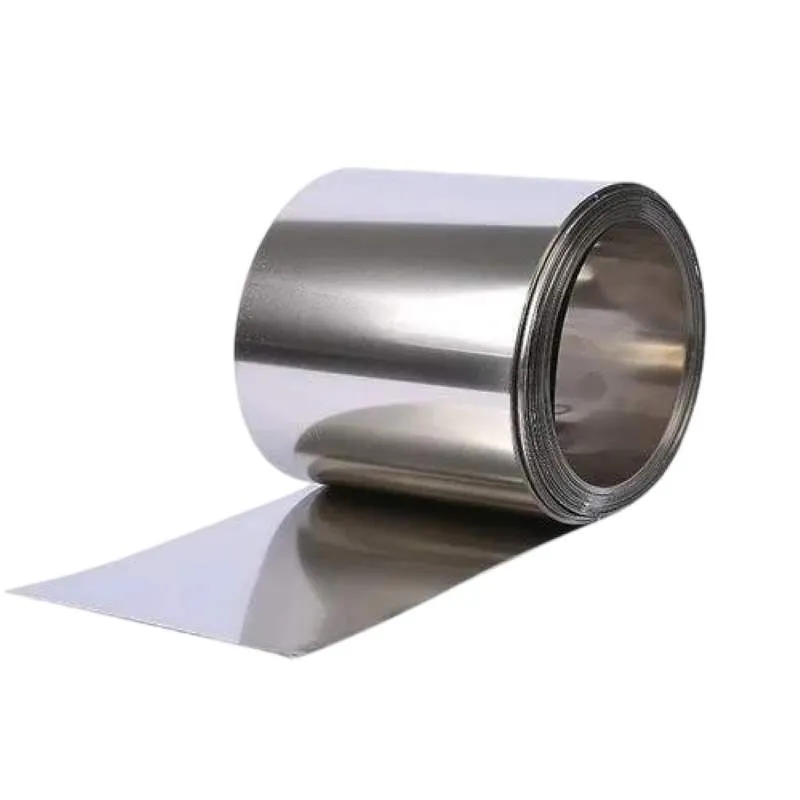
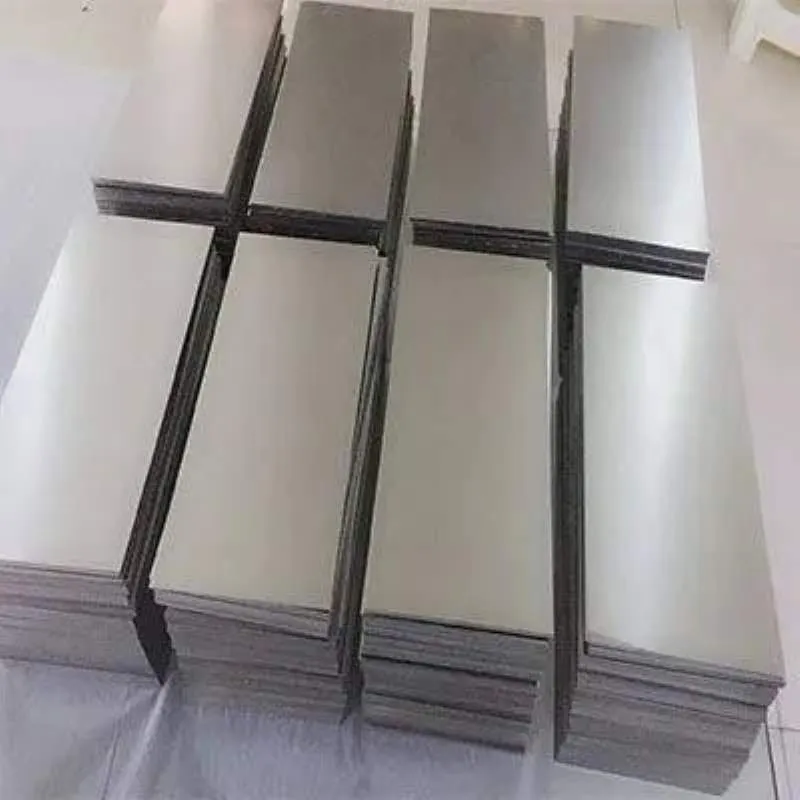
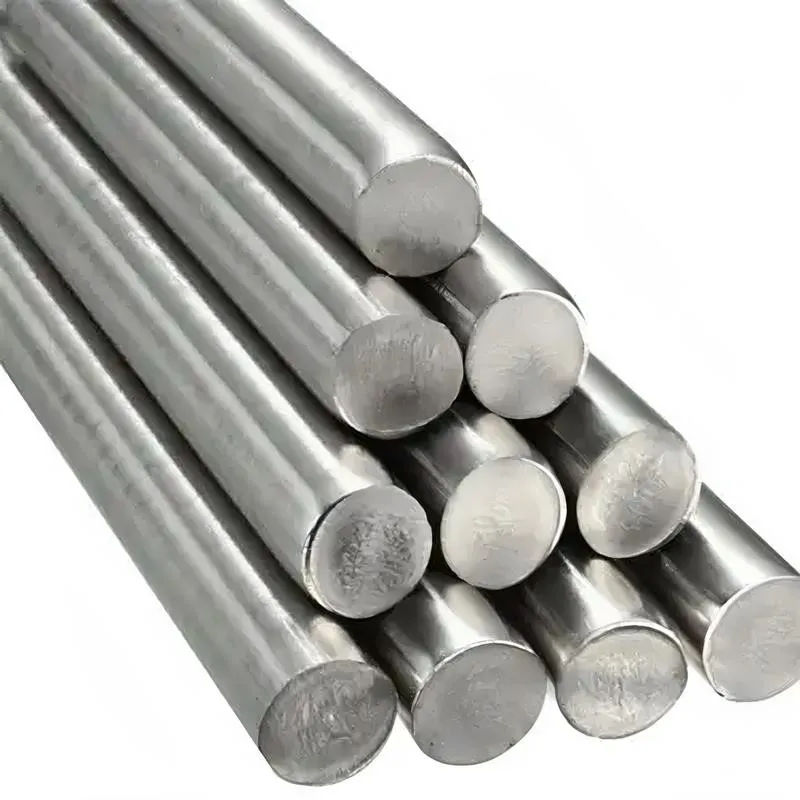
SAE 4621H Alloy Steel Foil/Strip
Product Code : STI-AL-076-CU
We provide SAE 4621H Alloy Steel Foil/Strip, Composition Spec is available in Bar (Round bar, Flat bar), Ribbon, Wire, Rods, Tube,Seamless Tube,Pipe, Ingots, Plate, Sheet, Strip and Forging Stock.,Purity, chemical composition, size, etc. can all be customized to meet specific requirements.
Please contact us if you need customized services. We will contact you with the price and availability in 24 hours.
SAE 4621H Alloy Steel Foil, Composition Spec Product Information
-:-
For detailed product information, please contact sales.
-:
SAE 4621H Alloy Steel Foil, Composition Spec Synonyms
-:-
For detailed product information, please contact sales.
-:
SAE 4621H Alloy Steel, Composition Spec Product Information
-:-
For detailed product information, please contact sales.
-:
# **SAE 4621H Alloy Steel - Hardenability Controlled Specification**
## **Medium Carbon Nickel-Molybdenum Steel with Guaranteed Hardenability Bands**
---
### **1. PRODUCT OVERVIEW**
**SAE 4621H Alloy Steel - Hardenability Controlled**
- **Material Classification:** Medium-carbon nickel-molybdenum alloy steel with controlled hardenability
- **H-Designation Significance:** "H" indicates compliance with hardenability requirements per SAE J1268/ASTM A304
- **Carbon Content:** 0.18-0.23% (medium carbon range for through-hardening)
- **Key Feature:** Guaranteed hardenability response within specified Jominy bands
- **Primary Advantage:** Predictable and consistent heat treatment results across different production lots
- **Typical Forms:** Bars, forgings, billets (commonly supplied in annealed or normalized condition)
**Critical Distinction: 4621 vs. 4621H**
| Aspect | SAE 4621 (Standard) | SAE 4621H (Hardenability Controlled) |
|--------|---------------------|---------------------------------------|
| **Composition Control** | Meets chemical ranges | Chemistry adjusted to hit hardenability targets |
| **Hardenability Guarantee** | No | Yes - specific Jominy bands guaranteed |
| **Lot-to-Lot Consistency** | Variable | High consistency in heat treatment response |
| **Cost** | Standard | Slightly higher due to additional testing/control |
| **Application Criticality** | General purpose | Critical components requiring predictable hardening |
---
### **2. CHEMICAL COMPOSITION SPECIFICATION**
#### **SAE 4621H Standard Composition Ranges:**
| Element | SAE 4621H Range (%) | Aim Composition (%) | Metallurgical Function & Control Importance |
|---------|---------------------|---------------------|---------------------------------------------|
| **Carbon (C)** | 0.18-0.23 | 0.20-0.21 | Primary hardenability control; tightly controlled to center of range |
| **Manganese (Mn)** | 0.70-0.90 | 0.78-0.85 | Major hardenability element; adjusted to compensate for other elements |
| **Silicon (Si)** | 0.15-0.30 | 0.20-0.25 | Secondary effect on hardenability; kept consistent |
| **Nickel (Ni)** | 1.65-2.00 | 1.75-1.85 | Primary alloy for toughness; significant hardenability contributor |
| **Molybdenum (Mo)** | 0.20-0.30 | 0.22-0.26 | Grain refinement; hardenability enhancement; prevents temper embrittlement |
| **Phosphorus (P)** | ≤ 0.025 | ≤ 0.015 | Tighter control than standard grade |
| **Sulfur (S)** | ≤ 0.025 | 0.010-0.020 | Tighter control; may be optimized for machinability |
| **Chromium (Cr)** | Report | ≤ 0.20 | Residual; monitored but not specified |
| **Copper (Cu)** | Report | ≤ 0.20 | Residual; monitored |
| **Boron (B)** | Optional: 0.0005-0.003 | Optional | Significant hardenability enhancer if specified |
#### **Hardenability Control Philosophy:**
1. **Carbon-Manganese Balance:** Adjusted within ranges to achieve target hardenability
2. **Nickel Consistency:** Maintained near nominal for consistent toughness
3. **Residual Control:** Tighter limits on P, S for better predictability
4. **Optional Boron:** Can be added for enhanced hardenability (4621HB)
#### **Chemistry Adjustment for Hardenability:**
- **If hardenability is low:** Increase Mn, adjust C toward upper limit
- **If hardenability is high:** Reduce Mn, adjust C toward lower limit
- **Lot-to-lot variation:** Chemistry adjusted while staying within H-ranges
---
### **3. INTERNATIONAL STANDARDS & EQUIVALENTS**
| Standard System | Designation | Title / Description | Hardenability Reference |
|----------------|-------------|---------------------|--------------------------|
| **UNS** | H46210 | Unified Numbering System (H-grades) | Includes hardenability requirement |
| **SAE** | 4621H | SAE J1268 | Hardenability Bands for Hardenability Steels |
| **ASTM** | A304 | Steel Bars, Alloy, Subject to End-Quench Hardenability | Primary specification |
| **ASTM** | A29/A29M | Steel Bars, Carbon and Alloy | Includes H-grade requirements |
| **AMS** | 6272H | Steel Bars, Forgings, and Tubing | Aerospace H-grade specification |
| **ISO** | 683-11 | Heat-treatable steels | Includes H-designation requirements |
| **DIN** | 1.6526H | 21NiCrMo2 H-güte | German H-grade equivalent |
| **EN** | 1.6523+H | 20NiCrMo2-2 H-grade | European H-designation |
| **JIS** | - | No direct equivalent | Similar to controlled hardenability grades |
#### **Hardenability Band Specifications:**
- **SAE J1268 Designation:** Multiple bands available (e.g., 4621H Band 1, Band 2, etc.)
- **ASTM A304:** Specifies end-quench test requirements
- **Customer Specifications:** Often include specific band requirements for critical applications
---
### **4. HARDENABILITY SPECIFICATION (JOMINY TEST)**
#### **Standard Hardenability Bands for SAE 4621H:**
| Distance from Quenched End | Band 1 (Soft) HRC | Band 2 (Medium) HRC | Band 3 (Hard) HRC | Band 4 (Very Hard) HRC |
|----------------------------|-------------------|---------------------|-------------------|------------------------|
| **1.5 mm (1/16")** | 36-44 | 40-48 | 44-52 | 48-55 |
| **5 mm (3/16")** | 32-40 | 36-44 | 40-48 | 44-52 |
| **10 mm (3/8")** | 28-36 | 32-40 | 36-44 | 40-48 |
| **15 mm (5/8")** | 24-32 | 28-36 | 32-40 | 36-44 |
| **20 mm (3/4")** | 22-30 | 26-34 | 30-38 | 34-42 |
| **25 mm (1")** | 20-28 | 24-32 | 28-36 | 32-40 |
#### **Typical Hardness at Various Positions for 25mm Diameter Bar:**
| Position in 25mm Round | Oil Quenched Hardness (HRC) | Microstructure |
|------------------------|-----------------------------|---------------|
| **Surface** | 40-48 | 90-100% martensite |
| **Mid-Radius** | 36-44 | 70-90% martensite |
| **Center** | 32-40 | 50-80% martensite |
| **Prediction Method:** Using Jominy curve and cooling rate conversion factors |
#### **Hardenability Factors:**
- **Ideal Critical Diameter (Dᵢ):** Approximately 50-80mm (2-3") depending on band
- **Grossmann Hardenability Factors:**
- Carbon factor: ~0.20 (based on 0.21% C)
- Mn factor: ~3.0 (based on 0.80% Mn)
- Ni factor: ~1.5 (based on 1.8% Ni)
- Mo factor: ~2.0 (based on 0.25% Mo)
---
### **5. PHYSICAL PROPERTIES**
| Property | Value | Conditions / Notes |
|----------|-------|-------------------|
| **Density** | 7.85 g/cm³ (0.284 lb/in³) | At 20°C, unchanged from standard grade |
| **Melting Range** | 1480-1520°C | Liquidus to solidus temperature |
| **Thermal Conductivity** | 42.0 W/m·K | At 100°C, annealed condition |
| **Specific Heat Capacity** | 460 J/kg·K | At 20°C |
| **Coefficient of Thermal Expansion** | 12.2 × 10⁻⁶/K | 20-100°C temperature range |
| **Electrical Resistivity** | 0.23 μΩ·m | At 20°C |
| **Modulus of Elasticity** | 205 GPa (29.7×10⁶ psi) | Typical for steel |
| **Poisson's Ratio** | 0.29 | Standard value for steel |
| **Transformational Characteristics** | Consistent due to controlled chemistry | Predictable Ms and Mf temperatures |
**Austenite Transformation Temperatures:**
- **Ac₁:** ~735°C (1355°F)
- **Ac₃:** ~810°C (1490°F)
- **Ms (Martensite Start):** ~380°C (715°F)
- **Mf (Martensite Finish):** ~220°C (430°F)
---
### **6. MECHANICAL PROPERTIES (HEAT TREATED)**
#### **Guaranteed Minimum Properties After Standard Heat Treatment:**
*845°C (1550°F) Austenitize, Oil Quench, 540°C (1000°F) Temper*
| Property | Minimum Values | Typical Values | Testing Standard |
|----------|----------------|----------------|------------------|
| **Tensile Strength** | 850 MPa (123 ksi) | 900-1050 MPa (130-152 ksi) | ASTM E8/E8M |
| **Yield Strength (0.2%)** | 700 MPa (102 ksi) | 750-900 MPa (109-131 ksi) | ASTM E8/E8M |
| **Elongation in 4D** | 15% | 16-20% | ASTM E8/E8M |
| **Reduction of Area** | 40% | 45-55% | ASTM E8/E8M |
| **Hardness** | 26 HRC | 28-33 HRC | ASTM E18 |
| **Charpy V-Notch Impact** | 35 J (26 ft-lb) | 40-55 J (30-41 ft-lb) | ASTM E23 |
#### **Properties by Section Size (Oil Quenched & 540°C Tempered):**
| Bar Diameter | Surface Hardness (HRC) | Center Hardness (HRC) | Tensile Strength (MPa) |
|--------------|------------------------|-----------------------|------------------------|
| **13 mm (0.5")** | 30-34 | 30-34 | 900-1000 |
| **25 mm (1")** | 30-34 | 28-32 | 850-950 |
| **50 mm (2")** | 30-34 | 26-30 | 800-900 |
| **75 mm (3")** | 30-34 | 24-28 | 750-850 |
#### **H-Grade Advantage: Consistency Across Production**
- **Hardness Variation:** Typically ±2 HRC across multiple lots
- **Strength Variation:** ±5% maximum for same heat treatment
- **Impact Consistency:** ±10% variation in Charpy values
---
### **7. HEAT TREATMENT RESPONSE & CONTROL**
#### **Standard Heat Treatment for SAE 4621H:**
1. **Austenitizing:**
- Temperature: 830-850°C (1525-1560°F) ±10°C
- Soak Time: 30 min/inch minimum
- Atmosphere: Neutral or protective
2. **Quenching:**
- Medium: Fast oil (ISO VG 46-68)
- Agitation: Moderate to ensure uniformity
- Result: Predictable hardness based on Jominy curve
3. **Tempering:**
- Temperature Range: 200-650°C (390-1200°F)
- Time: 1-2 hours/inch
- Cooling: Air cool
#### **Heat Treatment Predictability:**
- **Hardness Prediction:** Can be accurately predicted from Jominy data
- **Distortion Control:** More predictable due to consistent transformation behavior
- **Residual Stress Patterns:** More uniform across production lots
- **Dimensional Stability:** Improved due to consistent phase transformation
#### **Critical Heat Treatment Parameters for H-Grades:**
| Parameter | Importance for H-Grades | Control Requirement |
|-----------|-------------------------|---------------------|
| **Austenitizing Temperature** | High (affects hardenability) | ±10°C maximum |
| **Soak Time** | Medium | Adequate for complete transformation |
| **Quench Rate** | Critical | Consistent medium and agitation |
| **Tempering Temperature** | High | ±5°C for critical applications |
---
### **8. TYPICAL APPLICATIONS**
#### **Applications Requiring H-Grade Consistency:**
1. **Automotive Transmission Components:**
- Synchronizer hubs and sleeves
- Gear shafts and pinions
- Clutch components
- *Reason:* Consistent hardness prevents premature wear and ensures uniform performance
2. **Aerospace Components:**
- Landing gear components (non-primary)
- Actuator gears and shafts
- Engine mount brackets
- *Reason:* Predictable properties essential for certification and safety
3. **Industrial Gearing:**
- Precision gear sets
- High-speed gearbox components
- Heavy-duty gear applications
- *Reason:* Consistent case depth and core properties for uniform load distribution
4. **Oil & Gas Equipment:**
- Valve components
- Pump shafts
- Tool joints (non-corrosive service)
- *Reason:* Reliable performance in remote locations
5. **Agricultural Machinery:**
- Gearbox components
- PTO shafts
- Differential gears
- *Reason:* Reduced warranty claims due to consistent quality
#### **When to Specify SAE 4621H vs. Standard 4621:**
| Application Requirement | Specify 4621H When... | Standard 4621 Acceptable When... |
|------------------------|------------------------|----------------------------------|
| **Heat Treatment Consistency** | Multiple heat treat batches required | Single lot production |
| **Component Interchangeability** | Parts from different lots must match | Parts from same lot only |
| **Quality Certification** | Aerospace or automotive certification needed | Commercial grade acceptable |
| **Warranty Considerations** | Low failure rate critical | Some variation acceptable |
| **Automated Production** | Consistent machining response needed | Manual adjustment possible |
---
### **9. PROCESSING CHARACTERISTICS**
#### **Machinability (Annealed Condition):**
- **Relative Rating:** 60-65% of B1112 free-cutting steel
- **Consistency Advantage:** More uniform tool life across material lots
- **Recommended Practices:**
- Carbide tools preferred for production
- Cutting speeds: 40-70 m/min
- Feed rates: 0.15-0.30 mm/rev
- Coolant: Recommended for optimal results
#### **Forming and Forging:**
- **Hot Working:** 1150-900°C (2100-1650°F)
- **Consistency Benefit:** More predictable flow stresses and die filling
- **Forgeability:** Good - consistent behavior across heats
#### **Welding Characteristics:**
- **Weldability Rating:** Fair to Good (similar to standard grade)
- **Consistency Advantage:** More predictable HAZ hardness and microstructure
- **Recommended Procedures:**
- Preheat: 150-200°C for sections >12mm
- Low-hydrogen processes: GTAW, SMAW with low-H electrodes
- Post-weld heat treatment: Stress relief at 590-650°C recommended
---
### **10. QUALITY ASSURANCE & TESTING REQUIREMENTS**
#### **Mandatory Testing for SAE 4621H:**
1. **Chemical Analysis:** Complete spectrographic analysis per heat
2. **Jominy End-Quench Test:** Per ASTM A255 on each heat
3. **Hardness Verification:** Multiple points to confirm compliance
4. **Certification:** Hardenability curve provided with material
#### **Additional Testing (as specified):**
- **Microcleanliness:** ASTM E45 inclusion rating
- **Grain Size:** ASTM E112
- **Mechanical Properties:** After simulated heat treatment
- **Non-Destructive Testing:** Ultrasonic, magnetic particle
#### **Acceptance Criteria for H-Grades:**
| Test | Requirement | Frequency |
|------|-------------|-----------|
| **Chemistry** | Within H-grade ranges | Each heat |
| **Jominy Test** | Within specified band | Each heat |
| **Hardness (annealed)** | 170-207 HB | Each lot |
| **Surface Quality** | No defects per specification | 100% visual |
#### **Traceability Requirements:**
- Heat number traceability maintained throughout processing
- Hardenability test results linked to heat number
- Heat treatment records maintained for certified applications
---
### **11. DESIGN ADVANTAGES OF H-GRADES**
#### **Engineering Benefits:**
1. **Predictable Hardening Depth:** Accurate calculation of case/core boundaries
2. **Consistent Mechanical Properties:** Reduced safety factor requirements
3. **Improved Fatigue Life Prediction:** More reliable S-N curve data
4. **Reduced Distortion:** More uniform transformation behavior
5. **Better Finite Element Analysis Input:** More accurate material property data
#### **Manufacturing Benefits:**
1. **Reduced Heat Treatment Variation:** Fewer rejected parts
2. **Consistent Machining Response:** Uniform tool wear and surface finish
3. **Simplified Process Control:** Less adjustment of heat treatment parameters
4. **Improved Quality Control:** Statistical process control more effective
#### **Economic Benefits:**
1. **Reduced Scrap Rate:** Fewer heat treatment failures
2. **Lower Inspection Costs:** Reduced testing due to consistency
3. **Improved Supply Chain:** Multiple suppliers can provide equivalent material
4. **Reduced Warranty Costs:** More reliable component performance
---
### **12. COMPARISON WITH OTHER H-GRADES**
| H-Grade | Carbon Range | Primary Alloys | Typical Application | Relative Cost |
|---------|--------------|----------------|---------------------|---------------|
| **SAE 4621H** | 0.18-0.23 | 1.8Ni-0.25Mo | Medium strength, high toughness | Medium-High |
| **SAE 8620H** | 0.18-0.23 | 0.5Ni-0.5Cr-0.2Mo | General purpose case hardening | Medium |
| **SAE 4140H** | 0.38-0.43 | 1.0Cr-0.2Mo | High strength through hardening | Medium |
| **SAE 4340H** | 0.38-0.43 | 1.8Ni-0.8Cr-0.25Mo | Ultra-high strength aerospace | High |
| **SAE 1045H** | 0.43-0.50 | Carbon only | General engineering | Low |
#### **Selection Guidelines:**
- **Choose 4621H over 8620H:** When nickel toughness is required
- **Choose 4621H over 4140H:** When better impact properties are needed
- **Choose 4621H over 4340H:** For cost-sensitive applications requiring good toughness
- **Choose H-grade over standard:** When lot-to-lot consistency is critical
---
### **13. TECHNICAL SPECIFICATION RECOMMENDATIONS**
#### **When Ordering SAE 4621H, Specify:**
1. **Hardenability Band Required:** (e.g., Band 2 per SAE J1268)
2. **Condition:** Annealed, normalized, or hot rolled
3. **Size and Tolerance:** Per ASTM A29 or specific requirements
4. **Additional Testing:** Microcleanliness, grain size, etc.
5. **Certification Level:** Standard or full testing
#### **Sample Specification Language:**
"SAE 4621H alloy steel bars, annealed condition, complying with ASTM A304 and SAE J1268 Band 2 hardenability requirements. Material shall be supplied with full chemical analysis and Jominy hardenability curve for each heat. Maximum inclusion rating: ASTM E45, Method A, worst field 2.0 for all inclusion types."
#### **Quality Documentation Required:**
- Material Test Certificate 3.1 per EN 10204
- Jominy hardenability curve
- Chemical analysis report
- Heat treatment recommendations (if supplied heat treated)
---
### **14. GLOBAL AVAILABILITY & SUPPLY CHAIN**
#### **Production Sources:**
- **North America:** Widely produced by major steel mills
- **Europe:** Available as equivalent grades (1.6526H)
- **Asia:** Produced in Japan, Korea, China (as equivalent specifications)
#### **Lead Time Considerations:**
- **Stock Items:** Common sizes typically available from service centers
- **Mill Production:** 8-12 weeks for specific hardenability requirements
- **Testing Time:** Additional 2-3 weeks for full certification
#### **Cost Premium for H-Grade:**
- **Material Cost:** 10-20% premium over standard grade
- **Justification:** Reduced processing costs and improved yield often offset premium
---
**TECHNICAL SUMMARY:**
SAE 4621H represents the hardenability-controlled version of medium-carbon nickel-molybdenum alloy steel. The "H" designation ensures consistent heat treatment response through controlled chemistry and mandatory Jominy testing. This makes it particularly valuable for applications requiring predictable hardening behavior, consistent mechanical properties across production lots, and reduced variability in manufactured components.
**PRIMARY ADVANTAGES:**
1. **Predictable Heat Treatment:** Accurate hardness and case depth prediction
2. **Consistent Properties:** Reduced lot-to-lot variation
3. **Improved Reliability:** More consistent component performance
4. **Reduced Quality Costs:** Lower inspection and testing requirements
**APPLICATION RECOMMENDATION:**
Specify SAE 4621H for:
- Automotive transmission and drivetrain components
- Aerospace structural and mechanical parts
- Industrial gearing requiring consistent performance
- Any application where heat treatment consistency is critical to function or safety
---
**QUALITY STATEMENT:**
SAE 4621H is produced under strict quality controls to ensure compliance with hardenability requirements. Each heat is Jominy tested and certified to fall within specified bands. Material traceability is maintained from melt to final product.
**DISCLAIMER:** The information provided represents typical properties and characteristics based on standard specifications. Actual values for specific heats may vary within the guaranteed hardenability bands. For critical applications, review of actual Jominy curves and consultation with materials engineering professionals is recommended. Proper heat treatment procedures must be followed to achieve specified properties.
-:-
For detailed product information, please contact sales.
-:
SAE 4621H Alloy Steel, Composition Spec Specification
Dimensions
Size:
Diameter 20-1000 mm Length <4074 mm
Size:We can customized as required
Standard:
Per your request or drawing
We can customized as required
Properties(Theoretical)
Chemical Composition
-:-
For detailed product information, please contact sales.
-:
SAE 4621H Alloy Steel, Composition Spec Properties
-:-
For detailed product information, please contact sales.
-:
Applications of SAE 4621H Alloy Steel Foil, Composition Spec
-:-
For detailed product information, please contact sales.
-:
Chemical Identifiers SAE 4621H Alloy Steel Foil, Composition Spec
-:-
For detailed product information, please contact sales.
-:
Packing of SAE 4621H Alloy Steel Foil/Strip, Composition Spec
-:-
For detailed product information, please contact sales.
-:
Standard Packing:
-:-
For detailed product information, please contact sales.
-:
Typical bulk packaging includes palletized plastic 5 gallon/25 kg. pails, fiber and Steel Foil/Strip drums to 1 ton super sacks in full container (FCL) or truck load (T/L) quantities. Research and sample quantities and hygroscopic, oxidizing or other air sensitive materials may be packaged under argon or vacuum. Solutions are packaged in polypropylene, plastic or glass jars up to palletized 545 gallon liquid totes Special package is available on request. E FORUs’ is carefully handled to minimize damage during storage and transportation and to preserve the quality of our products in their original condition