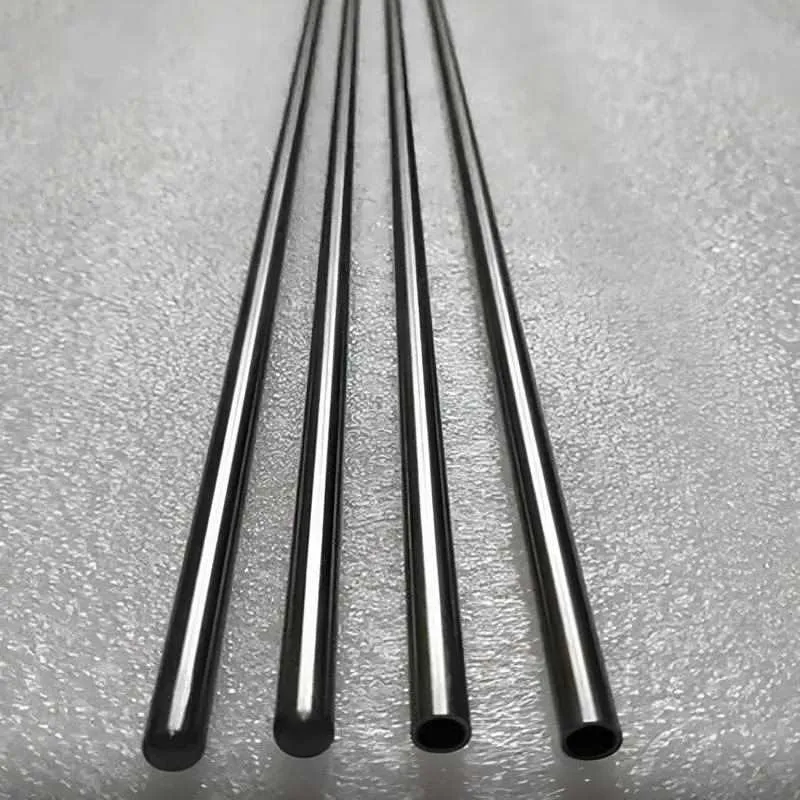
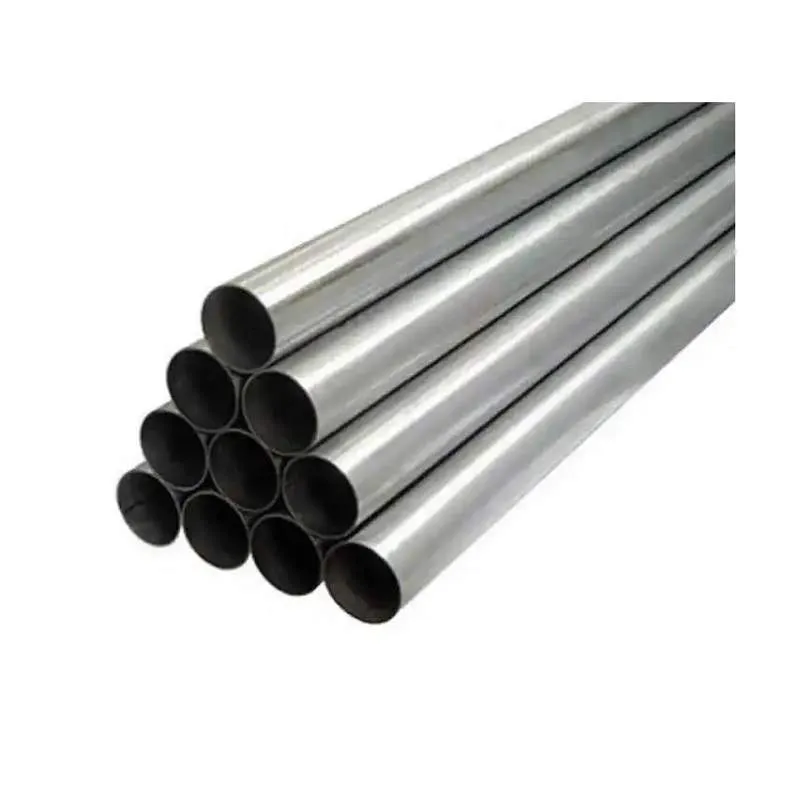
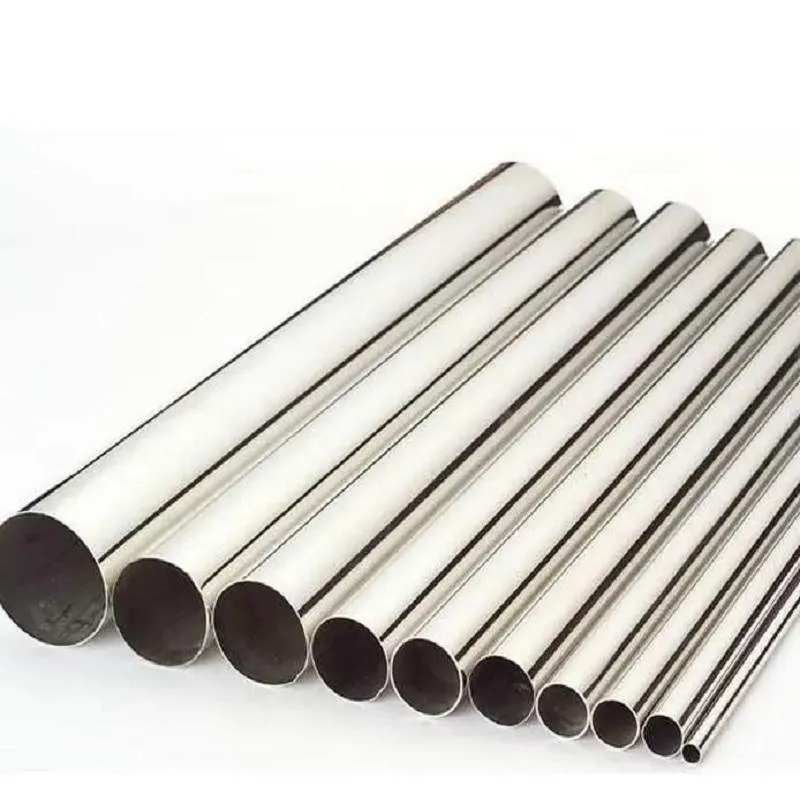
Carpenter No. 610® High Carbon, High Chrome Tool Steel Seamless tube (Air-Wear) (AISI D2)
Product Code : STI-CSTI-495-CU
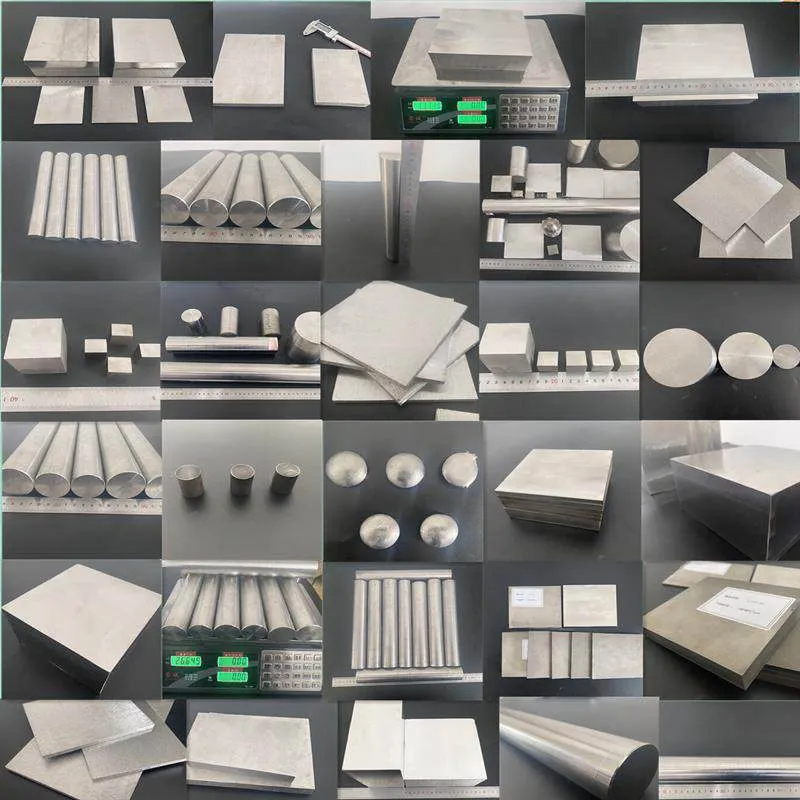
We provide Carpenter No. 610® High Carbon, High Chrome Tool Steel Seamless tube (Air-Wear) (AISI D2) is available in Bar (Round bar, Flat bar), Ribbon, Wire, Rods, Tube,Seamless Tube,Pipe, Ingots, Plate, Sheet, Strip and Forging Stock.,Purity, chemical composition, size, etc. can all be customized to meet specific requirements.
Please contact us if you need customized services. We will contact you with the price and availability in 24 hours.
Carpenter No. 610® High Carbon, High Chrome Tool Steel Seamless tube (Air-Wear) (AISI D2) Product Information
-:-
For detailed product information, please contact sales.
-:
Carpenter No. 610® High Carbon, High Chrome Tool Steel Seamless tube (Air-Wear) (AISI D2) Synonyms
-:-
For detailed product information, please contact sales.
-:
Carpenter No. 610® High Carbon, High Chrome Tool Steel (Air-Wear) (AISI D2) Product Information
-:-
For detailed product information, please contact sales.
-:
# **Technical Datasheet: Carpenter No. 610® High Carbon, High Chrome Tool Steel (Air-Wear) (AISI D2)**
---
## **1. Product Overview**
**Carpenter No. 610® Air-Wear (AISI D2)** is a premium-grade, **high-carbon, high-chromium, air-hardening cold work tool steel** manufactured to Carpenter's exacting standards. As the direct equivalent to AISI D2, this steel is engineered to provide **the optimal balance of extreme wear resistance, good dimensional stability, and practical hardenability** for demanding cold work applications. Its defining characteristic is the formation of a **high volume of hard, primary chromium carbides (M₇C₃ type)**, which impart outstanding resistance to abrasive wear, while its air-hardening nature minimizes distortion and quenching stresses.
The "No. 610®" and "Air-Wear" designations specifically denote Carpenter's proprietary brand for this air-hardening, wear-resistant D2 composition. It represents a significant advancement over oil-hardening wear steels (like D3) by offering **superior toughness, better dimensional control, and reduced heat treatment risk**, making it the industry-standard choice for high-wear precision tooling.
---
## **2. Key International Standards & Designations**
| Country/System | Standard Designation | Equivalent Grade Name |
| :--- | :--- | :--- |
| **USA (Carpenter)** | **No. 610® Air-Wear** | (Proprietary brand for D2) |
| **USA (AISI/SAE)** | **AISI D2 / Type D2** | UNS T30402 |
| **USA (ASTM)** | **ASTM A681** | Grade D2 |
| **ISO** | **ISO 4957:2018** | **1.2379** / X153CrMoV12 |
| **Europe (EN)** | **EN ISO 4957:2018** | **1.2379** / X153CrMoV12-1 |
| **Germany (DIN/W-Nr.)** | **1.2379** | X155CrVMo12-1 |
| **Japan (JIS)** | **JIS G4404** | **SKD11** |
| **United Kingdom (BS)** | **BD2** | - |
| **Common Industry Names** | High Carbon High Chrome, Air-Hardening Wear Steel, D2 | - |
---
## **3. Chemical Composition (Typical %)**
The composition is precisely balanced to promote a high volume of wear-resistant carbides while ensuring deep, air hardenability.
| Element | Weight % (Typical Range) | Metallurgical Function |
| :--- | :--- | :--- |
| **Carbon (C)** | 1.50 - 1.60 | Provides high matrix carbon for hardening and is essential for forming chromium carbides. Optimized to balance wear resistance and toughness. |
| **Chromium (Cr)** | 11.00 - 12.00 | **Primary carbide former.** Creates the hard, abrasion-resistant **M₇C₃ chromium carbides** that constitute ~12-16% of the volume. Provides deep hardenability and moderate corrosion resistance. |
| **Molybdenum (Mo)** | 0.70 - 1.00 | **Critical for air hardenability.** Enhances hardenability dramatically, allowing full hardening in still air. Also refines grain structure, improves toughness, and contributes to secondary hardening. |
| **Vanadium (V)** | 0.90 - 1.10 | Forms very hard, fine **MC-type vanadium carbides** for additional wear resistance and, crucially, **inhibits grain growth** during austenitizing, improving toughness. |
| **Silicon (Si)** | 0.15 - 0.40 | Deoxidizer and solid solution strengthener. |
| **Manganese (Mn)** | 0.30 - 0.50 | Aids in deoxidation and hardenability. |
| **Phosphorus (P)** | ≤ 0.025 | Impurity (minimized). |
| **Sulfur (S)** | ≤ 0.025 | Impurity (minimized). |
**Key Metallurgical Feature:** Contains a **high but controlled volume of primary alloy carbides**. The air-hardening capability, provided by Mo and balanced Cr, results in:
- **Minimal distortion and low stress** after quenching.
- **Good deep hardening** in large sections.
- **Better toughness** than oil-hardening D3 due to finer microstructure and absence of severe quench stresses.
---
## **4. Physical & Mechanical Properties**
### **4.1 Standard Heat Treatment**
* **Annealing:** Heat to 850-870°C (1560-1600°F), slow furnace cool (≤15°C/hr) to 600°C (1110°F), then air cool. Annealed hardness: **~210-240 HB**.
* **Preheating:** Recommended at 650°C (1200°F) and 800-850°C (1470-1560°F) to reduce thermal gradient, especially for complex parts.
* **Austenitizing (Hardening):** **980-1020°C (1795-1870°F).** Soak time: 20-40 minutes per inch. Lower temperatures favor toughness; higher temperatures favor wear resistance and hardenability. Protective atmosphere is essential.
* **Quenching:** **Still or forced air.** This is the core advantage—parts can be air-cooled to full hardness with minimal risk of distortion or cracking. Forced air is recommended for more consistent results.
* **Tempering:** **Must begin immediately.** **Double tempering is mandatory.** Temper at:
* **For Max Wear:** 180-250°C (355-480°F), achieving **60-62 HRC**.
* **For General Purpose:** 450-520°C (840-970°F), achieving **56-59 HRC** (optimal balance of toughness and wear).
* **Cryogenic Treatment:** Optional but beneficial after quenching to transform retained austenite, improving dimensional stability and slightly increasing hardness.
### **4.2 Mechanical Properties (Hardened & Double Tempered @ 500°C)**
| Property | Value / Rating (Typical) | Notes |
| :--- | :--- | :--- |
| **Hardness** | **57 - 59 HRC** (Common working range) | Can be tempered from 54 to 62+ HRC. |
| **Compressive Strength** | ~ 2600 - 3000 MPa | Outstanding, suitable for heavy forming. |
| **Transverse Rupture Strength (TRS)** | **Moderate** | Better than D3, but lower than tougher grades like A2. Adequate for most cold work. |
| **Abrasive Wear Resistance** | **Outstanding / Best-in-Class (Cold Work)** | Superior to A2 and O1; the benchmark for wear in conventional tool steels. |
| **Impact Toughness** | **Fair** | The trade-off for high wear resistance. Better than D3, but not for severe shock. |
| **Dimensional Stability** | **Excellent** | Air quenching results in minimal size change and distortion. |
| **Deep Hardenability** | Excellent | Can fully air-harden large sections (up to 300-400mm/12-16" dia). |
### **4.3 Physical Properties (Approximate)**
* Density: 7.70 g/cm³
* Thermal Conductivity: ~20 W/m·K (Low)
* Coefficient of Thermal Expansion: 10.4 x 10⁻⁶/K
* Modulus of Elasticity: 210 GPa
---
## **5. Typical Product Applications**
Carpenter No. 610® Air-Wear is the industry standard for **long-run, high-precision tooling subject to severe abrasive wear**.
* **Precision Blanking & Punching Dies:** For abrasive materials: **stainless steel, pre-coated metals, silicon steel, composites, plastics.**
* **Cold Forming Tools, Rolls, and Knurling Dies.**
* **Thread Rolling Dies** for high-strength or abrasive workpieces.
* **Shear Blades, Slitter Knives, and Rotary Cutters** for metals.
* **Powder Compaction Dies** and precision gauges.
* **Plastic Injection Molds** for abrasive filled plastics (glass-filled, mineral-filled).
* **Wear Parts:** Guides, liners, and rolls in high-abrasion environments.
---
## **6. Processing & Manufacturing Guidelines**
* **Machinability (Annealed):** **Poor.** Rated at **30-35%** of 1% carbon steel. Hard carbides are abrasive to cutting tools. Use rigid setups, positive rake carbide tooling, and moderate parameters.
* **Grindability:** **Fair to Poor.** The hard carbides wear wheels. Use softer-grade aluminum oxide wheels with light passes and ample coolant. CBN wheels offer superior performance for finishing.
* **EDM Machining:** Excellent and commonly used. A **low-temperature stress relief temper (150-200°C) after EDM is highly recommended** to remove the brittle white layer.
* **Welding:** **Not recommended for tooling applications.** If repair is unavoidable, use a meticulous procedure with high preheat, specialized tool steel electrodes, and full post-weld heat treatment.
* **Polishability:** **Very Good.** The fine, uniform carbide structure of Carpenter quality steel allows for excellent surface finishes, crucial for plastic molds and precision tools.
---
## **7. Comparative Performance & Selection Notes**
| Criterion | **No. 610® D2 (Air-Wear)** | **Oil-Wear D3** | **AISI A2** | **Powdered Metal (PM) D2** |
| :--- | :--- | :--- | :--- | :--- |
| **Wear Resistance** | **Best (Conventional)** | Slightly Better* | Very Good | **Superior** |
| **Toughness** | Fair | **Poorest** | **Best** | Good (Better than conventional) |
| **Dimensional Stability** | **Excellent** | Fair | **Excellent** | **Excellent** |
| **Distortion Risk** | Low | **High** | Low | Low |
| **Machinability/Grindability** | Poor | Poorest | Fair | Good |
| **Primary Advantage** | **Best Wear + Stability** | Max Wear (Oil-Harden) | Best Toughness Balance | Ultimate Wear+Toughness |
*\*D3 may have marginally better pure abrasion resistance in some cases, but D2's overall performance and reliability make it the preferred choice.*
**Why Choose Carpenter No. 610® D2?**
1. You require **maximum wear resistance** in a precision tool that must maintain dimensional accuracy.
2. The application involves **complex geometries** that would distort or crack with an oil quench.
3. You need a **proven, reliable material** with predictable heat treatment response.
4. You value the **consistency, cleanliness, and performance assurance** of the Carpenter brand, which often translates to better polishability and longer tool life.
**When to Choose an Alternative:**
* **For extreme impact or shock:** Choose **S7 or A2**.
* **For maximum possible wear + toughness:** Choose a **PM version of D2 or a PM super-grade** (e.g., Carpenter Micro-Melt®).
* **For simpler tools where cost is primary:** Choose **O1**.
---
## **8. Important Design & Handling Notes**
1. **Design for Wear:** While tougher than D3, D2 is still **not a shock steel**. Use generous fillet radii, avoid sharp internal corners, and design robustly.
2. **Heat Treatment is Key:** Air hardening is forgiving, but **precise austenitizing temperature and double tempering are critical** to achieve the desired balance of properties and ensure dimensional stability.
3. **Corrosion Resistance:** The ~12% Cr provides **good resistance to oxidation and mild corrosion** (semi-stainless), but it is not for severely corrosive environments. Protective coatings are recommended for long-term storage.
4. **Temperature Limit:** Useful hardness is maintained up to **~400-450°C (750-840°F)**. Not for hot work.
---
## **9. Conclusion**
**Carpenter No. 610® High Carbon, High Chrome Tool Steel (Air-Wear) is the benchmark material for high-wear, precision cold work tooling.** It masterfully combines the **legendary wear resistance of high-chromium steel with the practical benefits of air hardening**—low distortion, excellent dimensional stability, and reduced processing risk.
Choosing No. 610® D2 is a decision for **performance, reliability, and precision.** It is the go-to material for:
- **Long-run production dies** that must hold critical tolerances.
- **Tools for abrasive materials** where downtime for resharpening or replacement is costly.
- **Applications where the superior quality and consistency of a branded steel** justify the investment to ensure optimal tool life and performance.
For the vast majority of demanding wear applications that fall between the needs for extreme toughness (A2/S7) and the ultimate performance of PM steels, **Carpenter No. 610® Air-Wear (D2) remains the unparalleled, industry-standard solution.**
---
-:-
For detailed product information, please contact sales.
-:
Carpenter No. 610® High Carbon, High Chrome Tool Steel (Air-Wear) (AISI D2) Specification
Dimensions
Size:
Diameter 20-1000 mm Length <5227 mm
Size:We can customized as required
Standard:
Per your request or drawing
We can customized as required
Properties(Theoretical)
Chemical Composition
-:-
For detailed product information, please contact sales.
-:
Carpenter No. 610® High Carbon, High Chrome Tool Steel (Air-Wear) (AISI D2) Properties
-:-
For detailed product information, please contact sales.
-:
Applications of Carpenter No. 610® High Carbon, High Chrome Tool Steel Seamless tube (Air-Wear) (AISI D2)
-:-
For detailed product information, please contact sales.
-:
Chemical Identifiers Carpenter No. 610® High Carbon, High Chrome Tool Steel Seamless tube (Air-Wear) (AISI D2)
-:-
For detailed product information, please contact sales.
-:
Packing of Carpenter No. 610® High Carbon, High Chrome Tool Steel Seamless tube (Air-Wear) (AISI D2)
-:-
For detailed product information, please contact sales.
-:
Standard Packing:
-:-
For detailed product information, please contact sales.
-:
Typical bulk packaging includes palletized plastic 5 gallon/25 kg. pails, fiber and Steel Seamless tube drums to 1 ton super sacks in full container (FCL) or truck load (T/L) quantities. Research and sample quantities and hygroscopic, oxidizing or other air sensitive materials may be packaged under argon or vacuum. Solutions are packaged in polypropylene, plastic or glass jars up to palletized 1698 gallon liquid totes Special package is available on request. E FORUs’ is carefully handled to minimize damage during storage and transportation and to preserve the quality of our products in their original condition