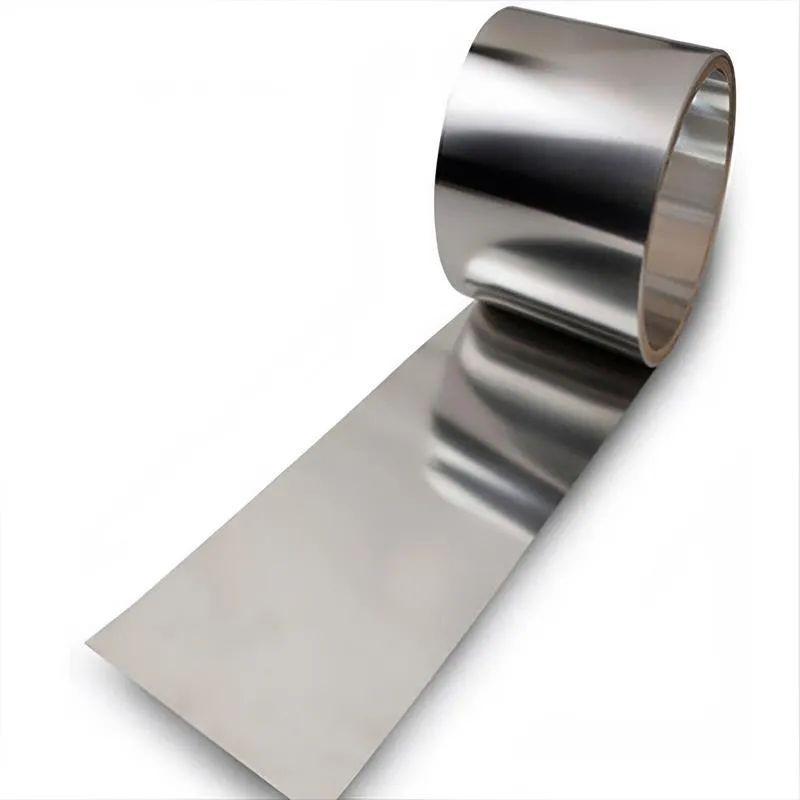
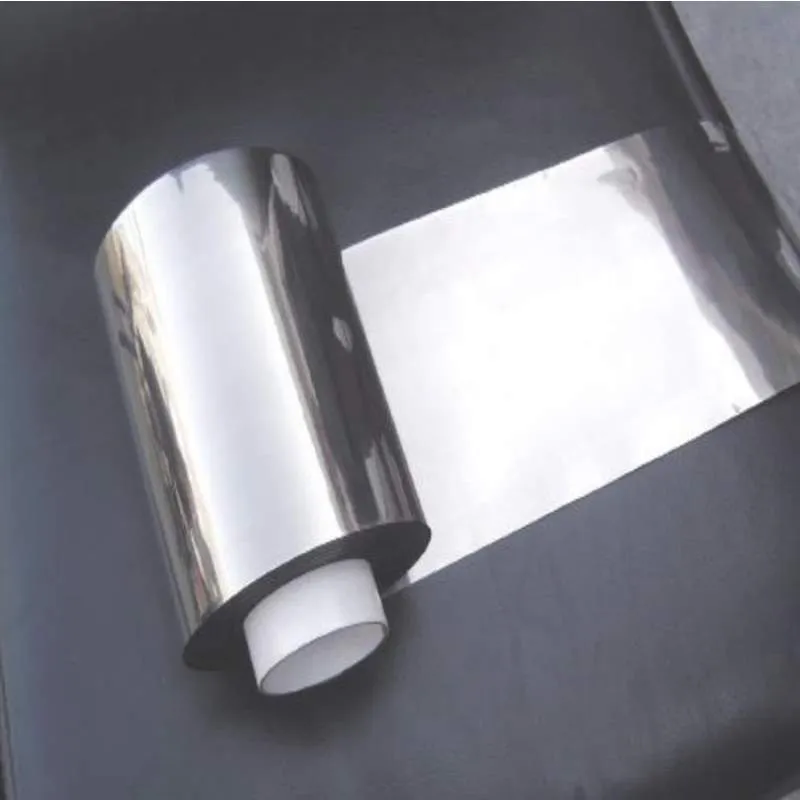
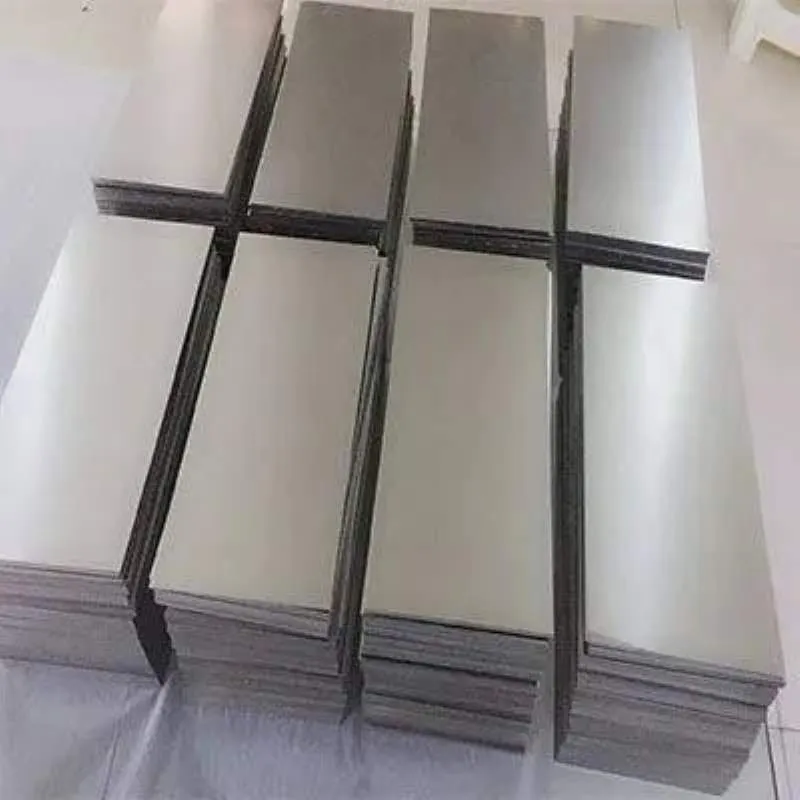
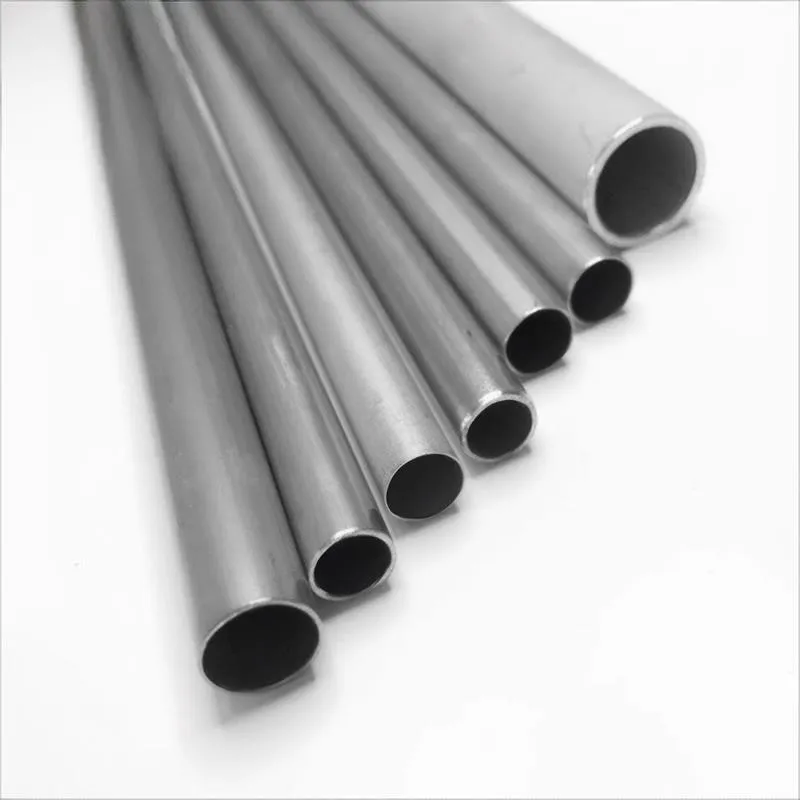
Latrobe,Nitralloy® 135 Modified VAC-ARC,Premium Nitriding Steel Foil/Strip
Product Code : STI-CSTI-595-CU
We provide Latrobe Nitralloy® 135 Modified VAC-ARC, Up to 1.5 in Premium Nitriding Steel Foil/Strip is available in Bar (Round bar, Flat bar), Ribbon, Wire, Rods, Tube,Seamless Tube,Pipe, Ingots, Plate, Sheet, Strip and Forging Stock.,Purity, chemical composition, size, etc. can all be customized to meet specific requirements.
Please contact us if you need customized services. We will contact you with the price and availability in 24 hours.
Latrobe Nitralloy® 135 Modified VAC-ARC, Up to 1.5 in Premium Nitriding Steel Foil Product Information
-:-
For detailed product information, please contact sales.
-:
Latrobe Nitralloy® 135 Modified VAC-ARC, Up to 1.5 in Premium Nitriding Steel Foil Synonyms
-:-
For detailed product information, please contact sales.
-:
Latrobe Nitralloy® 135 Modified VAC-ARC, Up to 1.5 in Premium Nitriding Steel Product Information
-:-
For detailed product information, please contact sales.
-:
# Product Datasheet: Latrobe Nitralloy® 135 Modified VAC-ARC (Up to 1.5") Premium Nitriding Steel
## 1. Product Overview
**Latrobe Nitralloy® 135 Modified VAC-ARC** is an enhanced aluminum-containing nitriding steel specifically engineered for applications requiring deep case depths up to **1.5 inches (38.1 mm)** in section size. Manufactured through **Vacuum Arc Remelting (VAC-ARC)** technology, this premium-grade material delivers superior hardenability, exceptional nitriding response, and excellent dimensional stability. The modified chemistry optimizes the balance between deep hardening capability and nitriding performance, making it ideal for large, heavy-duty components in aerospace, power generation, and industrial applications where conventional nitriding steels are insufficient.
## 2. Key Advantages & Characteristics
- **Exceptional Deep Hardenability**: Specifically formulated for sections up to 1.5" with uniform core properties
- **Superior Nitriding Response**: Aluminum-chromium-molybdenum synergy provides excellent nitride formation
- **High Surface Hardness**: Achieves 68-74 HRC (900-1200 HV) surface hardness after nitriding
- **Deep Case Capability**: Capable of developing effective case depths >0.75 mm (0.030") with proper processing
- **Minimal Distortion**: Predictable dimensional changes during both hardening and nitriding processes
- **Enhanced Steel Cleanliness**: VAC-ARC process reduces oxide and sulfide inclusions
- **Excellent Core Toughness**: Maintains good impact resistance despite high hardenability
- **Consistent Performance**: Uniform response across large cross-sections
## 3. Chemical Composition (Modified 135 Type)
### 3.1 Standard Composition (wt.%)
| Element | Content Range | Typical Value | Metallurgical Function |
|---------|--------------|---------------|------------------------|
| Carbon (C) | 0.38-0.45 | 0.42 | Core strength, carbide formation |
| Aluminum (Al) | 0.85-1.20 | 1.05 | Primary nitride former, surface hardening |
| Chromium (Cr) | 1.40-1.80 | 1.60 | Nitride formation, hardenability, corrosion resistance |
| Molybdenum (Mo) | 0.30-0.50 | 0.40 | Secondary hardening, temper resistance, reduces embrittlement |
| Vanadium (V) | 0.10-0.20 | 0.15 | Grain refinement, secondary nitride formation |
| Manganese (Mn) | 0.40-0.70 | 0.55 | Hardenability, deoxidizer |
| Silicon (Si) | 0.20-0.40 | 0.30 | Deoxidizer, solid solution strengthening |
| Nickel (Ni) | ≤0.40 | 0.25 | Core toughness enhancement (optional) |
| Sulfur (S) | ≤0.010 | 0.005 | Controlled for machinability |
| Phosphorus (P) | ≤0.015 | 0.010 | Impurity control |
| Iron (Fe) | Balance | Balance | Matrix |
### 3.2 VAC-ARC Process Benefits
- **Oxygen Content**: ≤12 ppm (typically 5-8 ppm)
- **Hydrogen Content**: ≤2 ppm
- **Inclusion Rating**: ASTM E45 Method A, Plate 1: ≤0.5 (Thin/Heavy series)
- **Macro-Cleanliness**: Superior to air-melted equivalents
- **Segregation Control**: Minimal centerline segregation in large sections
### 3.3 Modification Highlights vs. Standard 135
- **Optimized Aluminum**: Balanced for deep hardening without excessive grain growth
- **Enhanced Molybdenum**: Improved temper resistance and reduced nitriding embrittlement
- **Vanadium Addition**: Grain refinement for better toughness
- **Controlled Nickel**: Optional addition for critical toughness applications
## 4. Manufacturing Process
### 4.1 VAC-ARC Production Sequence
```
1. PRIMARY PROCESSING
• Electric Arc Furnace melting with precise charge control
• Ladle Metallurgy refining for composition adjustment
• Continuous casting or ingot casting
2. VACUUM ARC REMELTING
• Electrode preparation and vacuum sealing
• Melting under high vacuum (0.1-5.0 Pa)
• Controlled solidification rate (1-5°C/min)
• Directional solidification for reduced segregation
• Ingot cooling under controlled conditions
3. THERMOMECHANICAL PROCESSING
• Homogenization: 1150-1200°C for 4-8 hours
• Hot working: Forging/rolling with controlled reduction
• Annealing: Spheroidize annealing for machinability
• Conditioning: Surface preparation and inspection
```
### 4.2 Quality Control Parameters
| Parameter | Specification | Test Method |
|-----------|---------------|-------------|
| Ultrasonic Quality | AMS 2301, Class 1 | Ultrasonic inspection |
| Inclusion Rating | ASTM E45, Plate 1 ≤0.5 | Microscopic examination |
| Grain Size | ASTM 5-8 | ASTM E112 |
| Hardness (Annealed) | 217-269 HB | Brinell hardness |
| Hardenability (Jominy) | Meets 1.5" ruling section | ASTM A255 |
## 5. Physical & Mechanical Properties
### 5.1 Base Material Properties (Annealed Condition)
| Property | Value Range | Test Standard |
|----------|-------------|---------------|
| Hardness | 217-269 HB | ASTM E10 |
| Tensile Strength | 725-895 MPa | ASTM E8 |
| Yield Strength (0.2%) | 515-690 MPa | ASTM E8 |
| Elongation | 16-22% | ASTM E8 |
| Reduction of Area | 35-50% | ASTM E8 |
| Modulus of Elasticity | 205 GPa | Calculated |
| Density | 7.84 g/cm³ | ASTM B311 |
### 5.2 Heat Treated Core Properties (Before Nitriding)
| Property | 1" Section | 1.5" Section | Test Conditions |
|----------|------------|--------------|----------------|
| Hardness | 32-38 HRC | 30-35 HRC | Oil quenched & tempered |
| Ultimate Tensile | 1170-1380 MPa | 1030-1240 MPa | Room temperature |
| Yield Strength | 1030-1240 MPa | 930-1100 MPa | 0.2% offset |
| Impact Energy | 35-50 J | 30-45 J | Charpy V-notch |
| Fatigue Strength | 480-580 MPa | 450-550 MPa | R=-1, polished |
### 5.3 Nitrided Surface Properties
| Property | Value Range | Nitriding Conditions |
|----------|-------------|---------------------|
| Surface Hardness | 68-74 HRC (950-1150 HV) | Gas nitriding, 510-525°C |
| Effective Case Depth* | 0.40-0.90 mm | At 500 HV (50 HRC) |
| Total Case Depth | 0.50-1.20 mm | Metallographic |
| White Layer Thickness | 10-25 μm | Controllable |
| Compound Layer Hardness | 1100-1400 HV | Microhardness |
| Surface Compressive Stress | -500 to -900 MPa | X-ray diffraction |
*Case depth varies with time: ~0.15-0.20 mm per 10 hours at 525°C
### 5.4 Thermal & Physical Properties
| Property | Value | Conditions |
|----------|-------|-----------|
| Thermal Conductivity | 40.5 W/m·K | 20°C |
| Specific Heat | 465 J/kg·K | 20°C |
| Thermal Expansion Coefficient | 11.5×10⁻⁶/°C | 20-100°C |
| Nitriding Temperature Range | 495-565°C | Process dependent |
| Ac₁ Temperature | 745°C | Lower critical |
| Ac₃ Temperature | 815°C | Upper critical |
| Ms Temperature | 315°C | Martensite start |
## 6. Heat Treatment & Nitriding Guidelines
### 6.1 Pre-Nitriding Heat Treatment
```
For 1.5" Ruling Section:
1. AUSTENITIZING
• Temperature: 845-870°C (1550-1600°F)
• Time: 45-60 minutes per inch of thickness
• Atmosphere: Protective or neutral
2. QUENCHING
• Medium: Agitated oil (Fast quench oil)
• Temperature: 50-70°C (120-160°F)
• Agitation: Vigorous for maximum hardness
3. TEMPERING
• Temperature: 540-595°C (1000-1100°F)
• Time: 2 hours minimum per inch
• Cycles: Double temper recommended
• Resulting Hardness: 30-35 HRC
4. STRESS RELIEVING (Optional)
• Temperature: 595-620°C (1100-1150°F)
• Time: 2-4 hours
• Purpose: Maximize dimensional stability
```
### 6.2 Nitriding Process Parameters
```
GAS NITRIDING (Recommended):
• Temperature: 510-540°C (950-1000°F)
• Time: 20-90 hours (depth dependent)
• Atmosphere: NH₃ + Diluent (N₂ or cracked NH₃)
• Nitrogen Potential (Kn): 2.0-3.5
• Cooling: Furnace cool under nitrogen
PLASMA NITRIDING (Alternative):
• Temperature: 450-520°C (840-970°F)
• Time: 10-50 hours
• Atmosphere: N₂ + H₂ mixture
• Pressure: 1-10 mbar
• Voltage: 400-800 V
```
### 6.3 Post-Nitriding Treatments
- **Oxidation**: 350-450°C in steam/air for corrosion resistance
- **White Layer Removal**: Mechanical polishing or controlled etching
- **Stress Relieving**: 300-350°C for 2-4 hours if required
- **Surface Finishing**: Light grinding or honing for dimensional correction
## 7. International Standards & Specifications
### 7.1 Primary Specifications
| Standard | Designation | Notes |
|----------|-------------|-------|
| AMS 6472 | Nitralloy 135 | Base material specification |
| AMS 2759/5 | Heat Treatment - Nitriding | Process standard |
| ASTM A355 | Grade 135 | Chemical composition |
| SAE AMS 6472E | Nitralloy 135 | Aerospace material standard |
| Latrobe Spec | Nitralloy® 135 Modified | Proprietary enhanced grade |
### 7.2 Equivalent Standards
| Region/Country | Standard | Grade | Comparison |
|----------------|----------|-------|------------|
| Europe (DIN) | DIN 17211 | 1.8507 | Similar composition |
| International (ISO) | ISO 683-10 | 35CrAlMo6 | Functional equivalent |
| Japan (JIS) | JIS G4202 | SACM 645 | Similar nitriding steel |
| United Kingdom | BS 970 | 905M39 | Comparable grade |
### 7.3 Industry-Specific Standards
| Industry | Standard | Application Notes |
|----------|----------|------------------|
| Aerospace | AMS 2301 | Premium aircraft quality |
| Aerospace | AMS-H-6875 | Heat treatment of steel |
| Automotive | SAE J404 | Chemical composition |
| Power Generation | ASTM A668 | General requirements |
| Tool & Die | ASTM A681 | Modified applications |
## 8. Product Applications
### 8.1 Aerospace & Defense
- **Large Aircraft Components**: Landing gear cylinders, actuator housings, wing fittings
- **Helicopter Components**: Main rotor hubs, transmission housings, swashplate assemblies
- **Jet Engine Parts**: Turbine shafts, bearing housings, compressor casings
- **Missile Systems**: Launch tube components, guidance system housings
- **Military Vehicles**: Large gear components, turret bearings, track system parts
### 8.2 Power Generation
- **Gas Turbine Components**: Rotor shafts, bearing housings, compressor drums
- **Steam Turbine Parts**: Valve stems, governor components, shaft sleeves
- **Hydroelectric Equipment**: Turbine shafts, gate mechanisms, bearing assemblies
- **Nuclear Components**: Control rod mechanisms, valve components (non-active areas)
### 8.3 Heavy Industrial
- **Large Gears & Pinions**: Mining equipment gears, mill pinions, crusher components
- **Machine Tool Components**: Large spindles, feed screws, machine beds
- **Hydraulic Equipment**: Large cylinder barrels, piston rods, valve bodies
- **Marine Applications**: Propeller shafts, stern tubes, rudder stocks
- **Oil & Gas**: Large valve components, pump shafts, drilling equipment
### 8.4 Specialized Applications
- **Plastic Injection Molding**: Large screws, barrels, wear plates
- **Glass Manufacturing**: Mold components, plungers, guide rails
- **Die Casting**: Ejector pins, cores, cavity inserts
- **Textile Machinery**: Large rollers, guides, tensioning components
- **Paper Manufacturing**: Roll shells, bearing housings, guide components
## 9. Machining & Processing Characteristics
### 9.1 Machinability (Annealed Condition)
| Operation | Recommended Parameters | Tool Recommendations |
|-----------|------------------------|---------------------|
| Turning | Speed: 70-110 m/min, Feed: 0.15-0.30 mm/rev | Carbide grade C5-C6 |
| Milling | Speed: 80-130 m/min, Feed: 0.10-0.20 mm/tooth | Coated carbide end mills |
| Drilling | Speed: 25-40 m/min, Feed: 0.10-0.18 mm/rev | HSS-E or carbide drills |
| Tapping | Speed: 8-15 m/min | HSS-E with TiN/TiCN coating |
| Broaching | Speed: 3-7 m/min | Premium HSS or carbide |
| Grinding | Wheel: Al₂O₃ (A46-JV), Speed: 25-30 m/s | With ample coolant |
### 9.2 Special Processing Considerations
- **Pre-machining Allowance**: 0.2-0.3 mm per side for final grinding after nitriding
- **Stress Relief**: Recommended after rough machining, before hardening
- **Surface Preparation**: Critical for uniform nitriding response
- **Masking**: Tin plating or stop-off paints for selective nitriding
## 10. Performance Data & Comparative Analysis
### 10.1 Hardenability Comparison (Jominy Test)
| Distance from Quenched End | Nitralloy® 135 Modified | Standard 135 | AISI 4340 |
|----------------------------|-------------------------|--------------|-----------|
| 1/16" (1.6 mm) | 55-58 HRC | 53-56 HRC | 54-57 HRC |
| 1/4" (6.4 mm) | 52-55 HRC | 50-53 HRC | 50-53 HRC |
| 1/2" (12.7 mm) | 48-51 HRC | 46-49 HRC | 45-48 HRC |
| 1" (25.4 mm) | 42-45 HRC | 40-43 HRC | 38-41 HRC |
| 1.5" (38.1 mm) | 38-41 HRC | 36-39 HRC | 33-36 HRC |
### 10.2 Nitriding Performance Comparison
| Property | Nitralloy® 135 Modified | Nitralloy N™ | AISI 4140 Nitrided |
|----------|-------------------------|--------------|-------------------|
| Surface Hardness | 68-74 HRC | 65-72 HRC | 50-55 HRC |
| Case Depth (50hrs) | 0.45-0.55 mm | 0.35-0.45 mm | 0.25-0.35 mm |
| White Layer Control | Good | Excellent | Fair |
| Core Toughness | Good | Excellent | Good |
| Maximum Section | 1.5" (38 mm) | 1.0" (25 mm) | 0.5" (13 mm) |
| Distortion Tendency | Low | Very Low | Moderate |
### 10.3 Fatigue and Wear Performance
| Test Method | Results | Improvement vs. Standard 135 |
|-------------|---------|------------------------------|
| Rotating Bending Fatigue | 550-650 MPa (R=-1) | 10-15% improvement |
| Rolling Contact Fatigue | L₁₀: 3.5-4.5×10⁸ cycles | 20-30% life extension |
| Taber Abrasion Test | 90-95% less wear vs. mild steel | 15-20% better wear resistance |
| Pin-on-Disk Wear Rate | 2.5-4.0×10⁻⁶ mm³/N·m | 25-35% improvement |
| Corrosion Resistance* | 3-5× improvement with post-oxidation | Comparable |
*With post-nitriding oxidation treatment
## 11. Quality Assurance & Testing
### 11.1 Standard Testing Protocol
| Test | Standard | Frequency | Acceptance Criteria |
|------|----------|-----------|-------------------|
| Chemical Analysis | ASTM E415 | Each melt | Within specified range |
| Inclusion Rating | ASTM E45 | Each heat | Plate 1: ≤0.5 |
| Hardenability Test | ASTM A255 | Each heat | Meets 1.5" ruling section |
| Ultrasonic Testing | AMS 2301 | 100% material | Class 1 or better |
| Macro-Etch Test | ASTM E381 | Each ingot | No significant defects |
| Grain Size | ASTM E112 | Each lot | ASTM 5-8 |
### 11.2 Nitriding Process Validation
| Parameter | Control Method | Acceptance Criteria |
|-----------|---------------|-------------------|
| Surface Hardness | Microhardness (HV0.5) | 900-1150 HV |
| Case Depth | Microhardness traverse | Per drawing requirements |
| White Layer | Metallographic | 10-25 μm, continuous |
| Core Hardness | Rockwell C | 30-35 HRC |
| Distortion | Dimensional check | Within drawing tolerance |
### 11.3 Certifications & Documentation
- **Mill Test Certificates**: EN 10204 3.1/3.2 with full traceability
- **Process Documentation**: Complete VAC-ARC melting records
- **Heat Treatment Records**: Full documentation of all thermal processing
- **Industry Certifications**: AS9100, ISO 9001, NADCAP (as applicable)
## 12. Technical Support & Design Guidelines
### 12.1 Design Recommendations
- **Section Transitions**: Gradual changes to minimize stress concentration
- **Fillet Radii**: Minimum R=3 mm for heavily loaded sections
- **Surface Finish**: Ra 0.8-1.6 μm recommended before nitriding
- **Masking Considerations**: Design for selective nitriding if required
- **Dimensional Allowances**: Include growth allowance for nitriding (typically 0.001-0.003 in/in)
### 12.2 Application Engineering Guidelines
- **Load Conditions**: Optimized for high surface pressure applications
- **Temperature Limits**: Maximum service temperature 400°C (750°F)
- **Corrosion Protection**: Post-nitriding oxidation recommended for harsh environments
- **Lubrication Requirements**: Compatible with most industrial lubricants
- **Inspection Intervals**: Regular NDT recommended for critical applications
### 12.3 Failure Prevention Strategies
- **Proper Heat Treatment**: Essential for optimal core properties
- **Surface Preparation**: Critical for uniform nitriding response
- **Process Control**: Consistent nitriding parameters for repeatable results
- **Quality Verification**: Regular testing and inspection
### 12.4 Economic Considerations
- **Life Cycle Cost**: Higher initial cost offset by extended service life
- **Maintenance Intervals**: Reduced frequency of replacement
- **Downtime Reduction**: Increased reliability decreases production losses
- **Total Cost of Ownership**: Typically lower than conventional materials
---
## Technical Notice
The information contained in this datasheet represents typical values and characteristics for Latrobe Nitralloy® 135 Modified VAC-ARC steel. Actual properties may vary depending on specific processing conditions, heat treatment parameters, and component geometry. For critical applications, consultation with Latrobe technical personnel is mandatory.
**Safety Precautions**:
- Follow all standard safety protocols for handling alloy steels
- Use appropriate PPE during machining and heat treatment
- Observe nitriding process safety requirements including ammonia handling
- Follow MSDS guidelines for all processing operations
**Document Control**:
- Document: LAT-N135MOD-DS-001
- Revision: 3.2
- Effective Date: [Current Date]
- Supersedes: Revision 3.1 (2023)
**Contact Information**:
Latrobe Specialty Metals
[Company Address]
Technical Services: [Phone Number]
Email: [Technical Support Email]
Website: [Company Website]
---
*Nitralloy® is a registered trademark of Latrobe Specialty Metals. This information is proprietary and confidential. Reproduction or distribution without written permission is prohibited. Specifications are subject to change without notice. For critical applications, consult factory for latest specifications, processing recommendations, and availability of specific sizes and forms.*
-:-
For detailed product information, please contact sales.
-:
Latrobe Nitralloy® 135 Modified VAC-ARC, Up to 1.5 in Premium Nitriding Steel Specification
Dimensions
Size:
Diameter 20-1000 mm Length <5327 mm
Size:We can customized as required
Standard:
Per your request or drawing
We can customized as required
Properties(Theoretical)
Chemical Composition
-:-
For detailed product information, please contact sales.
-:
Latrobe Nitralloy® 135 Modified VAC-ARC, Up to 1.5 in Premium Nitriding Steel Properties
-:-
For detailed product information, please contact sales.
-:
Applications of Latrobe Nitralloy® 135 Modified VAC-ARC, Up to 1.5 in Premium Nitriding Steel Foil
-:-
For detailed product information, please contact sales.
-:
Chemical Identifiers Latrobe Nitralloy® 135 Modified VAC-ARC, Up to 1.5 in Premium Nitriding Steel Foil
-:-
For detailed product information, please contact sales.
-:
Packing of Latrobe Nitralloy® 135 Modified VAC-ARC, Up to 1.5 in Premium Nitriding Steel Foil/Strip
-:-
For detailed product information, please contact sales.
-:
Standard Packing:
-:-
For detailed product information, please contact sales.
-:
Typical bulk packaging includes palletized plastic 5 gallon/25 kg. pails, fiber and Steel Foil/Strip drums to 1 ton super sacks in full container (FCL) or truck load (T/L) quantities. Research and sample quantities and hygroscopic, oxidizing or other air sensitive materials may be packaged under argon or vacuum. Solutions are packaged in polypropylene, plastic or glass jars up to palletized 1798 gallon liquid totes Special package is available on request. E FORUs’ is carefully handled to minimize damage during storage and transportation and to preserve the quality of our products in their original condition