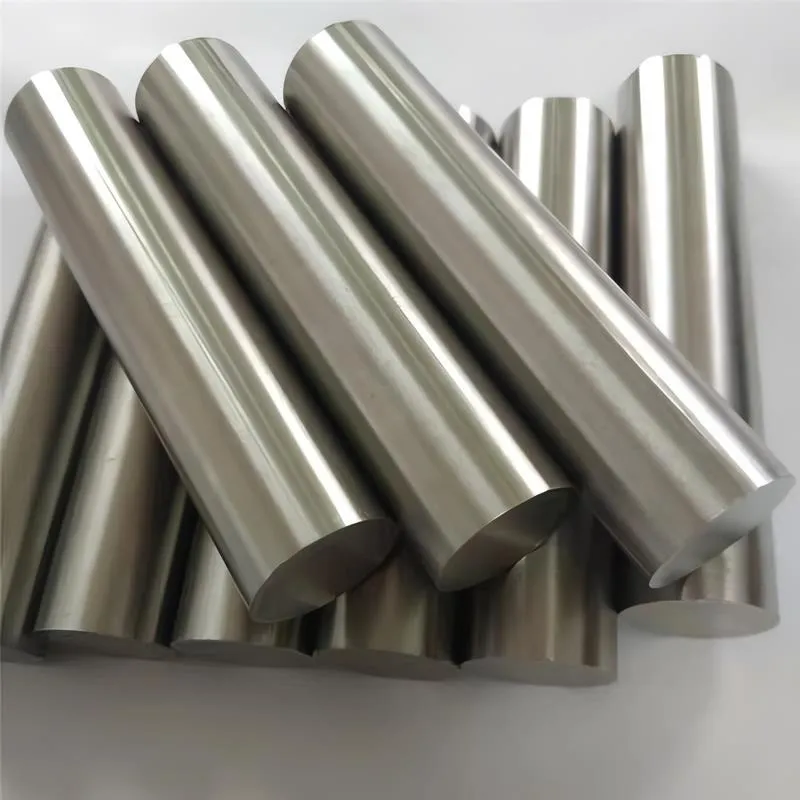
AISI 1018 Steel, hot rolled
Product Code : STI-CSTI-699-CU
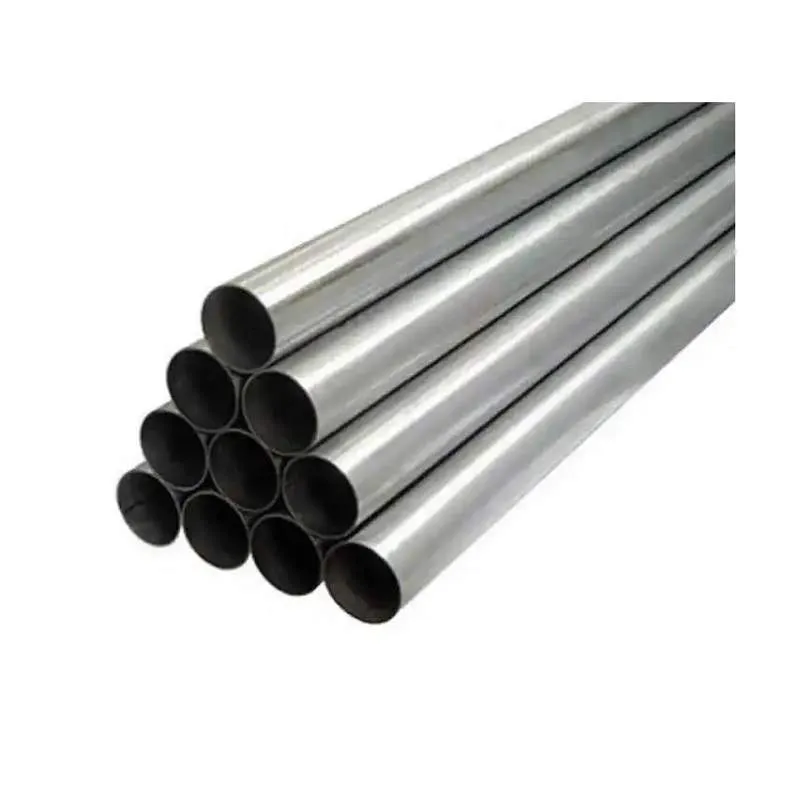
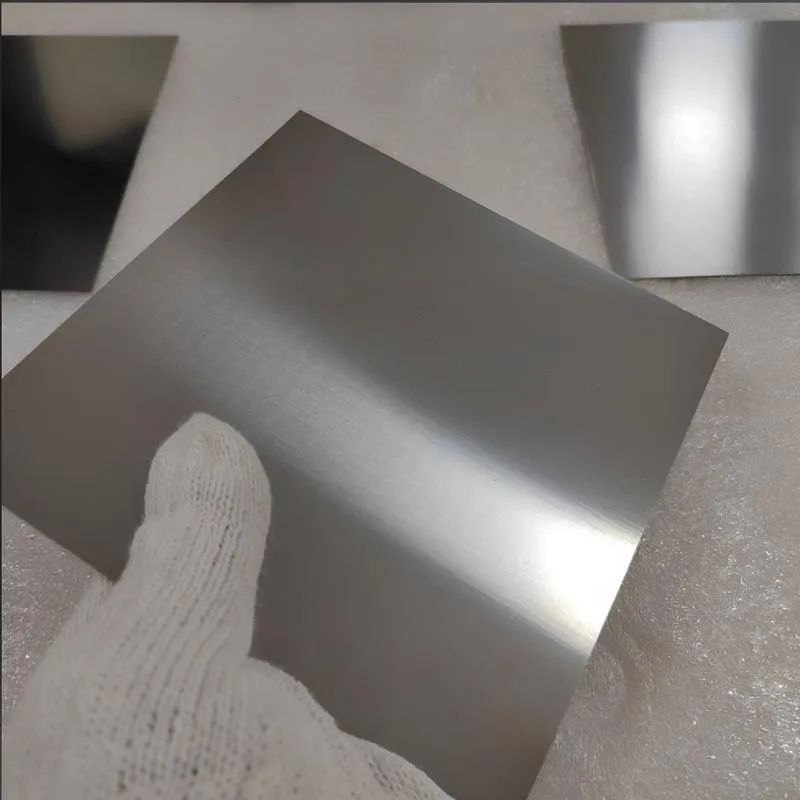
We provide AISI 1018 Steel, hot rolled, 19-32 mm (0.75-1.25 in) round is available in Bar (Round bar, Flat bar), Ribbon, Wire, Rods, Tube,Seamless Tube,Pipe, Ingots, Plate, Sheet, Strip and Forging Stock.,Purity, chemical composition, size, etc. can all be customized to meet specific requirements.
Please contact us if you need customized services. We will contact you with the price and availability in 24 hours.
AISI 1018 Steel, hot rolled, 19-32 mm (0.75-1.25 in) round Product Information
-:-
For detailed product information, please contact sales.
-:
AISI 1018 Steel, hot rolled, 19-32 mm (0.75-1.25 in) round Synonyms
-:-
For detailed product information, please contact sales.
-:
AISI 1018 Steel, hot rolled, 19-32 mm (0.75-1.25 in) round Product Information
-:-
For detailed product information, please contact sales.
-:
# Product Datasheet: AISI 1018 Cold Drawn, Quenched & Tempered Steel Round Bar
## 19-32 mm (0.75-1.25 in) Diameter Range
---
### 1. PRODUCT OVERVIEW
**AISI 1018 Cold Drawn, Quenched & Tempered (Q&T) Steel Round Bar** represents a premium engineering material that combines the dimensional precision of cold drawing with the enhanced mechanical properties of full heat treatment. Supplied in the versatile **19-32 mm (0.75-1.25 inch) diameter range**, this material undergoes a sophisticated multi-stage manufacturing process: initial hot rolling, precision cold drawing for dimensional control, followed by austenitizing, quenching, and tempering heat treatments. This combination produces a material with superior surface finish, tight dimensional tolerances, and significantly enhanced mechanical properties compared to standard cold drawn or hot rolled conditions.
The specific diameter range of 19-32 mm is particularly well-suited for this heat treatment process, allowing for consistent through-hardening and uniform mechanical properties throughout the cross-section. This makes it ideal for precision components requiring both dimensional accuracy and high strength in medium-duty applications.
---
### 2. KEY SPECIFICATIONS & INTERNATIONAL STANDARDS
| **Parameter** | **Specification** |
|---------------|-------------------|
| **AISI/SAE Grade** | 1018 (Cold Drawn, Quenched & Tempered) |
| **UNS Designation** | G10180 |
| **Manufacturing Process** | Hot rolled → Cold drawn → Austenitized → Quenched → Tempered |
| **Diameter Range** | **19-32 mm** (0.75-1.25 inches) |
| **Diameter Tolerance** | Typically ±0.05-0.10 mm (h9-h11 precision tolerance) |
| **Primary Standards** | **ASTM A108** - Cold-Finished Steel Bars
**ASTM A29/A29M** - Steel Bars, Carbon and Alloy
**ASTM A311/A311M** - Stress-Relieved Cold-Drawn Steel Bars
**SAE J1268** - Heat Treatment of Steel Bars |
| **Heat Treatment Standards** | **AMS 2759/1** - Heat Treatment of Steel Parts
**ISO 4885** - Heat treatments of ferrous materials |
**International Equivalents:**
- **EN (Europe):** 1.0402 (C22) +CD+QT per EN 10083-2
- **DIN (Germany):** C22, Ck22 (+C+D for cold drawn, +V for heat treated)
- **JIS (Japan):** S20C cold drawn, quenched and tempered
- **GB (China):** 20# 冷拉调质钢 (cold drawn, quenched & tempered)
- **ISO:** ISO 683-18 Grade 1.0402 +CD+QT
---
### 3. CHEMICAL COMPOSITION (% BY WEIGHT)
| **Element** | **Standard Range** | **Typical Analysis** | **Significance in CD+Q&T Process** |
|-------------|-------------------|----------------------|-----------------------------------|
| **Carbon (C)** | **0.15 - 0.20%** | 0.18% | Maximum achievable hardness limited to ~45 HRC as-quenched; primary strengthening element |
| **Manganese (Mn)** | **0.60 - 0.90%** | 0.75% | **Critical for 19-32 mm Q&T:** Enhances hardenability for effective through-hardening in this diameter range |
| **Phosphorus (P)** | **≤ 0.040% max** | 0.020% | Controlled to prevent quench embrittlement and temper brittleness |
| **Sulfur (S)** | **≤ 0.050% max** | 0.025% | Improves machinability in cold drawn condition; controlled to prevent hot shortness |
| **Silicon (Si)** | **0.10 - 0.20%** | 0.15% | Provides solid solution strengthening; aids in decarburization resistance during heat treatment |
| **Copper (Cu)** | ≤ 0.20% (optional) | 0.10% | Optional for atmospheric corrosion resistance |
| **Iron (Fe)** | Balance | Balance | Base metal |
**Critical Metallurgical Factors for 19-32 mm CD+Q&T:**
- **Carbon Equivalent:** CE = C + (Mn/6) ≈ 0.28-0.35
- **Ideal Critical Diameter (Dᵢ):** ~25-38 mm for oil quenching - ideal for 19-32 mm range
- **Maximum As-Quenched Hardness:** ~40-45 HRC achievable (theoretical based on carbon content)
- **Hardenability Position:** Upper end of low-carbon steels due to Mn content
- **Prior Cold Work Effect:** Cold drawing creates elongated grain structure that influences transformation kinetics
---
### 4. PHYSICAL & MECHANICAL PROPERTIES
#### 4.1 Mechanical Properties (Cold Drawn + Q&T Condition)
| **Property** | **Typical Range** | **Compared to CD Only** | **Test Method** | **19-32 mm Specific Notes** |
|--------------|-------------------|-------------------------|-----------------|-----------------------------|
| **Tensile Strength** | **650-850 MPa** (94-123 ksi) | +35-45% higher | ASTM A370 | Consistent through cross-section in this diameter range |
| **Yield Strength (0.2% offset)** | **520-720 MPa** (75-104 ksi) | +50-70% higher | ASTM A370 | Significant improvement from combined cold work and heat treatment |
| **Elongation in 50 mm** | **10-18%** | Reduced | ASTM A370 | Lower than CD only due to martensitic structure |
| **Reduction of Area** | **30-45%** | Reduced | ASTM A370 | Maintains reasonable ductility with proper tempering |
| **Hardness (Surface)** | **28-42 HRC** | Much higher | ASTM E18 | Primary control parameter; varies with tempering temperature |
| **Hardness (Core)** | **25-40 HRC** | - | ASTM E18 | Minimal gradient in 19-32 mm range (≤3 HRC difference) |
| **Modulus of Elasticity** | **200 GPa** (29,000 ksi) | Same | - | Unaffected by processing |
| **Shear Strength** | **420-550 MPa** (61-80 ksi) | Higher | - | Approximately 0.65 × tensile |
| **Fatigue Strength** (10⁷ cycles) | **300-400 MPa** (44-58 ksi) | +40-60% higher | Polished specimens | Excellent for rotating shaft applications |
| **Charpy V-Notch Impact** | **12-25 J** at 21°C | Lower | ASTM A370 | Dependent on tempering temperature |
| **Endurance Limit Ratio** | **0.46-0.50** | Similar | - | Fatigue strength/tensile strength |
#### 4.2 Property Variations with Tempering Temperature (19-32 mm Diameter)
| **Tempering Temperature** | **Hardness (HRC)** | **Tensile (MPa)** | **Yield (MPa)** | **Typical Applications** |
|---------------------------|-------------------|-------------------|------------------|--------------------------|
| **180-220°C (350-430°F)** | 38-42 | 800-850 | 650-720 | High wear resistance, low impact |
| **220-280°C (430-540°F)** | 34-38 | 750-800 | 600-670 | General high strength |
| **280-350°C (540-660°F)** | 30-34 | 700-750 | 550-620 | Balanced strength-toughness |
| **350-450°C (660-840°F)** | 26-30 | 650-700 | 520-580 | Improved toughness |
| **450-550°C (840-1020°F)** | 22-26 | 620-670 | 480-540 | Maximum toughness |
#### 4.3 Physical Properties
| **Property** | **Value** | **19-32 mm Specific Data** |
|--------------|-----------|----------------------------|
| **Diameter Range** | **19-32 mm** (0.75-1.25 in) | Ideal for consistent through-hardening |
| **Cross-sectional Area** | **284-804 mm²** (0.44-1.25 in²) | For load calculations |
| **Weight per Meter** | **2.23-6.31 kg/m** (1.50-4.24 lb/ft) | Manageable for handling and machining |
| **Surface Finish** | **0.8-1.6 μm Ra** | Superior to hot rolled Q&T due to cold drawing |
| **Density** | **7.85 g/cm³** (0.284 lb/in³) | Standard |
| **Thermal Conductivity** | **47.5 W/m·K** | At 100°C; reduced due to microstructure |
| **Electrical Resistivity** | **0.178 μΩ·m** | At 20°C; increased due to tempered martensite |
#### 4.4 Microstructural Characteristics
- **Prior Condition:** Elongated ferrite-pearlite from cold drawing
- **As-Quenched:** Primarily martensite with possible small amounts of bainite
- **Final Structure:** Tempered martensite (ferrite + fine ε-carbides)
- **Grain Size:** ASTM 8-10 (fine due to cold working prior to austenitizing)
- **Decarburization:** Typically <0.05 mm with proper atmosphere control
- **Residual Stress:** Low compressive surface stresses after proper tempering
---
### 5. MANUFACTURING PROCESS DETAILS
#### 5.1 Complete Manufacturing Sequence
```
Hot Rolled Bar (19-32 mm oversize) →
Pickling/Descaling →
Cold Drawing (10-20% reduction) →
Stress Relieving (550-600°C) →
Austenitizing: 870-900°C, 30-45 minutes →
Quenching: Agitated fast oil →
Immediate Tempering: 200-500°C, 60-90 minutes →
Air Cooling →
Final Straightening (precision) →
Inspection & Certification
```
#### 5.2 Critical Process Parameters for 19-32 mm Bars
| **Process Step** | **Optimal Parameters** | **Rationale for 19-32 mm** |
|------------------|------------------------|----------------------------|
| **Cold Drawing Reduction** | **10-20%** | Provides dimensional accuracy without excessive work hardening |
| **Austenitizing Temperature** | **870-900°C** (1600-1650°F) | Complete transformation without excessive grain growth |
| **Austenitizing Time** | **30-45 minutes** | Adequate for 19-32 mm through-section heating |
| **Quenching Medium** | **Fast oil (H=0.25-0.35)** | Prevents cracking while ensuring full martensite formation |
| **Quench Agitation** | **Vigorous** | Critical for consistent hardness in 19-32 mm range |
| **Time to Temper** | **<1 hour after quench** | Prevents quench cracking in stressed martensite |
| **Tempering Time** | **60-90 minutes** | Adequate for through-temperature uniformity |
#### 5.3 Advantages of Cold Drawing Prior to Q&T
1. **Dimensional Precision:** Tighter tolerances (±0.05-0.10 mm vs. ±0.3-0.5 mm for HR+Q&T)
2. **Surface Quality:** Superior finish (0.8-1.6 μm Ra vs. 3.2-6.3 μm Ra for HR+Q&T)
3. **Microstructural Refinement:** Cold work provides nucleation sites for finer austenite grains
4. **Reduced Machining:** Often used as-finished or with minimal final machining
5. **Straightness:** Better straightness control (≤1 mm/m vs. ≤3 mm/m for HR+Q&T)
---
### 6. TYPICAL APPLICATIONS FOR 19-32 mm CD+Q&T BARS
#### 6.1 Precision Shafting & Axles
- **Machine Tool Spindles:** Small to medium precision spindles requiring high stiffness
- **Pump Shafts:** Centrifugal and positive displacement pump shafts (19-25 mm common)
- **Motor Shafts:** Industrial motor shafts requiring precise dimensions and strength
- **Gearbox Shafts:** Countershafts, layshafts in mechanical transmissions
- **Robotic Components:** Actuator shafts, joint pins requiring precision and strength
#### 6.2 Automotive & Transportation
- **Steering Components:** Precision rack and pinion shafts, steering column shafts
- **Suspension Parts:** Strut rods, stabilizer bar links, control arm shafts
- **Transmission Components:** Shift rods, selector shafts, synchronizer hubs
- **Brake System Parts:** Caliper guide pins, parking brake mechanisms
- **Driveline Components:** Propeller shaft components, U-joint crosses
#### 6.3 Hydraulic & Pneumatic Systems
- **Cylinder Rods:** Hydraulic cylinder piston rods (25-32 mm common)
- **Valve Stems:** High-pressure valve stems requiring wear resistance
- **Pump Components:** Plungers, cam shafts, bearing journals
- **Actuator Components:** Linear actuator screws, guide rods
#### 6.4 Industrial Machinery
- **Textile Machinery:** Spindle shafts, roller shafts, guide pins
- **Packaging Equipment:** Cam shafts, timing shafts, drive components
- **Printing Machinery:** Impression cylinder shafts, roller cores
- **Food Processing:** Mixer shafts, cutter shafts, conveyor drive shafts
#### 6.5 Specialized Applications
- **Medical Equipment:** Surgical instrument shafts, positioning rods (after additional processing)
- **Aerospace Ground Support:** Landing gear components, actuator parts (non-flight critical)
- **Defense Applications:** Firearm components, optical mount shafts
- **Test Equipment:** Precision load cells, testing machine components
---
### 7. PROCESSING AFTER HEAT TREATMENT
#### 7.1 Machining Considerations (Post Q&T)
| **Operation** | **Recommendations** | **Limitations for 28+ HRC** |
|---------------|---------------------|-----------------------------|
| **Turning** | Carbide tools, moderate speeds/feeds | Limited to light finishing cuts |
| **Grinding** | Primary machining method | Essential for dimensional accuracy |
| **Centerless Grinding** | Excellent for diameter control | Standard finishing process |
| **Honing** | For precision bore finishing | Common for hydraulic applications |
| **Thread Grinding** | For precision threads | Preferred over tapping/cutting |
| **Hard Turning** | Possible with CBN/PCD tools | For specialized applications only |
**Typical Finishing Parameters:**
- **Grinding:** 25-35 m/sec wheel speed, 0.005-0.020 mm/pass
- **Honing:** 30-60 m/min surface speed, light pressure
- **Hard Turning:** 80-150 m/min, feed 0.05-0.15 mm/rev
#### 7.2 Welding Limitations
**Generally Not Recommended** due to:
- High risk of HAZ cracking and softening
- Loss of mechanical properties in welded area
- Difficulty in post-weld heat treatment matching
**If Welding is Unavoidable:**
- Use low-hydrogen processes (GTAW with ER80S-D2)
- Preheat to 200-300°C (400-570°F)
- Post-weld heat treat immediately to 50°C above original tempering temperature
- Consider alternative joining (bolting, adhesive bonding, press fits)
#### 7.3 Surface Treatments
- **Hard Chrome Plating:** For additional wear resistance (after grinding)
- **Nitriding:** Possible but limited by prior martensitic structure
- **Black Oxide:** For corrosion resistance and appearance
- **Phosphating:** For corrosion resistance and paint adhesion
- **PVD/CVD Coatings:** For specialized wear applications
---
### 8. DESIGN & ENGINEERING CONSIDERATIONS
#### 8.1 Advantages for 19-32 mm Applications
1. **Strength-to-Weight Ratio:** Excellent for size-constrained designs
2. **Dimensional Precision:** Reduces machining requirements and cost
3. **Through-Hardening Capability:** Consistent properties throughout 19-32 mm cross-section
4. **Fatigue Resistance:** Superior to non-heat treated conditions
5. **Wear Resistance:** Suitable for sliding and rolling contact applications
6. **Straightness & Roundness:** Excellent for precision rotating components
#### 8.2 Limitations & Constraints
1. **Limited Weldability:** Components should be designed without welding
2. **Forming Limitations:** Cannot be bent or formed after heat treatment
3. **Maximum Hardness:** Limited to ~42 HRC maximum (typically 28-38 HRC practical)
4. **Cost Premium:** 50-100% higher than standard cold drawn 1018
5. **Lead Time:** Longer due to additional processing steps
#### 8.3 Design Guidelines
- **Fillet Radii:** Minimum 1.5 mm to prevent stress concentrations
- **Section Transitions:** Gradual changes to prevent stress risers
- **Surface Finish Requirements:** Specify based on application needs
- **Tolerance Stack-up:** Account for potential grinding stock removal
- **Testing Requirements:** Define hardness, straightness, and NDT criteria
---
### 9. QUALITY ASSURANCE & INSPECTION
#### 9.1 Standard Testing Protocol
1. **Hardness Testing:** Surface and core (quarter-point) measurements
2. **Microstructure Examination:** Verification of tempered martensite
3. **Tensile Testing:** From representative samples (typically end pieces)
4. **Surface Inspection:** Visual and NDT for cracks and defects
5. **Dimensional Verification:** Diameter, roundness, straightness, surface finish
6. **Chemical Analysis:** Verification of composition (optional for each lot)
#### 9.2 Non-Destructive Testing Options
- **Magnetic Particle Inspection:** 100% surface inspection recommended
- **Ultrasonic Testing:** For internal defects in critical applications
- **Hardness Mapping:** Statistical sampling for property consistency
- **Eddy Current:** For sorting and defect detection
#### 9.3 Common Defects & Prevention
| **Defect** | **Cause** | **Detection Method** | **Prevention** |
|------------|-----------|----------------------|----------------|
| **Quench Cracks** | Thermal stresses | MP, PT | Proper quench medium, immediate tempering |
| **Soft Spots** | Inadequate quenching | Hardness mapping | Proper agitation, clean surfaces |
| **Distortion** | Non-uniform heating/cooling | Straightness check | Proper fixturing, controlled processes |
| **Decarburization** | Oxidation during heat treat | Micro examination | Protective atmosphere |
| **Grinding Burns** | Excessive grinding heat | Nital etch, hardness | Proper grinding parameters |
---
### 10. COMPARATIVE ANALYSIS
| **Property** | **1018 CD+Q&T** | **1018 CD Only** | **1045 CD+Q&T** | **4140 CD+Q&T** |
|--------------|-----------------|------------------|-----------------|-----------------|
| **Tensile (MPa)** | 650-850 | 480-580 | 750-950 | 850-1050 |
| **Yield (MPa)** | 520-720 | 390-480 | 600-800 | 700-900 |
| **Hardness (HRC)** | 28-42 | 75-95 HRB | 32-48 | 35-52 |
| **Cost Factor** | 1.50-2.00 | 1.00 | 1.20-1.50 | 1.80-2.50 |
| **Machinability (Post-HT)** | Poor | Good | Very Poor | Extremely Poor |
| **Weldability** | Very Poor | Excellent | Extremely Poor | Extremely Poor |
| **Through-Hardening Limit** | ~32 mm | N/A | ~50 mm | ~100 mm |
---
### 11. PROCUREMENT & SPECIFICATION
#### 11.1 Ordering Information
When specifying 19-32 mm AISI 1018 CD+Q&T bars, include:
1. **Material:** AISI 1018 Cold Drawn, Quenched & Tempered
2. **Diameter:** Exact size with tolerance (e.g., 25.0 mm ±0.05 mm)
3. **Hardness:** Required range (e.g., 32-36 HRC) or tempering temperature
4. **Straightness:** Maximum allowable (typically ≤1 mm/m)
5. **Surface Finish:** Ra requirement (typically 0.8-1.6 μm as-ground)
6. **Testing Requirements:** Hardness testing frequency, NDT requirements
7. **Certification:** Heat treatment records, test reports, material certs
8. **Packaging:** Special requirements for hardened material
#### 11.2 Typical Purchase Specifications
- **ASTM A311:** For stress-relieved bars (base specification)
- **ASTM A108 with Supplementary Requirements:** For additional testing
- **Customer-Specific:** With detailed heat treatment and testing requirements
- **Industry-Specific:** Automotive, aerospace, or other industry standards
---
### 12. TECHNICAL & ECONOMIC CONSIDERATIONS
#### 12.1 Cost Factors
- **Material Cost:** 50-100% premium over standard cold drawn 1018
- **Processing Cost:** Additional heat treatment and finishing operations
- **Tooling Cost:** Higher for post-HT machining/grinding
- **Inspection Cost:** Additional testing typically required
- **Scrap Risk:** Higher due to potential for heat treatment defects
- **Lead Time:** Typically 4-8 weeks vs. 1-2 weeks for standard material
#### 12.2 When to Specify 1018 CD+Q&T
- When dimensional precision AND high strength are both required
- For rotating components requiring both precision and fatigue resistance
- When wear resistance is needed in precision-sized components
- For applications where minimal final machining is desired
- When cost constraints limit use of alloy steels but properties exceed standard 1018
#### 12.3 Alternative Considerations
- **For higher strength:** Consider 1045 or 4140 CD+Q&T
- **For better toughness:** Consider normalized and tempered alloy steels
- **For weldability:** Fabricate from CD material, then heat treat
- **For cost reduction:** Consider induction hardening of CD material
---
### 13. INDUSTRY BEST PRACTICES
1. **Supplier Qualification:** Audit heat treat facilities for capability with 19-32 mm bars
2. **First Article Approval:** Comprehensive testing on initial production runs
3. **Statistical Process Control:** Monitor hardness, dimensions, straightness
4. **Handling Procedures:** Special care to prevent damage to precision surfaces
5. **Storage Conditions:** Protect from corrosion and mechanical damage
6. **Documentation Control:** Maintain complete heat treatment and testing records
7. **Design Reviews:** Ensure design is suitable for hardened material limitations
---
**CRITICAL TECHNICAL NOTES:**
1. **AISI 1018 CD+Q&T provides limited hardenability** - Maximum effective through-hardening is achieved in the 19-32 mm range
2. **Surface hardness of 28-42 HRC is typical** - Higher values reduce toughness significantly
3. **Immediate tempering after quenching is essential** to prevent cracking
4. **Welding is generally not feasible** without complete re-heat treatment
5. **Final dimensions are typically achieved by grinding** after heat treatment
6. **Property consistency is excellent** in this diameter range due to effective through-hardening
7. **Fatigue performance is significantly improved** over non-heat treated conditions
**APPLICATION SUITABILITY ASSESSMENT:**
- **Excellent for:** Precision shafts, axles, pins requiring strength and dimensional accuracy
- **Good for:** Wear components, gear blanks, hydraulic components
- **Poor for:** Welded assemblies, heavily formed parts, impact applications
- **Not recommended for:** Pressure vessels, highly stressed dynamic applications without thorough analysis
---
**DISCLAIMER:** This technical datasheet provides information about AISI 1018 cold drawn, quenched and tempered steel in the 19-32 mm diameter range based on industry practices and achievable properties. Actual results depend on specific chemistry, cold drawing reduction, heat treatment parameters, and process controls. AISI 1018's response to quenching and tempering is limited compared to medium-carbon steels. For critical applications, conduct thorough process qualification and testing. Always verify capabilities with suppliers and conduct appropriate testing for each application. This information is for guidance only and does not replace specific engineering analysis.
-:-
For detailed product information, please contact sales.
-:
AISI 1018 Steel, hot rolled, 19-32 mm (0.75-1.25 in) round Specification
Dimensions
Size:
Diameter 20-1000 mm Length <5431 mm
Size:We can customized as required
Standard:
Per your request or drawing
We can customized as required
Properties(Theoretical)
Chemical Composition
-:-
For detailed product information, please contact sales.
-:
AISI 1018 Steel, hot rolled, 19-32 mm (0.75-1.25 in) round Properties
-:-
For detailed product information, please contact sales.
-:
Applications of AISI 1018 Steel, hot rolled, 19-32 mm (0.75-1.25 in) round
-:-
For detailed product information, please contact sales.
-:
Chemical Identifiers AISI 1018 Steel, hot rolled, 19-32 mm (0.75-1.25 in) round
-:-
For detailed product information, please contact sales.
-:
Packing of AISI 1018 Steel, hot rolled, 19-32 mm (0.75-1.25 in) round
-:-
For detailed product information, please contact sales.
-:
Standard Packing:
-:-
For detailed product information, please contact sales.
-:
Typical bulk packaging includes palletized plastic 5 gallon/25 kg. pails, fiber and steel drums to 1 ton super sacks in full container (FCL) or truck load (T/L) quantities. Research and sample quantities and hygroscopic, oxidizing or other air sensitive materials may be packaged under argon or vacuum. Solutions are packaged in polypropylene, plastic or glass jars up to palletized 1902 gallon liquid totes Special package is available on request. E FORUs’ is carefully handled to minimize damage during storage and transportation and to preserve the quality of our products in their original condition