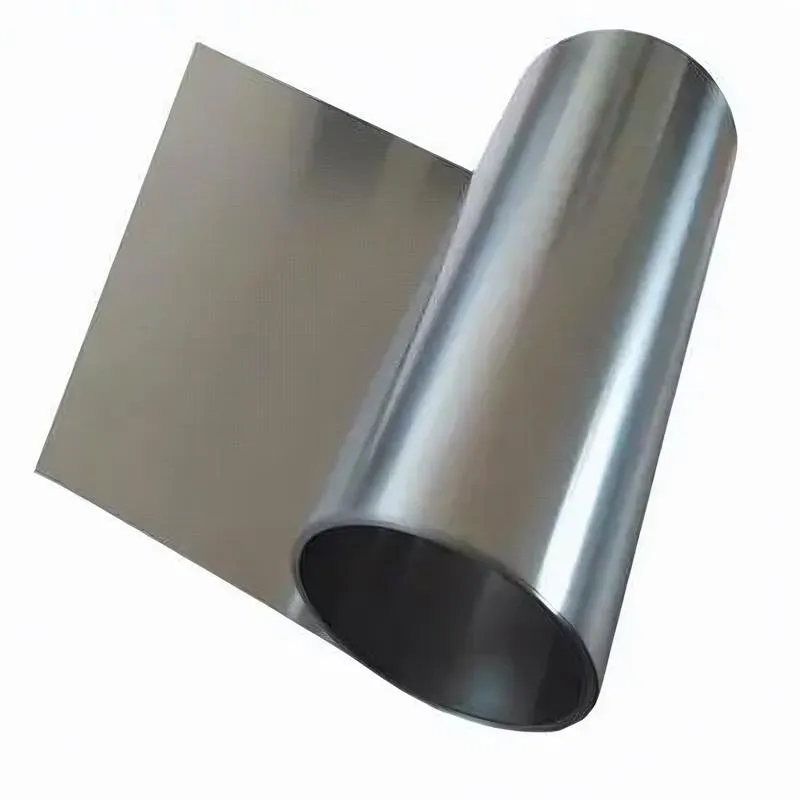
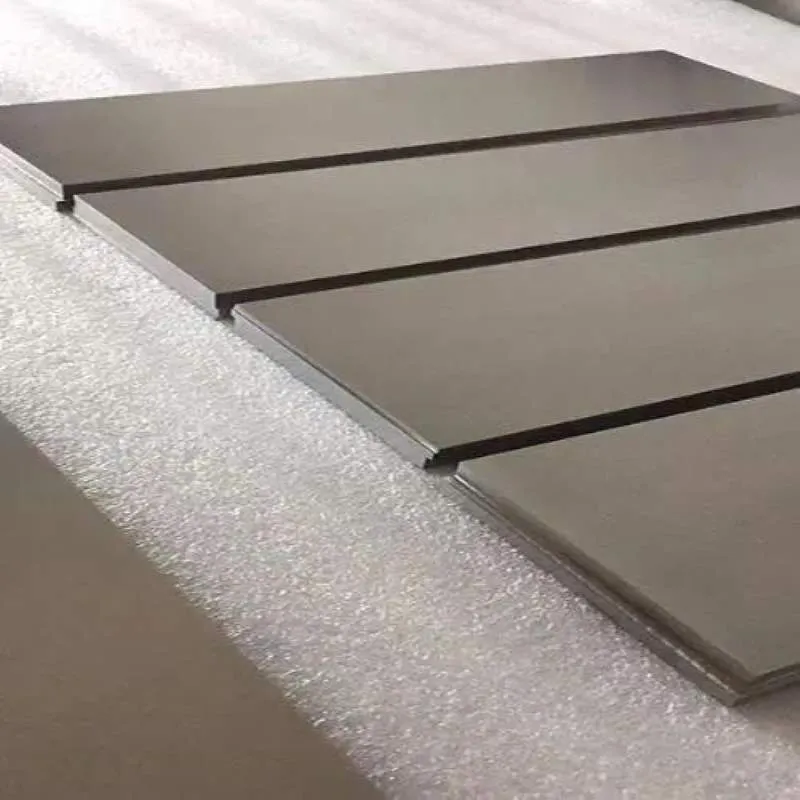
AISI 1080 Steel Foil/Strip
Product Code : STI-CSTI-139-CU
We provide AISI 1080 Steel Foil/Strip, oil quenched from 815°C (1500°F), tempered at 480°C (900°F) is available in Bar (Round bar, Flat bar), Ribbon, Wire, Rods, Tube,Seamless Tube,Pipe, Ingots, Plate, Sheet, Strip and Forging Stock.,Purity, chemical composition, size, etc. can all be customized to meet specific requirements.
Please contact us if you need customized services. We will contact you with the price and availability in 24 hours.
AISI 1080 Steel Foil, oil quenched from 815°C (1500°F), tempered at 480°C (900°F) Product Information
-:-
For detailed product information, please contact sales.
-:
AISI 1080 Steel Foil, oil quenched from 815°C (1500°F), tempered at 480°C (900°F) Synonyms
-:-
For detailed product information, please contact sales.
-:
AISI 1080 Steel, oil quenched from 815°C (1500°F), tempered at 480°C (900°F) Product Information
-:-
For detailed product information, please contact sales.
-:
### **Product Data Sheet: AISI 1080 Steel in the Heat-Treated Condition (Oil Quenched & Tempered at 480°C)**
#### **1. Overview: A Specific Heat-Treated State**
This datasheet describes **AISI 1080 steel in a specific, fully heat-treated condition**: oil-quenched from 815°C (1500°F) and tempered at 480°C (900°F). This thermal processing defines the material's final in-service properties. AISI 1080 is a very high-carbon steel, and this particular treatment regimen produces a classic **spring temper** or a high-strength structural temper. It optimizes the balance between tensile/elastic strength and a critical degree of toughness, sacrificing some maximum hardness for improved ductility and resistance to shock. This is a *service condition*, not a delivery form.
**Treatment Rationale:**
* **Oil Quench (from 815°C):** Austenitizing at 815°C fully dissolves carbides, followed by an oil quench. Oil provides a less severe cooling rate than water, minimizing the risk of distortion and quench cracking while still achieving full through-hardening to martensite in this grade.
* **Temper at 480°C (900°F):** This high-temperature tempering significantly relieves the brittleness of the as-quenched martensite. It precipitates fine carbides, resulting in a tough, sorbitic microstructure with a high elastic limit—ideal for springs and high-stress components that must resist permanent deformation.
---
#### **2. Base Material Chemical Composition (AISI/SAE 1080)**
The starting composition is standard for this grade.
| Element | Content (%) |
| :--- | :--- |
| **Carbon (C)** | **0.75 - 0.88** |
| **Manganese (Mn)** | 0.60 - 0.90 |
| **Phosphorus (P)** | ≤ 0.040 |
| **Sulfur (S)** | ≤ 0.050 |
| **Silicon (Si)** | 0.15 - 0.35 |
| **Iron (Fe)** | Balance |
---
#### **3. Mechanical & Physical Properties in this Condition**
*These are the final, in-service properties resulting from the specified heat treatment.*
| Property | Typical Value / Description |
| :--- | :--- |
| **Microstructure** | **Tempered Martensite (Sorbite)** |
| **Tensile Strength** | **1150 - 1300 MPa (167 - 189 ksi)** |
| **Yield Strength (0.2% Offset)** | **1030 - 1170 MPa (149 - 170 ksi)** |
| **Elongation (in 50 mm)** | **~ 8 - 12%** |
| **Reduction in Area** | **~ 30 - 40%** |
| **Hardness** | **38 - 44 HRC** (Rockwell C) / **~ 360 - 420 HB** |
| **Modulus of Elasticity** | ~ 200 GPa (29,000 ksi) |
| **Fatigue Strength** | High (Good resistance to cyclic loading in this temper) |
| **Impact Toughness (Charpy V-notch)** | **Moderate.** Significantly higher than a low-temperature temper, but not as high as alloy steels. |
| **Machinability** | **Poor.** Can only be machined with hard material techniques (grinding, EDM, carbide tools). |
| **Weldability** | **Not Recommended.** The heat-treated condition is irreparably damaged by welding. |
---
#### **4. Key In-Service Characteristics**
* **High Elastic Limit & Yield Strength:** The foremost characteristic. This temper allows components to withstand very high static and cyclical stresses without taking a permanent set, making it perfect for springs.
* **Good Toughness & Ductility Balance:** The 480°C temper provides a vital compromise, offering useful ductility and shock resistance while retaining very high strength. It is more resistant to brittle fracture than lower tempering temperatures.
* **Excellent Wear Resistance:** While not at maximum hardness, the hardness of ~40 HRC still provides very good resistance to abrasion and galling.
* **Dimensional Stability:** The high tempering temperature provides excellent stress relief, resulting in stable components under load.
---
#### **5. Typical Applications for this Specific Temper**
Components designed to leverage this specific balance of high yield strength and moderate toughness.
* **Heavy-Duty Mechanical Springs:** The quintessential application. **Truck and railway leaf springs, large coil suspension springs, high-stress torsion bars.**
* **Locking Mechanisms & Clamps:** High-strength parts that require both strength and a degree of resilience, such as **heavy-duty lock shackles, clamp bodies, and retaining rings.**
* **Agricultural & Earth-Moving Wear Parts:** **Plow shares, scraper blades, grader edges** that require resistance to abrasion but must also withstand occasional impact.
* **Hand Tools:** **Pry bars, heavy wrenches, and demolition tools** that cannot be fully brittle.
* **Structural Components in Machines:** **Axles, pins, and linkages** that are subject to high, repeated loads but not extreme shock.
---
#### **6. Relevant Standards & Specifications**
The specification focuses on the **achieved properties** and the **process** for standard material.
| Standard / Aspect | Relevance to this Condition |
| :--- | :--- |
| **Base Material Standard** | **AISI 1080 / SAE J403 / UNS G10800** |
| **Heat Treatment Specification** | Often called out on engineering drawings as:
"Harden: Heat to 815°C (1500°F), quench in oil. Temper at 480°C (900°F) to a hardness of 38-44 HRC." |
| **ASTM A29/A29M** | Provides standard chemistry for the base bar stock. |
| **ASTM A689** | Specification for carbon and alloy steel bars for springs. Grade 1080 would be procured and processed to meet the required spring properties (which this temper achieves). |
| **AMS 2771** | Aerospace standard for heat treatment of steel parts. Provides detailed procedures for time, temperature, and quenching media. |
| **SAE J416** | Standard for heat treatment for carburizing and through-hardening steels. |
---
### **Critical Processing Notes & Design Considerations**
1. **This is a Final State:** Components are **fully machined and formed prior to this heat treatment**. Only grinding or finishing operations can be performed afterward.
2. **Decarburization Control:** During austenitizing, surface decarburization must be prevented (e.g., using atmosphere-controlled furnaces) as it creates a soft surface layer that drastically reduces fatigue life, especially in springs.
3. **Quench Medium:** **Oil quench is specified.** Using water would cause excessive internal stress and likely cracking. Using air would not harden it sufficiently.
4. **Tempering Imperative:** **Tempering must follow quenching immediately** to prevent cracking and achieve the desired toughness. The 480°C temperature is a target; final hardness is the controlling parameter.
5. **Not for Impact/Welding:** While tougher than a low temper, it is still not recommended for extreme impact or any welding.
**Summary:** AISI 1080 oil-quenched and tempered at 480°C represents a classic, high-performance engineering state for carbon steel. It delivers an outstanding combination of **strength, resilience, and durability**, making it the benchmark treatment for demanding spring applications and high-stress structural components where reliable performance under load is critical. Its properties are a direct result of precise thermal processing applied to a high-carbon steel chemistry.
-:-
For detailed product information, please contact sales.
-:
AISI 1080 Steel, oil quenched from 815°C (1500°F), tempered at 480°C (900°F) Specification
Dimensions
Size:
Diameter 20-1000 mm Length <4871 mm
Size:We can customized as required
Standard:
Per your request or drawing
We can customized as required
Properties(Theoretical)
Chemical Composition
-:-
For detailed product information, please contact sales.
-:
AISI 1080 Steel, oil quenched from 815°C (1500°F), tempered at 480°C (900°F) Properties
-:-
For detailed product information, please contact sales.
-:
Applications of AISI 1080 Steel Foil, oil quenched from 815°C (1500°F), tempered at 480°C (900°F)
-:-
For detailed product information, please contact sales.
-:
Chemical Identifiers AISI 1080 Steel Foil, oil quenched from 815°C (1500°F), tempered at 480°C (900°F)
-:-
For detailed product information, please contact sales.
-:
Packing of AISI 1080 Steel Foil/Strip, oil quenched from 815°C (1500°F), tempered at 480°C (900°F)
-:-
For detailed product information, please contact sales.
-:
Standard Packing:
-:-
For detailed product information, please contact sales.
-:
Typical bulk packaging includes palletized plastic 5 gallon/25 kg. pails, fiber and Steel Foil/Strip drums to 1 ton super sacks in full container (FCL) or truck load (T/L) quantities. Research and sample quantities and hygroscopic, oxidizing or other air sensitive materials may be packaged under argon or vacuum. Solutions are packaged in polypropylene, plastic or glass jars up to palletized 1342 gallon liquid totes Special package is available on request. E FORUs’ is carefully handled to minimize damage during storage and transportation and to preserve the quality of our products in their original condition