AISI 1141 Steel, oil quenched
Product Code : STI-CSTI-1417-CU
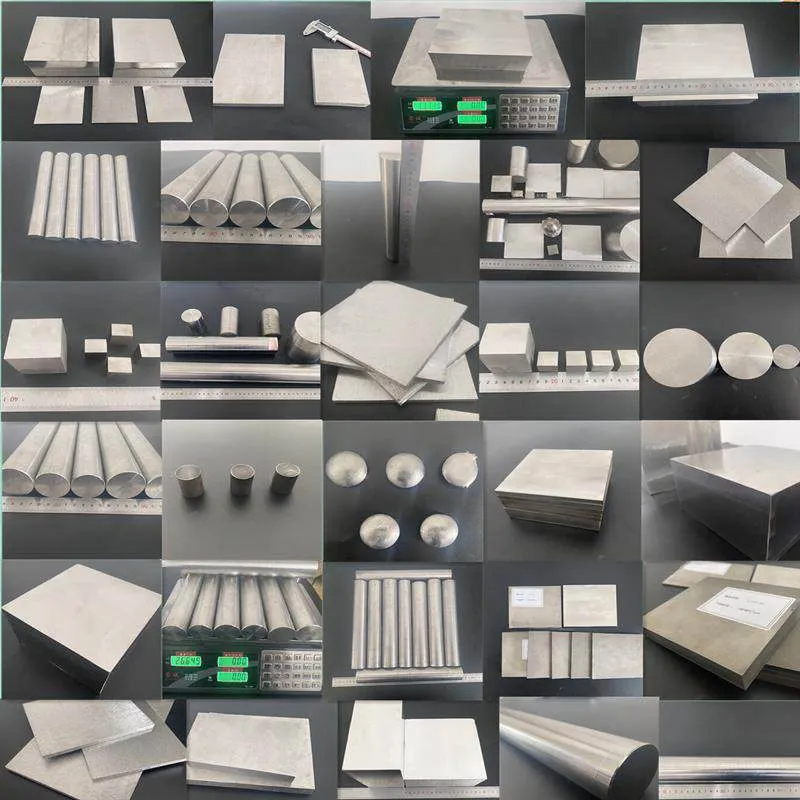
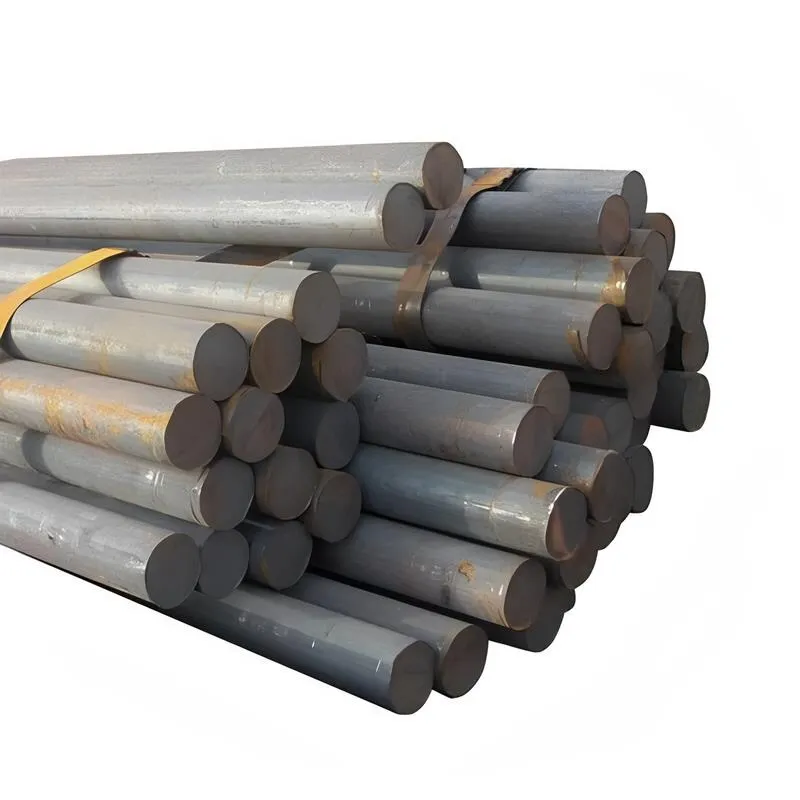
We provide AISI 1141 Steel, oil quenched from 815°C, 540°C (1000°F) temper is available in Bar (Round bar, Flat bar), Ribbon, Wire, Rods, Tube,Seamless Tube,Pipe, Ingots, Plate, Sheet, Strip and Forging Stock.,Purity, chemical composition, size, etc. can all be customized to meet specific requirements.
Please contact us if you need customized services. We will contact you with the price and availability in 24 hours.
AISI 1141 Steel, oil quenched from 815°C, 540°C (1000°F) temper Product Information
-:-
For detailed product information, please contact sales.
-:
AISI 1141 Steel, oil quenched from 815°C, 540°C (1000°F) temper Synonyms
-:-
For detailed product information, please contact sales.
-:
AISI 1141 Steel, oil quenched from 815°C, 540°C (1000°F) temper Product Information
-:-
For detailed product information, please contact sales.
-:
# Technical Data Sheet: AISI 1141 Steel
## Oil Quenched from 815°C & Tempered at 540°C (1500°F & 1000°F) - Heat Treated Condition
---
### **1. Executive Summary**
AISI 1141 steel subjected to oil quenching from 815°C (1500°F) followed by tempering at 540°C (1000°F) represents a **through-hardened, high-strength condition** of this resulfurized free-machining steel. This specific heat treatment transforms the material from its normalized or as-rolled state into a **tempered martensitic microstructure**, achieving an optimal balance of high tensile strength, good toughness, and retained machinability. The 540°C tempering temperature places the material in the **high-temperature tempering range**, resulting in a structure often referred to as "tempered sorbitte," which provides excellent combination of strength and ductility for demanding mechanical applications.
This heat-treated condition is particularly valuable for components requiring **wear resistance, good fatigue strength, and moderate impact resistance** while maintaining some machinability for final sizing or repair operations.
---
### **2. Heat Treatment Specification**
#### **2.1 Complete Thermal Cycle**
1. **Preheat (Optional but Recommended):** 650-700°C (1200-1290°F) - reduces thermal shock and distortion
2. **Austenitization:** 815°C (1500°F) ± 10°C (18°F) - soak time: 30 minutes per inch of thickness (minimum 30 minutes)
3. **Quenching:** Oil bath at 40-80°C (100-180°F) - agitated oil preferred for uniform cooling
4. **Tempering:** 540°C (1000°F) ± 10°C (18°F) - soak time: 60-90 minutes per inch of thickness (minimum 60 minutes)
5. **Cooling:** Air cool after tempering (furnace cooling optional for maximum stress relief)
#### **2.2 Critical Processing Parameters**
- **Maximum Hardening Diameter:** ~50 mm (2 inches) for full through-hardening in oil
- **Prior Condition:** Best results from normalized or annealed structure
- **Atmosphere Control:** Neutral or protective atmosphere recommended to prevent decarburization
- **Quench Severity:** Medium-speed quenching oil (e.g., ISO VG 46-68)
- **Temper Cooling Rate:** Air cooling standard; furnace cooling to 400°C then air cooling for maximum stress relief
---
### **3. Chemical Composition (Base Material)**
The chemical composition remains within standard AISI 1141 ranges, with the elevated manganese content proving particularly beneficial for hardenability during this heat treatment.
| Element | Specification Range (% weight) | Typical Value (%) | Role in Heat Treated Properties |
|---------|--------------------------------|-------------------|--------------------------------|
| **Carbon (C)** | 0.37 – 0.45 | 0.41 | Primary contributor to hardness and strength via martensite formation |
| **Manganese (Mn)** | 1.35 – 1.65 | 1.50 | **Critical for hardenability** - enables through-hardening of larger sections in oil |
| **Sulfur (S)** | 0.08 – 0.13 | 0.10 | Provides chip-breaking inclusions; slightly reduces transverse properties |
| **Phosphorus (P)** | ≤ 0.040 | 0.030 | Increases strength but may reduce toughness at this tempering temperature |
| **Silicon (Si)** | ≤ 0.10 | 0.05 | Deoxidizer; provides solid solution strengthening |
| **Iron (Fe)** | Balance | Balance | Matrix element |
**Hardenability Consideration:** The combination of 0.41% C and 1.50% Mn gives AISI 1141 a **DI (Ideal Critical Diameter) of approximately 50-60 mm (2.0-2.4 inches)** for 50% martensite at the center when oil quenched. This makes the specified 815°C/540°C treatment effective for rounds up to about 50 mm diameter.
---
### **4. Microstructural Characteristics**
#### **4.1 After Quenching (As-Quenched Condition)**
- **Primary Structure:** Lath martensite with retained austenite (<5-10%)
- **Prior Austenite Grain Size:** ASTM 6-8 (fine-grained)
- **Carbides:** Most carbon in solid solution in martensite
- **MnS Inclusions:** Remain as elongated stringers, unchanged by heat treatment
#### **4.2 After Tempering at 540°C (Final Condition)**
- **Matrix Structure:** Tempered martensite (tempered sorbitte)
- **Carbide Precipitation:** Fine, spheroidized cementite (Fe₃C) particles dispersed throughout ferrite matrix
- **Carbide Size:** 0.1-0.3 μm, uniformly distributed
- **Grain Structure:** Fine, equiaxed ferrite grains with carbide dispersion
- **Retained Austenite:** <2% (most transforms during tempering)
- **Inclusions:** MnS stringers remain but become less detrimental due to ductile matrix
---
### **5. Physical Properties**
| Property | Value / Range | Test Standard | Notes |
|----------|---------------|---------------|-------|
| **Density** | 7.85 g/cm³ (0.284 lb/in³) | ASTM E12 | Unchanged from base steel |
| **Modulus of Elasticity** | 200-205 GPa (29,000-29,700 ksi) | ASTM E111 | Slightly increased due to strain hardening |
| **Poisson's Ratio** | 0.29 | ASTM E132 | Typical for steel |
| **Coefficient of Thermal Expansion** | 12.2 μm/m·°C (20-300°C) | ASTM E228 | Similar to normalized condition |
| **Thermal Conductivity** | 47.5 W/m·K (100°C) | ASTM E1461 | Reduced 5-10% compared to normalized |
| **Specific Heat** | 480 J/kg·K (20°C) | ASTM E1269 | Similar to normalized |
| **Electrical Resistivity** | 0.25 μΩ·m | ASTM B193 | Increased due to lattice strain |
| **Magnetic Properties** | Ferromagnetic | - | Fully magnetic after tempering |
---
### **6. Mechanical Properties**
*Properties are for through-hardened sections up to 50 mm (2 inches) diameter. Larger diameters will show gradient properties.*
#### **6.1 Standard Mechanical Properties**
| Property | Typical Value | Test Standard | Comments |
|----------|---------------|---------------|----------|
| **Tensile Strength** | 900-1050 MPa (130-152 ksi) | ASTM A370 | High strength level |
| **Yield Strength (0.2%)** | 750-900 MPa (109-130 ksi) | ASTM A370 | Excellent yield-to-tensile ratio (0.83-0.86) |
| **Elongation in 50 mm** | 12-18% | ASTM A370 | Good for this strength level |
| **Reduction of Area** | 35-50% | ASTM A370 | Shows good ductility |
| **Hardness** | 28-34 HRC (269-321 HB) | ASTM E18/E10 | **Optimal range for many applications** |
| **True Fracture Strength** | 1100-1300 MPa (160-188 ksi) | Calculated | |
#### **6.2 Impact and Fatigue Properties**
| Property | Value Range | Test Standard | Application Significance |
|----------|-------------|---------------|-------------------------|
| **Charpy V-Notch Impact (20°C)** | 25-40 J (18-30 ft-lb) | ASTM E23 | **Good toughness** for a free-machining steel at this hardness |
| **Charpy V-Notch Impact (-20°C)** | 15-25 J (11-18 ft-lb) | ASTM E23 | Maintains reasonable low-temperature toughness |
| **Fatigue Strength (R=-1, 10⁷ cycles)** | 380-450 MPa (55-65 ksi) | ASTM E466 | **Excellent fatigue resistance** |
| **Endurance Ratio** | 0.40-0.45 | - | Typical for hardened steels |
| **Fracture Toughness (K₁c)** | 60-75 MPa√m | ASTM E399 | Adequate for most engineering applications |
| **Notch Sensitivity** | Moderate | - | Components should have generous fillets |
#### **6.3 Machinability in Hardened Condition**
- **Machinability Rating:** 40-50% (vs. AISI 1212 = 100%)
- **Cutting Method:** Requires carbide or ceramic tooling
- **Recommended Parameters:** Reduced speeds and feeds compared to annealed state
- **Grindability:** Excellent - responds well to grinding operations
- **Post-Hardening Machining:** Limited to grinding, honing, or hard turning operations
---
### **7. International Standards & Specifications**
This heat-treated condition can be supplied to meet various international standards:
| Standardization Body | Standard Number | Title / Description | Notes |
|----------------------|-----------------|---------------------|-------|
| **ASTM International** | ASTM A29/A29M | Steel Bars, Heat Treated | Can be supplied as heat treated to specific hardness |
| **ASTM International** | ASTM A304 | Carbon and Alloy Steel Bars Subject to End-Quench Hardenability | Hardenability specification |
| **SAE International** | SAE J1268 | Hardenability Bands for Carbon and Alloy H Steels | Hardenability data |
| **ISO** | ISO 683-18 | Heat-treatable steels, alloy steels | Can meet property requirements |
| **AMS** | AMS 2301 | Premium Aircraft-Quality Steel Cleanliness | For enhanced cleanliness versions |
| **Customer Specifications** | Various | Often supplied to customer-specific heat treat requirements | Most common approach |
**Typical Purchase Specification:** "AISI 1141, oil quenched and tempered to 28-32 HRC" or similar hardness range specification.
---
### **8. Applications**
This heat-treated condition is specified for **heavily loaded components requiring wear resistance and strength** while maintaining some toughness.
#### **8.1 Automotive & Transportation**
- **Heavy-Duty Shafts:** Axle shafts, propeller shafts, transmission output shafts
- **Gears:** Medium-duty gears, synchronizer hubs, transmission gears
- **Suspension Components:** King pins, steering arms, torsion bars
- **Drivetrain:** Differential gears, drive sprockets, coupling components
#### **8.2 Industrial Machinery**
- **Power Transmission:** Drive shafts, coupling shafts, spindle shafts
- **Hydraulic Components:** Piston rods, cylinder rods (for high-pressure applications)
- **Machine Tools:** Arbors, mandrels, tool holders
- **Material Handling:** Conveyor shafts, roller components, gearbox parts
#### **8.3 Agricultural & Construction Equipment**
- **Implement Parts:** Plow shares, tillage components, linkage parts
- **Drive Components:** PTO shafts, gearbox components
- **Wear Parts:** Bushings, pins, rollers subject to abrasive wear
#### **8.4 General Engineering**
- **Fasteners:** High-strength bolts, studs, and pins (Grade 8.8 equivalent)
- **Tooling Components:** Jigs, fixtures, die components
- **Valve Components:** Valve stems for high-pressure applications
---
### **9. Heat Treatment Response & Control**
#### **9.1 Section Size Limitations**
| Diameter | Surface Hardness | Core Hardness | Effective Case Depth (50 HRC) |
|----------|-----------------|---------------|-------------------------------|
| **25 mm (1 in)** | 30-34 HRC | 30-34 HRC | Fully through-hardened |
| **50 mm (2 in)** | 30-34 HRC | 28-32 HRC | Fully through-hardened |
| **75 mm (3 in)** | 30-34 HRC | 24-28 HRC | Partial through-hardening |
| **100 mm (4 in)** | 30-34 HRC | 20-24 HRC | Surface hardness only |
#### **9.2 Effect of Tempering Temperature Variation**
| Tempering Temperature | Resultant Hardness | Tensile Strength | Impact Toughness |
|-----------------------|-------------------|-----------------|------------------|
| **480°C (900°F)** | 34-38 HRC | 1050-1200 MPa | 15-25 J |
| **540°C (1000°F)** | 28-34 HRC | 900-1050 MPa | 25-40 J |
| **595°C (1100°F)** | 24-28 HRC | 750-850 MPa | 40-55 J |
| **650°C (1200°F)** | 18-22 HRC | 600-700 MPa | 55-70 J |
#### **9.3 Distortion Considerations**
- **Typical Dimensional Change:** 0.1-0.3% expansion during hardening
- **Straightness Tolerance:** May require straightening after heat treatment
- **Surface Condition:** Light scale formation; machining allowance required
- **Grinding Stock:** Typically 0.25-0.50 mm (0.010-0.020 in) per side recommended
---
### **10. Processing Characteristics**
#### **10.1 Machining After Heat Treatment**
- **Hard Turning:** Possible with CBN or ceramic tools at 100-200 SFM
- **Grinding:** Recommended for precision dimensions; use aluminum oxide or CBN wheels
- **Drilling/Tapping:** Requires carbide tools; pre-drill before heat treatment preferred
- **Milling:** Limited to light finishing cuts with carbide end mills
#### **10.2 Further Processing Options**
- **Surface Hardening:** Can be induction hardened for additional surface wear resistance
- **Nitriding:** Possible for increased surface hardness and corrosion resistance
- **Plating/Coating:** Chrome plating, phosphate coating, or other surface treatments applicable
- **Welding:** **Not recommended** in heat-treated condition due to risk of cracking and property degradation
#### **10.3 Quality Control in Heat Treatment**
- **Hardness Testing:** Rockwell C scale at multiple locations
- **Microstructure Examination:** To verify complete transformation and tempering
- **Dimensional Inspection:** Post-heat treatment dimensions critical
- **Non-Destructive Testing:** Magnetic particle or dye penetrant for crack detection
---
### **11. Comparison with Similar Heat Treatments**
| Treatment | Hardness (HRC) | Tensile Strength | Primary Application |
|-----------|----------------|-----------------|---------------------|
| **As-Normalized** | 85-92 HRB | 550-690 MPa | Machining before heat treatment |
| **Oil Quenched, 205°C (400°F) Temper** | 45-50 HRC | 1450-1650 MPa | Maximum wear resistance, low toughness |
| **Oil Quenched, 425°C (800°F) Temper** | 35-40 HRC | 1150-1300 MPa | High strength with moderate toughness |
| **Oil Quenched, 540°C (1000°F) Temper** | **28-34 HRC** | **900-1050 MPa** | **Optimal strength-toughness balance** |
| **Oil Quenched, 650°C (1200°F) Temper** | 18-24 HRC | 650-800 MPa | High toughness applications |
---
### **12. Limitations & Special Considerations**
1. **Transverse Properties:** The sulfur content (0.08-0.13%) reduces transverse ductility and impact strength by approximately 20-30% compared to longitudinal properties.
2. **Weldability:** Poor due to sulfur content; not recommended for welded fabrication in heat-treated condition.
3. **Stress Corrosion Cracking:** Moderate susceptibility at this strength level; consider protective coatings for corrosive environments.
4. **Notch Sensitivity:** Components should have generous fillet radii (minimum R = 1.5 mm or 0.060 in).
5. **High-Temperature Service:** Limited to approximately 250°C (480°F) maximum continuous service temperature.
---
### **13. Quality Assurance & Testing**
#### **13.1 Standard Testing Requirements**
- Hardness verification (minimum 3 locations per bar)
- Microstructure evaluation (per lot)
- Chemical analysis certification (per heat)
- Dimensional verification
#### **13.2 Special Testing Available**
- Hardenability testing (Jominy end-quench)
- Impact testing at various temperatures
- Fatigue testing
- Non-destructive examination (UT, MP, PT)
#### **13.3 Documentation**
- Certified heat treat chart with time-temperature records
- Material Test Report with chemistry and mechanical properties
- Certification of compliance to specified standards
---
### **14. Equivalent Grades & Alternatives**
| Country/Standard | Equivalent Grade | Notes |
|-----------------|------------------|-------|
| **USA (SAE)** | 1141, 1144 | 1144 has higher sulfur for better machinability |
| **USA (ASTM)** | Grade G11410 | UNS designation |
| **Germany (DIN)** | 1.0726+QT | Quenched and tempered condition |
| **Japan (JIS)** | SUM43 | Similar free-machining steel |
| **UK (BS)** | 212M44 | En8 equivalent with sulfur |
| **Alternative for Better Properties** | 4140, 4340 | Higher alloy steels with better transverse properties |
---
### **15. Safety & Handling**
- **Heat Treatment Safety:** Follow standard furnace and quench oil safety procedures
- **Machining Safety:** Use appropriate guards and personal protective equipment
- **Material Handling:** Heat-treated material is brittle; avoid impact loading during handling
- **Disposal:** Recyclable as ferrous scrap
---
**Technical Notice:** This heat treatment produces a specific combination of properties that may require adjustment for particular applications. Consultation with a metallurgical engineer is recommended for critical components or applications involving impact loading, cyclic stresses, or corrosive environments.
**Disclaimer:** The information provided is for technical reference. Actual properties may vary based on exact chemical composition, section size, and specific heat treatment parameters. Users should conduct application-specific testing to verify suitability.
-:-
For detailed product information, please contact sales.
-:
AISI 1141 Steel, oil quenched from 815°C, 540°C (1000°F) temper Specification
Dimensions
Size:
Diameter 20-1000 mm Length <6149 mm
Size:We can customized as required
Standard:
Per your request or drawing
We can customized as required
Properties(Theoretical)
Chemical Composition
-:-
For detailed product information, please contact sales.
-:
AISI 1141 Steel, oil quenched from 815°C, 540°C (1000°F) temper Properties
-:-
For detailed product information, please contact sales.
-:
Applications of AISI 1141 Steel, oil quenched from 815°C, 540°C (1000°F) temper
-:-
For detailed product information, please contact sales.
-:
Chemical Identifiers AISI 1141 Steel, oil quenched from 815°C, 540°C (1000°F) temper
-:-
For detailed product information, please contact sales.
-:
Packing of AISI 1141 Steel, oil quenched from 815°C, 540°C (1000°F) temper
-:-
For detailed product information, please contact sales.
-:
Standard Packing:
-:-
For detailed product information, please contact sales.
-:
Typical bulk packaging includes palletized plastic 5 gallon/25 kg. pails, fiber and steel drums to 1 ton super sacks in full container (FCL) or truck load (T/L) quantities. Research and sample quantities and hygroscopic, oxidizing or other air sensitive materials may be packaged under argon or vacuum. Solutions are packaged in polypropylene, plastic or glass jars up to palletized 2620 gallon liquid totes Special package is available on request. E FORUs’ is carefully handled to minimize damage during storage and transportation and to preserve the quality of our products in their original condition