AISI 4032H Steel
Product Code : STI-CSTI-1454-CU
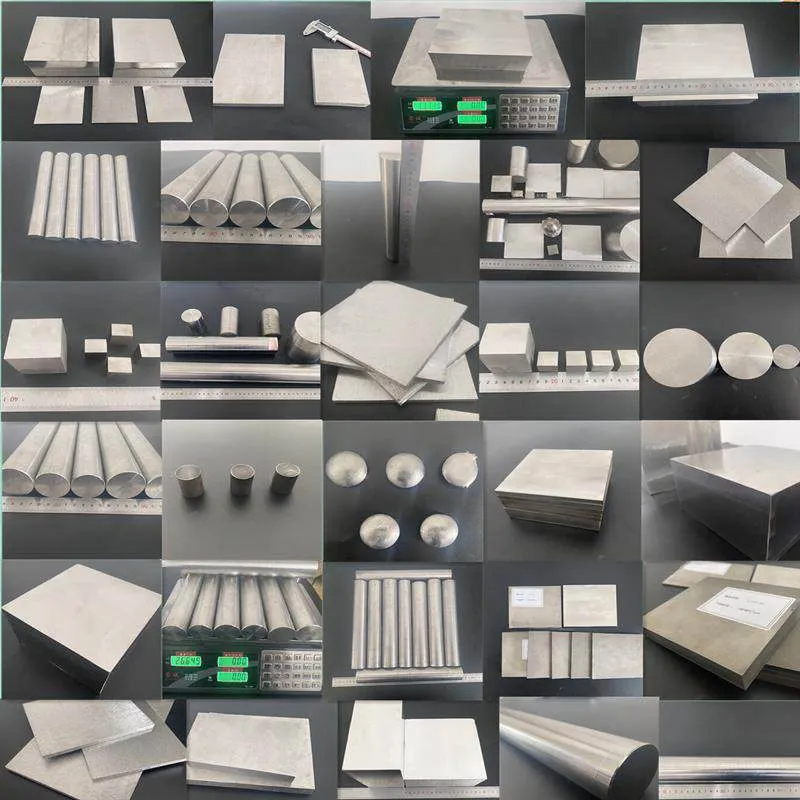
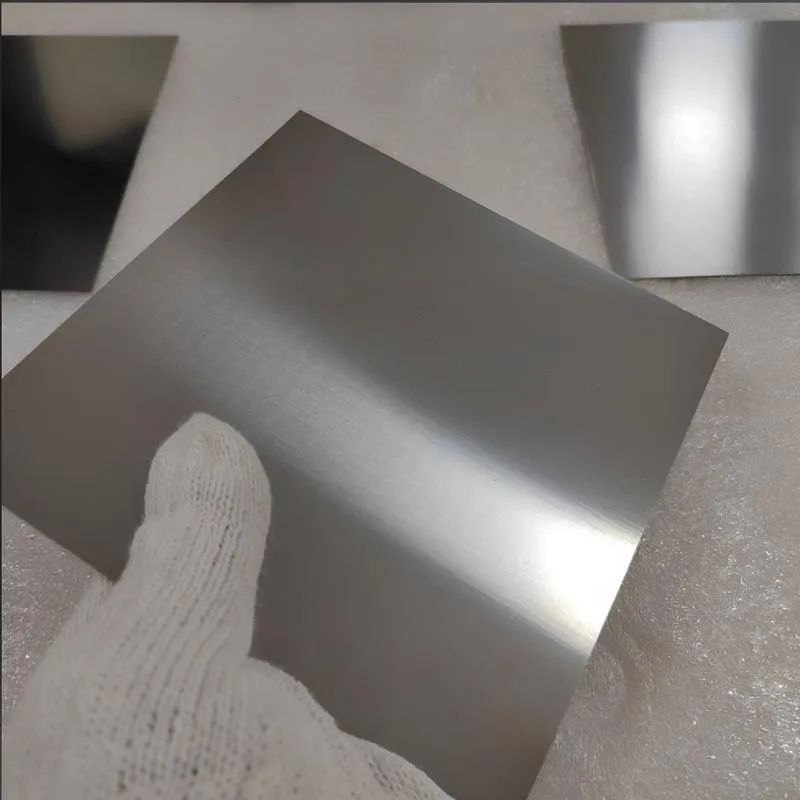
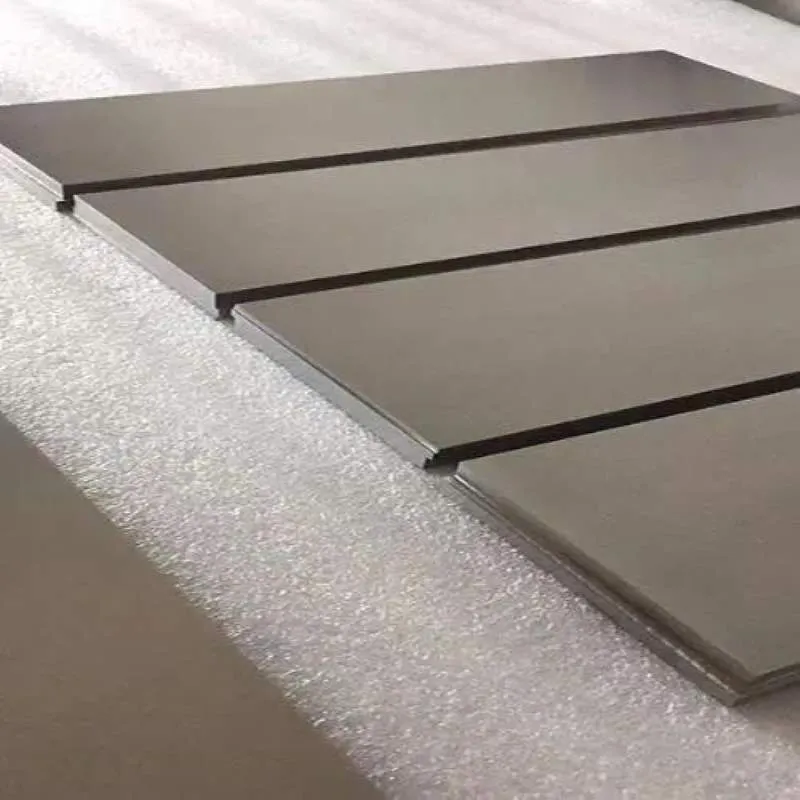
We provide AISI 4032H Steel Composition Spec is available in Bar (Round bar, Flat bar), Ribbon, Wire, Rods, Tube,Seamless Tube,Pipe, Ingots, Plate, Sheet, Strip and Forging Stock.,Purity, chemical composition, size, etc. can all be customized to meet specific requirements.
Please contact us if you need customized services. We will contact you with the price and availability in 24 hours.
AISI 4032H Steel Composition Spec Product Information
-:-
For detailed product information, please contact sales.
-:
AISI 4032H Steel Composition Spec Synonyms
-:-
For detailed product information, please contact sales.
-:
AISI 4032H Steel Composition Spec Product Information
-:-
For detailed product information, please contact sales.
-:
# **Product Datasheet: AISI 4032H Steel Composition Spec (UNS S40320)**
## **Product Overview**
AISI 4032H is a **hardenability-controlled nickel-silicon alloy steel** supplied to chemical composition specifications with guaranteed hardenability bands. The "H" designation indicates that the steel meets specific hardenability requirements as defined by SAE standards, ensuring predictable and consistent heat treatment response. This silicon-enriched alloy steel combines the benefits of AISI 4032 chemistry with the added assurance of controlled hardenability, making it particularly valuable for critical components where uniform mechanical properties throughout the cross-section are essential. The high silicon content (1.90-2.60%) provides exceptional temper resistance and high-temperature stability.
## **Key Features & Benefits**
- **Controlled Hardenability**: Guaranteed hardenability bands ensure consistent heat treatment response
- **Predictable Performance**: Reliable mechanical properties across different production lots
- **High Temperature Stability**: Silicon content enhances strength retention at elevated temperatures
- **Excellent Toughness**: Nickel content provides good impact resistance
- **Good Fatigue Resistance**: Suitable for dynamically loaded components
- **Versatile Heat Treatment**: Responds well to various hardening methods including nitriding
- **Reduced Scrap Rate**: Predictable hardenability minimizes heat treatment failures
- **Quality Assurance**: H-band certification provides additional quality verification
---
## **1. Chemical Composition**
### **Standard Composition Ranges (SAE J404, J1268)**
| Element | Composition Range (%) | Typical Analysis (%) | Primary Function & Metallurgical Effect |
|---------|----------------------|---------------------|----------------------------------------|
| **Carbon (C)** | 0.08 - 0.13 | 0.10 | Provides hardenability and strength; controlled for consistent response |
| **Manganese (Mn)** | 0.30 - 0.60 | 0.45 | Enhances hardenability; improves strength through solid solution |
| **Phosphorus (P)** | ≤ 0.025 | 0.015 | Kept very low for optimal ductility and impact resistance |
| **Sulfur (S)** | ≤ 0.025 | 0.010 | Controlled for improved machinability and cleanliness |
| **Silicon (Si)** | 1.90 - 2.60 | 2.25 | Primary alloying element; significantly increases hardenability and temper resistance |
| **Nickel (Ni)** | 0.40 - 0.80 | 0.60 | Improves toughness and impact resistance |
| **Chromium (Cr)** | 0.45 - 0.75 | 0.60 | Improves hardenability and corrosion resistance |
| **Molybdenum (Mo)** | 0.20 - 0.30 | 0.25 | Enhances hardenability and high-temperature strength |
| **Iron (Fe)** | Balance | Balance | Base metal |
### **Hardenability Control Elements**
| Element | Control Method | Purpose in H-Grade Steel |
|---------|---------------|--------------------------|
| **Carbon** | Narrower effective range within total range | Primary hardenability control |
| **Manganese** | Controlled within specified bands | Secondary hardenability control |
| **Chromium** | Tighter control than standard grade | Consistent response contributor |
| **Molybdenum** | Precise control | Hardenability and temper resistance |
### **Hardenability Band Specifications**
| Band Designation | Jominy Distance for Specific Hardness | Typical Applications |
|------------------|---------------------------------------|---------------------|
| **HI (Low)** | J9 = 24-30 HRC | Light sections, shallow hardening |
| **H2 (Medium)** | J9 = 30-36 HRC | General purpose applications |
| **H3 (High)** | J9 = 36-42 HRC | Heavy sections, deep hardening |
| **H4 (Very High)** | J9 = 42-48 HRC | Maximum hardenability requirements |
### **Critical Calculations**
| Parameter | Formula/Value | Significance |
|-----------|--------------|--------------|
| **Carbon Equivalent (CEIIW)** | 0.40-0.55 | CE = C + Mn/6 + (Cr+Mo+V)/5 + (Ni+Cu)/15 |
| **Hardenability Factor** | Very High | Controlled within specified bands |
| **Ideal Critical Diameter (Dᵢ)** | 2.5-3.0 inches (63-75mm) in oil | Through-hardening capability |
| **Temper Resistance Index** | High | Silicon enhances strength retention |
---
## **2. Physical Properties**
### **Basic Physical Properties**
| Property | Value | Conditions/Notes |
|----------|-------|------------------|
| **Density** | 7.75 g/cm³ | At 20°C (68°F) |
| **Melting Point** | 1480-1510°C | 2696-2750°F |
| **Specific Heat Capacity** | 460 J/kg·K | At 20°C |
| **Thermal Conductivity** | 38.5 W/m·K | At 100°C |
| **Coefficient of Thermal Expansion** | 11.8 ×10⁻⁶/°C | 20-100°C range |
| **Electrical Resistivity** | 0.52 μΩ·m | At 20°C |
| **Modulus of Elasticity (E)** | 200-205 GPa | 29-29.7 ×10⁶ psi |
| **Shear Modulus (G)** | 78-80 GPa | 11.3-11.6 ×10⁶ psi |
| **Poisson's Ratio (ν)** | 0.29 | - |
| **Magnetic Properties** | Ferromagnetic | Curie temperature: ~770°C |
### **Critical Transformation Temperatures**
| Temperature Point | Value | Metallurgical Significance |
|------------------|-------|---------------------------|
| **Ac₁ (Lower Critical)** | 745°C (1373°F) | Austenite formation begins |
| **Ac₃ (Upper Critical)** | 855°C (1571°F) | Complete austenitization |
| **Ms (Martensite Start)** | 340-360°C (644-680°F) | Martensite transformation begins |
| **Mf (Martensite Finish)** | 180-200°C (356-392°F) | Martensite transformation completes |
---
## **3. Hardenability Characteristics**
### **Jominy Hardenability Bands (SAE J1268)**
| Distance from Quenched End | H Band Limits (HRC) | H2 Band Typical (HRC) |
|----------------------------|---------------------|----------------------|
| **1.5mm (1/16")** | 38-48 | 42-46 |
| **3mm (1/8")** | 36-46 | 40-44 |
| **6mm (1/4")** | 32-42 | 36-40 |
| **10mm (3/8")** | 28-38 | 32-36 |
| **15mm (5/8")** | 24-34 | 28-32 |
| **20mm (3/4")** | 22-32 | 26-30 |
| **30mm (1-3/16")** | 20-30 | 24-28 |
### **Section Size Hardening Capability**
| Section Diameter | Oil Quench Result (H2 Band) | Water Quench Result (H2 Band) |
|------------------|-----------------------------|-------------------------------|
| **25mm (1")** | Surface: 42-46 HRC, Core: 38-42 HRC | Surface: 44-48 HRC, Core: 42-46 HRC |
| **50mm (2")** | Surface: 38-42 HRC, Core: 32-36 HRC | Surface: 40-44 HRC, Core: 36-40 HRC |
| **75mm (3")** | Surface: 34-38 HRC, Core: 28-32 HRC | Surface: 36-40 HRC, Core: 32-36 HRC |
| **100mm (4")** | Surface: 30-34 HRC, Core: 24-28 HRC | Surface: 32-36 HRC, Core: 28-32 HRC |
### **Ideal Critical Diameters**
| Quench Medium | 50% Martensite Diameter | 90% Martensite Diameter |
|---------------|-------------------------|-------------------------|
| **Oil (H=0.35)** | 65-75mm (2.6-3.0") | 45-55mm (1.8-2.2") |
| **Oil (H=0.50)** | 75-85mm (3.0-3.4") | 55-65mm (2.2-2.6") |
| **Water (H=1.0)** | 85-95mm (3.4-3.8") | 65-75mm (2.6-3.0") |
---
## **4. Mechanical Properties (Typical)**
### **As-Processed Properties**
| Condition | Hardness (HB) | Tensile Strength (MPa) | Yield Strength (MPa) | Elongation (%) |
|-----------|---------------|-----------------------|---------------------|----------------|
| **Annealed** | 179-229 | 585-760 | 345-485 | 20-28 |
| **Normalized** | 217-269 | 690-895 | 415-585 | 18-24 |
| **Hot Rolled** | 197-255 | 655-860 | 415-550 | 16-22 |
### **Heat Treated Properties (Oil Quenched & Tempered)**
| Tempering Temperature | Hardness (HRC) | Tensile Strength (MPa) | Yield Strength (MPa) | Impact Energy (J) |
|----------------------|---------------|-----------------------|---------------------|------------------|
| **200°C (392°F)** | 40-45 | 1240-1450 | 1030-1240 | 30-45 |
| **400°C (752°F)** | 35-40 | 1170-1380 | 1000-1170 | 40-60 |
| **540°C (1004°F)** | 28-33 | 930-1100 | 825-1000 | 55-75 |
| **650°C (1202°F)** | 22-26 | 690-860 | 585-760 | 70-90 |
### **Fatigue Properties**
| Condition | Surface Finish | Fatigue Limit (10⁷ cycles) | Ratio to Tensile Strength |
|-----------|---------------|----------------------------|---------------------------|
| **Polished** | 0.2-0.4 μm Ra | 480-580 MPa | 0.48-0.58 |
| **Ground** | 0.4-0.8 μm Ra | 430-520 MPa | 0.43-0.52 |
| **Machined** | 1.6-3.2 μm Ra | 380-460 MPa | 0.38-0.46 |
### **High Temperature Properties**
| Temperature | Tensile Strength Retention | Yield Strength Retention | Creep Strength (1000h) |
|-------------|----------------------------|--------------------------|------------------------|
| **200°C (392°F)** | 90-95% | 85-90% | >300 MPa |
| **400°C (752°F)** | 75-80% | 70-75% | 150-200 MPa |
| **500°C (932°F)** | 60-65% | 55-60% | 80-120 MPa |
---
## **5. Product Specifications & Standards**
### **Primary Specifications**
| Standard | Number | Title/Scope |
|----------|--------|-------------|
| **SAE** | J404 | Chemical Compositions of SAE Alloy Steels |
| **SAE** | J1268 | Hardenability Bands for Alloy H-Steels |
| **ASTM** | A304 | Standard for Steel Bars, Alloy, Subject to End-Quench Hardenability Requirements |
| **ASTM** | A29/A29M | General Requirements for Steel Bars |
| **UNS** | S40320 | Unified Numbering System |
| **AMS** | AMS 6415H | Hardenability controlled version |
### **International Equivalents**
| Standard | Equivalent Designation | Notes |
|----------|------------------------|-------|
| **ISO** | ISO 683-11: 34SiNiCrMo7 + H | Hardenability controlled |
| **EN** | EN 10083-3: 1.6563 + H | With hardenability requirements |
| **DIN** | DIN 17200: 34SiNiCrMo7 + H | German standard with H-band |
| **JIS** | JIS G4103: SNCM439H | Japanese H-grade equivalent |
| **GB** | GB/T 5216: 35Si2Mn2MoVH | Chinese H-grade standard |
### **Quality Designations**
| Designation | Meaning | Testing Requirements |
|-------------|---------|---------------------|
| **4032H** | Standard H-grade | Chemistry + Hardenability |
| **4032H + SR** | Stress relieved | Additional stress relief |
| **4032H + UT** | Ultrasonic tested | Internal quality verification |
| **4032H + Z** | Special cleanliness | Inclusion control |
---
## **6. Typical Applications**
### **Automotive Industry**
- **Transmission Components**: Gears, shafts, synchronizers requiring consistent hardening
- **Engine Parts**: Crankshafts, camshafts, connecting rods
- **Steering Components**: Racks, pinions, steering shafts
- **Suspension Parts**: High-stress suspension components
### **Aerospace & Defense**
- **Aircraft Landing Gear**: Components requiring predictable hardening
- **Engine Components**: Turbine shafts, compressor parts
- **Structural Components**: High-strength fasteners, fittings
- **Defense Applications**: Firearm components, armored vehicle parts
### **Industrial Machinery**
- **Gear Manufacturing**: Industrial gears requiring uniform hardness
- **Machine Tool Components**: Spindles, lead screws, arbors
- **Power Transmission**: Shafts, couplings, universal joints
- **Hydraulic Components**: High-pressure pistons, cylinders
### **Oil & Gas Industry**
- **Drilling Equipment**: Drill collars, tool joints
- **Valve Components**: High-pressure valve parts
- **Pump Components**: Shafts, impellers
- **Downhole Tools**: Mandrels, connectors
### **Special Applications**
- **Precision Instruments**: Components requiring dimensional stability
- **Tooling**: Molds, dies, forming tools
- **Fasteners**: High-strength bolts, special fasteners
- **Wear Parts**: Components requiring consistent wear resistance
---
## **7. Processing Characteristics**
### **Machinability**
| Condition | Relative Machinability | Recommended Practices |
|-----------|------------------------|----------------------|
| **Annealed** | 65-70% of B1112 | Standard carbide tools, soluble coolant |
| **Normalized** | 60-65% of B1112 | Coated carbide tools, moderate speeds |
| **Hardened** | 25-30% of B1112 | CBN or ceramic tools, low speeds |
### **Heat Treatment Guidelines**
| Process | Parameters | Quality Control Points |
|---------|------------|------------------------|
| **Austenitizing** | 850-880°C, 20-30 min/inch | Temperature uniformity, atmosphere control |
| **Quenching** | Oil, 40-60°C, agitation | Quench rate monitoring, temperature control |
| **Tempering** | 150-650°C, 1-2 hours/inch | Temperature accuracy, time control |
| **Stress Relief** | 550-600°C, 1 hour/inch | Heating/cooling rate control |
### **Welding Considerations**
| Process | Suitability | Precautions Required |
|---------|-------------|---------------------|
| **SMAW** | Fair | Preheat 100-150°C, low-hydrogen electrodes |
| **GTAW** | Good | Matching filler, post-weld heat treatment |
| **GMAW** | Fair | Short circuit transfer, gas shielding |
| **Resistance** | Limited | Special procedures required |
---
## **8. Quality Assurance**
### **Testing Requirements**
| Test | Standard | Frequency | Acceptance Criteria |
|------|----------|-----------|-------------------|
| **Chemical Analysis** | ASTM E415 | Each heat | Within specified ranges |
| **Hardenability Test** | ASTM A255 | Each heat | Within specified H-band |
| **Tensile Test** | ASTM A370 | As specified | Meet customer requirements |
| **Hardness Test** | ASTM E10 | Per lot | Consistent with specification |
### **Certification Requirements**
- **Hardenability Report**: Jominy test data included
- **Chemical Analysis**: Full element analysis
- **Heat Treatment Data**: Recommended parameters
- **Traceability**: Complete heat traceability
- **Third-Party Certification**: Available upon request
### **Statistical Process Control**
| Parameter | Control Method | Target Value | Control Limits |
|-----------|---------------|--------------|----------------|
| **Carbon Content** | SPC | Mid-range | ±0.02% |
| **Hardenability** | Jominy testing | Within band | ±3 HRC points |
| **Hardness** | Sampling | Specified range | ±15 HB |
| **Dimensions** | 100% check | Nominal | Within tolerance |
---
## **9. Technical Guidelines**
### **Design Considerations**
1. **Section Size**: Match component size to hardenability band
2. **Heat Treatment**: Design for uniform heating and cooling
3. **Stress Concentrations**: Use generous radii and smooth transitions
4. **Surface Finish**: Specify based on application requirements
### **Processing Recommendations**
- **Material Preparation**: Verify hardenability band before processing
- **Heat Treatment**: Follow recommended parameters for consistent results
- **Quality Verification**: Test sample pieces from each lot
- **Documentation**: Maintain complete processing records
### **Troubleshooting**
| Issue | Possible Cause | Corrective Action |
|-------|---------------|-------------------|
| **Insufficient Hardness** | Incorrect H-band selection | Verify hardenability, adjust heat treatment |
| **Excessive Distortion** | Uneven heating/cooling | Improve fixture design, control rates |
| **Cracking** | Rapid quenching, sharp corners | Modify design, adjust quench medium |
| **Inconsistent Properties** | Lot-to-lot variation | Verify H-band compliance |
---
## **10. Ordering Information**
### **Standard Order Specifications**
| Item | Specification | Notes |
|------|--------------|-------|
| **Grade** | AISI 4032H | Specify H-band if required |
| **Condition** | As required | Annealed, normalized, etc. |
| **H-Band** | H1, H2, H3, or H4 | Based on application |
| **Size** | Complete dimensions | Diameter, length, tolerance |
| **Quantity** | Weight or pieces | Minimums may apply |
| **Testing** | Required tests | Specify on order |
| **Certification** | Required level | Based on application |
### **Special Requirements**
- **Specific H-Band**: Request particular hardenability range
- **Additional Testing**: Request extra tests beyond standard
- **Special Processing**: Request specific heat treatment
- **Traceability**: Request enhanced documentation
- **Certification**: Request special certifications
---
**Disclaimer**: The information provided in this datasheet is for general reference purposes. Actual properties may vary depending on specific manufacturing processes, heat treatment parameters, and individual lot characteristics. For critical applications, conduct appropriate testing and consult with materials engineering professionals. Always refer to the latest edition of applicable standards and material specifications.
**Revision**: 1.0 | **Date**: October 2023 | **Classification**: Commercial Technical Data
-:-
For detailed product information, please contact sales.
-:
AISI 4032H Steel Composition Spec Specification
Dimensions
Size:
Diameter 20-1000 mm Length <6186 mm
Size:We can customized as required
Standard:
Per your request or drawing
We can customized as required
Properties(Theoretical)
Chemical Composition
-:-
For detailed product information, please contact sales.
-:
AISI 4032H Steel Composition Spec Properties
-:-
For detailed product information, please contact sales.
-:
Applications of AISI 4032H Steel Composition Spec
-:-
For detailed product information, please contact sales.
-:
Chemical Identifiers AISI 4032H Steel Composition Spec
-:-
For detailed product information, please contact sales.
-:
Packing of AISI 4032H Steel Composition Spec
-:-
For detailed product information, please contact sales.
-:
Standard Packing:
-:-
For detailed product information, please contact sales.
-:
Typical bulk packaging includes palletized plastic 5 gallon/25 kg. pails, fiber and steel drums to 1 ton super sacks in full container (FCL) or truck load (T/L) quantities. Research and sample quantities and hygroscopic, oxidizing or other air sensitive materials may be packaged under argon or vacuum. Solutions are packaged in polypropylene, plastic or glass jars up to palletized 2657 gallon liquid totes Special package is available on request. E FORUs’ is carefully handled to minimize damage during storage and transportation and to preserve the quality of our products in their original condition