AISI 4118H Steel, normalized
Product Code : STI-CSTI-846-CU
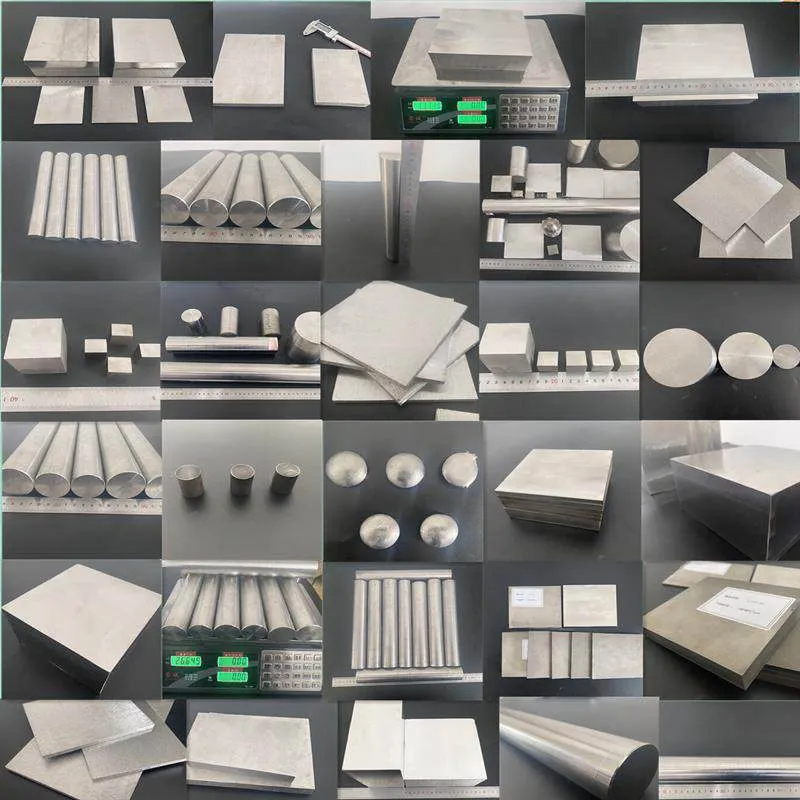
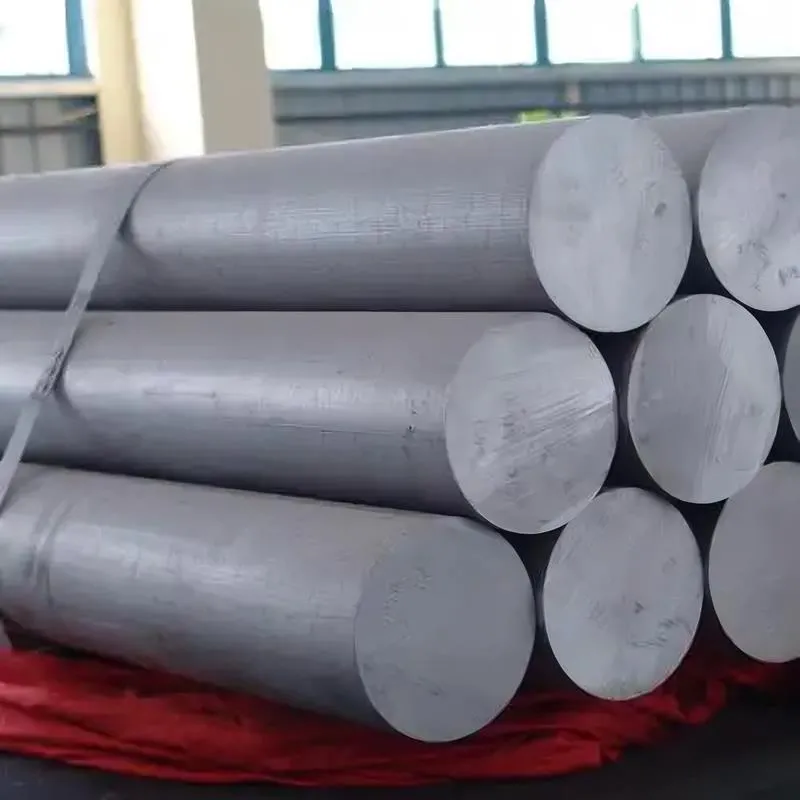
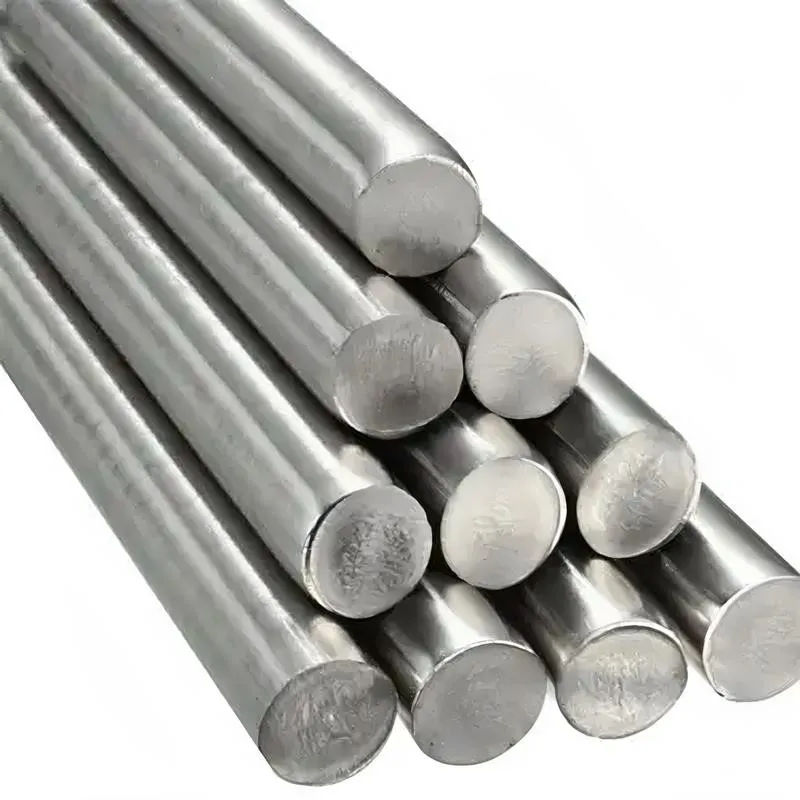
We provide AISI 4118H Steel, normalized at 910°C (1670°F), air cooled, 100 mm (4 in.) round is available in Bar (Round bar, Flat bar), Ribbon, Wire, Rods, Tube,Seamless Tube,Pipe, Ingots, Plate, Sheet, Strip and Forging Stock.,Purity, chemical composition, size, etc. can all be customized to meet specific requirements.
Please contact us if you need customized services. We will contact you with the price and availability in 24 hours.
AISI 4118H Steel, normalized at 910°C (1670°F), air cooled, 100 mm (4 in.) round Product Information
-:-
For detailed product information, please contact sales.
-:
AISI 4118H Steel, normalized at 910°C (1670°F), air cooled, 100 mm (4 in.) round Synonyms
-:-
For detailed product information, please contact sales.
-:
AISI 4118H Steel, normalized at 910°C (1670°F), air cooled, 100 mm (4 in.) round Product Information
-:-
For detailed product information, please contact sales.
-:
# **Product Technical Data Sheet: AISI 4118H Normalized Steel Round Bar**
**Product Designation:** AISI 4118H / SAE 4118H Normalized Steel
**Condition:** Normalized at 910°C (1670°F), Controlled Air Cooling
**Form & Size:** Round Bar, 100 mm (4.0 inch) Diameter
**Hardenability Classification:** H-Grade (Guaranteed Hardenability Band)
---
## **1. Overview**
AISI 4118H is a **hardenability-guaranteed** chromium-molybdenum low-alloy steel engineered for critical applications requiring predictable heat treatment response in large cross-sections. The **normalizing heat treatment** at 910°C with controlled air cooling produces a refined but necessarily varied microstructure across the 100mm diameter, reflecting the significant cooling rate gradient inherent in such large sections. This condition provides an optimal starting point for large components that will undergo subsequent case hardening or through-hardening, particularly where the hardenability guarantee ensures consistent transformation behavior despite the thermal mass challenges. The 100mm (4-inch) diameter represents a **heavy section application** where material selection and processing require careful consideration of property gradients and transformation kinetics.
## **2. Chemical Composition (Weight %)**
*Composition optimized for large-section hardenability per SAE J404 4118H requirements.*
| Element | Content Range (%) | Target Value (%) | Role in 100mm Section |
|---------|------------------|-----------------|------------------------|
| **Carbon (C)** | 0.18 - 0.23 | 0.21 | Critical for core strength in large sections |
| **Manganese (Mn)** | 0.70 - 0.95 | 0.83 | Essential for through-hardenability in 100mm diameter |
| **Silicon (Si)** | 0.15 - 0.35 | 0.25 | Deoxidizer, solid solution strengthening |
| **Chromium (Cr)** | 0.40 - 0.65 | 0.53 | Enhances hardenability depth, carbide formation |
| **Molybdenum (Mo)** | 0.10 - 0.15 | 0.13 | Critical for hardenability in heavy sections, reduces temper embrittlement |
| **Phosphorus (P)** | ≤ 0.025 | 0.015 | Tightly controlled for improved transverse properties |
| **Sulfur (S)** | ≤ 0.025 | 0.018 | Minimized for better transverse ductility in heavy sections |
| **Nickel (Ni)** | ≤ 0.25 | 0.15 | Often present as residual, improves core toughness |
| **Iron (Fe)** | Balance | Balance | Matrix element |
**Large-Section Chemistry Considerations:**
- **Elevated Mn and Mo:** Optimized to maximize hardenability in 100mm section
- **Reduced S and P:** Minimized to enhance transverse properties in heavy forgings
- **Carbon at mid-range:** Balances hardenability with machinability and weldability
## **3. Physical Properties (Normalized Condition)**
| Property | Surface Value | Center Value | Unit | Notes |
|----------|---------------|--------------|------|-------|
| **Density** | 7.85 | 7.85 | g/cm³ | Uniform throughout |
| **Melting Range** | - | 1415-1465 | °C | Solidus to liquidus |
| **Modulus of Elasticity** | 200-203 | 198-201 | GPa | Slight gradient due to microstructure |
| **Shear Modulus** | 77-79 | 76-78 | GPa | - |
| **Poisson's Ratio** | 0.29 | 0.29 | - | Uniform |
| **Thermal Conductivity** | 42.0 | 41.5 | W/m·K | At 100°C |
| **Specific Heat Capacity** | 480 | 480 | J/kg·K | At 20°C |
| **Thermal Expansion Coefficient** | 11.8 × 10⁻⁶ | 11.8 × 10⁻⁶ | /°C | 20-100°C |
| **Electrical Resistivity** | 0.23 | 0.24 | μΩ·m | Center slightly higher due to microstructure |
| **Acoustic Velocity** | 5900 | 5850 | m/s | Longitudinal wave |
## **4. Mechanical Properties (Normalized, 100mm Round)**
| Property | Surface (0-10mm) | Mid-Radius (25-35mm) | Center (45-50mm) | Test Standard |
|----------|------------------|----------------------|------------------|---------------|
| **Tensile Strength** | 530-620 MPa | 500-580 MPa | 480-560 MPa | ASTM E8/E8M |
| **Yield Strength (0.2%)** | 340-420 MPa | 320-400 MPa | 300-380 MPa | ASTM E8/E8M |
| **Elongation (50mm)** | 20-24% | 18-22% | 16-20% | ASTM E8/E8M |
| **Reduction of Area** | 42-52% | 38-48% | 35-45% | ASTM E8/E8M |
| **Hardness (Brinell)** | 149-187 HBW | 143-179 HBW | 137-170 HBW | ASTM E10 |
| **Impact Energy (CVN)** | 30-45 J | 25-40 J | 20-35 J | ASTM E23 (20°C) |
| **Fatigue Strength** | 250-290 MPa | 230-270 MPa | 210-250 MPa | 10⁷ cycles, R=-1 |
**Property Gradient Notes:**
- **Hardness Drop:** ~10% from surface to center
- **Strength Reduction:** ~8-10% from surface to center
- **Ductility Gradient:** Center exhibits 15-20% lower reduction of area
- **Impact Toughness:** Significant gradient due to microstructural coarsening at center
## **5. Hardenability Characteristics (Jominy End-Quench)**
*SAE J1268 Band Applied to 100mm Section*
| Jominy Position | Distance | Hardness Range (HRC) | Equivalent 100mm Position |
|-----------------|----------|----------------------|---------------------------|
| **J₁** | 1/16" (1.6mm) | 36-46 HRC | Surface in violent quench |
| **J₁₀** | 10/16" (15.9mm) | 22-32 HRC | Shallow subsurface (10mm) |
| **J₂₀** | 20/16" (31.8mm) | 17-27 HRC | Quarter-radius (25mm) |
| **J₃₀** | 30/16" (47.6mm) | 15-25 HRC | Mid-radius (38mm) |
| **J₄₀** | 40/16" (63.5mm) | 13-23 HRC | 3/4-radius (75mm) |
| **J₅₀** | 50/16" (79.4mm) | 12-22 HRC | Near-center (95mm) |
**100mm Section Quenching Predictions:**
- **Ideal Critical Diameter (D₁):** ~40mm in oil, ~70mm in water
- **Actual 100mm Oil Quench:** Center hardness 18-24 HRC (30-50% martensite)
- **Water Quench Risk:** High distortion and cracking risk, not recommended
- **Practical Approach:** Often used as carburizing grade or selectively hardened
## **6. Microstructural Characteristics**
### **Through-Section Microstructure:**
| Position | Microstructure | ASTM Grain Size | Pearlite/Ferrite Ratio | Prior Austenite Grain |
|----------|---------------|-----------------|------------------------|----------------------|
| **Surface (0-15mm)** | Fine pearlite + proeutectoid ferrite | 7-8 | 65/35 | ASTM 6-7 |
| **Quarter-Radius (25mm)** | Medium pearlite + ferrite | 6-7 | 60/40 | ASTM 5-6 |
| **Mid-Radius (38mm)** | Coarse pearlite + ferrite | 5-6 | 55/45 | ASTM 4-5 |
| **Near-Center (75mm)** | Very coarse pearlite + ferrite | 4-5 | 50/50 | ASTM 3-4 |
| **Center (95-100mm)** | Coarse pearlite with ferrite networks | 3-4 | 45/55 | ASTM 2-3 |
### **Normalizing Process for 100mm Round:**
1. **Controlled Heating:** 50-80°C/hour to 910°C to minimize thermal stress
2. **Extended Soaking:** 120-150 minutes at temperature (30-40 min per inch)
3. **Air Cooling Protocol:** Still air on elevated racks, rotation recommended for uniformity
4. **Cooling Rates:** ~3-8°C/min at center during critical transformation (700-550°C)
5. **Transformation:** Complete pearlitic transformation with grain size gradient
### **Inclusion Characteristics:**
- **ASTM E45 Rating:** Typically A₁₋₁.₅, B₀₋₁, C₀, D₀₋₁
- **Sulfide Shape Control:** Important for transverse properties in heavy section
- **Centerline Segregation:** Minimal with proper steelmaking practice
## **7. Manufacturing & Processing Characteristics**
### **Machinability in Normalized State:**
- **Relative Machinability:** 60-65% (vs. 100% for 1212 steel)
- **Surface Machining:** 25-35 m/min (80-115 SFM) with carbide tools
- **Core Machining:** 20-30 m/min (65-100 SFM) due to variable hardness
- **Tool Life:** Expect 20-30% reduction in tool life compared to smaller sections
- **Chip Control:** Variable chip formation through section
### **Thermal Processing Considerations:**
- **Preheating Required:** For all thermal operations to prevent cracking
- **Stress Relieving:** 600-620°C for 2+ hours after rough machining
- **Carburizing Potential:** Excellent candidate for case hardening applications
- **Through-Hardening Limits:** Limited to ~35-40 HRC at center even with aggressive quench
### **Welding of 100mm Section:**
- **Carbon Equivalent (Pcm):** 0.30-0.35 (Japanese formula)
- **Preheat Temperature:** 200-250°C minimum
- **Interpass Temperature:** 250-300°C maximum
- **Post-Weld Heat Treatment:** Mandatory, 590-620°C for 2+ hours
- **Welding Processes:** SMAW with low-hydrogen electrodes, SAW, GMAW with preheat
## **8. Applications**
### **Primary Applications in Normalized & Hardened Conditions:**
**Power Transmission:**
- Large gear blanks (>100mm face width)
- Heavy-duty shafting (marine propulsion, industrial drives)
- Sprockets and timing gears for heavy machinery
- Rolling mill pinions and drive components
**Heavy Equipment & Mining:**
- Excavator and dragline component blanks
- Crusher and mill component forgings
- Large bearing races and slewing rings
- Hydraulic cylinder rods and piston rods
**Energy Sector:**
- Turbine and generator shafting
- Large pump shafts and impellers
- Valve bodies and stems for high-pressure service
- Wind turbine main shaft components
**Transportation:**
- Railway axle blanks
- Large marine propeller shafts
- Heavy truck transmission components
- Off-highway vehicle final drive components
### **Final Heat Treatment Routes:**
1. **Carburizing:** Most common for 100mm sections (~1.5-2.5mm case depth)
2. **Induction Hardening:** For selected areas requiring wear resistance
3. **Through-Hardening & Tempering:** For components requiring 28-35 HRC throughout
4. **Nitriding:** For components requiring minimal distortion with hard case
## **9. International Standards & Equivalents**
### **Primary Standards:**
| Standard System | Designation | Equivalent/Specification | Notes |
|----------------|-------------|-------------------------|-------|
| **SAE/AISI** | **4118H** | SAE J404, J1268 | Hardenability guaranteed |
| **ASTM** | **A304** | Grade 4118H | Bars with hardenability requirements |
| **ASTM** | **A29/A29M** | General Requirements | Supplementary requirements for heavy sections |
| **UNS** | **G41186** | - | Unified Numbering System |
| **ISO** | **ISO 683-11** | 18CrMo4-5 | Similar composition |
| **DIN** | **1.7139+H** | 16MnCr5+H | German equivalent with hardenability |
| **EN** | **EN 10084** | 18CrMo4 | European standard |
| **JIS** | **SCM418H** | - | Japanese hardenability grade |
| **GB** | **18CrMoH** | - | Chinese standard (GB/T 5216) |
### **Large-Section Specific Standards:**
- **ASTM A388:** Standard Practice for Ultrasonic Examination of Heavy Steel Forgings
- **ASTM A609:** Standard Practice for Castings, Carbon, Low-Alloy, and Martensitic Stainless Steel, Ultrasonic Examination Thereof
- **SEP 1921:** Testing of Heavy Forging Ingots and Forged Products
## **10. Quality Assurance & Testing**
### **Mandatory Testing for 100mm Rounds:**
1. **Full Chemical Analysis:** With trace element reporting
2. **Jominy Hardenability Test:** Complete curve with band verification
3. **Mechanical Testing:** Tensile tests from surface, mid-radius, and center locations
4. **Hardness Survey:** Minimum 5 points across radius (0%, 25%, 50%, 75%, 100% radius)
5. **Macroetch Testing:** For internal soundness assessment
6. **Sulfur Print:** To assess segregation pattern
### **Non-Destructive Examination:**
- **Ultrasonic Testing:** 100% volumetric examination per ASTM A388
- **Magnetic Particle Inspection:** Full surface examination
- **Dimensional Verification:** Full dimensional survey including straightness and roundness
### **Acceptance Criteria for 100mm Sections:**
| Parameter | Acceptance Criteria | Test Method |
|-----------|-------------------|-------------|
| **Internal Soundness** | No indications >3mm equivalent flat-bottom hole | ASTM A388 |
| **Surface Defects** | No linear defects >3mm depth | MPI or visual |
| **Hardness Gradient** | ≤15% variation surface to center | Multiple point test |
| **Decarburization** | ≤0.5mm total depth | Metallographic |
| **Straightness** | ≤2mm per meter | Straightedge |
### **Certification Requirements:**
- Mill heat treatment certificate with full cycle documentation
- Chemical and mechanical test reports with location-specific data
- NDE reports with full traceability
- Material traceability to original heat
---
**Processing Guidelines for 100mm Rounds:**
**Before Machining:**
- Verify ultrasonic test results for internal soundness
- Plan machining to remove surface decarburization (minimum 1mm per side)
- Consider stress relieving after rough machining
**Heat Treatment Considerations:**
- For carburizing: Expect case depth of 1.5-2.5mm with proper cycle
- For through-hardening: Realistic center hardness 28-32 HRC in oil quench
- Always consider distortion potential in heat treatment planning
**Design Considerations:**
- Account for property gradients in stress calculations
- Consider anisotropic behavior due to microstructural variations
- Allow for additional machining stock for distortion correction
**Technical Note:** The 100mm diameter represents a significant challenge for uniform heat treatment. The hardenability guarantee in 4118H provides predictability but cannot overcome fundamental physical limitations of heat transfer in large sections. This material excels in applications where case hardening or selective hardening can be employed, or where moderate through-hardening is acceptable.
**Industry Best Practices:**
1. Always simulate heat treatment for large sections before production
2. Consider alternative grades (e.g., 4320H, 8620H) for deeper hardenability if needed
3. Implement controlled cooling after normalizing to minimize residual stress
4. Use ultrasonic testing to verify internal quality before extensive machining
**Disclaimer:** This technical data sheet provides typical values based on standard processing. Actual properties will vary based on specific mill practices, heat treatment parameters, and position within the cross-section. For critical applications, prototype testing and specific qualification are essential. The hardenability guarantee applies to the Jominy test specimen, not directly to the 100mm round, though it indicates inherent hardenability potential.
-:-
For detailed product information, please contact sales.
-:
AISI 4118H Steel, normalized at 910°C (1670°F), air cooled, 100 mm (4 in.) round Specification
Dimensions
Size:
Diameter 20-1000 mm Length <5578 mm
Size:We can customized as required
Standard:
Per your request or drawing
We can customized as required
Properties(Theoretical)
Chemical Composition
-:-
For detailed product information, please contact sales.
-:
AISI 4118H Steel, normalized at 910°C (1670°F), air cooled, 100 mm (4 in.) round Properties
-:-
For detailed product information, please contact sales.
-:
Applications of AISI 4118H Steel, normalized at 910°C (1670°F), air cooled, 100 mm (4 in.) round
-:-
For detailed product information, please contact sales.
-:
Chemical Identifiers AISI 4118H Steel, normalized at 910°C (1670°F), air cooled, 100 mm (4 in.) round
-:-
For detailed product information, please contact sales.
-:
Packing of AISI 4118H Steel, normalized at 910°C (1670°F), air cooled, 100 mm (4 in.) round
-:-
For detailed product information, please contact sales.
-:
Standard Packing:
-:-
For detailed product information, please contact sales.
-:
Typical bulk packaging includes palletized plastic 5 gallon/25 kg. pails, fiber and steel drums to 1 ton super sacks in full container (FCL) or truck load (T/L) quantities. Research and sample quantities and hygroscopic, oxidizing or other air sensitive materials may be packaged under argon or vacuum. Solutions are packaged in polypropylene, plastic or glass jars up to palletized 2049 gallon liquid totes Special package is available on request. E FORUs’ is carefully handled to minimize damage during storage and transportation and to preserve the quality of our products in their original condition