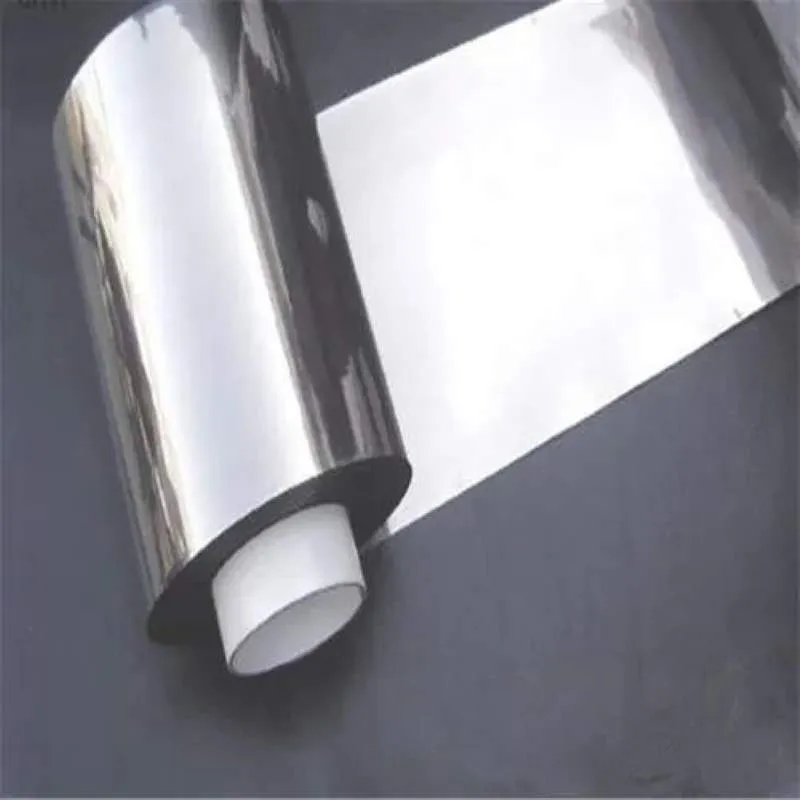
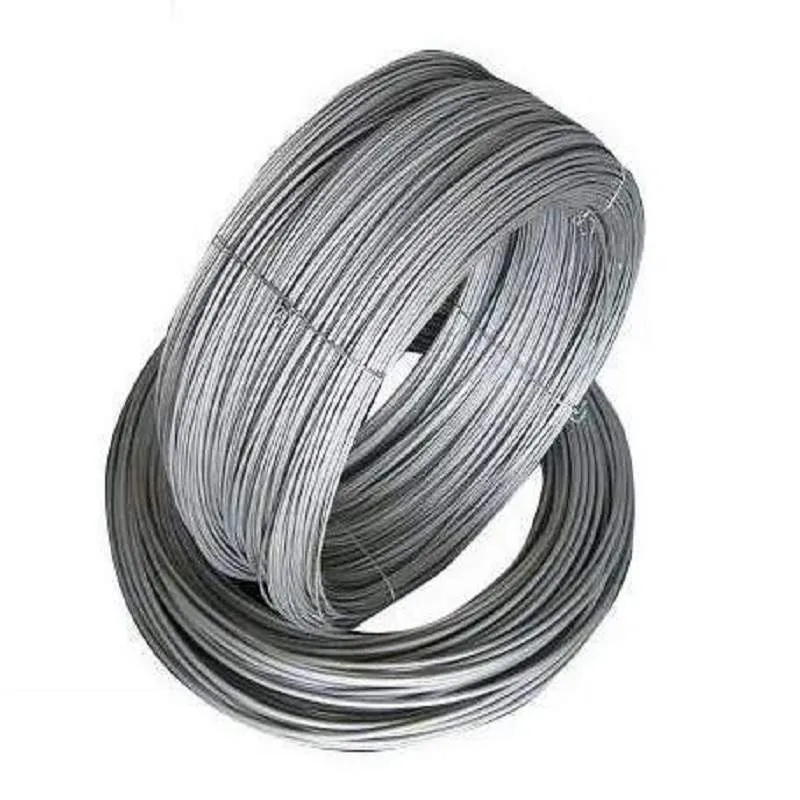
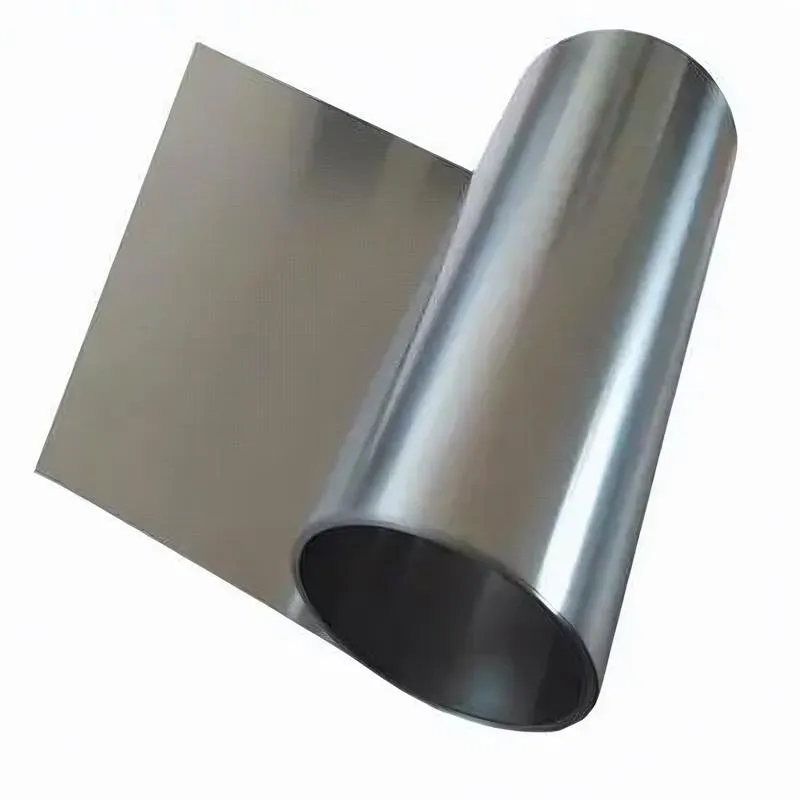
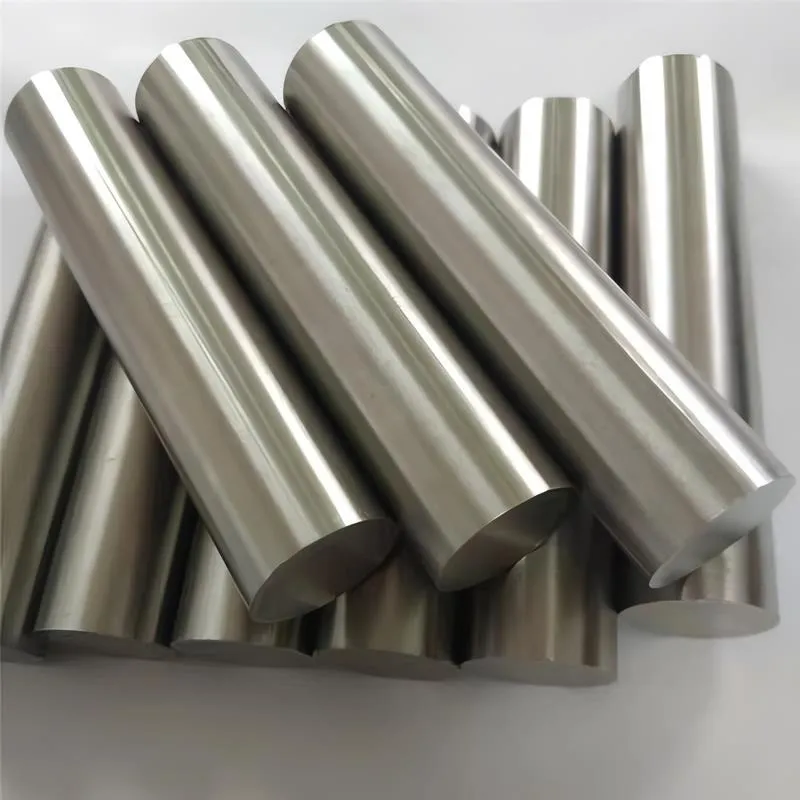
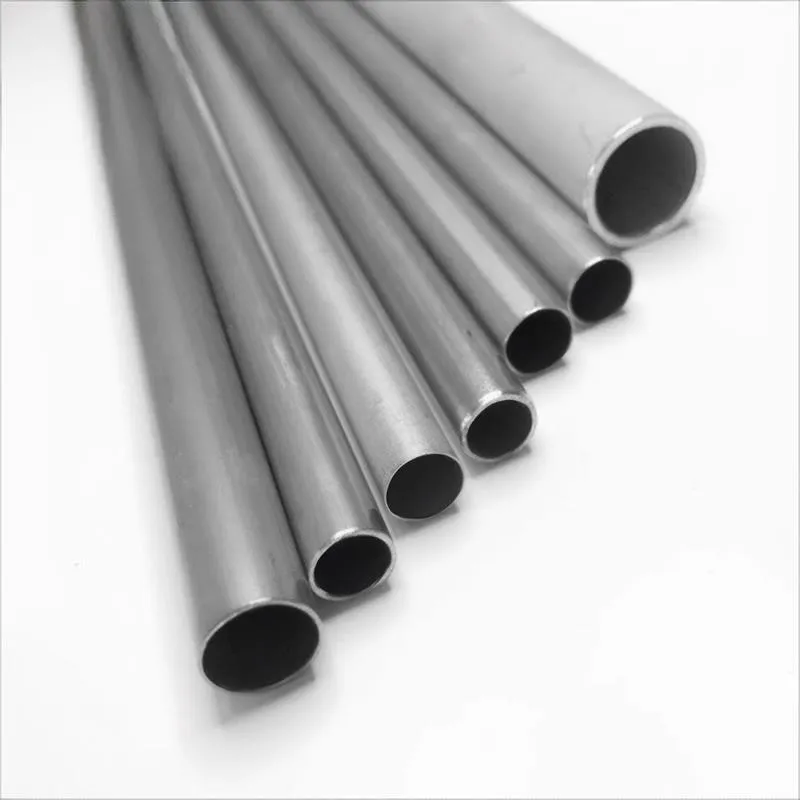
AISI 4140H Steel Foil/Strip
Product Code : STI-CSTI-1494-CU
We provide AISI 4140H Steel Foil/Strip, heat treated, tempered 205°C (400°F) is available in Bar (Round bar, Flat bar), Ribbon, Wire, Rods, Tube,Seamless Tube,Pipe, Ingots, Plate, Sheet, Strip and Forging Stock.,Purity, chemical composition, size, etc. can all be customized to meet specific requirements.
Please contact us if you need customized services. We will contact you with the price and availability in 24 hours.
AISI 4140H Steel Foil, heat treated, tempered 205°C (400°F) Product Information
-:-
For detailed product information, please contact sales.
-:
AISI 4140H Steel Foil, heat treated, tempered 205°C (400°F) Synonyms
-:-
For detailed product information, please contact sales.
-:
AISI 4140H Steel, heat treated, tempered 205°C (400°F) Product Information
-:-
For detailed product information, please contact sales.
-:
# **AISI 4140H Steel (Low-Temperature Tempered High-Hardness Condition) Product Specification**
## **1. PRODUCT IDENTIFICATION & THERMAL PROCESS**
**Product:** AISI 4140H Alloy Steel
**Material State:** Heat Treated to High Hardness, Low-Temperature Tempered
**Specified Heat Treatment:**
- **Hardening:** Fully hardened (typically oil quenched from 845-855°C / 1550-1570°F)
- **Tempering:** 205°C (400°F) → Air cooled
**Metallurgical Significance:** This treatment produces the **highest practical hardness and strength** achievable with AISI 4140H while maintaining minimal toughness for dimensional stability. The low 205°C tempering temperature intentionally retains maximum hardness by only partially relieving quenching stresses and transforming a minimal amount of retained austenite. The "H" (hardenability) grade ensures consistent through-hardening in the specified section size, guaranteeing uniform high hardness from surface to core.
## **2. CHEMICAL COMPOSITION (Hardenability Controlled)**
| Element | Composition Range (% by weight) | Metallurgical Role in This Condition |
| :--- | :--- | :--- |
| **Carbon (C)** | 0.38 - 0.43 | Forms high-carbon martensite upon quenching. At 205°C tempering, remains primarily as supersaturated martensite with only initial ε-carbide (Fe₂.₄C) precipitation, maximizing hardness retention. |
| **Manganese (Mn)** | 0.75 - 1.00 | Ensures complete martensitic transformation during quenching. Critical for achieving consistent through-hardening in the "H" grade. |
| **Phosphorus (P)** | ≤ 0.030 | Kept at exceptionally low levels to minimize embrittlement at this high-hardness, low-toughness condition. |
| **Sulfur (S)** | ≤ 0.030 | Strictly controlled to avoid sulfide stringers that could initiate cracks under high stress. |
| **Silicon (Si)** | 0.15 - 0.35 | Retards the tempering process significantly at 205°C, helping preserve as-quenched hardness. |
| **Chromium (Cr)** | 0.80 - 1.10 | Remains largely in solution at this temperature, providing solid solution strengthening. Minimal chromium carbide formation occurs. |
| **Molybdenum (Mo)** | 0.15 - 0.25 | Provides minimal tempering effect at 205°C but is critical for ensuring the "H" grade's consistent hardenability. |
## **3. CERTIFIED HARDENABILITY & TRANSFORMATION**
**Guaranteed Hardenability (SAE J1268):**
| Jominy Distance | As-Quenched Hardness Range, HRC |
| :--- | :--- |
| **J1.5** | 50 - 58 |
| **J10** | 34 - 44 |
**Microstructural State:**
- **Matrix:** Tempered low-carbon martensite (Stage 1 tempering)
- **Carbides:** Fine ε-carbides (Fe₂.₄C) only; no cementite formation
- **Retained Austenite:** 5-10% (typical for this tempering temperature)
- **Prior Austenite Grain Size:** ASTM 7-9 (fine)
- **Tempering Stage:** Stage 1 only (carbon clustering, no significant carbide coalescence)
## **4. MECHANICAL PROPERTIES**
*Properties are for properly hardened sections up to 50mm (2") diameter*
| Property | Typical Range | Comments |
| :--- | :--- | :--- |
| **Ultimate Tensile Strength** | 1650 - 1930 MPa (239,000 - 280,000 psi) | Near maximum for 4140H |
| **Yield Strength (0.2% Offset)** | 1400 - 1650 MPa (203,000 - 239,000 psi) | Exceptionally high |
| **Elongation (in 50mm)** | 8% - 12% | Very limited ductility |
| **Reduction of Area** | 25% - 35% | Characteristic of high hardness |
| **Hardness** | **50 - 54 HRC** (509 - 560 HB) | **Primary specification parameter** |
| **Charpy V-Notch Impact (21°C)** | **12 - 22 J** (9 - 16 ft-lb) | Low toughness; highly notch sensitive |
| **Modulus of Elasticity** | 205 - 210 GPa | Slightly increased due to high dislocation density |
| **Fatigue Limit (R=-1)** | ~550 - 650 MPa | For polished specimens only |
| **Fracture Toughness (K₁C)** | 35 - 50 MPa√m | Low; requires careful design |
## **5. PHYSICAL PROPERTIES**
| Property | Value / Condition |
| :--- | :--- |
| **Density** | 7.85 g/cm³ |
| **Thermal Conductivity** | 39.8 W/m·K @ 100°C | Reduced due to high lattice strain |
| **Coefficient of Thermal Expansion** | 11.0 µm/m·°C (20-100°C) |
| **Specific Heat Capacity** | 460 J/kg·K |
| **Electrical Resistivity** | 0.25 µΩ·m @ 20°C | Increased due to high dislocation density |
| **Magnetic Properties** | Strongly ferromagnetic (retained austenite is paramagnetic) |
## **6. TARGET APPLICATIONS**
This ultra-high-hardness condition is engineered for **specialized applications** where maximum wear resistance and load capacity are paramount, and where components operate primarily under compressive or controlled tensile loading.
* **Wear Components Under Compression:**
- Bearing races and rolling elements (after precision grinding)
- Guide ways and wear plates for machinery
- Sliding surfaces with minimal impact loading
* **Cutting & Shearing Tools (Non-Shock Applications):**
- Blades for cutting non-metallic materials
- Shearing knives for paper, plastics, or soft metals
- Cutting dies for continuous process applications
* **Precision Components:**
- Gauge blocks and calibration standards
- Precision shafts and axles (polished surfaces)
- Valve components in high-pressure systems
* **Tooling Applications:**
- Mold cores and cavities for abrasive plastics
- Die components for powder compaction
- Mandrels for cold drawing (with polished surfaces)
* **Specialty Fasteners:**
- High-strength shear pins
- Retention devices in controlled environments
## **7. INTERNATIONAL STANDARDS & EQUIVALENTS**
| Standard / Country | Designation | Equivalent Status | Notes for This Condition |
| :--- | :--- | :--- | :--- |
| **AISI/SAE** | 4140H | Primary Standard | SAE J1268 governs hardenability |
| **ASTM** | A304 Grade 4140H | US Standard | For bars with hardenability requirements |
| **AMS** | AMS 6382 (Grade B) | Aerospace | May require additional testing |
| **DIN/EN** | 42CrMo4H (1.7225+H) | Direct Equivalent | "+H" suffix is mandatory |
| **JIS** | SCM440H | Japanese Equivalent | |
| **GB** | 42CrMoH | Chinese Equivalent | GB/T 3077 |
| **ISO** | ISO 683-18 Type 42CrMo4 | International | Can specify hardenability |
## **8. FABRICATION CONSTRAINTS & WARNINGS**
**CRITICAL LIMITATIONS:**
1. **NOT WELDABLE** - Immediate cracking will occur
2. **Extremely notch sensitive** - All transitions require R > 4mm
3. **Cannot be cold formed or straightened**
4. **High risk of brittle fracture** under impact or shock loading
5. **Susceptible to stress corrosion cracking**
**Machining (in Heat-Treated State):**
- **Extremely difficult** - Not recommended
- **If absolutely necessary:** CBN or diamond tooling only
- **Light finishing operations only:** Grinding, honing, superfinishing
- **Coolant:** Essential to prevent local tempering
**Recommended Manufacturing Sequence:**
1. Complete all machining in annealed/normalized condition
2. Heat treat to final hardness (harden + temper at 205°C)
3. Final precision grinding only (minimal stock removal)
4. Stress relieve at 150-175°C if required for dimensional stability
**Grinding Specifications:**
- Use soft-grade wheels (H-I hardness)
- Maximum infeeds: 0.010-0.020mm/pass
- Maintain sharp wheel condition
- Flood coolant to prevent "grinding burn"
## **9. HEAT TREATMENT PROCESS DETAILS**
**Critical Parameters:**
- **Austenitizing:** 845-855°C (1550-1570°F), soak 30 min/inch
- **Quenching:** Agitated oil at 50-70°C (120-160°F)
- **Quench Delay:** < 15 seconds from furnace to quench
- **Tempering:** 205°C ±5°C (400°F ±10°F) for 2-4 hours
- **Cooling:** Air cool after tempering
**Optional Enhancements:**
- **Cryogenic treatment** (-80°C to -100°C) before tempering to transform retained austenite
- **Double tempering** (205°C, cool to RT, re-temper at 205°C) for dimensional stability
- **Stress relieving** at 175°C after final grinding
## **10. QUALITY ASSURANCE & TESTING**
**Mandatory Testing:**
- Hardness verification (HRC scale, multiple locations)
- Microstructure examination (tempered martensite verification)
- Non-destructive testing: 100% Magnetic Particle Inspection
**Recommended Additional Testing:**
- Ultrasonic testing for internal defects
- Residual stress measurement (X-ray diffraction)
- Retained austenite quantification (X-ray diffraction)
- Fracture toughness testing for critical applications
**Certification Requirements:**
- Full traceability to melt
- Hardenability test report (Jominy curve)
- Heat treatment charts with complete temperature records
- Mechanical test reports from prolongations
## **11. DESIGN & APPLICATION CONSIDERATIONS**
**Optimal Design Practices:**
- Use generous fillet radii (minimum R = 5mm)
- Avoid sharp corners and notch-like features
- Design for uniform section thickness
- Specify polished or ground surfaces
- Incorporate overload protection in systems
**Service Conditions:**
- **Maximum continuous temperature:** 150°C (300°F)
- **Minimum service temperature:** -20°C (-4°F) due to brittleness
- **Environment:** Must be corrosion protected (plating, coating, etc.)
- **Loading:** Primarily compressive or well-controlled tensile
**Safety Factors:**
- **Static loading:** 4.0 minimum
- **Dynamic loading:** 6.0 minimum
- **Fatigue loading:** Based on extensive testing only
## **12. COMPARATIVE PERFORMANCE**
**vs. Higher Temperature Tempering (540°C):**
- +15-20 HRC higher hardness
- +40-50% higher tensile strength
- -60-70% lower impact toughness
- Better wear resistance
- Higher risk of brittle fracture
**vs. Tool Steels at Similar Hardness:**
- Lower cost
- Adequate for many non-shock wear applications
- Better machinability in annealed state
- Lower red-hardness and hot strength
**Risk Assessment:**
- **High risk** of catastrophic brittle failure if misapplied
- **Requires expert engineering analysis** before specification
- **Not suitable** for general mechanical components
- **Recommended only** for specialized, well-understood applications
---
**CRITICAL SAFETY NOTICE:** Components in this condition (50-54 HRC at 205°C temper) operate at the **extreme edge of the material's capability envelope**. They are highly susceptible to brittle fracture with minimal warning. This condition should only be specified by experienced materials engineers for applications where:
1. Loading is **primarily compressive**
2. **No impact or shock loading** is possible
3. **Excellent surface finish** is maintained
4. **Regular inspection** is performed
5. **Conservative safety factors** are applied
6. **Redundant design** or **fail-safe mechanisms** are incorporated
This material condition represents the **maximum useful hardness for AISI 4140H** and should be treated with appropriate engineering caution. When wear resistance is critical but toughness can be compromised, and when loading conditions are perfectly controlled, this condition can provide exceptional performance. However, improper application will almost certainly result in catastrophic failure.
-:-
For detailed product information, please contact sales.
-:
AISI 4140H Steel, heat treated, tempered 205°C (400°F) Specification
Dimensions
Size:
Diameter 20-1000 mm Length <6226 mm
Size:We can customized as required
Standard:
Per your request or drawing
We can customized as required
Properties(Theoretical)
Chemical Composition
-:-
For detailed product information, please contact sales.
-:
AISI 4140H Steel, heat treated, tempered 205°C (400°F) Properties
-:-
For detailed product information, please contact sales.
-:
Applications of AISI 4140H Steel Foil, heat treated, tempered 205°C (400°F)
-:-
For detailed product information, please contact sales.
-:
Chemical Identifiers AISI 4140H Steel Foil, heat treated, tempered 205°C (400°F)
-:-
For detailed product information, please contact sales.
-:
Packing of AISI 4140H Steel Foil/Strip, heat treated, tempered 205°C (400°F)
-:-
For detailed product information, please contact sales.
-:
Standard Packing:
-:-
For detailed product information, please contact sales.
-:
Typical bulk packaging includes palletized plastic 5 gallon/25 kg. pails, fiber and Steel Foil/Strip drums to 1 ton super sacks in full container (FCL) or truck load (T/L) quantities. Research and sample quantities and hygroscopic, oxidizing or other air sensitive materials may be packaged under argon or vacuum. Solutions are packaged in polypropylene, plastic or glass jars up to palletized 2697 gallon liquid totes Special package is available on request. E FORUs’ is carefully handled to minimize damage during storage and transportation and to preserve the quality of our products in their original condition