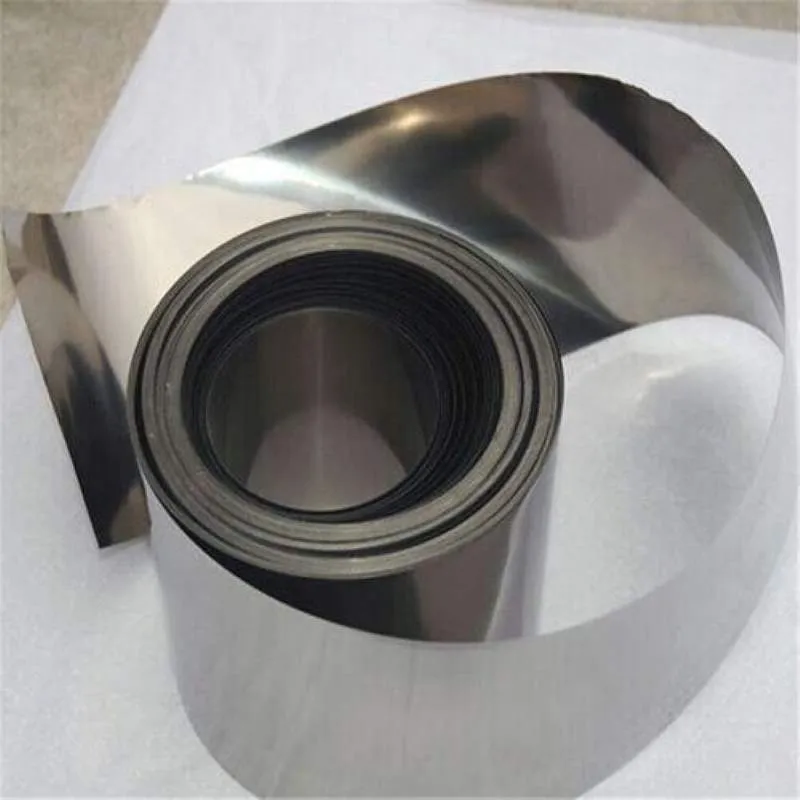
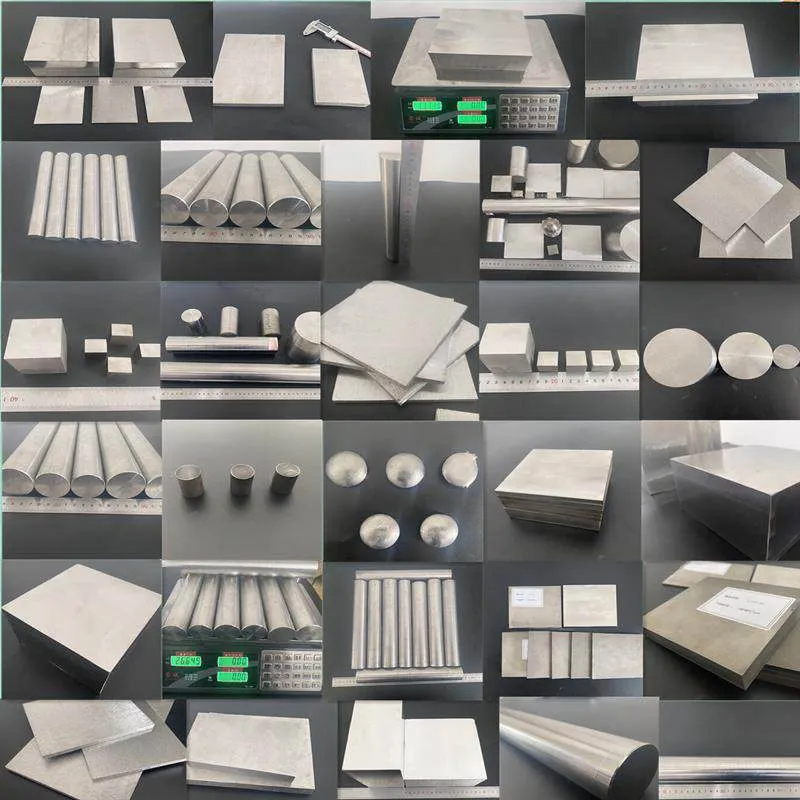
AISI 4142H Steel Foil/Strip
Product Code : STI-CSTI-1483-CU
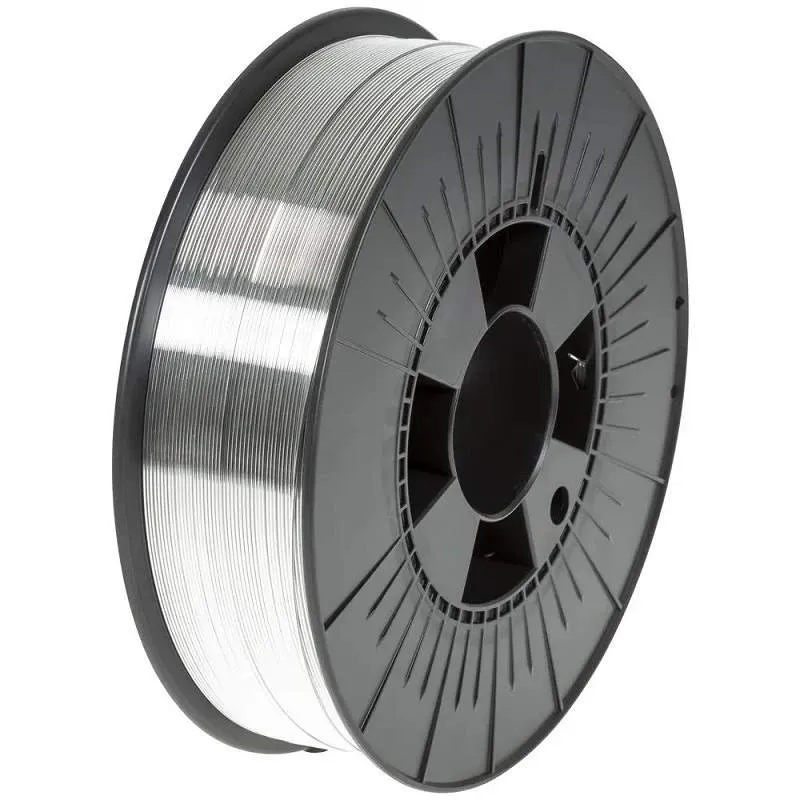
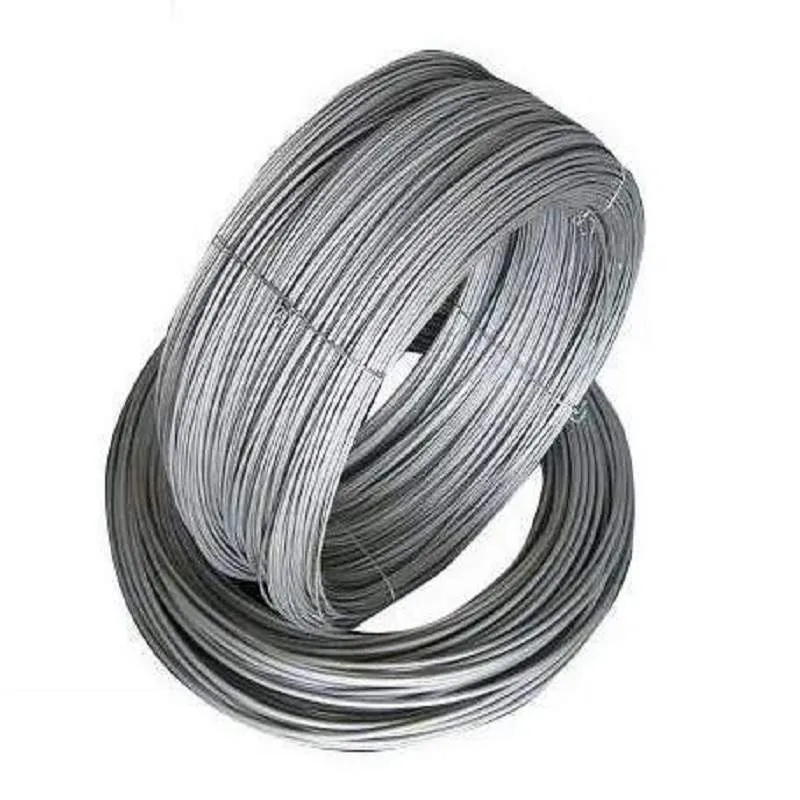
We provide AISI 4142H Steel Foil/Strip is available in Bar (Round bar, Flat bar), Ribbon, Wire, Rods, Tube,Seamless Tube,Pipe, Ingots, Plate, Sheet, Strip and Forging Stock.,Purity, chemical composition, size, etc. can all be customized to meet specific requirements.
Please contact us if you need customized services. We will contact you with the price and availability in 24 hours.
AISI 4142H Steel Foil Product Information
-:-
For detailed product information, please contact sales.
-:
AISI 4142H Steel Foil Synonyms
-:-
For detailed product information, please contact sales.
-:
AISI 4142H Steel Product Information
-:-
For detailed product information, please contact sales.
-:
# **AISI 4142H Steel (Hardenability Grade) Product Specification**
## **1. PRODUCT DEFINITION & CORE CONCEPT**
**Product:** AISI 4142H Alloy Steel - Hardenability Controlled Grade
**Key Differentiator:** The "H" suffix designates a **hardenability-controlled steel** produced to specific end-quench (Jominy) test requirements per SAE J1268 and ASTM A304 standards, rather than solely to chemical composition limits.
**Material Philosophy:** AISI 4142H ensures **predictable and consistent depth of hardening** in heat-treated components. By guaranteeing the steel's hardenability within a defined statistical band ("H-band"), manufacturers achieve reliable through-hardening properties regardless of minor melt-to-melt chemical variations. This is critical for components where consistent core properties in varying cross-sections are non-negotiable.
**Relation to AISI 4142:** Shares the same **higher carbon content (0.40-0.45% C)** as standard 4142, providing greater strength potential than 4140/4140H, but with the added assurance of controlled hardenability.
## **2. CHEMICAL COMPOSITION WITH HARDENABILITY CONTROL**
The composition is engineered and controlled to achieve guaranteed hardenability bands while maintaining the strength advantages of the 4142 chemistry.
| Element | Composition Range (% by weight) | Hardenability Role & Control Philosophy |
| :--- | :--- | :--- |
| **Carbon (C)** | 0.40 - 0.45 | **Primary hardenability driver.** Higher than 4140H, providing greater as-quenched hardness potential. Content is balanced within range to maintain consistent Jominy curve position. |
| **Manganese (Mn)** | 0.75 - 1.10 | **Major hardenability adjuster.** Range is often wider than standard 4142 to allow precise hardenability tuning during production while staying within the H-band. |
| **Phosphorus (P)** | ≤ 0.030 | Tighter limit than standard 4142 to ensure consistent impact properties across production lots. |
| **Sulfur (S)** | ≤ 0.030 | Tighter control for improved transverse properties and consistency. |
| **Silicon (Si)** | 0.15 - 0.35 | Deoxidizer; secondary hardenability influence. |
| **Chromium (Cr)** | 0.80 - 1.10 | **Key alloying element.** Provides robust hardenability increase and carbide formation. Content is tightly balanced with Mo. |
| **Molybdenum (Mo)** | 0.15 - 0.25 | **Critical for hardenability control.** Provides strong hardenability effect with minimal weight; essential for suppressing temper embrittlement in the critical 370-570°C tempering range. |
**Hardenability Control Principle:** The producer may adjust the balance of Mn, Cr, and Mo within their specified ranges to ensure each heat of steel falls within the mandated SAE J1268 hardenability band, while C content remains the primary strength determinant.
## **3. HARDENABILITY BAND SPECIFICATION (SAE J1268)**
The defining characteristic of 4142H is its guaranteed hardenability range. The "H-band" represents the maximum and minimum hardness values expected at various distances from the quenched end in a standard Jominy test.
**Typical Hardenability Band for 4142H:**
| Jominy Distance (1/16 in.) | Hardness Range, HRC (Min - Max) |
| :--- | :--- |
| **J1.5** | **55 - 61** |
| **J3** | **53 - 60** |
| **J5** | **48 - 56** |
| **J7** | **43 - 52** |
| **J10** | **37 - 47** |
| **J15** | **32 - 42** |
| **J20** | **29 - 39** |
| **J30** | **25 - 35** |
**Practical Implication:** This data allows designers to predict the hardness (and thus strength) at the **center** of a part of specific diameter after quenching. For example, a 50mm (2") diameter bar oil-quenched from 845°C will have a core hardness predictable within ~5 HRC.
## **4. TYPICAL PHYSICAL & MECHANICAL PROPERTIES (After Quench & Temper)**
Properties after heat treatment are more consistent than standard 4142 due to hardenability control.
* **Physical Properties:**
* **Density:** 7.85 g/cm³
* **Melting Point:** ~1410°C (2570°F)
* **Modulus of Elasticity:** 205 GPa (29,700 ksi)
* **Thermal Conductivity:** 41.5 W/m·K @ 100°C
* **Coefficient of Thermal Expansion:** 11.3 µm/m·°C (20-100°C)
* **Achievable Mechanical Properties (After Q&T - Example at 540°C/1000°F Temper):**
* **Tensile Strength:** 1150 - 1300 MPa (167,000 - 189,000 psi)
* **Yield Strength:** 1000 - 1150 MPa (145,000 - 167,000 psi)
* **Elongation:** 14% - 18%
* **Reduction of Area:** 45% - 55%
* **Hardness:** 34 - 39 HRC (321 - 375 HB)
* **Charpy V-Notch Impact:** 25 - 45 J (18 - 33 ft-lb)
## **5. PRODUCT APPLICATIONS**
4142H is specified for **high-reliability components** where consistent through-hardening is critical for performance and safety, especially in parts with variable sections or large diameters.
* **Heavy-Duty Automotive & Truck:** **Crankshafts, axle shafts, transmission gears, and differential carriers** for medium/heavy trucks and performance vehicles where lot-to-lot consistency is vital.
* **Oil & Gas Exploration:** **Large-diameter drill collars, tool joints, and blow-out preventer (BOP) components** where predictable core properties prevent catastrophic failure in thick sections under cyclic loads.
* **Power Generation:** **Large gear blanks, turbine shafts, and generator components** in wind turbines and conventional power plants.
* **Heavy Machinery & Mining:** **Gears, pinions, and shafts** for excavators, draglines, crushers, and mineral processing equipment.
* **Aerospace:** **Landing gear components and engine mounts** requiring certified material consistency and predictable response to heat treatment.
* **Tooling:** **Large die blocks and plastic injection mold bases** requiring uniform hardness after heat treatment to prevent distortion and ensure even wear.
## **6. INTERNATIONAL STANDARDS & EQUIVALENT GRADES**
| Standard / Country | Designation | Status / Note |
| :--- | :--- | :--- |
| **AISI / SAE (USA)** | **4142H** | Governed by SAE J1268 for hardenability bands. |
| **ASTM (USA)** | **A304 (Grade 4142H)** | Standard specification for alloy steel bars subject to hardenability requirements. |
| **UNS** | **H41420** | Unified Numbering System. |
| **DIN / EN (Germany/EU)** | **42CrMo4H (1.7225+H)** | The "+H" suffix is essential, denoting the hardenability-controlled version. |
| **JIS (Japan)** | **SCM440H** | The standard Japanese hardenability-grade equivalent. |
| **GB (China)** | **42CrMoH** | Chinese hardenability-grade standard. |
| **ISO** | **ISO 683-18: Type 42CrMo4** | Can be supplied to hardenability requirements per agreement. |
## **7. HEAT TREATMENT & PROCESSING**
**Standard Heat Treatment for Finished Parts:**
* **Forging/Pre-treatment:** Normalize at 870-900°C (1600-1650°F) after hot working.
* **Austenitizing:** 830-850°C (1525-1560°F). Soak time: ~30 min/inch of thickness.
* **Quenching:** **Oil quench** (agitated) is standard. Provides the cooling rate the H-band is designed for.
* **Tempering:** **Immediate tempering is critical.** Typical range: **425-650°C (800-1200°F)**. The guaranteed hardenability ensures the core reaches the same tempering response as the surface.
**Machining & Fabrication:**
* Parts are typically **machined in the annealed or normalized condition** prior to final hardening.
* **Welding** in the heat-treated state is **not recommended**. Any required welding should be done prior to final austenitizing and quenching.
## **8. QUALITY ASSURANCE & CERTIFICATION**
**Mandatory Certification:** Each lot of 4142H must be accompanied by a **hardenability test report** (Jominy curve) showing the results fall within the specified SAE H-band.
**Typical Certifications Include:**
1. Chemical Analysis Report
2. Hardenability Test Report (to SAE J1268 / ASTM A304)
3. Mechanical Property Report (if supplied heat-treated)
4. Grain Size Report (ASTM E112)
## **9. SUMMARY & SELECTION CRITERIA**
**Choose AISI 4142H over standard 4142 when:**
* Components have **thick sections** requiring predictable through-hardening.
* The application is **safety-critical or high-value**, where component failure has severe consequences.
* Production involves **multiple heat treat lots** where consistency is paramount.
* Parts have **variable cross-sections** and uniform properties are needed.
* The design requires **precise predictability** of core properties after heat treatment.
**Conclusion:** **AISI 4142H steel** is the **premium, reliability-focused variant** of 4142 alloy steel. It trades the simple chemical specification of standard 4142 for a **performance-based hardenability guarantee**. This provides engineers with a predictable material that delivers uniform strength and toughness throughout the cross-section of heat-treated parts, making it the material of choice for the most demanding applications in energy, transportation, and heavy industry. The "H" designation is an insurance policy against heat treatment variability, ensuring that critical components perform as designed, lot after lot.
-:-
For detailed product information, please contact sales.
-:
AISI 4142H Steel Specification
Dimensions
Size:
Diameter 20-1000 mm Length <6215 mm
Size:We can customized as required
Standard:
Per your request or drawing
We can customized as required
Properties(Theoretical)
Chemical Composition
-:-
For detailed product information, please contact sales.
-:
AISI 4142H Steel Properties
-:-
For detailed product information, please contact sales.
-:
Applications of AISI 4142H Steel Foil
-:-
For detailed product information, please contact sales.
-:
Chemical Identifiers AISI 4142H Steel Foil
-:-
For detailed product information, please contact sales.
-:
Packing of AISI 4142H Steel Foil/Strip
-:-
For detailed product information, please contact sales.
-:
Standard Packing:
-:-
For detailed product information, please contact sales.
-:
Typical bulk packaging includes palletized plastic 5 gallon/25 kg. pails, fiber and Steel Foil/Strip drums to 1 ton super sacks in full container (FCL) or truck load (T/L) quantities. Research and sample quantities and hygroscopic, oxidizing or other air sensitive materials may be packaged under argon or vacuum. Solutions are packaged in polypropylene, plastic or glass jars up to palletized 2686 gallon liquid totes Special package is available on request. E FORUs’ is carefully handled to minimize damage during storage and transportation and to preserve the quality of our products in their original condition