AISI 4150 Steel, annealed
Product Code : STI-CSTI-1497-CU
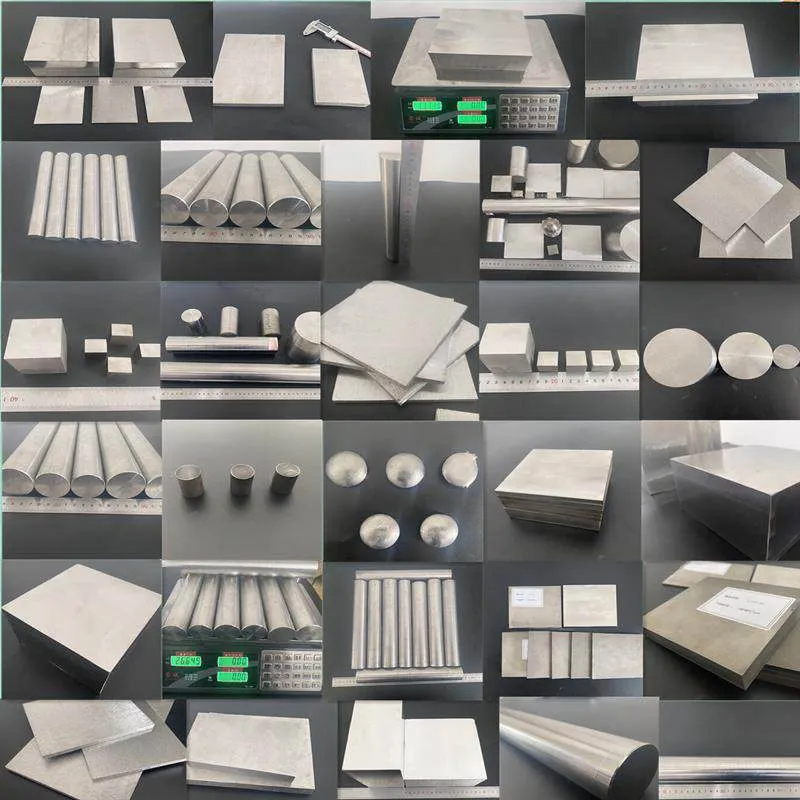
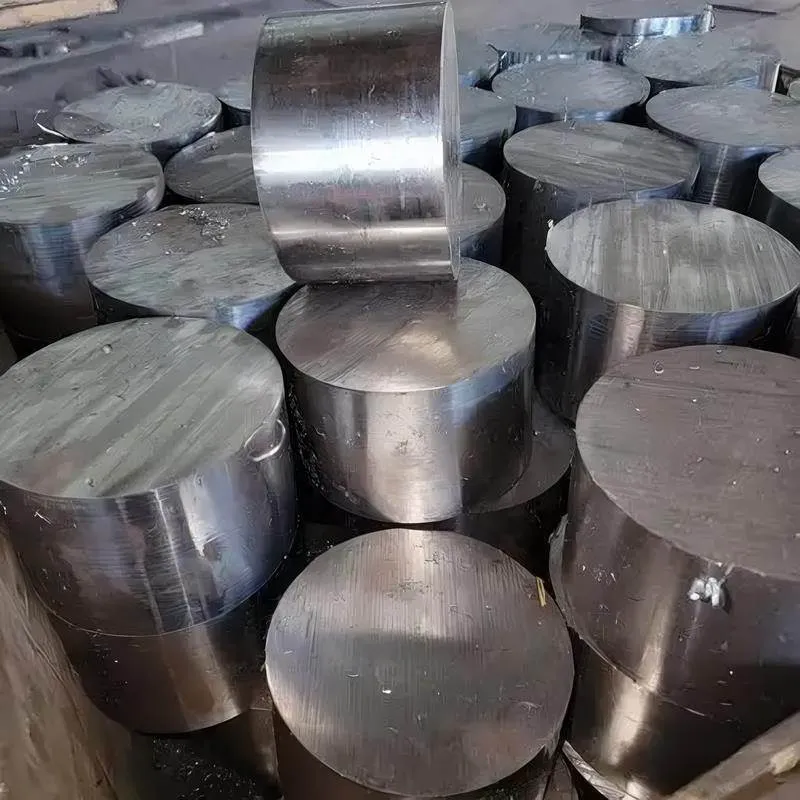
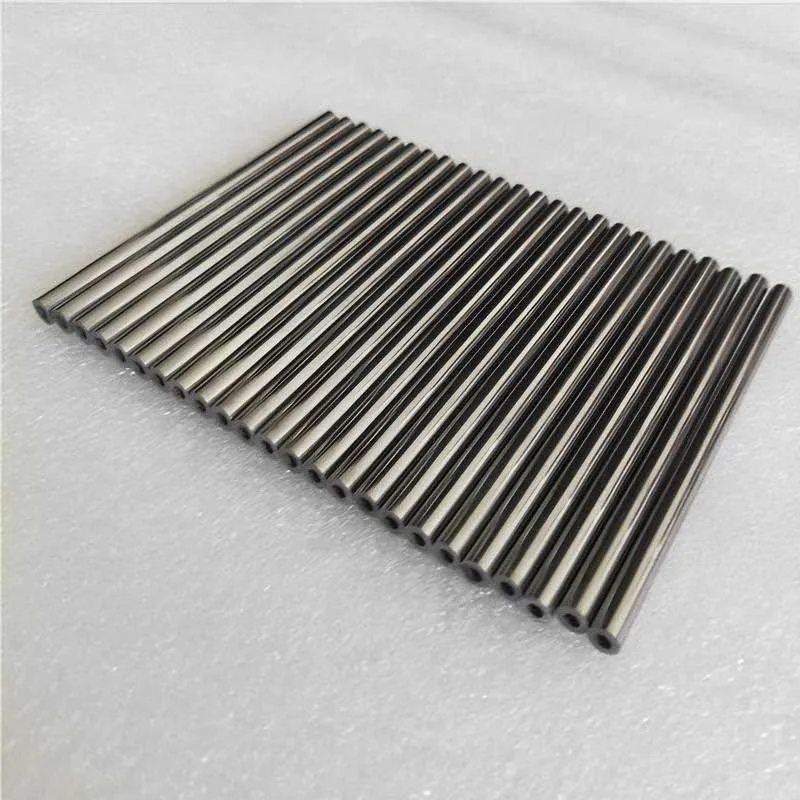
We provide AISI 4150 Steel, annealed 815°C (1500°F) is available in Bar (Round bar, Flat bar), Ribbon, Wire, Rods, Tube,Seamless Tube,Pipe, Ingots, Plate, Sheet, Strip and Forging Stock.,Purity, chemical composition, size, etc. can all be customized to meet specific requirements.
Please contact us if you need customized services. We will contact you with the price and availability in 24 hours.
AISI 4150 Steel, annealed 815°C (1500°F) Product Information
-:-
For detailed product information, please contact sales.
-:
AISI 4150 Steel, annealed 815°C (1500°F) Synonyms
-:-
For detailed product information, please contact sales.
-:
AISI 4150 Steel, annealed 815°C (1500°F) Product Information
-:-
For detailed product information, please contact sales.
-:
# **AISI 4150 Steel (Annealed Condition) Product Specification**
## **1. PRODUCT IDENTIFICATION & THERMAL PROCESS**
**Product:** AISI 4150 High-Carbon Chromium-Molybdenum Alloy Steel
**Material State:** Fully Annealed (Softened) Condition
**Annealing Process:**
- **Heating:** 815°C (1500°F) with sufficient soak time
- **Cooling:** Controlled slow furnace cooling
**Metallurgical Significance:** Annealing at 815°C produces the **softest possible condition** for AISI 4150 steel, creating an optimal microstructure for machining, cold forming, and subsequent manufacturing operations. For this high-carbon alloy (0.48-0.53% C), the 815°C temperature ensures complete austenitization while minimizing grain growth. The subsequent slow cooling promotes the formation of coarse pearlite and spheroidized carbides in a ferrite matrix, resulting in maximum softness, ductility, and dimensional stability. This condition is essential for components requiring extensive machining before final heat treatment.
## **2. CHEMICAL COMPOSITION**
AISI 4150's higher carbon content distinguishes it from the 4140 series, providing greater hardenability and strength potential.
| Element | Composition Range (% by weight) | Role in Annealed Condition |
| :--- | :--- | :--- |
| **Carbon (C)** | **0.48 - 0.53** | **Primary differentiator.** Forms coarse, soft pearlite and/or spheroidized carbides during slow cooling. Higher carbon content increases potential hardness after final heat treatment but requires careful annealing to ensure machinability. |
| **Manganese (Mn)** | 0.75 - 1.00 | Promotes austenite stability during annealing and contributes to hardenability potential. Helps control sulfide morphology for improved machinability. |
| **Phosphorus (P)** | ≤ 0.035 | Residual impurity, kept at minimum levels to preserve ductility and impact properties. |
| **Sulfur (S)** | ≤ 0.040 | Residual impurity; may be controlled for free-machining variants. |
| **Silicon (Si)** | 0.15 - 0.35 | Deoxidizer; provides minimal solid solution strengthening in this soft condition. |
| **Chromium (Cr)** | 0.80 - 1.10 | Forms carbides that spheroidize during slow cooling, improving machinability. Enhances hardenability potential for subsequent treatment. |
| **Molybdenum (Mo)** | 0.15 - 0.25 | Promotes carbide spheroidization during annealing and ensures consistent hardenability response. |
## **3. MICROSTRUCTURE & METALLURGY**
**Microstructural Features:**
- **Matrix:** Ferrite with coarse pearlite and/or spheroidized carbides
- **Pearlite Morphology:** Coarse lamellar or spheroidized (depending on cooling rate)
- **Carbide Distribution:** Uniformly dispersed spheroidal carbides (optimal for machining)
- **Grain Size:** ASTM 5-7 (moderate, due to annealing temperature)
- **Spheroidization:** Degree depends on cooling rate; slow cooling promotes full spheroidization
**Annealing Transformation:**
- **Ac₁:** ~735°C
- **Ac₃:** ~780°C
- **Annealing Temperature Rationale:** 815°C provides ~35°C above Ac₃ for complete austenitization while minimizing decarburization risk
- **Cooling Rate:** Typically 10-25°C/hour through critical range (700-500°C) to achieve full spheroidization
## **4. PHYSICAL & MECHANICAL PROPERTIES (Annealed Condition)**
* **Physical Properties:**
* **Density:** 7.85 g/cm³ (0.284 lb/in³)
* **Melting Point:** ~1405°C (2560°F)
* **Modulus of Elasticity:** 205 GPa (29,700 ksi)
* **Thermal Conductivity:** ~40.0 W/m·K at 100°C
* **Coefficient of Thermal Expansion:** 11.0 µm/m·°C (20-100°C)
* **Specific Heat Capacity:** 460 J/kg·K
* **Mechanical Properties (Typical for Annealed Condition):**
* **Tensile Strength:** 600 - 750 MPa (87,000 - 109,000 psi)
* **Yield Strength (0.2% Offset):** 350 - 450 MPa (51,000 - 65,000 psi)
* **Elongation (in 50mm):** **22% - 28%** (excellent ductility)
* **Reduction of Area:** **50% - 60%**
* **Hardness:** **180 - 220 HB** (Approx. 88-96 HRB)
* **Charpy V-Notch Impact (21°C):** 40 - 70 J (30 - 52 ft-lb)
* **Machinability Rating:** **Good (~65-70% of B1112 standard)**
* **Fatigue Strength:** ~250-300 MPa (polished specimens)
## **5. PRODUCT APPLICATIONS (Annealed Condition)**
This condition serves exclusively as **premium machining and forming stock** for high-performance components that will undergo final heat treatment.
* **Precision Machining Stock for Critical Components:**
- **Large gear blanks** for heavy mining and power generation equipment
- **Crankshafts** and **axle shafts** for heavy vehicles
- **Transmission components** requiring complex machining
- **Hydraulic cylinder rods** and **piston components**
* **Forging Blanks & Pre-forms:**
- **Hot forging stock** for automotive and aerospace components
- **Die forging pre-forms** requiring extensive machining
- **Cast-to-shape components** for subsequent machining
* **Tooling & Die Manufacturing:**
- **Plastic injection mold bases** and **die casting die blocks**
- **Forging die inserts** and **tool holders**
- **Precision fixture** and **jig components**
* **Prototyping & Development:**
- Material for prototype components requiring identical machining to production parts
- R&D testing of machinability and manufacturing processes
* **High-Strength Fastener Production:**
- **Bolt blanks** and **stud stock** for high-performance fasteners
- **Special fastener components** requiring thread rolling after annealing
## **6. INTERNATIONAL STANDARDS & EQUIVALENT GRADES**
| Standard / Country | Designation | Equivalent Status | Important Notes |
| :--- | :--- | :--- | :--- |
| **AISI/SAE** | **4150** | Primary Standard | Higher carbon variant of 4140 |
| **ASTM** | A29 Grade 4150 | US Standard | Typically supplied annealed for machining |
| **UNS** | G41500 | Unified Numbering | |
| **DIN/EN** | **50CrMo4 (1.7228)** | **True equivalent** | 50CrMo4 (0.47-0.55%C) matches 4150 carbon range |
| **JIS** | **SCM445** | Close equivalent | SCM445: 0.42-0.48%C; specify high carbon range |
| **GB** | **50CrMo / 55CrMo** | Chinese equivalents | 50CrMo (0.47-0.54%C) is preferred match |
| **ISO** | **ISO 683-18 Type 50CrMo4** | International standard | |
## **7. PROCESSING & FABRICATION**
**Annealing Process Parameters:**
- **Temperature:** 815°C ±10°C (1500°F ±20°F)
- **Soak Time:** 1-2 hours per inch of thickness
- **Cooling Rate:** Slow furnace cooling (15-30°C/hour to 500°C)
- **Atmosphere:** Protective or controlled to prevent decarburization
- **Final Structure:** Aim for 100% spheroidized structure for optimal machinability
**Machinability (Optimal Condition):**
- **Tooling:** Carbide recommended for production; HSS acceptable
- **Cutting Speed:** 60-90 m/min (200-300 SFM) for turning with carbide
- **Feed Rate:** 0.15-0.30 mm/rev (0.006-0.012 in/rev)
- **Depth of Cut:** Up to 5mm (0.2") for roughing
- **Coolant:** Highly recommended for tool life and chip control
- **Chip Formation:** Produces broken chips with proper tool geometry
**Forming & Bending:**
- **Excellent cold formability** due to high ductility
- **Minimum bend radius:** 2-3 × material thickness
- **Cold forging/upsetting:** Suitable with proper die design
- **Springback:** Moderate; requires compensation in tooling
**Welding Characteristics:**
- **Poor weldability** due to high carbon content
- **If welding required:** Preheat to 250-300°C (480-570°F)
- **Electrodes:** Low-hydrogen only (E7018 or equivalent)
- **Post-Weld:** Full re-annealing required
- **Recommendation:** Avoid welding; design as one-piece construction
## **8. SUBSEQUENT HEAT TREATMENT**
**Typical Manufacturing Sequence:**
1. Receive material in annealed condition
2. Rough machine (leave 1-2mm per side for finish)
3. Stress relieve (optional, 600-650°C) if heavy machining
4. Finish machine to near-final dimensions
5. Harden: Austenitize at 815-830°C, oil quench
6. Temper: 425-650°C depending on required properties
7. Final grinding/superfinishing (minimal stock removal)
**Heat Treatment Response:**
- **Excellent hardenability:** Can through-harden sections >100mm diameter
- **High as-quenched hardness:** Up to 60-62 HRC possible
- **Good tempering response:** Maintains hardness well at moderate tempering temperatures
- **Dimensional stability:** Annealed structure minimizes distortion during hardening
**Critical Considerations for Final Heat Treatment:**
- Higher carbon increases risk of quench cracking
- Oil quenching recommended for most applications
- Stress relieving after rough machining reduces distortion
- Double tempering recommended for dimensional stability
## **9. QUALITY ASSURANCE**
**Standard Testing & Certification:**
- Chemical analysis certificate (ladle and product)
- Hardness testing report (Brinell scale)
- Microstructure examination (spheroidization verification)
- Macro-etch test for soundness (ASTM A381)
- Grain size report (ASTM E112)
**Additional Testing Available:**
- Ultrasonic testing for internal defects
- Magnetic particle inspection for surface quality
- Tensile testing from representative samples
- Impact testing if specified
**Acceptance Criteria:**
- Hardness: 180-220 HB (fully annealed condition)
- Microstructure: ≥90% spheroidized carbides
- Decarburization: ≤0.25mm total depth
- Surface condition: Free from seams, laps, and rolling defects
## **10. COMPARATIVE ANALYSIS**
**vs. Annealed 4140:**
- +20-30 HB higher hardness in annealed state
- +10-15% higher tensile strength
- Slightly lower machinability (65% vs 70% of B1112)
- Greater hardenability for final heat treatment
- Higher risk of quench cracking during hardening
**vs. Normalized 4150:**
- Softer (180-220 HB vs 220-270 HB)
- Better machinability
- Lower residual stresses
- More dimensional stability during machining
- Less suitable for direct application without hardening
**Economic & Manufacturing Considerations:**
- Higher material cost than 4140
- Reduced tool life during machining vs lower-carbon steels
- Superior final properties after heat treatment
- Essential for components requiring maximum final hardness
- Cost-effective for high-value, critical components
## **11. DESIGN & SELECTION GUIDELINES**
**When to Specify Annealed 4150:**
- Components requiring extensive, complex machining operations
- Parts that will be through-hardened to high hardness (45-55 HRC)
- Applications where maximum wear resistance is required after heat treatment
- Large components requiring consistent through-hardening
- Safety-critical parts where material certification is required
**Design Considerations:**
- **Section transitions:** Use generous radii (R > 5mm) to minimize stress concentration
- **Machining allowances:** Leave sufficient stock for final grinding after heat treatment
- **Stress risers:** Avoid sharp corners and sudden section changes
- **Symmetry:** Design symmetrical parts to minimize heat treatment distortion
**Manufacturing Best Practices:**
- Perform all welding before machining and heat treatment
- Stress relieve after heavy rough machining
- Use sharp tools and adequate coolant during machining
- Consider cryogenic treatment after hardening for dimensional stability
- Specify final grinding after tempering for precision components
**Limitations & Cautions:**
- Not suitable for welding in finished components
- Requires careful heat treatment to avoid cracking
- Higher cost than more common alloy steels
- Not optimal for surface hardening only (through-hardening is its strength)
---
**TECHNICAL SUMMARY:** **AISI 4150 steel in the annealed condition (815°C)** represents the **optimal starting material for manufacturing the most demanding high-performance components**. Its high carbon content (0.48-0.53% C) provides unparalleled hardenability and final strength potential, while the fully annealed state ensures maximum machinability and dimensional stability during manufacturing. This material is specified when components must withstand extreme loads, severe wear, or demanding service conditions after final heat treatment. While requiring more careful processing than lower-carbon alloys, annealed 4150 delivers exceptional final properties that justify its use in critical applications such as heavy machinery gears, drill collars, high-stress shafts, and precision tooling. The investment in proper machining from annealed stock followed by controlled heat treatment yields components with an unmatched combination of hardness, strength, and toughness for the most challenging engineering applications.
-:-
For detailed product information, please contact sales.
-:
AISI 4150 Steel, annealed 815°C (1500°F) Specification
Dimensions
Size:
Diameter 20-1000 mm Length <6229 mm
Size:We can customized as required
Standard:
Per your request or drawing
We can customized as required
Properties(Theoretical)
Chemical Composition
-:-
For detailed product information, please contact sales.
-:
AISI 4150 Steel, annealed 815°C (1500°F) Properties
-:-
For detailed product information, please contact sales.
-:
Applications of AISI 4150 Steel, annealed 815°C (1500°F)
-:-
For detailed product information, please contact sales.
-:
Chemical Identifiers AISI 4150 Steel, annealed 815°C (1500°F)
-:-
For detailed product information, please contact sales.
-:
Packing of AISI 4150 Steel, annealed 815°C (1500°F)
-:-
For detailed product information, please contact sales.
-:
Standard Packing:
-:-
For detailed product information, please contact sales.
-:
Typical bulk packaging includes palletized plastic 5 gallon/25 kg. pails, fiber and steel drums to 1 ton super sacks in full container (FCL) or truck load (T/L) quantities. Research and sample quantities and hygroscopic, oxidizing or other air sensitive materials may be packaged under argon or vacuum. Solutions are packaged in polypropylene, plastic or glass jars up to palletized 2700 gallon liquid totes Special package is available on request. E FORUs’ is carefully handled to minimize damage during storage and transportation and to preserve the quality of our products in their original condition