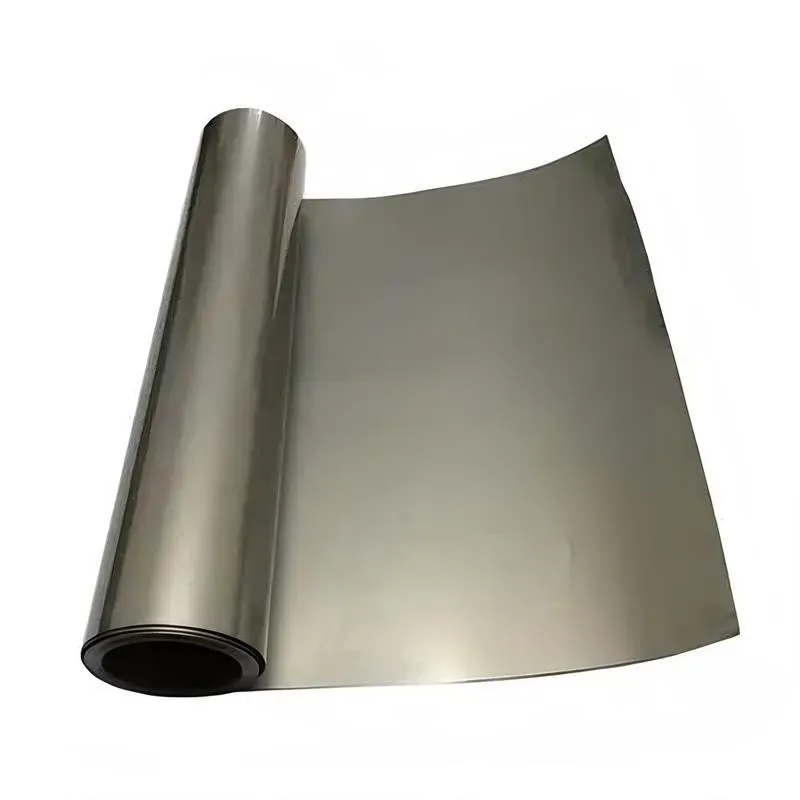
AISI 4320 Steel Foil/Strip
Product Code : STI-CSTI-893-CU
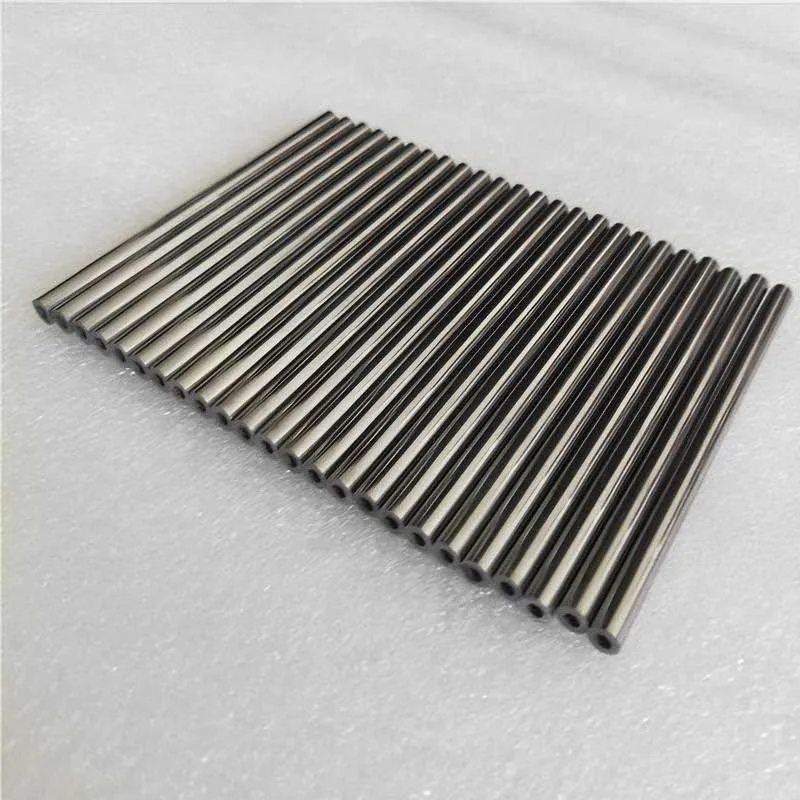
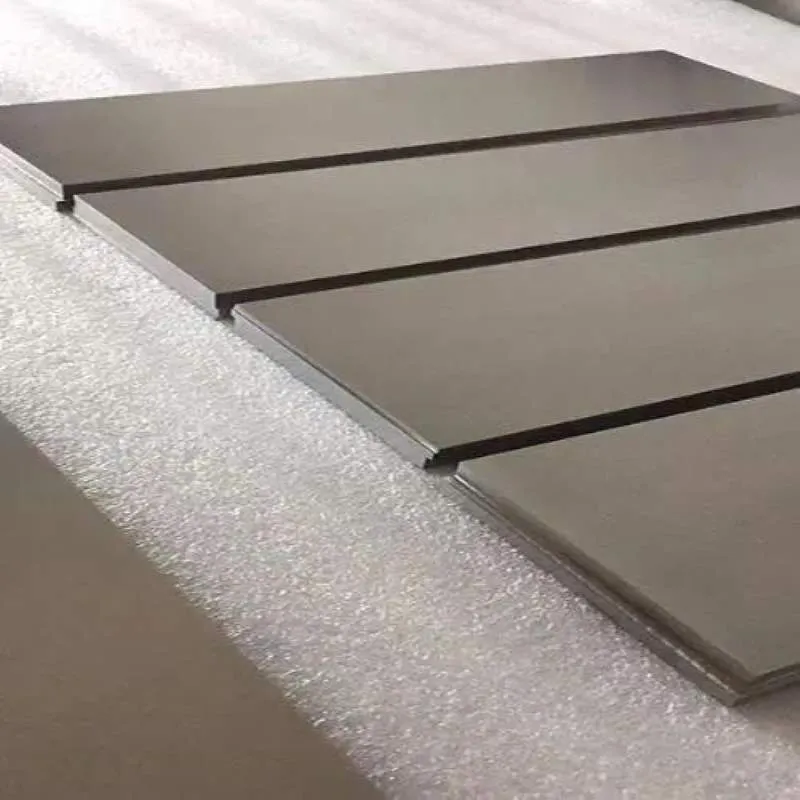
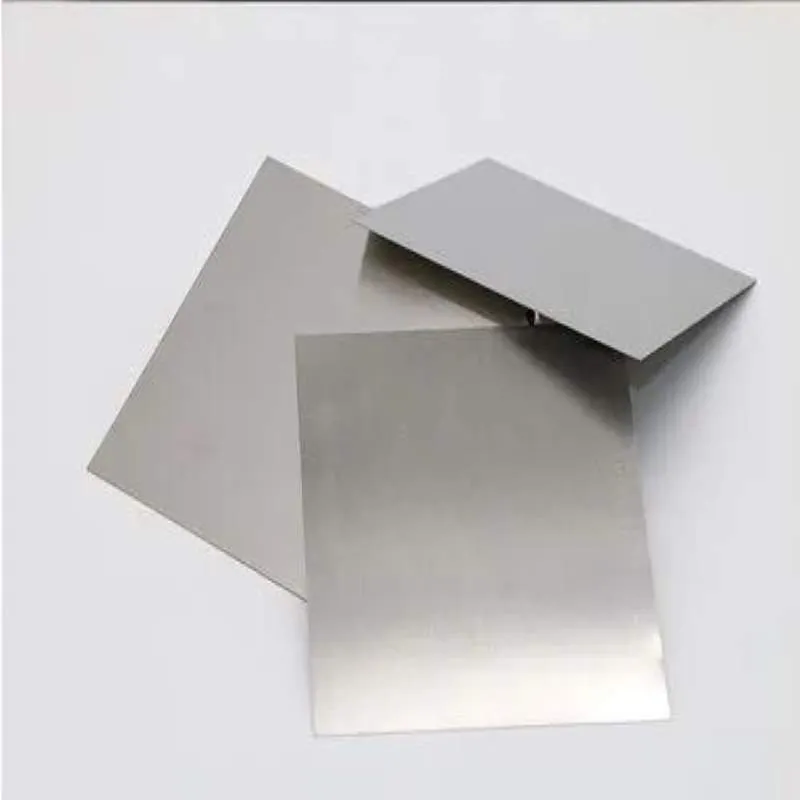
We provide AISI 4320 Steel Foil/Strip, annealed at 850°C (1560°F) is available in Bar (Round bar, Flat bar), Ribbon, Wire, Rods, Tube,Seamless Tube,Pipe, Ingots, Plate, Sheet, Strip and Forging Stock.,Purity, chemical composition, size, etc. can all be customized to meet specific requirements.
Please contact us if you need customized services. We will contact you with the price and availability in 24 hours.
AISI 4320 Steel Foil, annealed at 850°C (1560°F) Product Information
-:-
For detailed product information, please contact sales.
-:
AISI 4320 Steel Foil, annealed at 850°C (1560°F) Synonyms
-:-
For detailed product information, please contact sales.
-:
AISI 4320 Steel, annealed at 850°C (1560°F) Product Information
-:-
For detailed product information, please contact sales.
-:
# **Technical Specification: AISI 4320 Steel, Annealed at 850°C (1560°F)**
## **1. PRODUCT OVERVIEW**
AISI 4320 steel processed through **full annealing at 850°C (1560°F)** represents a nickel-chromium-molybdenum alloy steel in its softest, most machinable condition. This annealing treatment involves heating above the upper critical temperature (Ac₃), followed by slow furnace cooling to produce a **coarse ferrite-pearlite microstructure** with optimal ductility, minimal residual stresses, and superior machinability. The 850°C annealing temperature ensures complete austenitization while preventing excessive grain growth, making this material ideal for complex machining operations prior to final heat treatment.
## **2. MATERIAL SPECIFICATIONS & STANDARDS**
| **Parameter** | **Specification** | **Governing Standards** |
|---------------|-------------------|-------------------------|
| **Material Designation** | AISI 4320 / SAE 4320 | SAE J404, SAE J412 |
| **UNS Number** | G43200 | ASTM A29 |
| **International Equivalents** | DIN 1.6523, JIS SNCM220 | ISO 683-11:2016 |
| **Heat Treatment Condition** | Annealed | ASTM A29/A29M |
| **Annealing Temperature** | 850°C ± 15°C (1560°F ± 25°F) | AMS 2759 |
| **Cooling Method** | Furnace cooling (≤30°C/hour) | — |
| **Typical Hardness Range** | 156-207 HB | ASTM E10 |
## **3. CHEMICAL COMPOSITION**
### **3.1 Standard Composition Ranges**
| **Element** | **Minimum (%)** | **Maximum (%)** | **Typical (%)** | **Metallurgical Function** |
|-------------|-----------------|-----------------|-----------------|---------------------------|
| **Carbon (C)** | 0.17 | 0.22 | 0.20 | Matrix strength, hardenability |
| **Manganese (Mn)** | 0.45 | 0.65 | 0.55 | Austenite stabilization |
| **Phosphorus (P)** | — | 0.035 | 0.015 | Residual element |
| **Sulfur (S)** | — | 0.040 | 0.025 | Machinability enhancement |
| **Silicon (Si)** | 0.15 | 0.35 | 0.25 | Deoxidizer, solid solution strength |
| **Nickel (Ni)** | 1.65 | 2.00 | 1.80 | Toughness, hardenability |
| **Chromium (Cr)** | 0.40 | 0.60 | 0.50 | Hardenability, wear resistance |
| **Molybdenum (Mo)** | 0.20 | 0.30 | 0.25 | Grain refinement, temper resistance |
| **Iron (Fe)** | Balance | Balance | Balance | Matrix element |
### **3.2 Critical Composition Parameters**
- **Carbon Equivalent (CE):** 0.55-0.65 (IIW formula)
- **Hardenability Factor:** DI ≈ 100 mm (4.0 in.) ideal critical diameter
- **Nickel Equivalent:** ~2.1% (contributes to retained austenite control)
- **Machinability Index:** 65-75% (relative to 1212 steel)
## **4. ANNEALING PROCESS DETAILS**
### **4.1 Thermal Cycle Parameters**
```
Heating → Soaking at 850°C → Slow Furnace Cooling → Ambient Temperature
```
**Process Control Specifications:**
- **Heating Rate:** 100-150°C/hour (180-270°F/hour) to 650°C, then 50-100°C/hour to 850°C
- **Soaking Temperature:** 835-865°C (1535-1590°F) controlled range
- **Soaking Time:** 90-120 minutes per inch of thickness
- **Atmosphere:** Protective (endothermic gas) to prevent decarburization
- **Cooling Rate:** 15-30°C/hour (27-54°F/hour) through transformation range (750-550°C)
- **Final Cooling:** To below 300°C in furnace, then air cooling
- **Final Microstructure:** Coarse ferrite with pearlite colonies, ASTM grain size 5-7
### **4.2 Microstructural Characteristics**
| **Microstructural Feature** | **Description** | **Measurement/Characteristic** |
|----------------------------|-----------------|-------------------------------|
| **Matrix Structure** | Coarse ferrite with pearlite islands | 70-80% ferrite, 20-30% pearlite |
| **Grain Size** | ASTM 5-7 (coarse grain) | Average diameter: 45-65 μm |
| **Pearlite Morphology** | Lamellar colonies | Interlamellar spacing: 0.3-0.5 μm |
| **Carbide Distribution** | Lamellar in pearlite, some spheroidization | No continuous carbide networks |
| **Prior Austenite Grain Size** | ASTM 4-6 | Larger than normalized condition |
| **Inclusion Content** | Type A, B ≤ 1.5; Type C, D ≤ 1.0 | ASTM E45 rating |
## **5. MECHANICAL PROPERTIES**
### **5.1 Standard Mechanical Properties**
| **Property** | **Value Range** | **Test Standard** | **Section Size Dependency** |
|--------------|-----------------|-------------------|----------------------------|
| **Hardness** | 156-207 HB | ASTM E10-18 | 25-100 mm sections |
| **Ultimate Tensile Strength** | 515-620 MPa (75-90 ksi) | ASTM E8/E8M-22 | Longitudinal direction |
| **Yield Strength (0.2% offset)** | 275-415 MPa (40-60 ksi) | ASTM E8/E8M-22 | Longitudinal direction |
| **Elongation (in 50mm)** | 25-32% | ASTM E8/E8M-22 | 2 inch gauge length |
| **Reduction of Area** | 55-65% | ASTM E8/E8M-22 | Longitudinal test |
| **Modulus of Elasticity** | 200-205 GPa (29,000-29,700 ksi) | ASTM E111-22 | At room temperature |
| **Shear Modulus** | 77-80 GPa (11,200-11,600 ksi) | ASTM E143-21 | — |
### **5.2 Toughness Properties**
| **Property** | **Test Temperature** | **Value Range** | **Test Standard** |
|--------------|---------------------|-----------------|-------------------|
| **Charpy V-Notch Impact** | 20°C (68°F) | 50-70 J (37-52 ft·lb) | ASTM E23-23 |
| **Charpy V-Notch Impact** | 0°C (32°F) | 40-60 J (30-44 ft·lb) | ASTM E23-23 |
| **Charpy V-Notch Impact** | -20°C (-4°F) | 30-50 J (22-37 ft·lb) | ASTM E23-23 |
| **Ductile-Brittle Transition** | 50% FATT | -20°C to 0°C | Derived from CVN |
### **5.3 Section Size Effect on Properties**
| **Section Thickness** | **Hardness (HB)** | **Tensile Strength (MPa)** | **Yield Strength (MPa)** |
|-----------------------|-------------------|---------------------------|-------------------------|
| **25 mm (1 inch)** | 170-195 | 550-600 | 320-380 |
| **50 mm (2 inches)** | 165-190 | 535-585 | 310-370 |
| **75 mm (3 inches)** | 160-185 | 525-575 | 300-360 |
| **100 mm (4 inches)** | 156-180 | 515-565 | 275-345 |
## **6. PHYSICAL PROPERTIES**
### **6.1 Annealed Condition Properties**
| **Property** | **Value** | **Unit** | **Test Standard** |
|--------------|-----------|----------|-------------------|
| **Density** | 7.85 | g/cm³ | ASTM B311-22 |
| **Thermal Conductivity (20°C)** | 45.5 | W/m·K | ASTM E1225-20 |
| **Specific Heat Capacity (25°C)** | 475 | J/kg·K | ASTM E1269-23 |
| **Mean CTE (20-100°C)** | 12.3 × 10⁻⁶ | /K | ASTM E228-22 |
| **Mean CTE (20-200°C)** | 12.8 × 10⁻⁶ | /K | ASTM E228-22 |
| **Mean CTE (20-400°C)** | 14.0 × 10⁻⁶ | /K | ASTM E228-22 |
| **Electrical Resistivity (20°C)** | 0.21 | μΩ·m | ASTM B193-20 |
| **Magnetic Properties** | Ferromagnetic | — | ASTM A342-22 |
### **6.2 Transformation Temperatures**
| **Transformation** | **Temperature Range** | **Notes** |
|--------------------|-----------------------|----------|
| **Ac₁** | 730-750°C (1345-1380°F) | Start of austenite formation |
| **Ac₃** | 800-820°C (1470-1510°F) | Complete austenitization |
| **Ar₃** | 760-780°C (1400-1435°F) | Start of ferrite formation |
| **Ar₁** | 680-700°C (1255-1290°F) | Pearlite transformation |
| **Annealing Temperature** | 850°C (1560°F) | 30-50°C above Ac₃ |
## **7. APPLICATIONS**
### **7.1 Primary Application Sectors**
| **Industry** | **Typical Applications** | **Benefits of Annealed Condition** |
|--------------|--------------------------|-----------------------------------|
| **Automotive** | Gear blanks, complex shafts, transmission parts | Excellent machinability for intricate shapes |
| **Aerospace** | Non-structural components, tooling blanks | Ease of fabrication before heat treatment |
| **Heavy Machinery** | Large gear blanks, complex forgings | Reduced tool wear during heavy machining |
| **Oil & Gas** | Valve bodies, flange components | Good cold formability for fabrication |
| **Tool & Die** | Mold bases, fixture components | Stable dimensions during machining |
### **7.2 Component-Specific Advantages**
- **Complex Gears:** Allows machining of intricate tooth profiles before hardening
- **Large Forgings:** Minimizes machining forces and tool deflection
- **Precision Components:** Provides dimensional stability during machining
- **Prototype Parts:** Easy to modify and adjust before final hardening
- **Welded Assemblies:** Can be machined after welding before heat treatment
## **8. PROCESSING CHARACTERISTICS**
### **8.1 Machinability (Annealed Condition)**
| **Machining Operation** | **Relative Rating** | **Optimum Parameters** | **Tool Recommendations** |
|-------------------------|---------------------|------------------------|--------------------------|
| **Turning** | 75-80% (vs. 1212 steel) | Vc=150-180 m/min, f=0.30-0.45 mm/rev | Uncoated or TiN-coated carbide |
| **Milling** | 70-75% | Vc=120-150 m/min, fz=0.20-0.30 mm/tooth | Carbide end mills with positive rake |
| **Drilling** | 70% | Vc=30-40 m/min, f=0.20-0.30 mm/rev | HSS-Co or carbide drills |
| **Tapping** | 75% | 70-80% of drilling speed | TiN-coated HSS taps |
| **Broaching** | 65-70% | Appropriate for ferritic-pearlitic steels | HSS or carbide-tipped broaches |
### **8.2 Formability & Cold Working**
| **Forming Operation** | **Suitability** | **Limitations/Recommendations** |
|-----------------------|-----------------|---------------------------------|
| **Cold Bending** | Excellent (R/t ≥ 1.5) | Minimum bend radius 1.5× thickness |
| **Cold Heading** | Good | Annealing may be required between stages |
| **Shearing** | Excellent | Standard clearance 5-10% of thickness |
| **Deep Drawing** | Fair to Good | Proper die design and lubrication required |
| **Roll Forming** | Excellent | Suitable for most profiles |
### **8.3 Weldability Assessment**
| **Parameter** | **Rating/Value** | **Welding Recommendations** |
|---------------|------------------|----------------------------|
| **Carbon Equivalent (CEN)** | 0.45-0.50 | Good weldability with precautions |
| **Preheat Requirement** | 100-150°C for >12mm thickness | Preheat chart per AWS D1.1 |
| **Filler Material** | AWS ER80S-D2 or E8018-D2 | Matching or undermatching strength |
| **Post-Weld Heat Treatment** | Recommended, 590-650°C stress relief | For critical applications |
| **Weldability Classification** | Class II (Good) | With proper procedures |
## **9. SUBSEQUENT HEAT TREATMENT RESPONSE**
### **9.1 Response to Carburizing**
- **Case Development:** Uniform case depth due to homogeneous structure
- **Core Refinement:** Coarse annealed structure refines during carburizing cycle
- **Distortion Control:** Predictable due to stress-free starting condition
- **Optimal Pre-Treatment:** Annealing provides ideal condition for carburizing
### **9.2 Response to Through-Hardening**
- **Hardenability:** Good response due to alloy content
- **Quench Cracking Risk:** Lower than normalized due to softer matrix
- **Dimensional Change:** More predictable than normalized condition
- **Recommended Sequence:** Anneal → Machine → Harden & Temper
## **10. QUALITY ASSURANCE**
### **10.1 Standard Testing Requirements**
| **Test** | **Frequency** | **Standard** | **Acceptance Criteria** |
|----------|---------------|--------------|-------------------------|
| **Chemical Analysis** | Per heat | ASTM E415-21 | Within specified ranges |
| **Hardness Test** | Per batch/lot | ASTM E10-18 | 156-207 HB |
| **Tensile Test** | Per heat | ASTM E8/E8M-22 | Meet minimum properties |
| **Microstructural Exam** | Per furnace load | ASTM E3-22 | Coarse ferrite-pearlite |
| **Grain Size Measurement** | Per heat treatment | ASTM E112-13 | ASTM 5-7 |
| **Decarburization Check** | As specified | — | ≤0.25mm total depth |
### **10.2 Special Testing for Critical Applications**
- **Ultrasonic Testing:** ASTM A388 for internal quality
- **Magnetic Particle Inspection:** ASTM E1444 for surface defects
- **Macroetch Testing:** ASTM E340 for segregation assessment
- **Jominy Hardenability:** ASTM A255 for heat treat response
## **11. COMPARATIVE ANALYSIS**
### **11.1 vs. Normalized Condition**
| **Property** | **Annealed at 850°C** | **Normalized at 895°C** | **Application Guidance** |
|--------------|-----------------------|-------------------------|-------------------------|
| **Hardness** | 156-207 HB | 187-229 HB | Annealed for heavy machining |
| **Tensile Strength** | 515-620 MPa | 580-690 MPa | Normalized for better strength |
| **Machinability** | Superior | Good | Annealed preferred for complex parts |
| **Tool Life** | Longer | Shorter | Cost advantage with annealed |
| **Microstructure** | Coarse ferrite-pearlite | Fine ferrite-pearlite | Normalized for better toughness |
| **Subsequent HT Response** | Good | Excellent | Both suitable, normalized slightly better |
### **11.2 vs. Other Pre-Treatment Conditions**
| **Condition** | **Hardness (HB)** | **Primary Advantage** | **Typical Use** |
|---------------|-------------------|----------------------|-----------------|
| **As-Rolled** | 179-235 | No additional cost | Simple components |
| **Annealed (850°C)** | 156-207 | Best machinability | Complex machining |
| **Normalized** | 187-229 | Good balance | General purpose |
| **Spheroidize Annealed** | 149-187 | Best cold formability | Severe forming |
## **12. DESIGN & ENGINEERING GUIDELINES**
### **12.1 Section Size Considerations**
- **Optimum Annealing Thickness:** 25-200 mm (1-8 inches)
- **Minimum Effective Thickness:** 6 mm (0.25 inches)
- **Maximum Practical Thickness:** 300 mm (12 inches) with extended cycle
- **Mass Effect:** Minimal in annealed condition due to slow cooling
### **12.2 Machining Allowances**
| **Operation** | **Minimum Allowance** | **Recommended Allowance** | **Notes** |
|---------------|----------------------|---------------------------|----------|
| **Rough Turning** | 1.5 mm/side | 3.0 mm/side | For stock removal |
| **Finish Turning** | 0.25 mm/side | 0.5 mm/side | Final dimensions |
| **Grinding** | 0.10 mm/side | 0.25 mm/side | After heat treatment |
| **Decarb Removal** | 0.5 mm/side | 1.0 mm/side | If not protected atmosphere |
## **13. TECHNICAL ADVANTAGES**
### **13.1 Key Benefits of 850°C Annealing**
1. **Optimal Machinability:** Lowest hardness for easiest chip formation
2. **Stress Relief:** Eliminates residual stresses from previous processing
3. **Dimensional Stability:** Minimal movement during and after machining
4. **Tool Life Extension:** Significantly reduces tool wear rates
5. **Formability Enhancement:** Best condition for cold forming operations
6. **Consistent Properties:** Uniform throughout cross-section
7. **Predictable HT Response:** Reliable foundation for subsequent hardening
### **13.2 Economic Advantages**
- **Reduced Machining Costs:** Lower power consumption, longer tool life
- **Higher Production Rates:** Faster machining speeds possible
- **Fewer Rejects:** Better surface finish, dimensional accuracy
- **Flexibility:** Can be stored indefinitely before final processing
- **Standardization:** Consistent starting point for various components
## **14. LIMITATIONS & CONSIDERATIONS**
### **14.1 Process Limitations**
| **Limitation** | **Cause** | **Mitigation Strategy** |
|----------------|-----------|-------------------------|
| **Long Cycle Time** | Slow furnace cooling | Plan production accordingly |
| **Energy Intensive** | High temperature + slow cool | Batch processing for efficiency |
| **Decarburization Risk** | High temperature exposure | Protective atmosphere essential |
| **Scale Formation** | If not protected | Allow for scale removal |
| **Grain Growth** | Excessive time/temperature | Precise temperature control |
### **14.2 Material-Specific Considerations**
- **Not for Final Service:** Requires subsequent heat treatment for most applications
- **Limited Strength:** Cannot be used in load-bearing applications as-annealed
- **Surface Sensitivity:** May require machining after annealing for critical surfaces
- **Size Limitations:** Very large sections may have center-to-surface variations
## **15. STORAGE & HANDLING**
### **15.1 Storage Requirements**
- **Environment:** Indoor, dry storage preferred
- **Temperature:** Ambient, avoid extreme fluctuations
- **Humidity Control:** <60% RH to prevent surface corrosion
- **Stacking:** Flat, with proper support to prevent sagging
- **Identification:** Clear marking of heat number, condition, and size
### **15.2 Handling & Transportation**
- **Lifting Equipment:** Proper slings/spreaders for long sections
- **Surface Protection:** Prevent nicks, scratches on machined surfaces
- **Loading/Unloading:** Avoid impact loading
- **Corrosion Protection:** Oil or VCI protection for extended storage
- **Documentation:** Maintain traceability through handling chain
---
**TECHNICAL NOTES:**
1. Annealing at 850°C provides approximately 30-50°C superheat above Ac₃
2. Slow cooling through transformation range is critical for full softening
3. Protective atmosphere annealing is recommended for critical components
4. Annealed material is typically intermediate stock, not final product
5. Consider stress relieving at 550-650°C if dimensional stability is paramount
**CERTIFICATION & DOCUMENTATION:**
- Mill certification per ASTM A29/A29M
- Heat treatment certificate with time-temperature records
- Chemical and mechanical test reports
- Full traceability maintained
- Compliance certificates as specified
**REVISION:** 2.1 | **EFFECTIVE DATE:** 2024 | **STATUS:** Standard Production Specification
---
*This specification defines AISI 4320 steel in the annealed condition at 850°C. This condition represents the optimal starting point for complex machining operations, providing the softest, most machinable state of this alloy steel. The annealed condition is not intended for final service but rather as an intermediate processing stage. Final components will require appropriate heat treatment (carburizing, through-hardening, etc.) to achieve required service properties. Application-specific testing and validation are recommended for critical components.*
-:-
For detailed product information, please contact sales.
-:
AISI 4320 Steel, annealed at 850°C (1560°F) Specification
Dimensions
Size:
Diameter 20-1000 mm Length <5625 mm
Size:We can customized as required
Standard:
Per your request or drawing
We can customized as required
Properties(Theoretical)
Chemical Composition
-:-
For detailed product information, please contact sales.
-:
AISI 4320 Steel, annealed at 850°C (1560°F) Properties
-:-
For detailed product information, please contact sales.
-:
Applications of AISI 4320 Steel Foil, annealed at 850°C (1560°F)
-:-
For detailed product information, please contact sales.
-:
Chemical Identifiers AISI 4320 Steel Foil, annealed at 850°C (1560°F)
-:-
For detailed product information, please contact sales.
-:
Packing of AISI 4320 Steel Foil/Strip, annealed at 850°C (1560°F)
-:-
For detailed product information, please contact sales.
-:
Standard Packing:
-:-
For detailed product information, please contact sales.
-:
Typical bulk packaging includes palletized plastic 5 gallon/25 kg. pails, fiber and Steel Foil/Strip drums to 1 ton super sacks in full container (FCL) or truck load (T/L) quantities. Research and sample quantities and hygroscopic, oxidizing or other air sensitive materials may be packaged under argon or vacuum. Solutions are packaged in polypropylene, plastic or glass jars up to palletized 2096 gallon liquid totes Special package is available on request. E FORUs’ is carefully handled to minimize damage during storage and transportation and to preserve the quality of our products in their original condition