AISI 4340 Steel, normalized
Product Code : STI-CSTI-1507-CU
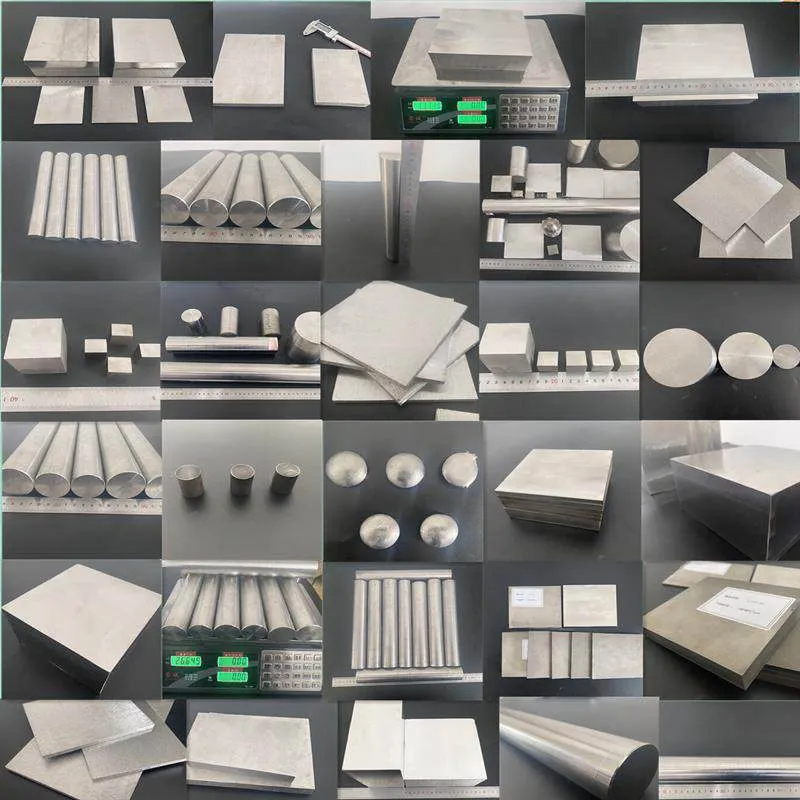
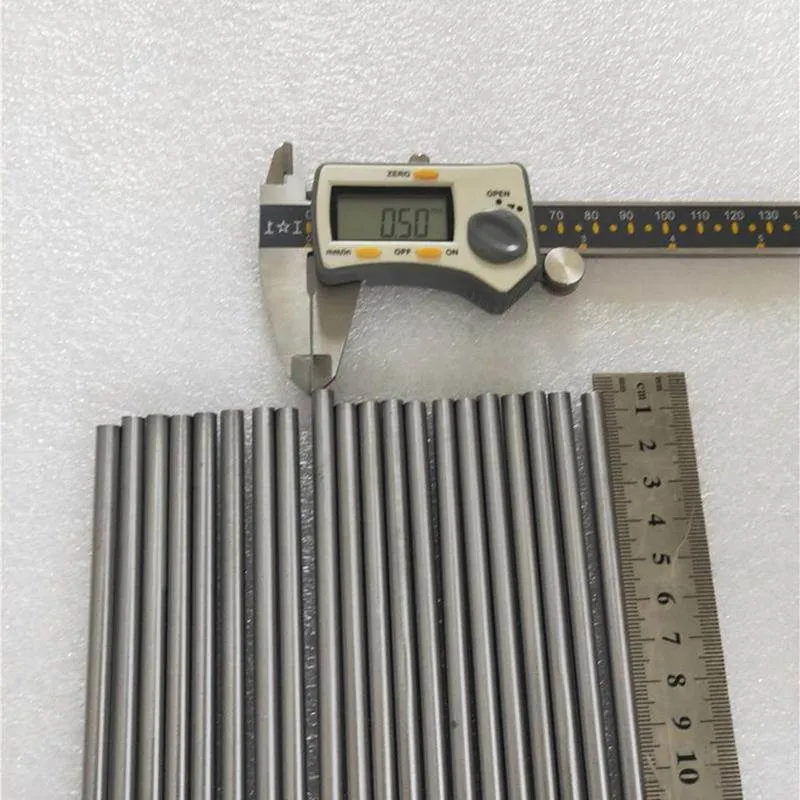
We provide AISI 4340 Steel, normalized is available in Bar (Round bar, Flat bar), Ribbon, Wire, Rods, Tube,Seamless Tube,Pipe, Ingots, Plate, Sheet, Strip and Forging Stock.,Purity, chemical composition, size, etc. can all be customized to meet specific requirements.
Please contact us if you need customized services. We will contact you with the price and availability in 24 hours.
AISI 4340 Steel, normalized Product Information
-:-
For detailed product information, please contact sales.
-:
AISI 4340 Steel, normalized Synonyms
-:-
For detailed product information, please contact sales.
-:
AISI 4340 Steel, normalized Product Information
-:-
For detailed product information, please contact sales.
-:
# **AISI 4340 Steel (Normalized Condition) Product Specification**
## **1. PRODUCT IDENTIFICATION & THERMAL PROCESS**
**Product:** AISI 4340 Nickel-Chromium-Molybdenum Alloy Steel
**Material State:** Normalized Condition
**Specified Thermal Treatment:**
- **Normalizing:** Typically 870-900°C (1600-1650°F) with complete austenitization
- **Cooling:** Still air cooling to room temperature
**Metallurgical Significance:** Normalization refines the grain structure, homogenizes the microstructure, and relieves internal stresses from prior hot working processes (forging, rolling, or casting). For AISI 4340—with its unique nickel-chromium-molybdenum composition—this treatment produces a fine, uniform mixture of ferrite and pearlite. The normalized condition provides improved strength and toughness over the as-forged or annealed states while maintaining good machinability, serving as an excellent starting point for either direct application or subsequent machining and final heat treatment.
## **2. CHEMICAL COMPOSITION**
AISI 4340 is distinguished by its nickel content, which significantly enhances toughness and hardenability.
| Element | Composition Range (% by weight) | Role in Normalized Condition |
| :--- | :--- | :--- |
| **Carbon (C)** | 0.38 - 0.43 | Provides strength through pearlite formation during air cooling. Foundation for hardenability. |
| **Manganese (Mn)** | 0.60 - 0.80 | Enhances hardenability and promotes finer pearlite formation. |
| **Phosphorus (P)** | ≤ 0.035 | Residual impurity, kept low to preserve impact toughness. |
| **Sulfur (S)** | ≤ 0.040 | Residual impurity, kept low. |
| **Silicon (Si)** | 0.15 - 0.35 | Deoxidizer; provides solid solution strengthening in ferrite. |
| **Nickel (Ni)** | **1.65 - 2.00** | **Key distinguishing element.** Greatly improves toughness, refines grain structure during normalization, lowers ductile-to-brittle transition temperature. |
| **Chromium (Cr)** | 0.70 - 0.90 | Increases hardenability and promotes fine carbide formation. |
| **Molybdenum (Mo)** | 0.20 - 0.30 | Enhances grain refinement during normalization, reduces temper embrittlement susceptibility. |
**Unique Feature:** The nickel content (1.65-2.00%) provides exceptional toughness not found in nickel-free grades like 4140, making normalized 4340 suitable for more demanding applications even in the non-hardened state.
## **3. MICROSTRUCTURE & TRANSFORMATION**
**Microstructural Features:**
- **Matrix:** Fine, uniform mixture of ferrite and pearlite
- **Pearlite Content:** ~40-50% (lower than plain carbon steels due to alloy content)
- **Pearlite Spacing:** Fine, due to chromium and molybdenum effects
- **Grain Size:** ASTM 7-9 (fine, refined by normalization)
- **Carbide Distribution:** Fine, uniform dispersion
**Normalizing Transformation:**
- **Ac₁:** ~730°C
- **Ac₃:** ~775°C
- **Typical Normalizing Temperature:** 870-900°C
- **Cooling Rate:** Still air (approximately 0.5-2°C/second)
- **Transformation Products:** Fine pearlite in polygonal ferrite matrix
## **4. PHYSICAL & MECHANICAL PROPERTIES (Normalized Condition)**
* **Physical Properties:**
* **Density:** 7.85 g/cm³ (0.284 lb/in³)
* **Melting Point:** ~1427°C (2600°F)
* **Modulus of Elasticity:** 205 GPa (29,700 ksi)
* **Thermal Conductivity:** 42.0 W/m·K @ 100°C
* **Coefficient of Thermal Expansion:** 11.4 µm/m·°C (20-100°C)
* **Specific Heat Capacity:** 460 J/kg·K
* **Mechanical Properties (Typical for Normalized Condition):**
* **Tensile Strength:** 700 - 850 MPa (102,000 - 123,000 psi)
* **Yield Strength (0.2% Offset):** 450 - 600 MPa (65,000 - 87,000 psi)
* **Elongation (in 50mm):** 20% - 25%
* **Reduction of Area:** 50% - 60%
* **Hardness:** **230 - 280 HB** (Approx. 99-108 HRB)
* **Charpy V-Notch Impact (21°C):** **40 - 70 J** (30 - 52 ft-lb) - **Excellent for normalized steel**
* **Machinability Rating:** **Fair to Good (~65% of B1112 standard)**
* **Fatigue Strength:** ~300-350 MPa (polished specimens)
* **Fracture Toughness:** Good for normalized condition
## **5. PRODUCT APPLICATIONS (Normalized Condition)**
This condition serves as an **excellent intermediate or final state** for components requiring good strength and exceptional toughness.
### **Forging & Casting Conditioning:**
- Post-forging treatment for **large aerospace forgings**
- **Cast component normalization** for grain refinement in heavy castings
- **Weldment normalizing** for stress relief and HAZ refinement in critical fabrications
### **Direct Application Components:**
- **Structural components** in heavy machinery requiring good toughness
- **Non-critical gears** and **shafts** for moderate service conditions
- **Fixtures**, **jigs**, and **tooling plates** requiring dimensional stability
- **Agricultural equipment parts** not requiring maximum hardness
- **Marine components** where corrosion resistance combined with toughness is needed
### **Pre-Machining for Subsequent Heat Treatment:**
- **Large component blanks** that will be through-hardened after machining
- **Complex geometries** where distortion control during final heat treatment is critical
- **Components requiring selective hardening** (induction, flame, or case hardening)
### **Critical Applications Utilizing Normalized State:**
- **Pressure vessel components** for moderate pressure service
- **Structural members** in mobile equipment
- **Connecting rods** and **crank arms** for certain engine applications
- **Mining equipment components** subject to impact loading
## **6. INTERNATIONAL STANDARDS & EQUIVALENT GRADES**
| Standard / Country | Designation | Equivalent Status | Notes |
| :--- | :--- | :--- | :--- |
| **AISI/SAE** | **4340** | Primary Standard | Most widely recognized |
| **ASTM** | A29 Grade 4340 | US Standard | Can be supplied normalized |
| **AMS** | AMS 6414, 6415 | Aerospace Materials | Often specified normalized for aircraft components |
| **UNS** | G43400 | Unified Numbering System | |
| **DIN/EN** | **1.6562 / 36NiCrMo6** | European Equivalent | 1.6562 is the closest match |
| **JIS** | **SNCM439** | Japanese Equivalent | Similar composition |
| **GB** | **40CrNiMoA** | Chinese Equivalent | GB/T 3077 standard |
| **ISO** | **ISO 683-18 Type 36NiCrMo6** | International Standard | |
**Important Note:** Unlike some other grades, 4340 is frequently used and specified in the normalized condition for many aerospace and critical applications due to its excellent toughness in this state.
## **7. PROCESSING & FABRICATION**
### **Normalizing Process Details:**
- **Temperature Range:** 870-900°C (1600-1650°F)
- **Soak Time:** 30-45 minutes per inch of thickness
- **Cooling:** Still air on racks with adequate spacing
- **Atmosphere:** Air or slightly protective
- **Temperature Uniformity:** Critical for consistent properties
### **Machinability:**
- **Condition:** Fair to Good (harder than annealed but still machinable)
- **Tooling:** Carbide recommended for production runs
- **Cutting Speed:** 60-85 m/min (200-280 SFM) for turning with carbide
- **Feed Rate:** 0.15-0.25 mm/rev (0.006-0.010 in/rev)
- **Coolant:** Recommended for improved tool life
- **Chip Formation:** Tends to produce continuous chips; chip breakers helpful
### **Welding Characteristics:**
- **Good weldability** in normalized condition (better than in hardened state)
- **Preheat:** 150-200°C (300-400°F) recommended
- **Electrodes:** Low-hydrogen electrodes required
- **Post-Weld:** Normalize or stress relieve at 600-650°C for critical applications
- **Best Practice:** For critical components, weld in normalized state then re-normalize
### **Forming & Bending:**
- **Moderate cold formability**
- **Minimum bend radius:** 3-4 × material thickness
- **Hot forming preferred** for complex shapes
- **Springback allowance:** 3-4° should be anticipated
## **8. SUBSEQUENT HEAT TREATMENT**
### **Typical Manufacturing Sequence for High-Strength Components:**
1. Forge or cast to near-net shape
2. Normalize at 870-900°C (current condition)
3. Rough machine
4. Stress relieve at 600-650°C if heavy machining performed
5. Finish machine to near-final dimensions
6. Austenitize at 815-845°C
7. Quench in oil (or water for maximum hardness)
8. Temper at desired temperature (205-650°C)
9. Final grinding/finishing
### **Heat Treatment Response:**
- **Exceptional hardenability:** Can through-harden very large sections (>150mm diameter)
- **Excellent toughness after tempering:** Due to nickel content
- **Warpage control:** Normalizing reduces residual stresses, minimizing distortion
- **Uniform response:** Normalized structure ensures consistent transformation
### **Typical Heat Treated Properties (After Quench & Temper from Normalized State):**
- **205°C (400°F) Temper:** 52-56 HRC, 1860-2070 MPa UTS
- **425°C (800°F) Temper:** 46-50 HRC, 1515-1725 MPa UTS
- **540°C (1000°F) Temper:** 39-44 HRC, 1240-1380 MPa UTS
## **9. QUALITY ASSURANCE**
### **Standard Testing:**
- Tensile testing per ASTM A370
- Hardness testing (Brinell scale preferred for normalized condition)
- Impact testing (Charpy V-notch) - often specified for 4340
- Macro-etch examination for soundness
- Grain size determination (ASTM E112)
### **Non-Destructive Testing (Often Specified):**
- Ultrasonic testing for internal defects
- Magnetic particle inspection for surface defects
- Dye penetrant for critical surfaces
### **Certification Requirements:**
- Chemical analysis certificate (including trace elements)
- Mechanical test report for normalized condition
- Heat treatment certificate confirming normalization cycle
- Impact test report (often required for 4340)
- Grain size report
### **Special Requirements for Aerospace Applications:**
- Additional cleanliness requirements (inclusion rating)
- Strict grain size control
- Detailed impact testing at multiple temperatures
- Fracture toughness testing for critical applications
## **10. COMPARATIVE ANALYSIS**
### **vs. Normalized 4140:**
- +20-40% better impact toughness at same strength level
- +10-15% better fatigue strength
- Deeper hardenability (can through-harden larger sections)
- Lower ductile-to-brittle transition temperature
- Higher cost (typically 30-50% premium)
### **vs. Annealed 4340:**
- +20-30% higher strength
- Better fatigue resistance
- More consistent response to final heat treatment
- Slightly reduced machinability
### **vs. Other Nickel-Alloy Steels:**
- **vs. 4330:** Higher carbon provides greater strength potential
- **vs. 4340 Mod:** Similar but with vanadium addition for grain refinement
- **vs. 300M:** Higher silicon variant for improved tempering resistance
### **Value Proposition:**
- Optimal combination of strength and toughness in normalized state
- Excellent foundation for subsequent heat treatment
- Proven reliability in critical applications
- Cost-effective for applications requiring high toughness
## **11. DESIGN & SELECTION CONSIDERATIONS**
### **When to Specify Normalized 4340:**
- Components requiring exceptional toughness in current state
- Large sections that will be through-hardened after machining
- Applications where fatigue resistance is critical
- Components subject to impact or shock loading
- Safety-critical applications where material reliability is paramount
### **Design Advantages:**
- **Excellent toughness-to-strength ratio**
- **Good fatigue resistance** for normalized condition
- **Weldability** suitable for fabrication
- **Dimensional stability** for precision components
- **Proven performance** in demanding applications
### **Section Size Considerations:**
- **Maximum for uniform normalization:** 200mm (8") diameter
- **Optimal range:** 50-150mm (2-6") for most applications
- **Minimum:** 25mm (1") to avoid excessive cooling rates
### **Economic Considerations:**
- Higher material cost than standard alloy steels
- Reduced risk of failure in critical applications
- Often cost-effective when considering total lifecycle cost
- Justified for safety-critical or high-value components
### **Special Considerations:**
- **Notch sensitivity:** Lower than lower-toughness steels but still present
- **Corrosion resistance:** Similar to other low-alloy steels; requires protection
- **Temperature limitations:** Good to ~400°C in normalized state
- **Embrittlement:** Less susceptible to temper embrittlement than many alloys due to Mo content
## **12. TECHNICAL SUMMARY**
**AISI 4340 steel in normalized condition** represents a **premium engineering material** that offers an exceptional balance of strength, toughness, and processability. The normalization treatment provides a refined, uniform microstructure that serves as an excellent starting point for either direct application or subsequent manufacturing and heat treatment.
The unique nickel content (1.65-2.00%) distinguishes 4340 from other alloy steels, providing toughness properties that approach those of much more expensive materials. This makes normalized 4340 particularly valuable for applications where impact resistance, fatigue strength, and reliability are critical concerns.
For components that will undergo final heat treatment, the normalized condition ensures predictable response to quenching and tempering, with minimal distortion and uniform properties throughout the cross-section. For components used in the normalized state, 4340 provides mechanical properties that are superior to most other steels in similar condition.
Commonly specified in aerospace, defense, energy, and heavy machinery applications, normalized 4340 has established a reputation for reliability in demanding service conditions. When component performance, safety, and longevity are paramount—and when the application justifies the additional material cost—normalized AISI 4340 provides an engineering solution that balances manufacturability with exceptional in-service performance.
The material's versatility, proven track record, and excellent property combination make it a preferred choice for engineers designing critical components where failure is not an option. Whether used as-is for moderately stressed applications or as a precursor to high-strength heat treatment, normalized 4340 delivers consistent, reliable performance that has been validated through decades of industrial use.
-:-
For detailed product information, please contact sales.
-:
AISI 4340 Steel, normalized Specification
Dimensions
Size:
Diameter 20-1000 mm Length <6239 mm
Size:We can customized as required
Standard:
Per your request or drawing
We can customized as required
Properties(Theoretical)
Chemical Composition
-:-
For detailed product information, please contact sales.
-:
AISI 4340 Steel, normalized Properties
-:-
For detailed product information, please contact sales.
-:
Applications of AISI 4340 Steel, normalized
-:-
For detailed product information, please contact sales.
-:
Chemical Identifiers AISI 4340 Steel, normalized
-:-
For detailed product information, please contact sales.
-:
Packing of AISI 4340 Steel, normalized
-:-
For detailed product information, please contact sales.
-:
Standard Packing:
-:-
For detailed product information, please contact sales.
-:
Typical bulk packaging includes palletized plastic 5 gallon/25 kg. pails, fiber and steel drums to 1 ton super sacks in full container (FCL) or truck load (T/L) quantities. Research and sample quantities and hygroscopic, oxidizing or other air sensitive materials may be packaged under argon or vacuum. Solutions are packaged in polypropylene, plastic or glass jars up to palletized 2710 gallon liquid totes Special package is available on request. E FORUs’ is carefully handled to minimize damage during storage and transportation and to preserve the quality of our products in their original condition