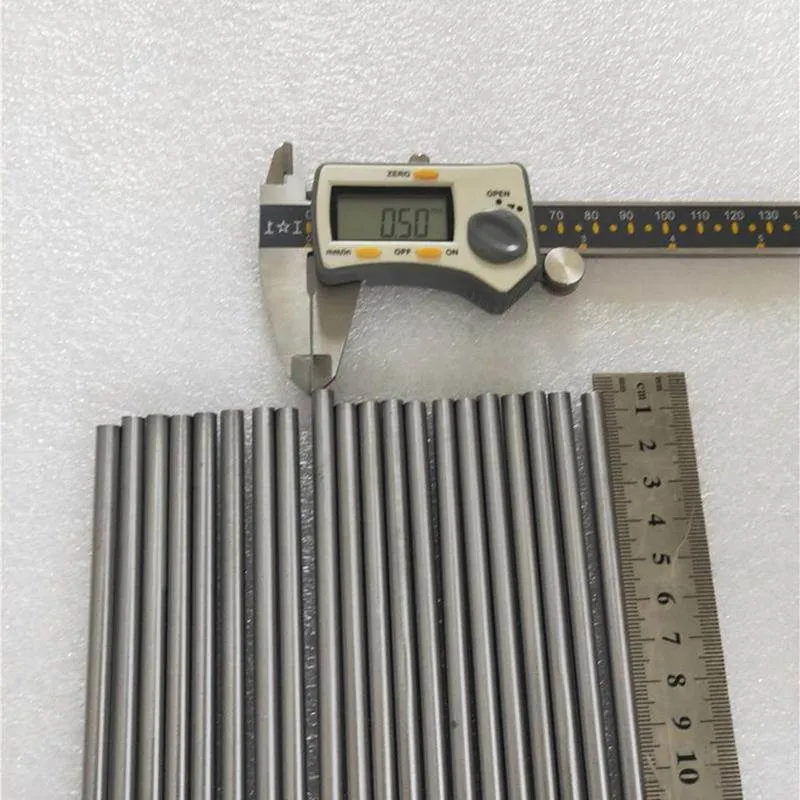
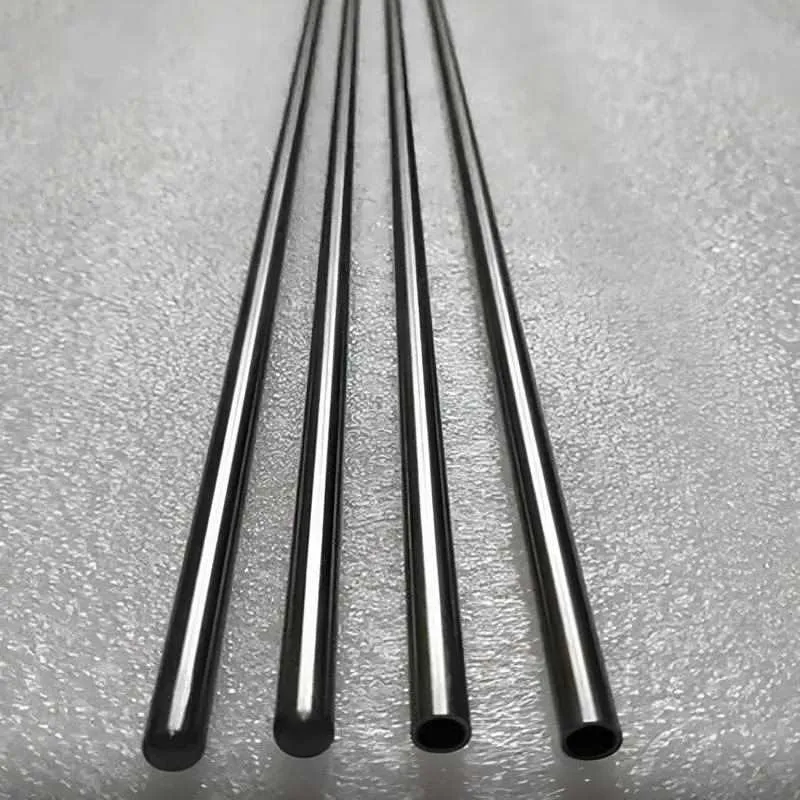
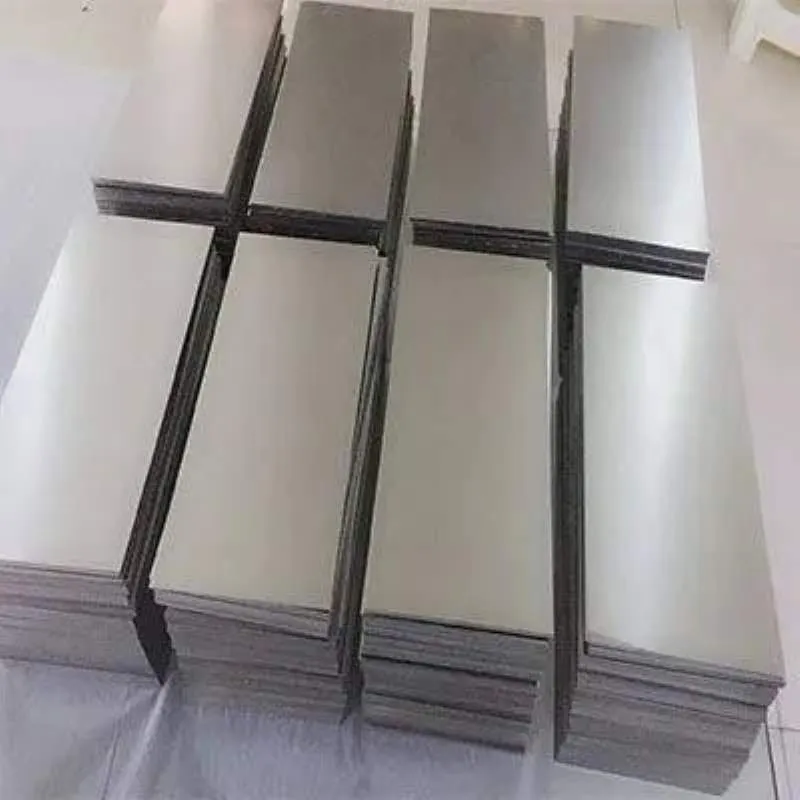
AISI 4340 Steel Capillary
Product Code : STI-CSTI-1508-CU
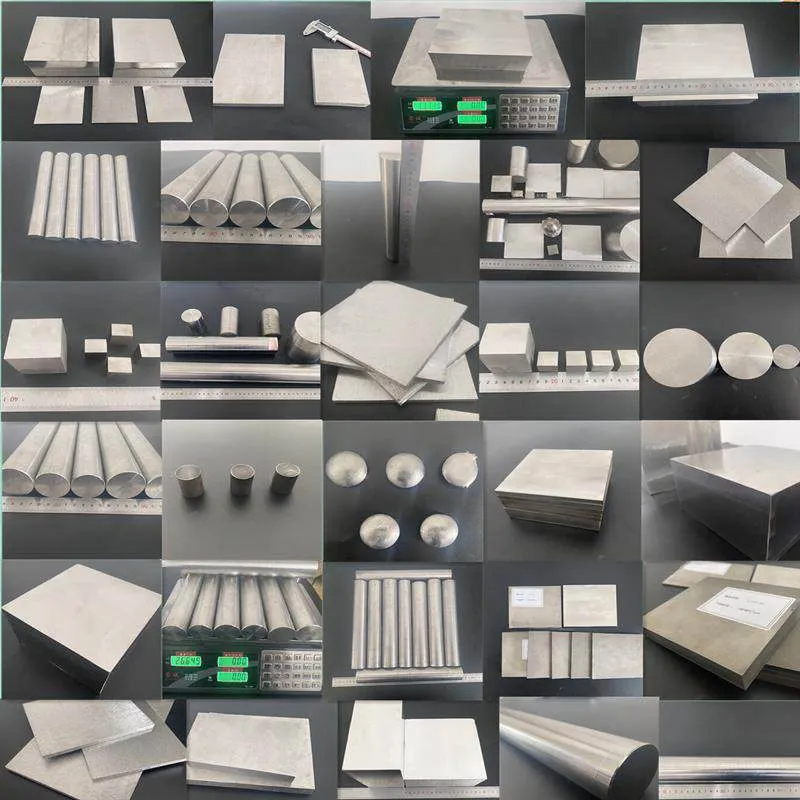
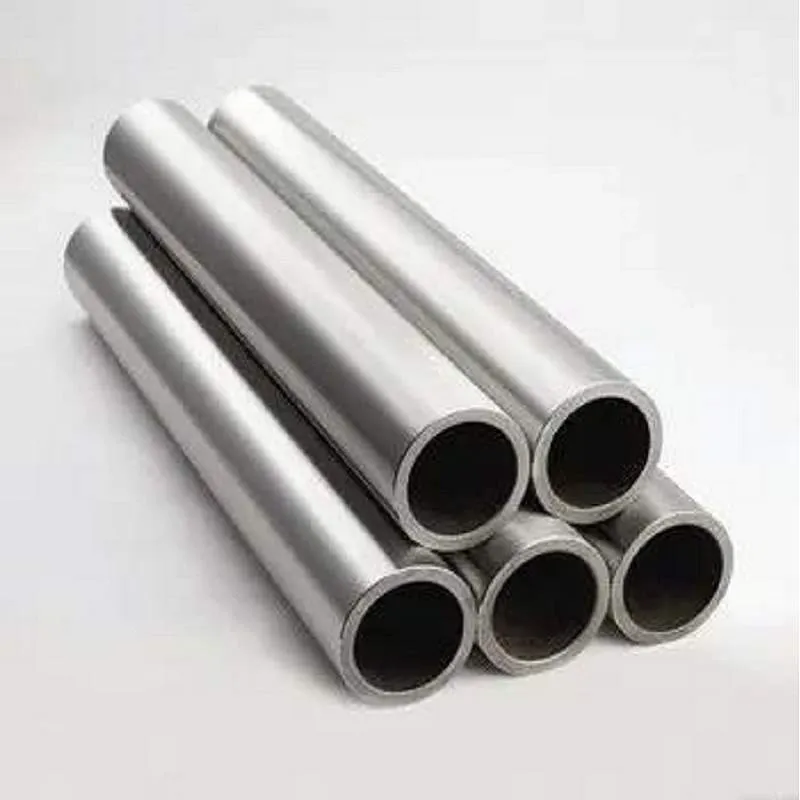
We provide AISI 4340 Steel Capillary, oil quenched 800°C (1470°F), 540°C (1000°F) temper is available in Bar (Round bar, Flat bar), Ribbon, Wire, Rods, Tube,Seamless Tube,Pipe, Ingots, Plate, Sheet, Strip and Forging Stock.,Purity, chemical composition, size, etc. can all be customized to meet specific requirements.
Please contact us if you need customized services. We will contact you with the price and availability in 24 hours.
AISI 4340 Steel Capillary, oil quenched 800°C (1470°F), 540°C (1000°F) temper Product Information
-:-
For detailed product information, please contact sales.
-:
AISI 4340 Steel Capillary, oil quenched 800°C (1470°F), 540°C (1000°F) temper Synonyms
-:-
For detailed product information, please contact sales.
-:
AISI 4340 Steel, oil quenched 800°C (1470°F), 540°C (1000°F) temper Product Information
-:-
For detailed product information, please contact sales.
-:
# **AISI 4340 Steel (Oil Quenched & Tempered - High Strength/Toughness Condition) Product Specification**
## **1. PRODUCT IDENTIFICATION & THERMAL PROCESS**
**Product:** AISI 4340 Nickel-Chromium-Molybdenum Alloy Steel
**Material State:** Fully Heat Treated, Quenched and Tempered Condition
**Specified Heat Treatment:**
- **Austenitizing:** 800°C (1470°F)
- **Quenching:** Oil quench (vigorous agitation)
- **Tempering:** 540°C (1000°F) → Air Cool
**Metallurgical Significance:** This specific heat treatment produces an **exceptional balance of ultra-high strength and superior toughness** for AISI 4340 steel. The relatively low austenitizing temperature (800°C) minimizes grain growth while ensuring complete austenitization, resulting in an extremely fine prior austenite grain size. Combined with 540°C tempering, this treatment optimizes the precipitation of fine alloy carbides within a tough tempered martensite matrix. The nickel content (1.65-2.00%) provides exceptional fracture toughness at this high strength level, distinguishing 4340 from nickel-free alloys.
## **2. CHEMICAL COMPOSITION**
| Element | Composition Range (% by weight) | Metallurgical Role in This Condition |
| :--- | :--- | :--- |
| **Carbon (C)** | 0.38 - 0.43 | Forms tempered martensite matrix; provides high hardness potential. Fine carbides precipitate during 540°C tempering. |
| **Manganese (Mn)** | 0.60 - 0.80 | Ensures complete martensitic transformation during oil quenching. |
| **Phosphorus (P)** | ≤ 0.035 | Kept at extremely low levels to maximize toughness at high strength. |
| **Sulfur (S)** | ≤ 0.040 | Tightly controlled for optimal transverse properties. |
| **Silicon (Si)** | 0.15 - 0.35 | Provides solid solution strengthening; retards tempering softening. |
| **Nickel (Ni)** | **1.65 - 2.00** | **Critical differentiator.** Provides exceptional toughness at high strength levels. Lowers ductile-brittle transition temperature significantly. Enhances hardenability. |
| **Chromium (Cr)** | 0.70 - 0.90 | Forms stable (Cr,Fe)₇C₃ carbides during tempering, contributing to secondary hardening and wear resistance. |
| **Molybdenum (Mo)** | **0.20 - 0.30** | **Essential for this tempering temperature.** Suppresses temper embrittlement completely at 540°C. Forms fine Mo₂C carbides that enhance creep resistance and strength retention. |
**Special Note:** The combination of Ni + Cr + Mo provides a synergistic effect that gives 4340 its renowned combination of high strength and exceptional toughness.
## **3. MICROSTRUCTURE & TRANSFORMATION**
**Microstructural Features:**
- **Matrix:** Very fine tempered martensite (tempered at 540°C)
- **Carbides:** Ultra-fine dispersion of alloy carbides (Mo₂C, Cr₇C₃)
- **Grain Size:** ASTM 10-12 (extremely fine due to 800°C austenitizing)
- **Retained Austenite:** <1% (fully transformed at 540°C tempering)
- **Prior Austenite Grain:** Extremely fine, contributing to exceptional toughness
**Transformation Details:**
- **Ac₁:** ~730°C
- **Ac₃:** ~775°C
- **Austenitizing Rationale:** 800°C provides only ~25°C above Ac₃, minimizing grain growth
- **Mₛ:** ~300-320°C
- **M_f:** ~100-120°C
- **Quench Medium:** Oil provides optimal cooling rate for this alloy
## **4. MECHANICAL PROPERTIES (After Q&T at 540°C)**
*Typical for sections up to 75mm (3") diameter*
| Property | Typical Range | Test Standard / Notes |
| :--- | :--- | :--- |
| **Ultimate Tensile Strength** | 1240 - 1380 MPa (180,000 - 200,000 psi) | Exceptionally high for this tempering temperature |
| **Yield Strength (0.2% Offset)** | 1100 - 1250 MPa (160,000 - 181,000 psi) | Outstanding yield ratio (~0.89) |
| **Elongation (in 50mm)** | **14% - 18%** | Excellent ductility for this strength level |
| **Reduction of Area** | **45% - 55%** | **Key toughness indicator** |
| **Hardness** | **38 - 43 HRC** (365 - 415 HB) | Optimized hardness-toughness balance |
| **Charpy V-Notch Impact (21°C)** | **40 - 70 J** (30 - 52 ft-lb) | **Exceptional for 1240+ MPa UTS** |
| **Fracture Toughness (K₁C)** | **80 - 120 MPa√m** | Outstanding crack resistance |
| **Fatigue Endurance Limit** | ~600 - 700 MPa | For polished specimens, R=-1 |
| **Shear Strength** | ~740 - 830 MPa | ~60% of UTS |
| **Modulus of Elasticity** | 205 GPa (29,700 ksi) | |
**Strength-Toughness Combination:** This specific treatment achieves a property combination that is rare in engineering materials: >1240 MPa tensile strength with >40 J impact energy.
## **5. PHYSICAL PROPERTIES**
| Property | Value / Condition |
| :--- | :--- |
| **Density** | 7.85 g/cm³ |
| **Thermal Conductivity** | 41.5 W/m·K @ 100°C |
| **Coefficient of Thermal Expansion** | 11.3 µm/m·°C (20-100°C) |
| **Specific Heat Capacity** | 460 J/kg·K |
| **Electrical Resistivity** | 0.23 µΩ·m @ 20°C |
| **Magnetic Properties** | Fully ferromagnetic |
## **6. TARGET APPLICATIONS**
This specific condition is engineered for **the most demanding applications** requiring the ultimate combination of strength, toughness, and fatigue resistance.
### **Aerospace & Defense (Primary Application Area):**
- **Aircraft landing gear components** (main fitting, pistons, torque links)
- **Helicopter rotor hubs** and **drive shafts**
- **Missile airframes** and **rocket motor cases**
- **Armored vehicle components** (suspension arms, turret rings)
- **Carrier-based aircraft components** requiring impact resistance
### **Oil & Gas (Critical Service):**
- **Drill collars** for deep well and directional drilling
- **Tool joints** and **heavy-weight drill pipe**
- **Blow-out preventer rams** and **components**
- **High-pressure wellhead equipment**
### **Power Generation & Heavy Machinery:**
- **Turbine shafts** for peak-load power generation
- **Large connecting rods** for high-performance engines
- **Crankshafts** for heavy-duty applications
- **Press components** and **forging die blocks**
### **High-Performance Automotive:**
- **Racing crankshafts** and **connecting rods**
- **Transmission gears** for extreme torque
- **Suspension components** for performance vehicles
- **High-stress fasteners** for critical assemblies
### **Tooling & Special Applications:**
- **Plastic injection molds** for engineering plastics
- **Die casting dies** for high-pressure applications
- **Extrusion tooling** for hard alloys
- **Special machinery components** where failure is unacceptable
## **7. INTERNATIONAL STANDARDS & EQUIVALENT GRADES**
| Standard / Country | Designation | Equivalent Status | Notes for This Condition |
| :--- | :--- | :--- | :--- |
| **AISI/SAE** | **4340** | Primary Standard | Most widely recognized |
| **ASTM** | A322 Grade 4340 | US Standard | Covers heat-treated alloy bars |
| **AMS** | **AMS 6415** | Aerospace Standard | Specific for 540°C (1000°F) temper condition |
| **UNS** | G43400 | Unified Numbering | |
| **DIN/EN** | **1.6562 / 36NiCrMo6** | European Equivalent | 1.6562 is the closest match |
| **JIS** | **SNCM439** | Japanese Equivalent | Similar composition |
| **GB** | **40CrNiMoA** | Chinese Equivalent | GB/T 3077 standard |
| **ISO** | **ISO 683-18 Type 36NiCrMo6** | International | |
**Aerospace Specifications:** This specific heat treatment (800°C oil quench + 540°C temper) is commonly specified under:
- **AMS 6415:** Aircraft quality, heat treated to 1240-1380 MPa
- **MIL-S-5000:** Military specification
- **BAC 5613:** Boeing material specification
## **8. FABRICATION & PROCESSING CONSTRAINTS**
### **Machinability (in Heat-Treated State):**
- **Condition:** Difficult
- **Tooling:** Carbide or CBN required
- **Cutting Speed:** 60-90 m/min (200-300 SFM) for turning with carbide
- **Feed Rate:** 0.10-0.20 mm/rev (0.004-0.008 in/rev)
- **Depth of Cut:** Light to moderate passes recommended
- **Coolant:** Essential for heat dissipation and tool life
- **Best Practice:** Complete majority of machining before final heat treatment
### **Welding Characteristics:**
- **Poor weldability** in heat-treated condition
- **If absolutely necessary:** Preheat to 300-350°C (575-660°F)
- **Electrodes:** Specialized high-nickel, low-hydrogen electrodes required
- **Post-Weld:** Full re-heat treatment mandatory (re-austenitize, quench, temper)
- **Industry Standard:** Avoid welding in heat-treated condition; weld in annealed state then full heat treat
### **Grinding:**
- Good grindability with proper technique
- Use aluminum oxide or CBN wheels
- Maintain adequate coolant flow to prevent "grinding burn"
- Light passes recommended
### **Straightening & Forming:**
- **Not recommended** in heat-treated condition
- If necessary: Hot straightening at 300-400°C only
- Maximum cold strain: <0.5% to avoid cracking
## **9. HEAT TREATMENT PROCESS DETAILS**
### **Critical Process Parameters:**
- **Austenitizing:** 800°C ±5°C (1470°F ±10°F), soak 30-45 min/inch
- **Quenching:** Agitated oil at 40-60°C (105-140°F)
- **Quench Delay:** <15 seconds from furnace to quench
- **Tempering:** 540°C ±5°C (1000°F ±10°F), 2-3 hours/inch minimum
- **Cooling:** Air cool after tempering (no water quenching)
### **Special Process Considerations:**
- **Double Tempering Strongly Recommended:** Temper at 540°C, cool to RT, re-temper at 525°C
- **Cryogenic Treatment (Optional):** -80°C treatment before tempering can transform retained austenite
- **Stress Relieving:** After final machining, 200°C for 2-4 hours for dimensional stability
- **Atmosphere Control:** Protective atmosphere recommended to prevent decarburization
### **Section Size Limitations:**
- **Maximum for uniform properties:** 100mm (4") diameter
- **Optimal range:** 25-75mm (1-3") diameter
- **Minimum:** 10mm (0.4") to avoid excessive cooling rates
## **10. QUALITY ASSURANCE & TESTING**
### **Mandatory Testing:**
- Tensile testing per ASTM A370 (typically 2 specimens minimum)
- Hardness testing (Rockwell C scale at multiple locations)
- Impact testing (Charpy V-notch at room temperature and often at -40°C)
- Microstructure examination (tempered martensite verification)
### **Non-Destructive Testing (Typically Required):**
- 100% Magnetic Particle Inspection per ASTM E709
- Ultrasonic testing for internal defects (ASTM A388)
- Fluorescent penetrant inspection for critical surfaces
### **Special Requirements for Aerospace:**
- Fracture toughness testing (K₁C or CTOD)
- Fatigue testing for critical components
- Residual stress measurement
- Hydrogen content analysis
### **Certification Requirements:**
- Full traceability to melt (including secondary refining processes)
- Complete chemical analysis (including trace/gaseous elements)
- Heat treatment charts with continuous temperature recording
- Mechanical test reports from actual component prolongations
- Grain size report (ASTM E112, typically 10+)
## **11. PERFORMANCE CHARACTERISTICS**
### **Key Advantages:**
1. **Exceptional Strength-Toughness Balance:** Industry benchmark for high-strength applications
2. **Superior Fatigue Resistance:** Excellent for cyclic loading applications
3. **Good Wear Resistance:** Suitable for components with sliding/rolling contact
4. **High Fracture Toughness:** Resistant to crack initiation and propagation
5. **Dimensional Stability:** Good after proper tempering
### **Design Considerations:**
- **Notch Sensitivity:** Moderate; generous fillet radii (R > 4mm) recommended
- **Corrosion Resistance:** Poor; requires protective coatings (cadmium, nickel plating, etc.)
- **Maximum Service Temperature:** ~400°C (750°F) continuous
- **Hydrogen Embrittlement:** Susceptible if electroplated without proper baking
### **Comparative Performance:**
**vs. 4340 at Higher Tempering Temperature (650°C):**
- +300-400 MPa higher tensile strength
- +10-15 HRC higher hardness
- -20-30 J lower impact toughness
- Better wear resistance
- Higher fatigue strength (for polished surfaces)
**vs. 4140 at Same Tempering Temperature (540°C):**
- +150-250 MPa higher tensile strength
- +50-100% higher impact toughness
- Much better fracture toughness
- Superior performance in critical applications
## **12. DESIGN & APPLICATION GUIDELINES**
### **Optimal Design Practices:**
- Use generous fillet radii (minimum R = 5mm or 0.5× section thickness)
- Avoid sharp corners and abrupt section changes
- Specify polished or ground surfaces for fatigue applications
- Design symmetrical parts to minimize heat treatment distortion
- Incorporate overload protection in systems using these components
### **Service Conditions:**
- **Maximum continuous temperature:** 400°C (750°F)
- **Minimum service temperature:** -40°C (-40°F) without special consideration
- **Environment:** Must be corrosion protected for most applications
- **Loading:** Excellent for static, dynamic, and impact loading
### **Safety Factors (Recommended Minimum):**
- Static loading: 2.5
- Dynamic loading: 3.5
- Fatigue loading: 4.0 (based on infinite life design)
- Impact loading: 5.0
### **Inspection & Maintenance:**
- Regular non-destructive inspection recommended for critical components
- Monitor for surface damage (nicks, scratches, corrosion)
- Repair by replacement rather than welding/repair in most cases
- Keep detailed service history for critical components
---
## **13. TECHNICAL SUMMARY**
**AISI 4340 steel, oil quenched from 800°C and tempered at 540°C (1000°F),** represents the **gold standard for high-strength, high-toughness engineering materials**. This specific heat treatment leverages the unique nickel-chromium-molybdenum composition of 4340 to achieve a property combination that is exceptionally rare: tensile strengths exceeding 1240 MPa (180,000 psi) combined with Charpy impact values of 40-70 J (30-52 ft-lb).
The relatively low austenitizing temperature (800°C) produces an extremely fine grain structure that maximizes toughness, while the 540°C tempering temperature provides an optimal balance between strength and ductility. The nickel content (1.65-2.00%) is particularly critical, providing the exceptional fracture toughness that distinguishes 4340 from nickel-free alloys.
This material condition is specified for the most demanding applications across aerospace, defense, energy, and heavy industry—components where failure would have catastrophic consequences. It is the material of choice for aircraft landing gear, critical power transmission components, and safety-related machinery parts.
While more expensive than common alloy steels and requiring careful processing, AISI 4340 in this heat treated condition provides unparalleled performance for critical applications. When component reliability under extreme conditions is paramount—and when the consequences of failure justify the additional cost and processing complexity—this specific 4340 treatment represents the engineering material solution of choice for the world's most demanding mechanical applications.
-:-
For detailed product information, please contact sales.
-:
AISI 4340 Steel, oil quenched 800°C (1470°F), 540°C (1000°F) temper Specification
Dimensions
Size:
Diameter 20-1000 mm Length <6240 mm
Size:We can customized as required
Standard:
Per your request or drawing
We can customized as required
Properties(Theoretical)
Chemical Composition
-:-
For detailed product information, please contact sales.
-:
AISI 4340 Steel, oil quenched 800°C (1470°F), 540°C (1000°F) temper Properties
-:-
For detailed product information, please contact sales.
-:
Applications of AISI 4340 Steel Capillary, oil quenched 800°C (1470°F), 540°C (1000°F) temper
-:-
For detailed product information, please contact sales.
-:
Chemical Identifiers AISI 4340 Steel Capillary, oil quenched 800°C (1470°F), 540°C (1000°F) temper
-:-
For detailed product information, please contact sales.
-:
Packing of AISI 4340 Steel Capillary, oil quenched 800°C (1470°F), 540°C (1000°F) temper
-:-
For detailed product information, please contact sales.
-:
Standard Packing:
-:-
For detailed product information, please contact sales.
-:
Typical bulk packaging includes palletized plastic 5 gallon/25 kg. pails, fiber and Steel Capillary drums to 1 ton super sacks in full container (FCL) or truck load (T/L) quantities. Research and sample quantities and hygroscopic, oxidizing or other air sensitive materials may be packaged under argon or vacuum. Solutions are packaged in polypropylene, plastic or glass jars up to palletized 2711 gallon liquid totes Special package is available on request. E FORUs’ is carefully handled to minimize damage during storage and transportation and to preserve the quality of our products in their original condition