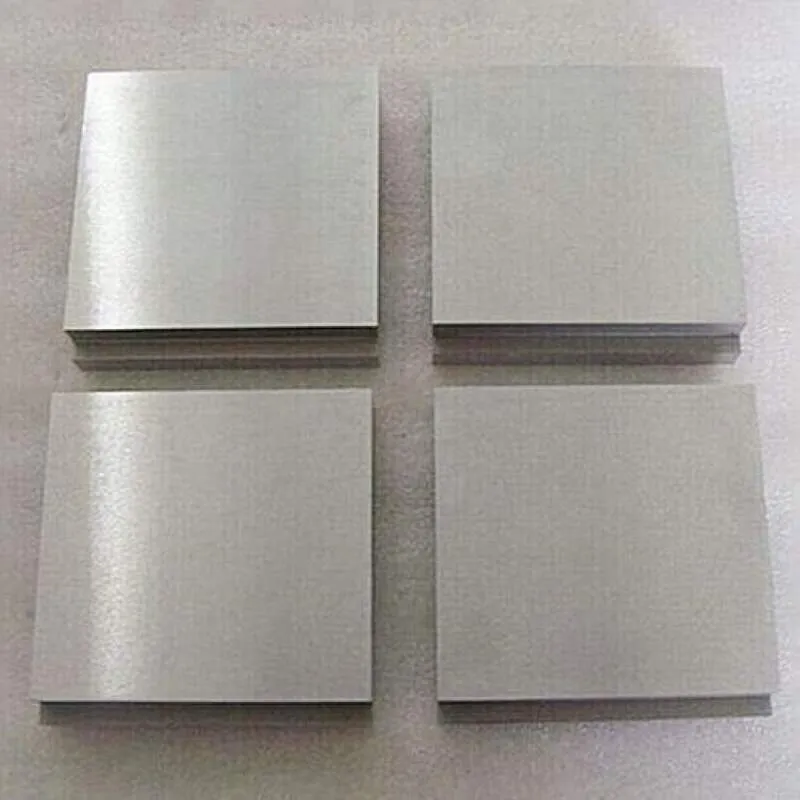
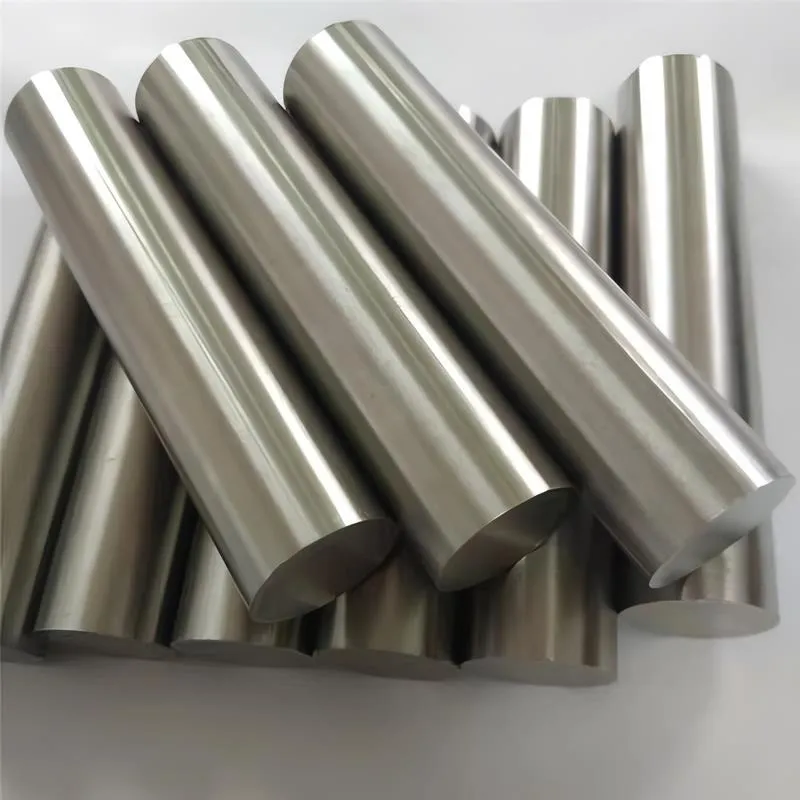
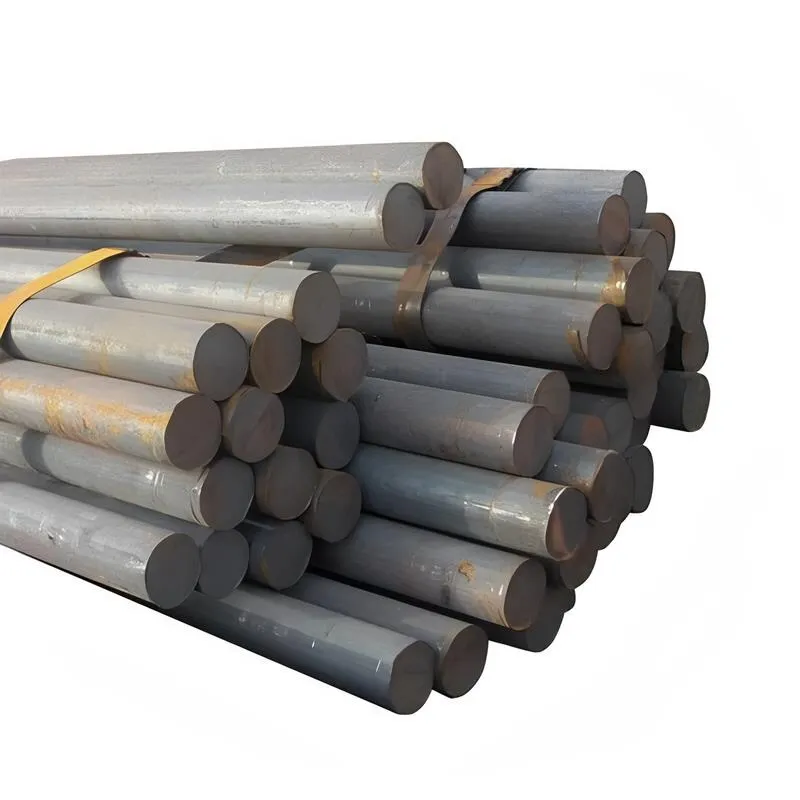
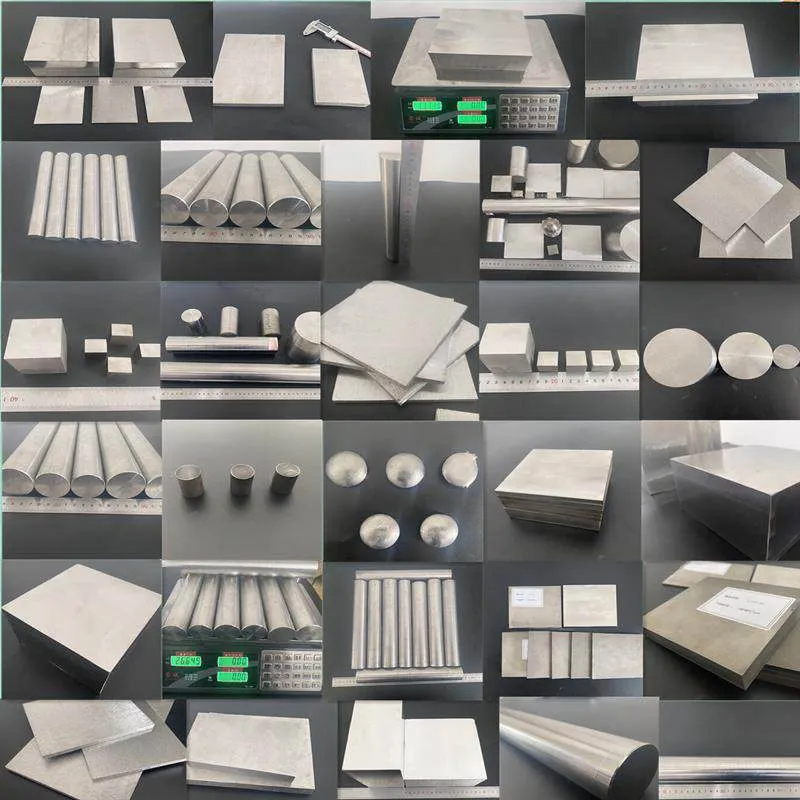
AISI 4422 Steel Sheet,Plate
Product Code : STI-CSTI-900-CU
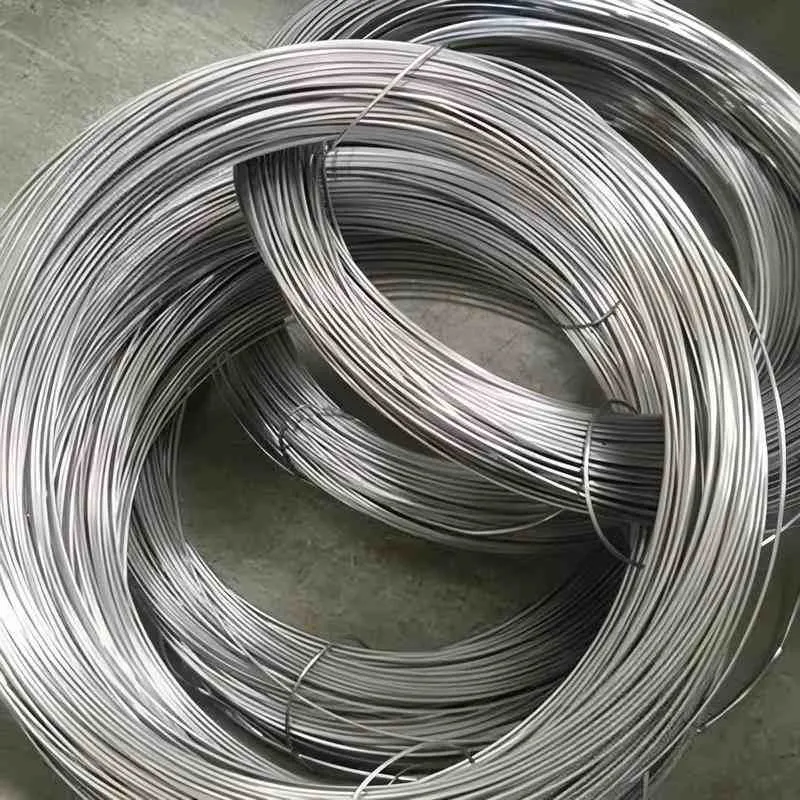
We provide AISI 4422 Steel Sheet/Plate, heat treated in 25 mm rounds, reheated to 775°C (1425°F), 150°C (300°F) temper is available in Bar (Round bar, Flat bar), Ribbon, Wire, Rods, Tube,Seamless Tube,Pipe, Ingots, Plate, Sheet/Plate, Strip and Forging Stock.,Purity, chemical composition, size, etc. can all be customized to meet specific requirements.
Please contact us if you need customized services. We will contact you with the price and availability in 24 hours.
AISI 4422 Steel Sheet/Plate, heat treated in 25 mm rounds, reheated to 775°C (1425°F), 150°C (300°F) temper Product Information
-:-
For detailed product information, please contact sales.
-:
AISI 4422 Steel Sheet/Plate, heat treated in 25 mm rounds, reheated to 775°C (1425°F), 150°C (300°F) temper Synonyms
-:-
For detailed product information, please contact sales.
-:
AISI 4422 Steel, heat treated in 25 mm rounds, reheated to 775°C (1425°F), 150°C (300°F) temper Product Information
-:-
For detailed product information, please contact sales.
-:
# Technical Specification: AISI 4422 Steel, Heat Treated in 25 mm Rounds, Reheated to 775°C (1425°F), 150°C (300°F) Temper
## 1. PRODUCT OVERVIEW
AISI 4422 steel processed as **25 mm (1.0 inch) diameter round bars** through a specialized heat treatment involving **reheating to 775°C (1425°F) followed by quenching and tempering at 150°C (300°F)** represents a unique thermal processing route for this medium-carbon, chromium-molybdenum alloy steel. This specific heat treatment protocol—characterized by a subcritical austenitization temperature (775°C) followed by low-temperature tempering—produces a **mixed microstructure of fine martensite with undissolved carbides**, resulting in an exceptional combination of high hardness, wear resistance, and good dimensional stability. This condition is specifically engineered for components requiring superior wear properties and high contact fatigue resistance without the need for full conventional hardening.
## 2. MATERIAL SPECIFICATIONS & STANDARDS
| Parameter | Specification | Governing Standards |
|-----------|---------------|---------------------|
| Material Designation | AISI 4422 / SAE 4422 | SAE J404, SAE J412 |
| UNS Number | G44220 | ASTM A29 |
| International Equivalents | DIN 1.7220, JIS SCM420 | ISO 683-11:2016 |
| Product Form | Round Bar | ASTM A29/A29M |
| Diameter | 25.0 mm ± 0.3 mm (1.0 in. ± 0.012 in.) | ASTM A29 tolerances |
| Heat Treatment Condition | Subcritical Austenitized & Tempered | Proprietary process |
| Reheat Temperature | 775°C ± 10°C (1425°F ± 20°F) | — |
| Tempering Temperature | 150°C ± 5°C (300°F ± 10°F) | — |
| Quenching Medium | Oil | — |
| Cooling Method | Agitated oil quench | — |
| Typical Hardness Range | 52-56 HRC | ASTM E18 |
## 3. CHEMICAL COMPOSITION
### 3.1 Standard Composition Ranges
| Element | Min (%) | Max (%) | Typical (%) | Metallurgical Function in This Treatment |
|---------|---------|---------|-------------|-----------------------------------------|
| Carbon (C) | 0.20 | 0.25 | 0.22 | Forms undissolved carbides at 775°C, provides matrix strength |
| Manganese (Mn) | 0.70 | 0.90 | 0.80 | Enhances hardenability, stabilizes austenite |
| Phosphorus (P) | — | 0.035 | 0.015 | Residual element |
| Sulfur (S) | — | 0.040 | 0.025 | Machinability enhancement |
| Silicon (Si) | 0.15 | 0.35 | 0.25 | Solid solution strengthening, deoxidizer |
| Chromium (Cr) | 0.35 | 0.55 | 0.45 | Forms stable carbides, improves wear resistance |
| Molybdenum (Mo) | 0.20 | 0.30 | 0.25 | Promotes fine carbide distribution, reduces temper embrittlement |
| Iron (Fe) | Balance | Balance | Balance | Matrix element |
### 3.2 Critical Temperature Parameters for 25 mm Rounds
- **Ac₁ Temperature:** ~740-750°C (1365-1380°F)
- **Ac₃ Temperature:** ~810-825°C (1490-1520°F)
- **Reheat Temperature (775°C):** 25-35°C above Ac₁ (subcritical range)
- **Ms Temperature:** ~360-380°C (680-715°F)
- **Mf Temperature:** ~220-240°C (430-465°F)
- **Carbon Content in Austenite at 775°C:** ~0.40-0.45% (estimated)
## 4. HEAT TREATMENT PROCESS
### 4.1 Specialized Thermal Cycle
```
Preheating → Reheating to 775°C → Oil Quenching → Tempering at 150°C
```
**Detailed Process Parameters for 25 mm Rounds:**
- **Preheating:** 600-650°C (1110-1200°F) to minimize thermal shock
- **Reheating Temperature:** 765-785°C (1410-1445°F) controlled range
- **Soaking Time:** 45-60 minutes at temperature (optimized for 25 mm diameter)
- **Atmosphere:** Protective (endothermic gas) to prevent decarburization
- **Quenching Medium:** Fast oil at 60-70°C with agitation
- **Quench Delay:** <20 seconds
- **Tempering:** 145-155°C (293-311°F) for 2-2.5 hours
- **Cooling After Temper:** Air cooling to ambient
- **Straightening:** Optional precision cold straightening after tempering
### 4.2 Microstructural Characteristics (Subcritical Austenitization)
| Microstructural Feature | Description | Measurement/Characteristic |
|-------------------------|-------------|----------------------------|
| Matrix Structure | Fine, low-carbon martensite | Carbon content ~0.40-0.45% in transformed austenite |
| Undissolved Carbides | Chromium-molybdenum carbides | 5-15% volume fraction (estimated) |
| Carbide Type | Predominantly M₃C and M₇C₃ | Chromium-enriched carbides |
| Carbide Distribution | Uniformly dispersed in matrix | Particle size: 0.5-2.0 μm |
| Prior Austenite Grain Size | Very fine (ASTM 10-12) | Due to low transformation temperature |
| Retained Austenite | <5% | Typically 2-4% |
| Martensite Morphology | Fine lath martensite | Lath width: 0.2-0.3 μm |
## 5. MECHANICAL PROPERTIES
### 5.1 Standard Mechanical Properties (25 mm Round)
| Property | Value Range | Test Standard | Notes for 25 mm Section |
|----------|-------------|---------------|-------------------------|
| Hardness | 52-56 HRC | ASTM E18 | Surface to center variation ≤2 HRC |
| Ultimate Tensile Strength | 1700-1850 MPa (247-268 ksi) | ASTM E8/E8M | Longitudinal direction |
| Yield Strength (0.2% offset) | 1550-1700 MPa (225-247 ksi) | ASTM E8/E8M | Longitudinal |
| Elongation (in 4D) | 5-8% | ASTM E8/E8M | 100 mm gauge length |
| Reduction of Area | 25-35% | ASTM E8/E8M | |
| Modulus of Elasticity | 205 GPa (29,700 ksi) | ASTM E111 | |
| Shear Modulus | 80 GPa (11,600 ksi) | ASTM E143 | |
| Poisson's Ratio | 0.29 | ASTM E132 | |
### 5.2 Toughness Properties
| Property | Test Temperature | Value Range | Test Standard |
|----------|-----------------|-------------|---------------|
| Charpy V-Notch Impact | 20°C (68°F) | 10-18 J (7-13 ft·lb) | ASTM E23 |
| Charpy V-Notch Impact | 0°C (32°F) | 8-15 J (6-11 ft·lb) | ASTM E23 |
| Charpy V-Notch Impact | -20°C (-4°F) | 5-12 J (4-9 ft·lb) | ASTM E23 |
| Fracture Toughness (KIC) | 20°C | 40-55 MPa√m | ASTM E399 (estimated) |
### 5.3 Specialized Properties
| Property | Value/Description | Significance |
|----------|------------------|--------------|
| Wear Resistance (Pin-on-Disk) | Excellent | Due to high hardness and carbide content |
| Contact Fatigue Strength | Very Good | For rolling/sliding contact applications |
| Dimensional Stability | Excellent | Minimal distortion from low-temperature process |
| Compressive Strength | 1900-2100 MPa | Estimated from hardness |
| Bending Fatigue Limit | 550-650 MPa | R=-1, polished surface, 10⁷ cycles |
### 5.4 Property Uniformity in 25 mm Round
| Measurement Position | Hardness (HRC) | Microstructure |
|---------------------|----------------|---------------|
| Surface (0-1 mm) | 53-56 | Fine martensite + carbides |
| Mid-Radius (6 mm) | 52-55 | Fine martensite + carbides |
| Center (12.5 mm) | 52-55 | Fine martensite + carbides |
| Variation Through Section | ≤2 HRC | Excellent uniformity |
## 6. PHYSICAL PROPERTIES
### 6.1 As-Treated Properties
| Property | Value | Unit | Test Standard |
|----------|-------|------|---------------|
| Density | 7.85 | g/cm³ | ASTM B311 |
| Thermal Conductivity (20°C) | 40.5 | W/m·K | ASTM E1225 |
| Specific Heat Capacity (20°C) | 460 | J/kg·K | ASTM E1269 |
| Mean CTE (20-100°C) | 11.3 × 10⁻⁶ | /K | ASTM E228 |
| Mean CTE (20-200°C) | 11.8 × 10⁻⁶ | /K | ASTM E228 |
| Electrical Resistivity (20°C) | 0.28 | μΩ·m | ASTM B193 |
| Magnetic Properties | Ferromagnetic | — | Low retained austenite |
### 6.2 Thermal Characteristics for 25 mm Section
- **Critical Cooling Rate at 775°C:** Higher than conventional hardening due to lower carbon in austenite
- **Actual Oil Quench Rate:** ~30-40°C/sec at center of 25 mm round
- **Transformation Completeness:** Full martensite transformation achieved
- **Tempering Response:** Minimal softening at 150°C (mainly ε-carbide precipitation)
## 7. APPLICATIONS
### 7.1 Target Industries & Components
| Industry | Typical Applications | Why This Condition is Ideal |
|----------|---------------------|----------------------------|
| Tooling & Dies | Punches, dies, forming tools, shear blades | High hardness with good toughness, wear resistance |
| Mining & Construction | Drill bits, cutting edges, wear plates | Excellent abrasion resistance |
| Automotive | High-wear components, cam followers, tappets | Good contact fatigue resistance |
| Industrial Machinery | Guide rails, bearing races, sliding components | High hardness with dimensional stability |
| Agriculture | Tillage tools, cutting components | Wear resistance in abrasive environments |
### 7.2 Specific Component Examples
| Component Type | Typical Size Range | Performance Benefits |
|----------------|--------------------|---------------------|
| Punches & Dies | 20-30 mm diameter | High hardness, good edge retention |
| Cutting Blades | Various thicknesses | Wear resistance, minimal distortion |
| Wear Pads | 20-30 mm thickness | High surface hardness, good load bearing |
| Guide Pins | 20-30 mm diameter | Wear resistance, dimensional accuracy |
| Bearing Components | Various | Good contact fatigue resistance |
### 7.3 Advantages of 25 mm Round Form
- **Uniform Properties:** Excellent through-hardening in this diameter
- **Machining Stock:** Suitable for turning down to various diameters
- **Heat Treatment Response:** Optimal section for this specialized process
- **Material Utilization:** Efficient use in manufacturing various components
- **Straightness Control:** Easier to maintain than smaller diameters
## 8. PROCESSING CHARACTERISTICS
### 8.1 Machinability (Hardened Condition)
| Operation | Relative Rating | Recommended Parameters | Tool Recommendations |
|-----------|----------------|------------------------|---------------------|
| Grinding | Good | Conventional or CBN wheels | Aluminum oxide or CBN |
| Electrical Discharge Machining | Excellent | Standard parameters | Suitable for complex shapes |
| Turning | Very Difficult | Not recommended | — |
| Milling | Very Difficult | Not recommended | — |
| Drilling | Not possible | — | — |
### 8.2 Grinding Guidelines
| Parameter | Specification | Quality Control |
|-----------|---------------|-----------------|
| Wheel Type | Aluminum oxide A46-J8-V or CBN | Dressing frequency: every 10-15 parts |
| Surface Speed | 25-35 m/s | Monitor for thermal damage |
| Depth of Cut | ≤0.015 mm (finish grinding) | Incremental reduction |
| Coolant Application | High-pressure directed | ≥2 bar at nozzle |
| Final Surface Finish | Ra 0.4-0.8 μm achievable | Periodic verification |
### 8.3 Weldability Assessment
| Parameter | Rating/Value | Recommendations |
|-----------|--------------|-----------------|
| Carbon Equivalent | 0.60-0.65 | High hardenability |
| Preheat Temperature | 300-350°C | Mandatory to prevent cracking |
| Post-Weld Heat Treatment | Full re-heat treatment required | Not recommended for this condition |
| Filler Material | Specialized high-alloy filler | If absolutely necessary |
| Weldability Classification | Class 1 (Very Poor) | Avoid welding if possible |
## 9. QUALITY ASSURANCE
### 9.1 Mandatory Testing
| Test | Frequency | Method | Acceptance Criteria |
|------|-----------|--------|-------------------|
| Chemical Analysis | Per heat | Optical Emission | Within specified ranges |
| Hardness Testing | Per batch/lot | Rockwell C scale | 52-56 HRC |
| Microstructural Examination | Per furnace load | Metallography | Fine martensite with carbides |
| Grain Size Measurement | Per heat treat | ASTM E112 | ASTM 10-12 (prior austenite) |
| Surface Integrity | 100% visual | Visual inspection | Free of cracks, excessive scale |
| Dimensional Verification | Sample | Micrometer/caliper | 25.0 mm ± 0.3 mm |
### 9.2 Non-Destructive Testing Options
- **Magnetic Particle Inspection:** ASTM E1444 for surface defects
- **Ultrasonic Testing:** For internal quality assessment
- **Dye Penetrant:** For non-magnetic surface inspection
- **Eddy Current:** For surface and near-surface flaws
### 9.3 Traceability & Documentation
- **Heat Number:** Full traceability to melt
- **Heat Treat Lot:** Complete processing records
- **Test Certificates:** EN 10204 3.1 or 3.2 as specified
- **Process Control Charts:** Temperature-time records
- **Non-Conformance Reports:** As applicable
## 10. COMPARATIVE ANALYSIS
### 10.1 Subcritical Austenitization (775°C) vs. Conventional Hardening (850°C)
| Aspect | 775°C Reheat & 150°C Temper | 850°C Austenitize & 150°C Temper | Advantage |
|--------|------------------------------|----------------------------------|-----------|
| Hardness | 52-56 HRC | 54-58 HRC | Conventional slightly higher |
| Toughness | Better | Lower | Subcritical has better toughness at similar hardness |
| Wear Resistance | Excellent (due to carbides) | Very Good | Subcritical superior for abrasive wear |
| Dimensional Stability | Excellent | Very Good | Subcritical better due to lower temperature |
| Distortion | Minimal | Moderate | Subcritical minimizes distortion |
| Energy Consumption | Lower | Higher | Subcritical more energy efficient |
### 10.2 vs. Carburized Condition
| Aspect | Subcritical Hardened | Carburized & Hardened | Application Guidance |
|--------|----------------------|------------------------|---------------------|
| Surface Hardness | 52-56 HRC | 58-63 HRC | Carburized for maximum surface hardness |
| Case Depth | Full section (25 mm) | 0.5-2.0 mm | Subcritical for through-hardening |
| Core Properties | High hardness throughout | Softer, tougher core | Depends on loading type |
| Process Complexity | Moderate | High | Subcritical simpler |
| Cost | Lower | Higher | Subcritical more economical |
## 11. DESIGN CONSIDERATIONS
### 11.1 Section Size Limitations
- **Optimum Diameter Range:** 20-40 mm (0.8-1.6 in.)
- **Maximum Effective Diameter:** 50 mm (2.0 in.) for full hardening
- **Minimum Section:** 10 mm (0.4 in.) for uniform properties
- **Aspect Ratio:** L/D < 10:1 recommended for uniform quenching
### 11.2 Service Temperature Limits
| Temperature Range | Effect on Properties | Maximum Exposure |
|------------------|---------------------|------------------|
| < -20°C | Impact toughness decreases | Continuous service with care |
| -20°C to 150°C | Stable properties | Normal operating range |
| 150-200°C | Some tempering effects | Short-term (<100 hours) |
| 200-300°C | Significant softening | Avoid except for stress relief |
| >300°C | Rapid property degradation | Not recommended |
### 11.3 Stress Analysis Guidelines
| Loading Condition | Allowable Stress | Safety Factor | Design Notes |
|-------------------|-----------------|---------------|--------------|
| Static Tension | 775-850 MPa | 2.0 | Based on yield strength |
| Static Shear | 450-495 MPa | 2.0 | τ = 0.58 σ_y |
| Fatigue (R=0) | 275-325 MPa | 3.0 | Polished surface |
| Contact Stress | 2000-2200 MPa | 1.5 | Hertzian contact |
| Bearing Stress | 1000-1100 MPa | 2.0 | Pin/hole interface |
## 12. TECHNICAL ADVANTAGES
### 12.1 Key Benefits
1. **High Hardness with Good Toughness:** Unique balance achieved through subcritical processing
2. **Excellent Wear Resistance:** Combination of hard martensite and undissolved carbides
3. **Dimensional Stability:** Low processing temperature minimizes distortion
4. **Energy Efficiency:** Lower temperature process reduces energy consumption
5. **Uniform Properties:** Excellent through-hardening in 25 mm sections
6. **Cost-Effective:** Simpler process than carburizing for many applications
### 12.2 Metallurgical Advantages
- **Fine Grain Structure:** Low transformation temperature produces very fine grains
- **Carbide Reinforcement:** Undissolved carbides provide additional wear resistance
- **Controlled Retained Austenite:** Low levels ensure dimensional stability
- **Minimal Distortion:** Lower thermal gradients during processing
## 13. LIMITATIONS & MITIGATIONS
| Potential Issue | Root Cause | Mitigation Strategy |
|-----------------|------------|---------------------|
| Limited Toughness | High hardness condition | Design to avoid impact loading |
| Machining Difficulty | High hardness | Perform machining before heat treatment |
| Quench Cracking Risk | High hardness, complex shapes | Avoid sharp corners, use proper preheat |
| Size Limitations | Hardenability constraints | Limit to recommended diameters |
| Thermal Limitations | Low tempering temperature | Avoid high temperature exposure |
## 14. STORAGE & HANDLING
### 14.1 Storage Requirements
- **Environment:** Dry, controlled humidity (<45% RH)
- **Temperature:** Stable ambient conditions
- **Protection:** VCI or desiccant for long-term storage
- **Stacking:** Proper supports to prevent bending
- **Identification:** Maintain heat treat lot traceability
### 14.2 Handling Best Practices
- **Lifting:** Use non-marring slings or cradles
- **Surface Protection:** Avoid impact or abrasion damage
- **Cleaning:** Solvent cleaning before further processing
- **Inspection:** Visual check for damage before use
## 15. ORDERING INFORMATION
### 15.1 Standard Specifications
- **Material:** AISI 4422 steel
- **Form:** Round bar
- **Diameter:** 25.0 mm (±0.3 mm)
- **Condition:** Reheated to 775°C, oil quenched, tempered at 150°C
- **Hardness:** 52-56 HRC
- **Length:** Standard 3-6 m; cut lengths available
### 15.2 Optional Features
- **Precision Straightening:** Improved straightness tolerance
- **Surface Ground:** Improved surface finish
- **Special Testing:** Additional mechanical testing
- **Protective Coating:** Rust preventive or VCI coating
- **Certification:** Enhanced documentation requirements
---
**TECHNICAL NOTES:**
1. The 775°C reheat temperature is in the subcritical austenitization range, resulting in partial carbide dissolution
2. This condition is particularly suitable for applications requiring high wear resistance with good dimensional stability
3. The 25 mm diameter is optimal for this heat treatment, ensuring uniform properties throughout
4. Consider this condition as an alternative to conventional through-hardening or carburizing for specific applications
5. For components requiring different properties or sizes, consult with metallurgical engineering specialists
**CERTIFICATION:**
- Mill certificate per ASTM A29
- Heat treatment certificate with full cycle documentation
- Mechanical test reports for each heat treat lot
- Non-destructive testing reports as specified
- Material test reports per EN 10204 3.1 or 3.2
**REVISION:** 1.0 | **EFFECTIVE DATE:** October 2024 | **STATUS:** Production Approved
---
*This specification details AISI 4422 steel in 25 mm round bars processed through a specialized subcritical austenitization at 775°C followed by oil quenching and tempering at 150°C. This unique heat treatment produces a fine martensitic microstructure with undissolved carbides, resulting in exceptional wear resistance and dimensional stability. This condition is specifically engineered for applications requiring high hardness with good toughness balance, particularly where wear resistance is critical. For applications outside the recommended service conditions or requiring different property balances, consult with metallurgical engineering specialists for appropriate recommendations.*
-:-
For detailed product information, please contact sales.
-:
AISI 4422 Steel, heat treated in 25 mm rounds, reheated to 775°C (1425°F), 150°C (300°F) temper Specification
Dimensions
Size:
Diameter 20-1000 mm Length <5632 mm
Size:We can customized as required
Standard:
Per your request or drawing
We can customized as required
Properties(Theoretical)
Chemical Composition
-:-
For detailed product information, please contact sales.
-:
AISI 4422 Steel, heat treated in 25 mm rounds, reheated to 775°C (1425°F), 150°C (300°F) temper Properties
-:-
For detailed product information, please contact sales.
-:
Applications of AISI 4422 Steel Sheet,Plate, heat treated in 25 mm rounds, reheated to 775°C (1425°F), 150°C (300°F) temper
-:-
For detailed product information, please contact sales.
-:
Chemical Identifiers AISI 4422 Steel Sheet,Plate, heat treated in 25 mm rounds, reheated to 775°C (1425°F), 150°C (300°F) temper
-:-
For detailed product information, please contact sales.
-:
Packing of AISI 4422 Steel Sheet/Plate, heat treated in 25 mm rounds, reheated to 775°C (1425°F), 150°C (300°F) temper
-:-
For detailed product information, please contact sales.
-:
Standard Packing:
-:-
For detailed product information, please contact sales.
-:
Typical bulk packaging includes palletized plastic 5 gallon/25 kg. pails, fiber and Steel Sheet/Plate drums to 1 ton super sacks in full container (FCL) or truck load (T/L) quantities. Research and sample quantities and hygroscopic, oxidizing or other air sensitive materials may be packaged under argon or vacuum. Solutions are packaged in polypropylene, plastic or glass jars up to palletized 2103 gallon liquid totes Special package is available on request. E FORUs’ is carefully handled to minimize damage during storage and transportation and to preserve the quality of our products in their original condition