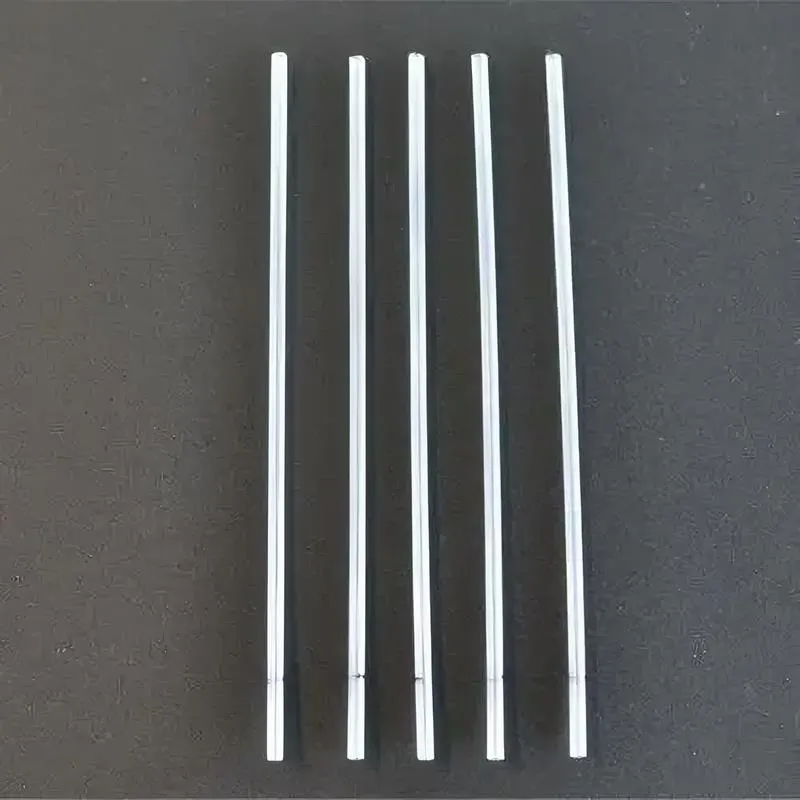
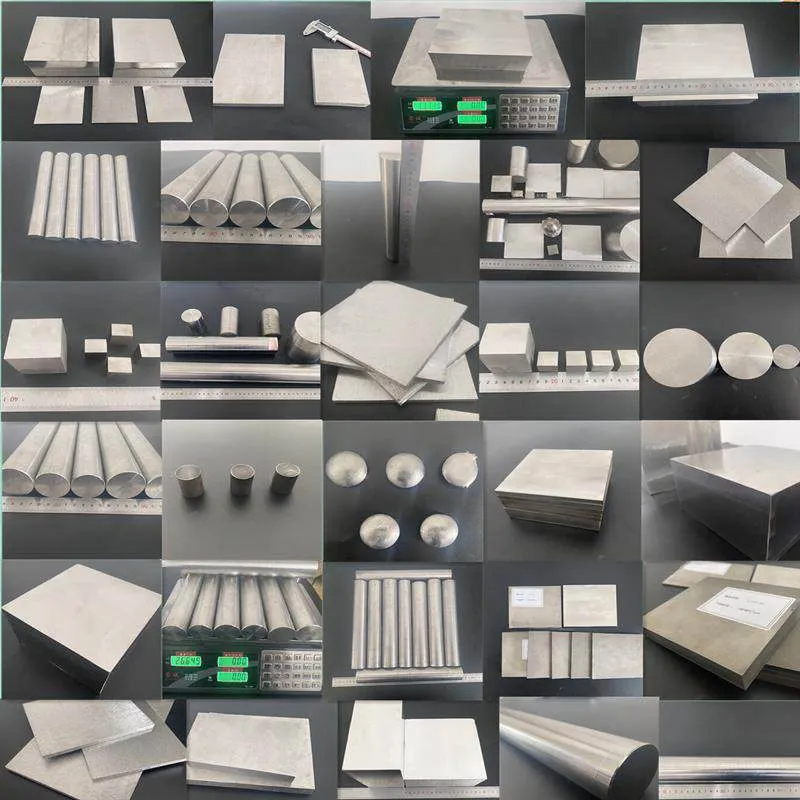
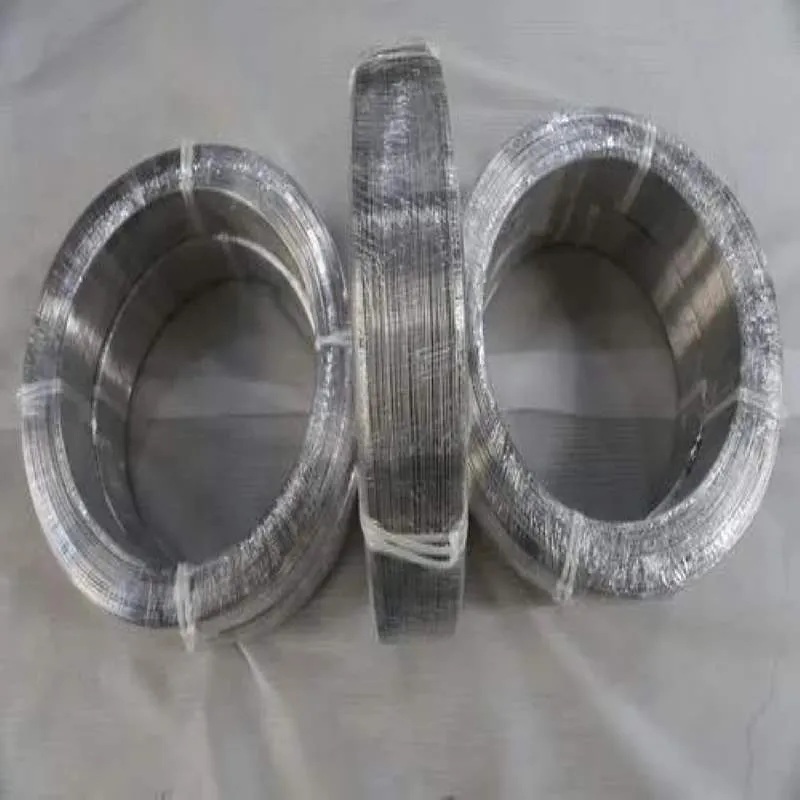
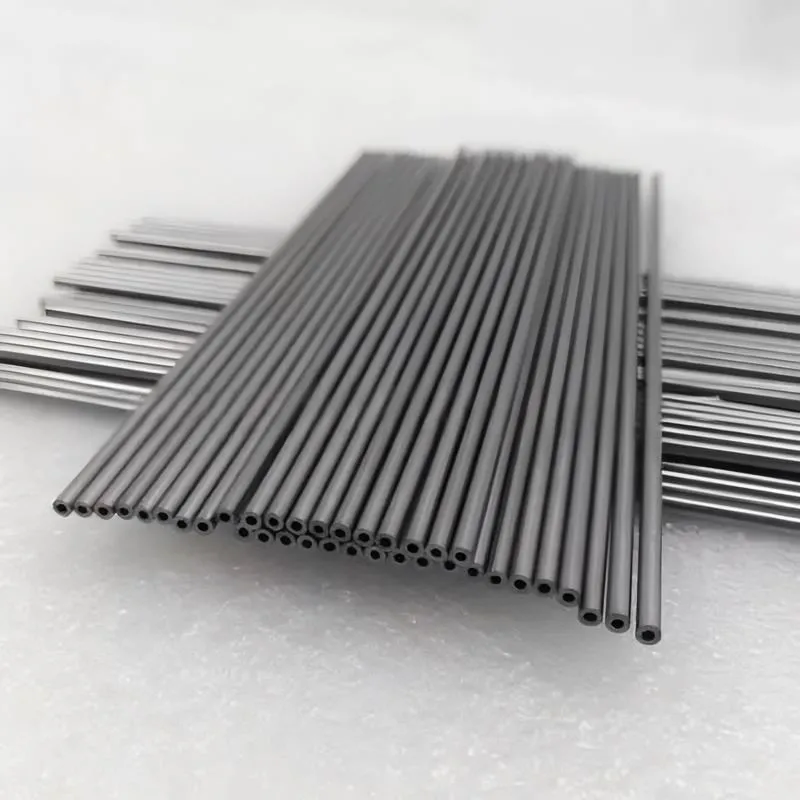
AISI 4427 Steel Capillary
Product Code : STI-CSTI-901-CU
We provide AISI 4427 Steel Capillary, heat treated in 25 mm rounds, reheated to 765°C (1410°F), 150°C (300°F) temper is available in Bar (Round bar, Flat bar), Ribbon, Wire, Rods, Tube,Seamless Tube,Pipe, Ingots, Plate, Sheet, Strip and Forging Stock.,Purity, chemical composition, size, etc. can all be customized to meet specific requirements.
Please contact us if you need customized services. We will contact you with the price and availability in 24 hours.
AISI 4427 Steel Capillary, heat treated in 25 mm rounds, reheated to 765°C (1410°F), 150°C (300°F) temper Product Information
-:-
For detailed product information, please contact sales.
-:
AISI 4427 Steel Capillary, heat treated in 25 mm rounds, reheated to 765°C (1410°F), 150°C (300°F) temper Synonyms
-:-
For detailed product information, please contact sales.
-:
AISI 4427 Steel, heat treated in 25 mm rounds, reheated to 765°C (1410°F), 150°C (300°F) temper Product Information
-:-
For detailed product information, please contact sales.
-:
# **Technical Specification: AISI 4427 Steel, Heat Treated in 25 mm Rounds, Reheated to 765°C (1410°F), 150°C (300°F) Temper**
---
## **1. PRODUCT OVERVIEW**
AISI 4427 steel in **25 mm (1.0 inch) diameter round bars**, processed through a specialized **subcritical austenitization at 765°C (1410°F) followed by oil quenching and low-temperature tempering at 150°C (300°F)**, represents a sophisticated heat treatment protocol for this medium-high carbon, chromium-molybdenum alloy steel. This treatment involves heating to a temperature just above the Ac₁ point (intercritical range), where only partial austenitization occurs, followed by quenching to produce a **unique composite microstructure of high-carbon martensite islands in a matrix of tempered martensite and undissolved carbides**. This condition delivers exceptional wear resistance, high hardness, and good dimensional stability, making it ideal for demanding tooling and wear component applications.
---
## **2. MATERIAL SPECIFICATIONS & STANDARDS**
| **Parameter** | **Specification** | **Governing Standards** |
|---------------|-------------------|-------------------------|
| **Material Designation** | AISI 4427 / SAE 4427 | SAE J404, SAE J412 |
| **UNS Number** | G44270 | ASTM A29 |
| **International Equivalents** | DIN 1.7225, JIS SCM440 | ISO 683-11:2016 |
| **Product Form** | Round Bar | ASTM A29/A29M |
| **Diameter** | 25.0 mm ± 0.3 mm (1.0 in. ± 0.012 in.) | ASTM A29 tolerances |
| **Condition** | Intercritically Annealed, Quenched & Tempered | Proprietary process |
| **Reheat Temperature** | 765°C ± 5°C (1410°F ± 9°F) | — |
| **Tempering Temperature** | 150°C ± 5°C (302°F ± 9°F) | — |
| **Quenching Medium** | Fast oil (ISO VG 68 or equivalent) | — |
| **Cooling Method** | Agitated oil quench | — |
| **Typical Hardness Range** | 54–58 HRC | ASTM E18 |
---
## **3. CHEMICAL COMPOSITION**
| **Element** | **Min (%)** | **Max (%)** | **Typical (%)** | **Metallurgical Role in Intercritical Treatment** |
|-------------|-------------|-------------|-----------------|--------------------------------------------------|
| **Carbon (C)** | 0.24 | 0.29 | 0.26 | Forms high-carbon austenite islands at 765°C; primary source of hardness |
| **Manganese (Mn)** | 0.60 | 0.80 | 0.70 | Increases hardenability of austenite regions |
| **Phosphorus (P)** | — | 0.035 | 0.015 | Residual |
| **Sulfur (S)** | — | 0.040 | 0.025 | Residual (machinability aid in pre-hardened state) |
| **Silicon (Si)** | 0.15 | 0.35 | 0.25 | Solid solution strengthener, raises Ac₁ temperature |
| **Chromium (Cr)** | 0.35 | 0.55 | 0.45 | Forms stable carbides, enhances hardenability and wear |
| **Molybdenum (Mo)** | 0.20 | 0.30 | 0.25 | Promotes fine carbide distribution, reduces temper embrittlement |
| **Iron (Fe)** | Balance | Balance | Balance | Matrix |
**Critical Temperature Parameters (Estimated for 0.26% C):**
- **Ac₁:** ~735–745°C (1355–1375°F)
- **Ac₃:** ~815–830°C (1500–1525°F)
- **Reheat Temperature (765°C):** 20–30°C above Ac₁ (intercritical range)
- **Ms of Austenite at 765°C:** ~180–200°C (356–392°F) – estimated based on carbon enrichment
- **Carbon Content in Austenite at 765°C:** ~0.6–0.7% (enriched due to partial transformation)
---
## **4. HEAT TREATMENT PROCESS**
### **4.1 Intercritical Thermal Cycle**
```
Preheat → Intercritical Soak at 765°C → Rapid Oil Quench → Temper at 150°C
```
**Detailed Process Parameters:**
- **Preheating:** 600–650°C (1110–1200°F) – essential to minimize distortion and thermal shock.
- **Intercritical Soak:** 765°C ± 5°C for 60–75 minutes – time optimized for 25 mm round to achieve thermal and chemical equilibrium.
- **Atmosphere:** Protective (Endothermic gas, N₂-based, or vacuum) to prevent decarburization and oxidation.
- **Quenching:** Fast oil at 60–70°C with strong agitation. **Critical** to suppress pearlite/bainite formation in enriched austenite.
- **Quench Delay:** < 15 seconds.
- **Tempering:** 150°C for 2–2.5 hours – stress relief with minimal hardness loss.
- **Cooling After Temper:** Still air.
- **Straightening:** Cold straightening possible with care after tempering.
### **4.2 Resultant Microstructure (Dual-Phase)**
| **Phase/Feature** | **Description** | **Estimated Volume %** | **Hardness (HV)** |
|-------------------|-----------------|------------------------|-------------------|
| **High-Carbon Martensite** | Transformed from carbon-enriched austenite islands. Very hard, brittle. | 30–40% | 750–850 HV |
| **Low-Carbon Martensite** | Matrix formed from austenite with nominal carbon content. Tougher. | 40–50% | 550–650 HV |
| **Undissolved Carbides** | Primarily (Cr,Fe)₇C₃ and (Fe,Mo)₃C. Provide wear resistance. | 10–20% | > 1000 HV |
| **Retained Austenite** | Stabilized in high-carbon regions. | < 3% | — |
**Microstructural Characteristics:**
- **Grain Size:** Very fine prior austenite grains (ASTM 11–12) due to low transformation temperature.
- **Carbide Distribution:** Fine, spherical to slightly angular carbides uniformly dispersed.
- **Phase Distribution:** Bimodal hardness distribution provides unique property combination.
---
## **5. MECHANICAL PROPERTIES**
### **5.1 Standard Mechanical Properties (Core of 25 mm Round)**
| **Property** | **Value Range** | **Test Standard** | **Notes** |
|--------------|-----------------|-------------------|-----------|
| **Hardness** | 54–58 HRC | ASTM E18 | Uniform within ±1.5 HRC |
| **Ultimate Tensile Strength** | 1800–1950 MPa (261–283 ksi) | ASTM E8/E8M | Longitudinal |
| **Yield Strength (0.2% offset)** | 1650–1800 MPa (239–261 ksi) | ASTM E8/E8M | |
| **Elongation** | 4–7% | ASTM E8/E8M | In 4D (100 mm) gauge |
| **Reduction of Area** | 20–30% | ASTM E8/E8M | |
| **Modulus of Elasticity** | 205–210 GPa | ASTM E111 | Slightly increased due to high carbide content |
| **Compressive Yield Strength** | 1900–2100 MPa | Estimated | |
### **5.2 Toughness & Fracture Properties**
| **Property** | **Test Condition** | **Value Range** | **Notes** |
|--------------|-------------------|-----------------|-----------|
| **Charpy V-Notch Impact** | 20°C (68°F) | 8–15 J (6–11 ft·lb) | ASTM E23 – Low due to high hardness/carbides |
| **Fracture Toughness (KIC)** | Estimated | 35–50 MPa√m | Brittle behavior expected |
| **Ductile-Brittle Transition Temp** | 50% FATT | > +50°C | Material is brittle at room temperature |
### **5.3 Specialized Performance Properties**
| **Property** | **Value/Performance** | **Test/Condition** |
|--------------|----------------------|-------------------|
| **Abrasive Wear Resistance** | **Excellent** | Superior to through-hardened 4427 at same bulk hardness. |
| **Adhesive/Galling Resistance** | Very Good | Due to hard carbide phases. |
| **Contact Fatigue Strength** | Good | Suitable for rolling/sliding contact. |
| **Bending Fatigue Limit** | 500–600 MPa | R = -1, polished, 10⁷ cycles. |
| **Dimensional Stability** | Excellent | Low processing temperature minimizes distortion. |
### **5.4 Property Uniformity in 25 mm Round**
| **Position** | **Hardness (HRC)** | **Microstructure** |
|--------------|-------------------|-------------------|
| **Surface (0–1 mm)** | 55–58 | Fine dual-phase structure |
| **Mid-Radius (~6 mm)** | 54–57 | Fine dual-phase structure |
| **Center (12.5 mm)** | 54–57 | Fine dual-phase structure |
| **Variation** | ≤ 1.5 HRC | Excellent for this hardness level |
---
## **6. PHYSICAL PROPERTIES**
| **Property** | **Value** | **Unit** | **Notes** |
|--------------|-----------|----------|-----------|
| **Density** | ~7.83 | g/cm³ | Slight reduction due to carbide formation |
| **Thermal Conductivity (20°C)** | 39.0 | W/m·K | Reduced by alloying and dual-phase structure |
| **Specific Heat (20°C)** | 450 | J/kg·K | |
| **Mean CTE (20–100°C)** | 11.0 × 10⁻⁶ | /K | |
| **Electrical Resistivity** | 0.30 | μΩ·m | Increased due to microstructure |
| **Magnetic Response** | Ferromagnetic | — | Minimal retained austenite |
---
## **7. APPLICATIONS**
### **7.1 Target Industries & Components**
| **Industry** | **Typical Components** | **Rationale for This Treatment** |
|--------------|------------------------|----------------------------------|
| **Tool & Die** | Blanking punches, fine blanking dies, forming punches, shear blades. | Extreme wear resistance, high edge strength, minimal distortion. |
| **Mining & Mineral Processing** | Crusher wear parts, slurry pump impellers, wear plates. | Outstanding abrasion resistance in severe environments. |
| **Oil & Gas (Downhole)** | Wear bushings, stabilizer blades, drilling tool components. | Resists abrasive drilling muds and provides galling resistance. |
| **Industrial Machinery** | Guide rails, wear strips, feed rolls, anvil blocks. | High hardness with stability for sliding/rolling wear. |
| **Automotive (Tooling)** | Trimming dies, piercing punches, wear-intensive forming tools. | Combines hardness and toughness needed for high-volume stamping. |
### **7.2 Advantages of the 25 mm Round Form**
- **Optimal Hardenability:** This diameter ensures full martensitic transformation of the austenite phases upon quenching from 765°C.
- **Versatile Stock Size:** Can be machined down to various smaller diameters or used as-is for pins, bushings, etc.
- **Minimal Residual Stress:** Symmetrical cross-section and controlled process reduce quenching stresses.
- **Predictable Performance:** Consistent cooling rate in oil quench leads to uniform properties.
---
## **8. PROCESSING & MACHINING**
### **8.1 Machinability in Final Hardened State**
**Machinability Rating: Very Poor to Nonexistent.**
- **Primary Machining:** **Must be completed in the annealed or normalized condition prior to this heat treatment.**
- **Final Shaping Methods:**
- **Grinding:** The primary method. Use Aluminum Oxide (A46-K8-V) or CBN wheels. Employ ample coolant to avoid burns.
- **Electrical Discharge Machining (EDM):** Excellent. Suitable for complex geometries.
- **Abrasive Waterjet Cutting:** Possible, but may cause edge hardening.
- **Traditional Cutting/Drilling/Milling:** **Not possible.**
### **8.2 Weldability**
- **Rating: Extremely Poor.** **Welding is NOT recommended.**
- **If Repair is Absolutely Necessary:**
1. Preheat to 400–450°C.
2. Use a specialized high-alloy filler (e.g., AWS A5.13 ER420).
3. Follow with immediate PWHT (Post Weld Heat Treatment) at 650–700°C and re-harden.
4. Expect significant property degradation in the HAZ.
---
## **9. QUALITY ASSURANCE**
### **9.1 Mandatory Testing**
| **Test** | **Frequency** | **Method / Standard** | **Acceptance Criteria** |
|----------|---------------|-----------------------|-------------------------|
| **Chemical Analysis** | Per heat | OES / ASTM E415 | Within AISI 4427 ranges |
| **Hardness Survey** | Per batch/lot | HRC / ASTM E18 | 54–58 HRC, uniform |
| **Microstructural Examination** | Per furnace load | Metallography / ASTM E3 | Dual-phase martensite + carbides, no defects |
| **Surface Inspection** | 100% | Visual, MPI optional | Free of cracks, quench cracks, major scale |
| **Dimensional Check** | Sample | Micrometer | 25.0 mm ± 0.3 mm |
### **9.2 Certifications & Documentation**
- **Material Test Certificate:** EN 10204 3.1
- **Heat Treatment Certificate:** Documenting exact times, temperatures, and atmosphere.
- **Traceability:** Heat number traceable to original melt.
---
## **10. COMPARATIVE ANALYSIS**
### **10.1 Intercritical (765°C) vs. Full Hardening (~840°C)**
| **Aspect** | **Intercritical @ 765°C** | **Full Austenitize @ 840°C** | **Advantage** |
|------------|---------------------------|------------------------------|--------------|
| **Hardness** | 54–58 HRC | 56–60 HRC | Similar peak hardness |
| **Toughness** | Slightly Higher | Lower | Intercritical offers better toughness at same hardness |
| **Wear Resistance** | Superior | Very Good | Carbides in intercritical structure enhance wear |
| **Distortion** | Minimal | Moderate | Lower temperature = less distortion |
| **Process Control** | More Critical | Standard | Intercritical requires precise temperature control |
### **10.2 AISI 4427 vs. Lower Carbon Grades (e.g., 4422) for This Process**
| **Aspect** | **AISI 4427 (0.26% C)** | **AISI 4422 (0.22% C)** | **Rationale** |
|------------|-------------------------|-------------------------|--------------|
| **Austenite Carbon at 765°C** | Higher (~0.7%) | Lower (~0.6%) | 4427 achieves higher hardness in martensite islands |
| **Overall Hardness** | Higher | Slightly Lower | More carbon available for hardening |
| **Carbide Volume** | Higher | Lower | 4427 provides better wear resistance |
| **Application** | More severe wear | Moderate wear | Select 4427 for extreme abrasion |
---
## **11. DESIGN & ENGINEERING GUIDELINES**
### **11.1 Design for This Material Condition**
- **Avoid Stress Concentrations:** Use generous fillets (R ≥ 2 mm). No sharp corners.
- **Brittle Material:** Design for **compressive** or **shear** loading. **Avoid tensile and impact loading**.
- **Surface Finish:** Specify grinding finish (e.g., Ra 0.4–0.8 μm) for fatigue-critical applications.
- **Allow for Grinding Stock:** Include 0.2–0.3 mm per side for final dimensioning after heat treat.
### **11.2 Service Limits**
- **Maximum Continuous Service Temperature:** **200°C (390°F).** Above this, significant tempering and softening occur.
- **Impact Loads:** **Not suitable.** Use only in **static** or **slowly varying load** applications.
- **Corrosive Environments:** This is **not** a stainless steel. Requires protection (coatings, plating) if corrosion is a factor.
---
## **12. TECHNICAL ADVANTAGES SUMMARY**
1. **Exceptional Wear Resistance:** The composite structure of hard martensite and carbides provides superior performance in abrasive and adhesive wear.
2. **High Hardness with Stability:** Achieves 54–58 HRC with excellent dimensional stability due to low processing temperature.
3. **Minimal Distortion:** Ideal for precision tooling components that must maintain tight tolerances post-heat-treatment.
4. **Energy Efficient:** Lower austenitizing temperature reduces furnace energy consumption.
---
## **13. LIMITATIONS & HANDLING**
- **Extreme Brittleness:** Handle with care to avoid chipping or cracking.
- **No Machinability:** All machining must be done prior to heat treatment.
- **Thermal Sensitivity:** Do not expose to temperatures >250°C in service.
- **Hydrogen Embrittlement:** If electroplated (e.g., chrome), **post-plate baking at 190–220°C for 18–24 hours is MANDATORY.**
---
## **14. PACKAGING & IDENTIFICATION**
- **Individual Protection:** Bars are often coated with anti-rust oil and wrapped.
- **Bundling:** Securely strapped to prevent movement and damage.
- **Identification:** Tags on bundles with Heat No., Diameter, Condition, and Hardness.
- **Certificates:** Provided separately in a protective package.
---
**REVISION:** 1.0 | **EFFECTIVE DATE:** October 2024 | **STATUS:** Released for Production
---
*This specification defines AISI 4427 steel in 25 mm round bars processed through an intercritical heat treatment at 765°C, followed by oil quenching and tempering at 150°C. This advanced thermal process creates a unique, high-performance microstructure engineered for applications where extreme wear resistance and high hardness are the primary design requirements, and where component geometry permits final finishing by grinding or EDM.*
-:-
For detailed product information, please contact sales.
-:
AISI 4427 Steel, heat treated in 25 mm rounds, reheated to 765°C (1410°F), 150°C (300°F) temper Specification
Dimensions
Size:
Diameter 20-1000 mm Length <5633 mm
Size:We can customized as required
Standard:
Per your request or drawing
We can customized as required
Properties(Theoretical)
Chemical Composition
-:-
For detailed product information, please contact sales.
-:
AISI 4427 Steel, heat treated in 25 mm rounds, reheated to 765°C (1410°F), 150°C (300°F) temper Properties
-:-
For detailed product information, please contact sales.
-:
Applications of AISI 4427 Steel Capillary, heat treated in 25 mm rounds, reheated to 765°C (1410°F), 150°C (300°F) temper
-:-
For detailed product information, please contact sales.
-:
Chemical Identifiers AISI 4427 Steel Capillary, heat treated in 25 mm rounds, reheated to 765°C (1410°F), 150°C (300°F) temper
-:-
For detailed product information, please contact sales.
-:
Packing of AISI 4427 Steel Capillary, heat treated in 25 mm rounds, reheated to 765°C (1410°F), 150°C (300°F) temper
-:-
For detailed product information, please contact sales.
-:
Standard Packing:
-:-
For detailed product information, please contact sales.
-:
Typical bulk packaging includes palletized plastic 5 gallon/25 kg. pails, fiber and Steel Capillary drums to 1 ton super sacks in full container (FCL) or truck load (T/L) quantities. Research and sample quantities and hygroscopic, oxidizing or other air sensitive materials may be packaged under argon or vacuum. Solutions are packaged in polypropylene, plastic or glass jars up to palletized 2104 gallon liquid totes Special package is available on request. E FORUs’ is carefully handled to minimize damage during storage and transportation and to preserve the quality of our products in their original condition