AISI 4620 Steel, mock carburized
Product Code : STI-CSTI-908-CU
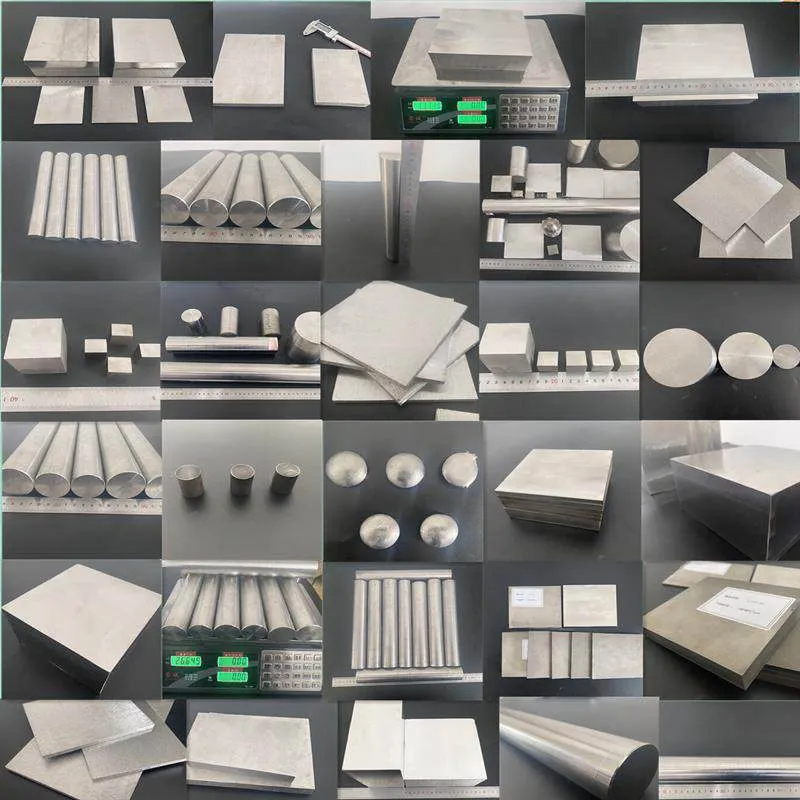
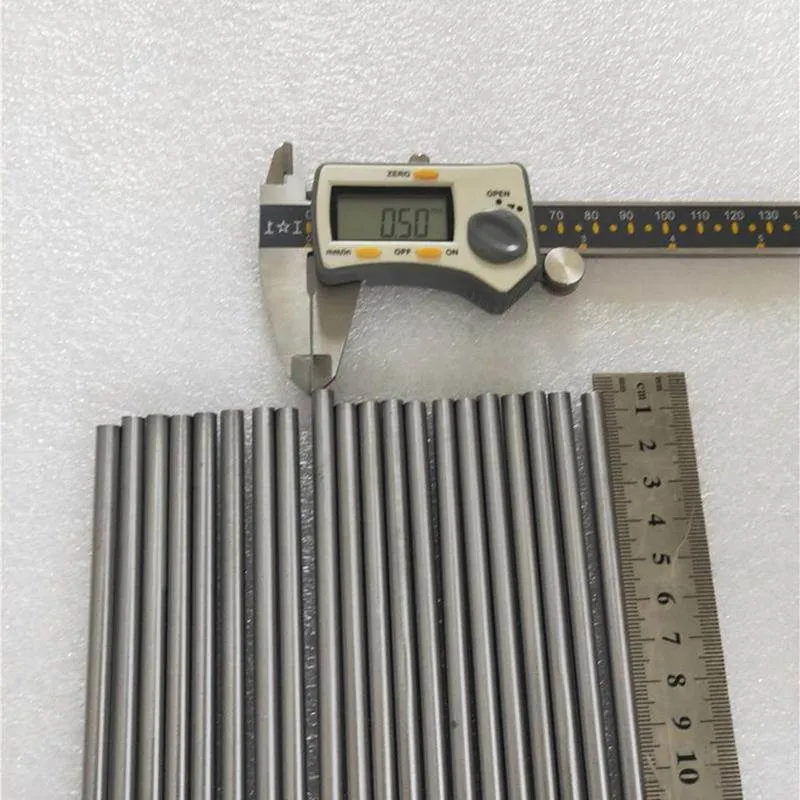
We provide AISI 4620 Steel, mock carburized, 230°C (450°F) temper, 100 mm (4 in.) round is available in Bar (Round bar, Flat bar), Ribbon, Wire, Rods, Tube,Seamless Tube,Pipe, Ingots, Plate, Sheet, Strip and Forging Stock.,Purity, chemical composition, size, etc. can all be customized to meet specific requirements.
Please contact us if you need customized services. We will contact you with the price and availability in 24 hours.
AISI 4620 Steel, mock carburized, 230°C (450°F) temper, 100 mm (4 in.) round Product Information
-:-
For detailed product information, please contact sales.
-:
AISI 4620 Steel, mock carburized, 230°C (450°F) temper, 100 mm (4 in.) round Synonyms
-:-
For detailed product information, please contact sales.
-:
AISI 4620 Steel, mock carburized, 230°C (450°F) temper, 100 mm (4 in.) round Product Information
-:-
For detailed product information, please contact sales.
-:
# **Technical Specification: AISI 4620 Steel, Mock Carburized, 230°C (450°F) Temper, 100 mm (4 in.) Round**
## **1. PRODUCT OVERVIEW**
AISI 4620 steel processed as a **100 mm (4 inch) diameter round bar** through **mock carburizing followed by tempering at 230°C (450°F)** represents a sophisticated through-hardening thermal treatment of this nickel-molybdenum alloy steel. The "mock carburizing" cycle simulates the extended time-temperature profile of a carburizing process without carbon enrichment, followed by oil quenching and intermediate-temperature tempering. This produces a **uniform, fine-grained tempered martensitic microstructure** throughout the substantial cross-section, resulting in exceptional core strength, good toughness retention, and excellent dimensional stability. This condition is engineered for large, high-integrity components that require consistent through-section properties without the case-core interface of traditional carburized parts.
## **2. MATERIAL SPECIFICATIONS & STANDARDS**
| **Parameter** | **Specification** | **Governing Standards** |
|---------------|-------------------|-------------------------|
| **Material Designation** | AISI 4620 / SAE 4620 | SAE J404, SAE J412 |
| **UNS Number** | G46200 | ASTM A29 |
| **International Equivalents** | DIN 1.6523, 20NiCrMo2-2 | ISO 683-11:2016 |
| **Product Form** | Round Bar (Forged or Hot-rolled) | ASTM A29/A29M |
| **Diameter** | 100.0 mm ± 1.5 mm (4.0 in. ± 0.06 in.) | Forging/bar tolerance |
| **Condition** | Mock Carburized, Quenched & Tempered | Proprietary Process |
| **Mock Carburizing Temp** | ~925°C (1697°F) simulation | — |
| **Tempering Temperature** | 230°C ± 10°C (450°F ± 20°F) | — |
| **Quenching Medium** | Intensive oil or polymer quenchant | — |
| **Typical Core Hardness** | 38-42 HRC | ASTM E18 |
| **Straightness** | ≤ 2.0 mm per 300 mm (0.08 in./ft) | Machining stock allowance |
## **3. CHEMICAL COMPOSITION**
| **Element** | **Minimum (%)** | **Maximum (%)** | **Typical (%)** | **Function in Mock Carburized State** |
|-------------|-----------------|-----------------|-----------------|--------------------------------------|
| **Carbon (C)** | 0.17 | 0.22 | 0.19 | Provides core hardenability and matrix strength; remains uniform (no carburizing gradient). |
| **Manganese (Mn)** | 0.45 | 0.65 | 0.55 | Enhances hardenability for full transformation in 100 mm section. |
| **Phosphorus (P)** | — | 0.035 | 0.015 | Residual. |
| **Sulfur (S)** | — | 0.040 | 0.025 | Residual. |
| **Silicon (Si)** | 0.15 | 0.35 | 0.25 | Solid solution strengthening, deoxidizer. |
| **Nickel (Ni)** | 1.65 | 2.00 | 1.80 | **Critical:** Provides exceptional core toughness and impact resistance at the achieved hardness. |
| **Molybdenum (Mo)** | 0.20 | 0.30 | 0.25 | **Essential:** Enables deep hardenability for 100 mm round; refines grain during extended high-temperature cycle. |
| **Iron (Fe)** | Balance | Balance | Balance | Matrix. |
**Hardenability Consideration for 100 mm Round:**
* **Ideal Critical Diameter (DI):** ~75-90 mm for 50% martensite. Achieving full through-hardening to 100 mm requires optimal quench design (intensive agitation, proper quenchant).
* **Carbon Content:** Uniform at ~0.19% throughout.
* **Microstructural Goal:** 100% tempered martensite at mid-radius, with potential for slight bainite at the absolute center.
## **4. HEAT TREATMENT PROCESS**
### **4.1 Mock Carburizing Thermal Cycle**
This process subjects the steel to the thermal history of carburizing without changing surface chemistry.
```
Preheat → Austenitize (~925°C, extended time) → Simulated Diffusion → Intensive Quench → Temper (230°C)
```
**Key Process Parameters:**
* **Thermal Cycle:** Heat to 920-930°C; hold for extended period (e.g., 8-12 hours) to simulate carburizing soak; slow cool or isothermal hold to simulate diffusion; re-austenitize at 850-870°C; quench.
* **Atmosphere:** Protective (endothermic gas or nitrogen) to prevent decarburization.
* **Quenching:** **Critical for 100 mm section.** Fast oil with severe agitation or high-speed polymer quenchant. Quench fixture may be required.
* **Tempering:** 220-240°C for 4-6 hours (long time due to mass).
* **Straightening:** Often requires hot straightening post-temper or during process.
### **4.2 Resultant Microstructure (100 mm Section)**
| **Radial Position** | **Microstructure** | **Hardness (HRC)** | **Prior Austenite Grain Size (ASTM)** |
|---------------------|-------------------|-------------------|--------------------------------------|
| **Surface (0-5 mm)** | Fine Tempered Martensite | 39-42 | 8-9 |
| **Mid-Radius (~25 mm)** | Tempered Martensite | 38-41 | 8-9 |
| **3/4 Radius (~38 mm)** | Tempered Martensite + possible traces of lower bainite | 37-40 | 8-9 |
| **Center (50 mm)** | Tempered Martensite/Bainite mixture | 36-39 | 8-9 |
**Key Feature:** The extended high-temperature cycle produces a very fine, stable prior austenite grain size, beneficial for toughness.
## **5. MECHANICAL PROPERTIES**
### **5.1 Core Properties (Typical at Mid-Radius)**
| **Property** | **Value Range** | **Test Standard** | **Notes** |
|--------------|-----------------|-------------------|-----------|
| **Hardness** | 38-42 HRC | ASTM E18 | Gradient from surface to center ~3 HRC max. |
| **Ultimate Tensile Strength** | 1200-1350 MPa (174-196 ksi) | ASTM E8/E8M | Longitudinal. |
| **Yield Strength (0.2% offset)** | 1000-1150 MPa (145-167 ksi) | ASTM E8/E8M | |
| **Elongation** | 12-16% | ASTM E8/E8M | In 4D. |
| **Reduction of Area** | 45-55% | ASTM E8/E8M | |
| **Modulus of Elasticity** | 205 GPa (29,700 ksi) | ASTM E111 | |
| **Charpy V-Notch Impact (20°C)** | 35-55 J (26-41 ft·lb) | ASTM E23 | **Excellent** for this hardness level, courtesy of Ni. |
| **Fracture Toughness (KIC)** | ~70-90 MPa√m | Estimated | Good resistance to crack propagation. |
### **5.2 Property Gradient Analysis (100 mm Diameter)**
| **Property** | **Surface** | **Mid-Radius** | **Center** | **Total Variation** |
|--------------|-------------|----------------|------------|---------------------|
| **Hardness (HRC)** | 40-42 | 38-41 | 36-39 | ≤ 4 HRC |
| **Yield Strength (MPa)** | 1050-1180 | 1000-1150 | 950-1100 | ~100 MPa |
| **Impact Energy (J)** | 40-58 | 35-55 | 30-50 | ~20 J |
## **6. PHYSICAL PROPERTIES**
| **Property** | **Value** | **Unit** | **Notes** |
|--------------|-----------|----------|-----------|
| Density | 7.85 | g/cm³ | |
| Thermal Conductivity (20°C) | 42.0 | W/m·K | Slightly reduced from annealed state. |
| Specific Heat (20°C) | 460 | J/kg·K | |
| Mean CTE (20-100°C) | 12.0 × 10⁻⁶ | /K | |
| Electrical Resistivity (20°C) | 0.24 | μΩ·m | Increased due to martensitic structure. |
## **7. APPLICATIONS**
This specific condition is designed for **large, high-stress components where a through-hardened structure is preferable to a case-hardened one**, eliminating the risk of case crushing or spalling under extreme loads.
### **7.1 Target Industries & Components**
| **Industry** | **Typical Components** | **Why This Condition is Ideal** |
|--------------|------------------------|---------------------------------|
| **Energy (Oil & Gas, Wind)** | Large shafting, spindle stocks, heavy-duty connector hubs, gear blanks for later nitriding. | Uniform strength throughout large diameter; good toughness for shock loads; stable for subsequent machining/grinding. |
| **Heavy Machinery & Mining** | Axle shafts for large vehicles, roller shafts, idler wheels, crusher main shafts, dragline pins. | High core strength to resist bending; excellent fatigue resistance; can be welded/repaired (with procedure). |
| **Power Transmission** | Large through-hardened gears, pinion shafts, coupling hubs. | Provides high tooth strength (bending) without case-depth limitations; good pitting resistance at this hardness. |
| **Defense & Marine** | Armament components, large naval shafting, turret rings. | Reliable performance in large sections; good combination of strength and toughness. |
### **7.2 Design Advantages**
1. **Eliminates Case-Core Interface Issues:** No risk of case crushing or sub-case fatigue.
2. **Predictable Performance in Large Sections:** Properties are well-defined through the bulk.
3. **Excellent Toughness:** The 230°C temper and nickel content provide superior impact resistance compared to higher temper grades.
4. **Good Machinability (for hardened steel):** Can be machined with carbide or ceramic tools for final sizing.
## **8. PROCESSING & FABRICATION**
### **8.1 Machinability (in Final Hardened State)**
* **Rating:** Fair (40-50% of annealed machinability).
* **Recommended Operations:** Turning, boring, grinding. Milling and drilling are difficult.
* **Tooling:** Premium coated carbide (TiAlN/AlCrN) or ceramic inserts. High rigidity setup is mandatory.
* **Parameters:** Lower speeds, moderate feeds, adequate coolant.
### **8.2 Weldability**
* **Rating:** Poor (requires stringent procedure).
* **Preheat:** **Mandatory.** 250-300°C minimum.
* **Filler Metal:** Low-hydrogen, high-nickel electrode (e.g., AWS ENiCrMo-6 type) to match toughness.
* **Post-Weld Heat Treatment (PWHT):** **Essential.** Temper at or above original tempering temperature (230°C+).
* **Recommendation:** Avoid welding if possible; perform any needed repairs before final heat treatment.
### **8.3 Grinding & Finishing**
* **Primary finishing method.** Necessary to achieve final dimensions and surface finish.
* **Risk of Grinding Burns:** High due to hardness and low thermal conductivity. Use soft wheels, ample coolant, and light passes.
## **9. INTERNATIONAL STANDARDS & EQUIVALENTS**
| **Standard** | **Designation / Approach** | **Notes** |
|--------------|----------------------------|-----------|
| **SAE (USA)** | 4620 | Base material. |
| **ASTM (USA)** | A29 (Grade 4620) | Condition is special and must be specified. |
| **DIN (Germany)** | 1.6523 / 20NiCrMo2-2 + specific heat treatment specification. | The thermal process defines the condition. |
| **ISO** | ISO 683-11:2016 | Material standard; heat treatment is supplementary. |
## **10. QUALITY ASSURANCE**
For this premium condition, rigorous testing is standard:
1. **Chemical Certification.**
2. **Hardness Traverse:** Multiple readings from surface to center (Brinell or HRC).
3. **Ultrasonic Testing (UT):** 100% for internal discontinuities per ASTM A388.
4. **Magnetic Particle Inspection (MPI):** For surface defects.
5. **Mechanical Test Coupons:** Taken from a sacrificial extension or test ring from same heat treat load.
6. **Microstructure Report:** Verifying tempered martensite and grain size.
## **11. SUMMARY**
**AISI 4620, mock carburized and tempered at 230°C in 100 mm rounds, is a high-performance material solution for large-diameter, high-integrity components.** It delivers a unique combination of high core strength (38-42 HRC), exceptional toughness (due to nickel), and excellent through-section uniformity. This makes it superior to traditional through-hardened medium-carbon steels for applications requiring both strength and damage tolerance in massive sections. It is a specialized, cost-effective alternative to more highly alloyed steels like 4340 for many large component applications, offering easier machining in the pre-hardened state and good overall performance.
---
**Disclaimer:** Achieving specified through-hardness in a 100 mm round is process-sensitive and depends on exact chemistry (preferring the upper end of Mn, Ni, Mo ranges), quench system design, and part geometry. Prototype testing is strongly recommended for first-time applications.
-:-
For detailed product information, please contact sales.
-:
AISI 4620 Steel, mock carburized, 230°C (450°F) temper, 100 mm (4 in.) round Specification
Dimensions
Size:
Diameter 20-1000 mm Length <5640 mm
Size:We can customized as required
Standard:
Per your request or drawing
We can customized as required
Properties(Theoretical)
Chemical Composition
-:-
For detailed product information, please contact sales.
-:
AISI 4620 Steel, mock carburized, 230°C (450°F) temper, 100 mm (4 in.) round Properties
-:-
For detailed product information, please contact sales.
-:
Applications of AISI 4620 Steel, mock carburized, 230°C (450°F) temper, 100 mm (4 in.) round
-:-
For detailed product information, please contact sales.
-:
Chemical Identifiers AISI 4620 Steel, mock carburized, 230°C (450°F) temper, 100 mm (4 in.) round
-:-
For detailed product information, please contact sales.
-:
Packing of AISI 4620 Steel, mock carburized, 230°C (450°F) temper, 100 mm (4 in.) round
-:-
For detailed product information, please contact sales.
-:
Standard Packing:
-:-
For detailed product information, please contact sales.
-:
Typical bulk packaging includes palletized plastic 5 gallon/25 kg. pails, fiber and steel drums to 1 ton super sacks in full container (FCL) or truck load (T/L) quantities. Research and sample quantities and hygroscopic, oxidizing or other air sensitive materials may be packaged under argon or vacuum. Solutions are packaged in polypropylene, plastic or glass jars up to palletized 2111 gallon liquid totes Special package is available on request. E FORUs’ is carefully handled to minimize damage during storage and transportation and to preserve the quality of our products in their original condition