AISI 4626 Steel Rod/Bar
Product Code : STI-CSTI-904-CU
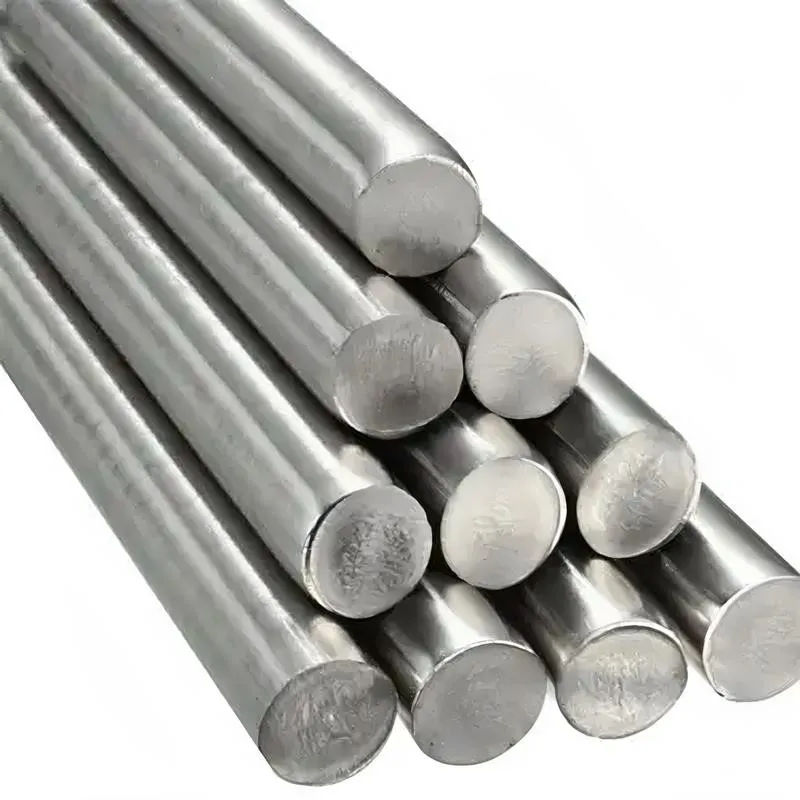
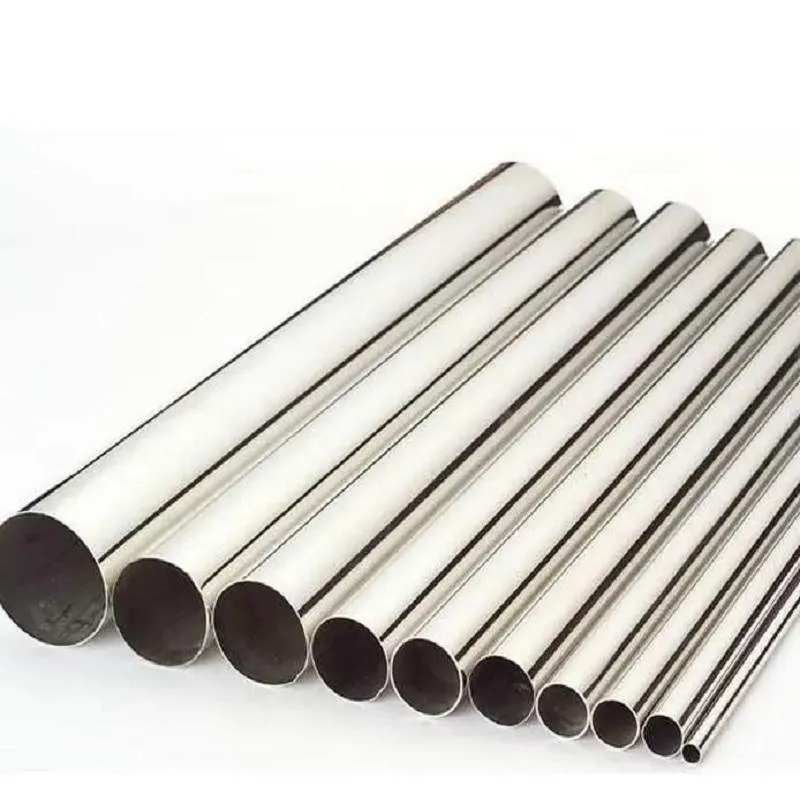
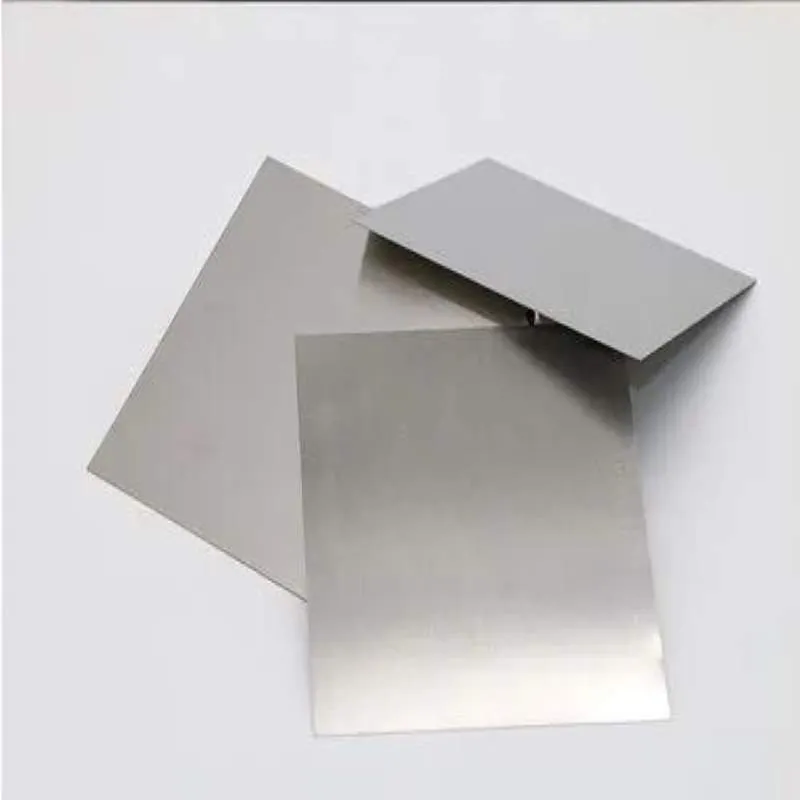
We provide AISI 4626 Steel Rod/Bar is available in Bar (Round bar, Flat bar), Ribbon, Wire, Rod/Bars, Tube,Seamless Tube,Pipe, Ingots, Plate, Sheet, Strip and Forging Stock.,Purity, chemical composition, size, etc. can all be customized to meet specific requirements.
Please contact us if you need customized services. We will contact you with the price and availability in 24 hours.
AISI 4626 Steel Rod Product Information
-:-
For detailed product information, please contact sales.
-:
AISI 4626 Steel Rod Synonyms
-:-
For detailed product information, please contact sales.
-:
AISI 4626 Steel Product Information
-:-
For detailed product information, please contact sales.
-:
# **Technical Specification: AISI 4626 Nickel-Molybdenum Alloy Steel**
## **1. PRODUCT OVERVIEW**
AISI 4626 is a medium-carbon, nickel-molybdenum alloy steel engineered for **high-strength through-hardening applications**. Distinguished by its balanced composition of approximately 0.55% nickel and 0.25% molybdenum, this grade offers an exceptional combination of **deep hardenability, high tensile strength, and superior toughness** after quenching and tempering. Unlike case-hardening grades, AISI 4626 is designed to develop uniform mechanical properties throughout its cross-section, making it a premium choice for heavy-duty components subjected to high stress, impact loading, and fatigue in demanding service environments such as heavy machinery, power transmission, and large automotive parts.
## **2. MATERIAL SPECIFICATIONS & STANDARDS**
| **Parameter** | **Specification** | **Governing Standards** |
|---------------|-------------------|-------------------------|
| **Material Designation** | AISI 4626 / SAE 4626 | SAE J404, SAE J412 |
| **UNS Number** | G46260 | ASTM A29 |
| **International Equivalents** | DIN 1.6526, 26NiCrMo6-7 | ISO 683-1:2018 |
| **Common Forms** | Round & Flat Bars, Forging Stock, Billets | ASTM A29/A29M, ASTM A322 |
| **Typical Heat Treatment** | Quench & Temper (Through-Hardening) | AMS 2759, ASTM A255 |
| **Hardenability** | Very Good (Deep Hardening) | SAE J1268 (for 4626H) |
## **3. CHEMICAL COMPOSITION**
| **Element** | **Minimum (%)** | **Maximum (%)** | **Typical (%)** | **Metallurgical Function** |
|-------------|-----------------|-----------------|-----------------|---------------------------|
| **Carbon (C)** | 0.24 | 0.29 | 0.26 | Primary strengthener; provides core hardness & strength via martensite formation. |
| **Manganese (Mn)** | 0.45 | 0.65 | 0.55 | Enhances hardenability, improves forgeability. |
| **Phosphorus (P)** | — | 0.035 | 0.015 | Residual element (controlled impurity). |
| **Sulfur (S)** | — | 0.040 | 0.025 | Residual element; can improve machinability. |
| **Silicon (Si)** | 0.15 | 0.35 | 0.25 | Deoxidizer; provides solid solution strengthening. |
| **Nickel (Ni)** | 0.45 | 0.65 | 0.55 | **Enhances toughness & ductility**; improves low-temperature impact resistance and hardenability. |
| **Molybdenum (Mo)** | 0.20 | 0.30 | 0.25 | **Key hardenability agent**; promotes fine grain structure, increases strength at high temperatures, reduces temper embrittlement. |
| **Iron (Fe)** | Balance | Balance | Balance | Matrix element. |
**Key Characteristics:**
* **Carbon Equivalent (CE, IIW):** ~0.55-0.60 (Fair weldability with strict procedures).
* **Alloy Balance:** The Ni-Mo combination provides excellent hardenability and a superior strength-toughness balance compared to plain carbon or Cr-Mo steels at similar carbon levels.
* **Hardenability:** Very good due to Mo; suitable for larger section sizes (up to ~100mm/4in diameter for full through-hardening).
## **4. HEAT TREATMENT & TYPICAL PROPERTIES**
### **4.1 Standard Processing: Quench & Temper**
AISI 4626 is primarily used in a **through-hardened and tempered** condition.
**Typical Heat Treatment Cycle:**
1. **Austenitize:** 830-860°C (1525-1580°F) – full austenitization for complete carbide dissolution.
2. **Quench:** Vigorous oil quench (or water quench for very large sections with caution).
3. **Temper:** 200-600°C (400-1100°F) – temperature selected based on desired hardness/toughness balance. Common range: 425-550°C (800-1025°F) for high-strength applications.
4. **Cool:** Air cool after tempering.
### **4.2 Mechanical Properties vs. Tempering Temperature**
*Properties are for a 25mm (1in) diameter round, oil quenched from 850°C, air cooled after temper.*
| **Tempering Temp (°C/°F)** | **Hardness (HRC)** | **Tensile Strength (MPa/ksi)** | **Yield Strength (MPa/ksi)** | **Elongation (%)** | **Impact Energy (J @ 20°C)** |
|----------------------------|--------------------|--------------------------------|------------------------------|--------------------|-----------------------------|
| **As-Quenched** | 52-56 | — | — | — | Low |
| **200 / 400** | 48-52 | 1550-1700 / 225-247 | 1300-1450 / 189-210 | 9-12 | 15-25 |
| **425 / 800** | 38-42 | 1150-1250 / 167-181 | 1000-1100 / 145-160 | 14-18 | 40-60 |
| **540 / 1000** | 32-36 | 950-1050 / 138-152 | 800-900 / 116-131 | 18-22 | 60-80 |
| **600 / 1110** | 28-32 | 850-950 / 123-138 | 700-800 / 102-116 | 20-25 | 70-90 |
### **4.3 Physical Properties (Annealed Condition)**
| **Property** | **Value** | **Unit** |
|--------------|-----------|----------|
| Density | 7.85 | g/cm³ |
| Modulus of Elasticity | 205 | GPa |
| Shear Modulus | 80 | GPa |
| Poisson's Ratio | 0.29 | — |
| Thermal Conductivity (100°C) | ~42 | W/m·K |
| Coefficient of Thermal Expansion (20-100°C) | ~12 x 10⁻⁶ | /K |
## **5. APPLICATIONS**
AISI 4626 is selected for **high-strength structural and power transmission components** where reliability under heavy loads, resistance to shock, and good fatigue life are paramount. Its through-hardening capability ensures consistent properties in large sections.
### **5.1 Primary Industries & Components**
| **Industry** | **Specific Components** | **Reason for Selection** |
|--------------|-------------------------|--------------------------|
| **Heavy Equipment & Mining** | Large-diameter shafts, axle beams, track links, crane hooks, excavator pivot pins. | Deep hardenability for large sections; high strength and good toughness to withstand shock loads. |
| **Power Transmission** | Gears (through-hardened), pinions, heavy-duty sprockets, drive shafts, coupling hubs. | Can be hardened to a uniform 40-45 HRC for excellent wear and pitting resistance with a tough core. |
| **Automotive (Heavy-Duty)** | Truck axle shafts, torsion bars, king pins, crankshafts (forgings), suspension components. | Superior fatigue strength and impact resistance compared to lower-alloy steels like 1045 or 4140. |
| **Oil & Gas** | Drill collar connectors, large valve stems, pump shafts, sucker rods (high-strength). | Performance under cyclic loading and in demanding downhole environments. |
| **General Engineering** | High-strength bolts (Grade 10.9 and above), hydraulic cylinder rods, press frames, die holders. | Reliable, uniform properties; good machinability in the annealed/tempered condition. |
### **5.2 Advantages over Other Through-Hardening Steels**
* **vs. 1045/1541:** Vastly superior hardenability, toughness, and strength at larger sections.
* **vs. 4140:** Better hardenability for larger diameters; improved toughness at equivalent hardness levels due to nickel content.
* **vs. 4340:** More cost-effective for many applications, with slightly lower hardenability and ultra-high strength capability, but often sufficient.
* **vs. Case-Hardening Grades (e.g., 8620):** Provides uniform high strength throughout, eliminating the risk of case-core separation under extreme loads.
## **6. PROCESSING CHARACTERISTICS**
### **6.1 Machinability**
* **Annealed Condition (~180 HB):** Fair to Good (~60% of 1212 steel). The nickel content can cause gumminess; use positive rake angles, sharp carbide tools, and adequate coolant.
* **Hardened & Tempered Condition (~300 HB):** Fair. Requires coated carbide or ceramic tools, reduced speeds/feeds.
### **6.2 Weldability**
* **Rating:** Fair (requires strict procedure).
* **Preheat:** **Mandatory.** 200-300°C (400-570°F) depending on section thickness.
* **Post-Weld Heat Treatment (PWHT):** **Highly Recommended.** Tempering at 590-650°C (1100-1200°F) immediately after welding to relieve HAZ stresses and restore toughness.
* **Filler Metal:** Use low-hydrogen electrodes (e.g., AWS E11018M) with matching or slightly undermatching strength.
### **6.3 Forgeability**
* **Rating:** Very Good.
* **Forging Temperature Range:** 1150-900°C (2100-1650°F). Do not forge below 900°C to avoid cracking.
## **7. INTERNATIONAL STANDARDS & EQUIVALENTS**
| **Standard** | **Designation** | **Notes** |
|--------------|-----------------|-----------|
| **SAE (USA)** | 4626 | Standard grade. "H" version (4626H) available for controlled hardenability. |
| **ASTM (USA)** | A322 (Grade 4626) | Standard specification for steel bars, alloy. |
| **UNS (USA)** | G46260 | Unified numbering system. |
| **DIN (Germany)** | 1.6526 / 26NiCrMo6-7 | **Direct equivalent.** Chemical composition closely matches. |
| **ISO** | ISO 683-1:2018 | Designation for through-hardening steels. |
| **JIS (Japan)** | SNCM240 | Very close equivalent (slightly different Ni/Cr ranges). |
| **GB (China)** | 25NiCrMo | General equivalent designation. |
**Note on Hardenability Version:** For applications requiring guaranteed and consistent depth of hardening, **AISI 4626H** should be specified per **SAE J1268**. This ensures the steel's chemistry is controlled within narrower "H-band" limits, and a Jominy hardenability test report is provided.
## **8. QUALITY ASSURANCE**
Standard mill testing for bar products includes:
* **Chemical Analysis:** Ladle and product analysis.
* **Hardness Testing.**
* **Tensile Testing:** On representative samples.
* **Macroetch/Microcleanliness:** Per ASTM E45.
* **Hardenability (Jominy Test):** Standard for 4626H; can be specified for regular 4626.
For critical finished components, additional testing may include:
* **Ultrasonic Testing (UT):** For internal defects.
* **Magnetic Particle Inspection (MPI):** For surface defects.
* **Charpy V-Notch Impact Testing:** At specified temperatures.
## **9. SUMMARY & SELECTION GUIDELINES**
**Choose AISI 4626 when:**
1. The component requires **high, uniform strength throughout its section** (through-hardening).
2. The **section size is moderate to large** (e.g., >50mm / 2in diameter) where good hardenability is critical.
3. **High toughness and good impact resistance** are required alongside high strength.
4. The application involves **heavy loads, shock, or high-cycle fatigue** (e.g., axles, gears, shafts).
5. It offers a better performance-to-cost ratio than premium grades like 4340 for the specific application.
**Consider alternatives when:**
* The section is small and strength requirements are moderate (a cheaper grade like **1045** or **4140** may suffice).
* Maximum possible hardenability and strength in very large sections is required (upgrade to **4340** or **300M**).
* The primary requirement is extreme surface wear resistance with a tough core (choose a **case-hardening grade** like 4320 or 8620).
---
**Disclaimer:** The information provided is typical and for reference. Final mechanical properties are highly dependent on the exact section size, heat treatment parameters (furnace, quenchant, tempering time/temperature), and prior processing history. Engineering calculations and prototyping with production heat treatment are essential for critical applications.
-:-
For detailed product information, please contact sales.
-:
AISI 4626 Steel Specification
Dimensions
Size:
Diameter 20-1000 mm Length <5636 mm
Size:We can customized as required
Standard:
Per your request or drawing
We can customized as required
Properties(Theoretical)
Chemical Composition
-:-
For detailed product information, please contact sales.
-:
AISI 4626 Steel Properties
-:-
For detailed product information, please contact sales.
-:
Applications of AISI 4626 Steel Rod
-:-
For detailed product information, please contact sales.
-:
Chemical Identifiers AISI 4626 Steel Rod
-:-
For detailed product information, please contact sales.
-:
Packing of AISI 4626 Steel Rod
-:-
For detailed product information, please contact sales.
-:
Standard Packing:
-:-
For detailed product information, please contact sales.
-:
Typical bulk packaging includes palletized plastic 5 gallon/25 kg. pails, fiber and Steel Rod drums to 1 ton super sacks in full container (FCL) or truck load (T/L) quantities. Research and sample quantities and hygroscopic, oxidizing or other air sensitive materials may be packaged under argon or vacuum. Solutions are packaged in polypropylene, plastic or glass jars up to palletized 2107 gallon liquid totes Special package is available on request. E FORUs’ is carefully handled to minimize damage during storage and transportation and to preserve the quality of our products in their original condition