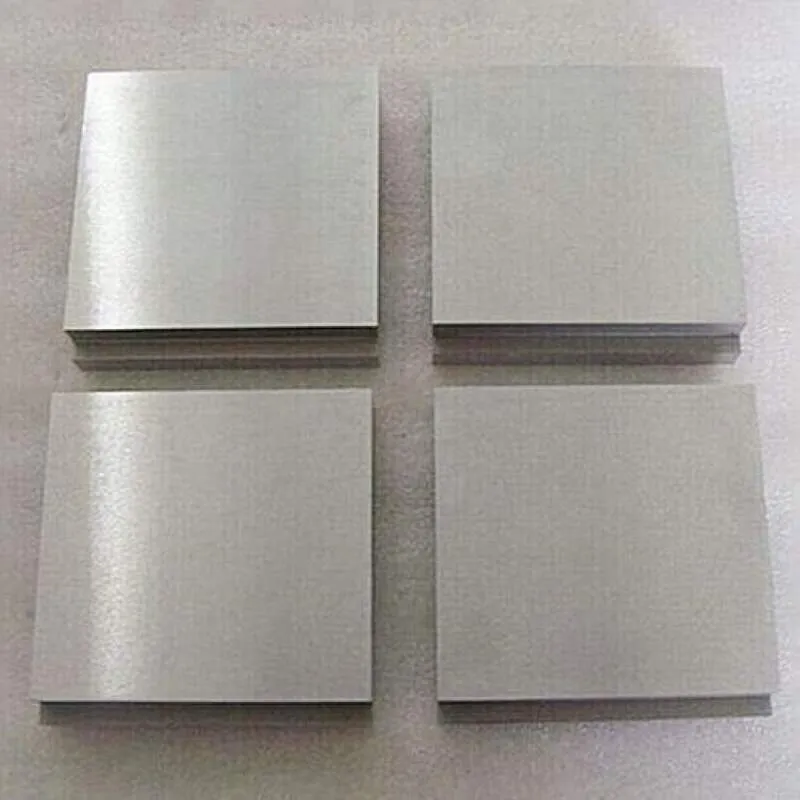
AISI 4626H Steel Sheet,Plate
Product Code : STI-CSTI-905-CU
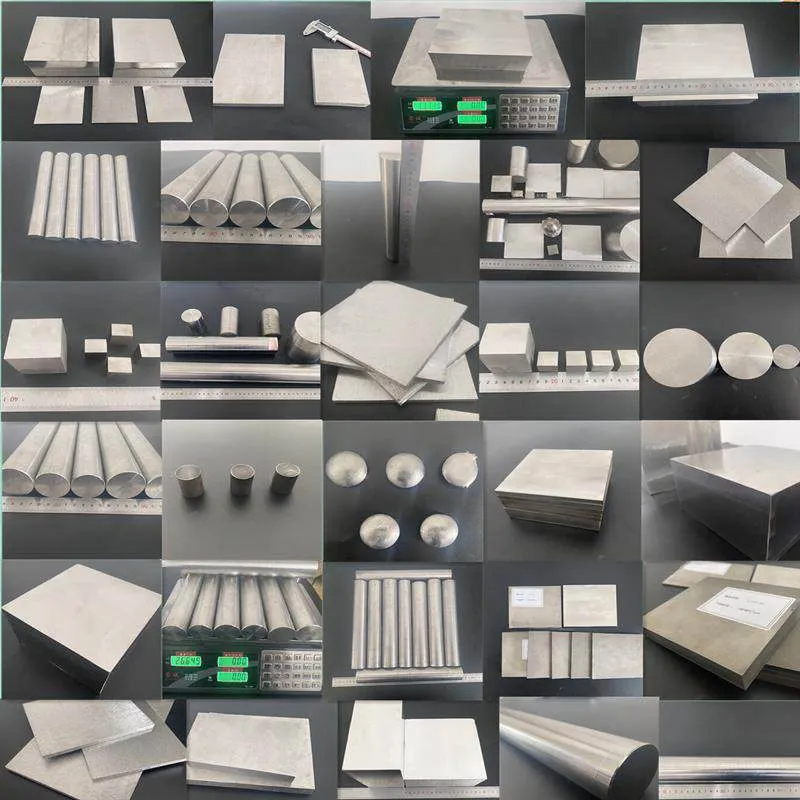
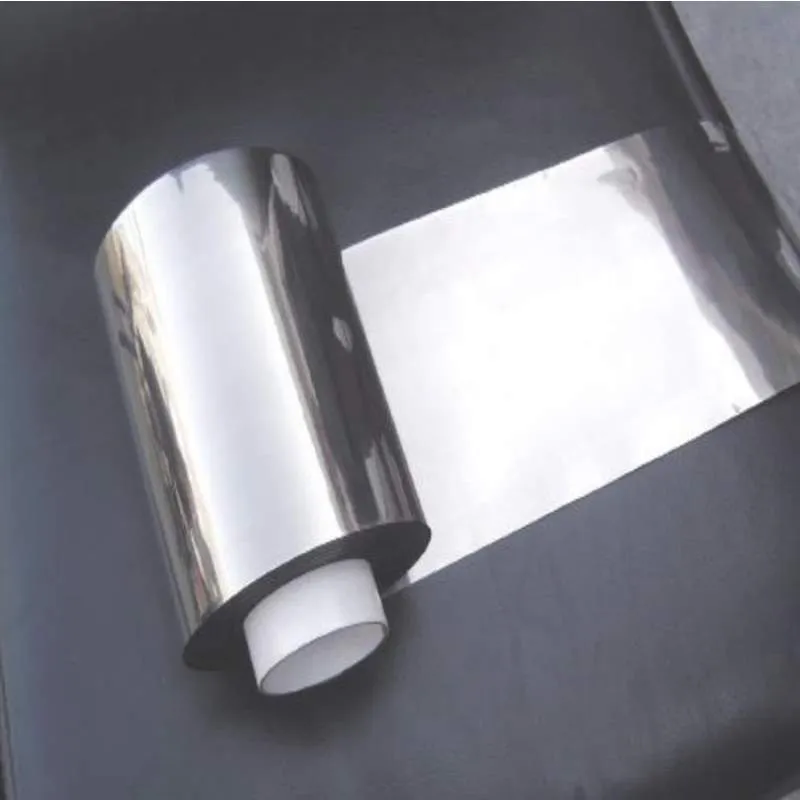
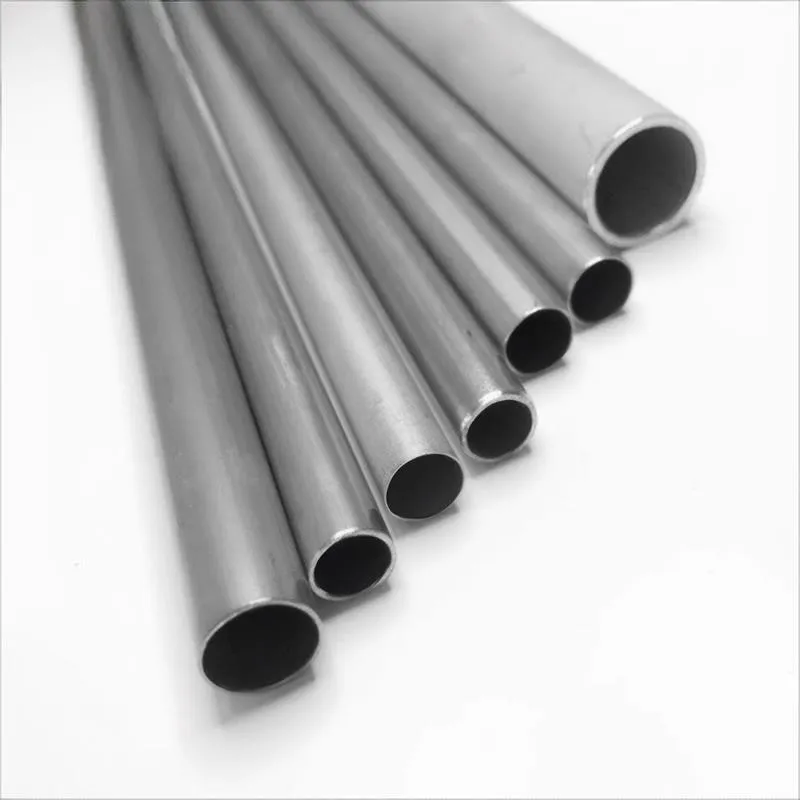
We provide AISI 4626H Steel Sheet/Plate is available in Bar (Round bar, Flat bar), Ribbon, Wire, Rods, Tube,Seamless Tube,Pipe, Ingots, Plate, Sheet/Plate, Strip and Forging Stock.,Purity, chemical composition, size, etc. can all be customized to meet specific requirements.
Please contact us if you need customized services. We will contact you with the price and availability in 24 hours.
AISI 4626H Steel Sheet/Plate Product Information
-:-
For detailed product information, please contact sales.
-:
AISI 4626H Steel Sheet/Plate Synonyms
-:-
For detailed product information, please contact sales.
-:
AISI 4626H Steel Product Information
-:-
For detailed product information, please contact sales.
-:
# **Technical Specification: AISI 4626H Nickel-Molybdenum H-Steel**
## **1. PRODUCT OVERVIEW**
AISI 4626H is a **hardenability-controlled**, medium-carbon nickel-molybdenum alloy steel specifically engineered for **high-strength, through-hardening applications requiring predictable and consistent performance**. The "H" designation indicates that the chemical composition is controlled within narrow ranges defined by SAE J1268 standards, guaranteeing a specific hardenability band as verified by Jominy end-quench testing. This ensures uniform depth of hardening and mechanical properties in heat-treated components, making 4626H a premium-grade material for critical, high-stress parts where batch-to-batch consistency, reliability in large sections, and precise engineering calculations are paramount.
## **2. MATERIAL SPECIFICATIONS & STANDARDS**
| **Parameter** | **Specification** | **Governing Standards** |
|---------------|-------------------|-------------------------|
| **Material Designation** | AISI 4626H / SAE 4626H | SAE J1268 |
| **UNS Number** | H46260 | ASTM A304 |
| **International Reference** | Through-hardening steel with guaranteed hardenability | ISO 683-1:2018 |
| **Common Forms** | Round & Flat Bars, Forging Stock | ASTM A304, ASTM A29 |
| **Primary Heat Treatment** | Quench & Temper (Through-Hardening) | AMS 2759, ASTM A255 |
| **Key Feature** | Guaranteed Hardenability Band | SAE J1268 (Jominy Curve Certification) |
| **Quality Level** | Premium (Controlled Consistency) | For critical engineering applications |
## **3. CHEMICAL COMPOSITION (SAE J1268 H-STEEL LIMITS)**
The chemistry of 4626H is tightly controlled to ensure the certified hardenability band. Ranges are narrower than for standard 4626.
| **Element** | **Minimum (%)** | **Maximum (%)** | **Typical Aim (%)** | **Metallurgical Role in H-Steel** |
|-------------|-----------------|-----------------|---------------------|----------------------------------|
| **Carbon (C)** | 0.24 | 0.29 | 0.26 | Primary strengthener; controlled for consistent response to tempering. |
| **Manganese (Mn)** | 0.45 | 0.65 | 0.55 | Key hardenability element; tightly controlled to manage the Jominy curve slope. |
| **Phosphorus (P)** | — | 0.035 | 0.015 | Residual (minimized). |
| **Sulfur (S)** | — | 0.040 | 0.025 | Residual; slightly elevated for machinability but controlled for consistency. |
| **Silicon (Si)** | 0.15 | 0.35 | 0.25 | Deoxidizer; solid solution strengthener. |
| **Nickel (Ni)** | 0.45 | 0.65 | 0.55 | Enhances toughness and low-temperature impact; contributes to hardenability. Its range is controlled to fine-tune core properties. |
| **Molybdenum (Mo)** | 0.20 | 0.30 | 0.25 | **Primary hardenability controller for H-grade.** Its precise control is critical for achieving the guaranteed depth of hardening, especially in larger sections. |
| **Iron (Fe)** | Balance | Balance | Balance | Matrix. |
**H-Steel Critical Parameters:**
* **Hardenability Band:** Certified per SAE J1268 for 4626H. Each heat comes with a Jominy test report.
* **Ideal Critical Diameter (DI):** Approximately 90-110 mm (3.5-4.3 in) for 50% martensite, depending on the specific aim chemistry within the H-band.
* **Consistency:** The primary value proposition – minimal variation in as-quenched hardness profile between heats and batches.
## **4. HARDENABILITY: THE DEFINING FEATURE**
### **4.1 Certified Jominy End-Quench Data**
The guaranteed hardenability is the core feature of 4626H. Below is a **typical range** for the SAE 4626H band. **The actual certified curve for a specific heat will be provided.**
| **Distance from Quenched End** | **Hardness Range (HRC)** | **SAE J1268 Band Reference** |
|--------------------------------|--------------------------|------------------------------|
| **1.5 mm (1/16 in) – J1** | 45-54 | Within Specified H-Band |
| **3.0 mm (1/8 in) – J2** | 44-53 | Within Specified H-Band |
| **6.0 mm (1/4 in) – J4** | 42-51 | Within Specified H-Band |
| **9.5 mm (3/8 in) – J6** | 39-48 | Within Specified H-Band |
| **12.7 mm (1/2 in) – J8** | 37-46 | Within Specified H-Band |
| **19.0 mm (3/4 in) – J12** | 33-42 | Within Specified H-Band |
| **25.4 mm (1 in) – J16** | 30-39 | Within Specified H-Band |
| **31.8 mm (1-1/4 in) – J20** | 27-36 | Within Specified H-Band |
### **4.2 Interpretation for Design**
* This curve predicts the **as-quenched** hardness at the center of a round bar of a given diameter under ideal quenching conditions.
* Example: To achieve a minimum of 40 HRC at the center after quenching, the maximum bar diameter would be limited by the J12-J16 distance data.
* This allows engineers to **accurately predict core hardness and select proper tempering cycles** for final properties, reducing prototyping needs.
## **5. HEAT TREATMENT & TYPICAL FINAL PROPERTIES**
### **5.1 Standard Processing**
**Typical Through-Hardening Cycle for 4626H:**
1. **Austenitize:** 830-860°C (1525-1580°F). Soak time: 30 min/inch of thickness.
2. **Quench:** Vigorous oil quench (Fast oil, 50-70°C, agitation). For very large sections, a more severe quenchant (polymer or water) may be used based on the Jominy data.
3. **Temper:** 425-600°C (800-1110°F) – Selected based on final hardness/strength requirements.
4. **Cool:** Air cool after tempering.
### **5.2 Achievable Mechanical Properties (Tempered Condition)**
*Properties for a fully hardened 50mm (2in) diameter round, oil quenched & tempered.*
| **Tempering Temperature** | **Typical Hardness (HRC)** | **Tensile Strength (MPa)** | **Yield Strength (MPa)** | **Elongation (%)** | **Impact Energy (J, 20°C)** |
|---------------------------|----------------------------|----------------------------|--------------------------|--------------------|-----------------------------|
| **425°C (800°F)** | 38-42 | 1150-1250 | 1000-1100 | 14-18 | 40-60 |
| **540°C (1000°F)** | 32-36 | 950-1050 | 800-900 | 18-22 | 60-80 |
| **600°C (1110°F)** | 28-32 | 850-950 | 700-800 | 20-25 | 70-90 |
**Note:** The consistency of 4626H ensures these property ranges are tighter and more predictable than standard 4626.
### **5.3 Physical Properties**
| **Property** | **Value** | **Unit** |
|--------------|-----------|----------|
| Density | 7.85 | g/cm³ |
| Modulus of Elasticity | 205 | GPa |
| Thermal Conductivity (100°C) | ~42 | W/m·K |
| CTE (20-100°C) | ~12 x 10⁻⁶ | /K |
## **6. APPLICATIONS**
AISI 4626H is specified for **critical, high-performance components** where predictable heat treatment response and uniform properties in medium to large sections are non-negotiable. It is often used in regulated or safety-critical industries.
### **6.1 Target Industries & Components**
| **Industry** | **Specific Components** | **Why 4626H is Specified** |
|--------------|-------------------------|----------------------------|
| **Aerospace & Defense** | Landing gear components, helicopter rotor shafts, high-strength bolts, missile components. | Mandatory material consistency and traceability; predictable performance under extreme loads. |
| **Heavy-Duty Automotive** | Commercial truck axle shafts, torsion bars, king pins, crankshafts (forgings). | Ensures consistent fatigue life and impact resistance across high-volume production. |
| **Power Generation & Turbines** | Large gear blanks, turbine shafts, generator rotor forgings, coupling hubs. | Predictable hardening of large cross-sections prevents soft cores and ensures reliability. |
| **Oil & Gas Drilling** | Drill collar subs, heavy-weight drill pipe tool joints, large valve stems. | Consistent performance in critical downhole tools where failure is catastrophic. |
| **Industrial Machinery** | Large press crankshafts, rolling mill rolls (back-up), extruder screws, die blocks. | Reduces heat treat distortion and scrap rates; enables accurate FEA modeling. |
### **6.2 The H-Steel Advantage: Predictability in Design**
* **Reduced Safety Factors:** Engineers can use smaller safety margins because material performance is guaranteed, leading to weight-optimized designs.
* **Eliminated Prototyping Rounds:** The certified Jominy curve often eliminates the need for multiple prototype heat treatment trials.
* **Supply Chain Simplification:** Components can be sourced from multiple qualified heat treaters with confidence in identical results.
* **Quality & Traceability:** Full certification provides auditable proof of material conformance for regulated industries.
## **7. PROCESSING & FABRICATION**
### **7.1 Machinability**
* **Annealed/Normalized Condition (~180 HB):** Fair to Good. Similar to standard 4626. Use sharp, positive-rake carbide tools.
* **Hardened & Tempered Condition (300-400 HB):** Fair. Requires appropriate tooling (coated carbide, ceramic).
* **Benefit of H-Grade:** Consistent chemistry leads to more predictable tool wear and machining parameters across batches.
### **7.2 Weldability**
* **Rating:** Fair (requires strict procedure). Similar to standard 4626.
* **Critical Requirement:** **Preheat (200-300°C) and Post-Weld Heat Treatment (PWHT)** are **mandatory** to avoid hydrogen cracking and to restore toughness in the Heat-Affected Zone (HAZ). PWHT should match the final component tempering temperature.
* **Filler:** Use low-hydrogen electrodes (e.g., AWS E11018M).
## **8. INTERNATIONAL STANDARDS & EQUIVALENTS**
| **Standard** | **Designation** | **Notes** |
|--------------|-----------------|-----------|
| **SAE (USA)** | 4626H | The defining standard with hardenability requirements (SAE J1268). |
| **ASTM (USA)** | ASTM A304 | Standard Specification for Carbon and Alloy Steel Bars Subject to End-Quench Hardenability Requirements. |
| **UNS (USA)** | H46260 | Unified Numbering System for H-steels. |
| **ISO** | ISO 683-1:2018 | Similar philosophy for through-hardening steels; specifies hardenability classes (e.g., HL, HH). A direct "4626H" equivalent may not exist, but a steel meeting the chemical and hardenability specs can be supplied to this standard. |
| **DIN (Germany)** | Material + Hardenability Specification | Typically ordered as, e.g., "26NiCrMo6-7 + specific hardenability requirement (e.g., HRC 30 at J10)." |
| **JIS (Japan)** | SNCM240H (or similar) | Japanese H-grade equivalents exist for Ni-Cr-Mo steels. |
**Crucial Distinction:** While chemical equivalents exist (e.g., DIN 1.6526), the **"H" system with Jominy certification is uniquely comprehensive in SAE/ASTM standards**. When sourcing internationally, the hardenability band requirements must be explicitly stated in the purchase specification.
## **9. QUALITY ASSURANCE & CERTIFICATION**
Purchasing AISI 4626H guarantees a specific level of documentation and testing:
1. **Hardenability Test Report:** A certified Jominy end-quench curve for the specific heat/lot of material. **This is the primary H-steel certificate.**
2. **Chemical Analysis Report:** Showing composition within SAE J1268 4626H limits.
3. **Mill Test Certificate:** Per ASTM A304 or equivalent.
4. **Full Traceability:** Heat number traceable from the final component back to the original steel melt.
## **10. SELECTION GUIDELINES: 4626H vs. STANDARD 4626**
**Specify AISI 4626H when:**
1. The component is **safety-critical or high-value**.
2. Production involves **medium to high volumes** where consistency reduces scrap and warranty costs.
3. The **section size is large enough** that hardenability variations could cause rejected parts (typically >25mm / 1in diameter).
4. The component is part of a **qualified manufacturing process** in aerospace, defense, or automotive where material certification is mandatory.
5. **Multiple heat treat vendors** are used, and identical results are required.
**Standard AISI 4626 may be sufficient when:**
1. The application is less critical, and some property variation is acceptable.
2. Section sizes are small (hardness is easily achieved).
3. Cost sensitivity is extremely high, and the premium for H-grade cannot be justified.
4. The part is a prototype or for low-volume production where each batch can be individually tested.
---
**Final Note:** AISI 4626H represents an investment in predictability and reliability. The additional cost over standard grades is justified by reduced engineering risk, lower rejection rates, and demonstrable quality assurance, making it the rational choice for engineers designing components where failure is not an option.
-:-
For detailed product information, please contact sales.
-:
AISI 4626H Steel Specification
Dimensions
Size:
Diameter 20-1000 mm Length <5637 mm
Size:We can customized as required
Standard:
Per your request or drawing
We can customized as required
Properties(Theoretical)
Chemical Composition
-:-
For detailed product information, please contact sales.
-:
AISI 4626H Steel Properties
-:-
For detailed product information, please contact sales.
-:
Applications of AISI 4626H Steel Sheet,Plate
-:-
For detailed product information, please contact sales.
-:
Chemical Identifiers AISI 4626H Steel Sheet,Plate
-:-
For detailed product information, please contact sales.
-:
Packing of AISI 4626H Steel Sheet/Plate
-:-
For detailed product information, please contact sales.
-:
Standard Packing:
-:-
For detailed product information, please contact sales.
-:
Typical bulk packaging includes palletized plastic 5 gallon/25 kg. pails, fiber and Steel Sheet/Plate drums to 1 ton super sacks in full container (FCL) or truck load (T/L) quantities. Research and sample quantities and hygroscopic, oxidizing or other air sensitive materials may be packaged under argon or vacuum. Solutions are packaged in polypropylene, plastic or glass jars up to palletized 2108 gallon liquid totes Special package is available on request. E FORUs’ is carefully handled to minimize damage during storage and transportation and to preserve the quality of our products in their original condition