AISI 94B15H Steel
Product Code : STI-CSTI-1047-CU
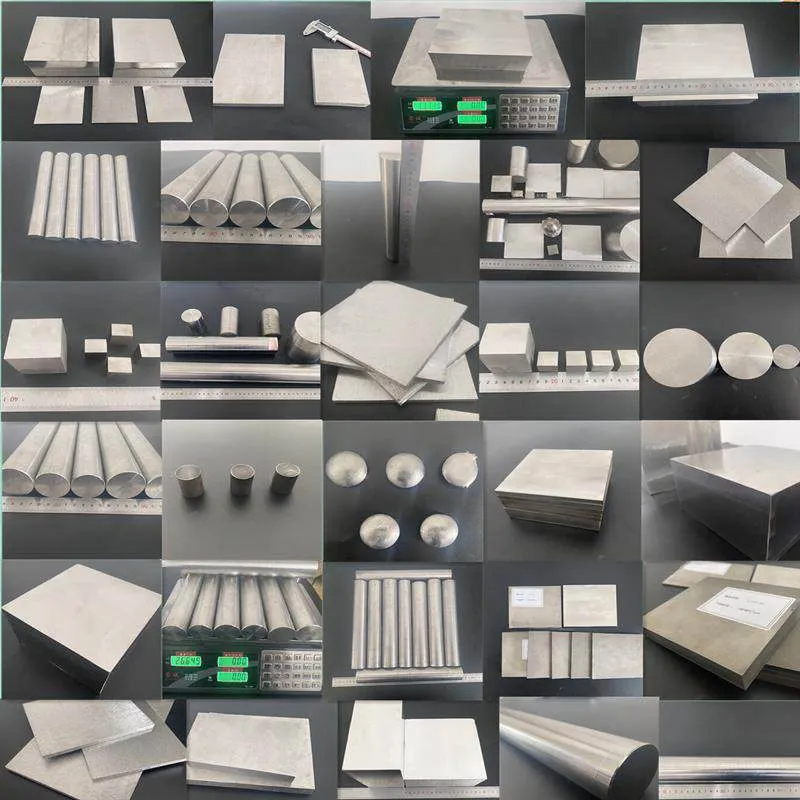
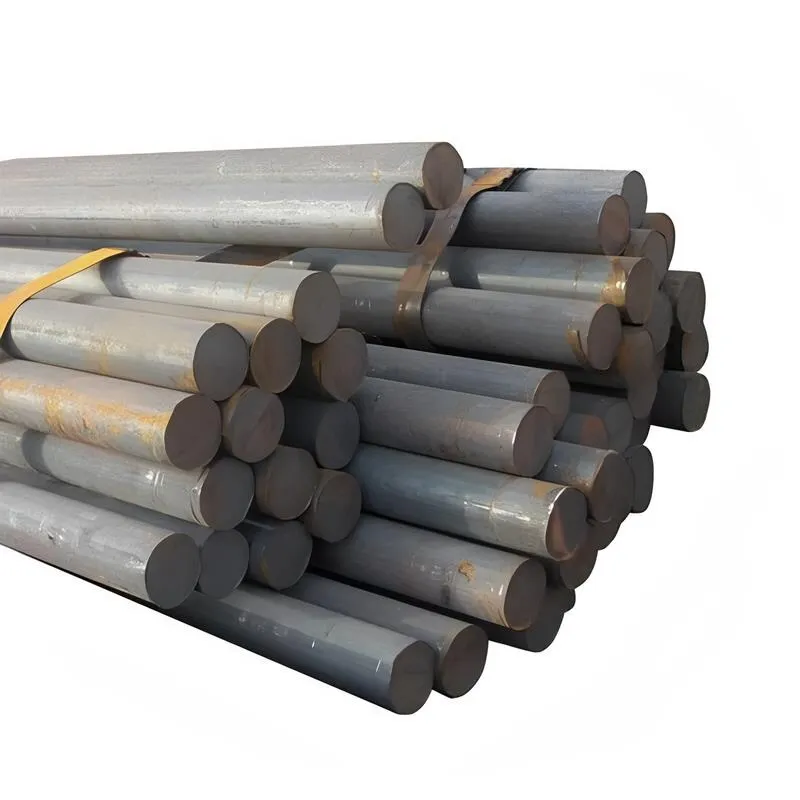
We provide AISI 94B15H Steel is available in Bar (Round bar, Flat bar), Ribbon, Wire, Rods, Tube,Seamless Tube,Pipe, Ingots, Plate, Sheet, Strip and Forging Stock.,Purity, chemical composition, size, etc. can all be customized to meet specific requirements.
Please contact us if you need customized services. We will contact you with the price and availability in 24 hours.
AISI 94B15H Steel Product Information
-:-
For detailed product information, please contact sales.
-:
AISI 94B15H Steel Synonyms
-:-
For detailed product information, please contact sales.
-:
AISI 94B15H Steel Product Information
-:-
For detailed product information, please contact sales.
-:
# **Technical Datasheet: AISI 94B15H Steel**
## **1. PRODUCT OVERVIEW**
**AISI 94B15H** is a **hardenability-controlled, boron-treated low-alloy case-hardening steel** engineered for applications requiring **predictable and consistent through-hardening characteristics** across different production batches and section sizes. The "**H**" designation indicates that the material is produced to meet specific hardenability bands as defined by SAE J1268, ensuring minimal variation in core properties after heat treatment.
This grade combines the **cost-effectiveness of boron-enhanced hardenability** with the **quality assurance of guaranteed hardenability limits**, making it a preferred choice for medium to heavy-duty components where reliable performance and manufacturing consistency are critical. The controlled addition of boron (0.0005-0.003%) significantly boosts hardenability without requiring substantial amounts of expensive alloying elements like nickel or molybdenum.
**Primary Applications:** Gears, shafts, pinions, and other power transmission components requiring case hardening with dependable core properties.
---
## **2. CHEMICAL COMPOSITION**
**Compliance:** SAE J404, SAE J1268 (Hardenability Bands), ASTM A304
| Element | Minimum (%) | Maximum (%) | Typical (%) | Metallurgical Function |
|---------|------------|-------------|-------------|------------------------|
| **Carbon (C)** | 0.13 | 0.18 | 0.15 | Provides core strength; forms high-carbon martensite in case |
| **Manganese (Mn)** | 0.75 | 1.00 | 0.87 | Enhances hardenability and tensile strength |
| **Silicon (Si)** | 0.20 | 0.35 | 0.25 | Deoxidizer; solid solution strengthener |
| **Boron (B)** | 0.0005 | 0.0030 | 0.0015 | **Critical hardenability enhancer** – retards ferrite formation at austenite grain boundaries |
| **Chromium (Cr)** | 0.35 | 0.65 | 0.50 | Increases hardenability; promotes carbide formation in carburized case |
| **Phosphorus (P)** | — | 0.035 | ≤0.025 | Residual element (controlled impurity) |
| **Sulfur (S)** | — | 0.040 | ≤0.025 | Improves machinability; forms manganese sulfides |
| **Nickel (Ni)** | — | 0.25* | ≤0.20 | Residual element (not intentionally added) |
| **Molybdenum (Mo)** | — | 0.06* | ≤0.05 | Residual element (not intentionally added) |
| **Titanium (Ti)** | — | 0.05* | 0.02-0.04 | Often added as **"boron protector"** – ties up nitrogen to prevent boron nitride formation |
| **Iron (Fe)** | Balance | — | Balance | Base metal |
*\* Nickel, Molybdenum, and Titanium are typically present as residuals or intentional micro-additions; their ranges are not primary specification requirements but are controlled for consistency.*
**Key Metallurgical Notes:**
1. **Boron Effectiveness:** Boron's hardenability effect is maximized when in "free" (uncombined) state. Titanium or zirconium additions protect boron by forming stable nitrides, preventing the formation of inert boron nitride (BN).
2. **Hardenability Control:** Chemistry is tightly controlled within narrower limits than standard 94B15 to ensure the steel falls within the specified SAE J1268 H-band.
---
## **3. HARDENABILITY (JOMINY END-QUENCH TEST)**
**Compliance:** SAE J1268 – Standard Hardenability Bands for Boron Steels
The "H" suffix guarantees the hardenability response falls within predefined limits. For 94B15H, the hardenability band ensures consistent depth of hardening in oil quenching.
**Typical Jominy Hardenability Band (SAE J1268):**
| Distance from Quenched End | Hardness Range (HRC) |
|----------------------------|----------------------|
| **J1 (1.5 mm)** | 40-50 |
| **J4 (10 mm)** | 35-45 |
| **J7 (20 mm)** | 30-40 |
| **J10 (30 mm)** | 25-35 |
| **J12 (40 mm)** | 22-32 |
*Note: Actual certification with upper and lower limits for each J-distance is provided with material shipment.*
**Significance for Design:**
- Predictable **core hardness** after quenching for given section sizes.
- Consistent **case-core transition** in carburized components.
- Reduced heat treatment distortion through uniform transformation.
---
## **4. PHYSICAL & MECHANICAL PROPERTIES**
### **A. Properties in Supply Condition (Typically Annealed or Normalized):**
- **Density:** 7.85 g/cm³ (0.284 lb/in³)
- **Modulus of Elasticity:** 205 GPa (29.7 × 10⁶ psi)
- **Poisson's Ratio:** 0.29
- **Thermal Conductivity:** 46.0 W/m·K @ 100°C
- **Coefficient of Thermal Expansion:** 12.5 × 10⁻⁶/°C (20-300°C)
- **Hardness (Annealed):** 149-192 HB
- **Hardness (Normalized):** 179-229 HB
- **Machinability Rating:** 65-70% (vs. 1212 steel as 100%)
### **B. Typical Mechanical Properties After Case Hardening & Tempering:**
**Core Properties (After Oil Quench & Temper):**
- **Hardness:** 28-38 HRC (depends on section size and tempering temperature)
- **Tensile Strength:** 950-1200 MPa (138-174 ksi)
- **Yield Strength (0.2% Offset):** 750-1000 MPa (109-145 ksi)
- **Elongation:** 10-15%
- **Reduction of Area:** 40-55%
- **Charpy V-Notch Impact (Room Temp):** 30-50 J (22-37 ft-lb)
**Case Properties (After Carburizing & Hardening):**
- **Surface Hardness:** 58-63 HRC (as-quenched); 54-60 HRC (after tempering at 150-200°C)
- **Effective Case Depth:** Typically specified per application (0.5-2.0 mm common)
- **Case Microstructure:** Fine martensite with possible fine carbides; retained austenite <20%
---
## **5. HEAT TREATMENT GUIDELINES**
### **A. Preliminary Conditioning:**
- **Full Annealing:** Heat to 830-850°C (1525-1560°F), slow furnace cool (≤28°C/hr to 600°C). Produces optimal machinability.
- **Normalizing:** Heat to 870-900°C (1600-1650°F), air cool. Common supply condition; refines grain structure.
### **B. Case Hardening Process (Typical):**
**Carburizing:**
1. **Temperature:** 900-925°C (1650-1700°F)
2. **Atmosphere:** Endothermic gas with natural gas/propane enrichment
3. **Carbon Potential:** 0.75-0.90% (surface target)
4. **Quench:** Direct oil quench (50-70°C oil) or reheat to 800-850°C then quench
5. **Temper:** 150-200°C (300-400°F) for 1-3 hours
**Carbonitriding (for thinner cases):**
- Adds 2-10% ammonia to carburizing atmosphere
- Provides better hardenability in thin sections
- Can use milder quench (hot oil or martemper)
### **C. Special Considerations for Boron Steels:**
- **Avoid Overheating:** Excessive temperatures (>950°C) can lead to **boron embrittlement** at prior austenite grain boundaries.
- **Quench Sensitivity:** Boron's effectiveness is optimized with moderate quench rates (oil). Very slow (air) or very fast (water) quenches reduce its benefit.
- **Tempering Stability:** Good resistance to temper softening up to ~300°C.
---
## **6. TYPICAL APPLICATIONS**
**94B15H is specified where predictable hardenability ensures consistent part performance, particularly in automotive and general industrial sectors.**
### **Automotive & Transportation:**
- **Transmission Components:** Synchronizer hubs, gears, shift forks
- **Drivetrain Parts:** Differential side gears, pinion gears, axle shafts
- **Engine Components:** Camshafts, crankshafts (select applications), fuel pump gears
- **Chassis Components:** High-strength bolts, studs, pins
### **Agricultural & Heavy Equipment:**
- **Tractor Components:** Transmission gears, PTO shafts
- **Implement Parts:** Gearbox components, drive shafts
- **Ground Engaging Tools:** Bushings, pins (when case hardened)
### **General Industrial Machinery:**
- **Gearboxes & Speed Reducers:** Gears and pinions for industrial drives
- **Material Handling:** Sprockets, conveyor drive components
- **Fluid Power:** Pump gears, hydraulic motor components
### **Advantageous Applications:**
- **Medium-to-large section components** requiring consistent through-hardening
- **High-volume production parts** where heat treatment consistency reduces scrap
- **Cost-sensitive applications** needing better hardenability than 10xx series steels without the cost of Cr-Mo or Ni-Cr-Mo grades
---
## **7. INTERNATIONAL STANDARDS & EQUIVALENTS**
### **Primary Specifications:**
- **USA:** AISI 94B15H, SAE 94B15H, UNS G94151
- **SAE Standard:** SAE J404 (Chemical Composition), SAE J1268 (Hardenability)
- **ASTM Standards:** Typically supplied under:
- ASTM A304: Standard Specification for Carbon and Alloy Steel Bars Subject to End-Quench Hardenability Requirements
- ASTM A29: Standard Specification for Steel Bars, Carbon and Alloy, Hot-Wrought
- ASTM A534: Carburizing Steels for Anti-Friction Bearings
### **International Approximate Equivalents:**
| Country/Standard | Designation | Notes |
|-----------------|-------------|-------|
| **International (ISO)** | - | No direct ISO equivalent for H-grade |
| **Europe (EN)** | 1.5525 | 15B16Cr1 (Similar composition, but H-grade not typically specified in EN) |
| **Germany (DIN/W-Nr.)** | 1.5528 | 15B21Cr1 / 15B28Cr2 (Similar boron-chromium steels) |
| **Japan (JIS)** | - | No direct equivalent; SCM420/SCM822 are Cr-Mo alternatives |
| **United Kingdom** | 527H17 | Similar boron steel grade |
| **France** | 15B16Cr1 | Similar to EN designation |
**Important Note:** The "H" (hardenability-controlled) designation is primarily a North American (SAE) practice. When sourcing to international standards, specific hardenability requirements must be explicitly stated, as equivalents may not guarantee the same hardenability band control.
---
## **8. QUALITY ASSURANCE & TESTING**
### **Mandatory Testing for 94B15H:**
1. **Chemical Analysis:** Complete spectrographic analysis verifying all elements within specified ranges.
2. **Hardenability Test:** Jominy end-quench test per SAE J1268 on each melt heat.
3. **Mechanical Tests (as specified):** Hardness, tensile tests on representative samples.
4. **Microcleanliness:** Inclusion rating per ASTM E45 or similar standards.
### **Typical Material Certification:**
- Certification that chemistry meets SAE J404 requirements
- Jominy hardenability curve with actual test data
- Statement of compliance with SAE J1268 hardenability band for 94B15H
- Heat number traceability
---
## **9. DESIGN & PROCESSING CONSIDERATIONS**
### **Advantages of 94B15H:**
- **Consistent Performance:** Guaranteed hardenability minimizes lot-to-lot variation.
- **Cost-Effective:** Achieves needed depth of hardening with lean alloy design.
- **Good Machinability:** Favorable for high-volume machining operations.
- **Versatile:** Suitable for various case-hardening methods.
### **Limitations & Considerations:**
- **Boron Embrittlement Risk:** Avoid prolonged exposure at high temperatures (>925°C).
- **Weldability:** Generally poor; not recommended for welded fabrication. Requires pre/post-heat treatment if welding is unavoidable.
- **Not for Elevated Temperature Service:** Boron's hardenability effect diminishes above ~500°C (930°F).
- **Fatigue Performance:** Adequate for many applications but may not match premium grades like 8620H or 9310H in extreme high-cycle fatigue scenarios.
### **Material Selection Comparison:**
- **vs. 1018/1020:** 94B15H offers much greater hardenability for larger sections.
- **vs. 8620H:** 94B15H is more cost-effective but generally has lower core toughness and hardenability.
- **vs. 4118H:** Similar cost position; 94B15H may have slight hardenability advantage due to boron.
---
## **10. SUPPLY FORMS & AVAILABILITY**
**Common Supply Conditions:**
- **Hot-Rolled & Annealed:** Most common for machining stock
- **Hot-Rolled & Normalized:** For improved machinability consistency
- **Cold-Drawn:** For improved surface finish and dimensional accuracy
**Available Forms:**
- Round bars (most common)
- Square bars
- Flat bars
- Billets for forging
**Size Range:** Typically available from 10 mm (0.4 in) to 250 mm (10 in) diameter.
---
## **SUMMARY**
**AISI 94B15H** represents an **optimized, consistency-focused variant** of boron-hardening steel technology. By marrying the cost-efficient hardenability boost of boron with the quality assurance of hardenability band certification, it provides manufacturers with a **predictable and economical material solution** for case-hardened components.
Its primary value proposition lies in **reducing heat treatment variability** in production environments, leading to fewer rejected parts, more consistent performance, and lower overall manufacturing costs for suitable applications. While not suitable for the most extreme duty cycles (where premium alloys like 8620H or 9310H are justified), 94B15H occupies an important niche in the design and manufacturing landscape for reliable, medium-duty power transmission and automotive components.
**Ideal Use Case:** High-volume production of automotive transmission gears or industrial drive components where consistent case depth and core hardness are critical to quality, and material cost is a significant factor.
-:-
For detailed product information, please contact sales.
-:
AISI 94B15H Steel Specification
Dimensions
Size:
Diameter 20-1000 mm Length <5779 mm
Size:We can customized as required
Standard:
Per your request or drawing
We can customized as required
Properties(Theoretical)
Chemical Composition
-:-
For detailed product information, please contact sales.
-:
AISI 94B15H Steel Properties
-:-
For detailed product information, please contact sales.
-:
Applications of AISI 94B15H Steel
-:-
For detailed product information, please contact sales.
-:
Chemical Identifiers AISI 94B15H Steel
-:-
For detailed product information, please contact sales.
-:
Packing of AISI 94B15H Steel
-:-
For detailed product information, please contact sales.
-:
Standard Packing:
-:-
For detailed product information, please contact sales.
-:
Typical bulk packaging includes palletized plastic 5 gallon/25 kg. pails, fiber and steel drums to 1 ton super sacks in full container (FCL) or truck load (T/L) quantities. Research and sample quantities and hygroscopic, oxidizing or other air sensitive materials may be packaged under argon or vacuum. Solutions are packaged in polypropylene, plastic or glass jars up to palletized 2250 gallon liquid totes Special package is available on request. E FORUs’ is carefully handled to minimize damage during storage and transportation and to preserve the quality of our products in their original condition