EN 1.0038 High Manganese Carbon Stee
Product Code : STI-CSTI-1053-CU
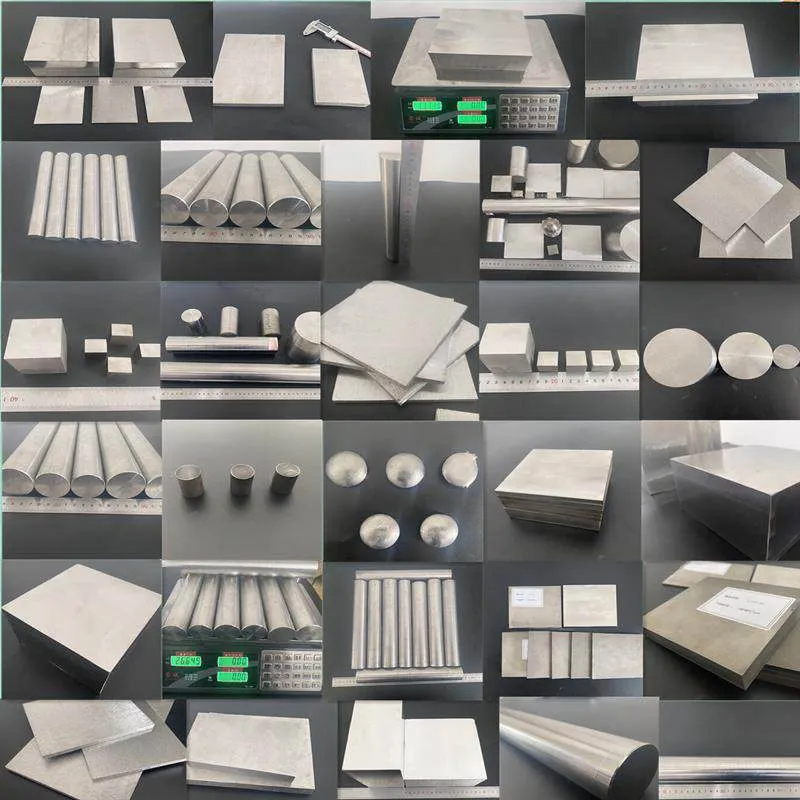
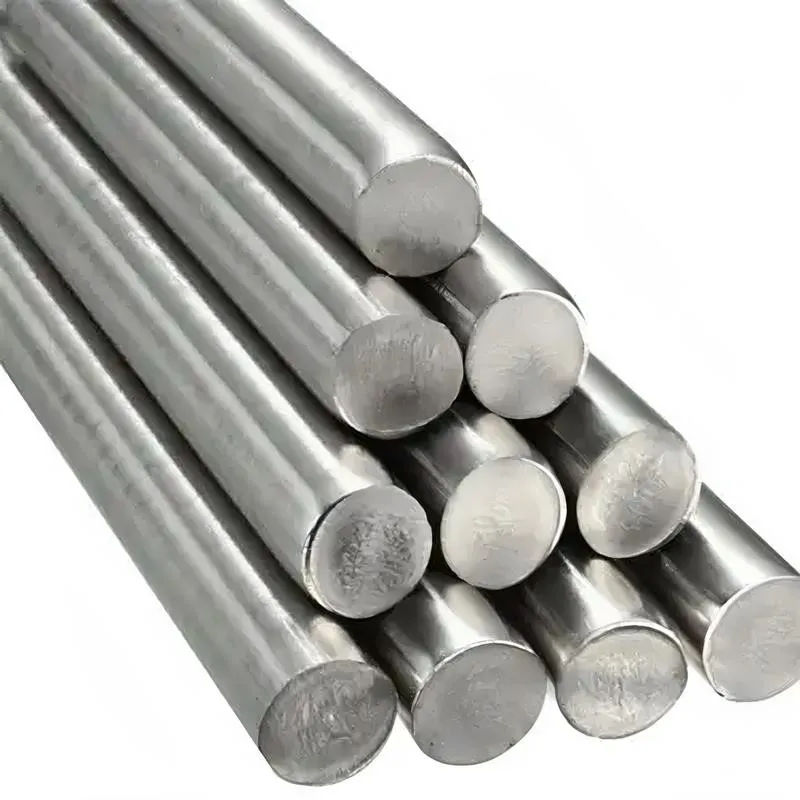
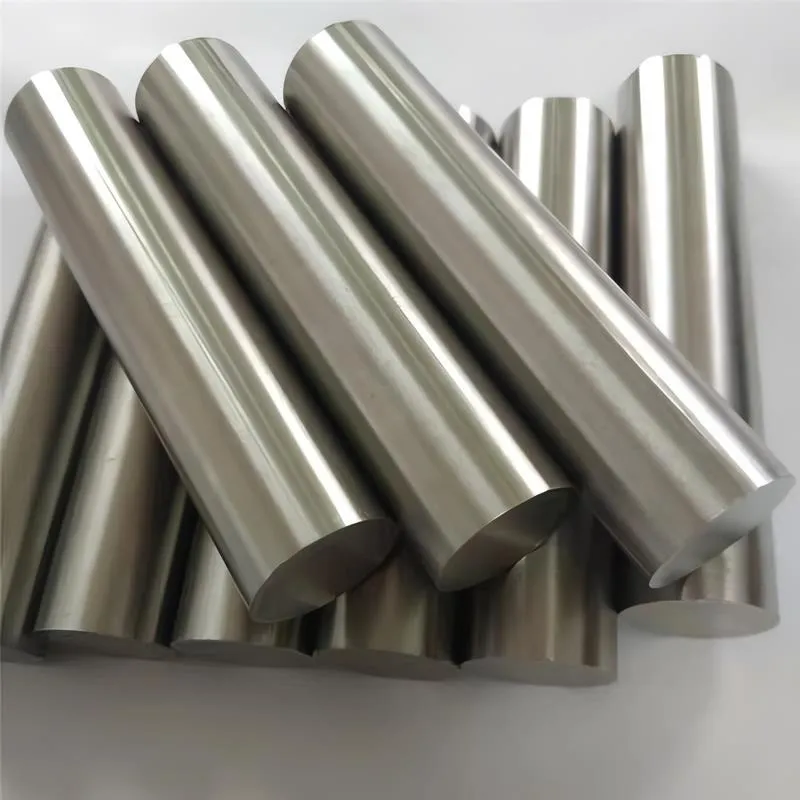
We provide EN 1.0038 High Manganese Carbon Steel, t < 16 mm is available in Bar (Round bar, Flat bar), Ribbon, Wire, Rods, Tube,Seamless Tube,Pipe, Ingots, Plate, Sheet, Strip and Forging Stock.,Purity, chemical composition, size, etc. can all be customized to meet specific requirements.
Please contact us if you need customized services. We will contact you with the price and availability in 24 hours.
EN 1.0038 High Manganese Carbon Steel, t < 16 mm Product Information
-:-
For detailed product information, please contact sales.
-:
EN 1.0038 High Manganese Carbon Steel, t < 16 mm Synonyms
-:-
For detailed product information, please contact sales.
-:
EN 1.0038 High Manganese Carbon Steel, t < 16 mm Product Information
-:-
For detailed product information, please contact sales.
-:
# **Technical Datasheet: EN 1.0038 (S235J0) High Manganese Carbon Steel**
**Nominal Thickness Range: t < 16 mm**
## **1. PRODUCT OVERVIEW**
**EN 1.0038 (Designation: S235J0)** is a **non-alloy, high manganese carbon structural steel** specifically engineered for applications requiring **guaranteed impact toughness at 0°C**. When supplied in thicknesses **below 16 mm**, this grade combines the excellent formability and weldability of standard S235 steels with certified low-temperature toughness, making it the **preferred choice for structural components in moderate climates** where occasional sub-zero temperatures occur.
The "J0" suffix indicates mandatory Charpy V-notch impact testing at **0°C**, providing assurance against brittle fracture in service temperatures down to approximately -10°C to -15°C. This enhanced toughness specification, coupled with the steel's characteristic high manganese-to-carbon ratio, makes 1.0038 ideal for safety-critical applications where structural integrity under varying thermal conditions is paramount.
**Key Characteristics (t < 16 mm):**
- **Certified Low-Temperature Toughness:** Guaranteed minimum 27J impact energy at 0°C
- **Excellent Cold Formability:** Maintains high ductility for bending and shaping operations
- **Superior Weldability:** Low carbon equivalent enables welding without preheating in most thin-section applications
- **Consistent Performance:** Aluminum-killed, fine-grained structure ensures uniform properties
- **Cost-Effective Safety Upgrade:** Minimal premium over S235JR for significantly improved toughness
---
## **2. CHEMICAL COMPOSITION**
**Compliance:** EN 10025-2:2019 - For thicknesses up to and including 16 mm.
*Composition limits are for product analysis.*
| Element | Maximum (%) | Typical (%) | Metallurgical Significance |
|---------|------------|-------------|---------------------------|
| **Carbon (C)** | **0.17** | 0.12-0.15 | Controlled at lower end of range to enhance toughness |
| **Manganese (Mn)** | **1.40** | 1.20-1.35 | Critical for toughness enhancement; Mn:C ratio >7:1 |
| **Phosphorus (P)** | **0.035** | ≤0.020 | Strictly limited to prevent cold shortness |
| **Sulfur (S)** | **0.035** | ≤0.015 | Lower than S235JR for improved through-thickness properties |
| **Silicon (Si)** | **0.55** | 0.25-0.40 | Deoxidizer; contributes to strength without compromising toughness |
| **Nitrogen (N)** | **0.012** | ≤0.008 | Tightly controlled to minimize aging embrittlement |
| **Aluminum, total (Alt)** | — | **≥0.020** (min) | Essential grain refiner; typically 0.025-0.045% |
| **Copper (Cu)** *optional* | 0.55 | — | May be added for weathering resistance |
| **Iron (Fe)** | Balance | Balance | Base metal |
**Critical Chemical Parameters:**
- **Carbon Equivalent (CEV):** 0.32-0.36% (CEV = C + Mn/6)
- **Cracking Parameter (Pcm):** 0.18-0.21%
- **Deoxidation:** **Fully aluminum-killed** with controlled nitrogen content
- **Grain Refinement:** Minimum aluminum content ensures ASTM 8-10 grain size
- **Impurity Control:** Lower residual elements than S235JR for enhanced toughness
---
## **3. PHYSICAL & MECHANICAL PROPERTIES**
### **A. Physical Properties (Typical):**
- **Density:** 7.85 g/cm³
- **Modulus of Elasticity:** 210 GPa
- **Shear Modulus:** 81 GPa
- **Poisson's Ratio:** 0.30
- **Coefficient of Thermal Expansion:** 12.0 × 10⁻⁶/K (20-100°C)
- **Thermal Conductivity:** 52 W/(m·K) at 20°C
- **Specific Heat Capacity:** 450 J/(kg·K)
- **Electrical Resistivity:** 0.14 μΩ·m
- **Magnetic Properties:** Ferromagnetic
### **B. Mandatory Mechanical Properties (EN 10025-2):**
*For nominal thickness t ≤ 16 mm*
| Property | Symbol | Value | Test Standard | Notes |
|----------|--------|-------|---------------|-------|
| **Yield Strength** | ReH | **235 MPa (min)** | EN ISO 6892-1 | Upper yield strength or Rp0.2 |
| **Tensile Strength** | Rm | **360-510 MPa** | EN ISO 6892-1 | Must fall within range |
| **Minimum Elongation** | A₅ | **26%** | EN ISO 6892-1 | Lo=5.65√So |
| **Impact Energy (0°C)** | KV | **27 J (min)** | EN ISO 148-1 | Charpy V-notch, longitudinal |
### **C. Typical Achieved Properties (t < 16 mm):**
| Property | Range | Typical | Application Significance |
|----------|-------|---------|--------------------------|
| **Yield Strength (ReH)** | 250-310 MPa | 275 MPa | 15-20% above minimum requirement |
| **Tensile Strength (Rm)** | 380-460 MPa | 420 MPa | Consistent through thickness |
| **Elongation (A₅)** | 28-35% | 32% | Excellent formability indicator |
| **Impact Energy (0°C)** | 35-80 J | 50 J | Substantial safety margin |
| **Hardness (HB)** | 115-135 | 125 | Balanced hardness-toughness |
| **Bend Test Performance** | 180° bend, d=0.5a | Pass | For bending parallel to rolling direction |
### **D. Toughness Characteristics:**
- **Ductile-to-Brittle Transition:** Typically -30°C to -40°C
- **Fracture Appearance Transition Temperature (FATT):** Approximately -20°C
- **Through-Thickness Toughness:** Z-direction properties improved over S235JR
- **Notch Toughness:** Excellent resistance to crack initiation at stress concentrators
---
## **4. FABRICATION & PROCESSING**
### **A. Forming & Cutting (t < 16 mm):**
- **Cold Bending:** Minimum inside radius = **0.5 × t** (parallel to rolling), **1.0 × t** (perpendicular)
- **Roll Forming:** Excellent for continuous forming operations
- **Stamping:** Suitable for complex shapes with proper die design
- **Cutting Methods:**
- Laser/Plasma: Excellent edge quality, minimal HAZ
- Waterjet: No thermal effects, ideal for precision
- Shearing: Clean edges with sharp tooling (10-15% clearance)
### **B. Welding Procedures:**
**General Guidelines (t < 16 mm):**
- **Preheating:** Generally not required for t < 10 mm at ambient >5°C
- **Interpass Temperature:** Maximum 200°C
- **Heat Input:** Recommended 0.5-2.0 kJ/mm
**Recommended Consumables:**
| Process | Consumable (EN ISO) | AWS Equivalent | Notes |
|---------|---------------------|----------------|-------|
| **SMAW** | E 38 0 R C 12 | E7018 | Basic coated for high toughness |
| **GMAW** | G 42 4 M G3Si1 | ER70S-6 | Most common for thin sections |
| **FCAW** | T 42 2 P C 1 H5 | E71T-1 | For outdoor applications |
| **SAW** | S 42 2 + suitable flux | F7A2-EM12K | For thicker welds in 12-16mm range |
**Weldability Advantages:**
- Low susceptibility to hydrogen cracking (Pcm < 0.22%)
- Minimal preheat requirements for thin sections
- Good HAZ toughness retention
### **C. Heat Treatment Considerations:**
- **As-Delivered Condition:** Typically normalized (N) for optimal toughness
- **Stress Relieving:** 580-620°C if required for highly restrained welds
- **No further hardening treatments** recommended or required
---
## **5. TYPICAL APPLICATIONS**
### **A. Building & Construction (Moderate Climates):**
- **Primary Structural Frames:** Beams, columns, and bracing in commercial buildings in Central/Northern Europe
- **Roof & Wall Systems:** Purlins, side rails, and cladding supports exposed to winter temperatures
- **Connection Elements:** Gusset plates, moment connections, splice plates
- **Safety-Critical Components:** Balustrades, access platforms, fire escape structures
### **B. Transportation Infrastructure:**
- **Bridge Components:** Deck plating, stiffeners, connection plates for small/medium spans
- **Railway Structures:** Signal gantries, equipment supports, station canopies
- **Road Infrastructure:** Sign supports, lighting columns, crash barrier components
- **Port Facilities:** Light crane runways, access walkways, equipment mounts
### **C. Industrial Equipment:**
- **Material Handling:** Conveyor frames, hopper supports, lifting equipment
- **Process Support Structures:** Platform frames, ladder supports, access systems
- **Machine Guards & Enclosures:** Safety barriers, protective housings
- **Agricultural Equipment:** Tractor attachments, implement frames, storage structures
### **D. Special Applications:**
- **Seismic-Resistant Structures:** Low-rise buildings in moderate seismic zones
- **Temporary Structures:** Scaffolding, formwork, falsework for winter construction
- **Renewable Energy:** Support structures for solar arrays, small wind turbine towers
- **Urban Furniture:** Bus shelters, information kiosks, public seating
---
## **6. INTERNATIONAL STANDARDS & EQUIVALENTS**
### **Primary Designations:**
- **EN Standard:** EN 10025-2:2019
- **Material Number:** 1.0038
- **Steel Name:** S235J0
- **Former Designation:** Fe 360B (EN 10025:1990)
### **Global Equivalents:**
| Country/Standard | Equivalent Grade | Key Comparison Notes |
|-----------------|------------------|----------------------|
| **ISO** | ISO 630-2: E235B | Identical mechanical properties |
| **USA (ASTM)** | ASTM A283 Gr. D | Similar yield (230 MPa) with impact at 0°C (20 ft-lb) |
| **USA (ASTM)** | ASTM A529 Gr. 50 | Higher strength but similar application concept |
| **Germany (DIN)** | DIN EN 10025-2: S235J0 | Direct adoption |
| **UK (BS)** | BS 4360: 43B | Historical equivalent |
| **Japan (JIS)** | JIS G3106: SM400A | Similar strength with impact at 0°C |
| **China (GB)** | GB/T 700: Q235B | 235 MPa yield with impact at 20°C (closest equivalent) |
| **Australia** | AS/NZS 3678: 250L0 | 250 MPa yield with impact at 0°C |
### **Comparison within EN 10025 S235 Family (t < 16 mm):**
| Grade | Impact Test | Min Impact Energy | Typical Service Temp | Cost Premium |
|-------|-------------|-------------------|----------------------|--------------|
| **S235JR** | Optional at +20°C | N/A | >+5°C | Base |
| **S235J0** | **Mandatory at 0°C** | **27J** | **-10°C to +40°C** | +5-8% |
| **S235J2** | Mandatory at -20°C | 27J | -25°C to +40°C | +10-15% |
| **S235JRG2** | Mandatory at +20°C | 27J | >0°C | +3-5% |
---
## **7. QUALITY ASSURANCE & TESTING**
### **Mandatory Testing (EN 10025-2):**
1. **Tensile Test:** One per batch ≤ 40 tonnes
2. **Impact Test:** One set (3 specimens) per batch at 0°C
3. **Bend Test:** If specified in purchase order
4. **Visual Inspection:** Surface quality per EN 10025-2
### **Additional Testing Options:**
- **Ultrasonic Testing:** For critical applications
- **Through-Thickness Testing:** Z15 or Z25 if required
- **Additional Impact Tests:** At other temperatures if specified
- **Chemical Analysis:** Full spectrographic report available
### **Certification:**
- **EN 10204 3.1 Certificate:** Standard delivery
- **3.2 Certificate:** Available with independent verification
- **Traceability:** Heat number maintained throughout supply chain
---
## **8. DESIGN CONSIDERATIONS**
### **Advantages:**
1. **Verified Safety Margin:** Certified toughness provides reliability in variable climates
2. **Design Flexibility:** Can be used in applications where temperature may drop below freezing
3. **Code Compliance:** Meets requirements of Eurocode 3 for structures down to -15°C ambient
4. **Fabrication Friendly:** Maintains all advantages of S235 steels with enhanced toughness
5. **Economic Safety:** Small cost increase for significant performance improvement
### **Limitations:**
- **Not for Arctic Conditions:** Not suitable for sustained service below -20°C
- **Thickness Limitations:** Properties guaranteed only for t ≤ 100 mm (with reduced values above 16 mm)
- **Not High-Strength:** 235 MPa yield may require heavier sections than higher grades
### **Design Recommendations:**
1. **For structures in climate zones with winter temperatures regularly between -10°C to +5°C**
2. **For dynamically loaded structures** where impact loading is possible
3. **For safety-critical applications** where failure consequences are severe
4. **When specified by national building codes** for moderate climate zones
### **Specification Example:**
"EN 10025-2 S235J0, thickness 12 mm, normalized delivery condition (N), with EN 10204 3.1 certificate including impact test results at 0°C."
---
## **9. ENVIRONMENTAL & SUSTAINABILITY**
### **Corrosion Protection:**
- **Painting:** Standard protection system; surface preparation to Sa 2½
- **Galvanizing:** Excellent suitability for hot-dip galvanizing
- **Weathering Steel Option:** Available as S235J0W with Cu addition
### **Recyclability:**
- **Recycling Rate:** >90% typical
- **Embodied Carbon:** Approximately 1.8-2.2 tCO₂/t steel
- **Environmental Declarations:** EPD available from major producers
### **Life Cycle Considerations:**
- **Durability:** 25-50 years with proper maintenance
- **End-of-Life:** Fully recyclable without quality loss
- **Sustainable Sourcing:** Available with responsible sourcing certification
---
## **10. TECHNICAL SUMMARY**
**EN 1.0038 (S235J0)** in thicknesses **below 16 mm** represents the **optimal balance between performance, fabricability, and cost** for structural applications in moderate climates. Its certified impact toughness at 0°C provides engineers with a reliable material choice for structures that may experience occasional sub-zero temperatures during their service life.
**Key Decision Factors:**
- Select over S235JR when: Winter temperatures may drop below freezing, dynamic loading is present, or building codes require certified toughness
- Select over S235J2 when: Service temperatures rarely drop below -15°C and cost optimization is important
- Consider higher grades (S355) when: Higher strength-to-weight ratio is critical or loading conditions are severe
**Market Position:** S235J0 occupies a critical niche in the European construction market, being specified for approximately 30% of structural steelwork in Central and Northern Europe. Its popularity stems from providing verified safety enhancement over S235JR with only a minimal cost premium, making it the default choice for quality-conscious engineers in regions with moderate winters.
**Future Trends:** Increasing emphasis on structural resilience and climate adaptation is expected to drive greater specification of toughness-guaranteed steels like S235J0, even in regions previously considered to have mild climates, as extreme weather events become more frequent.
---
**Disclaimer:** This datasheet provides typical values and guidelines. For specific applications, always consult the relevant standards, certified test reports, and qualified engineering professionals. Properties may vary between producers and production batches. Always verify actual test certificates for critical applications.
-:-
For detailed product information, please contact sales.
-:
EN 1.0038 High Manganese Carbon Steel, t < 16 mm Specification
Dimensions
Size:
Diameter 20-1000 mm Length <5785 mm
Size:We can customized as required
Standard:
Per your request or drawing
We can customized as required
Properties(Theoretical)
Chemical Composition
-:-
For detailed product information, please contact sales.
-:
EN 1.0038 High Manganese Carbon Steel, t < 16 mm Properties
-:-
For detailed product information, please contact sales.
-:
Applications of EN 1.0038 High Manganese Carbon Steel, t < 16 mm
-:-
For detailed product information, please contact sales.
-:
Chemical Identifiers EN 1.0038 High Manganese Carbon Steel, t < 16 mm
-:-
For detailed product information, please contact sales.
-:
Packing of EN 1.0038 High Manganese Carbon Steel, t < 16 mm
-:-
For detailed product information, please contact sales.
-:
Standard Packing:
-:-
For detailed product information, please contact sales.
-:
Typical bulk packaging includes palletized plastic 5 gallon/25 kg. pails, fiber and steel drums to 1 ton super sacks in full container (FCL) or truck load (T/L) quantities. Research and sample quantities and hygroscopic, oxidizing or other air sensitive materials may be packaged under argon or vacuum. Solutions are packaged in polypropylene, plastic or glass jars up to palletized 2256 gallon liquid totes Special package is available on request. E FORUs’ is carefully handled to minimize damage during storage and transportation and to preserve the quality of our products in their original condition