JIS S45C Steel, Tempered
Product Code : STI-CSTI-326-CU
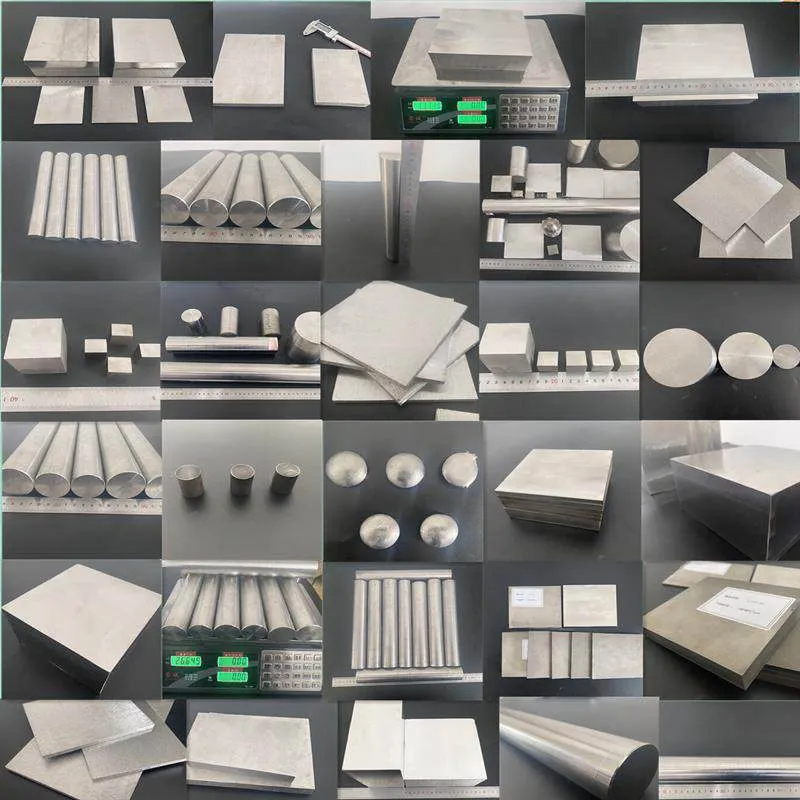
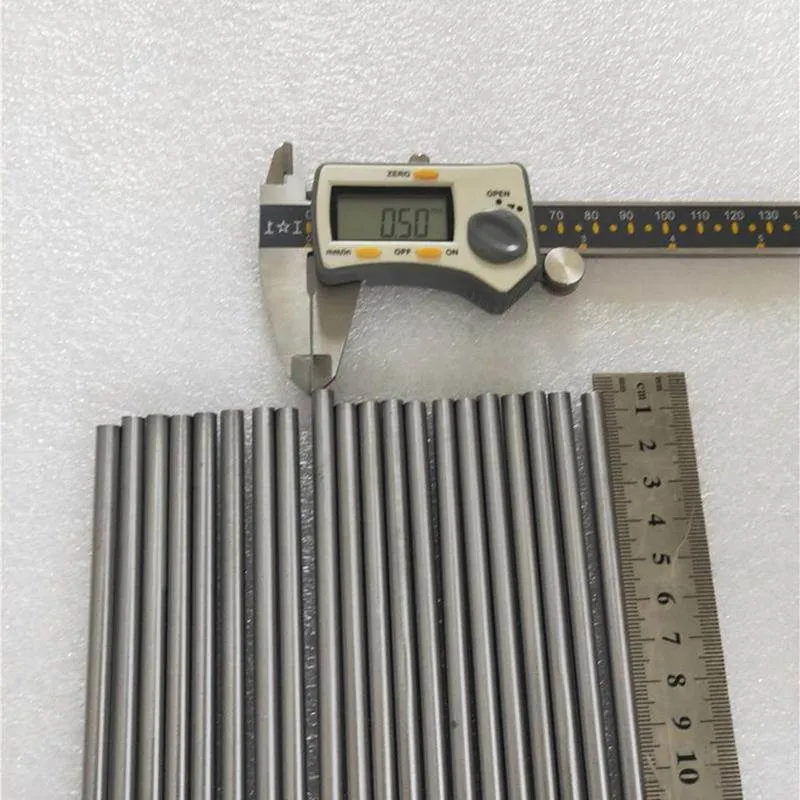
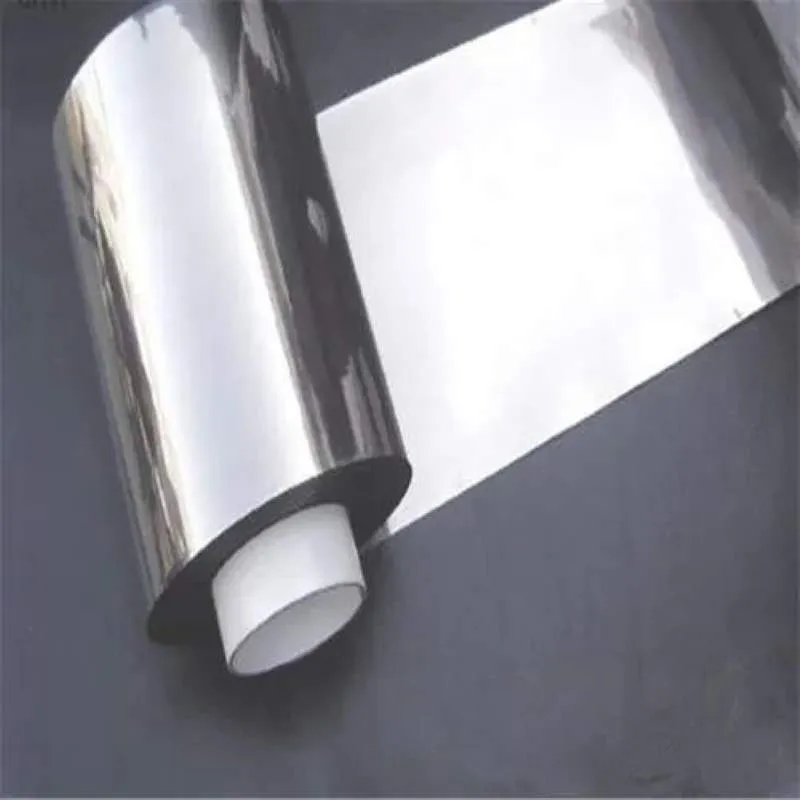
We provide JIS S45C Steel, Tempered is available in Bar (Round bar, Flat bar), Ribbon, Wire, Rods, Tube,Seamless Tube,Pipe, Ingots, Plate, Sheet, Strip and Forging Stock.,Purity, chemical composition, size, etc. can all be customized to meet specific requirements.
Please contact us if you need customized services. We will contact you with the price and availability in 24 hours.
JIS S45C Steel, Tempered Product Information
-:-
For detailed product information, please contact sales.
-:
JIS S45C Steel, Tempered Synonyms
-:-
For detailed product information, please contact sales.
-:
JIS S45C Steel, Tempered Product Information
-:-
For detailed product information, please contact sales.
-:
# **Technical Specification: JIS S45C Steel (Quenched and Tempered Condition)**
## **1. Product Overview**
**JIS S45C** in the **quenched and tempered (Q&T) condition** represents a high-performance heat-treated state of this versatile medium-carbon steel. While the base S45C material is standardized under JIS G4051, the **tempered** designation specifically refers to steel that has undergone **austenitizing, quenching, and subsequent tempering** to achieve a tempered martensite microstructure. This process dramatically enhances the steel's mechanical properties, particularly its **strength-to-toughness ratio**, making it suitable for demanding structural and mechanical applications.
It is crucial to distinguish "tempered" from normalized S45C: Tempering is **always preceded by quenching** and specifically denotes the final thermal treatment that reduces brittleness and controls final mechanical properties.
## **2. Chemical Composition (Weight %)**
The chemical composition remains identical to standard S45C, but with tighter controls to ensure consistent response to quenching and tempering.
| Element | JIS G4051 Standard Range | Typical Q&T Process Control |
|----------------|--------------------------|-----------------------------|
| **Carbon (C)** | 0.42 - 0.48 | 0.44 - 0.46 (Critical for hardenability) |
| **Silicon (Si)** | 0.15 - 0.35 | 0.20 - 0.30 |
| **Manganese (Mn)** | 0.60 - 0.90 | 0.70 - 0.85 |
| **Phosphorus (P)** | ≤ 0.030 | ≤ 0.020 |
| **Sulfur (S)** | ≤ 0.035 | ≤ 0.020 |
| **Iron (Fe)** | Balance | Balance |
**Compositional Significance for Q&T:**
- **Carbon (0.44-0.46%)**: Optimizes hardenability while maintaining good toughness after tempering.
- **Manganese (0.70-0.85%)**: Enhances hardenability, allowing effective quenching of moderate sections.
- **Low P & S**: Minimizes temper embrittlement risk and improves transverse toughness.
## **3. Heat Treatment Process & Resulting Properties**
### **Standard Quenching & Tempering Process:**
1. **Austenitizing:** 830°C - 850°C → Complete dissolution of carbides.
2. **Quenching:** Rapid cooling in **oil** (or water for simple shapes/small sections) → Formation of martensite.
3. **Tempering:** Reheating to a specific temperature (typically **550°C - 650°C**), holding, then air cooling → Formation of tough, tempered martensite (sorbitic structure).
### **Typical Mechanical Properties by Tempering Temperature:**
*Properties are for oil-quenched sections up to ~25mm diameter. Water quenching can yield higher strength in smaller sections.*
| Tempering Temp. | Tensile Strength | Yield Strength (0.2%) | Elongation | Reduction of Area | Hardness (Typical) | Impact Energy (Charpy V) |
|-----------------|------------------|-----------------------|------------|-------------------|---------------------|--------------------------|
| **200-300°C** (Low Temp) | 1100 - 1300 MPa | 950 - 1150 MPa | 8 - 12% | 30 - 40% | 38 - 45 HRC | 20 - 35 J |
| **400-500°C** (Medium Temp) | 900 - 1100 MPa | 750 - 950 MPa | 12 - 16% | 40 - 50% | 28 - 38 HRC | 30 - 50 J |
| **550-650°C** (High Temp) | 700 - 850 MPa | 550 - 700 MPa | 16 - 22% | 50 - 60% | 22 - 30 HRC | 50 - 80 J |
### **Physical Properties:**
- **Microstructure:** Tempered martensite (sorbite).
- **Grain Size:** ASTM 7-9 (fine, due to quenching).
- **Density:** 7.85 g/cm³.
- **Modulus of Elasticity:** 205 - 210 GPa.
- **Thermal Conductivity:** ~48 W/m·K at 100°C.
- **Specific Heat:** ~470 J/kg·K.
## **4. Product Applications**
Quenched and tempered S45C is selected for **high-stress, dynamic load applications** where its superior strength-toughness balance is critical.
### **High-Strength Fasteners & Components:**
- **Grade 8.8 / 10.9 equivalent bolts, studs, and high-tensile screws**
- **Heavy-duty connecting rods** (for engines, compressors)
- **High-strength pins, axles, and shafts** subject to shear and bending
### **Automotive & Transportation:**
- **Critical suspension components** (torsion bars, stabilizer links)
- **Transmission gears and shafts** (often followed by case hardening)
- **Crankshafts** for medium-duty engines
- **Steering knuckles and U-joint yokes**
### **Hydraulic & Machinery:**
- **Hydraulic piston rods** for high-pressure cylinders
- **Machine tool spindles** and lead screws
- **Gears and pinions** in industrial gearboxes
- **Press rams and mold platens**
### **Construction & Mining Equipment:**
- **Bucket teeth adapters** and linkage pins
- **Track rollers and idlers** for excavators
- **Drill rod couplings** and tool joints
## **5. International Standards & Cross-References**
| Standard System | Equivalent Grade / Condition | Key Specification |
|-----------------|------------------------------|-------------------|
| **JIS** | S45C, Quenched and Tempered (調質) | JIS G4051, JIS G4401 (for alloy steel Q&T bars) |
| **ISO** | **C45E4Q** (C45E + QT Condition) | ISO 683-18 |
| **DIN / EN** | **1.0503 (C45) + QT** or **1.1191 (CF45) + QT** | EN 10083-2 / -3 |
| **ASTM / SAE** | **1045, Q&T** | ASTM A29, SAE J404 |
| **AISI** | 1045, Q&T | - |
| **UNS** | G10450 (with QT condition specified) | - |
| **GB (China)** | **45# (調質)** | GB/T 3077 (referenced for Q&T) |
**Condition Code Note:** In modern procurement (especially under EN standards), the **+QT** condition code or a specific tempering temperature/strength range (e.g., 550°C temper) should be explicitly stated.
## **6. Design & Processing Considerations**
### **Advantages of Q&T S45C:**
1. **High Strength & Toughness:** Superior to normalized or annealed states.
2. **Good Fatigue Resistance:** Tempered martensite structure provides excellent endurance limits.
3. **Wear Resistance:** Moderate hardness combined with tough core resuses deformation.
4. **Consistent Properties:** Uniform microstructure throughout properly treated sections.
### **Limitations & Cautions:**
1. **Hardenability Limit:** Effective full hardening is typically limited to diameters < ~40mm (oil quench). Center properties of larger bars may be lower.
2. **Quench Cracking Risk:** Complex shapes with sharp section changes are prone to cracking during water quenching. Oil quenching is preferred.
3. **Distortion:** Dimensional changes during Q&T are inevitable and must be accounted for in machining allowances.
4. **Machinability:** Reduced compared to normalized state; requires harder tool materials (carbide) and lower speeds.
### **Fabrication Notes:**
- **Machining:** Should be performed **before** final Q&T for complex parts, or with carbide tools post-Q&T.
- **Welding:** **Not generally recommended** after Q&T. If unavoidable, requires preheat (300°C+), low-hydrogen electrodes, and post-weld tempering.
- **Straightening:** Can be performed cold with care, but local heating may soften the material.
## **7. Supply & Quality Assurance**
- **Common Forms:** Round bars, flats, forged blanks, and near-net-shape forgings.
- **Surface Condition:** Usually black (scale present) or cleaned (pickled & oiled). Precision ground bars are available.
- **Testing:** Standard supply includes **hardness testing** and often **tensile testing** per lot. Impact testing and hardenability (Jominy) tests are available as special requirements.
## **Conclusion**
**JIS S45C in the quenched and tempered condition** is a workhorse high-strength engineering steel. Its value lies in transforming a relatively simple and economical medium-carbon steel into a material capable of handling significant dynamic and static loads through controlled heat treatment.
For designers, specifying **"S45C, Q&T"** implies a requirement for the **enhanced mechanical property set** achieved through this specific process chain. For procurement, it is increasingly important to reference the modern international equivalent (**EN 1.0503/1.1191 +QT**) and to define the required mechanical property class (e.g., 700 MPa tensile strength) or tempering condition to ensure consistent quality across global supply chains.
-:-
For detailed product information, please contact sales.
-:
JIS S45C Steel, Tempered Specification
Dimensions
Size:
Diameter 20-1000 mm Length <5058 mm
Size:We can customized as required
Standard:
Per your request or drawing
We can customized as required
Properties(Theoretical)
Chemical Composition
-:-
For detailed product information, please contact sales.
-:
JIS S45C Steel, Tempered Properties
-:-
For detailed product information, please contact sales.
-:
Applications of JIS S45C Steel, Tempered
-:-
For detailed product information, please contact sales.
-:
Chemical Identifiers JIS S45C Steel, Tempered
-:-
For detailed product information, please contact sales.
-:
Packing of JIS S45C Steel, Tempered
-:-
For detailed product information, please contact sales.
-:
Standard Packing:
-:-
For detailed product information, please contact sales.
-:
Typical bulk packaging includes palletized plastic 5 gallon/25 kg. pails, fiber and steel drums to 1 ton super sacks in full container (FCL) or truck load (T/L) quantities. Research and sample quantities and hygroscopic, oxidizing or other air sensitive materials may be packaged under argon or vacuum. Solutions are packaged in polypropylene, plastic or glass jars up to palletized 1529 gallon liquid totes Special package is available on request. E FORUs’ is carefully handled to minimize damage during storage and transportation and to preserve the quality of our products in their original condition