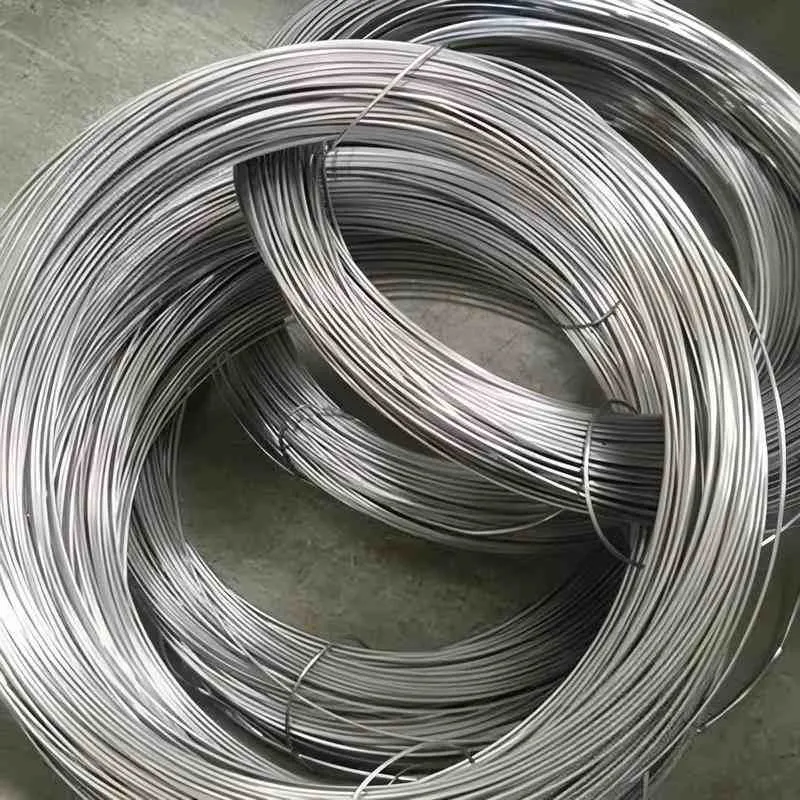
Ovako C55E EN10083-2:2006 (ref) Steel Wire
Product Code : STI-CSTI-360-CU
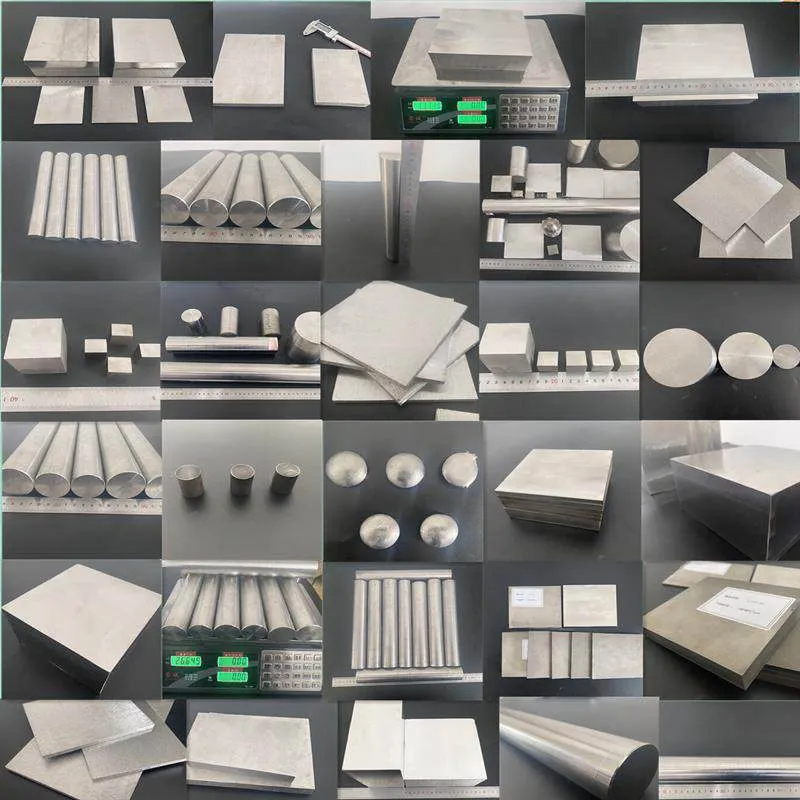
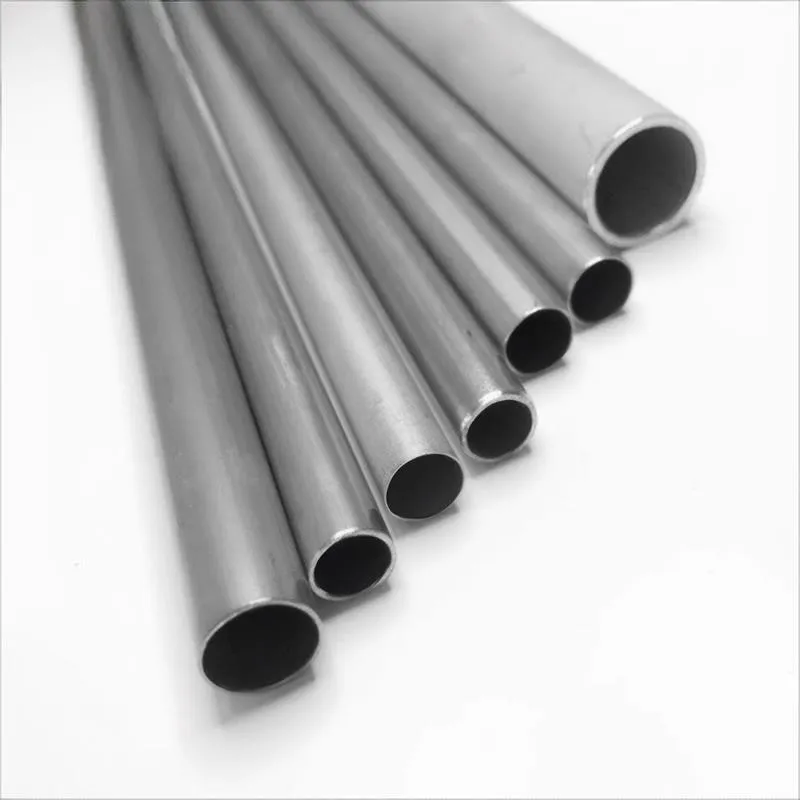
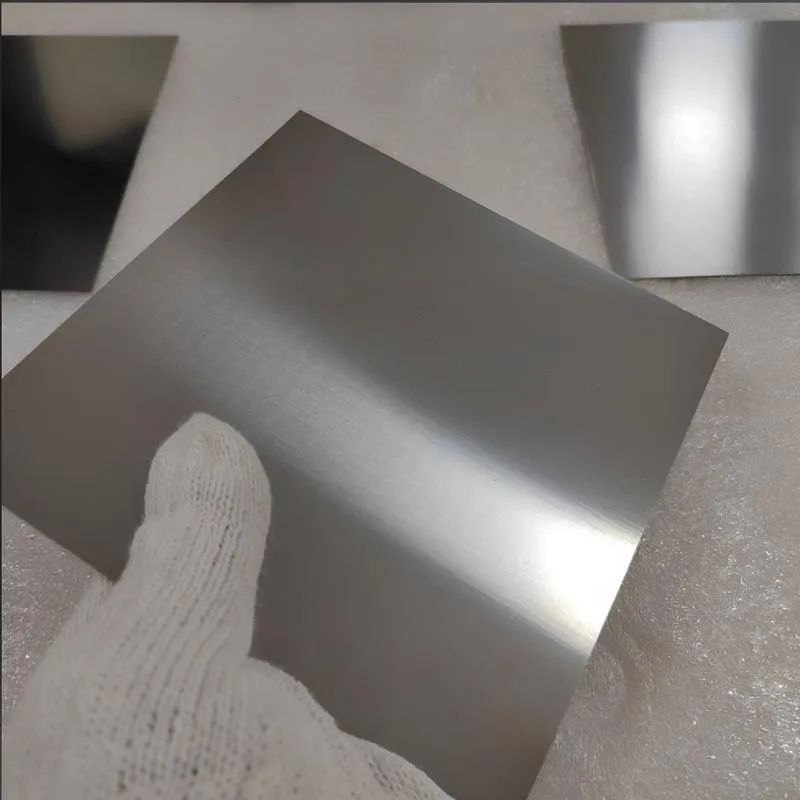
We provide Ovako C55E EN10083-2:2006 (ref) Steel Wire, +S is available in Bar (Round bar, Flat bar), Ribbon, Wire, Rods, Tube,Seamless Tube,Pipe, Ingots, Plate, Sheet, Strip and Forging Stock.,Purity, chemical composition, size, etc. can all be customized to meet specific requirements.
Please contact us if you need customized services. We will contact you with the price and availability in 24 hours.
Ovako C55E EN10083-2:2006 (ref) Steel Wire, +S Product Information
-:-
For detailed product information, please contact sales.
-:
Ovako C55E EN10083-2:2006 (ref) Steel Wire, +S Synonyms
-:-
For detailed product information, please contact sales.
-:
Ovako C55E EN10083-2:2006 (ref) Steel, +S Product Information
-:-
For detailed product information, please contact sales.
-:
# **Product Introduction: Ovako C55E EN 10083-2:2006 (ref) Steel, +S Condition**
**Ovako C55E EN 10083-2:2006 (ref), +S** is a **high-carbon, non-alloy quality steel** supplied by Ovako in the **softened or spheroidize-annealed (+S) condition**. The designation signifies that the steel is produced in alignment with the European standard EN 10083-2 for the C55E grade, with the critical addition of the **"+S" delivery condition**, indicating it has undergone a specific thermal treatment to achieve an optimal microstructure for machining prior to final hardening.
The "+S" condition is a controlled spheroidizing or full annealing process that transforms the steel's hard cementite network into soft, globular carbides dispersed in a soft ferritic matrix. This results in the **lowest possible hardness and maximum ductility** for this chemistry, making it the ideal pre-machining state for complex components that will later be heat-treated to achieve high hardness and wear resistance.
---
## **1. Chemical Composition (Per EN 10083-2:2006 - Grade 1.1203/C55E)**
The composition adheres to the standard limits for the high-carbon C55E engineering steel grade.
| Element | Carbon (C) | Silicon (Si) | Manganese (Mn) | Phosphorus (P) | Sulfur (S) | Chromium (Cr)* |
| :--- | :--- | :--- | :--- | :--- | :--- | :--- |
| **EN 10083-2 Limits for C55E** | 0.52 - 0.60 | ≤ 0.40 | 0.60 - 0.90 | ≤ 0.035 | ≤ 0.035 | ≤ 0.40 |
| **Ovako Typical in +S Condition** | 0.54 - 0.58 | 0.15 - 0.30 | 0.65 - 0.85 | **≤ 0.025** | **≤ 0.020** | ≤ 0.25 |
| **Key Role** | **Primary hardness potential.** | Deoxidizer. | Hardenability agent. | **Low for post-hardening toughness.** | **Low for machinability & isotropy.** | Residual, aids hardenability. |
**Critical Features for the +S Condition:**
* **High Carbon Content (0.52-0.60%):** Defines the ultimate hardening potential but makes the material inherently difficult to machine in non-annealed states. The +S treatment is essential to overcome this.
* **"+S" (Softened/Spheroidized) Microstructure:** This is the defining process. The steel is heated and cooled very slowly to produce a microstructure of **soft, spherical cementite particles in a ferrite matrix**. This drastically reduces hardness and eliminates continuous hard carbide networks that would cause excessive tool wear.
* **Optimized for Machinability:** The +S condition is specified specifically to enable economical and precise machining (turning, milling, drilling, threading) before the component undergoes its final hardening quench, after which machining becomes extremely difficult or impossible.
---
## **2. Physical & Mechanical Properties (+S Condition)**
The properties in the +S condition are tailored for manufacturability, not for final performance.
| Property | **Guaranteed / Typical Values - +S Condition** | **Technical Significance** |
| :--- | :--- | :--- |
| **Hardness** | **≤ 200 HB** (Typically **165 - 190 HB**) | **Minimized for machining.** This is the key deliverable of the +S state. |
| **Tensile Strength (Rm)** | **580 - 700 MPa** | Low strength relative to the steel's potential. |
| **Yield Strength (Rp0.2)** | **≥ 320 MPa** | |
| **Elongation (A₅)** | **≥ 18%** | **High ductility,** allowing for some forming/cold adjustment after machining if needed. |
| **Microstructure** | **Spheroidized cementite in a ferritic matrix** (per ISO 945). | The optimal structure for tool life and surface finish. |
| **Machinability** | **Good (for a high-carbon steel).** The soft, homogeneous structure provides predictable tool wear, good chip control (though chips can be stringy), and allows for excellent surface finishes. Vastly superior to normalized or as-rolled C55. | **Primary reason for specifying +S.** |
| **Dimensional Stability** | Good. The annealing process relieves internal stresses from rolling. | Reduces risk of distortion during subsequent machining. |
**Note on Final Properties (After Customer Hardening):** After machining, the component must be heat treated (quenched and tempered) to achieve its service properties. Typical results:
* **Hardness after Q&T:** 55 - 62 HRC
* **Tensile Strength (Rm):** 1800 - 2200 MPa
* **Toughness:** Low (characteristic of high-carbon hardened steel).
---
## **3. Product Applications**
This material is specified for **complex, high-precision components** that require extensive machining and will later be hardened for wear resistance.
* **Precision Tools & Dies:** **Complex punches, forming dies, shear blades, and gauges** that require intricate machining before hardening.
* **Automotive & Aerospace Components:** **High-wear camshafts, fuel system parts, and actuator components** with tight tolerances.
* **Machine Tool Components:** **Lead screws, precision shafts, and spindle parts** requiring fine finishes before surface or through-hardening.
* **Hydraulic & Valve Parts:** **Complex valve bodies, pistons, and pump components** for high-pressure systems.
* **Gearing:** **Gear blanks** that are machined to final tooth geometry before case hardening or through-hardening.
---
## **4. International & Equivalent Standards**
The "+S" condition is a specific delivery requirement applied to a standard grade.
| Standard System | Equivalent Grade & Condition | **Relationship / Note** |
| :--- | :--- | :--- |
| **Ovako Specification** | **C55E EN 10083-2 (ref), +S** | The exact product: standard grade + soft condition. |
| **EN 10083-2** | **1.1203 (C55E)** + **Condition +A (Annealed)** | The "+A" condition in EN standards is equivalent to "+S" (Softened/Annealed). |
| **DIN** | **1.1203 (Ck55) + weichgeglüht** | German for "soft annealed". |
| **ASTM A29/A29M** | **Grade 1055, Annealed** | The U.S. equivalent grade and condition. |
| **JIS G4051** | **S55C, Annealed** | Japanese equivalent. |
| **GB/T 699** | **55# Steel, Annealed** | Chinese equivalent. |
**Key Distinction:** Specifying **"+S" (or "+A") is critical.** Ordering simply "C55E" will typically result in delivery in a **normalized (+N) or as-rolled (+AR) condition**, which is significantly harder (≥210 HB) and much more difficult to machine, leading to higher tool costs, longer cycle times, and potential quality issues. The +S condition is a value-added processing step.
---
## **5. Key Advantages & Considerations**
**Advantages:**
* **Superior Machinability:** Enables the economical production of complex parts from high-carbon steel, which would otherwise be prohibitively expensive or impossible to machine.
* **Excellent Surface Finish:** The uniform soft structure allows for the achievement of fine surface finishes during machining.
* **Reduced Tool Wear:** Extends tool life dramatically compared to machining higher-hardness conditions.
* **Good Dimensional Stability:** Stress-relieved structure minimizes movement during and after machining.
* **Allows Complex Geometries:** Makes it feasible to produce intricate features that could not be formed after hardening.
**Considerations:**
* **Additional Cost:** The spheroidizing annealing process adds to the base material cost.
* **Not a Final Use Condition:** The material is useless for its intended service application in the +S state; **customer hardening is mandatory**.
* **Softer than Typical "Annealed":** The +S condition is often softer than a standard "annealed" or "normalized" state, which must be considered in machining fixture design.
* **Stringy Chips:** Can produce long, stringy chips during machining, which may require specific chip-breaking tool geometries or handling.
---
**Disclaimer:** The **"+S" condition is specified for machining purposes only.** All design calculations must be based on the **final mechanical properties achieved after the customer's quenching and tempering process.** It is imperative to:
1. **Clearly specify "+S" or "Soft Annealed" in the purchase order.**
2. **Consult Ovako for the recommended hardening parameters (austenitizing temperature, quenching medium) for this specific grade and batch.**
3. **Validate the entire process** (machining + heat treatment) on sample parts to ensure dimensional stability and final properties meet requirements. The success of the final component depends entirely on the control of both the machining and the subsequent heat treatment.
-:-
For detailed product information, please contact sales.
-:
Ovako C55E EN10083-2:2006 (ref) Steel, +S Specification
Dimensions
Size:
Diameter 20-1000 mm Length <5092 mm
Size:We can customized as required
Standard:
Per your request or drawing
We can customized as required
Properties(Theoretical)
Chemical Composition
-:-
For detailed product information, please contact sales.
-:
Ovako C55E EN10083-2:2006 (ref) Steel, +S Properties
-:-
For detailed product information, please contact sales.
-:
Applications of Ovako C55E EN10083-2:2006 (ref) Steel Wire, +S
-:-
For detailed product information, please contact sales.
-:
Chemical Identifiers Ovako C55E EN10083-2:2006 (ref) Steel Wire, +S
-:-
For detailed product information, please contact sales.
-:
Packing of Ovako C55E EN10083-2:2006 (ref) Steel Wire, +S
-:-
For detailed product information, please contact sales.
-:
Standard Packing:
-:-
For detailed product information, please contact sales.
-:
Typical bulk packaging includes palletized plastic 5 gallon/25 kg. pails, fiber and Steel Wire drums to 1 ton super sacks in full container (FCL) or truck load (T/L) quantities. Research and sample quantities and hygroscopic, oxidizing or other air sensitive materials may be packaged under argon or vacuum. Solutions are packaged in polypropylene, plastic or glass jars up to palletized 1563 gallon liquid totes Special package is available on request. E FORUs’ is carefully handled to minimize damage during storage and transportation and to preserve the quality of our products in their original condition