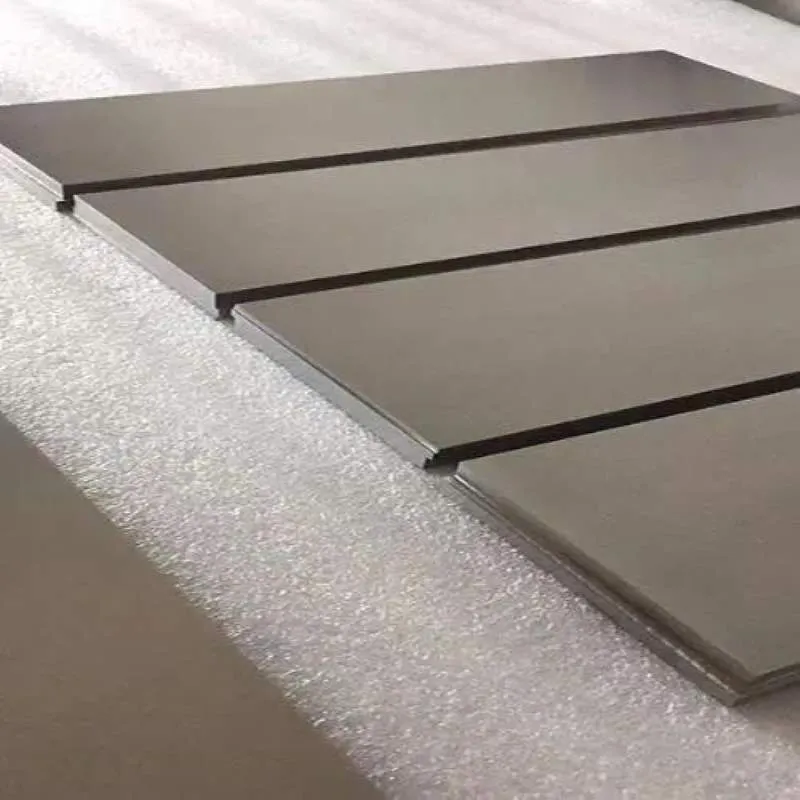
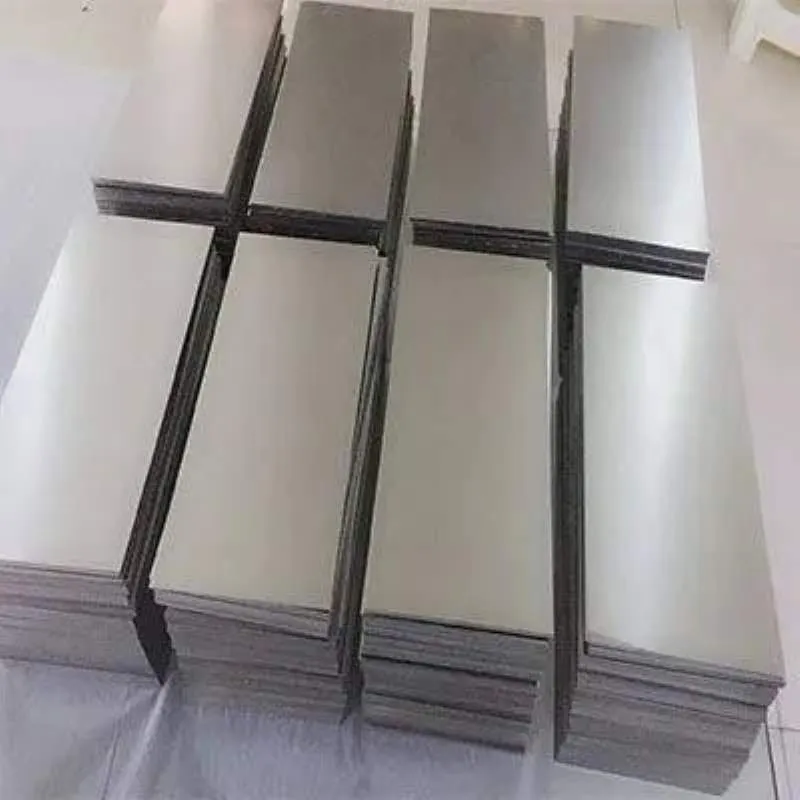
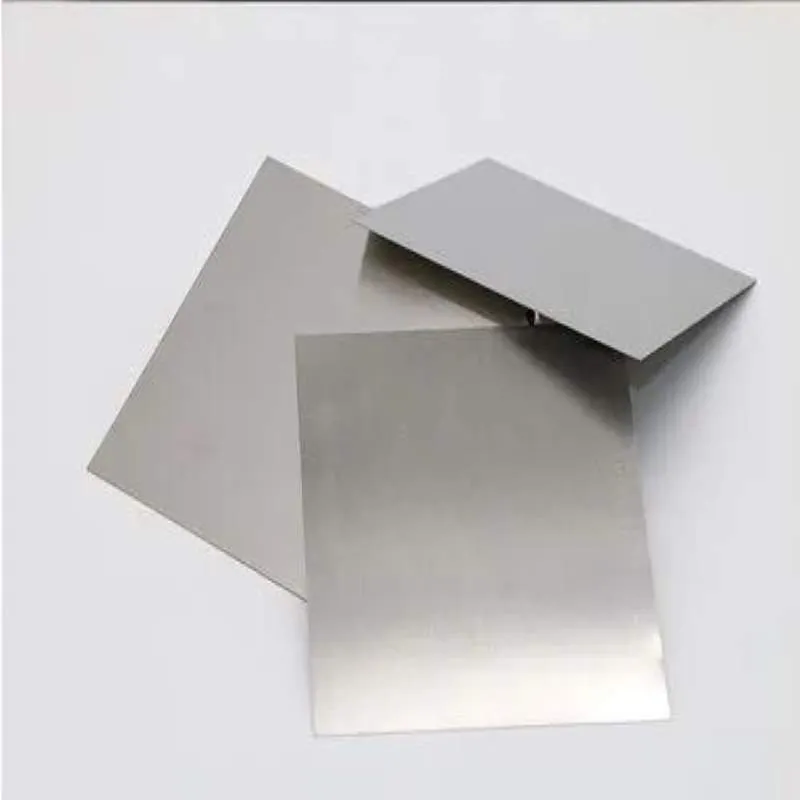
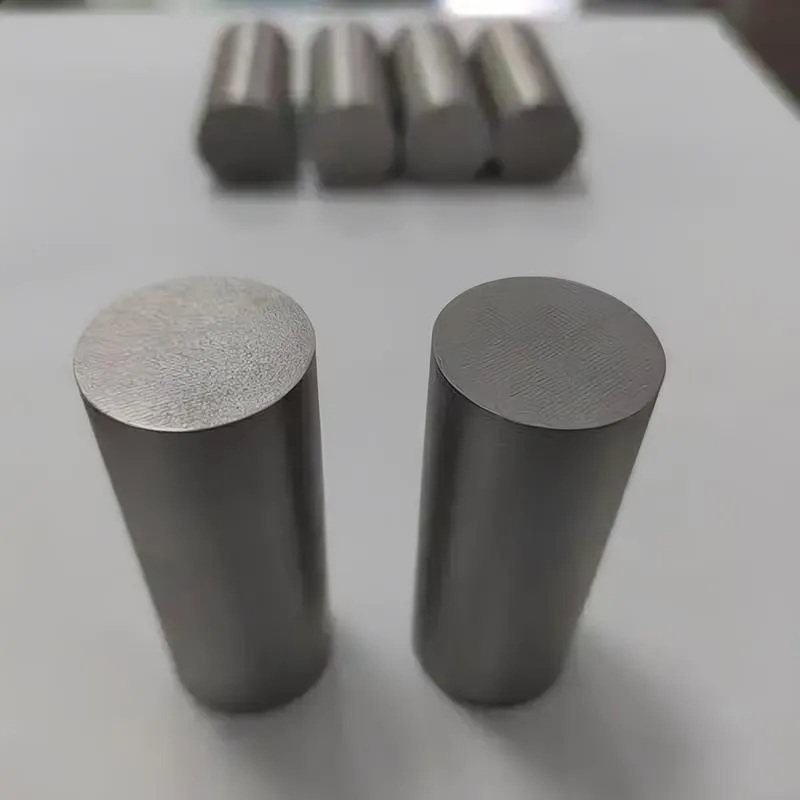
Schmolz + Bickenbach,Formadur® 2316/2316 ESR Plastic Mold Steel Sheet,Plate
Product Code : STI-GSTI-470-CU
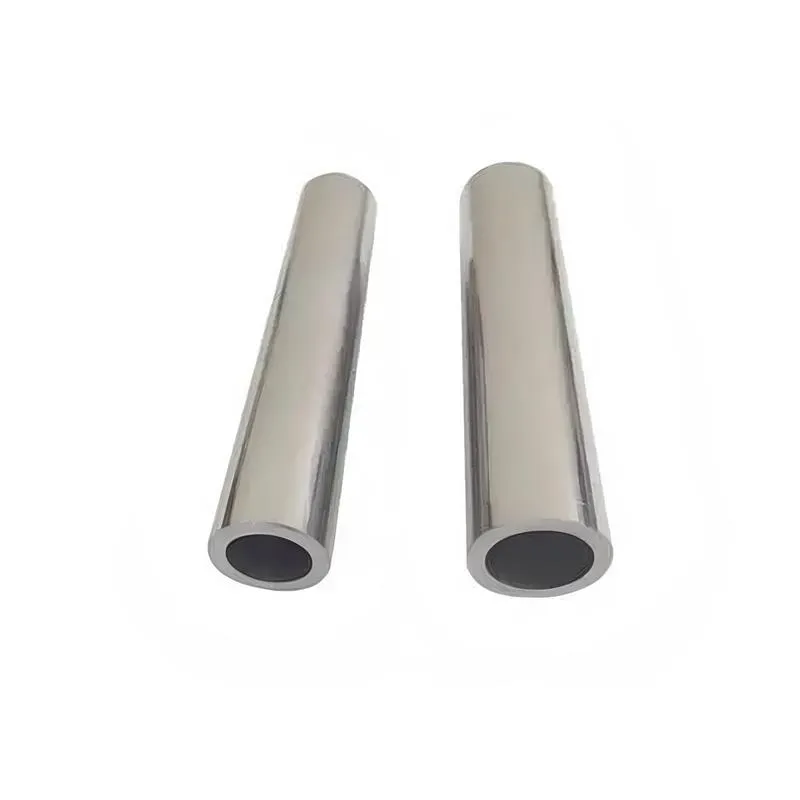
We provide Schmolz + Bickenbach Formadur® 2316/2316 ESR Plastic Mold Steel Sheet/Plate is available in Bar (Round bar, Flat bar), Ribbon, Wire, Rods, Tube,Seamless Tube,Pipe, Ingots, Plate, Sheet/Plate, Strip and Forging Stock.,Purity, chemical composition, size, etc. can all be customized to meet specific requirements.
Please contact us if you need customized services. We will contact you with the price and availability in 24 hours.
Schmolz + Bickenbach Formadur® 2316/2316 ESR Plastic Mold Steel Sheet/Plate Product Information
-:-
For detailed product information, please contact sales.
-:
Schmolz + Bickenbach Formadur® 2316/2316 ESR Plastic Mold Steel Sheet/Plate Synonyms
-:-
For detailed product information, please contact sales.
-:
Schmolz + Bickenbach Formadur® 2316/2316 ESR Plastic Mold Steel Product Information
-:-
For detailed product information, please contact sales.
-:
# **SCHMOLZ + BICKENBACH Formadur® 2316 / 2316 ESR | Premium Corrosion-Resistant Martensitic Stainless Mold Steel**
## **Overview**
SCHMOLZ + BICKENBACH **Formadur® 2316** and its enhanced variant **Formadur® 2316 ESR** represent the industry benchmark for high-performance, corrosion-resistant martensitic stainless steels in plastic injection molding. Engineered specifically to withstand corrosive attack from aggressive plastics, acid condensation, and humid workshop environments, this grade offers an optimal balance of **excellent corrosion resistance, very good polishability, and high wear resistance** after hardening. The **ESR (Electroslag Remelted)** version delivers a "Superclean" microstructure with superior homogeneity, isotropy, and polishability, making it the definitive choice for high-end medical, optical, and consumer product molds.
## **Key Features:**
* **Superior Corrosion Resistance:** High chromium content (~16%) provides outstanding resistance to pitting and uniform corrosion from PVC, flame-retardant plastics, water vapor, and acidic cooling water.
* **Excellent Polishability:** Capable of achieving optical-grade mirror finishes (SPI A1-A2). The **ESR variant** offers flawless, pit-free surfaces due to extreme material purity.
* **High Wear Resistance:** Can be hardened to 50-54 HRC, providing excellent resistance to abrasive filled plastics.
* **Good Dimensional Stability:** Air-hardening characteristics and controlled heat treatment result in minimal distortion.
* **Excellent Homogeneity (ESR):** The ESR refining process eliminates segregation, reduces inclusions to minimal levels, and ensures isotropic mechanical and finishing properties throughout the entire cross-section.
* **Good Toughness:** Maintains adequate impact resistance for mold applications even at high hardness levels.
* **Pre-hardened Option:** Available in pre-hardened condition (~30-34 HRC) for applications not requiring maximum hardness.
---
## **Material Specifications: Formadur® 2316 / 2316 ESR**
### **1. Chemical Composition (wt%)**
| Element | Content Range (wt%) | Function & Benefit |
| :--- | :--- | :--- |
| **Carbon (C)** | 0.33 - 0.40 | Provides hardness and wear resistance. Optimized for a balance of hardenability and corrosion resistance. |
| **Chromium (Cr)** | 15.00 - 17.00 | **Primary element.** Forms a dense, passive chromium oxide layer for corrosion protection. Contributes significantly to hardenability. |
| **Molybdenum (Mo)** | 1.00 - 1.30 | **Critical additive.** Dramatically enhances pitting and crevice corrosion resistance, especially against chlorides. Increases hardenability and strength. |
| **Manganese (Mn)** | ≤ 1.00 | Aids in deoxidation and stabilizes austenite. |
| **Silicon (Si)** | ≤ 0.40 | Deoxidizer. |
| **Vanadium (V)** | ≤ 0.10 (optional) | May be added for grain refinement. |
| **Sulfur (S)** | **≤ 0.005** (Standard) / **≤ 0.001** (ESR) | **Extremely low.** Essential for polishability and isotropic properties. ESR has ultra-low levels. |
| **Phosphorus (P)** | **≤ 0.025** (Standard) / **≤ 0.015** (ESR) | Minimized to prevent embrittlement. |
**Key Distinction of 2316 vs. 1.2083:** The significantly higher **Molybdenum (Mo) content** is the defining difference, providing Formadur® 2316 with substantially better corrosion resistance in chloride-containing environments (e.g., cooling water, PVC processing).
**ESR (Electroslag Remelting) Advantage:**
* **Inclusion Removal:** Reduces oxide and sulfide inclusions by over 90%.
* **Chemical Homogeneity:** Eliminates dendritic segregation.
* **Improved Ductility & Toughness:** Enhances transverse properties.
* **Superior Surface Finish:** Enables defect-free polishing.
### **2. Physical & Mechanical Properties**
#### **Properties in Annealed Condition (for Machining):**
| Property | Typical Value | Condition / Notes |
| :--- | :--- | :--- |
| **Hardness** | ~230 HB (max) | Annealed, spheroidized condition. |
| **Microstructure** | Spheroidized carbides in ferritic matrix | Optimized for machinability. |
#### **Properties in Hardened & Tempered Condition:**
| Tempering Temperature | Resulting Hardness (HRC) | Tensile Strength (MPa) | 0.2% Yield Strength (MPa) | Charpy Impact (J) |
| :--- | :--- | :--- | :--- | :--- |
| **180-200°C** | 52 - 54 | 1900 - 2100 | 1700 - 1850 | 14 - 20 |
| **250-300°C** | 50 - 52 | 1750 - 1900 | 1550 - 1700 | 18 - 25 |
| **350-400°C** | 48 - 50 | 1600 - 1750 | 1400 - 1550 | 22 - 30 |
#### **Properties in Pre-hardened Condition (Delivery Option):**
* **Hardness:** 290 - 330 HB (29 - 33 HRC)
* **Tensile Strength:** ~1000 - 1150 MPa
* **Yield Strength:** ~850 - 950 MPa
* **Application:** For large mold bases or inserts where corrosion resistance is needed but maximum wear resistance is not critical.
#### **General Physical Properties:**
* **Density:** ~7.75 g/cm³
* **Thermal Conductivity:** ~24 W/m·K (at 20°C)
* **Coefficient of Thermal Expansion:** ~10.5 x 10⁻⁶ /K (20-100°C)
* **Modulus of Elasticity:** ~215,000 MPa
#### **Corrosion Resistance Data:**
* **Pitting Resistance Equivalent Number (PREN):** **~19-21** (PREN = %Cr + 3.3x%Mo + 16x%N). This is significantly higher than 1.2083 (PREN ~13), indicating excellent resistance to pitting.
* **Relative Performance:** Offers 3-5 times better corrosion resistance in chloride environments compared to standard 13% Cr steels (1.2083).
* **Plastic Compatibility:** Highly resistant to: PVC (hydrochloric acid), flame-retardant ABS/PC (bromine compounds), POM (formic acid), and all common engineering plastics.
### **3. Machining & Finishing Properties**
| Operation | Performance & Recommendations |
| :--- | :--- |
| **Machining (Annealed)** | **Fair to Moderate.** The high alloy content (Cr, Mo) increases strength and work-hardening tendency. Use sharp, wear-resistant carbide tools, rigid setups, moderate speeds, and ample coolant. |
| **Electrical Discharge Machining (EDM)** | **Excellent.** Performs very well in both wire and sinker EDM. The **ESR grade** provides exceptionally smooth and consistent EDM surfaces. |
| **Grinding** | **Very Good.** Grinds well with proper wheels (aluminum oxide or CBN) and coolant. Avoid excessive heat input to prevent softening or cracking. |
| **Polishing** | **Outstanding (ESR) / Excellent (Standard).** The **ESR variant** is capable of the highest **SPI A1 (Mirror) finishes** without pits or defects. The standard grade achieves SPI A2/B1 easily. Progress through fine grits to diamond paste. |
| **Texturing (Etching, EDM, Laser)** | **Excellent.** The homogeneous structure of the **ESR grade** allows for the most precise and uniform textures, making it ideal for high-end cosmetic parts. |
| **Welding** | **Possible with strict procedures.** Requires high preheat (300-350°C), use of matching or over-alloyed filler (e.g., 316L for root passes), and mandatory post-weld tempering (≥500°C). Best performed by specialists. |
---
## **Applicable International Standards & Cross-References**
| Standard | Designation | Note |
| :--- | :--- | :--- |
| **SCHMOLZ + BICKENBACH** | **Formadur® 2316** / **2316 ESR** | Proprietary brand names. |
| **DIN / EN / W-Nr.** | **1.2316** | Standard designation. |
| **AISI / ASTM** | **420 Modified (with Mo)** / **S42000+Mo** | Not a direct AISI equivalent; the Mo addition makes it proprietary. |
| **ISO 4957** | **X36CrMo17** | Closest standard equivalent. |
| **Uddeholm** | **STAVAX® ESR** (similar to 1.2083) / **CORRAX®** (pre-hardened, similar) | Note: Uddeholm's primary 16% Cr grade is **POLMAX** for pre-hardened. |
| **Böhler / voestalpine** | **M340 ISOBLOC®** / **M333 ISODUR®** | Similar corrosion-resistant grades. |
| **ThyssenKrupp** | **GS-316** | Equivalent grade. |
| **Japanese (JIS)** | **SUS420J2 Modified** | |
| **Chinese (GB)** | **4Cr13Mo** (similar concept) | |
---
## **Heat Treatment Guidelines (for Through-Hardening)**
1. **Soft Annealing:** 780-800°C, slow furnace cool to 650°C, then air cool. Target: ≤ 230 HB.
2. **Stress Relieving (after rough machining):** 600-650°C, 2 hours, slow cool.
3. **Hardening:**
* **Preheat:** 550°C and 850°C (dual preheat is recommended).
* **Austenitize:** **1000-1020°C.** Use vacuum or controlled atmosphere. Soak time: 20-30 min/25mm.
* **Quench:** In **air** (for simple shapes) or **high-pressure gas** (vacuum furnace, preferred for minimal distortion). Oil quenching is possible but increases distortion and cleaning difficulty.
4. **Tempering:** **Immediately after quenching** (at ~50-80°C). Temper between **180-400°C** for at least 2 hours to achieve desired hardness. **Double tempering is strongly recommended** for dimensional stability and stress relief.
5. **Sub-Zero Treatment (Optional):** For maximum dimensional stability and hardness, treat at -80°C to -120°C between tempers.
---
## **Product Applications**
Formadur® 2316 is the **material of choice for corrosive plastic injection molds** and components where part appearance, mold longevity, and resistance to chemical attack are critical.
**Primary Application Areas:**
**A. Molds for Corrosive & Hygroscopic Plastics:**
* **Polyvinyl Chloride (PVC)** – all types (rigid, flexible).
* **Flame-Retardant (FR) Plastics** containing halogenated compounds (Bromine, Chlorine).
* **Polyacetals (POM)**, which can degrade to form formic acid.
* **Polyamide (PA)** and other engineering plastics in humid environments.
**B. High-End Surface Quality Molds:**
* **Optical Components:** Lenses, light guides, reflectors (especially **ESR grade**).
* **Consumer Electronics:** High-gloss housings for smartphones, laptops, cameras.
* **Automotive Lenses & Trim:** Where clarity and finish are paramount.
**C. Medical & Food Packaging Molds:**
* **Medical Device Housings:** Requires cleanability, corrosion resistance, and smooth surfaces.
* **Food Contact Parts:** Resists corrosion from cleaning agents and food acids.
**D. General High-Performance Molds:**
* **Hot Runner Components** (manifolds, nozzles) for corrosive materials.
* **Cavity & Core Inserts** for all the above applications.
* **Ejector Sleeves & Pins** in corrosive environments.
**Typical Mold Components:**
* Cavities and cores
* Stripper plates
* Inserts
* Hot runner system components
* Ejector pins and sleeves
**Not Recommended For:**
* **Extremely abrasive plastics** (e.g., >40% long glass fiber) without protective coatings – consider a high-hardness tool steel like 1.2085 or 1.2344.
* **Hot work tooling** like die casting (insufficient high-temperature strength).
* **Structural mold bases** where pre-hardened P20-type steels are more cost-effective (unless in a highly corrosive factory environment).
---
## **Selection Guide: 2316 ESR vs. Standard 2316 vs. 1.2083**
| Criterion | **Formadur® 2316 ESR** | **Formadur® 2316 (Std)** | **Formadur® 2083 (1.2083)** |
| :--- | :--- | :--- | :--- |
| **Corrosion Resistance** | **Excellent (Best)** | **Excellent** | Very Good |
| **Polishability (Max Finish)** | **SPI A1 (Optical)** | SPI A2 | SPI A2/B1 |
| **Texture Uniformity** | **Excellent** | Very Good | Good |
| **Homogeneity/Isotropy** | **Excellent (ESR)** | Good | Good (Very Good if ESR) |
| **Cost** | Highest | High | Moderate |
| **Best For** | Medical optics, luxury goods, flawless textures | General corrosive plastics, high-gloss parts | Moderately corrosive plastics, good polish needed |
---
**Disclaimer:**
The information provided is based on typical data for SCHMOLZ + BICKENBACH Formadur® 2316 steels. Properties can vary within specification ranges and are highly dependent on proper heat treatment. This document is for informational purposes only and does not constitute a guarantee. For critical applications, especially when specifying the **ESR** quality, always consult the official manufacturer's documentation. The superior performance of the ESR variant justifies its premium for applications where surface perfection is non-negotiable.
-:-
For detailed product information, please contact sales.
-:
Schmolz + Bickenbach Formadur® 2316/2316 ESR Plastic Mold Steel Specification
Dimensions
Size:
Diameter 20-1000 mm Length <7126 mm
Size:We can customized as required
Standard:
Per your request or drawing
We can customized as required
Properties(Theoretical)
Chemical Composition
-:-
For detailed product information, please contact sales.
-:
Schmolz + Bickenbach Formadur® 2316/2316 ESR Plastic Mold Steel Properties
-:-
For detailed product information, please contact sales.
-:
Applications of Schmolz + Bickenbach Formadur® 2316/2316 ESR Plastic Mold Steel Sheet,Plate
-:-
For detailed product information, please contact sales.
-:
Chemical Identifiers Schmolz + Bickenbach Formadur® 2316/2316 ESR Plastic Mold Steel Sheet,Plate
-:-
For detailed product information, please contact sales.
-:
Packing of Schmolz + Bickenbach Formadur® 2316/2316 ESR Plastic Mold Steel Sheet/Plate
-:-
For detailed product information, please contact sales.
-:
Standard Packing:
-:-
For detailed product information, please contact sales.
-:
Typical bulk packaging includes palletized plastic 5 gallon/25 kg. pails, fiber and Steel Sheet/Plate drums to 1 ton super sacks in full container (FCL) or truck load (T/L) quantities. Research and sample quantities and hygroscopic, oxidizing or other air sensitive materials may be packaged under argon or vacuum. Solutions are packaged in polypropylene, plastic or glass jars up to palletized 3597 gallon liquid totes Special package is available on request. E FORUs’ is carefully handled to minimize damage during storage and transportation and to preserve the quality of our products in their original condition