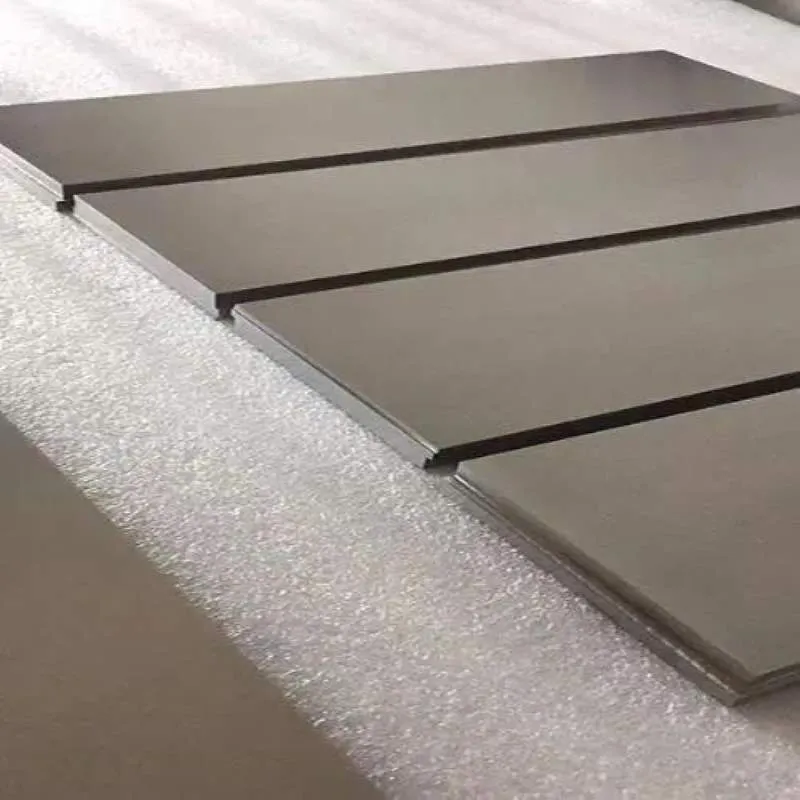
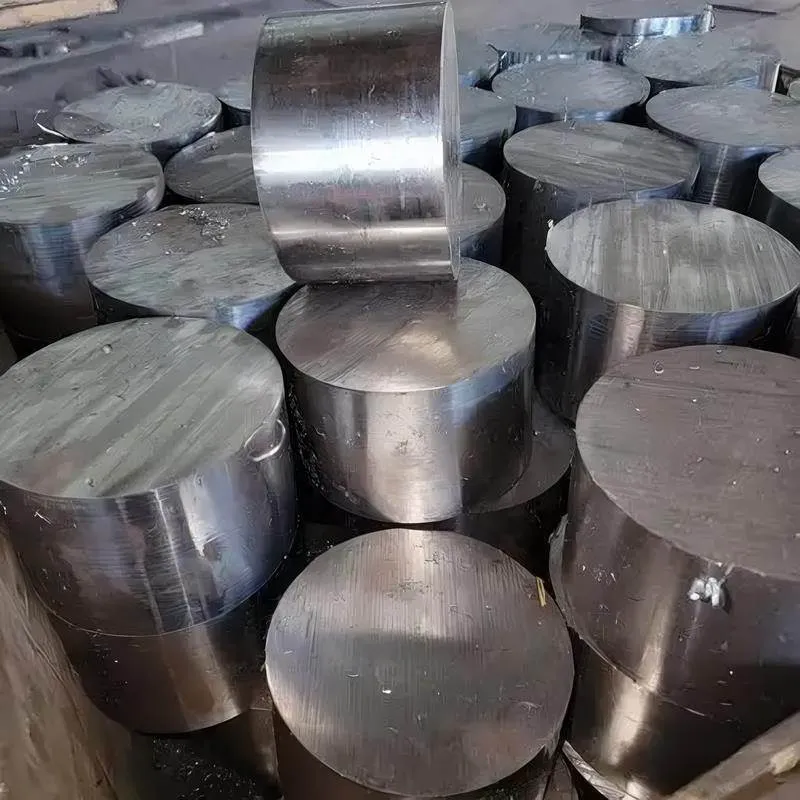
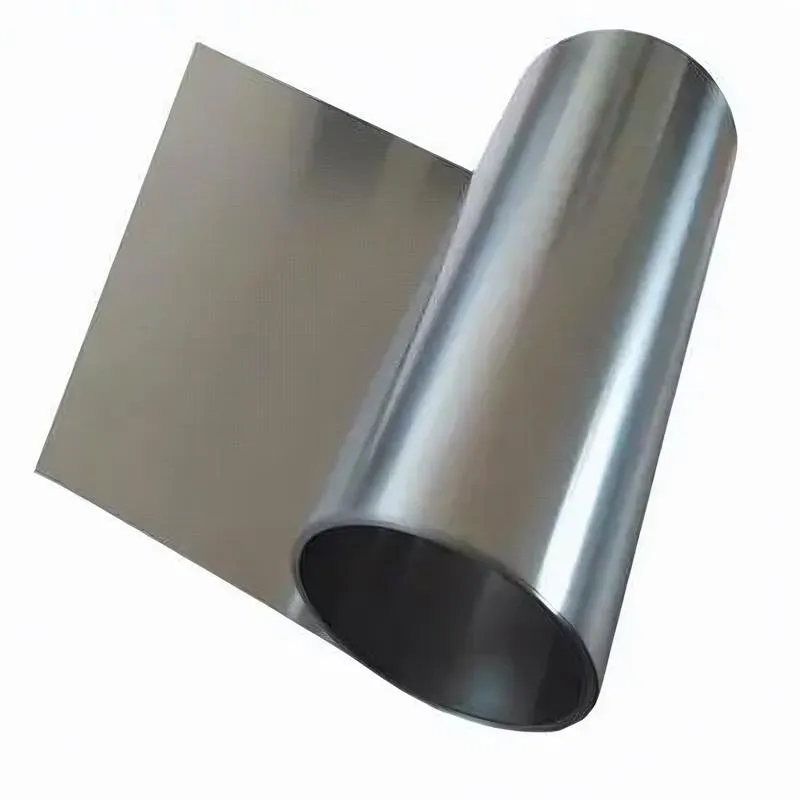
Schmolz + Bickenbach,Cryodur® 2363 (A-2) Cold Work Die Steel Sheet,Plate
Product Code : STI-GSTI-482-CU
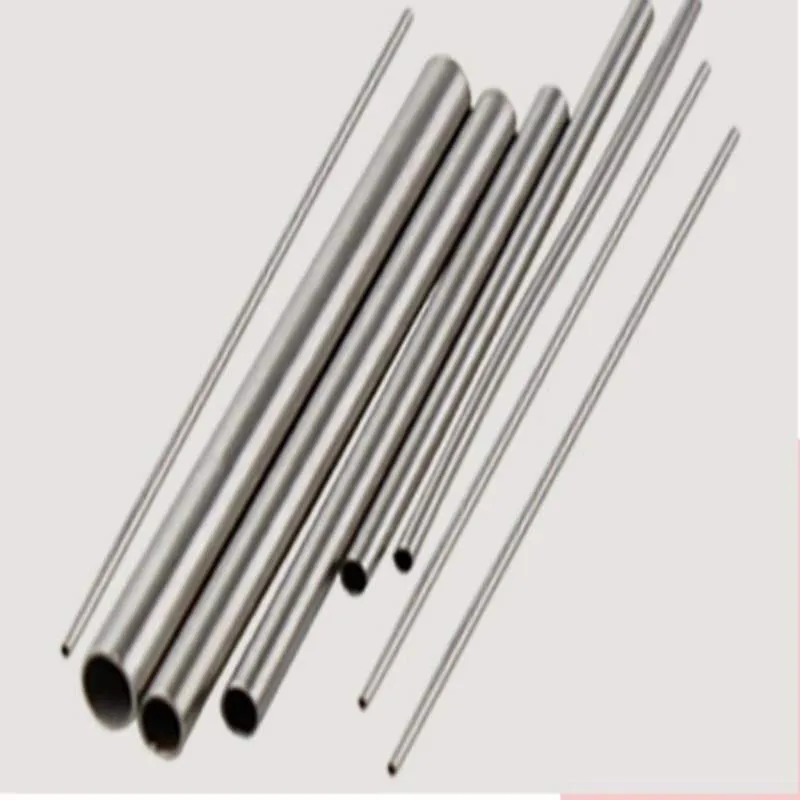
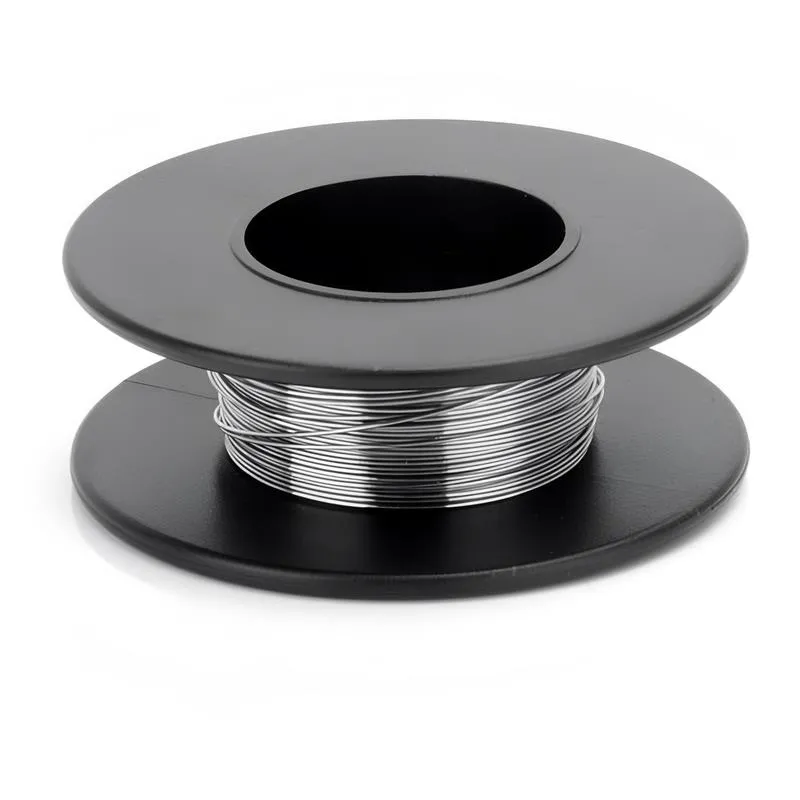
We provide Schmolz + Bickenbach Cryodur® 2363 (A-2) Cold Work Die Steel Sheet/Plate is available in Bar (Round bar, Flat bar), Ribbon, Wire, Rods, Tube,Seamless Tube,Pipe, Ingots, Plate, Sheet/Plate, Strip and Forging Stock.,Purity, chemical composition, size, etc. can all be customized to meet specific requirements.
Please contact us if you need customized services. We will contact you with the price and availability in 24 hours.
Schmolz + Bickenbach Cryodur® 2363 (A-2) Cold Work Die Steel Sheet/Plate Product Information
-:-
For detailed product information, please contact sales.
-:
Schmolz + Bickenbach Cryodur® 2363 (A-2) Cold Work Die Steel Sheet/Plate Synonyms
-:-
For detailed product information, please contact sales.
-:
Schmolz + Bickenbach Cryodur® 2363 (A-2) Cold Work Die Steel Product Information
-:-
For detailed product information, please contact sales.
-:
# **SCHMOLZ + BICKENBACH Cryodur® 2363 (A-2) | Premium Medium-Alloy Air-Hardening Cold Work Tool Steel**
## **Overview**
SCHMOLZ + BICKENBACH **Cryodur® 2363** is a high-quality, medium-alloy, chromium-molybdenum-vanadium cold work tool steel corresponding to the AISI A2 (DIN 1.2363) classification. Renowned as one of the most versatile and widely used cold work steels, it offers an **excellent balance of wear resistance, toughness, dimensional stability, and air-hardening capability**. The "Cryodur®" designation signifies production to stringent quality standards, ensuring consistent microstructure and predictable performance. A-2 type steels are characterized by their good through-hardenability with minimal distortion, making them suitable for intricate tools and dies requiring precision and reliability in demanding production environments.
## **Key Features:**
* **Excellent Balance of Wear Resistance & Toughness:** Provides superior wear resistance compared to oil-hardening O-series steels, while maintaining significantly better toughness than high-carbon, high-chromium D-series steels.
* **Deep Air-Hardening:** Exhibits excellent hardenability, allowing uniform through-hardening of substantial sections with minimal distortion and low risk of cracking, due to its air-quenching nature.
* **Good Dimensional Stability:** Minimal size change and predictable behavior during heat treatment enable the manufacture of precision tools with tight tolerances.
* **Good Machinability:** In the properly annealed condition, offers reasonable machinability for its alloy content.
* **Good Grindability:** Responds well to grinding operations, allowing for precise finishing and sharp cutting edges.
* **Good Resistance to Tempering:** Maintains hardness adequately during service, with useful properties retained up to approximately 400-450°C.
* **Versatility:** Suitable for a very broad range of cold work applications, from blanking and forming to gauges and machine components.
---
## **Material Specifications: Cryodur® 2363 (A-2)**
### **1. Chemical Composition (wt%)**
| Element | Content Range (wt%) | Function & Metallurgical Benefit |
| :--- | :--- | :--- |
| **Carbon (C)** | 0.95 - 1.05 | Provides high matrix hardness and forms carbides for wear resistance. The level is optimized for the balance of properties. |
| **Manganese (Mn)** | 0.40 - 0.70 | Aids in deoxidation and enhances hardenability. |
| **Silicon (Si)** | 0.15 - 0.40 | Deoxidizer and strengthens the ferrite matrix. |
| **Chromium (Cr)** | 4.80 - 5.50 | **Primary alloying element.** Provides deep hardenability, contributes significantly to wear resistance via chromium carbides (M₇C₃), and improves corrosion resistance slightly. |
| **Molybdenum (Mo)** | 0.90 - 1.20 | Enhances hardenability (especially in larger sections), improves toughness, and increases resistance to tempering. |
| **Vanadium (V)** | 0.15 - 0.35 | Forms hard, fine vanadium carbides (MC type) that improve wear resistance and help refine the grain size during heat treatment. |
| **Sulfur (S)** | ≤ 0.005 | Very low for optimal transverse toughness and polishability. |
| **Phosphorus (P)** | ≤ 0.015 | Minimized to prevent embrittlement. |
**Metallurgical Characteristics:**
The Cr-Mo-V balance provides a fine dispersion of mixed carbides (primarily M₇C₃ with some MC) in a hardened martensitic matrix. This structure delivers the characteristic A2 balance: better wear resistance than simpler oil-hardening steels (like O1) due to higher carbide volume, and better toughness than higher-carbon, higher-alloy steels (like D2) due to a less massive carbide network.
### **2. Physical & Mechanical Properties**
#### **Properties in Annealed Condition:**
* **Hardness:** ~210-240 HB
* **Microstructure:** Spheroidized carbides in ferritic matrix.
* **Machinability:** Fair to Good (for its hardness and alloy content).
#### **Properties in Hardened & Tempered Condition:**
| Tempering Temperature | Resulting Hardness (HRC) | 0.2% Yield Strength (MPa) | Tensile Strength (MPa) | Impact Toughness (Charpy V, J) |
| :--- | :--- | :--- | :--- | :--- |
| **150-200°C** | 61 - 63 | ~2150 - 2350 | ~2350 - 2550 | 8 - 14 |
| **250-300°C** | 60 - 62 | ~2050 - 2250 | ~2250 - 2450 | 10 - 16 |
| **400-450°C** | 58 - 60 | ~1850 - 2050 | ~2050 - 2250 | 14 - 22 |
| **500-550°C** | 55 - 57 | ~1650 - 1850 | ~1850 - 2050 | 20 - 30 |
**Typical Service Condition:** For a balance of wear resistance and toughness, tempering at **400-450°C to 58-60 HRC** is extremely common. For maximum wear resistance where toughness is less critical, tempering at **180-200°C to 61-63 HRC** is used.
#### **Physical Properties:**
* **Density:** ~7.80 g/cm³
* **Thermal Conductivity:** ~30 W/m·K (at 20°C)
* **Coefficient of Thermal Expansion:** 11.5 x 10⁻⁶ /K (20-100°C)
* **Modulus of Elasticity:** 210 GPa
* **Specific Heat Capacity:** ~460 J/kg·K
#### **Comparative Positioning:**
| Property | Cryodur® 2363 (A2) | O1 (Oil-Hardening) | D2 (High-Cr) | S7 (Shock-Resisting) |
| :--- | :--- | :--- | :--- | :--- |
| **Typical Hardness** | 58-62 HRC | 58-62 HRC | 58-62 HRC | 55-59 HRC |
| **Wear Resistance** | **Very Good** | Good | **Excellent** | Good |
| **Toughness** | Good | Good | Fair | **Excellent** |
| **Dimensional Stability** | **Excellent (Air-Harden)** | Fair (Oil-Harden) | Very Good | Excellent |
| **Distortion** | **Low** | Medium-High | Low | Low |
### **3. Machining & Finishing**
* **Machining (Annealed):** Fair to Good. Use positive geometry carbide tools with moderate speeds/feeds. It is more demanding to machine than O1 due to higher alloy content and initial hardness.
* **Grinding:** Good. Standard aluminum oxide wheels perform well. The material is generally considered to have good grindability for a high-hardness tool steel.
* **EDM:** Suitable and commonly used. Both wire and sinker EDM perform well.
* **Polishing:** Good. Can achieve fine finishes, though achieving a perfect mirror polish is more challenging than with more homogeneous steels like D2 (due to carbide size/distribution).
* **Welding:** **Possible but requires great caution.** High crack sensitivity. Requires thorough preheating (400-450°C), use of low-hydrogen matching electrodes (A2 type), slow cooling, and immediate post-weld tempering. Generally avoided for critical tool edges.
---
## **International Standards & Cross-References**
| Standard | Designation | Note |
| :--- | :--- | :--- |
| **SCHMOLZ + BICKENBACH** | **Cryodur® 2363** | Proprietary brand name for premium quality. |
| **DIN / EN / W-Nr.** | **1.2363** | |
| **AISI / ASTM** | **A2** | |
| **ISO 4957** | **X100CrMoV5-1** | |
| **Uddeholm** | **ARNE** (equivalent to A2) | |
| **Böhler / voestalpine** | **K110** (Equivalent to D2) / **A200** (for A2) | Note: K110 is D2 (1.2379), which is different. A200 is Böhler's A2. |
| **Japanese (JIS)** | **SKD12** | Common JIS equivalent for A2. |
| **Chinese (GB)** | **Cr5Mo1V** | |
---
## **Heat Treatment Guidelines**
1. **Soft Annealing:** Heat to 840-870°C, hold sufficiently (e.g., 2h/25mm), slow cool in furnace to 600°C (approx. 15°C/hour), then air cool. Target: ≤ 240 HB.
2. **Stress Relieving (after rough machining):** 600-650°C for 2 hours, slow cool.
3. **Preheating:** Essential. Preheat at 500-550°C and 800-850°C to minimize thermal shock and distortion.
4. **Austenitizing (Hardening):**
* **Temperature:** **940-970°C.** Commonly used range is 950-960°C. Use controlled atmosphere or vacuum.
* **Soak Time:** 20-40 minutes per 25mm of ruling section. Avoid excessive time at temperature.
5. **Quenching:** In **still or forced air.** This is the standard method. For complex shapes or very large masses, **high-pressure gas quenching** in a vacuum furnace is ideal to minimize distortion. **Oil quenching is possible but increases distortion and cracking risk significantly and is not recommended for precision tools.**
6. **Tempering:**
* **Must be performed immediately** after quenching (when parts reach 50-80°C).
* **Temperature:** As per required final properties (see table above). **400-450°C is most common for general purpose.**
* **Double tempering is strongly recommended.** Hold for at least 2 hours per temper, air cool to room temperature between tempers.
* **Cryogenic Treatment:** Optional but beneficial. A deep freeze treatment (-80°C to -120°C) between the first and second temper can convert retained austenite, improving dimensional stability and slightly increasing hardness.
---
## **Product Applications**
Cryodur® 2363 (A-2) is one of the most **versatile and widely applied cold work tool steels**, suitable for a vast array of applications where a balance of wear resistance, toughness, and stability is required.
**Primary Application Areas:**
**A. Blanking, Shearing, and Punching Dies:**
* **Progressive Dies** for medium-to-high production runs.
* **Fineblanking Dies.**
* **Punches and Dies** for sheet metal of moderate thickness and strength.
* **Shear Blades** and **Slitter Knives** for metal coils.
* **Lamination Dies** for electrical steels.
**B. Forming, Bending, and Drawing Tools:**
* **Forming Rolls** and **Bending Dies.**
* **Drawing Dies** for wires, rods, and tubes.
* **Cold Extrusion Punches and Dies** for less severe applications.
* **Swaging Tools.**
**C. Gauges, Fixtures, and Machine Components:**
* **Master Gauges**, **Ring Gauges**, and **Plug Gauges** requiring wear resistance and dimensional stability.
* **Jigs and Fixtures** subject to wear.
* **Liners**, **Bushings**, and **Wear Plates.**
* **Cams** and **Rollers.**
**D. Knives and Blades:**
* **Industrial Knives** for cutting paper, cardboard, textiles, and plastics.
* **Slitter Knives** for non-ferrous metals.
**E. Plastic Molds (Secondary Application):**
* **Injection Mold Inserts** for abrasive plastics (e.g., glass-filled) where higher wear resistance than P20 is needed, but full stainless (1.2083/1.2316) corrosion resistance is not required.
* **Ejector Pins** and **Sleeves** in abrasive environments.
**Typical Components:**
* Punch and die sets for automotive parts
* Thread rolling dies
* Forming inserts for appliance manufacturing
* Wear components in assembly machinery
**When to Choose A-2 / Cryodur® 2363:**
Select this grade as the **versatile "workhorse"** for cold work tooling when:
1. **Wear is a significant concern**, but not so extreme as to require D2.
2. **Good toughness** is needed to prevent chipping or breakage.
3. **Minimal distortion during heat treatment** is critical for precision tools.
4. The application does not involve **severe impact** (choose S7) or **extreme abrasion** (consider D2 or a particle metallurgy grade).
5. A balance of performance, cost, and process reliability is desired.
---
**Disclaimer:**
The information provided is based on typical data for SCHMOLZ + BICKENBACH Cryodur® 2363. Properties can vary within specification ranges and are highly dependent on precise heat treatment, especially austenitizing temperature and tempering cycle. This document is for informational purposes only and does not constitute a guarantee. For critical applications, always consult the official manufacturer's technical documentation. A2's popularity stems from its excellent all-around performance, but proper heat treatment is key to achieving its potential.
-:-
For detailed product information, please contact sales.
-:
Schmolz + Bickenbach Cryodur® 2363 (A-2) Cold Work Die Steel Specification
Dimensions
Size:
Diameter 20-1000 mm Length <7138 mm
Size:We can customized as required
Standard:
Per your request or drawing
We can customized as required
Properties(Theoretical)
Chemical Composition
-:-
For detailed product information, please contact sales.
-:
Schmolz + Bickenbach Cryodur® 2363 (A-2) Cold Work Die Steel Properties
-:-
For detailed product information, please contact sales.
-:
Applications of Schmolz + Bickenbach Cryodur® 2363 (A-2) Cold Work Die Steel Sheet,Plate
-:-
For detailed product information, please contact sales.
-:
Chemical Identifiers Schmolz + Bickenbach Cryodur® 2363 (A-2) Cold Work Die Steel Sheet,Plate
-:-
For detailed product information, please contact sales.
-:
Packing of Schmolz + Bickenbach Cryodur® 2363 (A-2) Cold Work Die Steel Sheet/Plate
-:-
For detailed product information, please contact sales.
-:
Standard Packing:
-:-
For detailed product information, please contact sales.
-:
Typical bulk packaging includes palletized plastic 5 gallon/25 kg. pails, fiber and Steel Sheet/Plate drums to 1 ton super sacks in full container (FCL) or truck load (T/L) quantities. Research and sample quantities and hygroscopic, oxidizing or other air sensitive materials may be packaged under argon or vacuum. Solutions are packaged in polypropylene, plastic or glass jars up to palletized 3609 gallon liquid totes Special package is available on request. E FORUs’ is carefully handled to minimize damage during storage and transportation and to preserve the quality of our products in their original condition