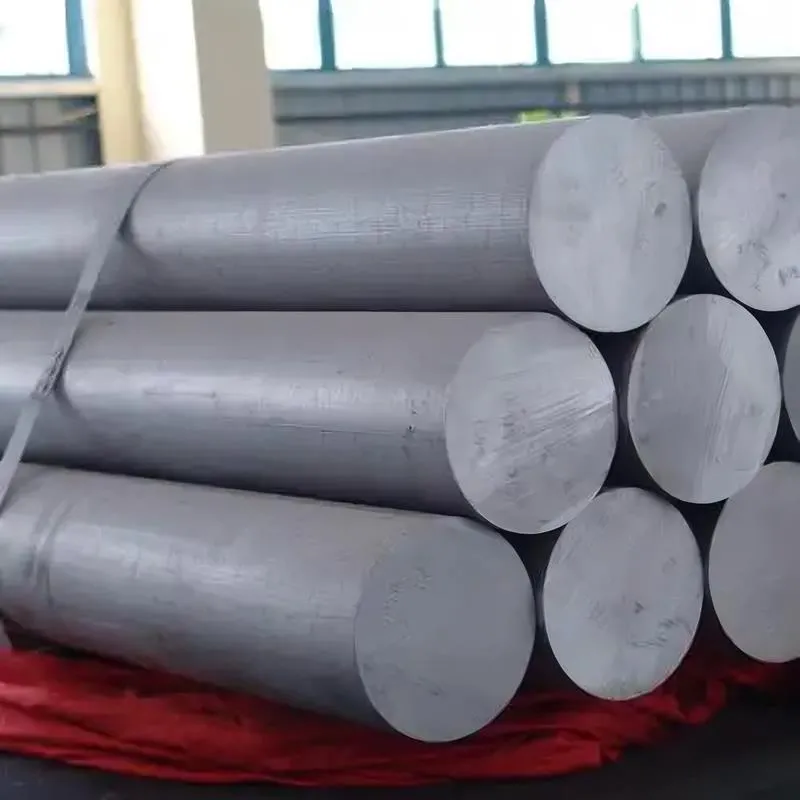
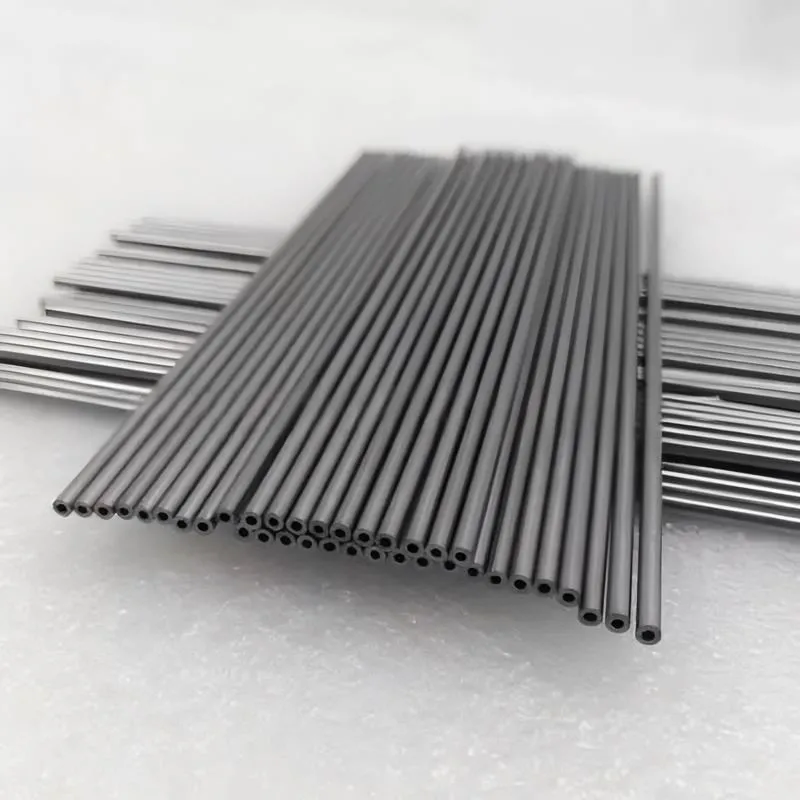
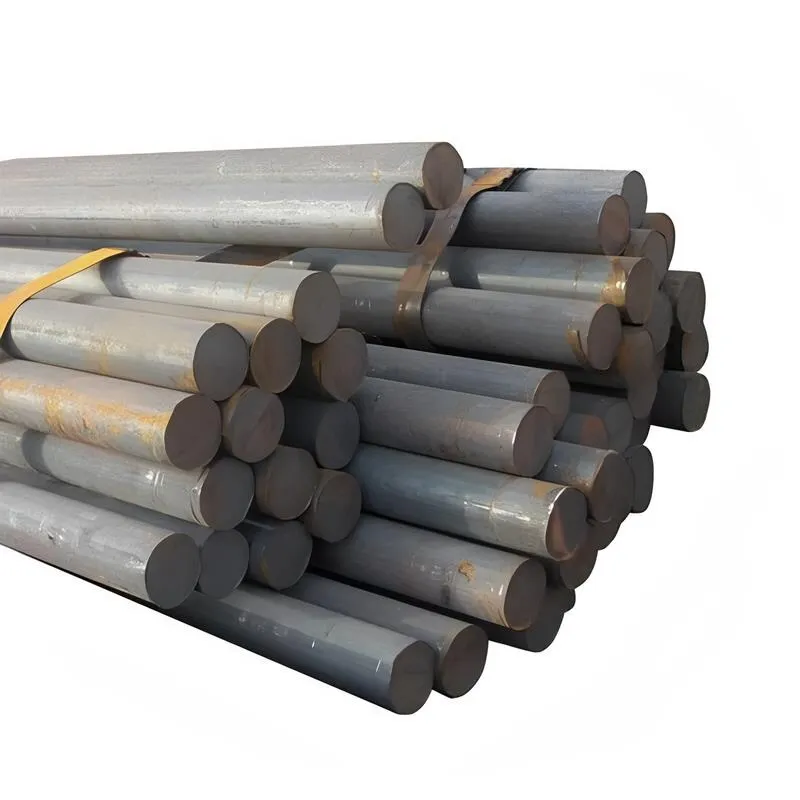
Schmolz + Bickenbach,Thermodur® E38K Hot Work Die Steel Rod/Bar
Product Code : STI-GSTI-476-CU
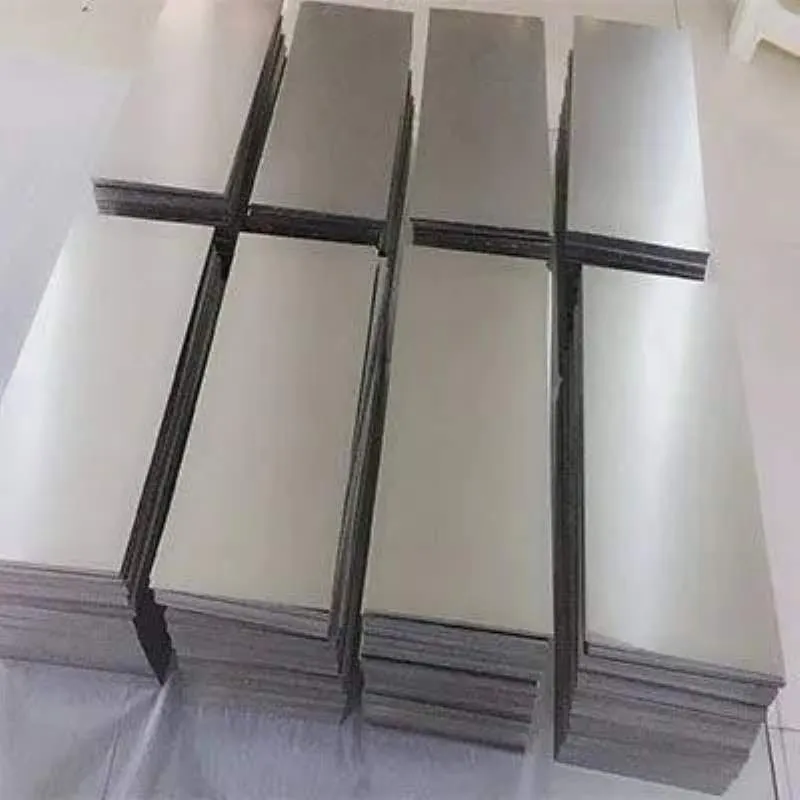
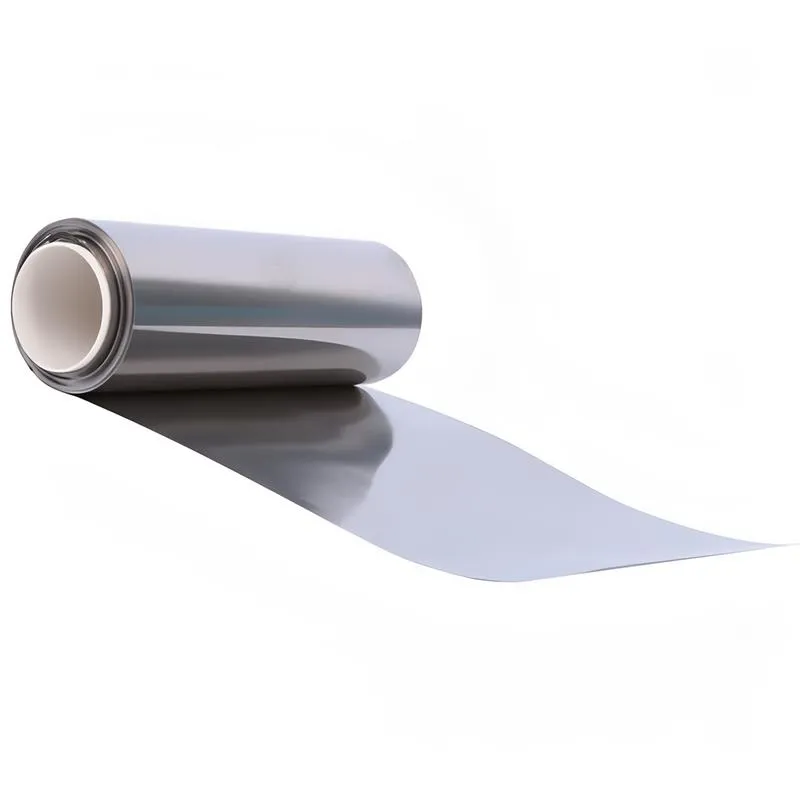
We provide Schmolz + Bickenbach Thermodur® E38K Hot Work Die Steel Rod/Bar is available in Bar (Round bar, Flat bar), Ribbon, Wire, Rod/Bars, Tube,Seamless Tube,Pipe, Ingots, Plate, Sheet, Strip and Forging Stock.,Purity, chemical composition, size, etc. can all be customized to meet specific requirements.
Please contact us if you need customized services. We will contact you with the price and availability in 24 hours.
Schmolz + Bickenbach Thermodur® E38K Hot Work Die Steel Rod Product Information
-:-
For detailed product information, please contact sales.
-:
Schmolz + Bickenbach Thermodur® E38K Hot Work Die Steel Rod Synonyms
-:-
For detailed product information, please contact sales.
-:
Schmolz + Bickenbach Thermodur® E38K Hot Work Die Steel Product Information
-:-
For detailed product information, please contact sales.
-:
# **SCHMOLZ + BICKENBACH Thermodur® E38K | High Thermal Conductivity Chromium-Hot Work Die Steel**
## **Overview**
SCHMOLZ + BICKENBACH **Thermodur® E38K** is a specialized, medium-alloy chromium hot work die steel engineered to address a critical performance parameter in die casting and hot forming: **maximizing heat extraction from the die surface**. While maintaining the essential hot strength and toughness characteristics of its class, E38K is distinguished by its **significantly enhanced thermal conductivity**, which is approximately **25-40% higher than conventional H11/H13 steels**. This unique property profile makes it the material of choice for die components where rapid heat dissipation is paramount to reduce thermal gradients, minimize heat checking, and improve casting quality.
## **Key Features:**
* **High Thermal Conductivity:** The defining characteristic, enabling superior heat transfer away from the die working surface to cooling channels. This reduces the peak surface temperature and thermal stress gradients.
* **Good Thermal Fatigue Resistance:** By lowering the maximum surface temperature and thermal gradient, the material inherently improves resistance to heat checking (thermal fatigue cracking).
* **High Toughness:** Maintains excellent impact toughness, particularly at elevated temperatures, providing good resistance to mechanical and thermal shock.
* **Good Wear & Soldering Resistance:** While not matching the wear resistance of high-vanadium grades, it offers adequate performance for many applications and can be surface-treated if needed.
* **Good Machinability:** Comparable to or better than standard H11-type steels in the annealed condition.
* **Cost-Effective Performance:** Offers a strategic balance for applications where heat extraction is the limiting factor, often outperforming more expensive, higher-alloyed steels in this specific context.
---
## **Material Specifications: Thermodur® E38K**
### **1. Chemical Composition (wt%)**
| Element | Content Range (wt%) | Function & Rationale for High Conductivity |
| :--- | :--- | :--- |
| **Carbon (C)** | 0.35 - 0.40 | Provides necessary hardness and strength. Kept moderate to not impede thermal conductivity excessively. |
| **Silicon (Si)** | 0.80 - 1.20 | Contributes to strength and oxidation resistance. Controlled to balance conductivity. |
| **Manganese (Mn)** | 0.30 - 0.50 | Standard for deoxidation and hardenability. |
| **Chromium (Cr)** | 4.80 - 5.50 | Provides hardenability, hot strength, and oxidation resistance. The primary alloying element. |
| **Molybdenum (Mo)** | 1.20 - 1.50 | Essential for hardenability, high-temperature strength, and tempering resistance. |
| **Vanadium (V)** | 0.30 - 0.50 | **Deliberately Lower.** Reduced compared to H13 (~1.0% V). Vanadium carbides are excellent for wear resistance but **reduce thermal conductivity**. The lower V content is a key reason for E38K's high conductivity. |
| **Special Considerations** | Low residual elements | Overall alloy content is optimized to minimize lattice strain and electron scattering, maximizing heat transfer through the steel matrix. |
**Metallurgical Basis for High Conductivity:**
Thermal conductivity in steels is primarily a function of the **pure iron lattice**. Alloying elements and carbides act as scattering centers, reducing conductivity. E38K achieves its performance by:
1. **Minimizing Vanadium:** The most significant factor. High-V carbides (VC) are potent thermal barriers.
2. **Optimized Alloy Balance:** Careful control of all elements to provide necessary service properties with minimal impairment to conductivity.
3. **Cleanliness & Homogeneity:** A uniform microstructure ensures consistent heat flow.
### **2. Physical & Mechanical Properties**
#### **Properties in Annealed Condition:**
* **Hardness:** ~200 HB
* **Machinability:** Good (similar to 1.2343/H11).
#### **Properties in Hardened & Tempered Condition:**
| Tempering Temperature | Hardness (HRC) | 0.2% Yield Strength (MPa) | Tensile Strength (MPa) | Impact Toughness (KV, J) |
| :--- | :--- | :--- | :--- | :--- |
| **540-560°C** | 46 - 48 | 1350 - 1500 | 1550 - 1700 | 40 - 55 |
| **580-600°C** | 44 - 46 | 1200 - 1350 | 1400 - 1550 | 45 - 65 |
| **620-640°C** | 42 - 44 | 1100 - 1250 | 1300 - 1450 | 55 - 75 |
#### **High-Temperature Mechanical Properties (Tempered to ~46 HRC):**
* **Hot Hardness @ 500°C:** ~370 - 400 HV
* **Hot Yield Strength @ 500°C:** ~750 - 900 MPa
* **Toughness at Temperature:** Maintains excellent values.
#### **Thermal & Physical Properties (The Key Differentiator):**
| Property | Thermodur® E38K | Standard H13 (1.2344) | Improvement / Benefit |
| :--- | :--- | :--- | :--- |
| **Thermal Conductivity (20°C)** | **~32 - 35 W/m·K** | ~24 - 26 W/m·K | **+30-40%** |
| **Thermal Conductivity (500°C)** | **~28 - 31 W/m·K** | ~22 - 24 W/m·K | **+25-30%** |
| **Coefficient of Thermal Expansion** | ~11.5 x 10⁻⁶/K | ~11.8 x 10⁻⁶/K | Slightly lower |
| **Density** | 7.78 g/cm³ | 7.80 g/cm³ | Comparable |
| **Specific Heat Capacity** | ~460 J/kg·K | ~460 J/kg·K | Comparable |
**Consequence of High Conductivity:** For the same heat input, an E38K die component will have a **lower peak surface temperature** and a **shallower temperature gradient** than an H13 component. This directly reduces thermal stress, the primary driver of heat checking.
### **3. Machining, Finishing & Surface Treatment**
* **Machining:** Good in annealed condition. Similar parameters to H11.
* **EDM & Grinding:** Performs well with standard practices.
* **Polishing:** Achieves good surface finishes. Its structure allows for effective polishing.
* **Nitriding:** An excellent combination. The high conductivity helps dissipate heat generated during nitriding and in service, while the nitride layer compensates for the slightly lower base wear resistance. **Gas or plasma nitriding is highly recommended** to enhance surface hardness and soldering resistance.
---
## **International Standards & Cross-References**
| Standard | Designation / Relation | Note |
| :--- | :--- | :--- |
| **SCHMOLZ + BICKENBACH** | **Thermodur® E38K** | Proprietary grade focused on high thermal conductivity. |
| **DIN / W-Nr.** | Conceptually similar to **1.2343 (H11)** | E38K is not a standard WNr. It is a proprietary modification with lower V for high conductivity. |
| **AISI / ASTM** | **H11 Modified (Low-V, High-Conductivity)** | Not a standard AISI grade. |
| **Common Industry Name** | **High-Conductivity H11** | Functional description. |
| **Competitor Analogs** | Uddeholm **TOOLOX® 44** (similar concept, but different chemistry - Toolox is a high-strength steel with high conductivity), Bohler **W321** (special grade) | These are different materials but address similar heat extraction challenges. |
---
## **Heat Treatment Guidelines**
The heat treatment is similar to H11-type steels but can leverage the material's stability.
1. **Soft Annealing:** 840-860°C, slow furnace cool.
2. **Stress Relieving:** 600-650°C after rough machining.
3. **Preheating:** 500°C and 800-850°C.
4. **Austenitizing:**
* **Temperature:** **1000-1020°C.** (Can be at the lower end of the H11 range).
* **Atmosphere:** Vacuum or controlled.
* **Soak Time:** 20-30 min/25mm.
5. **Quenching:** In **air** or **high-pressure gas**. Its good hardenability makes air quenching effective for many sections.
6. **Tempering:**
* **Temperature:** **560-620°C** (depending on required hardness).
* **Double tempering is recommended.**
* The high conductivity can lead to more uniform tempering throughout the section.
---
## **Product Applications**
Thermodur® E38K is **strategically applied where heat extraction is the critical challenge**, often in components with limited or inefficient cooling.
### **Primary Application Areas:**
**A. Die Casting - Heat-Extraction-Limited Components:**
* **Core Pins (Especially Long/Slender):** Where internal cooling is difficult. The high conductivity helps pull heat back to the base.
* **Ejector Pins:** Subject to high surface heat with minimal mass for cooling.
* **Shot Sleeves & Gooseneck Nozzles:** Where high thermal shock is coupled with the need for consistent temperature control.
* **Overflows & Vent Pins:** Small features that overheat rapidly.
* **Areas with Poor Cooling Line Placement:** In complex dies where optimal cooling channel layout is impossible.
**B. Hot Forging:**
* **Die Inserts** in forging processes where cooling is challenging and heat build-up leads to softening or heat checking.
* **Punches and Mandrels.**
**C. General Hot Work Tooling:**
* **Components where thermal fatigue (heat checking) is the primary failure mode** and is exacerbated by poor heat dissipation.
* **Tools for which a significant temperature drop between the surface and cooling channel is detrimental.**
### **Application Strategy & Pairing:**
E38K is often used **strategically within a die** rather than for the entire cavity.
* **Example:** A large die may use a **wear-resistant grade like 1.2344 (H13) for the main cavity** but employ **E38K for deep, difficult-to-cool core pins** to prevent them from overheating and failing prematurely.
* It is an excellent **substrate for nitriding**, combining bulk heat extraction with a hard, wear-resistant surface.
### **When NOT to Use E38K:**
* Applications where **abrasive or adhesive wear is the dominant failure mechanism** (e.g., high silicon aluminum, abrasive reinforcements). A higher vanadium grade (H13) or surface-coated steel would be better.
* Applications requiring the **absolute maximum hot hardness** at very high temperatures (>550°C continuously).
---
## **Economic & Performance Rationale**
**The "Thermal Management" Steel:**
E38K should be viewed as a **thermal management solution** as much as a tool steel. Its value is proven in applications where:
1. **Cycle Time Reduction is Sought:** Better heat extraction can allow for faster cycling without increasing die temperature.
2. **Casting Quality is Paramount:** More uniform die temperature improves filling and reduces porosity and soldering.
3. **Die Life is Limited by Heat Checking:** The fundamental reduction in thermal stress directly extends life.
4. **Cooling System Design is Constrained:** It compensates for sub-optimal cooling channel placement.
**Performance Comparison:** In an application failing due to heat checking on a core pin, switching from H13 to E38K can **double or triple the service life** of that specific component, providing a rapid return on investment despite its specialized nature.
---
**Disclaimer:**
The information provided is based on typical data for SCHMOLZ + BICKENBACH Thermodur® E38K. This is a specialized, proprietary grade with a unique property focus. Properties can vary and are dependent on heat treatment and section size. This document is for informational purposes only and does not constitute a specification or warranty. For critical applications, always consult the official manufacturer's technical documentation. The successful use of E38K requires an understanding of the dominant failure mechanism in the application; it is not a direct substitute for all H11/H13 applications but a targeted solution for heat-extraction-limited problems.
-:-
For detailed product information, please contact sales.
-:
Schmolz + Bickenbach Thermodur® E38K Hot Work Die Steel Specification
Dimensions
Size:
Diameter 20-1000 mm Length <7132 mm
Size:We can customized as required
Standard:
Per your request or drawing
We can customized as required
Properties(Theoretical)
Chemical Composition
-:-
For detailed product information, please contact sales.
-:
Schmolz + Bickenbach Thermodur® E38K Hot Work Die Steel Properties
-:-
For detailed product information, please contact sales.
-:
Applications of Schmolz + Bickenbach Thermodur® E38K Hot Work Die Steel Rod
-:-
For detailed product information, please contact sales.
-:
Chemical Identifiers Schmolz + Bickenbach Thermodur® E38K Hot Work Die Steel Rod
-:-
For detailed product information, please contact sales.
-:
Packing of Schmolz + Bickenbach Thermodur® E38K Hot Work Die Steel Rod
-:-
For detailed product information, please contact sales.
-:
Standard Packing:
-:-
For detailed product information, please contact sales.
-:
Typical bulk packaging includes palletized plastic 5 gallon/25 kg. pails, fiber and Steel Rod drums to 1 ton super sacks in full container (FCL) or truck load (T/L) quantities. Research and sample quantities and hygroscopic, oxidizing or other air sensitive materials may be packaged under argon or vacuum. Solutions are packaged in polypropylene, plastic or glass jars up to palletized 3603 gallon liquid totes Special package is available on request. E FORUs’ is carefully handled to minimize damage during storage and transportation and to preserve the quality of our products in their original condition