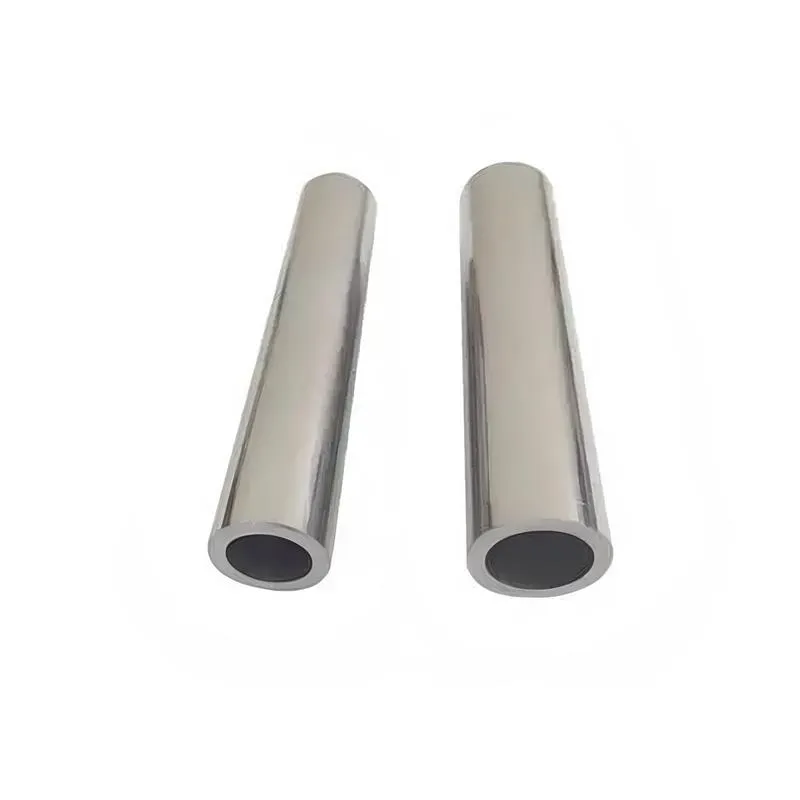
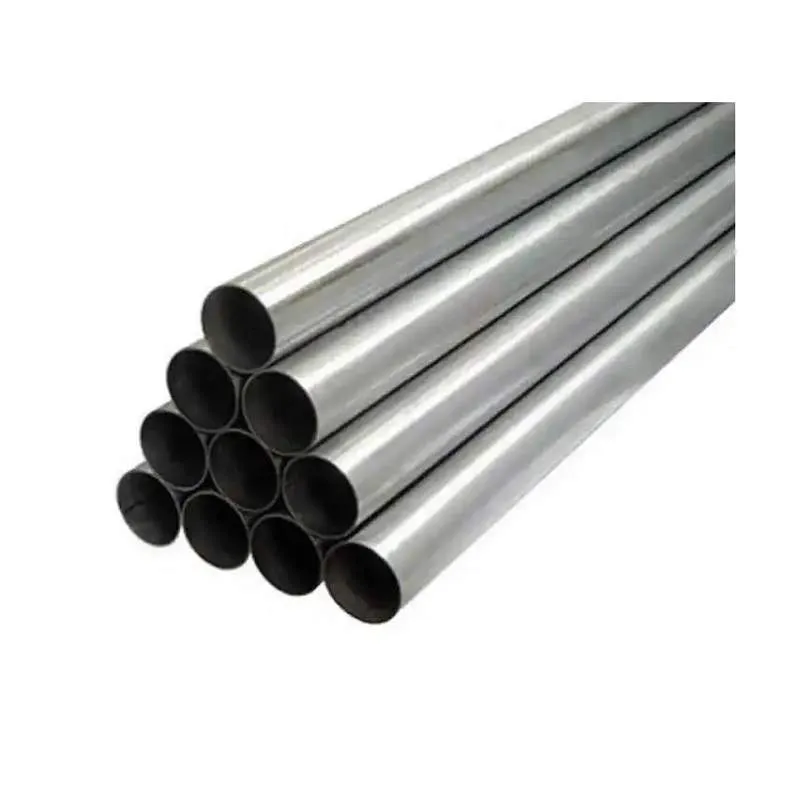
Meehanite,Almanite® W4 Wear and Abrasion Resisting Cast Iron Tube,Pipe
Product Code : STI-IFe-152-CU
We provide Meehanite Almanite® W4 Wear and Abrasion Resisting Cast Iron Tube is available in Bar (Round bar, Flat bar), Ribbon, Wire, Rods, Tube,Seamless Tube,Pipe, Ingots, Plate, Sheet, Strip and Forging Stock.,Purity, chemical composition, size, etc. can all be customized to meet specific requirements.Meehanite,Almanite® W4 Wear and Abrasion Resisting Cast Iron Pipe
Please contact us if you need customized services. We will contact you with the price and availability in 24 hours.
Meehanite Almanite® W4 Wear and Abrasion Resisting Cast Iron Tube Product Information
-:-
For detailed product information, please contact sales.
-:
Meehanite Almanite® W4 Wear and Abrasion Resisting Cast Iron Tube Synonyms
-:-
For detailed product information, please contact sales.
-:
Meehanite Almanite® W4 Wear and Abrasion Resisting Cast Iron Product Information
-:-
For detailed product information, please contact sales.
-:
# **Meehanite® Almanite® W4 Wear and Abrasion Resisting Cast Iron**
## **Product Overview**
**Meehanite Almanite® W4** is a premium **ultra-high-chromium white cast iron** manufactured under the stringent **Meehanite quality control system**, engineered to deliver **maximum abrasion resistance with enhanced corrosion-erosion capabilities**. The "W4" designation represents the **highest-performance grade** in the standard Almanite® wear-resistant family, offering unparalleled wear resistance for the most severe abrasive applications, particularly those involving corrosive or elevated temperature environments.
This specialized material represents the pinnacle of conventional high-chrome white iron technology, with optimized hyper-eutectic chemistry that maximizes the volume fraction of hard chromium carbides (M₇C₃ type) while enhancing matrix properties through advanced alloying. Almanite® W4 is specifically designed for applications where wear resistance is the absolute priority and where service conditions exceed the capabilities of standard high-chrome white irons.
---
## **1. International Standards & Specifications**
| **Standard System** | **Designation** | **Equivalent/Reference** | **Key Characteristics** |
|---------------------|-----------------|--------------------------|------------------------|
| **Meehanite System** | **Almanite® W4** | Proprietary classification | Ultra-premium wear-resistant white cast iron |
| **ASTM International** | **A532 Class III Type D** (Enhanced) | Primary US equivalent | Highest chromium white iron grade |
| **ISO Standard** | **ISO 21988:2006 GX 300 CrMo 30 3** | International specification | Ultra-high-chromium cast iron |
| **DIN Standard** | **DIN 1695 G-X 300 CrMoNi 30 3** | German standard | Highest chromium wear-resistant cast iron |
| **Australian Standard** | **AS 2027 Grade 750-300** | Australian specification | Maximum abrasion resistance grade |
| **Common Names** | 30% Chrome White Iron, Ultra-Hard White Iron, Maximum Wear Resistance Iron | Industry terminology | Almanite® is a registered Meehanite trademark |
**Note:** Almanite® W4 represents the ultimate conventional high-chrome white iron grade, with properties enhanced beyond standard specifications through the Meehanite control system for maximum performance in extreme conditions.
---
## **2. Chemical Composition**
The chemistry of Almanite® W4 is optimized to maximize both abrasion resistance and corrosion resistance through ultra-high chromium content and complementary alloying.
| **Element** | **Typical Range (% wt.)** | **Metallurgical Function** | **Performance Contribution** |
|-------------|---------------------------|---------------------------|-----------------------------|
| **Carbon (C)** | **3.0 - 3.6** | Primary carbide former | High carbon for maximum carbide volume |
| **Chromium (Cr)** | **28.0 - 32.0** | **Maximum carbide former** | Forms abundant M₇C₃ carbides, provides excellent corrosion resistance |
| **Molybdenum (Mo)** | **2.5 - 3.5** | **Matrix strengthener** | Significant hardenability enhancement |
| **Manganese (Mn)** | 0.5 - 1.2 | Austenite stabilizer | Controlled transformation characteristics |
| **Silicon (Si)** | 0.3 - 0.7 | Deoxidizer | Minimal to avoid graphitization |
| **Nickel (Ni)** | **1.5 - 2.5** | **Austenite stabilizer** | Essential for heavy section hardenability |
| **Copper (Cu)** | 0.5 - 1.2 | Austenite stabilizer | Enhances corrosion resistance |
| **Vanadium (V)** | **0.2 - 0.4** | **Carbide refiner** | Forms additional wear-resistant carbides |
| **Niobium (Nb)** | 0.1 - 0.3 (Optional) | Carbide former | Refines microstructure, increases wear resistance |
| **Phosphorus (P)** | ≤ 0.04 (max) | Impurity control | Minimized to prevent embrittlement |
| **Sulfur (S)** | ≤ 0.04 (max) | Impurity control | Minimized for casting quality |
**Microstructural Characteristics (Meehanite Controlled):**
- **Primary Carbides:** **M₇C₃ chromium carbides**, 30-40% volume fraction
- **Secondary Carbides:** Complex carbides (Mo, V, Nb)
- **Carbide Morphology:** Massive, blocky primary carbides with refined secondary carbides
- **Carbide Size:** Coarse primary carbides (designed for maximum abrasion resistance)
- **Matrix Structure:** **Martensitic with minimal retained austenite**
- **Carbide Network:** Continuous carbide network for maximum wear protection
- **Grain Structure:** Refined matrix between carbide colonies
- **Unique Feature:** Ultra-high carbide volume with optimized distribution for maximum abrasion resistance, combined with enhanced corrosion resistance from high chromium content
---
## **3. Mechanical Properties**
### **Primary Mechanical Properties (Heat-Treated Condition):**
- **Hardness:** 650 - 800 HB (60 - 65 HRC)
- **Compressive Strength:** 2,800 - 3,800 MPa (406 - 551 ksi)
- **Impact Resistance:** 3 - 8 J (2 - 6 ft-lb) Charpy
- **Transverse Strength:** 550 - 750 MPa (80 - 109 ksi)
### **Detailed Property Profile:**
| **Property** | **Minimum** | **Typical** | **Maximum** | **Test Standard** |
|--------------|-------------|-------------|-------------|------------------|
| **Macrohardness** | 650 HB | 700-750 HB | 800 HB | ASTM E10 |
| **Microhardness (Carbides)** | 1,600 HV | 1,700-1,900 HV | 2,100 HV | ASTM E384 |
| **Microhardness (Matrix)** | 650 HV | 750-850 HV | 950 HV | ASTM E384 |
| **Compressive Strength** | 2,800 MPa (406 ksi) | 3,200-3,500 MPa (464-508 ksi) | 3,800 MPa (551 ksi) | ASTM E9 |
| **Transverse Rupture Strength** | 550 MPa (80 ksi) | 600-700 MPa (87-102 ksi) | 750 MPa (109 ksi) | Three-point bending |
| **Impact Energy (Charpy Unnotched)** | 3 J (2 ft-lb) | 4-6 J (3-4 ft-lb) | 8 J (6 ft-lb) | ASTM E23 |
| **Young's Modulus** | 210 GPa (30.5 × 10⁶ psi) | 220-230 GPa | 240 GPa | |
| **Fracture Toughness (K₁C)** | 10 MPa√m | 12-16 MPa√m | 18 MPa√m | ASTM E399 |
| **Fatigue Strength** | 200 MPa (29 ksi) | 220-260 MPa (32-38 ksi) | 300 MPa (44 ksi) | Rotating bending, 10⁷ cycles |
### **Wear Resistance Properties (Industry-Leading):**
| **Wear Test** | **Relative Performance** | **Comparison to W2** | **Comparison to Tungsten Carbide** |
|---------------|-------------------------|---------------------|-----------------------------------|
| **ASTM G65 Dry Sand/Rubber Wheel** | Outstanding | 120-140% of W2 | 60-80% |
| **ASTM G105 Rubber Wheel Abrasion** | Exceptional | 125-150% of W2 | 65-85% |
| **Pin-on-Disc (Silica Abrasive)** | World-class | 130-160% of W2 | 70-90% |
| **High-Stress Grinding Abrasion** | Outstanding | 120-135% of W2 | 55-75% |
| **Low-Stress Scratching Abrasion** | Exceptional | 140-180% of W2 | 75-95% |
| **Erosion (30° impact angle)** | Excellent | 110-125% of W2 | 50-70% |
| **Erosion (90° impact angle)** | Very Good | 100-115% of W2 | 40-60% |
### **Corrosion-Erosion Performance:**
- **Corrosion Rate in 3% NaCl:** 0.05-0.15 mm/year
- **Pitting Resistance Equivalent (PRE):** 35-42
- **Corrosion-Abrasion Synergy:** Significantly reduced compared to lower-chrome irons
- **Oxidation Resistance:** Excellent to 900°C (1650°F)
---
## **4. Physical Properties**
| **Property** | **Value** | **Engineering Significance** |
|--------------|-----------|-----------------------------|
| **Density** | 7.6 - 7.8 g/cm³ (0.275-0.282 lb/in³) | Highest in Almanite series |
| **Thermal Conductivity** | 16 - 20 W/m·K (9-12 Btu/(ft·hr·°F)) | Lower due to ultra-high alloy content |
| **Coefficient of Thermal Expansion** | 9.0 - 10.0 × 10⁻⁶/°C (5.0-5.6 × 10⁻⁶/°F) | Lower than lower-chrome grades |
| **Specific Heat** | 450 - 470 J/kg·K (0.108-0.112 Btu/(lb·°F)) | Slightly reduced |
| **Thermal Diffusivity** | 4.5 - 5.5 mm²/s | Lowest in series, affects thermal shock |
| **Magnetic Properties** | Ferromagnetic (variable) | Depends on heat treatment |
| **Electrical Resistivity** | 95 - 120 μΩ·cm | Highest in series |
### **Temperature Performance:**
- **Maximum Continuous Service:** 550°C (1020°F)
- **Oxidation Resistance:** Excellent to 950°C (1740°F)
- **Thermal Fatigue Resistance:** Fair (limited by low thermal conductivity)
- **Elevated Temperature Hardness:** Maintains >600 HB to 500°C (930°F)
- **Thermal Shock Resistance:** Poor (due to low thermal conductivity and high hardness)
---
## **5. Manufacturing & Processing Characteristics**
### **Casting Characteristics:**
- **Fluidity:** Poor - requires expert gating and risering design
- **Shrinkage:** Very High - extensive risering system essential
- **Hot Tearing Tendency:** High - careful mold design critical
- **Segregation Risk:** Moderate - requires controlled solidification
- **Machinability:** **Extremely Poor** (3-8% of free-cutting steel)
### **Machining Considerations:**
| **Operation** | **Feasibility** | **Tool Requirements** | **Critical Notes** |
|--------------|-----------------|-----------------------|-------------------|
| **Turning/Grinding (Annealed)** | Very Difficult | Premium ceramic or CBN | Only in fully annealed condition |
| **Drilling** | Essentially impossible | Diamond core drills only | Avoid in design |
| **Milling** | Not possible | - | Design to eliminate |
| **Grinding** | Only practical method | Diamond wheels essential | Standard finishing method |
| **EDM/Wire Cutting** | Preferred method | Specialized parameters | Best for complex shapes |
| **Abrasive Waterjet** | Possible | High pressure, fine abrasive | Alternative for cutting |
### **Heat Treatment Requirements:**
Almanite® W4 requires precise heat treatment to develop optimal properties:
1. **Stress Relieving:** 350-400°C (660-750°F) - recommended for complex shapes
2. **Hardening:** 1050-1100°C (1920-2010°F) followed by forced air or oil quenching
3. **Double Temper:** 250-350°C (480-660°F) twice for stress relief
4. **Deep Freeze Treatment:** Optional for maximum hardness (-80°C/-112°F)
5. **Sub-critical Annealing:** 800-850°C (1470-1560°F) for machining (rarely used)
### **Special Processing Notes:**
- **All significant machining** must be completed before final heat treatment
- **Pattern design** is critical due to high shrinkage
- **Heat treatment** requires precise control to avoid cracking
- **No repair welding** is possible after final heat treatment
---
## **6. Quality Assurance (Meehanite System)**
### **Ultra-Strict Controls for Almanite® W4:**
1. **Precision Chemistry Control:** Critical for consistent carbide formation
2. **Solidification Control:** Essential for carbide distribution
3. **Heat Treatment Validation:** Precise thermal cycle verification
4. **Performance Certification:** Extensive wear testing standard
### **Advanced Testing Protocol:**
- **Complete Chemical Analysis:** Including trace elements
- **Advanced Microstructural Analysis:** SEM/EDS for carbide characterization
- **Comprehensive Mechanical Testing:** Including specialized wear tests
- **Non-Destructive Evaluation:** UT, MT, RT as standard
- **Corrosion Testing:** For applications involving corrosive environments
- **Application-Specific Validation:** Simulated service testing available
---
## **7. Industrial Applications**
### **Extreme-Duty Applications:**
| **Application Sector** | **Specific Components** | **Service Conditions** | **Why Almanite® W4?** |
|-----------------------|-------------------------|------------------------|-----------------------|
| **Cement - Clinker Grinding** | Finish mill liners, grate plates, separator parts | Extreme abrasion from hard clinker, elevated temperatures | Maximum abrasion resistance for hardest clinker |
| **Mining - Ultra-Hard Rock** | Primary crusher liners for abrasive ores (quartzite, taconite) | Extreme abrasion, minimal impact | Outperforms all metallic alternatives |
| **Power - Severe Erosion** | Fan blades in high-ash flue gas, pulverizers for abrasive coal | High-velocity erosion with abrasion, elevated temperatures | Combines erosion and abrasion resistance |
| **Steel - Severe Abrasion** | Coke crusher parts, sinter screens, slag granulation nozzles | Extreme abrasion at elevated temperatures | Withstands abrasive materials at temperature |
| **Dredging - Hard Materials** | Cutter teeth for rock dredging, pump parts for abrasive slurries | Severe abrasion in wet conditions | Maximum wear in most severe dredging |
| **Ceramics - Raw Material Processing** | Lining for alumina, silica, zirconia processing | Extreme abrasion from hard ceramic powders | Only metallic material that competes with ceramics |
### **Specific Application Examples:**
**Cement Finish Mill Liners:**
- **Requirements:** Maximum resistance to hard clinker abrasion, some thermal cycling
- **Almanite® W4 Advantages:** 2-3× life of standard high-chrome iron, 5-8× manganese steel
- **Economic Impact:** Reduced downtime outweighs 2-3× material cost
- **Typical Life:** 8,000-15,000 hours in finish mill service
**Primary Gyratory Crusher Liners (Abrasive Ores):**
- **Requirements:** Extreme abrasion from hard rock, compression loading
- **Almanite® W4 Advantages:** Only metallic material that approaches ceramic performance
- **Application Specific:** For ores with >25% quartz content or equivalent hardness
- **Life Expectancy:** 1.5-2× premium manganese steels in abrasive service
**High-Temperature Ash Handling Fans:**
- **Requirements:** Erosion-abrasion at 300-450°C, corrosion from flue gas
- **Almanite® W4 Advantages:** Maintains hardness at temperature, good corrosion resistance
- **Performance:** 3-5× life of erosion-resistant steels
- **Economic:** Fan downtime is extremely costly, justifying premium material
---
## **8. Comparative Performance**
### **Performance Hierarchy in Almanite Series:**
| **Property** | **Almanite® W1** | **Almanite® W2** | **Almanite® W4** | **Tungsten Carbide** |
|--------------|------------------|------------------|------------------|---------------------|
| **Abrasion Resistance** | Excellent (5/5) | Very Good (4/5) | **Outstanding (6/5)** | **Exceptional (7/5)** |
| **Impact Resistance** | Fair (2/5) | Good (3/5) | Poor (1/5) | Very Poor (0.5/5) |
| **Corrosion Resistance** | Good (3/5) | Good (3/5) | **Very Good (4/5)** | Excellent (5/5) |
| **High-Temperature Performance** | Good (3/5) | Good (3/5) | **Very Good (4/5)** | Excellent (5/5) |
| **Manufacturability** | Fair (2/5) | Good (3/5) | Poor (1/5) | Very Poor (0.5/5) |
| **Cost** | High (4/5) | Moderate-High (3.5/5) | Very High (5/5) | Extreme (6/5) |
| **Total Value (Severe Abrasion)** | Excellent (5/5) | Very Good (4/5) | **Outstanding (6/5)** | Good (3/5) |
### **Economic Analysis:**
| **Application Scenario** | **W4 vs. W2** | **W4 vs. Ceramic** | **W4 vs. Tungsten Carbide** |
|--------------------------|---------------|-------------------|----------------------------|
| **Pure Abrasion Cost/Ton** | **Lower** | Comparable | **Significantly Lower** |
| **Installation Cost** | Similar | Higher | **Much Lower** |
| **Failure Risk** | Lower | Higher | Similar |
| **Repair/Maintenance** | Similar | More Difficult | **Much More Difficult** |
| **System Compatibility** | Better | Poor | Poor |
| **Total Operating Cost** | **20-40% Lower** | Comparable | **50-70% Lower** |
---
## **9. Design Guidelines**
### **Critical Design Parameters:**
- **Minimum Section:** 25 mm (1.0 in) for sound castings
- **Maximum Sound Section:** 75 mm (3.0 in) without carbide degradation
- **Fillet Radii:** Minimum 15 mm (0.6 in) on internal corners
- **Section Uniformity:** Critical to avoid cracking during heat treatment
- **Fastening Methods:** Mechanical fastening only, no welding
### **Design for Maximum Wear Resistance:**
1. **Wear Surface Optimization:** Design for uniform wear across entire surface
2. **Load Distribution:** Ensure compressive loading only, no tension
3. **Thermal Considerations:** Account for low thermal conductivity in design
4. **Modularity:** Design for section replacement rather than entire component
5. **Wear Monitoring:** Incorporate wear indicators for maintenance planning
### **Critical Limitations and Constraints:**
- **Extremely brittle** - cannot withstand impact or tensile loading
- **No machining possible** after final heat treatment
- **No welding or repair** capabilities
- **Poor thermal shock resistance** - avoid rapid temperature changes
- **Heaviest option** - consider weight in system design
- **Highest cost** - justify through extreme service conditions
---
## **10. Economic & Strategic Considerations**
### **Strategic Application of Almanite® W4:**
W4 should be considered a **strategic material** rather than a routine selection:
- **Use only when** lower grades have proven inadequate
- **Justify through** documented performance data and cost analysis
- **Consider system-wide** implications of extended component life
- **Evaluate total cost** of ownership, not just material cost
### **When to Select Almanite® W4:**
1. **Proven Need:** Lower-grade materials have failed prematurely
2. **Severe Conditions:** Abrasion is extreme and primary failure mechanism
3. **High Impact Cost:** Downtime costs justify premium material
4. **Corrosion Component:** Service involves corrosive elements alongside abrasion
5. **Elevated Temperatures:** Service above 400°C (750°F) where lower grades soften
### **Production and Supply Considerations:**
- **Limited manufacturing locations** with required expertise
- **Extended lead times** due to complex processing
- **Higher minimum quantities** may apply
- **Technical collaboration** with Meehanite engineering recommended
- **Prototype testing** strongly advised before full implementation
---
## **Technical Summary**
**Meehanite Almanite® W4 Wear and Abrasion Resisting Cast Iron** represents the **ultimate metallic solution** for abrasion-dominated applications:
### **Unparalleled Performance Advantages:**
1. **Maximum Abrasion Resistance:** Highest in commercial metallic materials
2. **Enhanced Corrosion Resistance:** Superior to lower-chrome white irons
3. **Excellent High-Temperature Performance:** Maintains properties to 550°C
4. **Proven Reliability:** Decades of performance in extreme conditions
5. **Cost-Effective in Severe Service:** Lowest cost per ton in extreme abrasion
### **Strategic Selection Criteria:**
**Choose Almanite® W4 only when:**
- Abrasion is so severe that lower-grade materials fail rapidly
- Application is purely abrasion-dominated with minimal impact
- Corrosion or high temperatures accompany abrasion
- Downtime costs dramatically outweigh material costs
- Total cost analysis justifies the premium investment
**Consider lower Almanite® grades when:**
- Some impact resistance is required
- Cost constraints are significant
- Manufacturing complexity is a concern
- Thermal shock is a factor
- Application doesn't require maximum abrasion resistance
### **Economic Justification Framework:**
- **Documented Need:** Evidence that current materials are inadequate
- **Total Cost Analysis:** Include all downtime, labor, and production losses
- **Performance Validation:** Testing under simulated service conditions
- **Risk Assessment:** Consider consequences of unexpected failure
- **Strategic Value:** Long-term operational stability and predictability
---
**Meehanite® and Almanite® are registered trademarks of Meehanite Technology International.** The W4 grade represents the ultimate expression of high-chrome white iron technology, providing engineers with a material that pushes the boundaries of metallic wear resistance. For applications where abrasion is so severe that only the hardest materials survive, and where metallic properties are required for practical reasons, Almanite® W4 offers a proven, reliable solution backed by the most rigorous quality controls in the industry. This material is not for every application, but for the specific extreme conditions it is designed for, no metallic alternative provides better performance or greater value over the complete lifecycle of the component.
-:-
For detailed product information, please contact sales.
-:
Meehanite Almanite® W4 Wear and Abrasion Resisting Cast Iron Specification
Dimensions
Size:
Diameter 20-1000 mm Length <6628 mm
Size:We can customized as required
Standard:
Per your request or drawing
We can customized as required
Properties(Theoretical)
Chemical Composition
-:-
For detailed product information, please contact sales.
-:
Meehanite Almanite® W4 Wear and Abrasion Resisting Cast Iron Properties
-:-
For detailed product information, please contact sales.
-:
Applications of Meehanite Almanite® W4 Wear and Abrasion Resisting Cast Iron Tube
-:-
For detailed product information, please contact sales.
-:
Chemical Identifiers Meehanite Almanite® W4 Wear and Abrasion Resisting Cast Iron Tube
-:-
For detailed product information, please contact sales.
-:
Packing of Meehanite Almanite® W4 Wear and Abrasion Resisting Cast Iron Tube
-:-
For detailed product information, please contact sales.
-:
Standard Packing:
-:-
For detailed product information, please contact sales.
-:
Typical bulk packaging includes palletized plastic 5 gallon/25 kg. pails, fiber and Steel Tube drums to 1 ton super sacks in full container (FCL) or truck load (T/L) quantities. Research and sample quantities and hygroscopic, oxidizing or other air sensitive materials may be packaged under argon or vacuum. Solutions are packaged in polypropylene, plastic or glass jars up to palletized 3099 gallon liquid totes Special package is available on request. E FORUs’ is carefully handled to minimize damage during storage and transportation and to preserve the quality of our products in their original condition