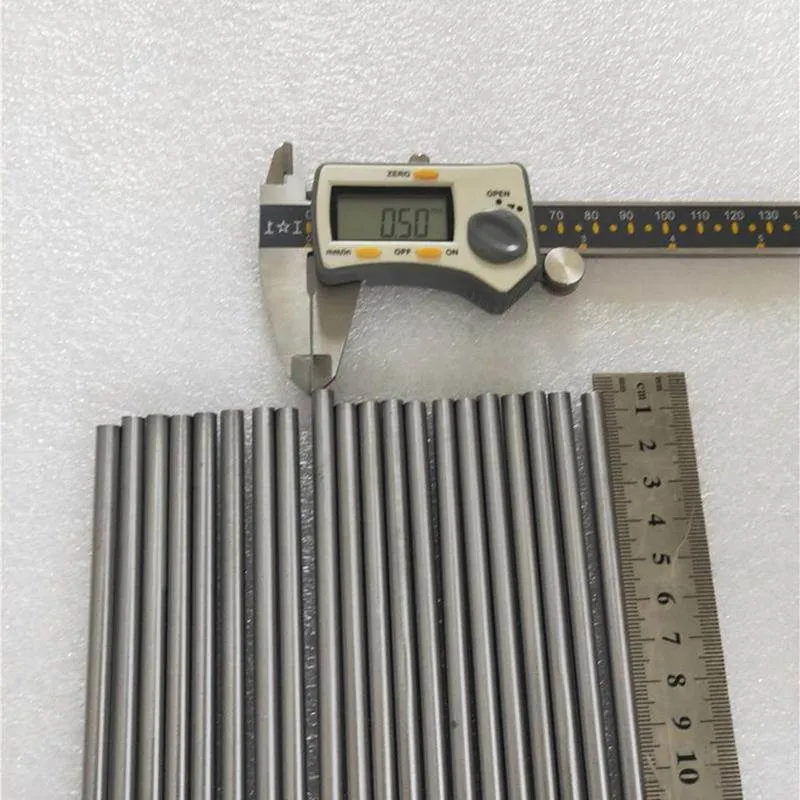
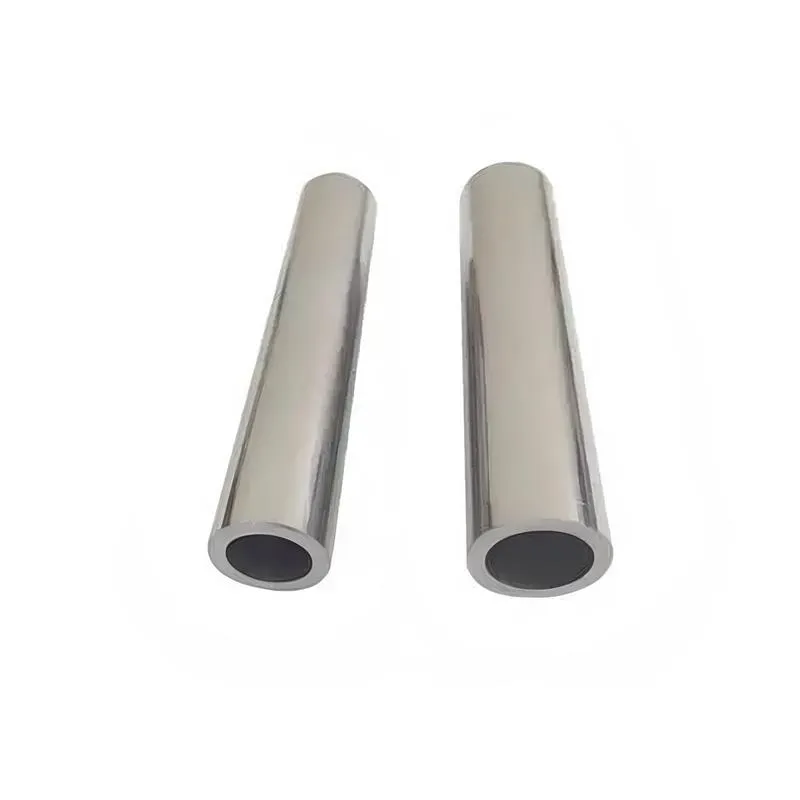
Schmolz + Bickenbach Thermodur® 2367 Superclean Hot Work Die Steel
Product Code : STI-GSTI-478-CU
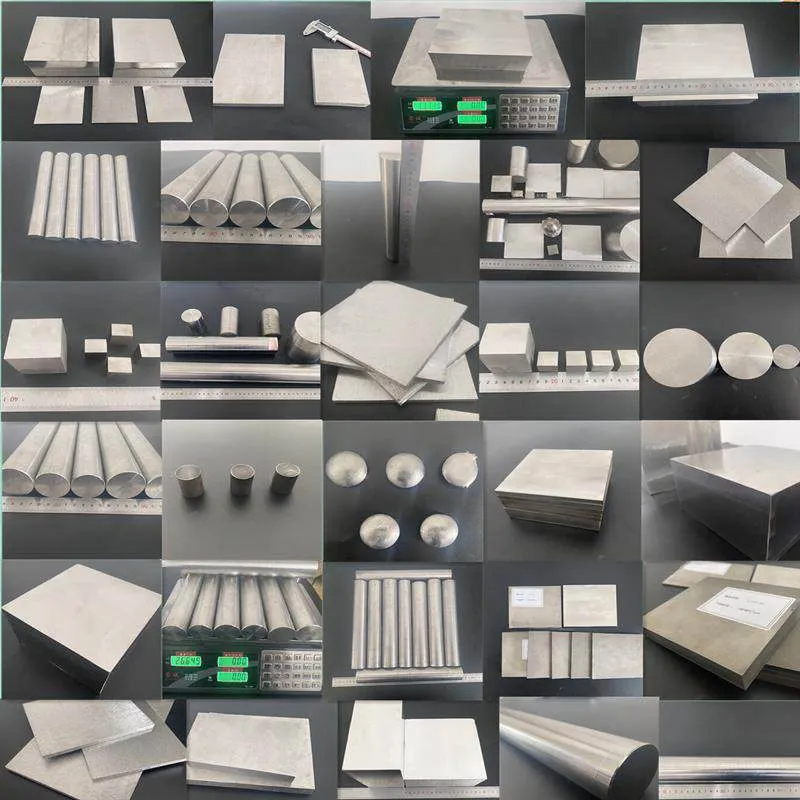
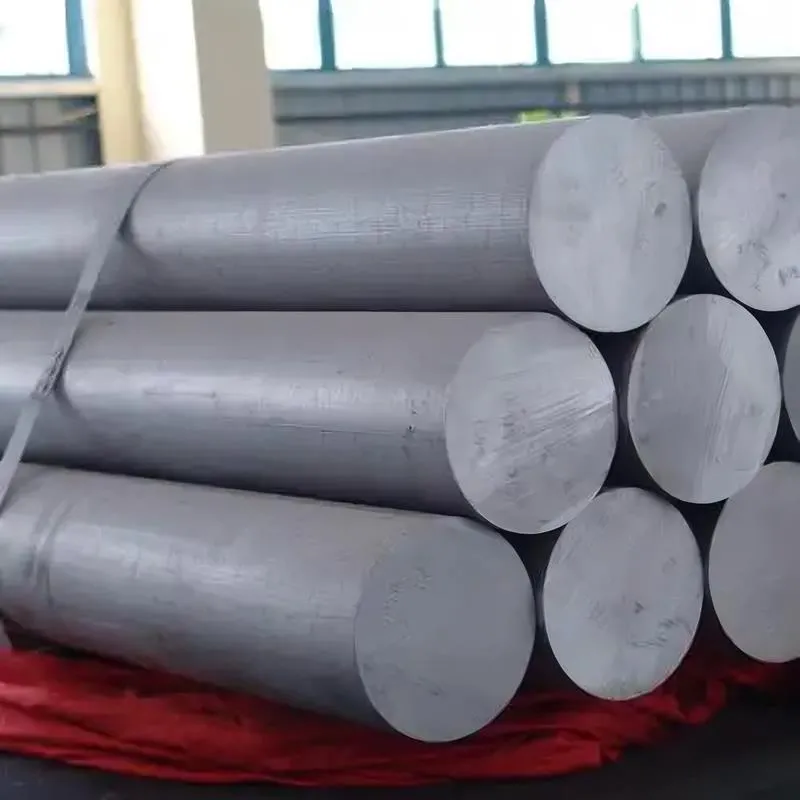
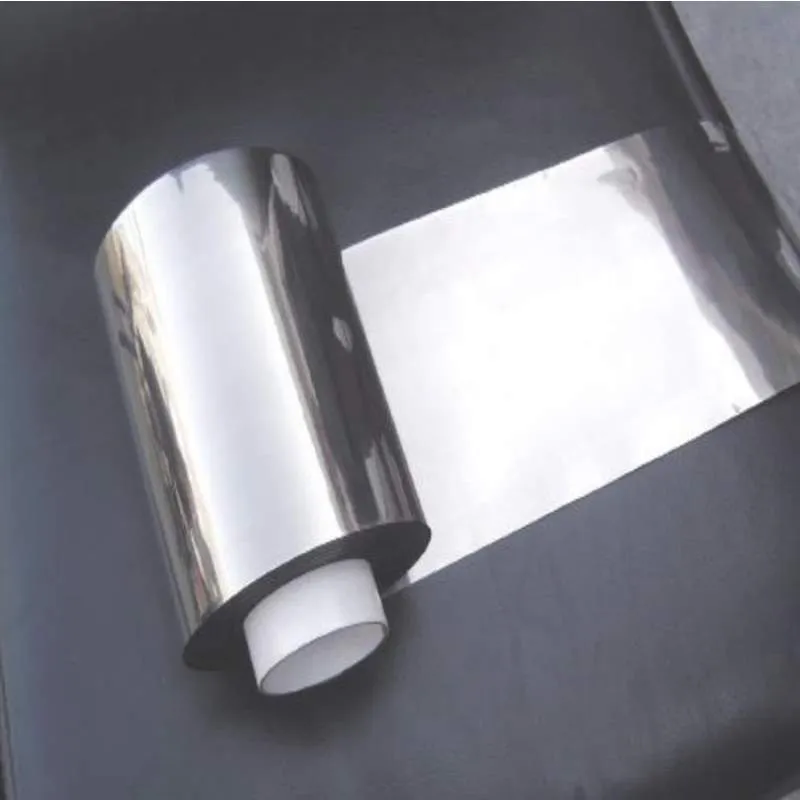
We provide Schmolz + Bickenbach Thermodur® 2367 Superclean Hot Work Die Steel is available in Bar (Round bar, Flat bar), Ribbon, Wire, Rods, Tube,Seamless Tube,Pipe, Ingots, Plate, Sheet, Strip and Forging Stock.,Purity, chemical composition, size, etc. can all be customized to meet specific requirements.
Please contact us if you need customized services. We will contact you with the price and availability in 24 hours.
Schmolz + Bickenbach Thermodur® 2367 Superclean Hot Work Die Steel Product Information
-:-
For detailed product information, please contact sales.
-:
Schmolz + Bickenbach Thermodur® 2367 Superclean Hot Work Die Steel Synonyms
-:-
For detailed product information, please contact sales.
-:
Schmolz + Bickenbach Thermodur® 2367 Superclean Hot Work Die Steel Product Information
-:-
For detailed product information, please contact sales.
-:
# **SCHMOLZ + BICKENBACH Thermodur® 2367 Superclean | Premium High-Cobalt Hot Work Die Steel**
## **Overview**
SCHMOLZ + BICKENBACH **Thermodur® 2367 Superclean** represents the pinnacle of hot work die steel technology, engineered for the most extreme temperature applications where conventional H11/H13/H10 grades reach their performance limits. This advanced, cobalt-alloyed (approximately 4.5-5.0% Co) hot work steel is distinguished by its **"Superclean"** microstructure, achieved through Electroslag Remelting (ESR) or similar advanced refining processes. Thermodur® 2367 is specifically formulated to deliver **unmatched high-temperature hardness (red hardness), exceptional thermal fatigue resistance, and superior creep strength** at sustained temperatures up to 700°C (1292°F). It is the material of choice for the most demanding die casting, forging, and extrusion applications involving high-melting-point alloys.
## **Key Features:**
* **Exceptional Red Hardness:** High cobalt content provides superior retention of hardness at elevated temperatures (up to 700°C), significantly outperforming non-cobalt grades.
* **Superclean Microstructure:** ESR refining ensures extreme material purity, homogeneity, and isotropy, leading to predictable performance and enhanced thermal fatigue life.
* **Superior Thermal Fatigue Resistance:** The combination of high hot strength, good toughness, and excellent thermal conductivity provides outstanding resistance to heat checking under severe thermal cycling.
* **Excellent High-Temperature Strength & Creep Resistance:** Maintains mechanical integrity under sustained load at high temperatures, resisting deformation and washout.
* **High Thermal Conductivity:** Approximately 20-25% higher than standard H13, promoting efficient heat extraction and reducing thermal gradients.
* **Good Oxidation Resistance:** Chromium content provides adequate protection against scaling in hot work environments.
* **Good Toughness at Operating Temperatures:** Maintains fracture resistance despite its high alloy content, crucial for withstanding mechanical and thermal shocks.
* **Excellent Polishability:** The Superclean structure allows for superior surface finishes, reducing sticking and improving part release.
---
## **Material Specifications: Thermodur® 2367 Superclean**
### **1. Chemical Composition (wt%)**
| Element | Content Range (wt%) | Function & High-Temperature Benefit |
| :--- | :--- | :--- |
| **Carbon (C)** | 0.32 - 0.40 | Provides matrix strength and carbide formation. Balanced for high-temperature toughness. |
| **Silicon (Si)** | 0.80 - 1.20 | Enhances oxidation resistance and solid solution strengthening. |
| **Manganese (Mn)** | 0.20 - 0.50 | Aids in deoxidation and contributes to hardenability. |
| **Chromium (Cr)** | 4.80 - 5.50 | Provides oxidation resistance, hardenability, and forms stable carbides. |
| **Molybdenum (Mo)** | 2.70 - 3.20 | **Critical for high-temperature strength and tempering resistance.** Promotes secondary hardening. |
| **Vanadium (V)** | 0.40 - 0.60 | Forms fine, stable MC carbides for wear resistance and grain refinement. |
| **Cobalt (Co)** | **4.50 - 5.00** | **Key Differentiator.** Dramatically enhances red hardness (hot hardness) by reducing the rate of tempering and carbide coarsening at high temperatures. Increases thermal conductivity. |
| **Tungsten (W)** | 0.80 - 1.20 (Optional) | May be present in some variants to further enhance hot hardness. |
| **Sulfur (S)** | **≤ 0.002** (Superclean) | **Extremely Low.** Maximizes toughness, polishability, and isotropy. |
| **Phosphorus (P)** | **≤ 0.015** (Superclean) | **Ultra-Low.** Minimized to prevent embrittlement. |
**Metallurgical Advantages of Superclean Structure:**
* **Inclusion Control:** Near-elimination of oxide and sulfide inclusions (<0.1% by area), removing potential crack initiation sites.
* **Chemical Homogeneity:** No micro-segregation, ensuring uniform distribution of costly cobalt and other alloying elements.
* **Fine, Equiaxed Grain Structure:** ASTM 10-11 grain size, optimizing the strength-toughness balance.
* **Isotropic Properties:** Mechanical properties are nearly identical in longitudinal and transverse directions.
### **2. Physical & Mechanical Properties**
#### **Properties in Annealed Condition:**
* **Hardness:** 200 - 230 HB
* **Machinability:** Fair to Moderate. Higher alloy content increases cutting forces compared to H13.
#### **Properties in Hardened & Tempered Condition (Typical for Hot Work):**
| Tempering Temperature | Hardness (HRC) | 0.2% Yield Strength (MPa) | Tensile Strength (MPa) | Impact Toughness (Charpy V, J) |
| :--- | :--- | :--- | :--- | :--- |
| **580-600°C** | 48 - 50 | 1500 - 1650 | 1700 - 1850 | 20 - 30 |
| **620-640°C** | 46 - 48 | 1400 - 1550 | 1600 - 1750 | 25 - 35 |
| **660-680°C** | 44 - 46 | 1300 - 1450 | 1500 - 1650 | 30 - 45 |
| **700-720°C** | 42 - 44 | 1200 - 1350 | 1400 - 1550 | 35 - 55 |
#### **High-Temperature Performance (The Core Advantage - Tempered to ~48 HRC):**
| Temperature | Hot Hardness (HV) | 0.2% Hot Yield Strength (MPa) | **Retained Hardness vs. H13** | Thermal Conductivity |
| :--- | :--- | :--- | :--- | :--- |
| **500°C** | 480 - 520 | 1100 - 1250 | **+15-20%** | 30 - 33 W/m·K |
| **600°C** | 420 - 460 | 800 - 950 | **+25-30%** | 28 - 31 W/m·K |
| **650°C** | 380 - 420 | 600 - 750 | **+35-40%** | 27 - 30 W/m·K |
| **700°C** | 320 - 360 | 450 - 600 | **+50-60%** | 26 - 29 W/m·K |
#### **Comparative High-Temperature Performance:**
| Property @ 650°C | Thermodur® 2367 | Standard H13 (1.2344) | Thermodur® 2365 (H10) | Advantage |
| :--- | :--- | :--- | :--- | :--- |
| **Hot Hardness** | 380-420 HV | 260-300 HV | 320-360 HV | **Superior to both** |
| **Creep Strength** | Excellent | Moderate | Good | **Best in class** |
| **Thermal Fatigue Life** | Exceptional | Good | Very Good | **Optimal balance** |
| **Cost** | Highest | Low | High | Premium material |
#### **Physical Properties:**
* **Density:** 7.90 g/cm³
* **Coefficient of Thermal Expansion:** 11.5 × 10⁻⁶/K (20-400°C)
* **Modulus of Elasticity:** 215 GPa
* **Specific Heat Capacity:** 440 J/kg·K
* **Maximum Continuous Service Temperature:** **700°C (1292°F)**
* **Peak Intermittent Temperature:** **750°C (1382°F)**
### **3. Special Performance Characteristics**
* **Thermal Fatigue Life:** The Superclean structure combined with high hot strength typically provides **50-100% longer life** in severe thermal cycling applications compared to premium H13.
* **Creep and Deformation Resistance:** Exceptional resistance to time-dependent deformation under load at high temperatures, crucial for maintaining die geometry in prolonged operations.
* **Wear & Erosion Resistance at Temperature:** Maintains surface integrity better than other grades when abrasive materials are processed at high temperatures.
* **Consistent Performance:** The Superclean quality ensures minimal property variation, critical for predictable die life in automated production.
### **4. Machining & Finishing**
* **Machining (Annealed):** Requires rigid setups and sharp carbide tools. Lower speeds and higher feeds recommended. Expect higher tool wear than with H13.
* **EDM:** Excellent results due to homogeneous structure. Produces high-quality surfaces with minimal white layer.
* **Grinding:** Good grindability with proper wheels and cooling. The high hardness in tempered state requires appropriate grinding parameters.
* **Polishing:** Capable of excellent surface finishes (Ra < 0.25 µm) due to the extremely clean microstructure. Essential for reducing soldering in die casting.
* **Welding:** Difficult and not generally recommended due to high crack sensitivity. Requires extreme precautions if attempted.
---
## **International Standards & Cross-References**
| Standard | Designation | Note |
| :--- | :--- | :--- |
| **SCHMOLZ + BICKENBACH** | **Thermodur® 2367 Superclean** | Proprietary premium cobalt-grade. |
| **DIN / EN / W-Nr.** | **1.2367** | Base designation for this Co-containing composition. |
| **AISI / ASTM** | **H19 (Modified)** | H19 is a similar Co-containing grade (AISI H19: ~4.25% Co). |
| **ISO 4957** | **X32CrMoCoV3-3-3** | Similar high-temperature, cobalt-bearing grade. |
| **Uddeholm** | **DIEVAR®** (Modified Co-variant possible) | Note: DIEVAR is typically a modified H11. For high Co, reference is often to proprietary grades. |
| **Böhler / voestalpine** | **W400 with Co** | Special high-temperature variant. |
| **Common Reference** | **5% Cobalt Hot Work Steel** | Functional description in the industry. |
| **Japanese (JIS)** | **SKD8** (contains Co) | Similar concept. |
| **Chinese (GB)** | **4Cr5Mo2SiVCo** | Refers to cobalt-containing hot work steels. |
---
## **Heat Treatment Guidelines**
1. **Soft Annealing:** 850-880°C, slow furnace cool (10-15°C/hour) to 600°C, then air cool. Target: 200-230 HB.
2. **Stress Relieving:** 650-700°C for 2-4 hours after rough machining.
3. **Preheating:** **Critical.** Three stages recommended: 500°C, 800°C, and 950°C.
4. **Austenitizing:**
* **Temperature:** **1050-1080°C.** Higher temperature ensures dissolution of complex carbides.
* **Atmosphere:** Vacuum or controlled atmosphere essential.
* **Soak Time:** 25-40 minutes per 25mm of ruling section.
5. **Quenching:** In **high-pressure gas** (6-12 bar) is **strongly preferred** for minimal distortion. Air quenching is possible for simple shapes.
6. **Tempering:**
* **Must begin immediately** after quenching.
* **Temperature Range:** **620-700°C** (typical for hot work applications targeting 44-48 HRC).
* **Double or Triple Tempering is mandatory.** Hold for 2-3 hours per temper.
* The high cobalt content provides exceptional tempering resistance, allowing high tempering temperatures without excessive softening.
**Special Note:** Due to its high alloy content, full properties develop only after multiple high-temperature tempers. Avoid low-temperature tempering (<550°C) as it may not fully utilize the material's potential.
---
## **Product Applications**
Thermodur® 2367 Superclean is engineered for **the most extreme hot work applications** where temperature, stress, and production demands exceed the capabilities of standard premium hot work steels.
### **Primary Application Areas:**
**A. High-Pressure Die Casting (HPDC) - Demanding Applications:**
* **Thin-Wall Aluminum Castings:** Requiring high injection speeds and pressures, leading to extreme thermal shock.
* **Structural Components:** Automotive safety parts (e.g., crash management systems, pillars) where die reliability is critical.
* **Large Cavity Inserts** subject to high thermal and mechanical loads.
* **Shot Sleeves and Tips** for large machines or aggressive cycles.
**B. Non-Ferrous Metal Forming at High Temperatures:**
* **Brass and Copper Alloy Die Casting:** Where melt temperatures are 900-1100°C.
* **Hot Brass and Copper Forging Dies.**
* **Extrusion Dies and Mandrels** for copper alloys and high-strength aluminum alloys.
**C. Steel and Superalloy Hot Work:**
* **Precision Forging Dies for Titanium and Nickel-Based Superalloys** (aerospace components).
* **Die Inserts for Hot Stamping (Press Hardening)** of ultra-high-strength boron steel, especially in high-volume production.
* **Tools for Isothermal and Hot-Die Forging.**
**D. General Applications Where H13/2365 Fail Prematurely:**
* Tools experiencing rapid **softening and deformation** at temperature.
* Applications where **heat checking is severe** and occurs early in the die life.
* **High-volume production** where unscheduled die maintenance is extremely costly.
### **Specific Component Recommendations:**
* **Critical cavity and core inserts** in aluminum HPDC for automotive structural parts.
* **Core pins** in deep, difficult-to-cool sections of brass die casting dies.
* **Forging die inserts** for aerospace titanium components.
* **Hot stamping tools** for automotive safety components (A-pillars, B-pillars, door beams).
* **Extrusion dies** for high-strength copper alloys.
### **Economic Justification:**
* **Extended Die Life:** Often **2-4 times longer** than premium H13 in suitable extreme applications.
* **Reduced Downtime:** Fewer die changes and maintenance stops.
* **Higher Productivity:** Enables more aggressive process parameters (higher temperatures, faster cycles).
* **Superior Part Quality:** Better dimensional stability and surface finish over the die's lifetime.
* **Return on Investment:** Despite high initial cost, the total cost per produced part is often lower in demanding applications.
---
## **Selection Guidelines: When to Choose 2367 Superclean**
**Choose Thermodur® 2367 Superclean when:**
1. Operating temperatures consistently exceed **600°C (1112°F)** and approach 700°C.
2. **Die softening and plastic deformation** are the failure modes with current H13/2365 tooling.
3. Applications involve **brass, bronze, or copper alloy** die casting or forging.
4. **High-volume production** of critical components where die failure is unacceptable.
5. **Thermal fatigue life** must be maximized in an extremely aggressive thermal cycle.
6. The application justifies the **premium material cost** through extended life, reduced downtime, or enabling a process that other materials cannot support.
**Consider H13 (1.2344) or 2365 for:** Standard aluminum die casting, general hot forging, and applications where temperatures remain below 600°C and the premium performance of 2367 is not required.
---
**Disclaimer:**
The information provided is based on typical data for SCHMOLZ + BICKENBACH Thermodur® 2367 Superclean. This is a premium, high-cobalt grade requiring expert heat treatment and application knowledge. Properties are highly dependent on exact processing parameters. This document is for informational purposes only and does not constitute a specification or warranty. For critical applications, consultation with SCHMOLZ + BICKENBACH technical specialists is essential. The "Superclean" quality is integral to achieving the stated high-temperature performance. Successful use requires a thorough analysis of the thermal and mechanical load profile of the specific application.
-:-
For detailed product information, please contact sales.
-:
Schmolz + Bickenbach Thermodur® 2367 Superclean Hot Work Die Steel Specification
Dimensions
Size:
Diameter 20-1000 mm Length <7134 mm
Size:We can customized as required
Standard:
Per your request or drawing
We can customized as required
Properties(Theoretical)
Chemical Composition
-:-
For detailed product information, please contact sales.
-:
Schmolz + Bickenbach Thermodur® 2367 Superclean Hot Work Die Steel Properties
-:-
For detailed product information, please contact sales.
-:
Applications of Schmolz + Bickenbach Thermodur® 2367 Superclean Hot Work Die Steel
-:-
For detailed product information, please contact sales.
-:
Chemical Identifiers Schmolz + Bickenbach Thermodur® 2367 Superclean Hot Work Die Steel
-:-
For detailed product information, please contact sales.
-:
Packing of Schmolz + Bickenbach Thermodur® 2367 Superclean Hot Work Die Steel
-:-
For detailed product information, please contact sales.
-:
Standard Packing:
-:-
For detailed product information, please contact sales.
-:
Typical bulk packaging includes palletized plastic 5 gallon/25 kg. pails, fiber and steel drums to 1 ton super sacks in full container (FCL) or truck load (T/L) quantities. Research and sample quantities and hygroscopic, oxidizing or other air sensitive materials may be packaged under argon or vacuum. Solutions are packaged in polypropylene, plastic or glass jars up to palletized 3605 gallon liquid totes Special package is available on request. E FORUs’ is carefully handled to minimize damage during storage and transportation and to preserve the quality of our products in their original condition