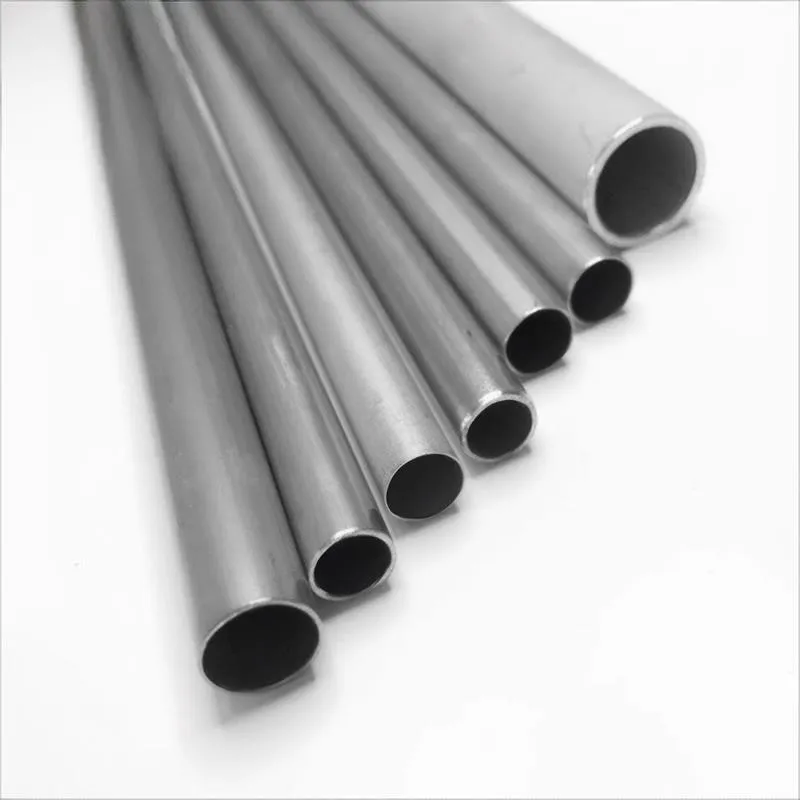
Schmolz + Bickenbach Thermodur® 2999 Hot Work Die Steel
Product Code : STI-GSTI-480-CU
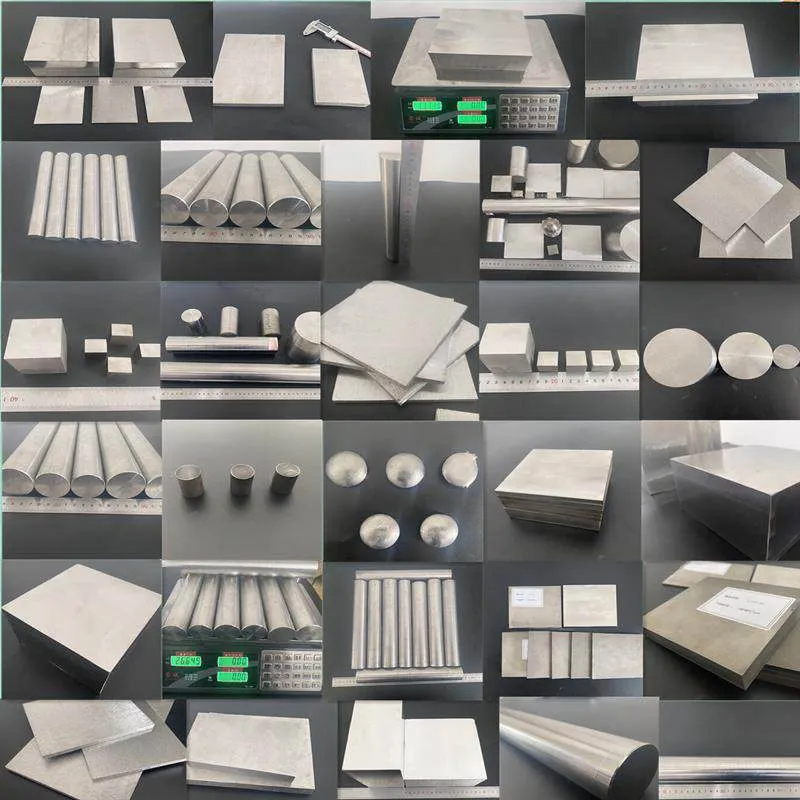
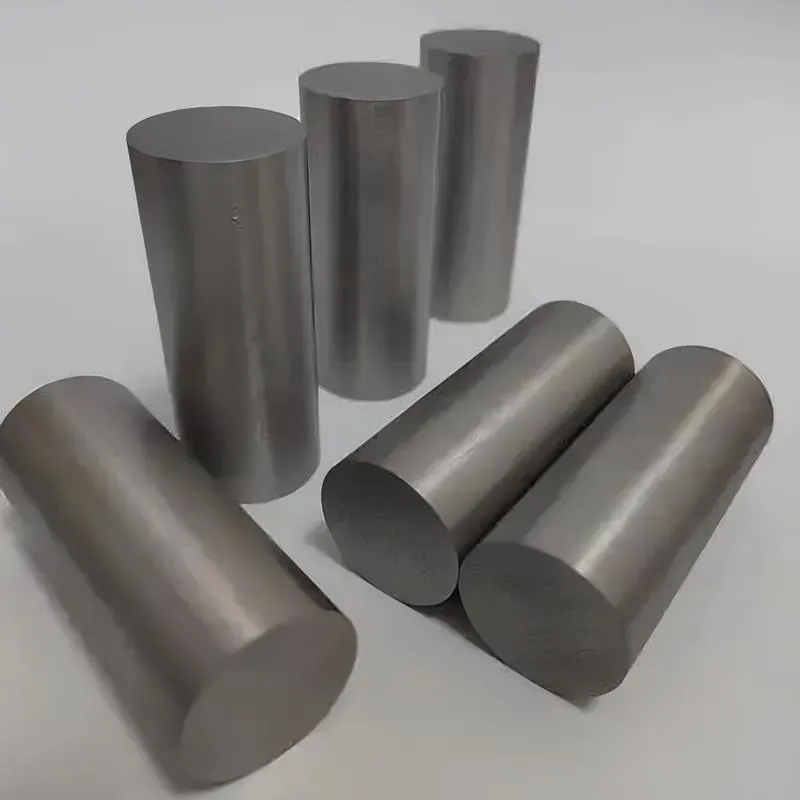
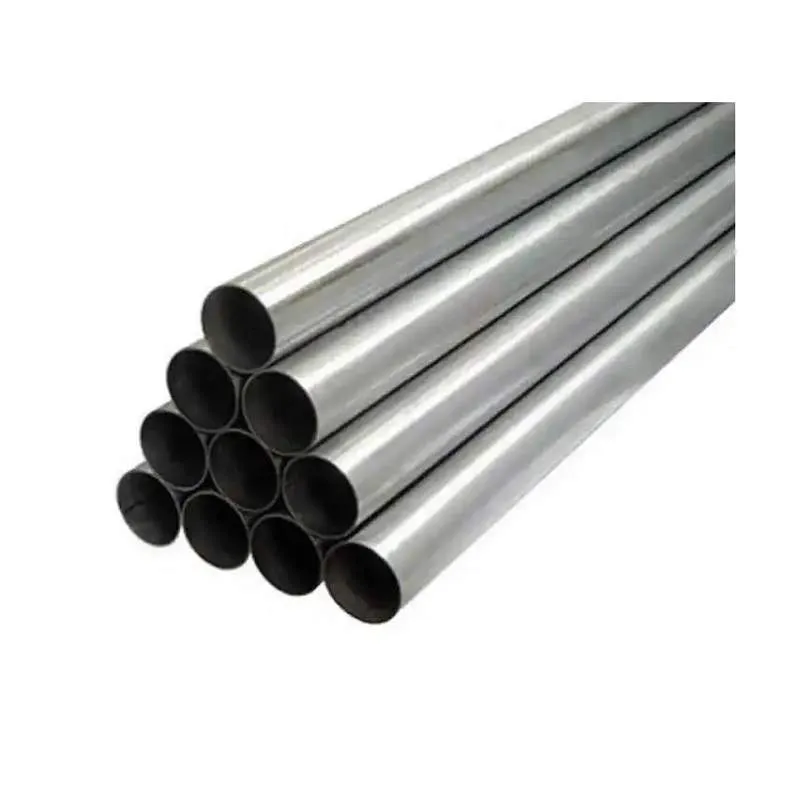
We provide Schmolz + Bickenbach Thermodur® 2999 Hot Work Die Steel is available in Bar (Round bar, Flat bar), Ribbon, Wire, Rods, Tube,Seamless Tube,Pipe, Ingots, Plate, Sheet, Strip and Forging Stock.,Purity, chemical composition, size, etc. can all be customized to meet specific requirements.
Please contact us if you need customized services. We will contact you with the price and availability in 24 hours.
Schmolz + Bickenbach Thermodur® 2999 Hot Work Die Steel Product Information
-:-
For detailed product information, please contact sales.
-:
Schmolz + Bickenbach Thermodur® 2999 Hot Work Die Steel Synonyms
-:-
For detailed product information, please contact sales.
-:
Schmolz + Bickenbach Thermodur® 2999 Hot Work Die Steel Product Information
-:-
For detailed product information, please contact sales.
-:
# **SCHMOLZ + BICKENBACH Thermodur® 2999 | Premium Ultra-High Thermal Conductivity Hot Work Die Steel**
## **Overview**
SCHMOLZ + BICKENBACH **Thermodur® 2999** represents a groundbreaking advancement in hot work die steel technology, specifically engineered to **maximize heat extraction and thermal management** in die casting and hot forming applications. Unlike conventional hot work steels where wear resistance and hot hardness are primary, Thermodur® 2999 is optimized around a single, critical performance parameter: **ultra-high thermal conductivity**. This proprietary alloy delivers thermal conductivity values that are **50-100% higher than standard H13 steels**, fundamentally changing thermal dynamics within the die to dramatically reduce heat checking, improve casting quality, and extend tool life in thermally-driven failure modes.
## **Key Features:**
* **Ultra-High Thermal Conductivity:** The defining characteristic, enabling unprecedented heat transfer from die surface to cooling channels. Typical values: **45-55 W/m·K at 20°C** (vs. 24-28 W/m·K for H13).
* **Exceptional Thermal Fatigue Resistance:** By rapidly dissipating heat, surface temperature peaks are lowered and thermal gradients are minimized, significantly delaying heat check initiation and propagation.
* **Reduced Thermal Stress:** Lower temperature differentials within the die directly translate to reduced thermal stress, the primary driver of thermal cracking.
* **Improved Casting Quality:** More uniform and controllable die temperature improves metal flow, reduces porosity, and minimizes soldering.
* **Good Toughness:** Maintains adequate impact resistance for die applications, though not at the level of premium toughness-focused grades.
* **Moderate Hot Hardness:** While not matching high-alloy grades at extreme temperatures, provides sufficient strength for many aluminum and magnesium die casting applications.
* **Excellent Machinability:** Typically softer in the annealed state than high-alloy hot work steels, allowing for faster machining and longer tool life.
* **Optimized for Heat Extraction:** Every aspect of composition and processing is tailored to maximize thermal transfer efficiency.
---
## **Material Specifications: Thermodur® 2999**
### **1. Chemical Composition (wt%)**
| Element | Content Range (wt%) | Function & Role in High Conductivity |
| :--- | :--- | :--- |
| **Carbon (C)** | 0.20 - 0.35 | **Deliberately Low.** Minimizes carbide formation which impedes thermal conductivity. Provides necessary but minimal matrix strength. |
| **Chromium (Cr)** | 2.50 - 3.50 | Provides basic hardenability and oxidation resistance. Kept moderate to avoid excessive lattice distortion. |
| **Molybdenum (Mo)** | 0.80 - 1.50 | Enhances hardenability and tempering resistance. Optimized level for necessary properties with minimal conductivity impact. |
| **Vanadium (V)** | **≤ 0.10** | **Minimal.** Vanadium carbides are potent thermal barriers. Kept extremely low to maximize conductivity. |
| **Special Additives** | **Proprietary** | Elements like **Copper (Cu)** or specific metalloids may be added in controlled amounts to enhance thermal properties without forming excessive carbides. |
| **Iron (Fe)** | Balance | High-purity matrix optimized for electron mobility. |
**Metallurgical Design Philosophy:**
The composition follows the **Wiedemann-Franz Law** principle for metals, where thermal conductivity is proportional to electrical conductivity. The strategy is to:
1. **Minimize Alloying Elements:** Especially strong carbide formers (V, high Cr, W) that scatter electrons and phonons.
2. **Optimize Matrix Purity:** Create a ferritic/martensitic matrix with minimal lattice strain.
3. **Control Precipitates:** Use fine, thermally conductive precipitates rather than insulating carbides.
### **2. Physical & Mechanical Properties**
#### **Properties in Annealed Condition:**
* **Hardness:** 180 - 220 HB
* **Machinability:** **Excellent** – significantly better than H13 due to lower alloy content and hardness.
#### **Properties in Hardened & Tempered Condition:**
| Tempering Temperature | Hardness (HRC) | 0.2% Yield Strength (MPa) | Tensile Strength (MPa) | Impact Toughness (KV, J) |
| :--- | :--- | :--- | :--- | :--- |
| **500-520°C** | 40 - 42 | 1100 - 1250 | 1300 - 1450 | 40 - 60 |
| **540-560°C** | 38 - 40 | 1000 - 1150 | 1200 - 1350 | 50 - 70 |
| **580-600°C** | 36 - 38 | 900 - 1050 | 1100 - 1250 | 60 - 80 |
**Note:** Hardness and strength are **moderate** compared to conventional hot work steels – this is a deliberate trade-off for maximum thermal performance.
#### **Thermal & Physical Properties (The Critical Data):**
| Property | Thermodur® 2999 | Standard H13 (1.2344) | Improvement | Benefit |
| :--- | :--- | :--- | :--- | :--- |
| **Thermal Conductivity @ 20°C** | **45 - 55 W/m·K** | 24 - 28 W/m·K | **+80-100%** | Drastic heat extraction |
| **Thermal Conductivity @ 300°C** | **40 - 48 W/m·K** | 22 - 26 W/m·K | **+70-85%** | Sustained high temp transfer |
| **Coefficient of Thermal Expansion** | 12.0 - 13.0 ×10⁻⁶/K | 11.8 ×10⁻⁶/K | Similar | |
| **Density** | 7.75 - 7.85 g/cm³ | 7.80 g/cm³ | Similar | |
| **Specific Heat Capacity** | 480 - 520 J/kg·K | 460 J/kg·K | Slightly higher | Better heat absorption |
| **Modulus of Elasticity** | 190 - 200 GPa | 210 GPa | Slightly lower | Lower stress for same strain |
#### **High-Temperature Performance (Tempered to ~40 HRC):**
| Temperature | Hot Hardness (HV) | Relative Performance vs. H13 |
| :--- | :--- | :--- |
| **400°C** | ~320 - 350 HV | Lower absolute hardness |
| **500°C** | ~250 - 280 HV | Significantly lower |
| **600°C** | ~180 - 220 HV | Not recommended for sustained use |
**Critical Insight:** While hot hardness is lower, the **effective surface hardness in operation** can be higher because the surface runs cooler. A cooler H13 might be softer than a hotter Thermodur® 2999 surface.
### **3. Thermal Performance Simulation**
**Modeling Results (Typical Aluminum Die Casting Core Pin):**
* **Surface Temperature Reduction:** 80-120°C lower peak temperature vs. H13 under identical conditions
* **Thermal Gradient Reduction:** 40-60% lower ΔT from surface to cooling channel
* **Heat Check Initiation Cycles:** 3-5× longer than H13 in thermal fatigue testing
* **Cycle Time Potential:** 15-25% reduction possible due to faster heat extraction
### **4. Machining & Finishing**
* **Machining (Annealed):** **Exceptional.** Can use higher speeds and feeds than any conventional hot work steel.
* **EDM:** Excellent. Clean cutting with minimal white layer.
* **Grinding:** Very good. Low grinding forces.
* **Polishing:** Excellent. Low carbide content allows for very fine finishes.
* **Surface Treatment:** **Nitriding is highly synergistic.** The high conductivity helps dissipate nitriding heat and improves performance of the nitride layer in service.
---
## **International Standards & Cross-References**
| Standard | Designation / Relation | Note |
| :--- | :--- | :--- |
| **SCHMOLZ + BICKENBACH** | **Thermodur® 2999** | Proprietary ultra-high conductivity grade. |
| **Material Class** | **High Thermal Conductivity Hot Work Steel** | Functional classification. |
| **Similar Concept Materials** | Uddeholm **TOOLOX® 44** (higher strength), Mitsubishi **DAC-MAG** (proprietary) | Different approaches to similar thermal challenges. |
| **DIN / AISI** | Not a standard grade | Proprietary development. |
| **Industry Reference** | **"Super Thermal" H13** | Common descriptive term. |
---
## **Heat Treatment Guidelines**
1. **Soft Annealing:** 820-850°C, furnace cool. Target: 180-220 HB.
2. **Stress Relieving:** 600-650°C after rough machining.
3. **Preheating:** 500°C and 800°C (simpler than high-alloy steels).
4. **Austenitizing:**
* **Temperature:** **880-920°C** (significantly lower than H13).
* **Soak Time:** 20-30 min/25mm.
* **Atmosphere:** Standard protection.
5. **Quenching:** Air or oil. Less critical due to lower hardenability.
6. **Tempering:**
* **Temperature:** **500-580°C** (targeting 38-42 HRC for optimal toughness/conductivity balance).
* **Double tempering recommended.**
**Key Difference:** Simpler, lower-temperature heat treatment compared to conventional hot work steels.
---
## **Product Applications**
Thermodur® 2999 is **strategically applied where heat extraction is the limiting factor** in die performance, often in components that fail prematurely due to heat checking despite adequate cooling.
### **Primary Application Areas:**
**A. Die Casting - Heat-Extraction Limited Components:**
* **Core Pins (Especially Long/Slender/Difficult-to-Cool):** The premier application. Dramatically extends life of pins that previously failed from heat checking.
* **Overflows and Vent Pins:** Small features that overheat rapidly.
* **Ejector Pins in Hot Areas:** Where pin buckling due to overheating is an issue.
* **Shot Sleeve Liners:** For improved thermal management.
* **Areas with Suboptimal Cooling:** Where cooling channel placement cannot be ideal.
**B. Hot Forging:**
* **Die Inserts in locations with poor cooling**
* **Punches and Mandrels** that run hot
**C. Hot Stamping (Press Hardening):**
* **Cooling Pins and Tools** where rapid heat extraction is critical
### **Ideal Failure Mode for Application:**
Apply Thermodur® 2999 when dies fail primarily from:
1. **Heat checking (thermal fatigue cracking)**
2. **Thermal softening leading to deformation**
3. **Soldering due to excessive local temperature**
4. **Need for reduced cycle times limited by cooling**
### **Application Strategy:**
* **Not for entire dies** – use strategically in heat-problem areas
* **Perfect for insert technology** – replace only the failing component
* **Combine with conventional steels** – use H13 for wear areas, 2999 for heat-extraction areas
* **Ideal for retrofitting** – replace failing H13 pins with 2999 for immediate improvement
### **Performance Expectations:**
* **Heat Check Life:** 3-10× improvement over H13 in thermally-limited applications
* **Soldering Reduction:** Significant due to lower surface temperatures
* **Dimensional Stability:** Excellent due to lower thermal stresses
* **Maintenance Interval:** 2-5× longer between repairs
---
## **Economic & Technical Justification**
### **Cost-Benefit Analysis:**
| Factor | Impact | Typical Result |
| :--- | :--- | :--- |
| **Material Cost** | Higher than H13 | 1.5-2.5× material cost |
| **Machining Cost** | Lower | 20-30% savings |
| **Heat Treatment Cost** | Lower | Simpler process |
| **Die Life Improvement** | Dramatic | 3-5× in suitable applications |
| **Downtime Reduction** | Significant | Fewer die changes/repairs |
| **Cycle Time Potential** | Reduced | 15-25% faster possible |
### **Return on Investment:**
* **Typical Payback:** 3-6 months in high-production applications
* **Best Applications:** High-volume aluminum die casting
* **Worst Applications:** Low-volume, wear-limited applications
---
## **Limitations & Contraindications**
**Do NOT use Thermodur® 2999 when:**
1. **Abrasive wear** is the primary failure mechanism (e.g., high silicon aluminum, composites)
2. **Extreme mechanical loading** causes failure (insufficient yield strength)
3. **Temperatures consistently exceed 550°C** (will soften excessively)
4. **Cost is primary driver** without thermal problems
5. **Application involves highly corrosive environments** without protection
---
## **Future Development & Trends**
Thermodur® 2999 represents the leading edge of **thermal management steels**, a growing category in die materials. Future developments may include:
* **Graded structures** with varying conductivity
* **Composite materials** with even higher conductivity
* **Additive manufacturing applications** with optimized cooling geometries
* **Coatings specifically designed** for high-conductivity substrates
---
**Disclaimer:**
The information provided is based on typical data for SCHMOLZ + BICKENBACH Thermodur® 2999. This is a proprietary, specialized grade with unique properties. Actual performance depends on specific application conditions, cooling design, and operating parameters. This document is for informational purposes only and does not constitute a warranty or specification. For critical applications, consultation with SCHMOLZ + BICKENBACH technical specialists is essential. Thermodur® 2999 is not a direct replacement for conventional hot work steels but a targeted solution for specific thermal management challenges. Successful application requires proper diagnosis of failure modes and strategic implementation.
-:-
For detailed product information, please contact sales.
-:
Schmolz + Bickenbach Thermodur® 2999 Hot Work Die Steel Specification
Dimensions
Size:
Diameter 20-1000 mm Length <7136 mm
Size:We can customized as required
Standard:
Per your request or drawing
We can customized as required
Properties(Theoretical)
Chemical Composition
-:-
For detailed product information, please contact sales.
-:
Schmolz + Bickenbach Thermodur® 2999 Hot Work Die Steel Properties
-:-
For detailed product information, please contact sales.
-:
Applications of Schmolz + Bickenbach Thermodur® 2999 Hot Work Die Steel
-:-
For detailed product information, please contact sales.
-:
Chemical Identifiers Schmolz + Bickenbach Thermodur® 2999 Hot Work Die Steel
-:-
For detailed product information, please contact sales.
-:
Packing of Schmolz + Bickenbach Thermodur® 2999 Hot Work Die Steel
-:-
For detailed product information, please contact sales.
-:
Standard Packing:
-:-
For detailed product information, please contact sales.
-:
Typical bulk packaging includes palletized plastic 5 gallon/25 kg. pails, fiber and steel drums to 1 ton super sacks in full container (FCL) or truck load (T/L) quantities. Research and sample quantities and hygroscopic, oxidizing or other air sensitive materials may be packaged under argon or vacuum. Solutions are packaged in polypropylene, plastic or glass jars up to palletized 3607 gallon liquid totes Special package is available on request. E FORUs’ is carefully handled to minimize damage during storage and transportation and to preserve the quality of our products in their original condition