3D Systems LaserForm® Maraging Steel (B), AFTER AGING
Product Code : STI-GSTI-570-CU
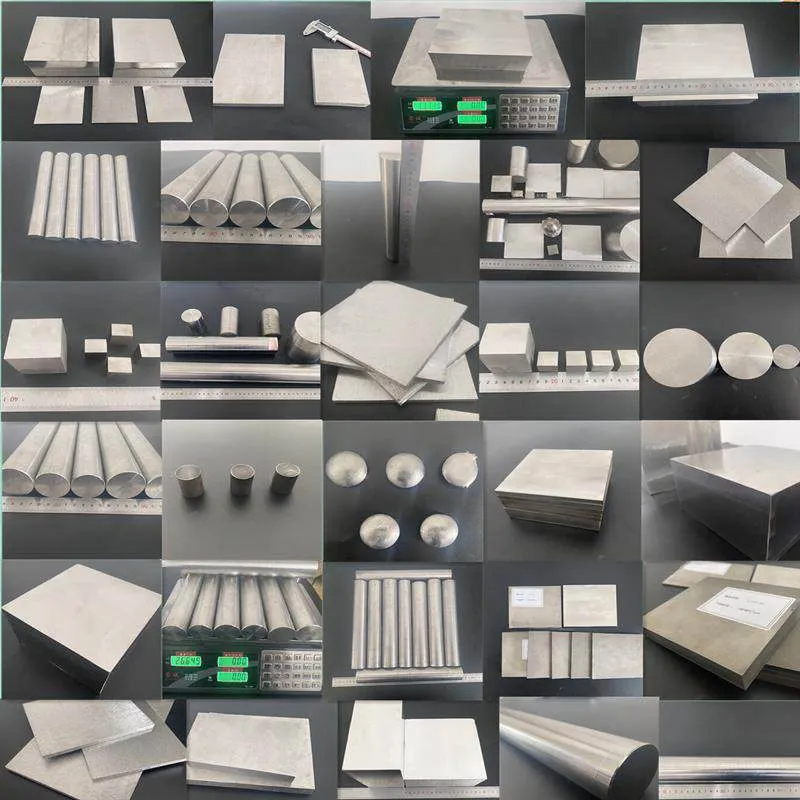
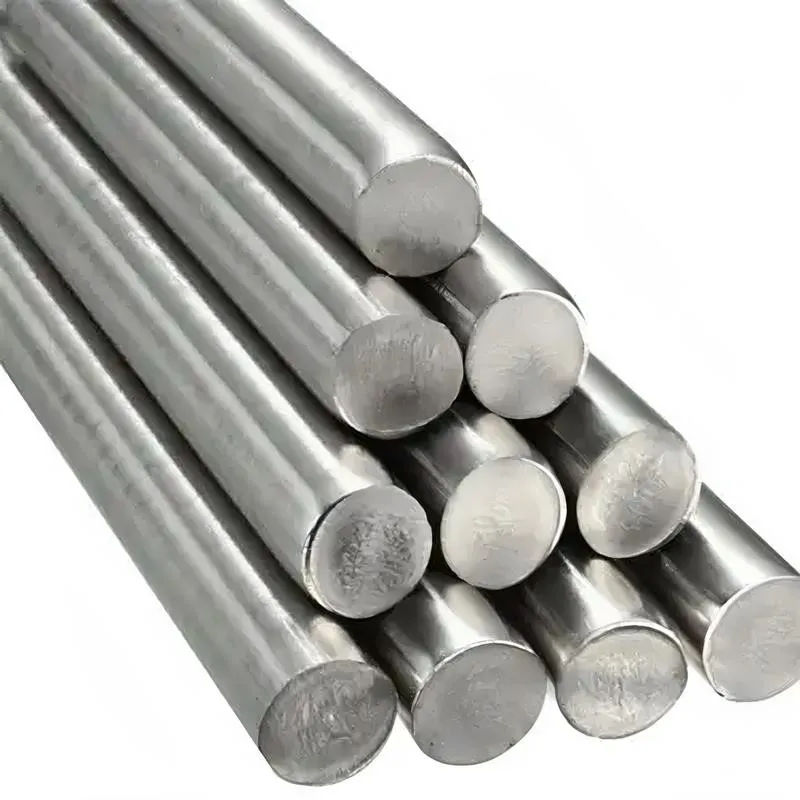
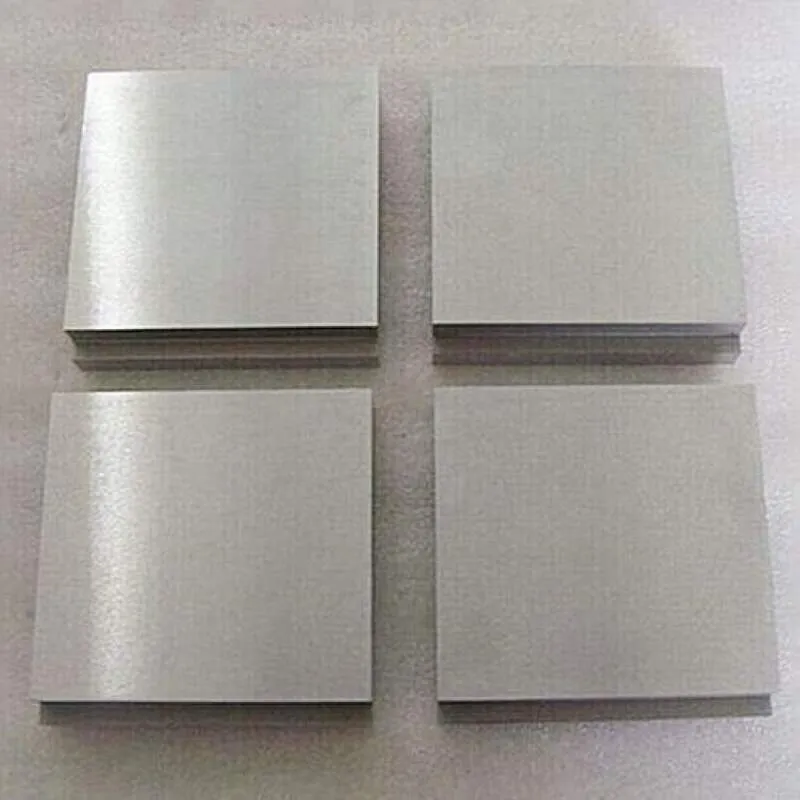
We provide 3D Systems LaserForm® Maraging Steel (B), AFTER AGING is available in Bar (Round bar, Flat bar), Ribbon, Wire, Rods, Tube,Seamless Tube,Pipe, Ingots, Plate, Sheet, Strip and Forging Stock.,Purity, chemical composition, size, etc. can all be customized to meet specific requirements.
3D Systems LaserForm® Maraging Steel (B), AFTER AGING Product Information
-:-
For detailed product information, please contact sales.
-:
3D Systems LaserForm® Maraging Steel (B), AFTER AGING Synonyms
-:-
For detailed product information, please contact sales.
-:
3D Systems LaserForm® Maraging Steel (B), AFTER AGING Product Information
-:-
For detailed product information, please contact sales.
-:
# **3D Systems LaserForm® Maraging Steel (B), AFTER AGING**
## **Product Overview**
**3D Systems LaserForm® Maraging Steel (B), AFTER AGING** represents the peak-performance condition of this premium-grade, low-carbon, iron-nickel martensitic steel engineered for Direct Metal Printing (DMP) technology. Subjected to a precise **full aging heat treatment** following additive manufacturing, this material achieves **ultimate tensile strengths exceeding 1,900 MPa** while maintaining exceptional toughness for its strength class. The aging process triggers the formation of coherent intermetallic precipitates within the martensitic matrix, transforming the material into one of the highest strength-to-weight ratio alloys available for additive manufacturing. This condition is specified for applications demanding maximum strength, hardness, and wear resistance, particularly in tooling, aerospace, and high-performance engineering components.
---
## **TECHNICAL SPECIFICATIONS**
### **Manufacturing & Processing Specification**
| Parameter | Specification |
|-----------|---------------|
| **Primary Process** | Direct Metal Printing (DMP) / Laser Powder Bed Fusion (LPBF) |
| **Post-Process Condition** | **After Full Aging Treatment** |
| **Recommended Pre-Treatment** | Solution Annealing (820°C) for optimal properties |
| **Aging Protocol** | 480°C ± 5°C for 3-6 hours, air cooled |
| **Compatible Systems** | 3D Systems ProX DMP 200/300/320, DMP Factory 350/500/850 |
| **Build Volume** | Up to 500 × 500 × 500 mm (system dependent) |
| **Optimal Layer Thickness** | 30-40 μm (for homogeneous aging response) |
| **Atmosphere Control** | High-purity argon (< 30 ppm O₂) during build |
| **Aging Atmosphere** | Inert (Argon) or vacuum (< 10⁻³ mbar) |
| **Build Plate Temperature** | 80-120°C |
### **Material Composition (wt%, Powder Specification)**
| Element | Target Range | Metallurgical Function in Aged Condition |
|---------|--------------|-----------------------------------|
| **Nickel (Ni)** | 17.0-19.0 | Forms Ni₃(Ti,Mo) intermetallic precipitates, matrix strengthening |
| **Cobalt (Co)** | 8.0-9.5 | Reduces solubility of Mo in matrix, promotes precipitation hardening |
| **Molybdenum (Mo)** | 4.5-5.5 | Primary precipitation element forming Ni₃Mo coherent precipitates |
| **Titanium (Ti)** | 0.6-1.0 | Forms Ni₃Ti precipitates, significant strengthening contribution |
| **Aluminum (Al)** | 0.05-0.15 | Forms Ni₃Al precipitates, additional strengthening |
| **Carbon (C)** | ≤ 0.010 | **Ultra-low to prevent carbide formation and maximize toughness** |
| **Manganese (Mn)** | ≤ 0.08 | Impurity control |
| **Silicon (Si)** | ≤ 0.08 | Impurity control |
| **Chromium (Cr)** | ≤ 0.20 | Minimized to prevent embrittlement |
| **Copper (Cu)** | ≤ 0.08 | Impurity control |
| **Phosphorus (P)** | ≤ 0.005 | **Extremely low for optimal toughness** |
| **Sulfur (S)** | ≤ 0.003 | **Extremely low for optimal toughness** |
| **Boron (B)** | 0.001-0.003 | Grain boundary strengthening, hardenability |
| **Niobium (Nb)** | 0.01-0.05 | Optional addition for secondary precipitation |
| **Iron (Fe)** | Balance | Matrix |
*Proprietary chemistry optimized for maximum precipitation hardening response in AM microstructure*
---
## **HEAT TREATMENT SPECIFICATION**
### **Standard Aging Treatment Sequence**
| Step | Temperature | Time | Atmosphere | Purpose |
|------|-------------|------|------------|---------|
| **Solution Annealing** | 820°C ± 10°C (1508°F) | 1 hr/25mm + 30min | Vacuum/Argon | Dissolve precipitates, homogenize |
| **Quenching** | Rapid cool to < 50°C | - | Forced Argon | Retain supersaturated martensite |
| **Aging Treatment** | 480°C ± 5°C (896°F) | 3-6 hours (typically 4h) | Vacuum/Argon | Precipitation hardening |
| **Cooling** | Air cool to room temperature | - | - | - |
### **Alternative Aging Conditions**
| Aging Condition | Temperature | Time | Hardness (HRC) | Application |
|-----------------|-------------|------|----------------|-------------|
| **Peak Aged (H900 Equivalent)** | 480°C (896°F) | 3-6 hours | 50-54 | Maximum strength |
| **Overaged (H1150 Equivalent)** | 540°C (1004°F) | 3-6 hours | 44-48 | Improved toughness |
| **Double Aged** | 480°C + 480°C | 3h + 3h | 51-53 | Enhanced stability |
| **Direct Aged (from As-Built)** | 480°C | 4-6 hours | 48-52 | Simplified process |
### **Microstructural Evolution During Aging**
| Microstructural Feature | After Aging | Metallurgical Significance |
|------------------------|-------------|---------------------------|
| **Precipitate Type** | Coherent Ni₃(Ti,Mo) intermetallics (5-20 nm) | Primary strengthening mechanism |
| **Precipitate Distribution** | Homogeneous, high density (10²²-10²³ m⁻³) | Uniform strengthening |
| **Martensite Matrix** | Tempered, recovered lath structure | Improved toughness vs. as-quenched |
| **Retained Austenite** | < 2% (typically 0.5-1.5%) | Minimal, prevents embrittlement |
| **Prior Austenite Grain Size** | ASTM 8-10 (20-30 μm) | Fine grains enhance toughness |
| **Dislocation Density** | Moderate (10¹²-10¹³ m⁻²) | Supports precipitation nucleation |
| **Grain Boundary Character** | Clean, precipitate-free zones minimized | Prevents intergranular failure |
---
## **MECHANICAL PROPERTIES (After Aging)**
### **Tensile Properties (ASTM E8/E8M, Room Temperature)**
| Orientation | Ultimate Tensile Strength | Yield Strength (0.2%) | Elongation | Reduction of Area |
|-------------|---------------------------|-----------------------|------------|-------------------|
| **Horizontal (XY)** | 1950-2050 MPa | 1850-1950 MPa | 6-9% | 25-35% |
| **Vertical (Z)** | 1900-2000 MPa | 1800-1900 MPa | 5-8% | 20-30% |
| **45° Diagonal** | 1925-2025 MPa | 1825-1925 MPa | 5.5-8.5% | 22-32% |
*Note: Properties after full solution + aging treatment; 8-12% anisotropy remains*
### **Comprehensive Mechanical Properties**
| Property | After Aging | Test Standard | Notes |
|----------|-------------|---------------|-------|
| **Hardness** | 50-54 HRC (Typical 52 HRC) | ASTM E18 | Uniform throughout section |
| **Impact Toughness** | 15-25 J | ASTM E23 | Charpy V-notch, 22°C |
| **Fracture Toughness (KIC)** | 50-70 MPa√m | ASTM E399 | CT specimens |
| **Fatigue Strength** | 550-650 MPa | ASTM E466 | R = -1, 10⁷ cycles |
| **Young's Modulus** | 190-200 GPa | ASTM E111 | |
| **Shear Strength** | 1100-1200 MPa | ASTM B831 | |
| **Compressive Strength** | 2100-2300 MPa | ASTM E9 | Exceptional compressive properties |
| **Bearing Strength** | 2400-2600 MPa | ASTM E238 | |
| **Fatigue Crack Growth Rate** | da/dN = 1-3×10⁻⁸ m/cycle (ΔK=20 MPa√m) | ASTM E647 | Excellent fatigue resistance |
| **Notch Tensile Strength** | 2200-2400 MPa | ASTM E602 | High notch sensitivity |
### **Elevated Temperature Properties**
| Temperature | Yield Strength Retention | Notes |
|-------------|-------------------------|-------|
| **200°C (392°F)** | 85-90% | Good retention |
| **300°C (572°F)** | 70-75% | Moderate retention |
| **400°C (752°F)** | 50-60% | Limited service |
| **500°C (932°F)** | 30-40% | Overaging occurs |
---
## **PHYSICAL PROPERTIES (After Aging)**
| Property | Value | Conditions/Notes |
|----------|-------|------------------|
| **Density** | 8.15-8.20 g/cm³ | > 99.7% dense per ASTM B962 |
| **Thermal Conductivity** | 21.0 W/m·K | 20°C |
| **Coefficient of Thermal Expansion** | 10.2 × 10⁻⁶/K | 20-200°C |
| **Specific Heat Capacity** | 470 J/kg·K | 20°C |
| **Electrical Resistivity** | 0.68 μΩ·m | 20°C (increases with aging) |
| **Magnetic Permeability** | Ferromagnetic | Martensitic structure |
| **Melting Range** | 1410-1450°C | Solidus-Liquidus |
| **Poisson's Ratio** | 0.29 | |
---
## **DESIGN FOR ADDITIVE MANUFACTURING & AGING**
### **Geometric Guidelines for Aged Parts**
| Parameter | Recommendation | Rationale |
|-----------|----------------|-----------|
| **Minimum Wall Thickness** | 1.0 mm (uniform aging) | Ensures consistent aging response |
| **Maximum Section Thickness** | 100 mm (optimal), 150 mm (maximum) | Aging effectiveness diminishes with thickness |
| **Section Transitions** | Gradual (4:1 ratio maximum) | Prevents stress concentration in brittle condition |
| **Internal Cavities** | Minimum 5 mm access ports | Allows aging atmosphere penetration |
| **Feature Size** | Minimum 0.5 mm (post-aging) | Accounts for potential dimensional changes |
| **Sharp Corners** | Minimum radius R2.0 mm (preferred R3.0 mm) | Critical for stress concentration in high-strength material |
| **Hole Patterns** | Minimum edge distance 1.5× hole diameter | Prevents cracking during aging |
### **Aging-Specific Design Considerations**
1. **Residual Stress Management:** Parts must be stress relieved before aging to prevent distortion
2. **Support Removal:** Must be completed before aging (aged material is difficult to machine)
3. **Dimensional Allowance:** Include 0.1-0.2% growth allowance for aging transformation
4. **Surface Finish Requirements:** Specify before aging if polishing/grinding needed
5. **Inspection Features:** Include witness marks for post-aging dimensional verification
---
## **PRIMARY APPLICATIONS**
### **High-Performance Tooling**
- **Injection Mold Inserts:** For glass-filled, abrasive, or high-temperature plastics
- **Die Casting Tooling:** Cores, pins, slides for aluminum, magnesium, zinc
- **Stamping & Forming Dies:** Progressive dies, forming punches for high-strength metals
- **Extrusion Dies:** For copper alloys, stainless steels, titanium
- **Powder Compaction Tools:** Punches, dies for metal powder compaction
### **Aerospace & Defense**
- **Rocket & Missile Components:** Nozzle inserts, thrust vector controls, structural brackets
- **Aircraft Components:** Landing gear parts, actuator components, high-stress brackets
- **Unmanned Systems:** Structural elements for high-performance UAVs
- **Ordnance Components:** Firearms, artillery parts requiring high strength/wear resistance
- **Satellite Mechanisms:** Deployment mechanisms, structural supports
### **Automotive & Motorsports**
- **High-Performance Engine Components:** Valve train parts, turbocharger components
- **Race Car Components:** Suspension links, uprights, gearbox components
- **Tooling for Production:** Dies, molds for high-volume automotive parts
- **Specialty Fasteners:** High-strength custom fasteners
### **Industrial & Manufacturing**
- **Machine Tool Components:** Spindles, tool holders, cutting tool bodies
- **Wear Components:** Guides, bushings, rollers in abrasive environments
- **Heavy Machinery:** Gears, shafts, pins for high-load applications
- **Robotics:** High-stress joints, end-effectors for heavy payloads
### **Medical & Dental (Non-Implant)**
- **Surgical Tool Components:** High-wear parts of surgical instruments
- **Dental & Orthodontic Tools:** Crown/bridge fabrication equipment
- **Medical Device Components:** High-strength mechanisms, components
- **Laboratory Equipment:** High-load fixtures, testing apparatus
### **Energy & Heavy Industry**
- **Oil & Gas Tooling:** Downhole tools, drilling components
- **Power Generation:** Turbine components, high-stress fasteners
- **Mining Equipment:** Wear parts, cutting tools
- **Heavy Manufacturing:** Dies, molds for forging, extrusion
---
## **POST-PROCESSING & FINISHING (After Aging)**
### **Machining Considerations (Post-Aging)**
- **Tool Material:** CBN or PCD recommended, premium carbide acceptable
- **Cutting Speed:** 20-40 m/min (turning)
- **Feed Rate:** 0.05-0.15 mm/rev (light feeds essential)
- **Depth of Cut:** 0.1-0.5 mm (light cuts only)
- **Coolant:** Essential, high-pressure through-tool preferred
- **Chip Formation:** Powder-like chips, excellent breakability
- **Tool Wear:** High - plan for frequent tool changes
- **Recommendation:** Machine before aging whenever possible
### **Grinding & Abrasive Processes**
- **Primary Method:** Recommended for post-aging dimensional adjustments
- **Wheel Type:** Diamond or CBN wheels (resin or vitrified bond)
- **Coolant:** Essential to prevent thermal damage
- **Parameters:** Light passes (0.005-0.020 mm), frequent dressing
- **Surface Finish:** Ra < 0.2 μm achievable
### **Surface Enhancement Treatments**
- **Polishing:** Diamond compound progression (Ra < 0.05 μm achievable)
- **Electropolishing:** Limited effectiveness
- **Shot Peening:** Almen 0.004-0.008A (light intensity)
- **Coatings:** TiN, TiCN, DLC, AlCrN highly effective on aged surface
- **Passivation:** Not typically required
### **Joining Technologies**
- **Welding:** Not recommended in aged condition (requires re-solution and re-aging)
- **Adhesive Bonding:** Good with proper surface preparation
- **Mechanical Fastening:** Standard practices, but high clamping forces needed
- **Brazing:** Difficult, requires specialized nickel-based alloys
---
## **QUALITY STANDARDS & CERTIFICATIONS**
| Standard | Applicability | Compliance Status |
|----------|---------------|-------------------|
| **ASTM F3605** | Maraging Steel for Additive Manufacturing | Fully compliant |
| **AMS 6514** | Maraging Steel, 18Ni (250 Grade) | Property equivalent |
| **ISO 4957** | Tool steels | Comparable to high-speed steels |
| **ASTM A538** | Precipitation Hardening Steel | Property equivalent |
| **ISO/ASTM 52904** | Additive Manufacturing - Process Characteristics | Compliant |
| **AS9100** | Aerospace Quality Management | Compliant |
| **NADCAP** | Heat Treating Accreditation | Available through partners |
### **Testing & Documentation Package**
- **Full Chemical Analysis:** ICP-OES, combustion analysis
- **Mechanical Testing:** Tensile (multiple orientations), hardness mapping, impact
- **Metallurgical Analysis:** Precipitate characterization (TEM), grain structure
- **Non-Destructive Testing:** Dye penetrant, X-ray, ultrasonic
- **Heat Treat Documentation:** Full cycle documentation with chart recording
- **Certification:** 3.2 Material Certificate per EN 10204
---
## **COMPARATIVE PERFORMANCE DATA**
| Material Condition | UTS (MPa) | Hardness (HRC) | Elongation (%) | KIC (MPa√m) | Best Application |
|--------------------|-----------|----------------|----------------|-------------|------------------|
| **As-Built** | 1150-1250 | 38-42 | 8-12 | 60-80 | Prototypes, non-critical tools |
| **Stress Relieved** | 1100-1200 | 36-40 | 10-14 | 70-90 | Precision tooling, fixtures |
| **Aged (This Spec)** | 1950-2050 | 50-54 | 6-9 | 50-70 | High-strength tooling, components |
| **Wrought & Aged** | 2000-2100 | 52-55 | 5-8 | 40-60 | Traditional high-strength uses |
| **Tool Steel (H13)** | 1600-1800 | 48-52 | 8-12 | 30-50 | Hot work tooling |
---
## **DIMENSIONAL CONSIDERATIONS**
### **Aging-Induced Dimensional Changes**
- **Typical Growth:** 0.10-0.15% linear expansion
- **Anisotropic Growth:** Z-direction > XY-direction (10-15% difference)
- **Distortion Risk:** Moderate - proper fixturing during aging recommended
- **Post-Aging Stability:** Excellent - minimal further dimensional changes
### **Inspection & Quality Control**
- **Pre-Aging Inspection:** Dimensional verification recommended
- **Post-Aging Inspection:** Full dimensional check, hardness verification
- **Non-Conformance:** Grinding allowance should be designed in
- **Statistical Control:** Critical dimensions should have ±0.05 mm tolerance
---
## **STORAGE & HANDLING**
### **Powder Management**
- **Storage Life:** 18 months in original argon-purged packaging
- **Storage Conditions:** < 40% relative humidity, 15-30°C
- **Handling:** Inert atmosphere glove box recommended
- **Safety:** NFPA 484 combustible metals standard
### **Aging Facility Requirements**
- **Furnace Type:** Vacuum furnace with overpressure quench capability
- **Temperature Uniformity:** ±5°C throughout work zone
- **Heating Elements:** Molybdenum or graphite
- **Atmosphere Control:** < 10⁻³ mbar vacuum capability
- **Quenching System:** Forced argon gas quench (up to 10 bar)
- **Certification:** NADCAP heat treating accreditation preferred
---
## **TECHNICAL SUPPORT SERVICES**
- **Aging Protocol Development:** Custom cycles for specific geometries
- **Distortion Prediction:** FEA modeling of aging effects
- **Application Engineering:** Material selection for high-strength applications
- **Failure Analysis:** Comprehensive metallurgical investigation
- **Quality Assurance:** Development of inspection protocols
---
## **ORDERING INFORMATION**
| Item | Specification |
|------|---------------|
| **Standard Packaging** | 5 kg, 10 kg, 20 kg argon-sealed containers |
| **Aging Service** | Available as standard or optional service |
| **Lead Time** | 4-10 weeks (including aging and testing) |
| **Documentation** | Certificate of Analysis, MSDS, Aging Certificate |
| **Custom Processing** | Available for specialized requirements |
---
**3D Systems Corporation**
*Ultimate Performance Additive Manufacturing Solutions*
[www.3dsystems.com](https://www.3dsystems.com)
Phone: +1-803-326-3900
Email: materials@3dsystems.com
---
**PERFORMANCE NOTE:**
LaserForm® Maraging Steel (B) in the AFTER AGING condition delivers **the highest strength-to-weight ratio** of any commercially available additive manufacturing material, with tensile strengths exceeding 1,900 MPa while maintaining usable toughness. This makes it ideal for applications where maximum strength, hardness, and wear resistance are critical requirements.
**DISCLAIMER:**
The data provided represents typical values obtained from standardized test specimens manufactured under controlled conditions. Actual performance in production applications may vary based on specific geometry, build parameters, aging execution, and service conditions. For critical applications, comprehensive application-specific testing is mandatory. Specifications are subject to change without notice. Always consult the most current technical data sheets before design and production.
© 2024 3D Systems Corporation. All rights reserved. LaserForm is a registered trademark of 3D Systems Corporation.
-:-
For detailed product information, please contact sales.
-:
3D Systems LaserForm® Maraging Steel (B), AFTER AGING Specification
Dimensions
Size:
Diameter 20-1000 mm Length <7226 mm
Size:We can customized as required
Standard:
Per your request or drawing
We can customized as required
Properties(Theoretical)
Chemical Composition
-:-
For detailed product information, please contact sales.
-:
3D Systems LaserForm® Maraging Steel (B), AFTER AGING Properties
-:-
For detailed product information, please contact sales.
-:
Applications of 3D Systems LaserForm® Maraging Steel (B), AFTER AGING
-:-
For detailed product information, please contact sales.
-:
Chemical Identifiers 3D Systems LaserForm® Maraging Steel (B), AFTER AGING
-:-
For detailed product information, please contact sales.
-:
Packing of 3D Systems LaserForm® Maraging Steel (B), AFTER AGING
-:-
For detailed product information, please contact sales.
-:
Standard Packing:
-:-
For detailed product information, please contact sales.
-:
Typical bulk packaging includes palletized plastic 5 gallon/25 kg. pails, fiber and steel drums to 1 ton super sacks in full container (FCL) or truck load (T/L) quantities. Research and sample quantities and hygroscopic, oxidizing or other air sensitive materials may be packaged under argon or vacuum. Solutions are packaged in polypropylene, plastic or glass jars up to palletized 3697 gallon liquid totes Special package is available on request. E FORUs’ is carefully handled to minimize damage during storage and transportation and to preserve the quality of our products in their original condition