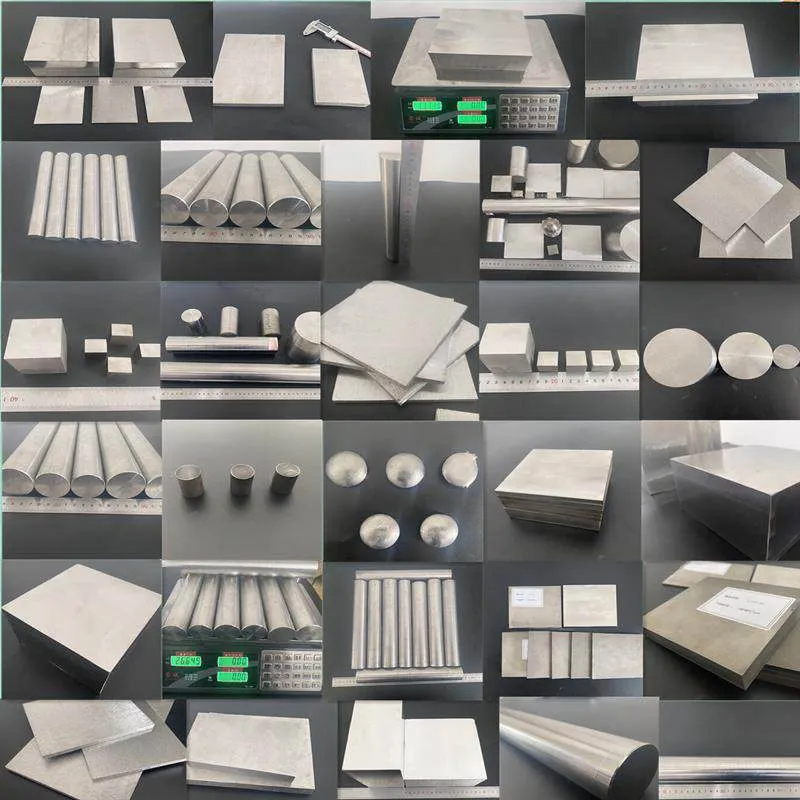
Latrobe Marvac 300 VIM-VAR ; 10 in. High Strength Maraging Steel
Product Code : STI-GSTI-721-CU
We provide Latrobe Marvac 300 VIM-VAR ; 10 in. High Strength Maraging Steel is available in Bar (Round bar, Flat bar), Ribbon, Wire, Rods, Tube,Seamless Tube,Pipe, Ingots, Plate, Sheet, Strip and Forging Stock.,Purity, chemical composition, size, etc. can all be customized to meet specific requirements.
Please contact us if you need customized services. We will contact you with the price and availability in 24 hours.
Latrobe Marvac 300 VIM-VAR ; 10 in. High Strength Maraging Steel Product Information
-:-
For detailed product information, please contact sales.
-:
Latrobe Marvac 300 VIM-VAR ; 10 in. High Strength Maraging Steel Synonyms
-:-
For detailed product information, please contact sales.
-:
Latrobe Marvac 300 VIM-VAR ; 10 in. High Strength Maraging Steel Product Information
-:-
For detailed product information, please contact sales.
-:
# Latrobe Marvac 300 VIM-VAR
## Premium Ultra-High-Strength Maraging Steel - 10 Inch Cross-Section
---
### **Product Overview**
**Latrobe Marvac 300 VIM-VAR** is a **premium-grade, double-vacuum melted maraging steel** engineered for the most demanding ultra-high-strength applications requiring a **10-inch (254 mm) cross-section**. Produced via **Vacuum Induction Melting (VIM) followed by Vacuum Arc Remelting (VAR)**, this material is specifically formulated to achieve a nominal yield strength of **300 ksi (≈2068 MPa)** while maintaining exceptional toughness and uniformity throughout its massive cross-section. The "300" designation references its **ultimate tensile strength target of 300 ksi**, placing it at the pinnacle of the standard maraging steel family. This product represents the **ultimate combination of size, strength, and quality control**, designed for mission-critical aerospace and defense components where failure is not an option.
---
### **Chemical Composition (Weight %) - 10" Ultra-High-Strength Optimized**
*Precisely balanced for maximum precipitation hardening in large sections.*
| Element | Specification Range | Typical VIM-VAR Analysis (10") | Critical Function for 10" 300-Grade |
|---------|-------------------|-------------------------------|------------------------------------|
| **Nickel (Ni)** | 18.0 - 19.0 | 18.7 | Elevated to ensure full martensitic transformation to core; essential for toughness at this strength level. |
| **Cobalt (Co)** | 8.5 - 9.5 | 9.2 | **High-end control.** Maximizes driving force for Mo precipitation; critical for achieving 300 ksi strength in thick sections. |
| **Molybdenum (Mo)** | 4.8 - 5.2 | 5.05 | Primary precipitation hardener (Ni₃Mo). Slightly elevated to compensate for any potential depletion in large ingot. |
| **Titanium (Ti)** | 0.5 - 0.8 | 0.68 | Secondary precipitation hardener (Ni₃Ti). Tightly controlled - too low reduces strength, too high risks large TiN inclusions. |
| **Aluminum (Al)** | 0.05 - 0.15 | 0.12 | Deoxidizer; slightly elevated for improved cleanliness in large VIM heats. |
| **Carbon (C)** | ≤ 0.025 | 0.008 | **Stricter maximum** than standard. Essential to prevent carbide-induced brittleness at ultra-high strength. |
| **Manganese (Mn)** | ≤ 0.08 | 0.04 | Minimized to prevent segregation bands in 10" section. |
| **Silicon (Si)** | ≤ 0.08 | 0.04 | Controlled for improved fracture toughness. |
| **Boron (B)** | 0.004 - 0.006 | 0.005 | Enhanced for maximum hardenability in 10" section. |
| **Zirconium (Zr)** | 0.015 - 0.025 | 0.020 | Grain refiner; critical for maintaining fine grains during extended high-temperature forging. |
| **Sulfur (S)** | ≤ 0.004 | 0.0015 | **Ultra-Low Sulfur (ULS).** Non-negotiable for transverse ductility at 300 ksi strength. |
| **Phosphorus (P)** | ≤ 0.006 | 0.0025 | Tightly controlled to prevent temper embrittlement. |
| **Iron (Fe)** | Balance | Balance | Base. |
**Melting Practice Imperative (VIM-VAR for 10" 300-Grade):**
The VIM-VAR process is **not optional** but **mandatory** for 10-inch 300-grade maraging steel because:
1. **Segregation Elimination:** Prevents centerline weakness that would be catastrophic at this strength level.
2. **Inclusion Control:** Removes oxide and sulfide inclusions that would act as fracture initiation sites in the brittle ultra-high-strength matrix.
3. **Homogeneity:** Ensures uniform aging response from surface to core - a 2% strength variation in a 2000 MPa material is 40 MPa, which is significant.
---
### **Heat Treatment for 10-Inch 300-Grade Sections**
*Extended cycles with precise control are critical.*
1. **Solution Annealing:**
* **Temperature:** 820°C ± 8°C (1508°F)
* **Time:** **10-14 hours** (extended for full austenitization of 10" core)
* **Cooling:** **Forced Air Quench** or **Oil Quench** (depending on exact geometry and risk tolerance).
2. **Aging (Precipitation Hardening):**
* **Temperature:** 480°C ± 3°C (896°F) - **Tighter tolerance** than for 250-grade
* **Time:** **12-18 hours** (extended to ensure complete precipitation to core)
* **Cooling:** Air Cool.
---
### **Mechanical Properties (Aged Condition - 10" Section)**
*Guaranteed minimums from **Surface (S), 1/2 Radius (R/2), and Center (C)**. The center properties govern design.*
| Property | Location | Minimum Guaranteed | Typical Achieved (10" VIM-VAR) | Test Standard | Critical Note |
|----------|----------|-------------------|-------------------------------|---------------|---------------|
| **Ultimate Tensile Strength** | **Center (C)** | **2000 MPa (290 ksi)** | **2020 - 2100 MPa** | ASTM E8 | **300 ksi nominal target.** |
| **0.2% Yield Strength** | **Center (C)** | **1900 MPa (276 ksi)** | **1920 - 2000 MPa** | ASTM E8 | Primary design strength. |
| **Elongation (in 4D)** | Center (C) | 6% | 7 - 10% | ASTM E8 | Limited ductility expected at this strength. |
| **Reduction of Area** | Center (C) | 25% | 30 - 40% | ASTM E8 | |
| **Hardness** | All Locations | 50 HRC | 51 - 54 HRC | ASTM E18 | |
| **Fracture Toughness (KIC)** | R/2 (L-T) | **60 MPa√m** | **65 - 85 MPa√m** | ASTM E399 | **The critical design constraint.** Much lower than 250-grade. |
| **Impact Energy (Charpy V)** | Center (L) | 15 J | 20 - 30 J | ASTM E23 | Low impact resistance - handle with care. |
**Property Gradient & Uniformity (The VIM-VAR Advantage):**
* **Maximum Core-to-Surface Strength Drop:** **≤ 2.5%** (guaranteed). In a 10" 300-grade, this means ≤ 50 MPa difference.
* **Center Consistency:** Multiple tests across the core diameter must show minimal variation.
* **Transverse Properties:** While reduced, they are significantly better than air-melted equivalents due to inclusion shape control.
---
### **Physical Properties (Aged)**
| Property | Value |
|----------|-------|
| **Density** | 8.01 - 8.03 g/cm³ |
| **Thermal Conductivity** | 19 - 21 W/(m·K) |
| **Coefficient of Thermal Expansion** | 10.8 x 10⁻⁶ /K (20-100°C) |
| **Modulus of Elasticity** | 185 - 192 GPa |
| **Electrical Resistivity** | 0.62 - 0.68 μΩ·m |
| **Magnetic Properties** | Ferromagnetic |
---
### **Key Performance Characteristics**
1. **Ultimate Strength-to-Weight Ratio:** Provides the highest practical strength of any commercially available steel in this size range.
2. **Controlled Brittleness:** While inherently less tough than lower-strength grades, the VIM-VAR process maximizes achievable toughness at the 300 ksi level.
3. **Excellent Fatigue Strength:** High tensile strength translates to good fatigue resistance, though notch sensitivity is high.
4. **Dimensional Stability:** Predictable, minimal growth during aging (~0.05-0.06%).
5. **Stress Corrosion Cracking Resistance:** Good for its strength class, but still requires environmental protection.
---
### **International Standards & Certifications**
* **Primary Specification:** **AMS 6521** (18.5Ni-9.0Co-4.9Mo-0.65Ti) is the baseline, but 10" 300-grade typically requires supplementary requirements.
* **Melting Practice:** Must meet **AMS 2301** (Premium Aircraft-Quality Steel) or more stringent customer-specific cleanliness specs.
* **Customer Specifications:** Often supplied to:
* **Boeing BMS 7-348** (with VIM-VAR requirement)
* **Airbus AITM** specifications
* **NASA MSFC** specifications for launch vehicle components
* **Major Defense Prime** source control drawings
* **Testing Standards:** Requires full **ASTM A788** / **A989** testing protocol for large forgings.
---
### **Primary Applications**
This material is reserved for the most critical applications where its exceptional strength justifies its cost and manufacturing challenges.
1. **Aerospace - Primary Market:**
* **Solid Rocket Motor Cases** for strategic and space launch vehicles (e.g., Minuteman, Peacekeeper heritage; modern launch vehicle segments).
* **Main Landing Gear Components** for next-generation military aircraft and heavy-lift transports.
* **Rotor Hub and Mast Components** for heavy-lift helicopters.
* **Critical Spacecraft Structures** subject to extreme launch loads.
2. **Defense:**
* **Armor-Piercing Penetrator Cores** (sub-caliber applications).
* **Heavy Weapon System Components** (recoil mechanisms, breech assemblies).
* **Missile Airframe and Motor Components.**
3. **High-Pressure & Energy:**
* **Components for Isostatic Pressing (HIP)** systems operating at extreme pressures.
* **Deep-Well Downhole Tools** for ultra-deep drilling.
4. **Advanced Tooling:**
* **Giant Die Blocks** for forging aerospace titanium and superalloy components.
* **Mandrels for Superplastic Forming** of large aerospace structures.
---
### **Fabrication & Quality Assurance Imperatives**
**Forging & Processing:**
* Requires **significant hot work reduction** from the VAR ingot to break up the as-cast structure and ensure proper grain flow.
* **Ultrasonic Testing:** **100% volumetric UT** to the most stringent criteria - typically **Quality Level 2 (QL2)** or better per ASTM A388 (e.g., FBH 0.8 mm or equivalent DAC curve). Testing from multiple directions is mandatory.
* **Macroetch & Microcleanliness:** Full transverse macroetch to check for sound center. Microcleanliness per ASTM E45 with strict limits (e.g., Thin Series ≤ 1.0).
**Machining & Heat Treatment:**
* **Machining:** Almost exclusively performed in the **solution-annealed condition**. Machining after aging requires CBN or ceramic tooling and is extremely difficult.
* **Heat Treatment:** Requires furnaces with proven **temperature uniformity of ±5°C** throughout the work zone. Multiple thermocouples are used to monitor core temperature during long cycles.
**Design Philosophy:**
* **Fracture Mechanics-Based:** Must use **Linear Elastic Fracture Mechanics (LEFM)**. The low KIC value is the governing design parameter.
* **Safe-Life Design:** "Damage-tolerant" design is rarely applicable. Components are designed for a finite safe life.
* **Flaw-Free Manufacturing:** Any defect larger than the critical flaw size (calculated from KIC and design stress) is rejectable.
---
### **Economic & Procurement Considerations**
* **Lead Time:** **8-14 months** minimum due to double melting, extended forging, and comprehensive testing.
* **Cost:** **Exceptionally high.** One of the most expensive standard steel product forms, driven by:
* VIM-VAR melting costs
* High cobalt and nickel content
* Low yield from ingot to finished product
* Extensive testing and certification
* **Minimum Order:** Typically a full or half VAR ingot due to melting economics.
---
### **Comparison: 10" Marvac 300 vs. 10" Marvac 250**
| Characteristic | **Marvac 300 VIM-VAR (10")** | **Marvac 250 VIM-VAR (10")** |
|----------------|-----------------------------|-----------------------------|
| **Nominal UTS** | **300 ksi (2068 MPa)** | 250 ksi (1725 MPa) |
| **Typical YS (Center)** | **1920-2000 MPa** | 1675-1730 MPa |
| **Fracture Toughness (KIC)** | **65-85 MPa√m** | **85-110 MPa√m** |
| **Ductility (RA, Center)** | 30-40% | 40-50% |
| **Primary Design Limit** | **Fracture Toughness** | **Yield Strength** |
| **Typical Application** | **Rocket Motors, Extreme Load Components** | **Landing Gears, Rotor Hubs** |
| **Relative Cost** | **~30-40% Higher** | Baseline |
---
### **Summary**
**Latrobe Marvac 300 VIM-VAR in 10-inch cross-section** represents the **absolute frontier of what is commercially feasible** in large-scale, ultra-high-strength steel technology. It is not a material for general engineering but a **specialized solution for extreme performance requirements**. The combination of **300 ksi strength capability in a 10-inch diameter**, made possible only by the **VIM-VAR melting process**, enables engineering achievements that would otherwise be impossible - particularly in aerospace launch systems and advanced defense platforms.
Its successful use demands:
1. **Total respect for its inherent brittleness** (low fracture toughness).
2. **Perfect, flaw-free manufacturing** from melt to finished part.
3. **Sophisticated, fracture-mechanics-based design.**
4. **Uncompromising quality assurance** at every process step.
For engineers facing the challenge of **containing immense forces in a minimum weight package**, where every kilogram saved translates to mission capability, this material provides a proven, if demanding, solution. It is the embodiment of the principle that in extreme engineering, **material selection is not just about properties, but about the certainty of those properties throughout the entire component volume.**
-:-
For detailed product information, please contact sales.
-:
Latrobe Marvac 300 VIM-VAR ; 10 in. High Strength Maraging Steel Specification
Dimensions
Size:
Diameter 20-1000 mm Length <7377 mm
Size:We can customized as required
Standard:
Per your request or drawing
We can customized as required
Properties(Theoretical)
Chemical Composition
-:-
For detailed product information, please contact sales.
-:
Latrobe Marvac 300 VIM-VAR ; 10 in. High Strength Maraging Steel Properties
-:-
For detailed product information, please contact sales.
-:
Applications of Latrobe Marvac 300 VIM-VAR ; 10 in. High Strength Maraging Steel
-:-
For detailed product information, please contact sales.
-:
Chemical Identifiers Latrobe Marvac 300 VIM-VAR ; 10 in. High Strength Maraging Steel
-:-
For detailed product information, please contact sales.
-:
Packing of Latrobe Marvac 300 VIM-VAR ; 10 in. High Strength Maraging Steel
-:-
For detailed product information, please contact sales.
-:
Standard Packing:
-:-
For detailed product information, please contact sales.
-:
Typical bulk packaging includes palletized plastic 5 gallon/25 kg. pails, fiber and steel drums to 1 ton super sacks in full container (FCL) or truck load (T/L) quantities. Research and sample quantities and hygroscopic, oxidizing or other air sensitive materials may be packaged under argon or vacuum. Solutions are packaged in polypropylene, plastic or glass jars up to palletized 3848 gallon liquid totes Special package is available on request. E FORUs’ is carefully handled to minimize damage during storage and transportation and to preserve the quality of our products in their original condition