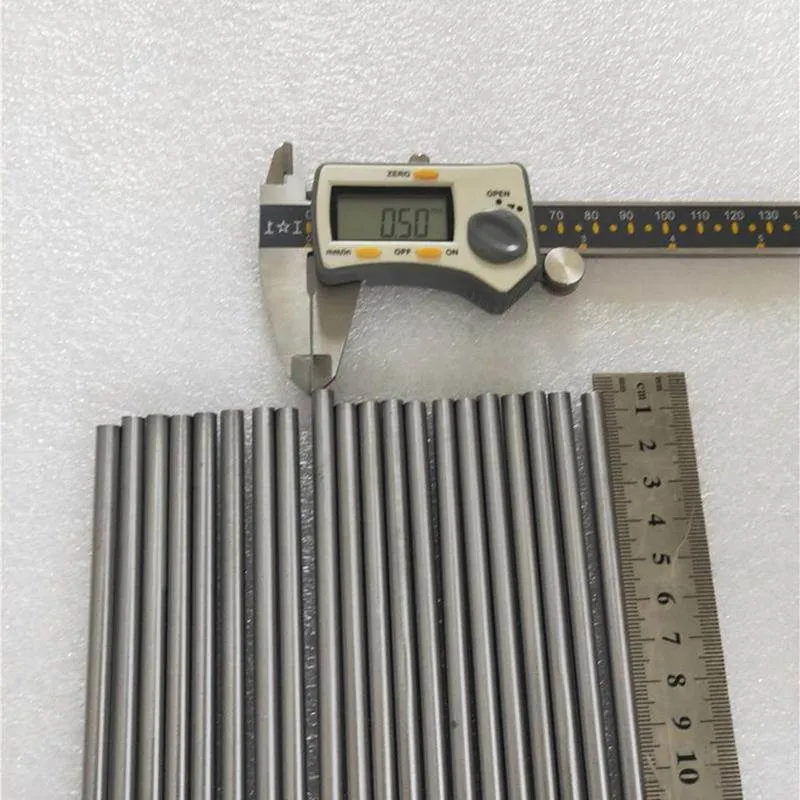
AISI Type A5 Tool Steel
Product Code : STI-GSTI-007-CU
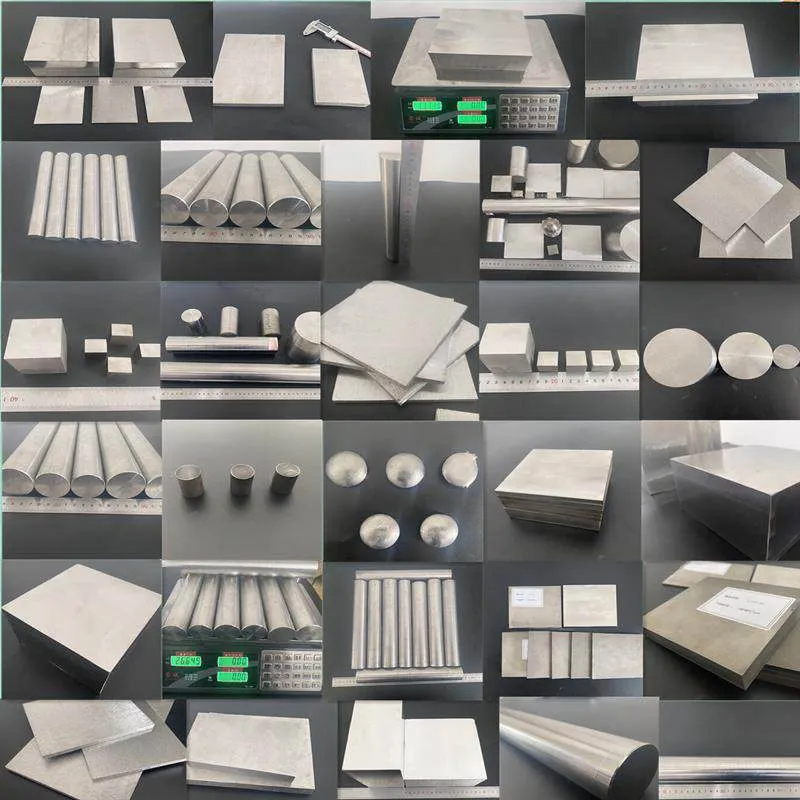
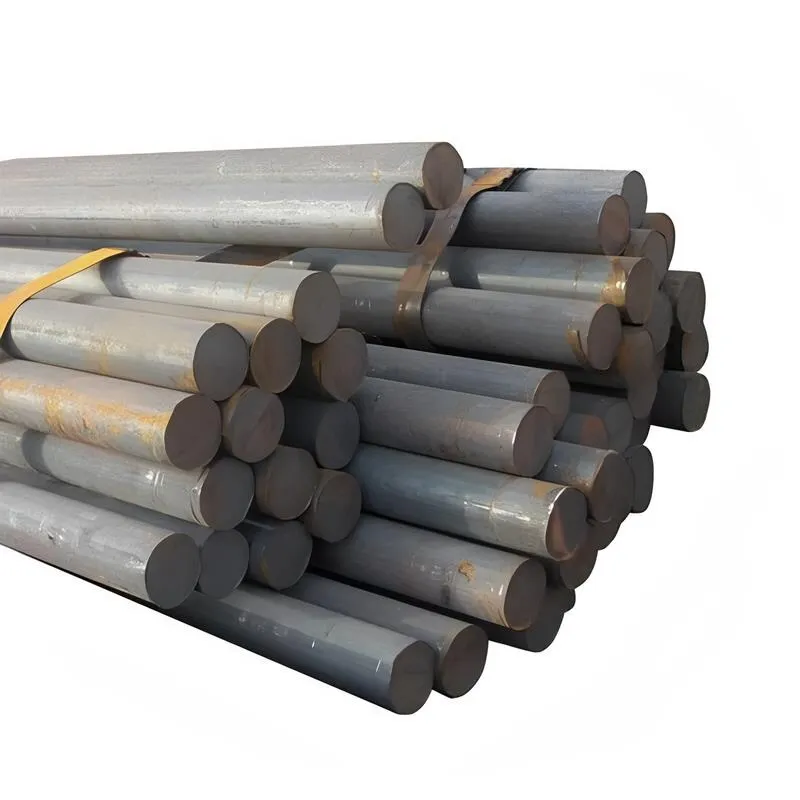
We provide AISI Type A5 Tool Steel is available in Bar (Round bar, Flat bar), Ribbon, Wire, Rods, Tube,Seamless Tube,Pipe, Ingots, Plate, Sheet, Strip and Forging Stock.,Purity, chemical composition, size, etc. can all be customized to meet specific requirements.
Please contact us if you need customized services. We will contact you with the price and availability in 24 hours.
AISI Type A5 Tool Steel Product Information
-:-
For detailed product information, please contact sales.
-:
AISI Type A5 Tool Steel Synonyms
-:-
For detailed product information, please contact sales.
-:
AISI Type A5 Tool Steel Product Information
-:-
For detailed product information, please contact sales.
-:
# **Product Introduction: AISI Type A5 Tool Steel**
## **Overview**
AISI Type A5 is a **high-manganese, air-hardening cold work tool steel** specifically engineered to deliver **exceptional toughness combined with excellent dimensional stability**. As one of the most shock-resistant grades in the A-series, A5 contains the highest manganese content among standard A-grades, providing deep hardenability and remarkable impact resistance while maintaining the characteristic minimal distortion of air-hardening steels. This unique balance makes it particularly valuable for **large, complex tooling subjected to severe mechanical shock** where dimensional accuracy is critical.
---
## **Chemical Composition (Typical Weight %)**
The composition features strategically high manganese content for enhanced hardenability and toughness.
| Element | Content (%) |
| :--- | :--- |
| Carbon (C) | 0.95 - 1.05 |
| Manganese (Mn) | **2.80 - 3.30** |
| Chromium (Cr) | 0.90 - 1.20 |
| Molybdenum (Mo) | 0.90 - 1.40 |
| Silicon (Si) | 0.15 - 0.50 |
| Nickel (Ni) | 0.90 - 1.40 |
| Vanadium (V) | ≤ 0.25 |
| Sulfur (S) | ≤ 0.03 |
| Phosphorus (P) | ≤ 0.03 |
| **Iron (Fe)** | **Balance** |
**Key Role of Elements:**
* **High Manganese (2.80-3.30%):** The defining feature of A5. Provides exceptional hardenability, promotes austenite stability during heat treatment, and significantly enhances toughness and core strength in thick sections.
* **Moderate Carbon:** Balances hardenability with toughness, avoiding excessive brittleness while providing adequate hardness.
* **Nickel:** Further improves toughness and hardenability, particularly in heavier cross-sections.
* **Chromium & Molybdenum:** Provide secondary hardening response, improve wear resistance through carbide formation, and support air-hardening characteristics.
* **Low Vanadium:** Primarily acts as a grain refiner; kept minimal to preserve toughness.
---
## **Physical & Mechanical Properties**
*Properties shown are for properly heat treated material.*
| Property | Typical Value / Description |
| :--- | :--- |
| **Density** | 7.86 g/cm³ (0.284 lb/in³) |
| **Hardness (Annealed)** | 200 - 241 HB (Brinell) |
| **Hardness (Hardened & Tempered)** | **54 - 60 HRC** (Typically operated at 56-58 HRC for optimal toughness/hardness balance) |
| **Wear Resistance** | **Fair to Good.** Lower than higher-carbon A-series grades (A2, A3) but adequate for many applications. Not suitable for highly abrasive conditions. |
| **Toughness** | **Excellent.** The highest among standard A-series grades (A2-A10), approaching some S-series shock-resistant steels. Outstanding resistance to chipping and fracture. |
| **Dimensional Stability** | **Exceptional.** Air-hardening provides minimal distortion (<0.0003 in/in) even in complex geometries and large sections. |
| **Machinability (Annealed)** | **Good** (Approx. 70% of 1% carbon steel). Better than most tool steels due to lower carbide content. |
| **Grindability** | **Good.** Less challenging than high-vanadium or high-chromium steels; requires standard grinding practices. |
| **Thermal Conductivity** | ~ 32.5 W/m·K at 20°C |
| **Coefficient of Thermal Expansion** | ~ 11.7 × 10⁻⁶/°C (20-100°C) |
| **Deep Hardenability** | **Excellent.** Can through-harden sections up to 150mm (6") with proper air quenching. |
---
## **Heat Treatment Guidelines**
| Process | Parameters |
| :--- | :--- |
| **Annealing** | Heat to 790-815°C (1450-1500°F), slow furnace cool at ≤22°C/hour to 480°C (900°F), then air cool. Result: 200-241 HB. |
| **Stress Relieving** | 650-675°C (1200-1250°F) for 1-2 hours, air cool. |
| **Preheating** | **Critical:** Preheat at 650-760°C (1200-1400°F) to minimize thermal gradients. |
| **Austenitizing** | 815-845°C (1500-1550°F). Lower temperature preserves toughness and fine grain structure. |
| **Quenching** | **Air quench** in still or forced air. For sections >100mm, forced air or positive pressure quenching is recommended. |
| **Tempering** | **Must be performed immediately.** Double temper at 175-540°C (350-1000°F) for minimum 2 hours per cycle. For high toughness applications: temper at 425-540°C (800-1000°F) to achieve 54-56 HRC. |
---
## **Product Applications**
AISI A5 excels in applications requiring **maximum toughness in large, precision tooling** where dimensional stability during heat treatment is paramount.
### **Primary Applications:**
1. **Large Forming Dies & Punches:** For heavy-gauge metal forming where shock loads are high and dimensional accuracy is critical.
2. **Master Dies & Tooling Models:** For reproducing tooling where dimensional stability and resistance to handling damage are essential.
3. **Shear Blades & Cutting Tools:** For cutting tough, fibrous materials (cables, thick plastics, rubber) where chipping resistance is more important than extreme wear.
4. **Thread Rolling Dies:** For softer materials where high pressure requires exceptional toughness.
5. **Precision Gauges & Fixtures:** Large, complex fixtures that must maintain dimensional stability after heat treatment.
6. **Machine Tool Components:** Cam shafts, heavy-duty wear plates, and guide rails in high-load applications.
7. **Cold Heading Dies & Boltmaking Tools:** Where high impact resistance is required.
### **Industry Usage:**
- **Heavy Equipment Manufacturing**
- **Tool & Die Making** (for large, complex tooling)
- **Forging & Metal Stamping**
- **Precision Machining & Gauge Manufacturing**
- **Fastener Production**
---
## **International Standards & Cross-Reference**
AISI A5 has limited direct international equivalents due to its unique high-manganese composition.
| Standard | Designation | Equivalent / Similar Grade |
| :--- | :--- | :--- |
| **AISI/SAE (USA)** | **Type A5** | - |
| **UNS (USA)** | **T30105** | - |
| **ASTM (USA)** | A681 | Grade A5 |
| **Europe (EN)** | - | No direct common equivalent |
| **Germany (DIN)** | **~1.2516** (*closest functional match*) | 55NiCrMoV7 (Lower Mn, similar concept) |
| **Japan (JIS)** | - | No direct common equivalent |
| **ISO** | - | No direct equivalent |
**Important Note:** The high manganese content (2.80-3.30%) makes A5 chemically unique. European 1.2516 (55NiCrMoV7) is often used as a functional substitute where high toughness is needed, but it contains significantly less manganese (~0.60%). True equivalents are rare outside North American specifications.
---
## **Technical Comparison**
| Property | A5 vs. A2 | A5 vs. S7 |
| :--- | :--- | :--- |
| **Carbon Content** | Similar | Lower (1.05% max vs. 0.50% max) |
| **Manganese Content** | **Much higher** (3.30% max vs. 1.00% max) | Higher (3.30% max vs. 0.80% max) |
| **Primary Advantage** | **Toughness + Dimensional Stability** | **Maximum Shock Resistance** |
| **Maximum Hardness** | Lower (60 HRC vs. 62 HRC) | Similar (60 HRC vs. 58-60 HRC) |
| **Wear Resistance** | Lower | Lower |
| **Heat Treatment** | Air hardening (simpler) | Air hardening (similar) |
| **Best For** | Large, complex tools requiring stability | Extreme impact applications |
---
## **Advantages & Considerations**
### **Advantages:**
1. **Exceptional Toughness:** Highest impact resistance in the A-series family.
2. **Superior Dimensional Stability:** Minimal distortion during air hardening, ideal for precision tooling.
3. **Deep Hardenability:** Reliable through-hardening in very thick sections (up to 6").
4. **Good Machinability:** Easier to machine than higher-alloy tool steels.
5. **Consistent Performance:** Predictable heat treatment response and properties.
### **Considerations:**
1. **Limited Wear Resistance:** Not suitable for highly abrasive applications.
2. **Lower Maximum Hardness:** Cannot achieve the high hardness levels of A2 or D2.
3. **Specialized Grade:** Less commonly stocked than A2 or O1; may require special ordering.
4. **Not for Hot Work:** Limited high-temperature performance.
---
## **Availability & Processing**
### **Available Forms:**
- Round Bars (½" to 12" diameter)
- Flat Bars and Plates
- Forged Blocks
- Custom Shapes (limited availability)
### **Processing Notes:**
1. **Machining:** Use carbide tools for best results; adequate coolant recommended.
2. **Grinding:** Use standard aluminum oxide wheels with proper cooling.
3. **EDM:** Can be wire or sinker EDM machined; stress relieve after EDM.
4. **Welding:** Not generally recommended for tool applications. If necessary, preheat to 300-400°C (575-750°F) and use low-hydrogen electrodes.
---
## **Conclusion**
AISI Type A5 tool steel represents a **specialized solution within the cold work tool steel spectrum**, offering a **unique combination of deep hardenability, exceptional toughness, and superior dimensional stability**. Its high manganese content distinguishes it from other A-series grades, providing unparalleled impact resistance for large, complex tooling that must maintain precise dimensions after heat treatment. While not as wear-resistant as A2 or as shock-resistant as dedicated S-series steels, A5 occupies a valuable niche for **applications where both significant toughness and dimensional precision are required simultaneously**. It is the ideal choice for tool engineers designing large forming dies, master tooling, and heavy-duty components where failure by fracture is a greater concern than gradual wear, and where the stability of air hardening is essential for manufacturing accuracy.
-:-
For detailed product information, please contact sales.
-:
AISI Type A5 Tool Steel Specification
Dimensions
Size:
Diameter 20-1000 mm Length <6663 mm
Size:We can customized as required
Standard:
Per your request or drawing
We can customized as required
Properties(Theoretical)
Chemical Composition
-:-
For detailed product information, please contact sales.
-:
AISI Type A5 Tool Steel Properties
-:-
For detailed product information, please contact sales.
-:
Applications of AISI Type A5 Tool Steel
-:-
For detailed product information, please contact sales.
-:
Chemical Identifiers AISI Type A5 Tool Steel
-:-
For detailed product information, please contact sales.
-:
Packing of AISI Type A5 Tool Steel
-:-
For detailed product information, please contact sales.
-:
Standard Packing:
-:-
For detailed product information, please contact sales.
-:
Typical bulk packaging includes palletized plastic 5 gallon/25 kg. pails, fiber and steel drums to 1 ton super sacks in full container (FCL) or truck load (T/L) quantities. Research and sample quantities and hygroscopic, oxidizing or other air sensitive materials may be packaged under argon or vacuum. Solutions are packaged in polypropylene, plastic or glass jars up to palletized 3134 gallon liquid totes Special package is available on request. E FORUs’ is carefully handled to minimize damage during storage and transportation and to preserve the quality of our products in their original condition