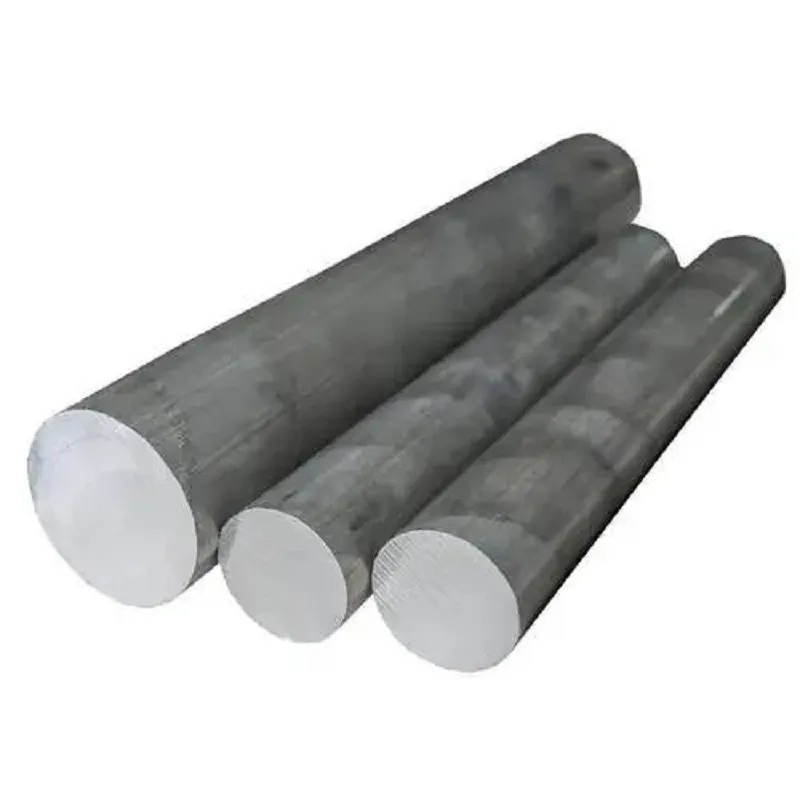
AISI Type D' Cold Work Tool Steel
Product Code : STI-GSTI-016-CU
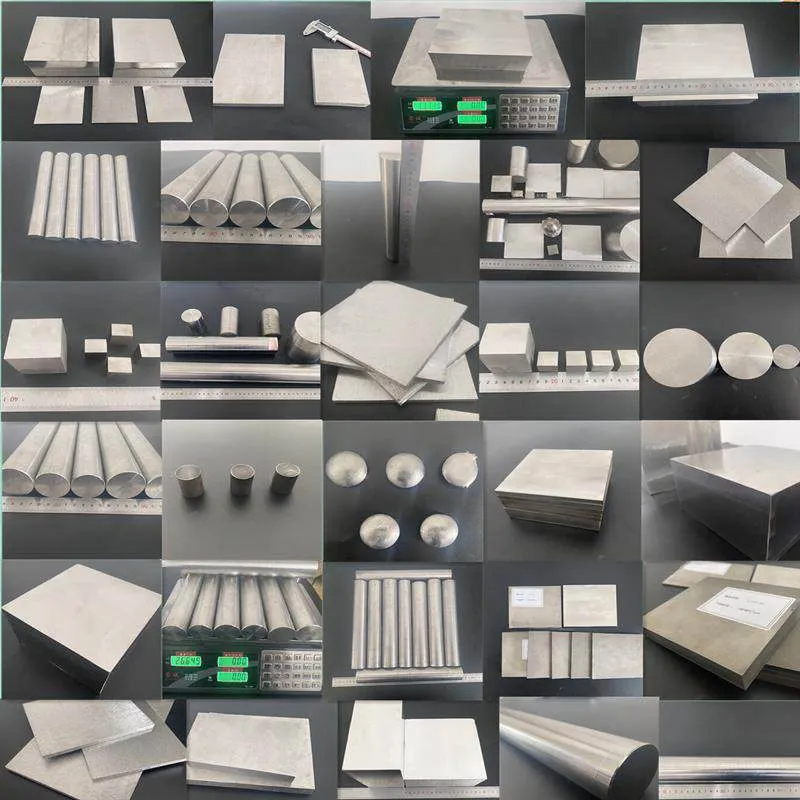
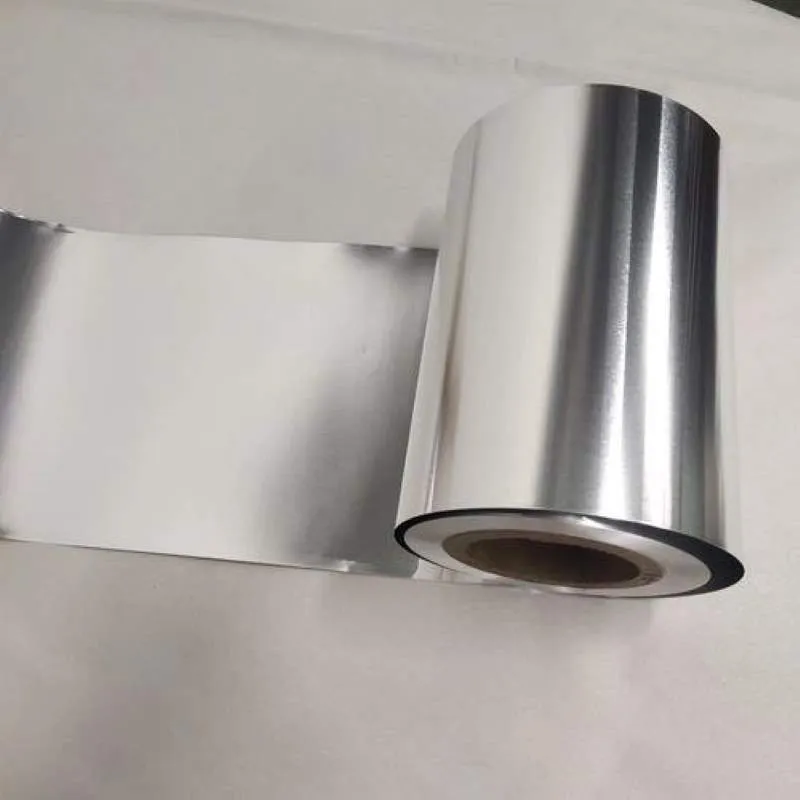
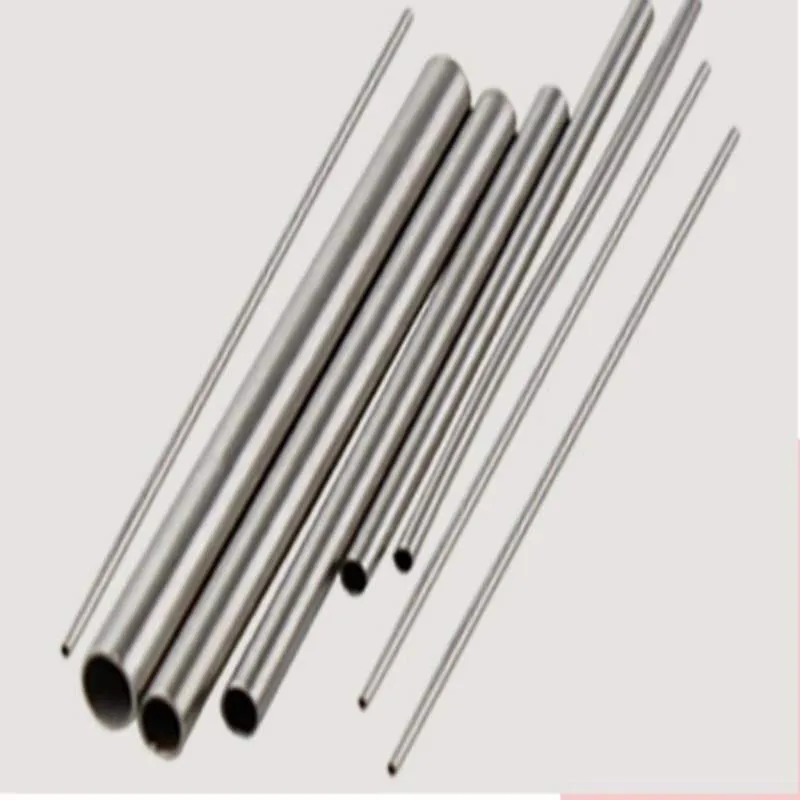
We provide AISI Type D' Cold Work Tool Steel is available in Bar (Round bar, Flat bar), Ribbon, Wire, Rods, Tube,Seamless Tube,Pipe, Ingots, Plate, Sheet, Strip and Forging Stock.,Purity, chemical composition, size, etc. can all be customized to meet specific requirements.
Please contact us if you need customized services. We will contact you with the price and availability in 24 hours.
AISI Type D' Cold Work Tool Steel Product Information
-:-
For detailed product information, please contact sales.
-:
AISI Type D' Cold Work Tool Steel Synonyms
-:-
For detailed product information, please contact sales.
-:
AISI Type D' Cold Work Tool Steel Product Information
-:-
For detailed product information, please contact sales.
-:
# **Product Introduction: AISI Type D' Cold Work Tool Steel**
## **Overview**
**AISI Type D'** represents a **specialized subgroup within the high-carbon, high-chromium cold work tool steel family**. Unlike standard D-grades (D2, D3, etc.), D' variants typically denote **modified compositions**—often with adjusted carbon, vanadium, or other alloying elements—to target specific performance characteristics such as enhanced toughness, improved grindability, or optimized carbide distribution. These steels maintain the signature **exceptional wear resistance and deep air-hardening capability** of D-type steels but are engineered for specialized applications where the standard grades present limitations. The prime symbol (') indicates a deliberate deviation from the standard AISI composition.
---
## **Chemical Composition (Typical Range %)**
*Note: Exact composition varies by manufacturer and specific "D'" designation (e.g., D2', D3', D5'). The table represents a common generic range for a modified D2-type alloy.*
| Element | Typical D' Range (%) | Comparison to Std. D2 | Modification Purpose |
| :--- | :--- | :--- | :--- |
| **Carbon (C)** | 1.40 - 1.60 | Similar or Slightly Adjusted | Fine-tunes carbide volume for wear/toughness balance. |
| **Chromium (Cr)** | 11.00 - 13.00 | Similar | Maintains hardenability and primary carbide former. |
| **Molybdenum (Mo)** | 0.70 - 1.20 | Often Increased | Enhances hardenability and secondary hardening; improves toughness. |
| **Vanadium (V)** | **Variable: 0.50 - 2.50+** | **Key Variable** | **Primary modification element.** Lower V improves grindability/toughness; higher V boosts wear resistance. |
| **Silicon (Si)** | 0.10 - 0.60 | May be Increased | Can be raised to improve tempering resistance and toughness. |
| **Manganese (Mn)** | 0.20 - 0.60 | Similar | - |
| **Sulfur (S)** | ≤ 0.03 (or higher for machinability) | May be Increased | Sometimes added for improved machinability (free-machining variant). |
| **Cobalt (Co)** | Occasionally Added (1-3%) | Not in Std. D2 | Added for increased hot hardness and tempering resistance. |
| **Iron (Fe)** | **Balance** | - | - |
**Key Feature:** The defining characteristic of D' steels is **intentional compositional modification**, most commonly via **vanadium adjustment**. A **high-V D' variant** targets extreme abrasion resistance (bridging toward A11 properties), while a **low-V D' variant** prioritizes grindability and toughness for intricate tooling.
---
## **Physical & Mechanical Properties**
*Properties are highly dependent on the specific D' variant and heat treatment.*
| Property | Typical Value / Description | Impact of Modification |
| :--- | :--- | :--- |
| **Density** | ~7.70 g/cm³ | Similar to standard D-grades. |
| **Hardness (Annealed)** | 220 - 255 HB | - |
| **Hardness (Hardened & Tempered)** | **58 - 64 HRC** | Can achieve higher hardness with high-V variants. |
| **Wear Resistance** | **Very Good to Exceptional.** High-V variants exceed D2; low-V variants are slightly lower. | Directly correlates with vanadium and total carbide volume. |
| **Toughness** | **Fair to Good.** Can be improved over standard D2 with optimized carbide size/distribution. | Lower carbon or optimized heat treatment can enhance toughness. |
| **Dimensional Stability** | **Excellent.** Maintains air-hardening advantages with minimal distortion. | - |
| **Machinability (Annealed)** | **Poor to Very Poor** (Similar to or worse than D2). | High-V variants are extremely difficult. |
| **Grindability** | **Very Poor to Extremely Poor.** High-V variants are among the most challenging steels to grind. **Low-V variants are specifically improved in this area.** | **Grindability is a primary reason for low-V D' formulations.** |
| **Thermal Conductivity** | Low (~20 W/m·K) | - |
---
## **Heat Treatment Guidelines**
Heat treatment follows principles similar to D2 but must be tailored to the specific modification.
| Process | General Parameters | Special Considerations for D' |
| :--- | :--- | :--- |
| **Annealing** | 870-900°C (1600-1650°F), slow furnace cool. | High-V alloys may require higher annealing temps for spheroidization. |
| **Preheating** | **Critical:** Double preheat at 550°C & 850°C. | Even more critical for high-alloy variants to prevent cracking. |
| **Austenitizing** | 990-1040°C (1815-1905°F). | High-V variants may require higher temperatures to dissolve vanadium carbides. |
| **Quenching** | Air quench (still or forced air) or high-pressure gas quench. | - |
| **Tempering** | **Multiple tempers mandatory.** Start at 480-540°C (900-1000°F). High-V/Cobalt variants may require tempering up to 560°C. | Must be tailored to secondary hardening response of the specific alloy. |
---
## **Product Applications**
D' steels are selected for niche applications where standard D-grades are *almost* but not *quite* suitable.
### **Applications by Variant Type:**
**1. High-Vanadium / High-Wear D' Variants (e.g., "Super D2"):**
- **Extreme Abrasion Tooling:** Dies for powder compaction (metal, ceramic), abrasive plastic composites.
- **Precision Slitter Knives** for advanced composites or abrasive papers.
- **Critical Wear Parts** in machinery processing highly abrasive materials.
- **Thread rolling dies** for hard alloys.
**2. Low-Vanadium / High-Toughness/Improved Grindability D' Variants:**
- **Complex, intricate dies and molds** requiring extensive grinding and EDM.
- **Precision punches and forming tools** where chipping resistance is critical.
- **Tools requiring a superior finish** from grinding or polishing.
- **Applications where standard D2's grindability is a production bottleneck.**
**3. Cobalt-Containing D' Variants:**
- **Hot stamping or warm forming tools** (limited hot work applications).
- **Tools requiring elevated tempering temperatures** for stress relief.
- **Applications needing increased hardness at slightly elevated temperatures.**
### **Industry Usage:**
- **Precision Tool & Die Making** (specialized)
- **Powder Metallurgy**
- **Advanced Composites Manufacturing**
- **Cutting Tool Industry**
---
## **International Standards & Cross-Reference**
*D' steels are proprietary modifications and do not have universal standard designations.*
| Standard | Designation | Notes |
| :--- | :--- | :--- |
| **AISI/SAE (USA)** | **Not a Standard AISI Grade** | The prime (') denotes a non-standard, modified composition. |
| **UNS (USA)** | **No specific UNS** | May be supplied under a proprietary UNS or material code. |
| **Europe (EN)** | - | Often equivalent to a modified **1.2379** (X153CrMoV12) or proprietary "Super Clean" versions. |
| **Germany (DIN)** | - | Similar to modified **1.2606** or proprietary grades like **1.2379 Super** (for high-V). |
| **Japan (JIS)** | **Modified SKD11** | Often marketed as "SKD11+", "SKD11 Special", or "DC11". |
| **Common Names** | **Super D2, DC53 (Low-V example), Microclean D2** | Manufacturer-specific trade names. |
**Critical Note:** **AISI Type D' is not a singular, standardized material.** It is a **category for proprietary alloys**. **Exact chemical and mechanical specifications must be obtained from the steel producer's data sheet** for the specific "D'" grade being supplied (e.g., Böhler K110, Daido DC53, etc.).
---
## **Advantages & Considerations**
### **Advantages:**
1. **Tailored Performance:** Can be optimized for specific needs (wear, toughness, grindability) beyond standard D2.
2. **Potential for Superior Properties:** High-V variants offer wear resistance approaching A11; low-V variants offer better toughness/grindability than D2.
3. **Maintains Core D-Grade Benefits:** Excellent deep hardenability and dimensional stability of air-hardening steels.
4. **Problem-Solving Material:** Solves specific application failures where standard grades are inadequate.
### **Considerations:**
1. **Lack of Standardization:** Properties are not universal; supplier dependency is high.
2. **Higher Cost:** Typically more expensive than standard grades due to specialized production.
3. **Complex Heat Treatment:** May require even more precise control than standard grades.
4. **Procurement Complexity:** Requires clear technical specification and supplier qualification.
---
## **Conclusion**
**AISI Type D' Cold Work Tool Steel** is not a single material but a **class of engineered, proprietary alloys** representing the evolution of the classic high-carbon, high-chromium tool steel. It embodies the principle of **application-specific material design**, where steelmakers modify the foundational D-grade chemistry to push performance boundaries in one or more key areas—be it extreme wear, improved grindability, or enhanced toughness. While sacrificing the universality and predictability of a true standard grade like D2, a well-specified D' steel offers the toolmaker a **precision instrument** to solve a specific, high-value problem. Successful implementation requires close collaboration with a reputable steel producer and a clear understanding of the dominant failure mode the tool is designed to overcome. For the most demanding, specialized tooling applications, D' variants represent the cutting edge of cold work steel technology.
-:-
For detailed product information, please contact sales.
-:
AISI Type D' Cold Work Tool Steel Specification
Dimensions
Size:
Diameter 20-1000 mm Length <6672 mm
Size:We can customized as required
Standard:
Per your request or drawing
We can customized as required
Properties(Theoretical)
Chemical Composition
-:-
For detailed product information, please contact sales.
-:
AISI Type D' Cold Work Tool Steel Properties
-:-
For detailed product information, please contact sales.
-:
Applications of AISI Type D' Cold Work Tool Steel
-:-
For detailed product information, please contact sales.
-:
Chemical Identifiers AISI Type D' Cold Work Tool Steel
-:-
For detailed product information, please contact sales.
-:
Packing of AISI Type D' Cold Work Tool Steel
-:-
For detailed product information, please contact sales.
-:
Standard Packing:
-:-
For detailed product information, please contact sales.
-:
Typical bulk packaging includes palletized plastic 5 gallon/25 kg. pails, fiber and steel drums to 1 ton super sacks in full container (FCL) or truck load (T/L) quantities. Research and sample quantities and hygroscopic, oxidizing or other air sensitive materials may be packaged under argon or vacuum. Solutions are packaged in polypropylene, plastic or glass jars up to palletized 3143 gallon liquid totes Special package is available on request. E FORUs’ is carefully handled to minimize damage during storage and transportation and to preserve the quality of our products in their original condition