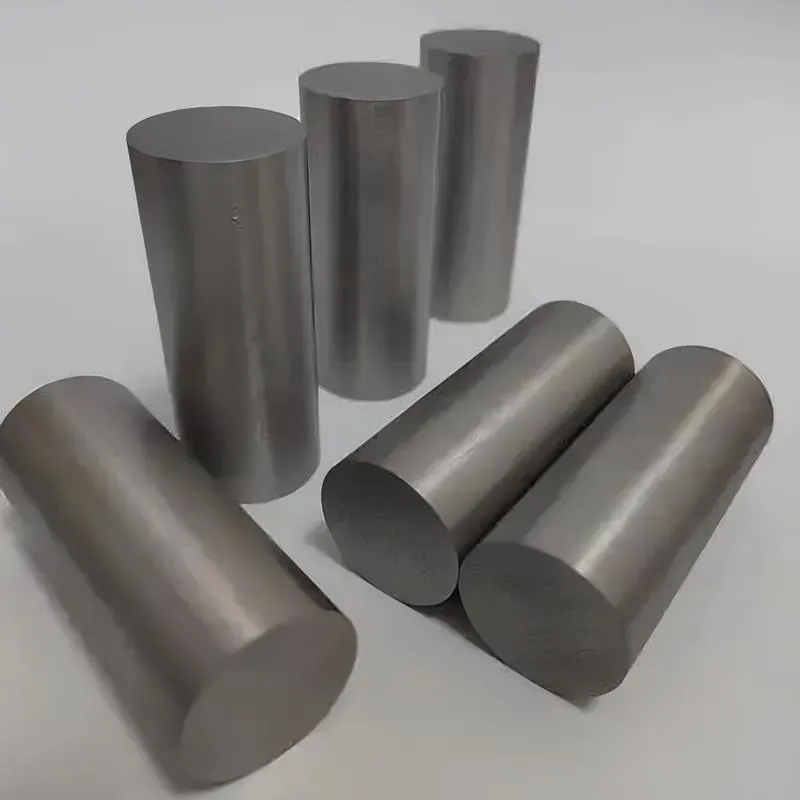
AISI Type D2 Tool Steel
Product Code : STI-GSTI-017-CU
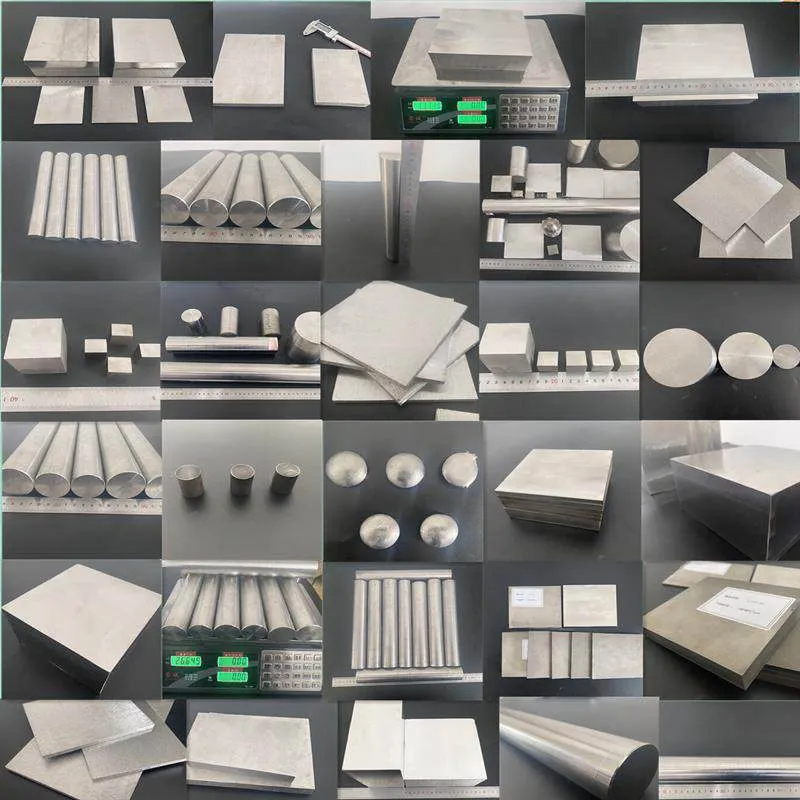
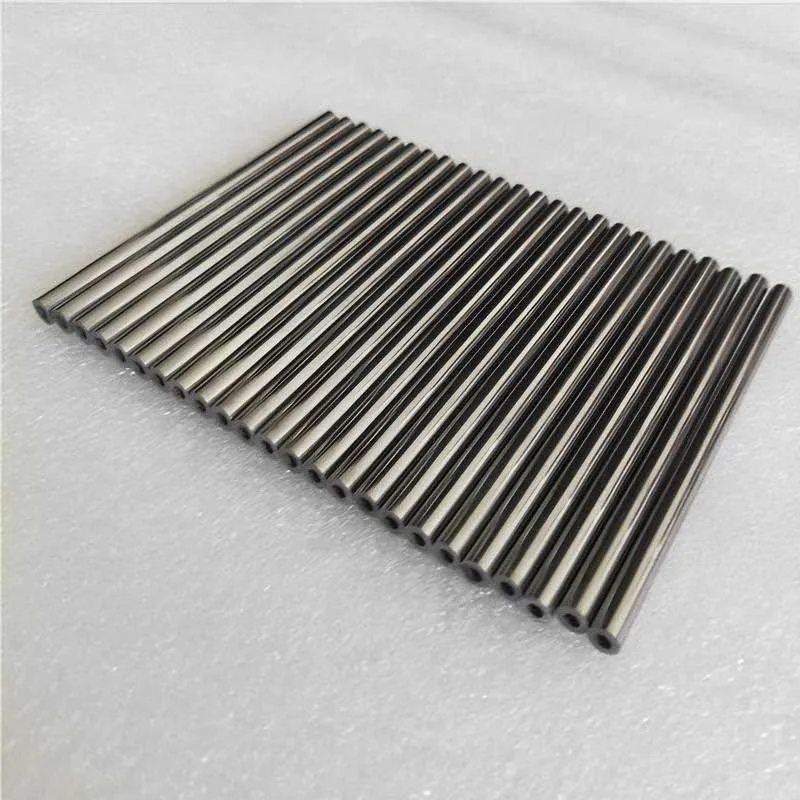
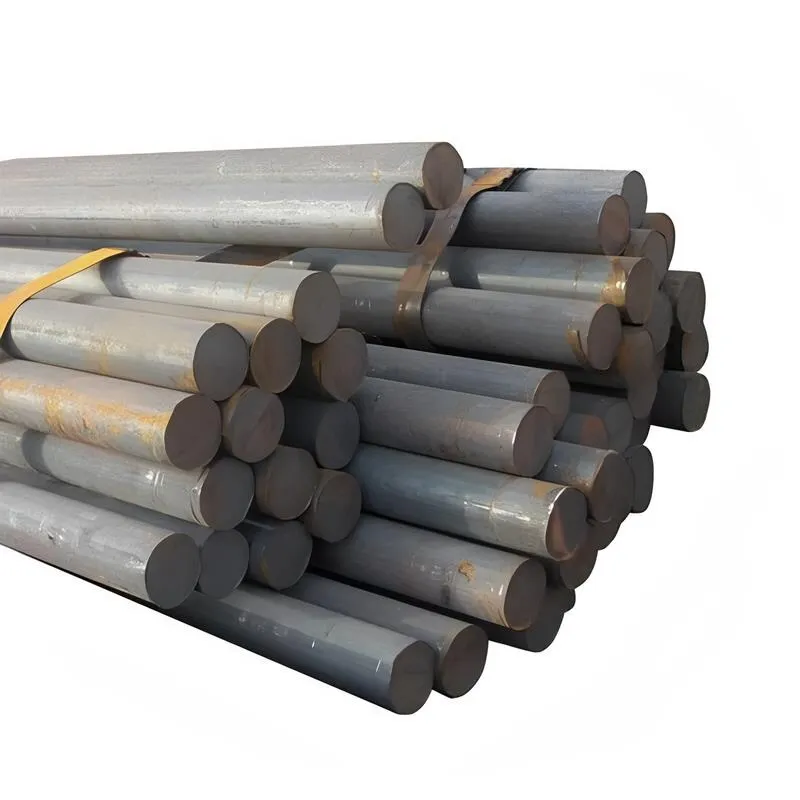
We provide AISI Type D2 Tool Steel, air quenched at 1010°C, tempered at 200°C is available in Bar (Round bar, Flat bar), Ribbon, Wire, Rods, Tube,Seamless Tube,Pipe, Ingots, Plate, Sheet, Strip and Forging Stock.,Purity, chemical composition, size, etc. can all be customized to meet specific requirements.
Please contact us if you need customized services. We will contact you with the price and availability in 24 hours.
AISI Type D2 Tool Steel, air quenched at 1010°C, tempered at 200°C Product Information
-:-
For detailed product information, please contact sales.
-:
AISI Type D2 Tool Steel, air quenched at 1010°C, tempered at 200°C Synonyms
-:-
For detailed product information, please contact sales.
-:
AISI Type D2 Tool Steel, air quenched at 1010°C, tempered at 200°C Product Information
-:-
For detailed product information, please contact sales.
-:
# **Product Introduction: AISI Type D2 Tool Steel (Air Quenched at 1010°C, Tempered at 200°C)**
## **Overview**
**AISI Type D2** is a premier **high-carbon, high-chromium, air-hardening cold work tool steel**, renowned as the industry benchmark for **exceptional wear resistance and good dimensional stability**. When processed with the specific heat treatment parameters of **austenitizing at 1010°C followed by air quenching and tempering at 200°C**, D2 achieves an optimal microstructure that maximizes hardness and abrasion resistance for demanding applications. This treatment develops a high volume of hard, complex carbides within a very hard martensitic matrix, resulting in a material capable of withstanding severe abrasive wear while maintaining the shape fidelity characteristic of air-hardening steels.
---
## **Chemical Composition (Typical Weight %)**
The composition is engineered for high carbide volume and deep air hardenability.
| Element | Content (%) | Role in Microstructure & Properties |
| :--- | :--- | :--- |
| **Carbon (C)** | 1.40 - 1.60 | Primary carbide former. Combined with Cr and V, creates a high volume fraction (~12-16%) of hard carbides for extreme wear resistance. |
| **Chromium (Cr)** | 11.00 - 13.00 | Primary alloying element. Provides deep hardenability for air quenching, forms hard chromium carbides (M₇C₃), and contributes to corrosion resistance. |
| **Molybdenum (Mo)** | 0.70 - 1.20 | Enhances hardenability, promotes fine grain structure, and improves toughness and tempering resistance. |
| **Vanadium (V)** | 0.50 - 1.10 | Forms extremely hard vanadium carbides (VC/V₄C₃) for superior abrasion resistance and acts as a powerful grain refiner. |
| **Silicon (Si)** | 0.10 - 0.60 | Deoxidizer; increases strength. |
| **Manganese (Mn)** | 0.20 - 0.60 | Aids in hardenability and acts as a deoxidizer. |
| **Sulfur (S)** | ≤ 0.03 | - |
| **Phosphorus (P)** | ≤ 0.03 | - |
| **Iron (Fe)** | **Balance** | - |
---
## **Heat Treatment & Resulting Microstructure**
**Specific Parameters: Austenitize at 1010°C → Air Quench → Temper at 200°C**
| Process Step | Parameters & Metallurgical Objective |
| :--- | :--- |
| **Austenitizing @ 1010°C (1850°F)** | **Purpose:** To dissolve a sufficient amount of chromium and vanadium carbides into the austenite matrix without causing excessive grain growth.
**Soak Time:** 30-45 minutes per inch of thickness.
**Effect:** Achieves a high carbon and alloy content in solution, setting the stage for maximum as-quenched hardness. |
| **Quenching: Still or Forced Air** | **Purpose:** To transform austenite to martensite with minimal distortion and stress.
**Practice:** Cool uniformly in still air or with gentle forced air agitation.
**As-Quenched Hardness:** ~63-65 HRC (contains significant retained austenite). |
| **Tempering @ 200°C (390°F)** | **Purpose:** To relieve quenching stresses, transform some retained austenite, and achieve final working hardness.
**Practice:** Double temper for 2 hours each cycle is **strongly recommended**.
**Final Microstructure:** Tempered martensite with a uniform dispersion of primary (M₇C₃) and secondary (VC) carbides. |
---
## **Physical & Mechanical Properties (After 1010°C Air Quench + 200°C Temper)**
| Property | Typical Value / Description | Notes on this Specific Treatment |
| :--- | :--- | :--- |
| **Final Hardness** | **60 - 62 HRC** | Achieves peak wear resistance. Toughness is at its lower end for D2. |
| **Wear Resistance** | **Excellent.** Among the highest of all cold work tool steels. Superior to A2, O1, and most others. | High carbide volume and high matrix hardness from low-temp tempering maximize abrasion resistance. |
| **Toughness** | **Fair (Low for D2).** | The low tempering temperature does not significantly improve ductility. Material is relatively brittle; sensitive to impact and notch effects. |
| **Dimensional Stability** | **Excellent.** Air quenching results in minimal distortion (~0.0002-0.0004 in/in). | The low-temperature temper provides stress relief without significant dimensional change. |
| **Compressive Strength** | **Very High** (> 3000 MPa) | Beneficial for forming and coining applications. |
| **Machinability (Annealed)** | Poor (~40% of 1% carbon steel). | Difficult due to hard carbides. |
| **Grindability** | **Poor to Very Poor.** | The high hardness and vanadium carbides make grinding challenging. Requires proper wheels and technique. |
| **Retained Austenite** | **Low (< 5%)** | The 200°C temper promotes transformation of retained austenite from quenching. A second temper further reduces it. |
---
## **Product Applications**
This specific high-hardness condition is selected for applications where **abrasive wear is the dominant and primary failure mechanism**, and where tools are not subjected to heavy impact.
### **Primary Applications:**
1. **Long-Run Blanking and Forming Dies:** For abrasive sheet metals (stainless steel, silicon steel) or materials (pre-painted steel, composites).
2. **Precision Slitter Knives and Rotary Cutters:** For metals, plastics, paper, and laminates requiring a sharp, wear-resistant edge.
3. **Powder Compaction Tooling:** Dies and punches for pressing metal or ceramic powders.
4. **Thread Rolling Dies and Forming Rolls:** For producing threads on hard or abrasive materials.
5. **Cold Extrusion Punches and Dies:** For extruding steel and other metals.
6. **Gauges and Precision Wear Parts:** Where dimensional stability and wear resistance are critical.
7. **Plastic Injection Molds:** For processing abrasive or corrosive filled plastics (e.g., fiberglass, minerals).
### **Industry Usage:**
- **Metal Stamping & Forming**
- **Cutting Tool Manufacturing**
- **Powder Metallurgy**
- **Fastener Production**
- **Precision Machining**
---
## **International Standards & Cross-Reference**
AISI D2 is a globally recognized standard with direct equivalents.
| Standard | Designation | Equivalent / Similar Grade |
| :--- | :--- | :--- |
| **AISI/SAE (USA)** | **Type D2** | - |
| **UNS (USA)** | **T30402** | - |
| **ASTM (USA)** | A681 | Grade D2 |
| **Europe (EN)** | **1.2379** | X153CrMoV12 |
| **Germany (DIN)** | **1.2379** | X153CrMoV12 |
| **Japan (JIS)** | **SKD11** | - |
| **Sweden (SS)** | **2310** | - |
| **ISO** | **~160CrMoV12** | - |
---
## **Advantages & Considerations of this Specific Treatment**
### **Advantages:**
1. **Maximum Wear Resistance:** This treatment pushes D2 to its peak abrasion resistance capability.
2. **Excellent Dimensional Stability:** Air quenching ensures minimal distortion, preserving tool accuracy.
3. **High Hardness & Strength:** Ideal for applications requiring resistance to deformation under high pressure.
4. **Good Corrosion Resistance:** The high chromium content provides better corrosion resistance than most tool steels (though not stainless).
### **Considerations & Limitations:**
1. **Low Toughness:** The 200°C temper offers minimal improvement in impact resistance. **Not suitable for tools subject to shock, chipping, or heavy impact.**
2. **Grinding & Machining Difficulty:** The final high hardness makes re-sharpening or reworking very difficult.
3. **Risk of Untempered Martensite:** If the tempering cycle is insufficient or uneven, brittle untempered martensite may remain, leading to premature failure.
4. **Not for Elevated Temperatures:** Service temperatures should remain below ~200°C (390°F) to avoid overtempering and softening.
---
## **Comparison with Alternative Tempering Temperatures**
| Tempering Temperature | Resulting Hardness | Primary Property Emphasis |
| :--- | :--- | :--- |
| **200°C (390°F)** | **60-62 HRC** | **MAXIMUM WEAR RESISTANCE.** Used here. Very low toughness. |
| **400°C (750°F)** | 58-60 HRC | **BALANCE.** Good wear resistance with significantly improved toughness. Most common general-purpose condition. |
| **520°C (970°F)** | 54-56 HRC | **MAXIMUM TOUGHNESS (Secondary Hardness Peak).** Good for impact applications; wear resistance is reduced. |
---
## **Conclusion**
**AISI Type D2 tool steel, when air quenched from 1010°C and tempered at 200°C, represents the material at its pinnacle of wear-resistant performance.** This specific heat treatment regimen is a **targeted engineering choice** that prioritizes extreme abrasion resistance and high hardness above all else, including toughness. It is the ideal specification for **long-running production tooling** where the dominant and predictable failure mode is gradual abrasive wear, and where tools are protected from impact. By understanding and leveraging this specific condition, manufacturers can achieve exceptional tool life and cost-per-part efficiency in the most demanding cold work applications, solidifying D2's status as the workhorse for high-wear tooling.
-:-
For detailed product information, please contact sales.
-:
AISI Type D2 Tool Steel, air quenched at 1010°C, tempered at 200°C Specification
Dimensions
Size:
Diameter 20-1000 mm Length <6673 mm
Size:We can customized as required
Standard:
Per your request or drawing
We can customized as required
Properties(Theoretical)
Chemical Composition
-:-
For detailed product information, please contact sales.
-:
AISI Type D2 Tool Steel, air quenched at 1010°C, tempered at 200°C Properties
-:-
For detailed product information, please contact sales.
-:
Applications of AISI Type D2 Tool Steel, air quenched at 1010°C, tempered at 200°C
-:-
For detailed product information, please contact sales.
-:
Chemical Identifiers AISI Type D2 Tool Steel, air quenched at 1010°C, tempered at 200°C
-:-
For detailed product information, please contact sales.
-:
Packing of AISI Type D2 Tool Steel, air quenched at 1010°C, tempered at 200°C
-:-
For detailed product information, please contact sales.
-:
Standard Packing:
-:-
For detailed product information, please contact sales.
-:
Typical bulk packaging includes palletized plastic 5 gallon/25 kg. pails, fiber and steel drums to 1 ton super sacks in full container (FCL) or truck load (T/L) quantities. Research and sample quantities and hygroscopic, oxidizing or other air sensitive materials may be packaged under argon or vacuum. Solutions are packaged in polypropylene, plastic or glass jars up to palletized 3144 gallon liquid totes Special package is available on request. E FORUs’ is carefully handled to minimize damage during storage and transportation and to preserve the quality of our products in their original condition