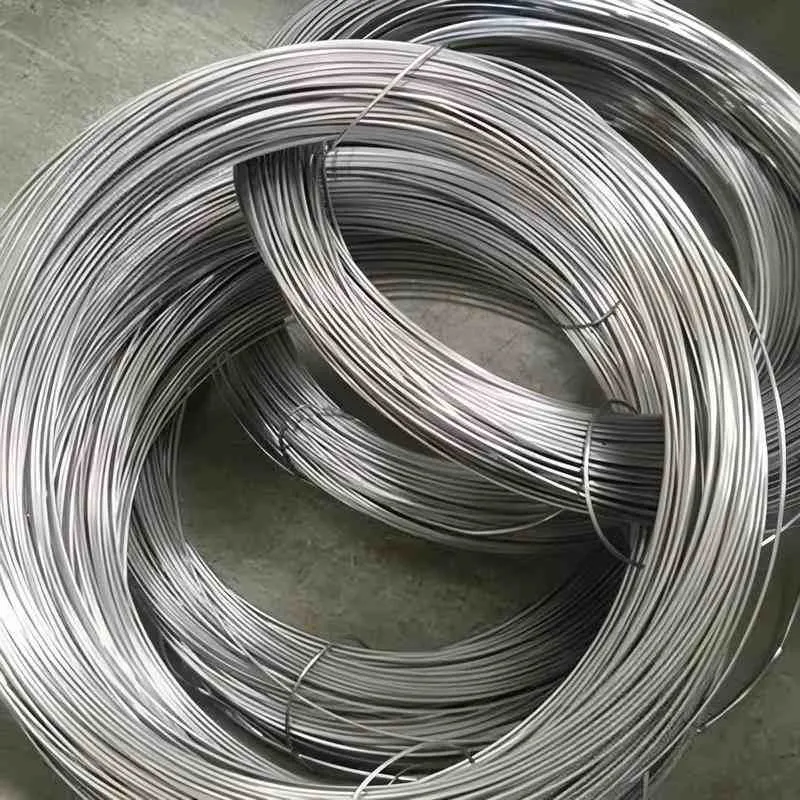
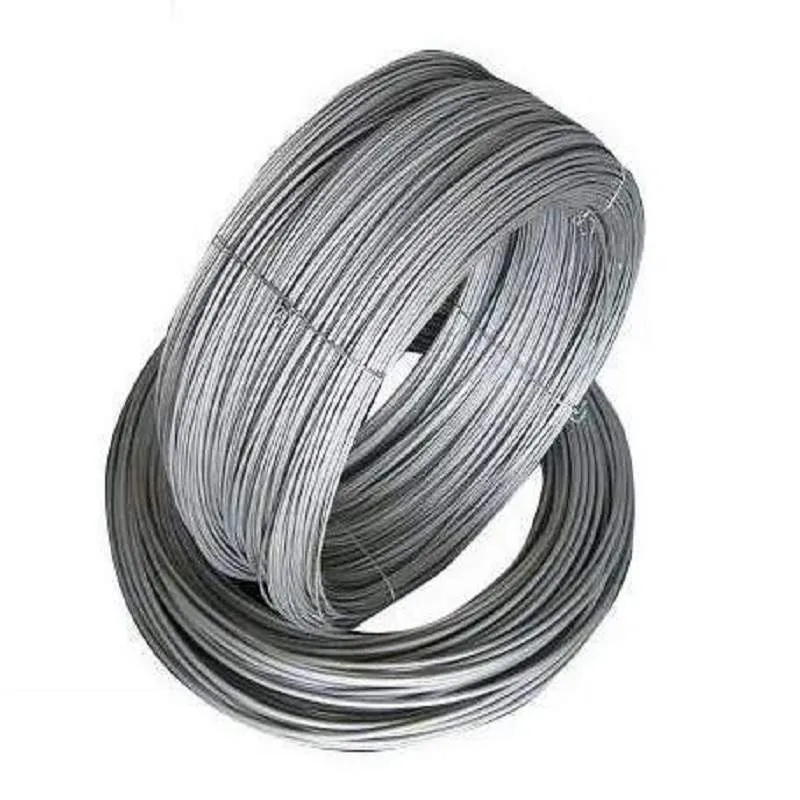
AISI Type F1 Tungsten High Speed Tool Steel Wire
Product Code : STI-GSTI-026-CU
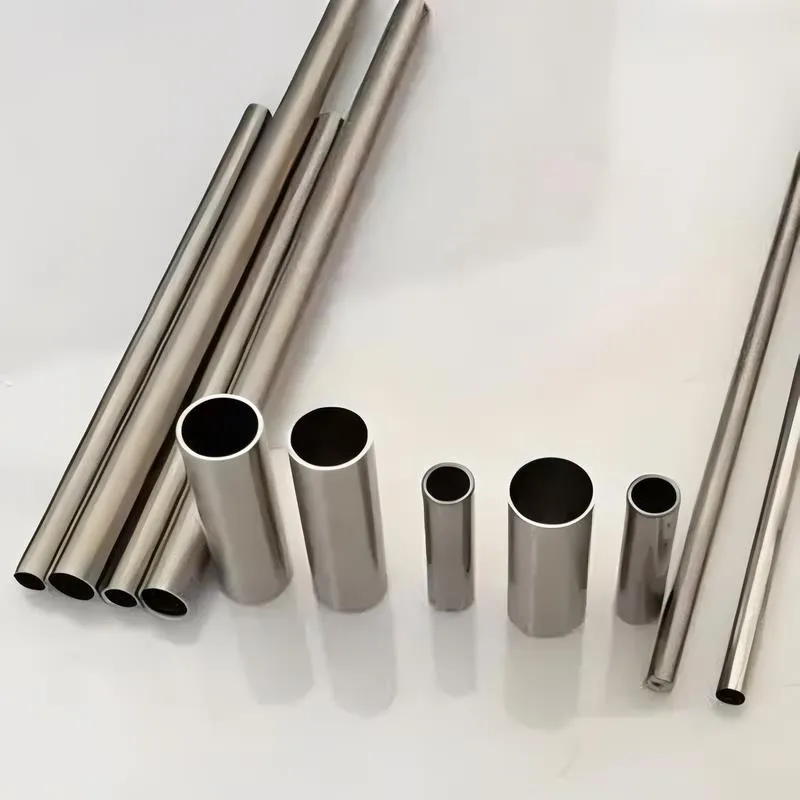
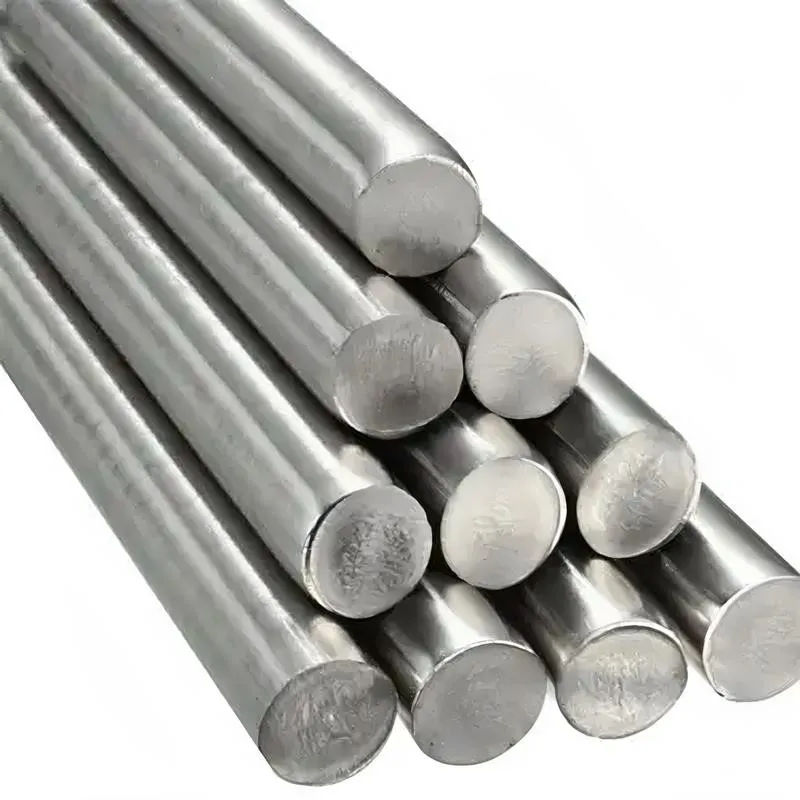
We provide AISI Type F1 Tungsten High Speed Tool Steel Wire is available in Bar (Round bar, Flat bar), Ribbon, Wire, Rods, Tube,Seamless Tube,Pipe, Ingots, Plate, Sheet, Strip and Forging Stock.,Purity, chemical composition, size, etc. can all be customized to meet specific requirements.
Please contact us if you need customized services. We will contact you with the price and availability in 24 hours.
AISI Type F1 Tungsten High Speed Tool Steel Wire Product Information
-:-
For detailed product information, please contact sales.
-:
AISI Type F1 Tungsten High Speed Tool Steel Wire Synonyms
-:-
For detailed product information, please contact sales.
-:
AISI Type F1 Tungsten High Speed Tool Steel Product Information
-:-
For detailed product information, please contact sales.
-:
# **Product Introduction: AISI Type F1 Tungsten High-Speed Tool Steel**
## **Overview**
**AISI Type F1** is a **tungsten-based, water-hardening high-speed tool steel** that represents one of the earliest and most fundamental formulations of high-speed steel (HSS). Characterized by its simple **tungsten-chromium-vanadium** alloy system without molybdenum, F1 delivers **excellent hot hardness, good wear resistance, and moderate toughness** when properly heat treated. As a water-hardening grade, it requires precise quenching control but offers a cost-effective solution for applications requiring cutting performance at elevated temperatures. F1 is particularly valued for its ability to maintain a sharp cutting edge under high-speed, high-temperature conditions where conventional carbon tool steels would rapidly soften.
---
## **Chemical Composition (Typical Weight %)**
F1 features a classic tungsten-based HSS composition, distinct from modern molybdenum-containing grades.
| Element | Content (%) | Role in High-Speed Steel Performance |
| :--- | :--- | :--- |
| **Tungsten (W)** | **12.00 - 13.50** | **Primary alloying element.** Forms hard, thermally stable tungsten carbides (WC, W₂C) that provide red hardness (hot hardness) and wear resistance at elevated temperatures. |
| **Chromium (Cr)** | 3.75 - 4.25 | Enhances hardenability, provides moderate corrosion resistance, and contributes to secondary hardening during tempering. |
| **Vanadium (V)** | 2.75 - 3.25 | Forms ultra-hard vanadium carbides (VC) for exceptional wear resistance and refines grain structure. Higher vanadium content than many early HSS grades. |
| **Carbon (C)** | 0.65 - 0.75 | Balances carbide formation with matrix properties; provides adequate hardness without excessive brittleness. |
| **Manganese (Mn)** | 0.20 - 0.40 | Aids hardenability. |
| **Silicon (Si)** | 0.20 - 0.40 | Deoxidizer. |
| **Sulfur (S)** | ≤ 0.03 | - |
| **Phosphorus (P)** | ≤ 0.03 | - |
| **Iron (Fe)** | **Balance** | - |
| **Notable Absence** | **Molybdenum (Mo)** | **0%** - Distinguishes F1 from M-series HSS grades. |
**Key Distinction:** F1 is a **pure tungsten-type** high-speed steel (Group T1 in alternative classifications) without molybdenum substitution. This gives it slightly different carbide characteristics and heat treatment response compared to modern M-series grades.
---
## **Physical & Mechanical Properties**
*Properties are for material in the fully heat treated condition.*
| Property | Typical Value / Description |
| :--- | :--- |
| **Density** | ~8.30 g/cm³ (High due to tungsten content) |
| **Hardness (Annealed)** | 235 - 255 HB |
| **Hardness (Hardened & Tempered)** | **64 - 66 HRC** (Typical working hardness) |
| **Red Hardness (Hot Hardness)** | **Excellent.** Maintains hardness (~58-60 HRC) at temperatures up to 600°C (1110°F). |
| **Wear Resistance** | **Very Good to Excellent.** The combination of tungsten and vanadium carbides provides good abrasion resistance, especially at elevated temperatures. |
| **Toughness** | **Fair to Good (for HSS).** Better than many M-series HSS grades due to lower carbon content and absence of complex carbides. |
| **Heat Treatment Response** | Requires water quenching with careful control to avoid cracking. Multiple high-temperature tempers develop secondary hardness. |
| **Machinability (Annealed)** | **Fair** (~50% of 1% carbon steel). Difficult due to high alloy content. |
| **Grindability** | **Poor.** Hard vanadium carbides make grinding challenging; requires proper wheel selection. |
| **Thermal Conductivity** | Moderate (~25 W/m·K) |
| **Maximum Service Temperature** | ~540-600°C (1000-1110°F) for intermittent cutting |
---
## **Heat Treatment Guidelines**
F1 requires precise heat treatment to develop its high-speed steel properties.
| Process | Parameters | Critical Considerations |
| :--- | :--- | :--- |
| **Annealing** | Heat to 850-870°C (1560-1600°F), slow furnace cool at ≤15°C/hour to 600°C, then air cool. | Full annealing essential for machinability. |
| **Preheating** | **Double preheat:** 650°C (1200°F) and 850°C (1560°F). | Critical to prevent thermal shock during high-temperature austenitizing. |
| **Austenitizing** | **1260-1290°C (2300-2355°F).** Soak: 2-5 minutes for small tools, longer for larger sections. | **Must use salt bath or controlled atmosphere** to prevent decarburization and oxidation. |
| **Quenching** | **Quench in water or brine.** Oil quenching may be used for complex shapes but reduces maximum hardness. | Water quenching provides maximum hardness but high cracking risk. Rapid agitation essential. |
| **Tempering** | **TRIPLE TEMPER MANDATORY.** 540-570°C (1000-1060°F) for 1-2 hours each. Temper immediately after quenching to ~65°C (150°F). | Develops secondary hardness through precipitation of alloy carbides. |
---
## **Product Applications**
F1 is used for cutting tools requiring hot hardness and edge retention at high speeds.
### **Primary Applications:**
1. **High-Speed Cutting Tools:** Drills, reamers, taps, and milling cutters for machining steels and cast irons.
2. **Forming Tools for Hot Work:** Punches, dies, and shears for hot forming operations at moderate temperatures.
3. **Lathe Tools and Single-Point Cutting Tools:** For turning operations on hard materials.
4. **Saw Blades and Broaches:** Where hot hardness is required during cutting.
5. **Woodworking Tools:** For high-speed routing and planing of hardwoods.
6. **Specialty Knives:** For cutting abrasive materials at elevated temperatures.
7. **Thread Rolling and Gear Cutting Tools.**
### **Industry Usage:**
- **Metal Machining & Cutting Tool Manufacturing**
- **Hot Forming & Stamping**
- **Woodworking Tool Production**
- **Tool & Die Making for High-Temperature Applications**
---
## **International Standards & Cross-Reference**
F1 is classified under various international systems as a tungsten-type high-speed steel.
| Standard | Designation | Equivalent / Similar Grade |
| :--- | :--- | :--- |
| **AISI (USA)** | **Type F1** | (Note: AISI F1 is not as commonly referenced as T1) |
| **Alternative AISI** | **T1** (More common designation) | Tungsten 18-4-1 type |
| **ISO** | **HS18-0-1** | - |
| **Europe (EN)** | **1.3355** | HS18-0-1 |
| **Germany (DIN)** | **1.3355** | S18-0-1 |
| **Japan (JIS)** | **SKH2** | - |
| **UK (BS)** | **BT1** | - |
| **UNS** | **T12001** | For T1 grade |
**Important Note:** AISI Type F1 is essentially equivalent to the more widely recognized **AISI T1** (18% W, 4% Cr, 1% V) grade, though exact compositions may vary slightly between sources. The "F" classification is less common than the "T" designation for tungsten HSS.
---
## **Advantages & Considerations**
### **Advantages:**
1. **Excellent Hot Hardness:** Maintains cutting edge at high temperatures better than tool steels.
2. **Good Wear Resistance:** Tungsten and vanadium carbides provide durable cutting edges.
3. **Relatively Good Toughness:** For a high-speed steel, F1/T1 offers reasonable impact resistance.
4. **Proven Technology:** Long history of reliable performance in demanding applications.
5. **No Molybdenum Dependency:** Advantageous when molybdenum supply is constrained.
### **Considerations:**
1. **Critical Heat Treatment:** Water quenching requires precise control to avoid cracking; heat treatment is more demanding than for oil-hardening steels.
2. **High Decarburization Risk:** Very high austenitizing temperatures necessitate protective atmospheres or salt baths.
3. **Lower Productivity than Modern HSS:** Generally cannot achieve the same cutting speeds as M42 or other cobalt-containing super HSS grades.
4. **Higher Cost than Conventional Tool Steels:** Tungsten is an expensive alloying element.
5. **Grinding Difficulties:** Hard carbides require careful grinding techniques.
---
## **Comparison with Modern High-Speed Steels**
| Property | **F1/T1 (Tungsten HSS)** | **M2 (Molybdenum HSS)** | **M42 (Cobalt Super HSS)** |
| :--- | :--- | :--- | :--- |
| **Primary Alloy** | Tungsten (12-13.5% W) | Molybdenum (5-6.5% Mo) | Molybdenum + Cobalt (8% Co) |
| **Typical Hardness** | 64-66 HRC | 64-66 HRC | 67-69 HRC |
| **Hot Hardness** | Very Good | Very Good | **Excellent** |
| **Toughness** | **Good (for HSS)** | Fair | Lower |
| **Grindability** | Poor | Poor | **Very Poor** |
| **Cost** | High (W-based) | Moderate | Very High |
| **Primary Use** | General HSS tools | Most common HSS | High-performance tools |
---
## **Historical & Modern Context**
- **Historical Significance:** F1/T1 was one of the first true high-speed steels developed in the early 20th century, revolutionizing metal cutting.
- **Modern Relevance:** While largely superseded by molybdenum-based grades (M-series) for general applications due to cost and performance factors, F1/T1 remains in use for specific applications where its particular balance of properties is advantageous.
- **Specialized Applications:** Still preferred for certain tool types where its specific carbide structure and heat treatment response are beneficial.
---
## **Conclusion**
**AISI Type F1 Tungsten High-Speed Tool Steel** represents a **foundational grade in the development of high-speed steel technology**. While modern molybdenum-based grades have largely assumed dominance in general applications due to economic and performance factors, F1 (often designated as T1) continues to offer **valuable performance characteristics** for specific cutting and hot work applications. Its **excellent hot hardness, good toughness balance, and proven reliability** make it a viable choice for tools requiring sustained cutting performance at elevated temperatures. For applications where the specific characteristics of tungsten-based carbides are advantageous, or where molybdenum-free composition is desired, F1 provides a time-tested, high-performance material solution. It serves as both a historical benchmark and a specialized contemporary tool steel for demanding high-temperature cutting applications.
-:-
For detailed product information, please contact sales.
-:
AISI Type F1 Tungsten High Speed Tool Steel Specification
Dimensions
Size:
Diameter 20-1000 mm Length <6682 mm
Size:We can customized as required
Standard:
Per your request or drawing
We can customized as required
Properties(Theoretical)
Chemical Composition
-:-
For detailed product information, please contact sales.
-:
AISI Type F1 Tungsten High Speed Tool Steel Properties
-:-
For detailed product information, please contact sales.
-:
Applications of AISI Type F1 Tungsten High Speed Tool Steel Wire
-:-
For detailed product information, please contact sales.
-:
Chemical Identifiers AISI Type F1 Tungsten High Speed Tool Steel Wire
-:-
For detailed product information, please contact sales.
-:
Packing of AISI Type F1 Tungsten High Speed Tool Steel Wire
-:-
For detailed product information, please contact sales.
-:
Standard Packing:
-:-
For detailed product information, please contact sales.
-:
Typical bulk packaging includes palletized plastic 5 gallon/25 kg. pails, fiber and Steel Wire drums to 1 ton super sacks in full container (FCL) or truck load (T/L) quantities. Research and sample quantities and hygroscopic, oxidizing or other air sensitive materials may be packaged under argon or vacuum. Solutions are packaged in polypropylene, plastic or glass jars up to palletized 3153 gallon liquid totes Special package is available on request. E FORUs’ is carefully handled to minimize damage during storage and transportation and to preserve the quality of our products in their original condition