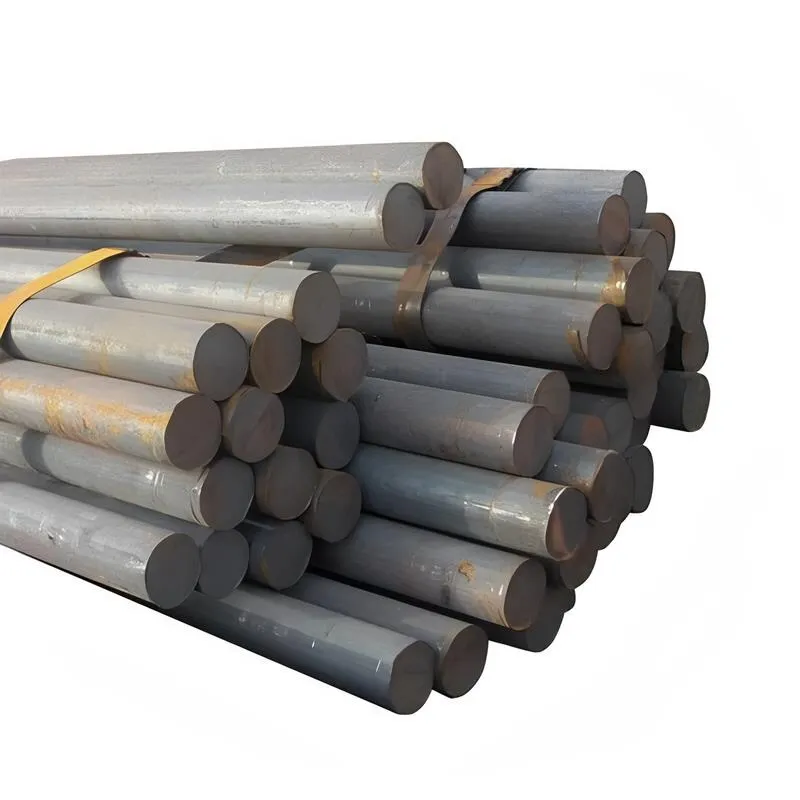
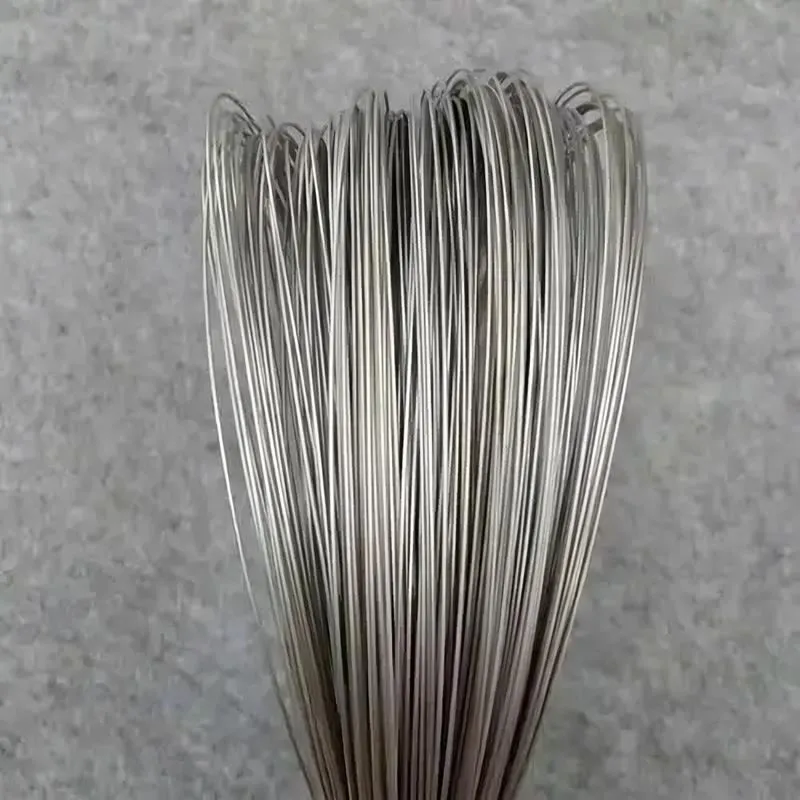
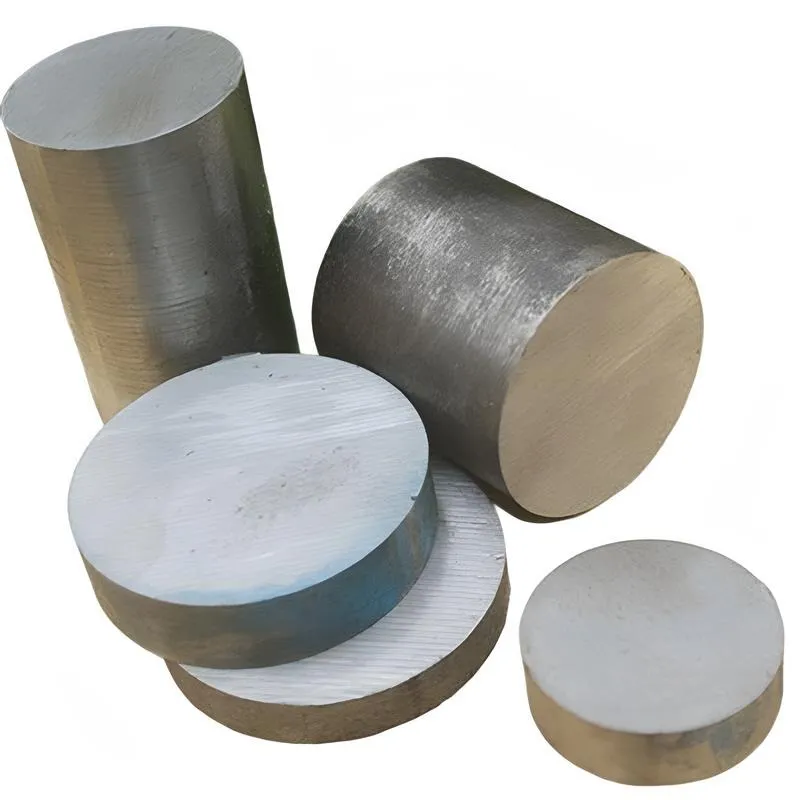
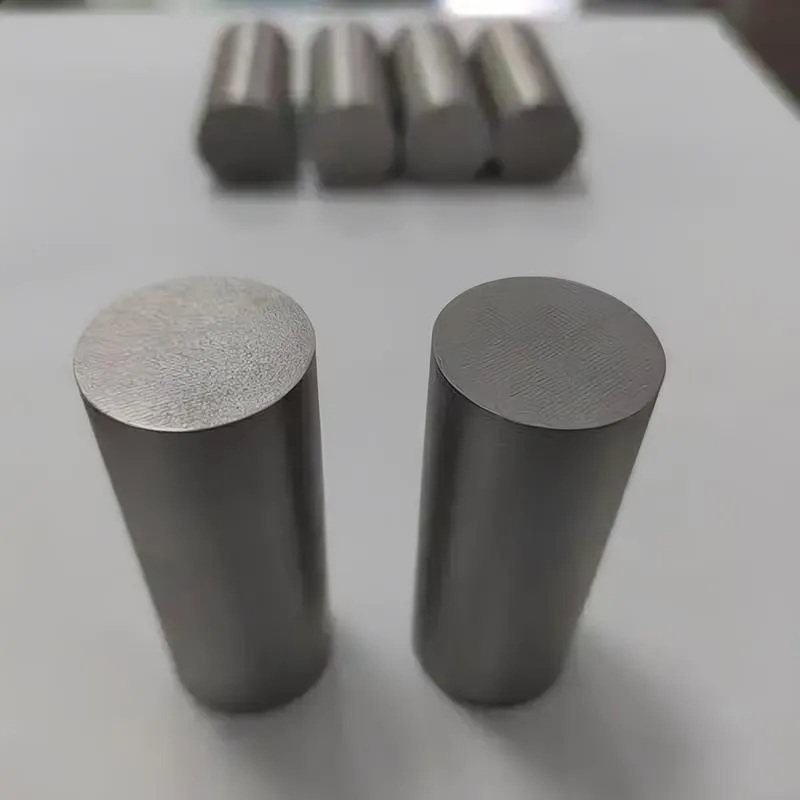
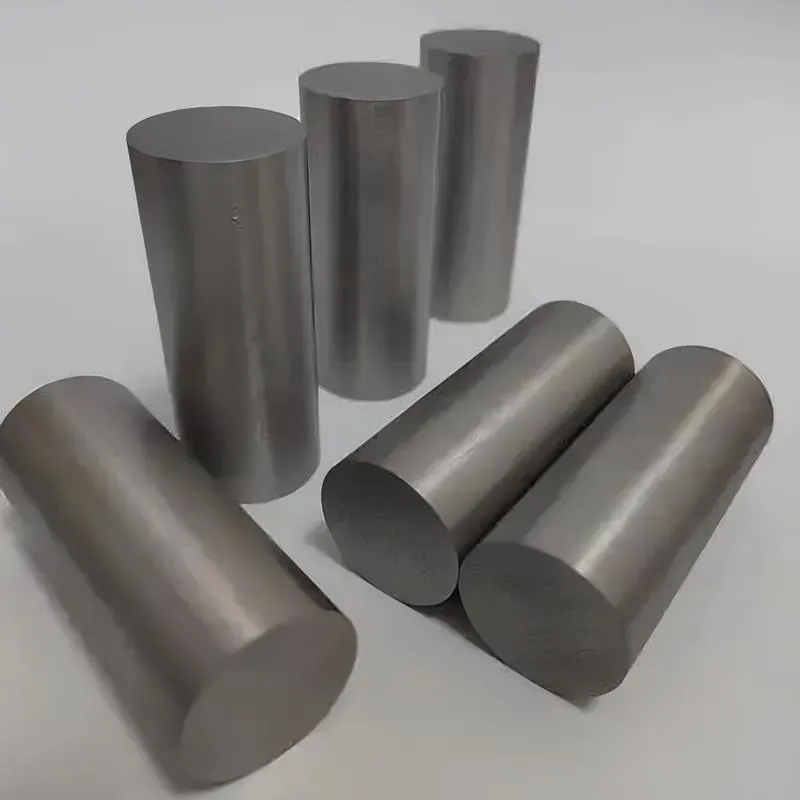
AISI Type H11 Hot Work Tool Steel Rod/Bar
Product Code : STI-GSTI-030-CU
We provide AISI Type H11 Hot Work Tool Steel Rod/Bar, air or oil quenched from 995-1025°C is available in Bar (Round bar, Flat bar), Ribbon, Wire, Rod/Bars, Tube,Seamless Tube,Pipe, Ingots, Plate, Sheet, Strip and Forging Stock.,Purity, chemical composition, size, etc. can all be customized to meet specific requirements.
Please contact us if you need customized services. We will contact you with the price and availability in 24 hours.
AISI Type H11 Hot Work Tool Steel Rod, air or oil quenched from 995-1025°C Product Information
-:-
For detailed product information, please contact sales.
-:
AISI Type H11 Hot Work Tool Steel Rod, air or oil quenched from 995-1025°C Synonyms
-:-
For detailed product information, please contact sales.
-:
AISI Type H11 Hot Work Tool Steel, air or oil quenched from 995-1025°C Product Information
-:-
For detailed product information, please contact sales.
-:
# **Product Introduction: AISI Type H11 Hot Work Tool Steel (Air or Oil Quenched from 995-1025°C)**
## **Overview**
**AISI Type H11** is a premier **medium-carbon, chromium-molybdenum-vanadium hot work tool steel** renowned for its **exceptional toughness and thermal fatigue resistance**. When processed with the specific heat treatment parameters of **austenitizing at 995-1025°C (1825-1875°F), followed by either air or oil quenching**, H11 achieves an optimal microstructure that balances high-temperature strength with remarkable impact resistance. This grade is particularly valued for its versatility in quenching methods, allowing toolmakers to select the quenching medium based on section size and complexity while developing properties essential for demanding hot work applications such as forging, extrusion, and die casting.
---
## **Chemical Composition (Typical Weight %)**
H11 features a balanced composition optimized for toughness and thermal stability.
| Element | Content (%) | Role in Hot Work Performance |
| :--- | :--- | :--- |
| **Carbon (C)** | 0.33 - 0.43 | Provides base hardness and strength while maximizing toughness; balanced to resist thermal fatigue. |
| **Chromium (Cr)** | 4.75 - 5.50 | Provides oxidation resistance, hardenability, and contributes to hot strength through carbide formation. |
| **Molybdenum (Mo)** | 1.10 - 1.60 | Enhances high-temperature strength, creep resistance, hardenability, and promotes fine grain structure. |
| **Vanadium (V)** | 0.30 - 0.60 | Forms stable vanadium carbides that refine grain size and improve elevated-temperature wear resistance. |
| **Silicon (Si)** | 0.80 - 1.20 | Increases resistance to thermal fatigue (heat checking) and oxidation; strengthens ferrite matrix. |
| **Manganese (Mn)** | 0.20 - 0.50 | Aids hardenability and deoxidization. |
| **Sulfur (S)** | ≤ 0.03 | - |
| **Phosphorus (P)** | ≤ 0.03 | - |
| **Iron (Fe)** | **Balance** | Base metal. |
**Key Characteristic:** H11 has **lower vanadium content (0.30-0.60%) compared to H13 (0.80-1.20%)**, which contributes to its superior toughness while slightly reducing hot hardness and wear resistance. This makes H11 the **toughest grade in the standard chromium hot work steel series**.
---
## **Heat Treatment & Microstructural Development**
**Specific Parameters: Austenitize at 995-1025°C → Air or Oil Quench → Temper at 540-600°C**
### **Quenching Method Selection:**
| Quench Medium | Typical Applications | Advantages | Considerations |
| :--- | :--- | :--- | :--- |
| **Air Quench** | • Complex geometries
• Thin sections
• Tools requiring minimal distortion | • Minimal distortion & stress
• Lower cracking risk
• Good dimensional control | • Slower cooling rate
• May not achieve max hardness in thick sections |
| **Oil Quench** | • Thick sections (>100mm)
• Tools requiring maximum hardness
• Simple geometries | • Faster cooling
• Higher as-quenched hardness
• Better through-hardening | • Higher distortion risk
• Increased stress & cracking potential |
### **Heat Treatment Parameters:**
| Process | Parameters | Metallurgical Objective |
| :--- | :--- | :--- |
| **Preheating** | 650-760°C (1200-1400°F) | Minimize thermal shock during austenitizing |
| **Austenitizing** | **995-1025°C (1825-1875°F)** | Dissolve carbides for optimal alloying; higher temps increase hardenability but reduce toughness |
| **Soak Time** | 20-30 min/inch of thickness | Ensure temperature uniformity |
| **Quenching** | **Air:** Still or forced air
**Oil:** 40-60°C warm oil, agitated | Transform austenite to martensite with chosen distortion/risk balance |
| **Tempering** | **Double temper at 540-600°C** for 2+ hours each | Develop secondary hardness, relieve stress, transform retained austenite |
---
## **Physical & Mechanical Properties (After 995-1025°C Quench + Tempering)**
| Property | Typical Value / Description | Notes on Quenching Method |
| :--- | :--- | :--- |
| **Hardness (Tempered)** | **40 - 52 HRC** (Typically 44-48 HRC for hot work) | Oil-quenched samples may show 1-2 HRC higher hardness in thick sections. |
| **Hot Hardness (at 540°C)** | **~34-38 HRC** | Slightly lower than H13 at same tempering temperature due to lower vanadium. |
| **Toughness** | **Excellent.** **Highest among standard hot work steels.** Charpy impact values typically 35-50 J at 45 HRC. | Primary advantage of H11. Air quenching generally yields slightly higher toughness. |
| **Thermal Fatigue Resistance** | **Excellent.** Exceptional resistance to heat checking due to high toughness and good thermal conductivity. | Superior to H13 in severe thermal cycling applications. |
| **Thermal Conductivity** | **~29.5 W/m·K** at 20°C (Higher than H13) | Better heat dissipation reduces thermal gradients and stress. |
| **Dimensional Stability** | **Air quench:** Excellent
**Oil quench:** Good (with careful practice) | Air quenching provides superior dimensional control. |
| **Maximum Service Temp** | **~540°C (1000°F)** continuous | - |
| **Machinability (Annealed)** | **Good** (~65% of 1% carbon steel) | - |
---
## **Product Applications**
H11's exceptional toughness makes it ideal for high-impact hot work applications.
### **Primary Applications:**
1. **Hot Forging Dies & Inserts:** For hammer and press forging of steels and alloys where impact resistance is critical.
2. **Aluminum & Magnesium Die Casting:** Ejector pins, core pins, and components subject to thermal shock.
3. **Hot Extrusion Tooling:** Mandrels, liners, and dummy blocks for aluminum and copper extrusion.
4. **Hot Shear Blades & Trimming Tools:** For cutting hot metals.
5. **Hot Work Punches & Piercers:** Subject to high impact and pressure.
6. **Plastic Injection Molds:** For engineering plastics requiring good thermal fatigue resistance.
7. **High-Stress Die Casting Components:** Where breakage is a concern with harder grades.
### **Industry Usage:**
- **Hot Forging (Steel & Non-Ferrous)**
- **Die Casting (Aluminum, Magnesium)**
- **Metal Extrusion**
- **Heavy Equipment Manufacturing**
- **Aerospace Component Production**
---
## **International Standards & Cross-Reference**
AISI H11 is recognized globally with direct equivalents.
| Standard | Designation | Equivalent / Similar Grade |
| :--- | :--- | :--- |
| **AISI/SAE (USA)** | **H11** | - |
| **UNS (USA)** | **T20811** | - |
| **ASTM (USA)** | A681 | Grade H11 |
| **Europe (EN)** | **1.2343** | X38CrMoV5-1 |
| **Germany (DIN)** | **1.2343** | X38CrMoV5-1 |
| **Japan (JIS)** | **SKD6** | - |
| **ISO** | **~35CrMoV5** | - |
| **Sweden (SS)** | **2242** | - |
---
## **Technical Comparison: H11 vs. H13**
| Property | **H11 (Air/Oil Quenched)** | **H13 (Air Quenched)** |
| :--- | :--- | :--- |
| **Vanadium Content** | 0.30-0.60% | **0.80-1.20%** |
| **Primary Advantage** | **Maximum Toughness** | **Balanced Performance** |
| **Hot Hardness** | Good | **Better** |
| **Wear Resistance** | Good | **Better** |
| **Thermal Fatigue Resistance** | **Excellent** | Very Good |
| **Typical Application** | **High-impact forging** | **General-purpose die casting** |
| **Quenching Flexibility** | **Air or Oil** | Primarily Air |
---
## **Advantages & Considerations**
### **Advantages:**
1. **Exceptional Toughness:** Highest impact resistance among standard hot work steels.
2. **Quenching Flexibility:** Can be air or oil quenched based on application requirements.
3. **Excellent Thermal Fatigue Resistance:** Superior resistance to heat checking in cyclic applications.
4. **Good Machinability & Grindability:** Easier to fabricate than higher-alloy steels.
5. **Good Thermal Conductivity:** Better heat dissipation than many hot work grades.
### **Considerations:**
1. **Lower Hot Hardness than H13:** Not optimal for applications above 540°C continuous service.
2. **Lower Wear Resistance:** May wear faster than H13 in abrasive applications.
3. **Oil Quenching Risks:** If oil quenching is used, careful control is needed to minimize distortion.
4. **Less Common than H13:** May have lower availability in some regions.
---
## **Selection Guidelines: Air vs. Oil Quenching**
### **Choose Air Quenching When:**
- Tool geometry is complex with thin sections
- Dimensional tolerances are tight
- Tool has sharp corners or uneven mass distribution
- Maximum toughness is required
### **Choose Oil Quenching When:**
- Section thickness exceeds 100mm (4 inches)
- Maximum as-quenched hardness is needed
- Tool geometry is simple and symmetrical
- Equipment for high-pressure gas quenching is unavailable
---
## **Heat Treatment Best Practices**
1. **Preheating is Mandatory:** Always preheat to 650-760°C before austenitizing.
2. **Temperature Uniformity:** Ensure uniform heating to ±5°C during austenitizing.
3. **Quench Immediately:** Transfer from furnace to quench medium within seconds.
4. **Double Temper:** Always use double tempering, with the second temper at the same or slightly higher temperature.
5. **Stress Relief:** For machined or EDM'd tools, stress relieve at 550-600°C before final hardening.
---
## **Conclusion**
**AISI Type H11 Hot Work Tool Steel, when air or oil quenched from 995-1025°C, represents one of the toughest and most reliable materials available for high-impact hot work applications.** Its balanced composition and quenching flexibility allow tool engineers to tailor the heat treatment to specific geometric and performance requirements. While it sacrifices some hot hardness and wear resistance compared to H13, H11's **exceptional toughness and thermal fatigue resistance** make it the **preferred choice for applications involving severe mechanical shock, such as hot forging dies and high-stress die casting components**. For tooling subjected to the combined challenges of high temperature, impact loading, and thermal cycling, H11 provides a proven, durable solution that maximizes service life through resistance to catastrophic failure rather than gradual wear. Its continued use in demanding industries underscores its value as a specialized material engineered for reliability under extreme conditions.
-:-
For detailed product information, please contact sales.
-:
AISI Type H11 Hot Work Tool Steel, air or oil quenched from 995-1025°C Specification
Dimensions
Size:
Diameter 20-1000 mm Length <6686 mm
Size:We can customized as required
Standard:
Per your request or drawing
We can customized as required
Properties(Theoretical)
Chemical Composition
-:-
For detailed product information, please contact sales.
-:
AISI Type H11 Hot Work Tool Steel, air or oil quenched from 995-1025°C Properties
-:-
For detailed product information, please contact sales.
-:
Applications of AISI Type H11 Hot Work Tool Steel Rod, air or oil quenched from 995-1025°C
-:-
For detailed product information, please contact sales.
-:
Chemical Identifiers AISI Type H11 Hot Work Tool Steel Rod, air or oil quenched from 995-1025°C
-:-
For detailed product information, please contact sales.
-:
Packing of AISI Type H11 Hot Work Tool Steel Rod, air or oil quenched from 995-1025°C
-:-
For detailed product information, please contact sales.
-:
Standard Packing:
-:-
For detailed product information, please contact sales.
-:
Typical bulk packaging includes palletized plastic 5 gallon/25 kg. pails, fiber and Steel Rod drums to 1 ton super sacks in full container (FCL) or truck load (T/L) quantities. Research and sample quantities and hygroscopic, oxidizing or other air sensitive materials may be packaged under argon or vacuum. Solutions are packaged in polypropylene, plastic or glass jars up to palletized 3157 gallon liquid totes Special package is available on request. E FORUs’ is carefully handled to minimize damage during storage and transportation and to preserve the quality of our products in their original condition