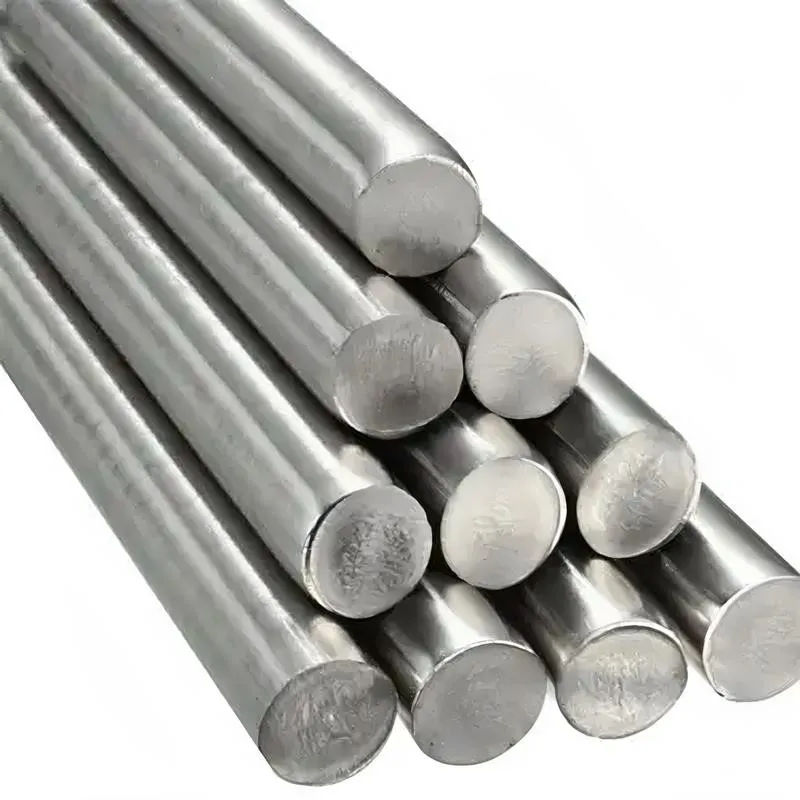
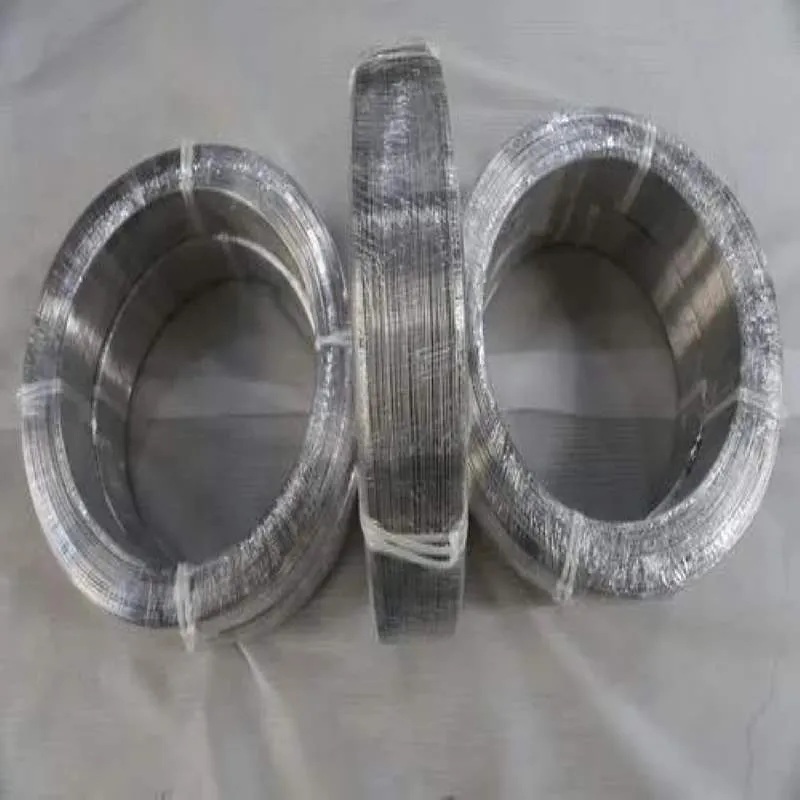
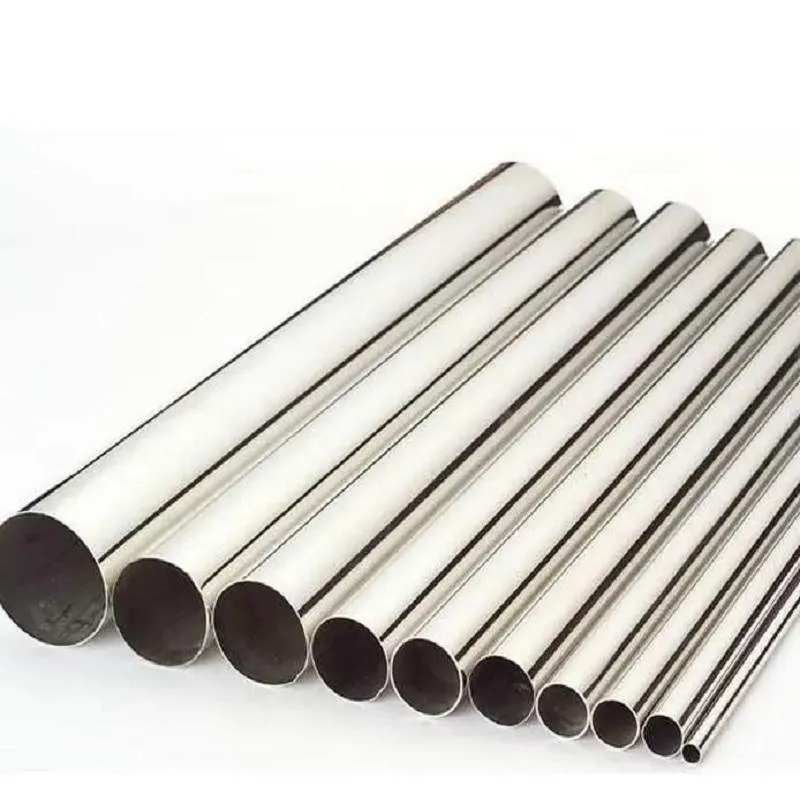
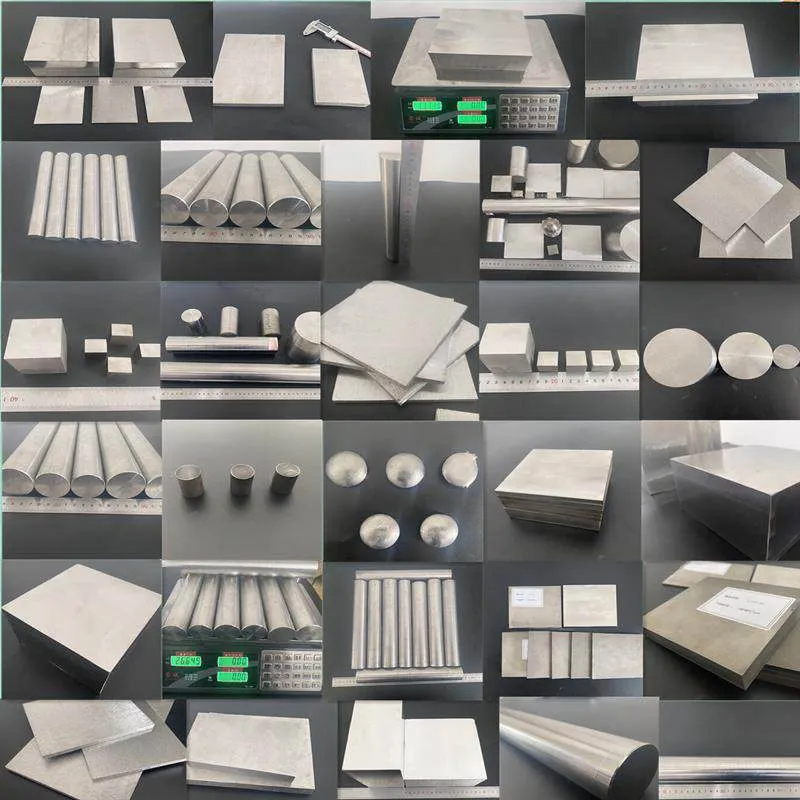
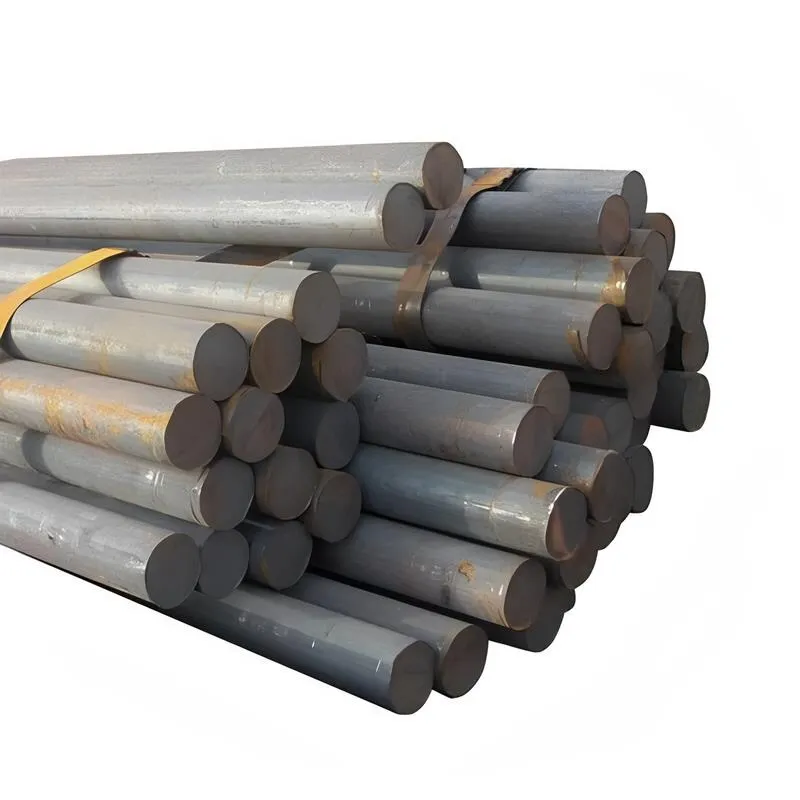
AISI Type M1 Molybdenum-Alloy High-Speed-Tool Steel Rod/Bar (UNS T11301)
Product Code : STI-GSTI-059-CU
We provide AISI Type M1 Molybdenum-Alloy High-Speed-Tool Steel Rod/Bar (UNS T11301) is available in Bar (Round bar, Flat bar), Ribbon, Wire, Rod/Bars, Tube,Seamless Tube,Pipe, Ingots, Plate, Sheet, Strip and Forging Stock.,Purity, chemical composition, size, etc. can all be customized to meet specific requirements.
Please contact us if you need customized services. We will contact you with the price and availability in 24 hours.
AISI Type M1 Molybdenum-Alloy High-Speed-Tool Steel Rod (UNS T11301) Product Information
-:-
For detailed product information, please contact sales.
-:
AISI Type M1 Molybdenum-Alloy High-Speed-Tool Steel Rod (UNS T11301) Synonyms
-:-
For detailed product information, please contact sales.
-:
AISI Type M1 Molybdenum-Alloy High-Speed-Tool Steel (UNS T11301) Product Information
-:-
For detailed product information, please contact sales.
-:
# **Product Introduction: AISI Type M1 Molybdenum-Alloy High-Speed Tool Steel (UNS T11301)**
## **Overview**
AISI Type M1 is a **molybdenum-dominated high-speed steel (HSS)** belonging to the AISI M-series of high-performance tool steels. Characterized by its **high molybdenum (8.00-9.50%) and moderate tungsten (1.40-2.10%)** content, M1 offers an excellent balance of **hot hardness, wear resistance, and toughness** at a more economical cost compared to traditional tungsten-rich high-speed steels. This grade is particularly valued for its **superior grindability** and good combination of cutting performance and durability, making it a versatile choice for various cutting tools operating at elevated temperatures.
**Key Advantages:**
- **Excellent Hot Hardness:** Maintains cutting edge hardness at temperatures up to 540°C (1000°F)
- **Superior Grindability:** Easier to grind than tungsten-based high-speed steels
- **Good Toughness:** Better impact resistance than many high-alloy HSS grades
- **Cost-Effective:** Lower cost than equivalent tungsten-based high-speed steels
- **Good Wear Resistance:** Adequate carbide formation for general to severe service
**Primary Considerations:**
- Requires careful heat treatment to prevent decarburization and achieve optimal properties
- Slightly lower red hardness compared to some M2 and tungsten-based HSS grades
- More susceptible to decarburization during heat treatment than some grades
- Best performance achieved with proper surface treatments (coatings)
## **International Designations & Standards**
| Standard System | Designation | Note |
|----------------|-------------|------|
| **AISI/SAE (USA)** | M1 | Primary specification |
| **UNS (USA)** | T11301 | Unified numbering system |
| **ASTM (USA)** | A600 | High-Speed Tool Steel Standard |
| **ISO (International)** | ~**HS6-5-2** | Similar molybdenum HSS (6%W-5%Mo-2%V) |
| **DIN (Germany)** | 1.3346 | Equivalent to HS6-5-2 |
| **JIS (Japan)** | ~SKH2 | Similar molybdenum high-speed steel |
| **BS (UK)** | ~**BM1** | Molybdenum high-speed steel |
| **GB (China)** | ~**W6Mo5Cr4V2** | Similar composition (M2 equivalent) |
*Note: While M1 has direct equivalents in some standards, it is often compared to M2, which has become more prevalent in many applications.*
---
## **1. Chemical Composition (Typical, Weight %)**
M1's composition features high molybdenum as the primary hardening element, with supporting tungsten and vanadium.
| Element | Content (%) | Role & Metallurgical Effect |
|---------|-------------|-----------------------------|
| **Carbon (C)** | 0.78 - 0.88 | Balances carbide formation and matrix hardness. Critical for wear resistance and hot hardness. |
| **Molybdenum (Mo)** | 8.00 - 9.50 | **Primary alloying element.** Forms hard Mo₂C carbides, provides solid solution strengthening, and contributes significantly to secondary hardening. Replaces tungsten economically. |
| **Tungsten (W)** | 1.40 - 2.10 | Supports hot hardness, forms stable tungsten carbides, and complements molybdenum's effects. |
| **Chromium (Cr)** | 3.50 - 4.50 | Enhances hardenability, provides oxidation resistance, and forms chromium carbides for wear resistance. |
| **Vanadium (V)** | 1.00 - 1.40 | Forms very hard, fine vanadium carbides (VC) that resist grain growth and provide exceptional wear resistance. |
| **Cobalt (Co)** | 0.0 - 0.50 (Optional) | When added, improves hot hardness and thermal conductivity. |
| **Silicon (Si)** | 0.20 - 0.40 | Deoxidizer and strengthens the matrix. |
| **Manganese (Mn)** | 0.15 - 0.40 | Improves hardenability and aids in deoxidation. |
| **Sulfur (S)** | ≤0.030 | Impurity; sometimes controlled for machinability. |
| **Phosphorus (P)** | ≤0.030 | Impurity; kept low. |
| **Iron (Fe)** | Balance | Matrix element. |
**Key Metallurgical Features:**
- **Carbide Types:** MC (vanadium), M₆C (molybdenum/tungsten), M₂₃C₆ (chromium)
- **Carbide Volume:** ~10-14% in properly heat-treated condition
- **Austenitizing Temperature:** High (1190-1230°C) due to high alloy content
---
## **2. Physical & Mechanical Properties**
### **Physical Properties**
| Property | Typical Value | Conditions/Notes |
|----------|---------------|------------------|
| **Density** | 8.10 - 8.20 g/cm³ | At 20°C (68°F) |
| **Melting Range** | 1370 - 1420°C (2500 - 2590°F) | Lower than tungsten HSS due to molybdenum |
| **Thermal Conductivity** | 20 - 25 W/m·K | At 20°C (68°F) |
| **Specific Heat Capacity** | 420 - 460 J/kg·K | At 20°C (68°F) |
| **Coefficient of Thermal Expansion** | 10.5 - 11.5 × 10⁻⁶/K | 20-600°C (68-1110°F) range |
| **Electrical Resistivity** | 0.50 - 0.60 μΩ·m | At 20°C (68°F) |
| **Elastic Modulus** | 200 - 210 GPa (29 - 30.5 × 10⁶ psi) | At room temperature |
| **Magnetic Properties** | Ferromagnetic | Below Curie temperature (~760°C) |
### **Mechanical Properties (Properly Heat-Treated)**
| Property | Value Range | Heat Treatment Condition |
|----------|-------------|--------------------------|
| **Hardness (Annealed)** | 217 - 255 HB | Annealed condition |
| **Hardness (Hardened)** | 63 - 66 HRC | Properly heat treated (quenched + triple tempered) |
| **Hot Hardness** | 58 - 61 HRC | At 540°C (1000°F) after 4 hours exposure |
| **Transverse Rupture Strength** | 3500 - 4200 MPa (508 - 609 ksi) | At 64-66 HRC |
| **Compressive Strength** | 3800 - 4400 MPa (551 - 638 ksi) | At 64-66 HRC |
| **Impact Toughness (Charpy)** | 15 - 25 J (11 - 18 ft·lb) | At 64-66 HRC |
| **Young's Modulus** | 205 - 215 GPa (29.7 - 31.2 × 10⁶ psi) | At room temperature |
| **Poisson's Ratio** | 0.27 - 0.30 | At room temperature |
### **High-Temperature Properties**
| Temperature | Hardness (HRC) | Tensile Strength (MPa) | Yield Strength (MPa) |
|-------------|----------------|------------------------|----------------------|
| **20°C (68°F)** | 64-66 | 2200-2600 | 1800-2200 |
| **300°C (570°F)** | 60-62 | 1800-2200 | 1500-1900 |
| **500°C (930°F)** | 56-58 | 1200-1600 | 1000-1400 |
| **600°C (1110°F)** | 48-52 | 800-1100 | 700-1000 |
---
## **3. Product Applications**
### **Primary Application Areas**
**1. Cutting Tools:**
- Drills, taps, and reamers for general purpose machining
- End mills and milling cutters
- Gear cutters and hobs
- Broaches and form tools
**2. Metal Cutting Inserts:**
- Single-point turning tools
- Forming and parting tools
- Thread cutting tools
**3. Specialized Cutting Applications:**
- Saw blades for metal cutting
- Cold work punches and dies
- Woodworking tools for hard materials
**4. Wear Components:**
- Guide rolls and wear plates in high-temperature applications
- Machine tool components requiring wear resistance
- Knives and cutting blades for non-metallic materials
### **Industry-Specific Applications**
| Industry | Typical M1 Components | Recommended Hardness |
|----------|-----------------------|----------------------|
| **General Machining** | Drills, taps, reamers, end mills | 64-66 HRC |
| **Automotive** | Gear cutters, form tools, broaches | 64-66 HRC |
| **Aerospace** | Cutting tools for high-temperature alloys | 64-66 HRC with coatings |
| **Tool & Die** | Punches, dies, forming tools | 62-64 HRC |
| **Woodworking** | Knives for composite materials | 62-64 HRC |
### **Performance Comparison in Cutting Applications**
| Work Material | Cutting Speed (SFM) | Feed Rate (in/rev) | Expected Tool Life |
|---------------|---------------------|---------------------|-------------------|
| **Mild Steel** | 80-120 | 0.005-0.015 | Good to Excellent |
| **Alloy Steel** | 60-100 | 0.004-0.012 | Good |
| **Stainless Steel** | 40-80 | 0.003-0.010 | Good |
| **Cast Iron** | 70-110 | 0.006-0.018 | Excellent |
| **Aluminum** | 300-500 | 0.008-0.025 | Excellent |
---
## **4. Heat Treatment Guidelines**
### **Annealing (Full Annealing)**
- **Temperature:** 840-870°C (1545-1600°F)
- **Soaking Time:** 2-4 hours at temperature
- **Cooling:** Slow furnace cool at ≤15°C/hr (≤27°F/hr) to 540°C (1000°F), then air cool
- **Resulting Hardness:** 217-255 HB
- **Microstructure:** Spheroidized carbides in ferrite matrix
### **Stress Relieving (After Rough Machining)**
- **Temperature:** 650-700°C (1200-1290°F)
- **Time:** 1-2 hours per inch of thickness
- **Cooling:** Slow furnace cool or air cool
### **Hardening (Critical Process)**
1. **Preheating:** **Essential** to prevent thermal shock
- **First Stage:** 450-500°C (840-930°F)
- **Second Stage:** 820-870°C (1510-1600°F)
2. **Austenitizing:**
- **Temperature:** 1190-1230°C (2175-2245°F)
- **Soaking Time:** 2-5 minutes per inch of thickness (short to prevent grain growth)
- **Atmosphere:** Vacuum, salt bath, or protective atmosphere **required** to prevent decarburization
- **Quench Medium:** Oil, salt bath (marquenching), or air (for small sections)
3. **Quenching:**
- **Oil Quench:** Preheat oil to 40-80°C (100-175°F)
- **Salt Bath Marquench:** 540-590°C (1000-1100°F), hold to equalize, then air cool
- **Air Cool:** For small, simple sections only
### **Tempering (Triple Tempering Required)**
- **First Temper:** Immediately after quenching to ~60°C (140°F)
- **Temperature:** 540-580°C (1000-1075°F)
- **Time:** 1-2 hours per temper (minimum 3 tempers)
- **Cooling:** Air cool to room temperature between tempers
- **Final Hardness:** 63-66 HRC after triple tempering
### **Sub-Zero Treatment (Optional)**
- **Purpose:** Convert retained austenite
- **Temperature:** -70 to -100°C (-95 to -150°F)
- **Time:** 2-4 hours after quenching, before first temper
- **Effect:** Increases hardness by 0.5-1.5 HRC and improves dimensional stability
---
## **5. Machining & Grinding Characteristics**
### **Machinability (Annealed Condition)**
- **Relative Machinability:** 45-55% (compared to 1% carbon steel = 100%)
- **Cutting Tool Recommendations:** Carbide tools required
- **Cutting Parameters:**
- **Turning:** 25-40 m/min (80-130 SFM) with carbide
- **Milling:** 15-25 m/min (50-80 SFM) with carbide
- **Drilling:** 8-15 m/min (25-50 SFM) with carbide
- **Coolant:** Heavy-duty soluble oil or semi-synthetic
### **Grinding (Hardened Condition)**
- **Grindability:** Excellent (better than tungsten-based HSS)
- **Wheel Selection:**
- Aluminum oxide: A46-J8-V for rough grinding
- CBN or diamond for precision grinding
- **Parameters:**
- Wheel speed: 25-35 m/s (5000-7000 SFPM)
- Downfeed: 0.005-0.020 mm/pass (0.0002-0.0008 in/pass)
- Crossfeed: 1-5 mm/pass (0.04-0.20 in/pass)
- **Coolant:** Copious flow to prevent burning
---
## **6. Comparative Analysis**
### **vs. Other M-Series High-Speed Steels**
| Property | M1 | M2 | M7 | M42 (8% Co) |
|----------|----|----|----|--------------|
| **Molybdenum** | 8.00-9.50% | 4.50-5.50% | 8.20-9.20% | 9.00-10.00% |
| **Tungsten** | 1.40-2.10% | 5.50-6.75% | 1.40-2.10% | 1.15-1.85% |
| **Vanadium** | 1.00-1.40% | 1.75-2.20% | 1.75-2.25% | 0.95-1.35% |
| **Hot Hardness** | Good | Very Good | Good | Excellent |
| **Toughness** | Very Good | Good | Good | Fair |
| **Grindability** | Excellent | Good | Very Good | Fair |
| **Cost Factor** | 1.0x | 1.1x | 1.1x | 1.8x |
### **vs. Tungsten-Based High-Speed Steels (T-series)**
| Aspect | M1 (M-series) | T1 (18-4-1) | T15 (High Vanadium) |
|--------|---------------|-------------|---------------------|
| **Primary Alloy** | Molybdenum | Tungsten | Tungsten + High Vanadium |
| **Red Hardness** | Good | Excellent | Excellent |
| **Toughness** | Better | Good | Poor |
| **Grindability** | Much Better | Poor | Very Poor |
| **Decarburization** | More Susceptible | Less Susceptible | Less Susceptible |
| **Cost** | Lower | Higher | Highest |
---
## **7. Surface Treatments & Coatings**
### **Common Surface Treatments**
1. **Nitriding:** Improves surface hardness to 70+ HRC
- Temperature: 480-540°C (900-1000°F)
- Case depth: 0.05-0.15 mm (0.002-0.006 in)
2. **Steam Treating:** Creates oxidation-resistant Fe₃O₄ layer
3. **Phosphate Coating:** Improves lubrication and chip flow
### **Advanced Coatings (PVD/CVD)**
- **TiN (Titanium Nitride):** Gold color, improves lubricity and wear resistance
- **TiCN (Titanium Carbo-Nitride):** Gray-violet, higher hardness than TiN
- **AlTiN (Aluminum Titanium Nitride):** Dark gray, excellent for high-temperature applications
- **DLC (Diamond-Like Carbon):** For non-ferrous applications
### **Coating Benefits for M1**
- Extends tool life 2-5 times
- Reduces friction and built-up edge
- Allows higher cutting speeds
- Improves surface finish on workpieces
---
## **8. Technical Recommendations**
### **Design Considerations**
1. **Tool Geometry:** Positive rake angles for better chip control
2. **Edge Preparation:** Honed edges improve fatigue resistance
3. **Stress Relief:** Include radii on all corners (minimum R0.5mm)
4. **Heat Treatment Allowances:** 0.1-0.3mm per side for grinding after heat treatment
### **Quality Control Points**
- **Decarburization Check:** Maximum 0.10mm per side allowed
- **Hardness Testing:** Multiple points on complex tools
- **Microstructure:** Check for proper carbide distribution and grain size
- **Dimensional Stability:** Verify after triple tempering
### **Common Heat Treatment Problems & Solutions**
| Problem | Cause | Solution |
|---------|-------|----------|
| **Low Hardness** | Under-tempering, low austenitizing temperature | Increase tempering temperature, verify austenitizing temperature |
| **Excessive Decarb** | Poor atmosphere control | Use vacuum or salt bath heat treatment |
| **Cracking** | Too rapid heating or cooling | Improve preheating, use marquenching |
| **Warpage** | Uneven heating or quenching | Improve fixturing, use salt bath marquench |
### **Safety Considerations**
- **Heat Treatment:** High temperatures require specialized equipment and PPE
- **Grinding:** Use proper dust collection for HSS particles
- **Handling:** Sharp edges on cutting tools
- **Disposal:** Recycle as high-alloy steel scrap
---
## **Disclaimer**
This technical datasheet provides comprehensive information about AISI Type M1 high-speed tool steel based on industry standards and typical manufacturing practices. Actual properties and performance may vary depending on:
1. **Manufacturer's specific production methods** and quality control
2. **Precise heat treatment parameters** and equipment used
3. **Specific application conditions** and cutting parameters
4. **Tool design, grinding quality,** and coating applications
**Critical Applications Note:**
- M1 has been largely superseded by M2 in many applications but remains valuable for specific uses
- Always conduct tool testing under actual production conditions
- Consult with cutting tool specialists for optimal application
- Consider coated grades for improved performance
For the most current specifications and detailed technical data, refer to:
- ASTM A600: Standard Specification for Tool Steel High Speed
- Manufacturer's technical datasheets and heat treatment guides
- Industry best practices for high-speed steel tool manufacturing
This information is provided for reference purposes and is subject to change as technology and standards evolve. Users should verify specific requirements with their steel suppliers and technical consultants for critical applications.
-:-
For detailed product information, please contact sales.
-:
AISI Type M1 Molybdenum-Alloy High-Speed-Tool Steel (UNS T11301) Specification
Dimensions
Size:
Diameter 20-1000 mm Length <6715 mm
Size:We can customized as required
Standard:
Per your request or drawing
We can customized as required
Properties(Theoretical)
Chemical Composition
-:-
For detailed product information, please contact sales.
-:
AISI Type M1 Molybdenum-Alloy High-Speed-Tool Steel (UNS T11301) Properties
-:-
For detailed product information, please contact sales.
-:
Applications of AISI Type M1 Molybdenum-Alloy High-Speed-Tool Steel Rod (UNS T11301)
-:-
For detailed product information, please contact sales.
-:
Chemical Identifiers AISI Type M1 Molybdenum-Alloy High-Speed-Tool Steel Rod (UNS T11301)
-:-
For detailed product information, please contact sales.
-:
Packing of AISI Type M1 Molybdenum-Alloy High-Speed-Tool Steel Rod (UNS T11301)
-:-
For detailed product information, please contact sales.
-:
Standard Packing:
-:-
For detailed product information, please contact sales.
-:
Typical bulk packaging includes palletized plastic 5 gallon/25 kg. pails, fiber and Steel Rod drums to 1 ton super sacks in full container (FCL) or truck load (T/L) quantities. Research and sample quantities and hygroscopic, oxidizing or other air sensitive materials may be packaged under argon or vacuum. Solutions are packaged in polypropylene, plastic or glass jars up to palletized 3186 gallon liquid totes Special package is available on request. E FORUs’ is carefully handled to minimize damage during storage and transportation and to preserve the quality of our products in their original condition