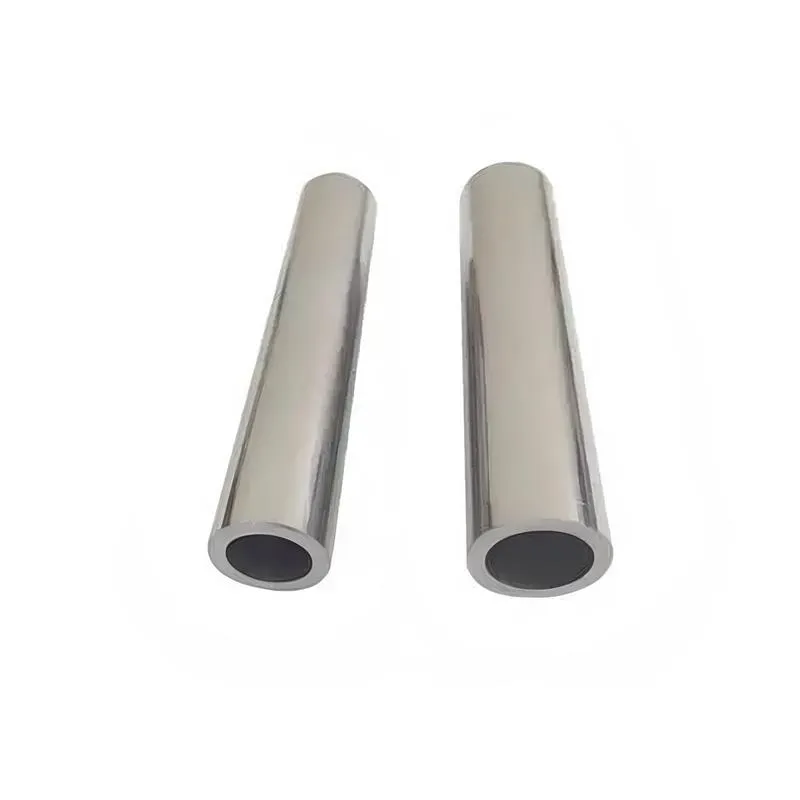
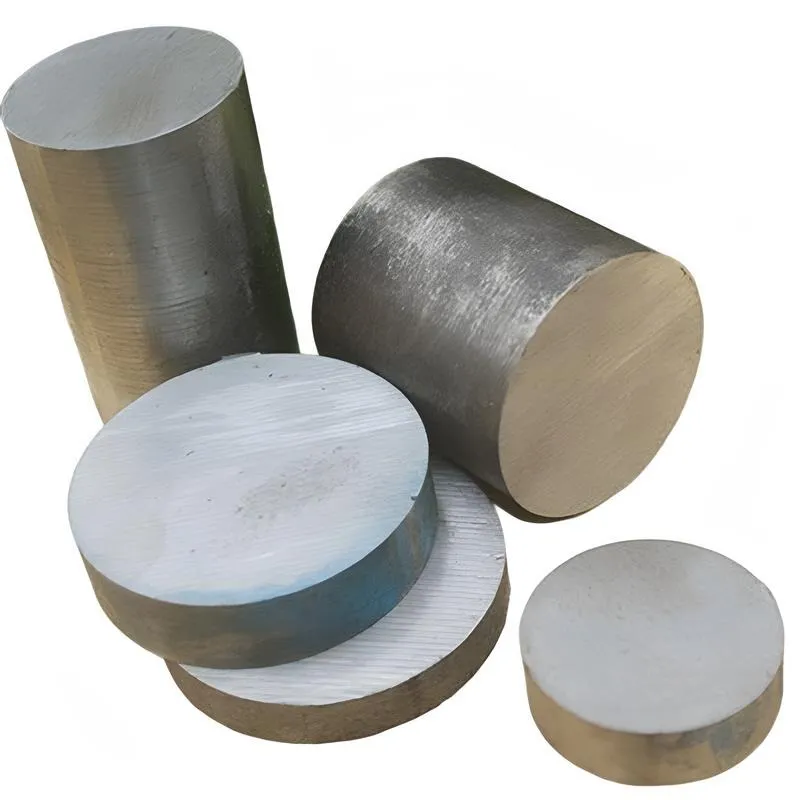
AISI Type M10 Molybdenum High Speed Tool Steel Tube,Pipe (UNS T11310)
Product Code : STI-GSTI-060-CU
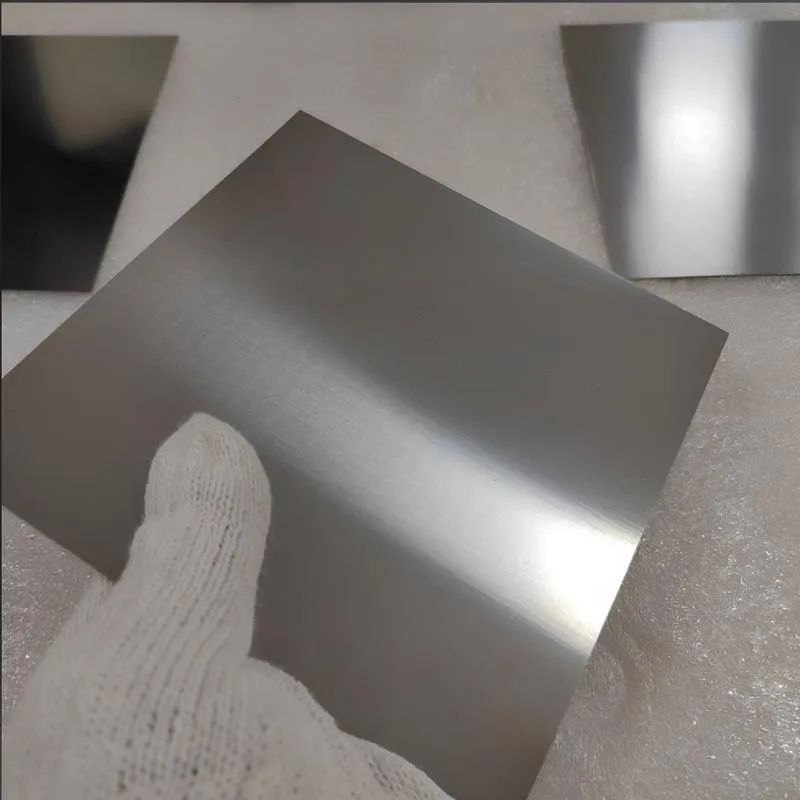
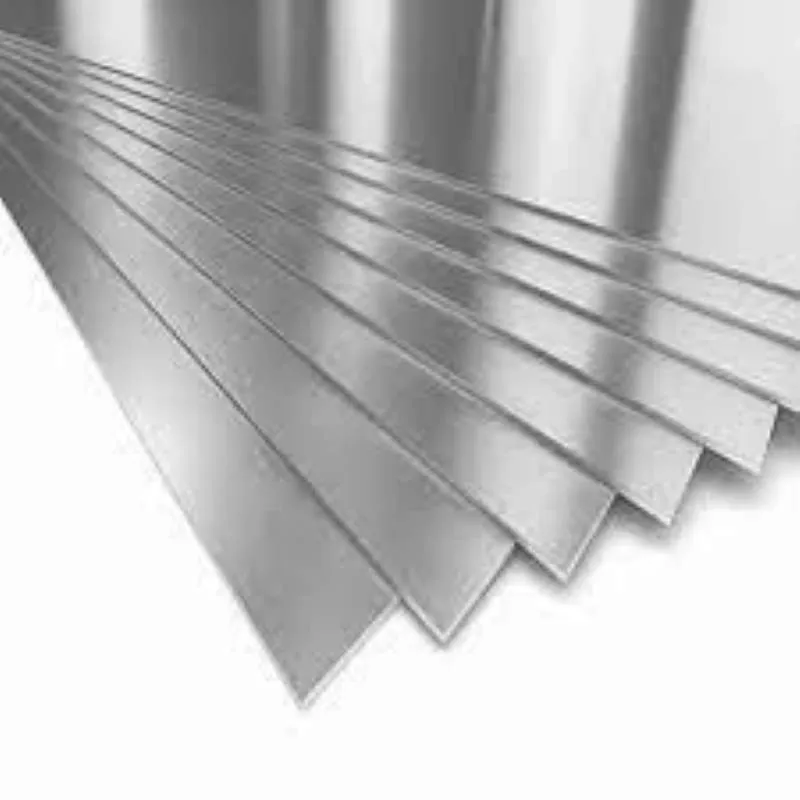
We provide AISI Type M10 Molybdenum High Speed Tool Steel Tube (UNS T11310) is available in Bar (Round bar, Flat bar), Ribbon, Wire, Rods, Tube,Seamless Tube,Pipe, Ingots, Plate, Sheet, Strip and Forging Stock.,Purity, chemical composition, size, etc. can all be customized to meet specific requirements.AISI Type M10 Molybdenum High Speed Tool Steel Pipe (UNS T11310)
Please contact us if you need customized services. We will contact you with the price and availability in 24 hours.
AISI Type M10 Molybdenum High Speed Tool Steel Tube (UNS T11310) Product Information
-:-
For detailed product information, please contact sales.
-:
AISI Type M10 Molybdenum High Speed Tool Steel Tube (UNS T11310) Synonyms
-:-
For detailed product information, please contact sales.
-:
AISI Type M10 Molybdenum High Speed Tool Steel (UNS T11310) Product Information
-:-
For detailed product information, please contact sales.
-:
# **Product Introduction: AISI Type M10 Molybdenum High-Speed Tool Steel (UNS T11310)**
## **Overview**
AISI Type M10 is a **tungsten-free molybdenum high-speed steel (HSS)** belonging to the AISI M-series. Characterized by its **exceptionally high molybdenum content (8.00-9.00%) with zero tungsten addition**, M10 represents the most economical grade among conventional high-speed steels while maintaining excellent cutting performance. This grade offers an optimal balance of **hot hardness, wear resistance, and grindability**, making it particularly suitable for general-purpose cutting tools where cost-effectiveness is paramount without compromising essential HSS properties.
**Key Advantages:**
- **Excellent Cost-Performance Ratio:** Most economical among standard HSS grades
- **Superior Grindability:** Best grindability in the M-series due to absence of tungsten carbides
- **Good Toughness:** Better impact resistance than higher-alloy HSS grades
- **Good Hot Hardness:** Maintains cutting edge at temperatures up to 525°C (975°F)
- **Predictable Heat Treatment:** Relatively straightforward hardening process
**Primary Considerations:**
- Lower hot hardness compared to tungsten-containing grades (M2, M7)
- More susceptible to decarburization during heat treatment
- Moderate wear resistance compared to high-vanadium grades
- Requires careful atmosphere control during heat treatment
## **International Designations & Standards**
| Standard System | Designation | Note |
|----------------|-------------|------|
| **AISI/SAE (USA)** | M10 | Primary specification |
| **UNS (USA)** | T11310 | Unified numbering system |
| **ASTM (USA)** | A600 | High-Speed Tool Steel Standard |
| **ISO (International)** | ~**HS2-9-2** | Similar composition (2%V-9%Mo) |
| **DIN (Germany)** | ~1.3207 | Molybdenum high-speed steel |
| **JIS (Japan)** | ~SKH10 | Similar molybdenum HSS |
| **BS (UK)** | ~**BM10** | Molybdenum high-speed steel |
| **GB (China)** | ~**Mo9Co8** | Similar molybdenum-cobalt grade |
*Note: M10 represents the most tungsten-lean standard HSS grade, with exact equivalents varying across international standards.*
---
## **1. Chemical Composition (Typical, Weight %)**
M10's composition is notable for complete absence of tungsten, relying entirely on molybdenum for hot hardness.
| Element | Content (%) | Role & Metallurgical Effect |
|---------|-------------|-----------------------------|
| **Carbon (C)** | 0.84 - 0.94 | Critical for matrix hardness and carbide formation. Balanced to optimize hardness without excessive brittleness. |
| **Molybdenum (Mo)** | 8.00 - 9.00 | **Primary alloying element (100% of hot hardness contribution).** Forms Mo₂C carbides, provides solid solution strengthening, enables secondary hardening. |
| **Chromium (Cr)** | 3.75 - 4.50 | Provides hardenability, oxidation resistance, forms chromium carbides (Cr₂₃C₆, Cr₇C₃) for wear resistance. |
| **Vanadium (V)** | 1.80 - 2.20 | **Key wear element.** Forms extremely hard vanadium carbides (VC) that resist abrasion and retard grain growth. Higher than M1 for improved wear. |
| **Cobalt (Co)** | 0.0 - 0.50 (Optional) | When added, improves hot hardness and thermal conductivity. |
| **Silicon (Si)** | 0.20 - 0.45 | Deoxidizer, matrix strengthener, improves tempering resistance. |
| **Manganese (Mn)** | 0.20 - 0.40 | Enhances hardenability, aids in deoxidation. |
| **Sulfur (S)** | ≤0.030 | Residual impurity; sometimes controlled for improved machinability. |
| **Phosphorus (P)** | ≤0.030 | Residual impurity; kept minimal. |
| **Iron (Fe)** | Balance | Matrix element. |
**Metallurgical Characteristics:**
- **Tungsten Content:** 0% - Unique among standard HSS grades
- **Primary Carbides:** MC (vanadium), M₂C (molybdenum), M₂₃C₆ (chromium)
- **Carbide Volume:** ~12-16% (higher than M1 due to increased vanadium)
- **Austenitizing Temperature:** 1190-1220°C (lower than tungsten HSS)
---
## **2. Physical & Mechanical Properties**
### **Physical Properties**
| Property | Typical Value | Conditions/Notes |
|----------|---------------|------------------|
| **Density** | 8.00 - 8.10 g/cm³ | At 20°C (68°F) - Lower than tungsten HSS |
| **Melting Range** | 1360 - 1410°C (2480 - 2570°F) | Lower melting point than tungsten grades |
| **Thermal Conductivity** | 22 - 27 W/m·K | At 20°C (68°F) |
| **Specific Heat Capacity** | 430 - 470 J/kg·K | At 20°C (68°F) |
| **Coefficient of Thermal Expansion** | 10.8 - 11.8 × 10⁻⁶/K | 20-600°C (68-1110°F) range |
| **Electrical Resistivity** | 0.48 - 0.58 μΩ·m | At 20°C (68°F) |
| **Elastic Modulus** | 200 - 210 GPa (29 - 30.5 × 10⁶ psi) | At room temperature |
| **Magnetic Properties** | Ferromagnetic | Below Curie temperature (~750°C) |
### **Mechanical Properties (Properly Heat-Treated)**
| Property | Value Range | Heat Treatment Condition |
|----------|-------------|--------------------------|
| **Hardness (Annealed)** | 223 - 255 HB | Annealed condition |
| **Hardness (Hardened)** | 63 - 66 HRC | Triple tempered condition |
| **Hot Hardness** | 57 - 60 HRC | At 525°C (975°F) after 4 hours exposure |
| **Transverse Rupture Strength** | 3300 - 4000 MPa (479 - 580 ksi) | At 64-66 HRC |
| **Compressive Strength** | 3700 - 4300 MPa (537 - 624 ksi) | At 64-66 HRC |
| **Impact Toughness (Charpy)** | 18 - 28 J (13 - 21 ft·lb) | At 64-66 HRC - **Better than many HSS grades** |
| **Young's Modulus** | 205 - 215 GPa (29.7 - 31.2 × 10⁶ psi) | At room temperature |
| **Poisson's Ratio** | 0.27 - 0.30 | At room temperature |
### **High-Temperature Performance**
| Temperature | Hardness (HRC) | Retention (%) | Relative Cutting Performance |
|-------------|----------------|---------------|------------------------------|
| **20°C (68°F)** | 64-66 | 100% | Baseline |
| **300°C (570°F)** | 59-61 | 92-94% | Very Good |
| **450°C (840°F)** | 55-57 | 86-88% | Good |
| **550°C (1020°F)** | 50-52 | 78-81% | Fair |
| **600°C (1110°F)** | 45-48 | 70-75% | Limited |
### **Grindability Index**
- **Relative Grindability:** 120-140% (compared to M2 = 100%)
- **Wheel Life:** 25-40% longer than M2
- **Power Consumption:** 15-25% lower than tungsten HSS
- **Surface Finish:** Excellent with proper technique
---
## **3. Product Applications**
### **Primary Application Areas**
**1. General Purpose Cutting Tools:**
- Twist drills for carbon and alloy steels
- Taps and dies for general threading
- Reamers for hole finishing
- End mills for slotting and profiling
**2. Forming and Shaping Tools:**
- Gear hobs and shaper cutters
- Broaches for internal machining
- Form tools and profile cutters
- Thread rolling dies
**3. Sawing and Cutting Tools:**
- Metal cutting saw blades
- Band saw blades
- Hack saw blades
- Hole saws
**4. Specialized Applications:**
- Woodworking tools for hardwoods
- Plastic cutting tools
- Cold work punches and dies
- Wear parts requiring HSS properties
### **Industry-Specific Applications**
| Industry | Typical M10 Components | Recommended Hardness |
|----------|-----------------------|----------------------|
| **General Machining** | Drills ≤12mm, taps M3-M12, reamers | 64-66 HRC |
| **Maintenance & Repair** | General purpose cutting tools, saw blades | 63-65 HRC |
| **Fastener Production** | Thread cutting tools, form tools | 64-66 HRC |
| **Woodworking** | Router bits, planer knives for composites | 62-64 HRC |
| **Tool Manufacturing** | Blank for custom tool fabrication | 64-66 HRC |
### **Cutting Performance Guidelines**
| Work Material | Cutting Speed (m/min) | Feed (mm/rev) | Cooling | Expected Tool Life |
|---------------|----------------------|---------------|---------|-------------------|
| **Low Carbon Steel** | 25-40 | 0.10-0.25 | Emulsion | Good-Excellent |
| **Alloy Steel (30-40 HRC)** | 20-35 | 0.08-0.20 | Emulsion/Oil | Good |
| **Stainless Steel (Austenitic)** | 15-25 | 0.05-0.15 | Heavy Duty Oil | Fair-Good |
| **Gray Cast Iron** | 30-45 | 0.15-0.30 | Dry or Air | Excellent |
| **Aluminum Alloys** | 80-150 | 0.20-0.40 | Kerosene or Dry | Excellent |
---
## **4. Heat Treatment Guidelines**
### **Annealing (Process Annealing)**
- **Temperature:** 830-860°C (1525-1580°F)
- **Soaking Time:** 2-4 hours at temperature
- **Cooling:** Furnace cool at ≤15°C/hr to 540°C, then air cool
- **Resulting Hardness:** 223-255 HB
- **Protection:** Pack annealing or controlled atmosphere recommended
### **Stress Relieving**
- **After Machining:** 600-650°C (1110-1200°F) for 1-2 hours
- **After Rough Grinding:** 500-550°C (930-1020°F) for 1 hour
- **Cooling:** Air cool
### **Hardening (Critical Process)**
1. **Preheating:** **Essential** (two-stage recommended)
- **Stage 1:** 450-550°C (840-1020°F)
- **Stage 2:** 800-850°C (1470-1560°F)
2. **Austenitizing:**
- **Temperature:** 1190-1220°C (2175-2230°F)
- **Soaking Time:** 2-4 minutes per 25mm (1 inch) of thickness
- **Atmosphere:** **Critical** - Vacuum, salt bath, or protective atmosphere required
- **Quench Options:** Oil, salt bath marquench, or air for small sections
3. **Quenching:**
- **Oil Quench:** Oil temperature 40-80°C (100-175°F)
- **Marquench:** 540-590°C (1000-1100°F), hold, then air cool
- **Air Cool:** Limited to simple shapes <25mm thickness
### **Tempering (Triple Temper Required)**
- **Immediate Tempering:** Begin when tool reaches 60-80°C (140-175°F)
- **Temperature:** 540-570°C (1000-1060°F)
- **Cycle:** Triple temper minimum, each 1-2 hours
- **Cooling:** Air cool completely between tempers
- **Final Hardness:** 63-66 HRC
- **Retained Austenite:** <5% after proper tempering
### **Sub-Zero Treatment (Recommended)**
- **Temperature:** -70 to -100°C (-95 to -150°F)
- **Duration:** 2-4 hours after quenching
- **Timing:** Between quenching and first temper
- **Benefits:** Dimensional stability, slight hardness increase
---
## **5. Machining & Grinding Characteristics**
### **Machinability (Annealed Condition)**
- **Relative Machinability:** 50-60% (compared to 1% carbon steel = 100%)
- **Tool Material:** Carbide tools strongly recommended
- **Cutting Parameters:**
- **Turning:** 20-35 m/min (65-115 SFM) with carbide
- **Milling:** 15-25 m/min (50-80 SFM) with carbide
- **Drilling:** 8-12 m/min (25-40 SFM) with carbide
- **Chip Control:** Use chip breakers, moderate feeds
- **Coolant:** Heavy-duty soluble oil or synthetic
### **Grinding (Primary Advantage)**
- **Wheel Selection:**
- Aluminum Oxide: A46-J8-V (general purpose)
- A54-K8-V (fine finishing)
- CBN (high-precision, high-volume)
- **Parameters:**
- Surface Speed: 25-30 m/s (5000-6000 SFPM)
- Downfeed: 0.005-0.015 mm (0.0002-0.0006 in) per pass
- Crossfeed: 1-3 mm (0.04-0.12 in) per pass
- **Coolant:** Copious flow, preferably water-based synthetic
- **Dressing:** Frequent dressing for best results
### **Electrical Discharge Machining (EDM)**
- **Suitability:** Good with proper parameters
- **Electrode:** Copper or graphite
- **Surface Effect:** White layer formation minimal with proper finishing
- **Post-EDM:** Stress relieve at 150-200°C below tempering temperature
---
## **6. Comparative Analysis**
### **vs. Other Molybdenum HSS Grades**
| Property | M10 | M1 | M7 | M33 (5% Co) |
|----------|-----|----|----|--------------|
| **Tungsten** | 0% | 1.40-2.10% | 1.40-2.10% | 1.50-2.00% |
| **Molybdenum** | 8.00-9.00% | 8.00-9.50% | 8.20-9.20% | 9.00-10.00% |
| **Vanadium** | 1.80-2.20% | 1.00-1.40% | 1.75-2.25% | 1.00-1.40% |
| **Hot Hardness** | Good | Good | Very Good | Excellent |
| **Wear Resistance** | Very Good | Good | Excellent | Good |
| **Grindability** | Excellent | Excellent | Very Good | Good |
| **Toughness** | Very Good | Very Good | Good | Fair |
| **Cost Factor** | 0.9x | 1.0x | 1.1x | 1.5x |
### **vs. Tungsten-Based HSS (T-series)**
| Aspect | M10 | T1 (18-4-1) | T4 (18-4-2-5Co) |
|--------|-----|-------------|-----------------|
| **Primary Cost Savings** | 25-40% | Baseline | +40-60% |
| **Hot Hardness at 600°C** | 85-88% of T1 | 100% | 110-115% |
| **Grinding Productivity** | 130-150% | 100% | 80-90% |
| **Toughness** | Better | Good | Poorer |
| **Heat Treatment Control** | More Critical | Less Critical | Less Critical |
| **Primary Market** | General Purpose | Heavy Duty | High Performance |
### **Application Selection Matrix**
| Application Requirement | M10 Suitability | Better Alternatives |
|------------------------|-----------------|-------------------|
| **General Purpose Drills/Taps** | Excellent | M2 (slightly better wear) |
| **High Volume Production** | Good | Powder metallurgy HSS |
| **Severe Interrupted Cuts** | Good | M3:2 or M4 (higher toughness) |
| **High Speed Machining** | Fair | M42 or cobalt HSS |
| **Abrasive Materials** | Fair | High vanadium grades |
---
## **7. Surface Treatments & Coatings**
### **Recommended Coatings**
1. **TiN (Titanium Nitride):** Gold coating, excellent for general purpose
- Thickness: 2-4 μm
- Temperature: 450-500°C (840-930°F)
2. **TiCN (Titanium Carbo-Nitride):** Higher hardness than TiN
- For abrasive materials
- Better adhesion than TiN
3. **CrN (Chromium Nitride):** Excellent for non-ferrous materials
- Lower friction coefficient
- Good for aluminum and copper alloys
### **Coating Performance Improvement**
- **Tool Life Increase:** 2-4x uncoated life
- **Cutting Speed Increase:** 20-40% possible
- **Surface Finish Improvement:** 1-2 roughness grade improvement
- **Built-up Edge Reduction:** Significant reduction
### **Pre-coating Preparation**
- **Surface Finish:** 0.2-0.4 μm Ra optimal
- **Cleaning:** Ultrasonic cleaning essential
- **Edge Preparation:** Honed edges (0.02-0.05mm radius)
- **Stress State:** Compressive stress preferred
---
## **8. Quality Control & Inspection**
### **Material Specifications**
- **Decarburization:** Max 0.08mm per side on finished tool stock
- **Non-metallic Inclusions:** ASTM E45, Max Thin Series 2.5
- **Carbide Distribution:** Uniform, fine distribution required
- **Surface Quality:** Free from seams, laps, cracks
### **Heat Treatment Verification**
- **Hardness Uniformity:** ±1 HRC across tool
- **Microstructure:** Fine martensite, uniform carbides
- **Retained Austenite:** <5% after tempering
- **Surface Condition:** Decarburization <0.05mm
### **Tool Performance Testing**
- **Cutting Test:** Standard workpiece material
- **Wear Measurement:** Flank and crater wear monitoring
- **Breakage Test:** Overload testing for toughness verification
---
## **9. Technical Recommendations**
### **Design Considerations**
1. **Tool Geometry:** Conservative angles for maximum strength
2. **Core Design:** Adequate web thickness for drills
3. **Flute Design:** Optimize for chip evacuation
4. **Shank Design:** Proper clamping surfaces
### **Manufacturing Best Practices**
1. **Blank Preparation:** Stress relieve after rough machining
2. **Grinding Sequence:** Rough grind, heat treat, finish grind
3. **Edge Preparation:** Honing after final grinding
4. **Cleaning:** Thorough cleaning before coating
### **Common Problems & Solutions**
| Problem | Symptoms | Solutions |
|---------|----------|-----------|
| **Premature Wear** | Rapid flank wear, poor finish | Increase hardness, apply coating, reduce speed |
| **Edge Chipping** | Small fractures at cutting edge | Increase toughness (higher temper), hone edges |
| **Poor Surface Finish** | Built-up edge, tearing | Increase speed, apply coating, improve geometry |
| **Breakage** | Tool fracture | Check for stress risers, increase core strength |
### **Economic Considerations**
- **Material Cost:** 15-25% lower than M2
- **Grinding Cost:** 20-30% lower than tungsten HSS
- **Tool Life/Cost Ratio:** Excellent for general applications
- **Inventory Value:** Lower inventory carrying cost
---
## **Disclaimer**
This technical datasheet provides comprehensive information about AISI Type M10 high-speed tool steel based on industry standards and typical applications. Actual properties and performance may vary depending on:
1. **Manufacturer's specific production methods** and quality systems
2. **Exact heat treatment parameters** and equipment capabilities
3. **Specific application conditions** and operating parameters
4. **Tool design, manufacturing quality,** and maintenance practices
**Important Notes:**
- M10 offers the best cost-performance ratio among standard HSS grades
- Proper heat treatment is critical for achieving optimal properties
- Coatings significantly enhance performance in most applications
- Regular requalification recommended for critical applications
For current specifications and detailed technical data, refer to:
- ASTM A600: Standard Specification for Tool Steel High Speed
- Manufacturer's technical datasheets and heat treatment guides
- Industry best practices for tool manufacturing and application
This information is intended for reference purposes and is subject to revision as technology and standards evolve. Always consult with materials specialists for critical applications and verify requirements with your steel supplier.
-:-
For detailed product information, please contact sales.
-:
AISI Type M10 Molybdenum High Speed Tool Steel (UNS T11310) Specification
Dimensions
Size:
Diameter 20-1000 mm Length <6716 mm
Size:We can customized as required
Standard:
Per your request or drawing
We can customized as required
Properties(Theoretical)
Chemical Composition
-:-
For detailed product information, please contact sales.
-:
AISI Type M10 Molybdenum High Speed Tool Steel (UNS T11310) Properties
-:-
For detailed product information, please contact sales.
-:
Applications of AISI Type M10 Molybdenum High Speed Tool Steel Tube (UNS T11310)
-:-
For detailed product information, please contact sales.
-:
Chemical Identifiers AISI Type M10 Molybdenum High Speed Tool Steel Tube (UNS T11310)
-:-
For detailed product information, please contact sales.
-:
Packing of AISI Type M10 Molybdenum High Speed Tool Steel Tube (UNS T11310)
-:-
For detailed product information, please contact sales.
-:
Standard Packing:
-:-
For detailed product information, please contact sales.
-:
Typical bulk packaging includes palletized plastic 5 gallon/25 kg. pails, fiber and Steel Tube drums to 1 ton super sacks in full container (FCL) or truck load (T/L) quantities. Research and sample quantities and hygroscopic, oxidizing or other air sensitive materials may be packaged under argon or vacuum. Solutions are packaged in polypropylene, plastic or glass jars up to palletized 3187 gallon liquid totes Special package is available on request. E FORUs’ is carefully handled to minimize damage during storage and transportation and to preserve the quality of our products in their original condition