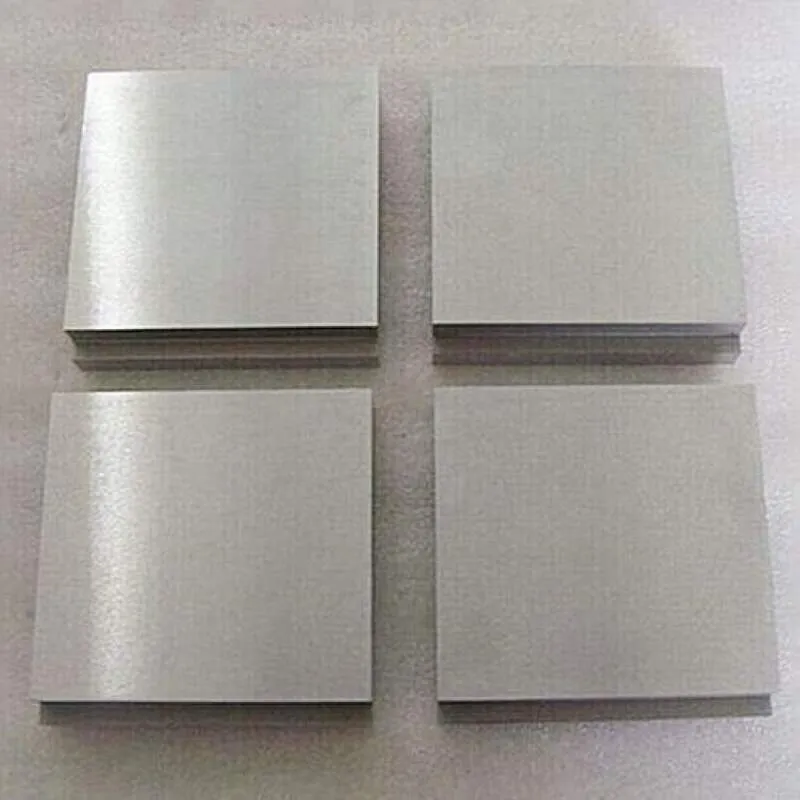
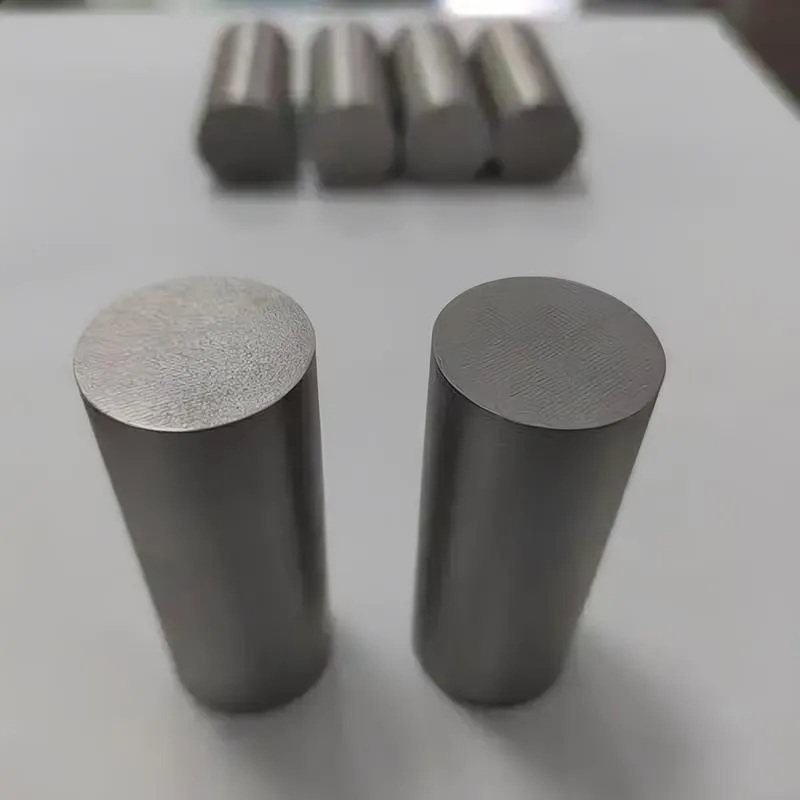
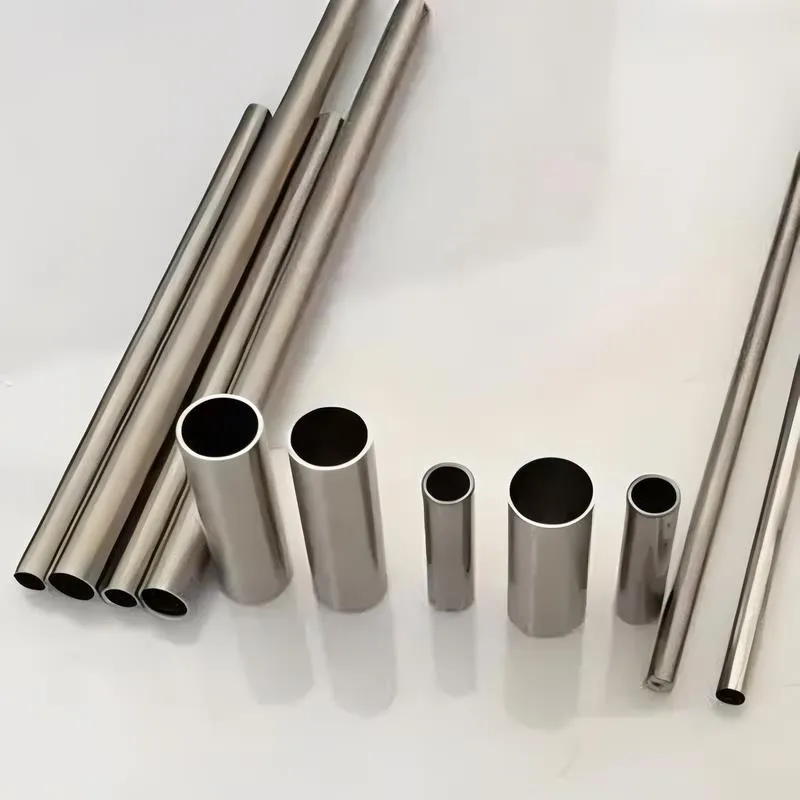
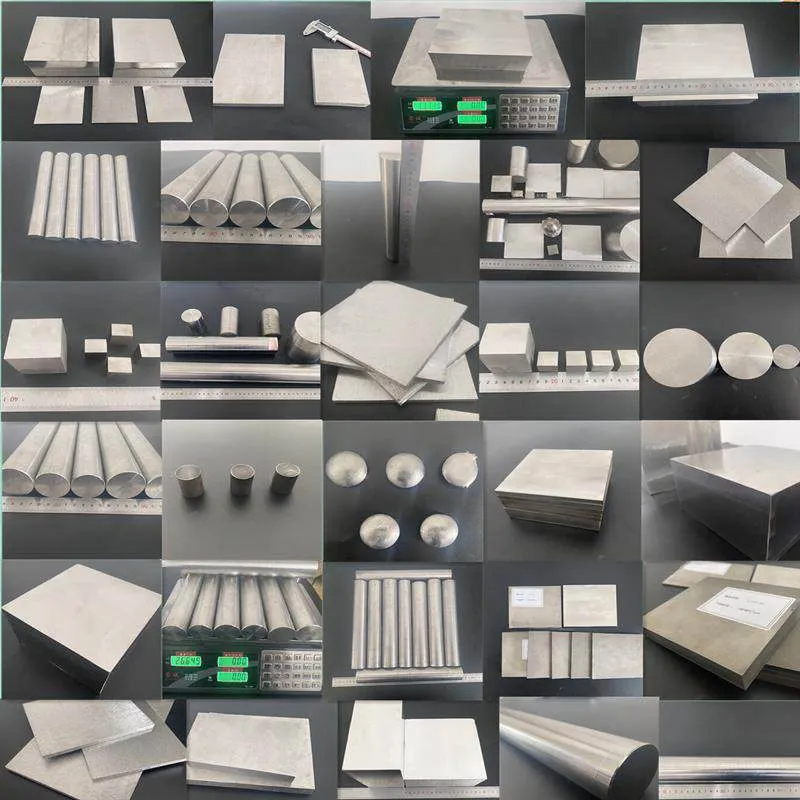
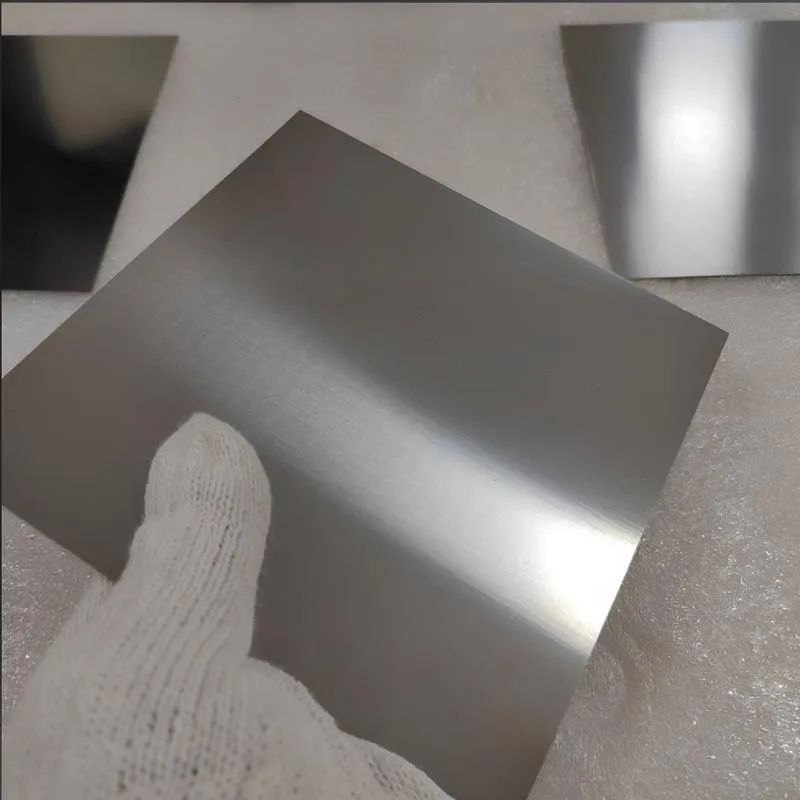
AISI Type M34 Molybdenum High Speed Tool Steel Sheet,Plate (UNS T11334)
Product Code : STI-GSTI-065-CU
We provide AISI Type M34 Molybdenum High Speed Tool Steel Sheet/Plate (UNS T11334) is available in Bar (Round bar, Flat bar), Ribbon, Wire, Rods, Tube,Seamless Tube,Pipe, Ingots, Plate, Sheet/Plate, Strip and Forging Stock.,Purity, chemical composition, size, etc. can all be customized to meet specific requirements.
Please contact us if you need customized services. We will contact you with the price and availability in 24 hours.
AISI Type M34 Molybdenum High Speed Tool Steel Sheet/Plate (UNS T11334) Product Information
-:-
For detailed product information, please contact sales.
-:
AISI Type M34 Molybdenum High Speed Tool Steel Sheet/Plate (UNS T11334) Synonyms
-:-
For detailed product information, please contact sales.
-:
AISI Type M34 Molybdenum High Speed Tool Steel (UNS T11334) Product Information
-:-
For detailed product information, please contact sales.
-:
# **Product Introduction: AISI Type M34 Cobalt Molybdenum-Tungsten High-Speed Tool Steel (UNS T11334)**
## **Overview**
AISI Type M34 is a **cobalt-enhanced molybdenum-tungsten high-speed steel (HSS)** within the AISI M-series, featuring **moderate cobalt content (4.50-5.00%)** and a **balanced tungsten-molybdenum composition** similar to M2 but with added cobalt for improved high-temperature performance. This grade bridges the gap between standard M2 and premium cobalt grades, offering **enhanced hot hardness and cutting performance** for applications requiring better high-temperature capability than M2 provides, without the extreme cost and processing challenges of higher-cobalt grades.
**Key Advantages:**
- **Improved Hot Hardness:** Cobalt addition enhances cutting edge retention at elevated temperatures
- **Balanced Composition:** Maintains M2's favorable tungsten-molybdenum balance with cobalt benefits
- **Good All-Around Performance:** Comprehensive improvement over M2 in multiple performance aspects
- **Reasonable Grindability:** More grindable than high-cobalt, high-vanadium grades
- **Cost-Effective Upgrade:** Performance enhancement over M2 without premium M42/M15 pricing
**Primary Considerations:**
- Higher cost than standard M2
- Slightly reduced toughness compared to non-cobalt grades
- Requires careful heat treatment control
- Limited availability compared to mainstream grades
## **International Designations & Standards**
| Standard System | Designation | Note |
|----------------|-------------|------|
| **AISI/SAE (USA)** | M34 | Primary specification |
| **UNS (USA)** | T11334 | Unified numbering system |
| **ASTM (USA)** | A600 | High-Speed Tool Steel Standard |
| **ISO (International)** | ~**HS6-5-2-5** | Similar cobalt-bearing composition |
| **DIN (Germany)** | ~1.3245 | Cobalt-containing high-speed steel |
| **JIS (Japan)** | ~SKH54 | Medium-cobalt high-speed steel |
| **BS (UK)** | ~**BM34** | Cobalt-bearing HSS |
| **GB (China)** | ~**W6Mo5Cr4V2Co5** | Similar cobalt HSS composition |
*Note: M34 represents a specific cobalt-enhanced variant of the M2 composition, offering targeted performance improvements for demanding applications.*
---
## **1. Chemical Composition (Typical, Weight %)**
M34 builds upon the proven M2 composition with strategic cobalt addition.
| Element | Content (%) | Role & Metallurgical Effect |
|---------|-------------|-----------------------------|
| **Carbon (C)** | 0.80 - 0.90 | Provides matrix hardness and supports carbide formation. Slightly higher than M2 to balance cobalt's effect. |
| **Cobalt (Co)** | 4.50 - 5.00 | **Primary performance enhancer.** Increases red hardness, improves thermal conductivity, promotes secondary hardening, enhances high-temperature strength. |
| **Tungsten (W)** | 5.50 - 6.75 | Same as M2. Provides hot hardness through tungsten carbide formation and solid solution strengthening. |
| **Molybdenum (Mo)** | 4.50 - 5.50 | Same as M2. Works synergistically with tungsten for hot hardness and hardenability. |
| **Chromium (Cr)** | 3.75 - 4.50 | Standard HSS level for hardenability, oxidation resistance, and carbide formation. |
| **Vanadium (V)** | 1.75 - 2.20 | Same as M2. Forms hard vanadium carbides for wear resistance and grain refinement. |
| **Silicon (Si)** | 0.20 - 0.45 | Deoxidizer and matrix strengthener. |
| **Manganese (Mn)** | 0.15 - 0.40 | Enhances hardenability and aids in deoxidation. |
| **Sulfur (S)** | ≤0.030 | Residual impurity. |
| **Phosphorus (P)** | ≤0.030 | Residual impurity. |
| **Iron (Fe)** | Balance | Matrix element. |
**Composition Strategy:**
- **M2 Plus Cobalt:** Essentially M2 composition with 4.50-5.00% cobalt addition
- **Balanced Approach:** Maintains all favorable characteristics of M2
- **Targeted Enhancement:** Cobalt specifically improves high-temperature performance
- **Consistent Processing:** Similar heat treatment to M2 with minor adjustments
---
## **2. Physical & Mechanical Properties**
### **Physical Properties**
| Property | Typical Value | Conditions/Notes |
|----------|---------------|------------------|
| **Density** | 8.16 - 8.20 g/cm³ | At 20°C (68°F) - Slightly higher than M2 due to cobalt |
| **Melting Range** | 1370 - 1420°C (2500 - 2590°F) | Similar to M2 |
| **Thermal Conductivity** | 24 - 29 W/m·K | At 20°C (68°F) - 10-15% higher than M2 due to cobalt |
| **Specific Heat Capacity** | 420 - 460 J/kg·K | At 20°C (68°F) |
| **Coefficient of Thermal Expansion** | 10.8 - 11.5 × 10⁻⁶/K | 20-600°C (68-1110°F) range |
| **Electrical Resistivity** | 0.50 - 0.58 μΩ·m | At 20°C (68°F) |
| **Elastic Modulus** | 205 - 215 GPa (29.7 - 31.2 × 10⁶ psi) | At room temperature |
| **Thermal Diffusivity** | 6.5 - 7.5 mm²/s | At 20°C (68°F) |
### **Mechanical Properties (Properly Heat-Treated)**
| Property | Value Range | Heat Treatment Condition |
|----------|-------------|--------------------------|
| **Hardness (Annealed)** | 217 - 255 HB | Annealed condition |
| **Hardness (Hardened)** | 64 - 67 HRC | Triple tempered condition |
| **Hot Hardness (600°C)** | 56 - 59 HRC | After 4 hours at temperature |
| **Transverse Rupture Strength** | 3300 - 3900 MPa (479 - 566 ksi) | At 65-66 HRC |
| **Compressive Strength** | 3800 - 4400 MPa (551 - 638 ksi) | At 65-66 HRC |
| **Impact Toughness (Charpy)** | 18 - 26 J (13 - 19 ft·lb) | At 65-66 HRC - Slightly lower than M2 |
| **Young's Modulus** | 205 - 215 GPa (29.7 - 31.2 × 10⁶ psi) | At room temperature |
| **Fatigue Strength** | 750 - 900 MPa (109 - 131 ksi) | Rotating bending, 10⁷ cycles |
### **High-Temperature Performance Comparison**
| Temperature | M34 Hardness (HRC) | M2 Hardness (HRC) | Performance Advantage |
|-------------|---------------------|--------------------|-----------------------|
| **20°C (68°F)** | 65-66 | 64-65 | +0.5-1.0 HRC |
| **300°C (570°F)** | 61-63 | 60-62 | +1.0-1.5 HRC |
| **450°C (840°F)** | 57-60 | 56-58 | +1.0-2.0 HRC |
| **550°C (1020°F)** | 53-56 | 52-54 | +1.0-2.0 HRC |
| **600°C (1110°F)** | 49-52 | 48-50 | +1.0-2.0 HRC |
### **Performance Enhancement Metrics**
- **Red Hardness Improvement:** 10-20% over M2 at 600°C
- **Thermal Conductivity Increase:** 10-15% over M2
- **Secondary Hardening Response:** Enhanced due to cobalt
- **Cutting Speed Potential:** 15-25% higher than M2 for equivalent tool life
### **Grindability Characteristics**
- **Relative Grindability:** 85-95% (compared to M2 = 100%)
- **Wheel Selection:** Standard aluminum oxide suitable
- **Power Requirement:** 5-10% higher than M2
- **Coolant Requirement:** Standard systems adequate
- **Surface Finish:** Good achievable with proper technique
---
## **3. Product Applications**
### **Primary Application Areas**
**1. Enhanced Performance Cutting Tools:**
- Drills for stainless steels and high-temperature alloys
- End mills for elevated temperature operations
- Taps for difficult-to-machine materials
- Reamers requiring extended performance
**2. Production Tools with Higher Demands:**
- Gear cutting tools for automotive and aerospace
- Broaches for production environments
- Milling cutters for continuous high-performance operations
- Form tools requiring consistent high-temperature performance
**3. Specialized Machining Applications:**
- Cutting tools for heat-resistant alloys
- Tools for machining hardened steels (up to 45 HRC)
- High-speed machining of alloy steels
- Production tools for abrasive materials
### **Industry-Specific Applications**
| Industry | Typical M34 Components | Performance Benefit |
|----------|-----------------------|---------------------|
| **Aerospace** | Cutting tools for high-temperature alloys | Improved tool life in warm conditions |
| **Automotive** | Gear hobs, form tools, broaches | Higher production rates possible |
| **Energy** | Valve machining tools, turbine components | Better high-temperature capability |
| **General Manufacturing** | Production drills, end mills, taps | Extended tool life, reduced downtime |
| **Tool & Die** | Hard milling cutters, form tools | Improved edge retention |
### **Recommended Cutting Parameters**
| Work Material | Cutting Speed (m/min) | Feed (mm/tooth) | Depth of Cut | Cooling Strategy |
|---------------|----------------------|-----------------|--------------|------------------|
| **Low-Alloy Steels** | 40-60 | 0.15-0.30 | 1-5 mm | Standard coolant |
| **Stainless Steels** | 30-50 | 0.10-0.25 | 1-4 mm | Enhanced coolant |
| **Heat-Resistant Alloys** | 25-45 | 0.08-0.20 | 0.5-3 mm | High-pressure coolant |
| **Cast Iron** | 45-70 | 0.20-0.40 | 1-6 mm | Dry or minimal coolant |
| **Hardened Steels (40-45HRC)** | 35-55 | 0.08-0.20 | 0.5-3 mm | Oil-based coolant |
---
## **4. Heat Treatment Guidelines**
### **Annealing**
- **Temperature:** 840-870°C (1545-1600°F)
- **Soaking Time:** 2-4 hours
- **Cooling Rate:** ≤15°C/hr to 540°C, then air cool
- **Resulting Hardness:** 217-255 HB
- **Atmosphere:** Protective atmosphere recommended
### **Stress Relieving**
- **After Rough Machining:** 600-650°C (1110-1200°F), 1-2 hours
- **After Grinding:** 500-550°C (930-1020°F), 1 hour
- **Cooling:** Slow furnace cool or air cool
### **Hardening Process**
1. **Preheating (Critical):**
- **First Stage:** 450-550°C (840-1020°F)
- **Second Stage:** 800-850°C (1470-1560°F)
2. **Austenitizing:**
- **Temperature:** 1190-1230°C (2175-2245°F)
- **Soaking Time:** 2-5 minutes per 25mm thickness
- **Atmosphere:** Controlled atmosphere or vacuum essential
3. **Quenching Options:**
- **Oil Quench:** 40-80°C oil with good agitation
- **Salt Bath Marquench:** 540-590°C, hold then air cool
- **Air Cooling:** For simple shapes <25mm thickness
### **Tempering**
- **Temperature:** 540-570°C (1000-1060°F)
- **Cycles:** Minimum 3 tempers required
- **Duration:** 1-2 hours per temper cycle
- **Cooling:** Air cool completely between tempers
- **Final Hardness:** 64-67 HRC
- **Note:** Higher tempering temperatures may be used for specific toughness requirements
### **Sub-Zero Treatment**
- **Recommendation:** Beneficial for optimal performance
- **Temperature:** -70 to -100°C (-95 to -150°F)
- **Duration:** 2-4 hours
- **Timing:** After quenching, before first temper
- **Benefits:** Maximum hardness, dimensional stability
---
## **5. Manufacturing & Processing**
### **Machinability (Annealed Condition)**
- **Relative Machinability:** 40-50% (1% carbon steel = 100%)
- **Tool Requirements:** Carbide tools strongly recommended
- **Cutting Parameters:**
- Turning: 25-40 m/min (80-130 SFM) with carbide
- Milling: 15-25 m/min (50-80 SFM) with carbide
- Drilling: 8-15 m/min (25-50 SFM) with carbide
- **Chip Control:** Aggressive chip breakers recommended
- **Coolant:** Heavy-duty soluble oil or synthetic
### **Grinding Operations**
- **Abrasive Selection:** Aluminum oxide A46-J8-V standard
- **Wheel Speed:** 25-30 m/s (5000-6000 SFPM)
- **Infeed Rates:** 0.005-0.020 mm/pass
- **Crossfeed:** 1-5 mm/pass
- **Coolant:** Water-based synthetic recommended
- **Surface Finish:** Good achievable with proper technique
### **Surface Treatments & Coatings**
- **Recommended Coatings:** TiN, TiCN, TiAlN
- **Coating Benefits:** 2-4x tool life improvement
- **Pre-coating Preparation:** Edge honing 0.02-0.05mm radius
- **Coating Thickness:** 2-4 microns optimal
- **Application Temperature:** Compatible with standard PVD processes
---
## **6. Comparative Analysis**
### **vs. Other Cobalt-Containing HSS**
| Property | M34 | M2 | M35 | M42 |
|----------|-----|----|-----|-----|
| **Cobalt Content** | 4.50-5.00% | 0% | 4.50-5.00% | 7.50-8.50% |
| **Base Composition** | M2 + Co | Standard | M2 + Co + adjustments | High-cobalt, high-carbon |
| **Hot Hardness** | Good | Good | Very Good | Excellent |
| **Room Temp Hardness** | 65-66 HRC | 64-65 HRC | 65-66 HRC | 66-68 HRC |
| **Toughness** | Good | Very Good | Fair | Fair |
| **Grindability** | Good | Very Good | Fair | Poor |
| **Cost Factor** | 1.4-1.5x | 1.0x | 1.5-1.6x | 2.0-2.2x |
### **Performance Positioning Matrix**
| Application Scenario | M34 Advantage | Alternative Considerations |
|---------------------|---------------|---------------------------|
| **General machining needing better than M2** | Excellent | M35 for slightly better performance |
| **Production tools with temperature issues** | Very Good | M42 if extreme temperatures |
| **Cost-sensitive cobalt applications** | Very Good | M33 for slightly lower cost |
| **Balanced performance requirements** | Excellent | M2 if temperature not critical |
| **Severe high-temperature operations** | Good | M15 or M42 for extreme conditions |
### **Economic Analysis**
- **Material Cost Premium:** 40-50% over M2
- **Tool Life Improvement:** 20-40% over M2 in appropriate applications
- **Processing Cost:** Similar to M2
- **Total Cost Benefit:** Positive return in 3-9 months for production applications
- **Optimal Application Range:** Moderate to high production volumes
---
## **7. Quality Standards & Specifications**
### **Material Quality Requirements**
- **Chemical Composition:** Must meet AISI specified ranges
- **Decarburization Limit:** Maximum 0.10mm per side
- **Hardness Uniformity:** ±1.5 HRC across tool
- **Microstructure:** Uniform carbide distribution, fine grain structure
- **Surface Quality:** Free from defects per ASTM standards
### **Testing & Certification**
- **Chemical Analysis:** Full spectrographic analysis required
- **Hardness Testing:** Multiple point verification
- **Microstructural Examination:** Carbide size and distribution assessment
- **Performance Validation:** Optional cutting tests for critical applications
- **Certification:** Mill test certificates with heat traceability
### **Industry Standards Compliance**
- **ASTM A600:** Primary governing standard
- **ISO 4957:** International tool steel standard
- **Customer Specifications:** Often more stringent requirements
- **Industry Best Practices:** Adherence to established processing guidelines
---
## **8. Technical Recommendations**
### **Selection Guidelines**
**Choose M34 When:**
- M2 performance is insufficient for temperature conditions
- Moderate cobalt benefits are needed without M42/M15 premium
- Good grindability must be maintained
- Balanced all-around performance is required
- Production volumes justify material cost premium
**Consider Alternatives When:**
- Maximum high-temperature performance needed (choose M42/M15)
- Minimum cost is critical (choose M2)
- Extreme abrasion resistance required (choose high-vanadium grades)
- Maximum toughness needed (choose lower hardness grades)
- Severe interrupted cutting conditions exist
### **Application Best Practices**
1. **Start Conservatively:** Begin with M2 parameters, optimize upward
2. **Monitor Performance:** Track tool wear, cutting forces, surface finish
3. **Implement Regular Maintenance:** Scheduled inspection and regrinding
4. **Use Appropriate Coolants:** Match coolant type to application requirements
5. **Optimize Tool Geometry:** Fine-tune for specific materials and operations
### **Limitations and Constraints**
- **Temperature Ceiling:** Not for continuous use above 600°C
- **Impact Sensitivity:** Avoid severe interrupted cutting conditions
- **Optimal Hardness Range:** 64-67 HRC for best performance balance
- **Application Specificity:** Best results in continuous or light-interrupted cutting
### **Troubleshooting Guide**
| Problem | Potential Causes | Corrective Actions |
|---------|-----------------|-------------------|
| **Premature Flank Wear** | Insufficient hardness, improper coating | Verify heat treatment, apply wear-resistant coating |
| **Edge Chipping** | Excessive feed, poor edge preparation | Reduce feed rates, improve edge honing (0.03-0.08mm radius) |
| **Catastrophic Failure** | Excessive load, vibration, tool deflection | Reduce cutting forces, improve rigidity, check tool geometry |
| **Poor Surface Finish** | Dull tool, improper cutting parameters | Regrind tool, optimize speed and feed rates |
| **Thermal Cracking** | Excessive heat generation, inadequate cooling | Improve coolant delivery, reduce cutting speed |
### **Economic Optimization Strategies**
1. **Life Cycle Cost Analysis:** Consider total cost including tool changes, downtime
2. **Performance Monitoring:** Track tool life, maintenance costs, production output
3. **Process Integration:** Optimize entire machining process, not just tool selection
4. **Supplier Collaboration:** Work with technical support for application optimization
---
## **Disclaimer**
This technical datasheet provides comprehensive information about AISI Type M34 high-speed tool steel based on industry standards, technical literature, and typical application experiences. Actual properties and performance may vary depending on multiple factors:
**Critical Variables Affecting Performance:**
1. **Manufacturing Variations:** Different producers may have slight compositional adjustments
2. **Heat Treatment Execution:** Precise control of time, temperature, and atmosphere
3. **Tool Design & Geometry:** Optimization for specific applications
4. **Application Conditions:** Workpiece material, machine rigidity, coolant effectiveness
5. **Operating Parameters:** Speed, feed, depth of cut, engagement conditions
**Important Usage Notes:**
- M34 represents a specific performance niche between standard and premium HSS grades
- Proper application engineering is essential for optimal results
- Performance claims should be validated under actual production conditions
- Regular tool maintenance and monitoring are critical for success
**References and Standards:**
- ASTM A600: Standard Specification for Tool Steel High Speed
- ISO 4957: Tool steels
- ASM Handbook, Volume 1: Properties and Selection: Irons, Steels, and High-Performance Alloys
- Manufacturer's technical data sheets and processing recommendations
This information is current based on available technical knowledge and is subject to revision as technology advances and new data becomes available. Users should:
- Verify specifications with their materials supplier
- Conduct application-specific testing for critical applications
- Consult with materials engineering specialists for unique requirements
- Stay informed about technological developments in tool materials
Always prioritize safety in tool handling, maintenance, and operation, and follow all applicable industry standards and best practices.
-:-
For detailed product information, please contact sales.
-:
AISI Type M34 Molybdenum High Speed Tool Steel (UNS T11334) Specification
Dimensions
Size:
Diameter 20-1000 mm Length <6721 mm
Size:We can customized as required
Standard:
Per your request or drawing
We can customized as required
Properties(Theoretical)
Chemical Composition
-:-
For detailed product information, please contact sales.
-:
AISI Type M34 Molybdenum High Speed Tool Steel (UNS T11334) Properties
-:-
For detailed product information, please contact sales.
-:
Applications of AISI Type M34 Molybdenum High Speed Tool Steel Sheet,Plate (UNS T11334)
-:-
For detailed product information, please contact sales.
-:
Chemical Identifiers AISI Type M34 Molybdenum High Speed Tool Steel Sheet,Plate (UNS T11334)
-:-
For detailed product information, please contact sales.
-:
Packing of AISI Type M34 Molybdenum High Speed Tool Steel Sheet/Plate (UNS T11334)
-:-
For detailed product information, please contact sales.
-:
Standard Packing:
-:-
For detailed product information, please contact sales.
-:
Typical bulk packaging includes palletized plastic 5 gallon/25 kg. pails, fiber and Steel Sheet/Plate drums to 1 ton super sacks in full container (FCL) or truck load (T/L) quantities. Research and sample quantities and hygroscopic, oxidizing or other air sensitive materials may be packaged under argon or vacuum. Solutions are packaged in polypropylene, plastic or glass jars up to palletized 3192 gallon liquid totes Special package is available on request. E FORUs’ is carefully handled to minimize damage during storage and transportation and to preserve the quality of our products in their original condition