AISI Type M7 Molybdenum High Speed Tool Steel Rod/Bar (UNS T11307)
Product Code : STI-GSTI-083-CU
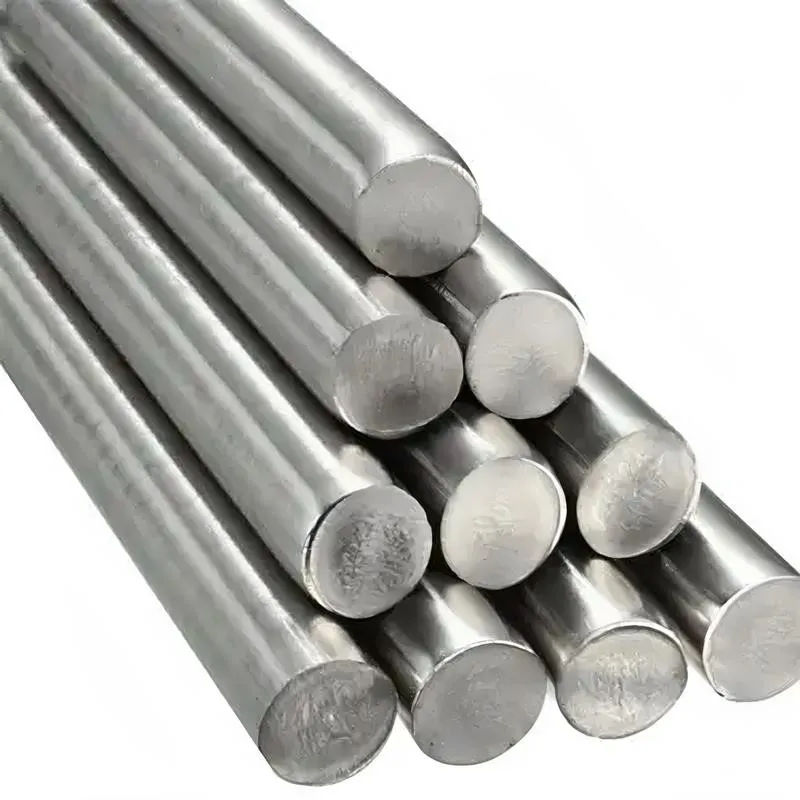
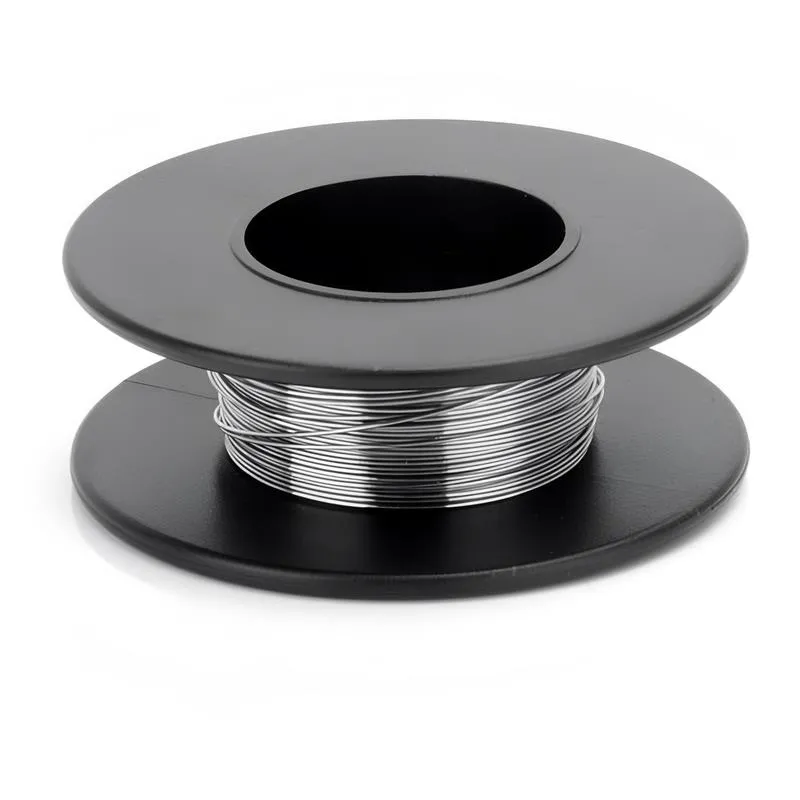
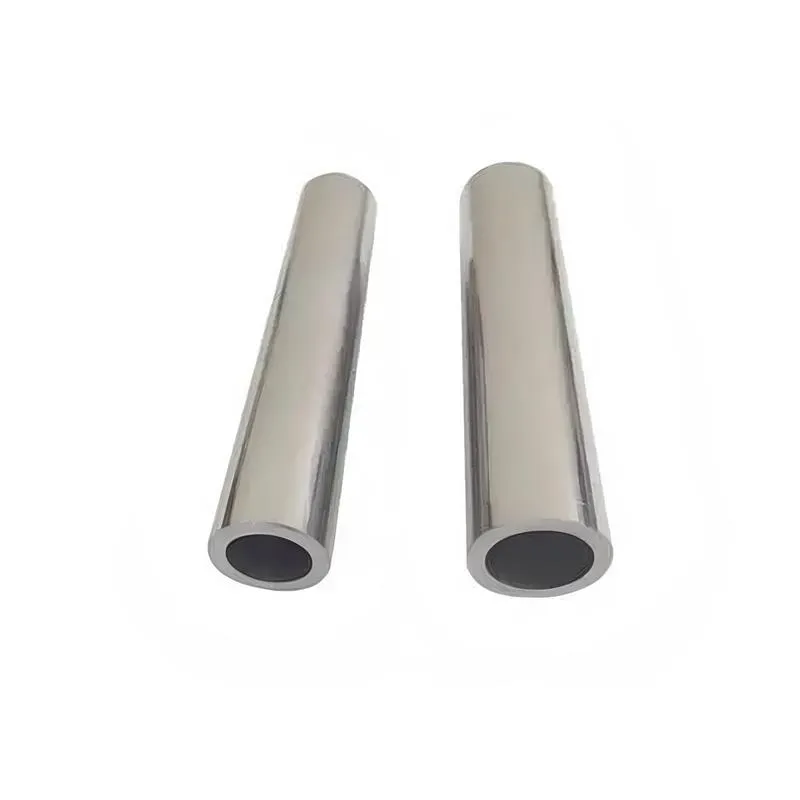
We provide AISI Type M7 Molybdenum High Speed Tool Steel Rod/Bar (UNS T11307) is available in Bar (Round bar, Flat bar), Ribbon, Wire, Rod/Bars, Tube,Seamless Tube,Pipe, Ingots, Plate, Sheet, Strip and Forging Stock.,Purity, chemical composition, size, etc. can all be customized to meet specific requirements.
Please contact us if you need customized services. We will contact you with the price and availability in 24 hours.
AISI Type M7 Molybdenum High Speed Tool Steel Rod (UNS T11307) Product Information
-:-
For detailed product information, please contact sales.
-:
AISI Type M7 Molybdenum High Speed Tool Steel Rod (UNS T11307) Synonyms
-:-
For detailed product information, please contact sales.
-:
AISI Type M7 Molybdenum High Speed Tool Steel (UNS T11307) Product Information
-:-
For detailed product information, please contact sales.
-:
# **Product Introduction: AISI Type M7 Molybdenum High-Speed Tool Steel (UNS T11307)**
## **Overview**
**AISI M7 (UNS T11307)** is a **high-carbon, high-vanadium, cobalt-free molybdenum high-speed steel** renowned for its **exceptional abrasion resistance**. Positioned between the standard workhorse M2 and the more specialized high-cobalt grades, M7 is engineered specifically for applications where **wear resistance is the primary concern**. It achieves superior wear life compared to M2 through a significant increase in carbon and vanadium content, making it a cost-effective solution for machining abrasive materials without the expense of cobalt alloying.
## **1. Chemical Composition (Nominal %)**
| Element | Content (%) | Primary Function |
|---------|------------|------------------|
| **Carbon (C)** | 0.97 - 1.07 | **Higher than M2.** Increases matrix hardness and carbide volume for enhanced wear resistance. |
| **Tungsten (W)** | 1.30 - 2.10 | Contributes to hot hardness and secondary hardening. |
| **Molybdenum (Mo)** | 8.20 - 9.20 | **Primary hardening element.** Provides deep hardenability, strong secondary hardening, and refines grain structure. |
| **Chromium (Cr)** | 3.50 - 4.00 | Enhances hardenability and provides oxidation resistance. |
| **Vanadium (V)** | 1.70 - 2.10 | **Higher than M2.** Forms hard, wear-resistant vanadium carbides (MC-type) – the key to M7's abrasion resistance. |
| **Cobalt (Co)** | **Not Present** | Absence keeps cost lower while focusing on wear performance. |
| **Silicon (Si)** | 0.20 - 0.45 | Deoxidizer and strengthens the matrix. |
| **Manganese (Mn)** | 0.15 - 0.40 | Improves hardenability. |
| **Sulfur (S)** | ≤ 0.03 | Typically kept low. |
| **Phosphorus (P)** | ≤ 0.03 | Impurity kept low for toughness. |
| **Iron (Fe)** | Balance | Base metal. |
**Key Chemistry Note:** M7's defining characteristic is its **high molybdenum and vanadium content relative to carbon**. This "M-V-C" balance creates a microstructure rich in fine, hard vanadium and molybdenum carbides, providing outstanding resistance to abrasive wear. It is often considered the **most wear-resistant of the common cobalt-free "M" series steels** (excluding specialized grades like M4 with even higher vanadium).
## **2. Physical & Mechanical Properties**
| Property | Typical Value / Condition |
|----------|--------------------------|
| **Density** | ~8.06 g/cm³ (0.291 lb/in³) |
| **Melting Point** | ~1415°C (2580°F) |
| **Thermal Conductivity** | ~27.5 W/m·K at 20°C |
| **Coefficient of Thermal Expansion** | 11.3 × 10⁻⁶/K (20-540°C) |
| **Modulus of Elasticity** | ~208 GPa (30.2 × 10⁶ psi) |
| **Annealed Hardness** | 229-269 HB |
| **Hardened & Tempered Hardness** | **63-66 HRC** (Commonly 64-65 HRC). Can achieve up to 66 HRC. |
| **Red Hardness** | **Good to Very Good.** Slightly better than M2 due to higher alloy content; effective up to ~550°C (1020°F). |
| **Abrasion Resistance** | **Excellent.** Significantly better than M2, approaching some cobalt grades for pure sliding/abrasive wear. |
| **Toughness** | **Good.** Slightly lower than M2 due to higher carbide volume, but generally better than high-cobalt grades (M42, M35). |
| **Tempering Temperature** | 540-600°C (1000-1110°F), typically double-tempered. |
| **Grindability** | **Fair to Difficult** (~50-55% of M2). Higher vanadium content requires proper wheel selection. |
## **3. International Standards & Cross-References**
M7 is a well-established grade with clear international equivalents.
| Standard | Designation |
|----------|------------|
| **UNS** | T11307 |
| **AISI/ASTM (USA)** | M7 (ASTM A600) |
| **ISO (International)** | **HS 1-8-2** (ISO 4957: Tool steels) – **Direct equivalent**. |
| **DIN (Germany)** | **1.3348** |
| **JIS (Japan)** | **SKH58** (Note: SKH58 can correspond to M7 or similar compositions). |
| **GB (China)** | **W2Mo9Cr4V2** (A common and accurate equivalent). |
| **AFNOR (France)** | **HS 1-8-2** |
## **4. Product Applications**
M7 is the **preferred choice over M2 when machining abrasive materials or when longer tool life is required under high-wear conditions**. Its balance of wear resistance, toughness, and cost is highly valued.
**Primary Applications Include:**
* **Cutting Tools for Abrasive Materials:**
* **Drills, taps, end mills, and reamers** for machining: **cast irons** (especially grey and ductile iron), **stainless steels**, **high-temperature alloys**, **nickel-based alloys**, and **abrasive non-ferrous metals** (e.g., silicon aluminum, copper alloys).
* **Form tools, broaches, and gear hobs** for production environments where consistent wear life is critical.
* **Saw blades** (band saws, circular saws) for cutting tough alloys.
* **Woodworking tools** for processed woods and composites.
* **Forming and Wear Parts:**
* **Cold work punches, dies, and forming rolls** subject to significant wear.
* **Shear blades** for bar, rod, and sheet metal.
* **Knives and slitters** for paper, plastics, and sheet metal.
* **Wear plates, guides, and liners** in machinery.
**Key Advantage:** M7 provides a **substantial increase in tool life (often 50-100% or more) compared to M2 when wear is the limiting factor**, at a moderate increase in material cost. It is the **go-to upgrade from M2** for general machining shops facing abrasive workpiece materials.
## **5. Processing & Heat Treatment Guidelines**
* **Forging:** Heat uniformly to **1050-1100°C (1920-2010°F)**. Do not forge below **925°C (1700°F)**. Cool slowly.
* **Annealing:** Heat to **840-870°C (1545-1600°F)**, hold, furnace cool slowly to **540°C (1000°F)**. Annealed hardness: 229-269 HB.
* **Hardening (Austenitizing):**
1. **Preheat Thoroughly:** 800-850°C (1470-1560°F) is essential.
2. **Austenitize:** **1190-1220°C (2175-2225°F)**. The higher end promotes better wear resistance; the lower end favors toughness.
3. **Quench:** In salt bath, oil, or vacuum/pressurized gas.
* **Tempering:** **Temper immediately** after quenching. Temper at **540-590°C (1000-1095°F)** for at least 2 hours per cycle. **Double tempering is standard practice.** It ensures full transformation of retained austenite and maximizes toughness and dimensional stability.
## **6. Comparative Summary**
| Grade | Typical Hardness (HRC) | Abrasion Resistance | Toughness | Red-Hardness | Best Application Focus |
|-------|------------------------|---------------------|-----------|--------------|------------------------|
| **M2** | 62-64 | Good | Very Good | Good | General-purpose HSS machining. |
| **M7** | **64-66** | **Excellent** | Good | Very Good | **Abrasive materials** (cast iron, stainless, high-temp alloys). |
| **M42 (Co8%)** | 66-68 | Excellent | Fair | Outstanding | High-speed machining of hard/abrasive materials; requires maximum hot hardness. |
**Conclusion:** AISI M7 is a strategically important high-speed steel that optimally fills the gap between general-purpose and premium HSS grades. Its **formulation deliberately maximizes wear resistance**, making it an economically and technically sound choice for a wide array of demanding machining and tooling applications where abrasion is the dominant failure mode.
---
**Disclaimer:** This information is for reference purposes. Specific processing parameters and application suitability must be verified with the material supplier's technical data sheets and qualified engineering judgment. Proper heat treatment is critical to achieving the optimal balance of properties for which M7 is designed.
-:-
For detailed product information, please contact sales.
-:
AISI Type M7 Molybdenum High Speed Tool Steel (UNS T11307) Specification
Dimensions
Size:
Diameter 20-1000 mm Length <6739 mm
Size:We can customized as required
Standard:
Per your request or drawing
We can customized as required
Properties(Theoretical)
Chemical Composition
-:-
For detailed product information, please contact sales.
-:
AISI Type M7 Molybdenum High Speed Tool Steel (UNS T11307) Properties
-:-
For detailed product information, please contact sales.
-:
Applications of AISI Type M7 Molybdenum High Speed Tool Steel Rod (UNS T11307)
-:-
For detailed product information, please contact sales.
-:
Chemical Identifiers AISI Type M7 Molybdenum High Speed Tool Steel Rod (UNS T11307)
-:-
For detailed product information, please contact sales.
-:
Packing of AISI Type M7 Molybdenum High Speed Tool Steel Rod (UNS T11307)
-:-
For detailed product information, please contact sales.
-:
Standard Packing:
-:-
For detailed product information, please contact sales.
-:
Typical bulk packaging includes palletized plastic 5 gallon/25 kg. pails, fiber and Steel Rod drums to 1 ton super sacks in full container (FCL) or truck load (T/L) quantities. Research and sample quantities and hygroscopic, oxidizing or other air sensitive materials may be packaged under argon or vacuum. Solutions are packaged in polypropylene, plastic or glass jars up to palletized 3210 gallon liquid totes Special package is available on request. E FORUs’ is carefully handled to minimize damage during storage and transportation and to preserve the quality of our products in their original condition